Argyll Free Press

Growing News Network

Monday, February 2, 2026
Log in
  • Business
  • Finance
  • Sports
  • Tech & Science
    • HP Envy 4500 Review
    • LG Optimus 170 Review
    • iPod Touch 6th Generation Review
    • HTC One M8 Accessories Set-up
    • Surrealist Games You Must Play
    • Hisense Sero 8 Review
    • Dell Latitude e7440 Review
    • HP Laserjet 1536dnf mfp Review
    • Garmin Fenix 2 Review
    • Skype Vs Viber
    • Best Video Conferencing Software
    • Sony mdr 1r Headphones Review
    • Canon Rebel t3i Review
    • Sennheiser Momentum 2-0 Review
  • Travel
  • Headlines
  • Health
  • United States

Drunken Driving Rates Not Affected by Uber

July 30, 2016 By Deborah Campbell Leave a Comment

Uber drunk driving

A recent study has reported that the prevalence of ride-sharing services like Uber and Lyft did not affect the number of deaths related to drunken driving.

Oxford University and the University of Southern California researchers analyzed the data from the 100 most crowded urban areas, both from before and after Uber and its competitors started their businesses.

Results showed that having access to ride-sharing services did not have an impact on traffic fatalities that involved DUIs. These discoveries matter especially because Uber has repeatedly counted a reduction in drunken-driving as a benefit of its service.

According to “Making Our Roads Safer For Everyone,” a blog post posted on Uber’s website, the company had conducted a survey with the group Mothers Against Drunk Driving back in 2015. The results suggested people believe their friends are less likely to drive drunk since Uber has become available.

The death toll has been reduced but due to efforts related to teen drinking and driving, as well as thanks to broader alcohol control initiatives. Researchers at Providence College and Stonehill College found in June of this year that fatal vehicle crashes occur less with ride-sharing app availability.

Another 2015 study that Uber has pointed out was conducted by data scientists at Temple University. It showed that alcohol-related driving fatalities had decreased after the introduction of Uber services in California.

Uber Safe from drunk driving

However, Brad Greenwood and Sunil Wattal, the authors of that study, noted that their data focused strictly on California and did not account for other factors that could have had an impact on drunken driving, like changes in legislation.

Drunk people don’t want to pay for an Uber ride

Therefore, when the latest study, featured in the American Journal of Epidemiology, reanalyzed the situation, the results were wildly different.

Researchers looked at county-level data from 100 urban zones in dozens of states and also controlled for the fact that state laws can also affect drunk driving fatalities. Among the laws were marijuana-related legislation, bans on texting while driving, and higher taxes on alcohol.

The results showed Uber had no impact on deaths related to drinking and driving. Some of the reasons may be that an inebriated individual is not rational enough to considerate a safer Uber ride. Also, many drunk drivers may not want to pay for a costly Uber ride.

Either way, “The takeaway for me is that there’s still tons of room for improvement when it comes to reducing drunk driving fatalities,” like David Kirk, one of the study’s authors, said.


Image Sources: 1, 2

Filed Under: Tech & Science

Twitter Announces Night Mode for Android Users

July 27, 2016 By Deborah Campbell Leave a Comment

twitter night mode

Have you ever found yourself stalking a celebrity on Twitter in the wee hours of the morning, when the smartphone’s light is too bright and your eyes too tired?

The recently announced Night Mode is here to help, replacing the white background with dark blue. The black text also turns to white, designed to make it easy on the eyes to surf Twitter at night.

Over the past few months, the microblogging platform has been relentlessly testing the feature and receiving feedback from a small number of alpha testers. The social network has yet to reveal if it has plans of bringing the feature to iOS.

According to Twitter support, this is how you can enable it. First, make sure you have the latest version of the app, then tap on the navigation menu icon (or the profile icon) you see in the top menu.

Night Mode should be among the first settings featured in the drop-down list; just drag the toggle to turn it on or off, depending on the time of day or how tired you feel.

Twitter is not the first one to introduce this feature meant to improve the night experience of its users. It’s a known fact that the blue light emitted by smartphones and devices, in general, can act as a disruptive factor for a good night sleep. The Night Mode should alleviate some of that strain on the eyes.

Meanwhile, Twitter has also announced that general users and organizations are finally allowed to get their accounts verified and get that highly-coveted blue tick. Previously, the verified accounts were limited mostly to celebrities and public figures.

If you’re interested, visit the company’s dedicated support page and fill the form to apply for verification of your account. In the one-page form, users are asked to confirm the name of the account they want to verify and the reason why it should be verified.

Filling the form requires some criteria, such as a verified mobile number, confirmed email address, a profile photo, a bio, a birthday date, a link to a website other than twitter, and tweets that are set as ‘Public.’

Image Source: Tech Malak

Filed Under: Tech & Science

New Algorithm Reduces App Update Size in Google Play Store

July 24, 2016 By Deborah Campbell Leave a Comment

Google Play Store

A new algorithm has been added to the Google Play Store and it bears good news for users who are constantly fighting with the storage limitation.

According to an Android Developers blog post, the algorithm can reduce the size of the updates released for Android apps, while also displaying to users the actual size of the updates they install.

Google also revealed that over the last year, more than 65 billion apps were downloaded from the Google Play Store. Given the rapid growth that’s visible on the app front, developers are being forced to release more frequent updates so they can keep up with the new content.

At the same time, many updates include fixes of security issues and changes required by the users’ feedback. It didn’t take long, however, for Google to realize there was a problem regarding certain users who rarely connect to Wi-Fi networks.

Updates are straining in terms of data they require to download and install. That’s why the search giant looked for ways to reduce the size of app updates, while also showing to users how much data they require to download.

Google announced that, now, only the changes brought to the apps in the Google Play Store will be downloaded (changes known as deltas). Then, they are merged with the apps that are already installed on smartphones, significantly reducing the size of the updates.

In the blog post, the company illustrated the power of the new delta algorithm with the help of two recent fixes to the Google Chrome browser for Android.

Originally, the major update from M46 to M47 had a size of 22.8 MB, while the M47 minor update was 15.3 MB. After the new algorithm was applied, the updates’ sizes were reduced to an impressive 12.9 MB and 3.6 MB, respectively.

While these updates can be reduced in size almost by 50 percent, Google also hopes to reduce the data strain of the expansion files required by some apps, such as mobile games. These additional downloads to a main app are much larger, but they will soon be reduced by 12 percent, on average.

With the news of the algorithm also comes the update that will display the amount of data necessary to download apps and updates in the Google Play Store. This will help users with limited data plans to be aware of how much they’re consuming.

Image Source: XDA Developers

Filed Under: Tech & Science

Dreambit Allows You To Try New Hairstyles Digitally

July 23, 2016 By Deborah Campbell Leave a Comment

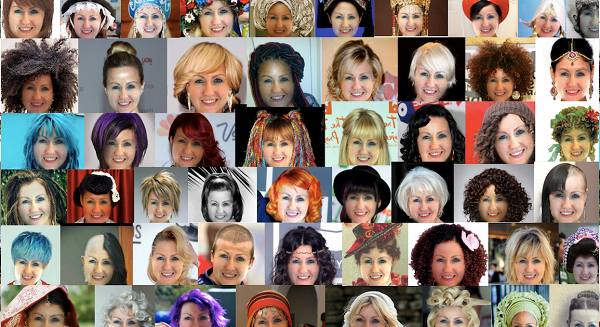
Dreambit software

Ask any girl: choosing a new hairstyle can be one of the most difficult tasks on this planet.

And while that might be an overstatement – we know that – it has a lot to do with the fact that we never know exactly how a new hairstyle would fit our faces or complement our appearance.

However, this problem has finally found a solution in the form of a piece of software created by researchers at the University of Washington. Meet Dreambit, the software that allows you to better imagine how you will look with a completely new hairstyle.

You don’t have to try that new bob or shave your head for real to see if a new hairdo will suit you – at least, not anymore. The software can even “turn back time” and allow you to see if a particular color or hairstyle would have looked good on you when you were 12 years old.

Dreambit is useful and entertaining at the same time

Using the software is really easy; all you need to do is upload a photo of you and then type a search term for what you would be interested (e.g. “black curly hair” or “1960s”). After looking through internet photo collections and different categories, the software will seamlessly give you the new look.

To offer an end result that fits your face as much as possible, the new software searches through hundreds of thousands of photographs that people have uploaded on the internet. Then, it copies and pastes only the elements of the appearance that look similar yours.

At the same time, its creators say the software’s abilities are fine tuned to change a person’s look while also keeping the original face shape intact, as well as their pose and expression.

“This is a way to try on different looks or personas without actually changing your physical appearance,” explains Ira Kemelmacher-Shlizerman, one of the developers. “While imagining what you’d look like with a new hairstyle is mind blowing, it also lets you experiment with creative imaginative scenarios.”

Many elements were involved in creating the new software, including facial recognition and processing, age progression, and three-dimensional reconstruction.

Thanks to the age progression software built by Kemelmacher-Shlizerman herself, the software can come up with different photographs representing a specific country, period, and age.
Image Source: Digital Trends

Filed Under: Tech & Science

Germany Proposes the Introduction of Black Boxes in Self-driving Cars

July 19, 2016 By Deborah Campbell Leave a Comment

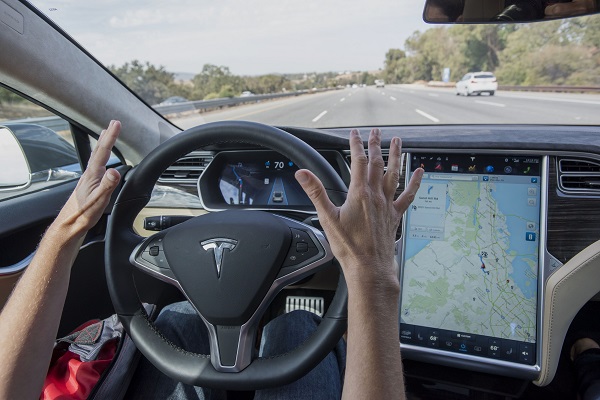
Tesla self-driving technology

It’s going to be a while longer before everyone gets on board with the whole self-driving idea. Just look at the recent headlines surrounding Tesla’s Autopilot test. People will need time to adjust to the concept of being driven around by their cars on public roads.

According to tech companies and automakers, there will be another stage between the current situation of the road traffic and the fully autonomous (level 4) vehicles.

Before self-driving cars will be capable of roaming around with no human intervention, they will still need a relatively alert human occupant behind the wheel, ready to take control of the vehicle if necessary.

It’s not just automakers behind the push for self-driving vehicles. Not only in the US but elsewhere, governments are also excited by the technology’s potential of significantly curbing the annual death toll caused by car accidents.

According to a Reuters report, Germany’s transport ministry wants to help drivers of self-driving cars to ease up a bit while they’re being transported from point A to point B. To do that, he proposed the cars to be equipped with the vehicle version of a plane’s black box.

In other words, the ‘drivers’ – who will still be required to sit behind the controls – will be more relaxed knowing that the car has on-board data recorders that keep an eye on its autonomous behavior.

Tesla electric car

More than any other automaker out there, Tesla has shown that the proposal is possible. The company’s electric vehicles are in continuous communication with Tesla’s servers.

Most importantly, the carmaker has shown it’s not afraid to check data logs after a crash to see exactly the state of the car at the time and what caused the crash.

The most recent kerfuffle has shown that Tesla did not involve Autopilot at all in a recent incident with its self-driving technology, causing a collective gasp in the media.

Other automakers are working on improving their semi-autonomous driving modes. At the moment, any Volvo, Tesla, or Audi (level 2 cars) has only one way of knowing if you’re an alert passenger: by monitoring if you’re holding the steering wheel or not.

It’s possible, however, that the next Audi A8 will also feature a camera that will check to see if the driver is capable of taking control in case of an emergency.
Image Source: Fortune

Filed Under: Tech & Science Tagged With: Black Boxes, Black Boxes in self-driving cars, self-driving car, self-driving technology

Team Finds Link Between Healthy Immune System and Good Social Ability

July 17, 2016 By Deborah Campbell Leave a Comment

Friends Taking a Group PhotoA group of researchers at the University of Virginia School of Medicine found that there is a link between issues with the immune system and lower propensity to interact with one another. The new findings could help spur new treatments of Alzheimer’s disease, autism and other neurological conditions.

The immune system keeps infections and pathogens in check while it boosts the body’s natural defenses against disease. Yet, it is the first time a study finds a link between the immune system and social abilities.

Dr. Jonathan Kipnis of the UVA’s Department of Neuroscience and his fellow researchers found that the immune system can sometimes directly influence or even control social skills. Scientists believe that a compromised immune system could be behind a person’s inability of fostering healthy social interactions.

The discovery could help medical research come with better treatments for schizophrenia and Autism Spectrum disorders.

Kipnis noted that science has separated the brain and the immune system and their functions. As a result, any immune activity recorded in the brain has been long viewed as a tell-tale sign of disease. Yet, Dr. Kipnis’ team found a link between immune response and the brain last year.

The new study, however, reveals that not only the two are tightly connected, but the immune response to disease-causing agents may shape our social skills too. Researchers think that we are “multicellular battlefields for two ancient forces: pathogens and the immune system.”

So, the immune system may shape some of our personality traits as well, researchers suggest.

The team based their assumptions on rat experiments, which revealed that the absence of  interferon gamma, a immune molecule whose levels sink when the immune system is fighting pathogens, impairs social interaction in lab animals.

Scientists found that rats and mice activate the molecule when they interact with one another. But when they genetically tweaked the animals to stop producing the molecule, there was a significant increase in their brain activity which rendered the animals less social.

When the molecule was back in business, rats and mice were able to develop healthy social interactions once more as their brain connectivity was in the normal range again.

Dr. Anthony Filiano, senior researcher involved in the study, explained that healthy social relationships are essential for animals’ survival as they usually gather together to forage and mate. However, when more organisms get closer they are also more likely to spread diseases. This may be why there’s the need for a strong immune system for social interactions.

The findings were published this week in the journal Nature.

Image Source: Flickr

Filed Under: Uncategorized Tagged With: Alzheimer's, ASD, autism, immune system, immune system disorders, link between immune system and the brain

Study: Goats May Be Man’s Second Best Friend

July 10, 2016 By Deborah Campbell Leave a Comment

Closeup of white goat’s snoutRecent research shows that domesticated goats may have more in common with dogs than previously thought. A group of scientists found that just like dogs, domesticated goats turn their eyes to humans when they need help.

Other domesticated animals don’t display such a loving relationship. Study authors believe that the goats’ friendly behavior towards humans is due to a long history of domestication which stretches back to 11,000 years ago.

A new study suggests that the 11,000 years of domestication have turned goats into man’s second best friend. The analysis revealed that goats have the same gaze at humans as dogs have when they need help.

Prior to the study, only dogs and horses were known to use direct eye contact to request something from their human owners.

Study authors wanted to test the theory and set up an experiment involving boxes filled with treats that animals couldn’t open all by themselves. Dogs, horses and, surprisingly, goats made eye contact with nearby humans to help them get to the food.

Study investigators underlined the distinction between taming and domestication. For instance, tame foxes can act like pets but they will never become domesticated. For several hundreds dollars you can buy a fox from a Siberia producer which breeds only animals that are docile in the presence of humans.

The Siberian company claims that the animals are very doglike and can be trained.

On the other hand, domestication creates a stronger bond between humans and animals and the implications are not yet fully understood. For example, tame wolves which can also never be domesticated did not turn their gaze to their human companions to help them open the containers in the experiment.

Researchers believe that the doglike gaze can only be attained through countless generations of domesticated animals. And goats had plenty of time at their disposal to become more acquainted with their human handlers when they need help.

Lead author of the study Alan McElligott who is a researcher at Queen Mary University of London in the U.K. noted that goats were never bred as pets. And neither were horses and dogs which were domesticated because man needed them as companions or for animal traction.

Goats were kept close to humans due to milk, hair and meat. But paradoxically, they treat us as their friends even though they weren’t bred to be our pets but our dinner.

The study was published this week in Biology Letters.

Image Source: Pixabay

Filed Under: Tech & Science Tagged With: doemsticated goats, domestication, goats, man’s best friend

American Women Have Mixed Thoughts About Grooming, Survey

July 1, 2016 By Deborah Campbell Leave a Comment

trimming

Many metaphors have been added to the vernacular describe the act of trimming or completely getting rid of one’s pubic hair (coiffing the badger and trimming the bushes being the least weird).

But regardless of one’s choice of words, it’s clear that Americans just love it. Women have experimented with of all kinds of techniques on their nether region, including vaginal facials and vajazzling.

A new study in JAMA Dermatology revealed that approximately 84 percent of women participating in a survey said they groomed their pubic hair one way or another while 16 percent said they were all natural at all times.

More than 3,300 women were included in the varied sample, coming from different backgrounds, with various races, ages, education levels, locations, and incomes. Going further into the overall statistics, some would say that the differences found by the researchers in terms of grooming habits are pretty evident.

It turns out that white women are more inclined to groom their nether regions than women of any other race; grooming is more popular among women aged 18-24 than women over the age of 45; and college-educated women were the most likely to groom.

As far as the grooming habits are concerned, most women reported using a nonelectric razor, as well as scissors or an electric razor. Interestingly enough, four of the 3,316 women also said they used tweezers for grooming, which is a scary thought for anyone who’s ever tried tweezing even one pubic hair.

Prior work had discovered that one of the most important factors in pubic hair removal is age – the younger the woman, the more likely she is to alter her appearance down south. The figures say 12 percent of those 18 to 24 years old never remove anything while 21 percent remove everything.

That’s not to say that pubic hairlessness because more than half of the women over 50 still sport full bushes and only two percent prefer to go bald. It only shows that this trend has caught on among younger women.

Beyond these demographic factors, the survey’s authors also inquired about other factors that contribute to a woman’s grooming habits, including “aesthetics rather than functionality” and “the mainstream media’s portrayal of women discussing and engaging in pubic hair removal.”
Image Source: Women’s Health Mag

Filed Under: Health Tagged With: pubic hairlessness, trimming, vaginal aesthetics, vaginal facials, vajazzling

Macaques Become More Socially Selective As They Age

June 26, 2016 By Deborah Campbell Leave a Comment

Barbary macaques

As humans get older, they become increasingly selective in terms of how they spend their time and with whom. However, it turns out we’re not the only ones who do that, as researchers note a similar behavior in aging Barbary macaques.

Published in the journal Current Biology, a new research has found this type of selective attitude-behavior in monkeys in an enclosure, for which they conducted behavioral and experimental studies.

While focusing on this particular species of monkeys, the team hoped to find an explanation for the very similar human behavior that occurs as they age.

According to leading researcher, Laura Almeling of the German Primate Center in Göttingen, Germany, previous theories stated that humans reduce their social circle as they age because they want to cherish the limited time remaining and spend it only with loved ones.

But this hypothesis cannot be applied to macaques, as they have no knowledge of their limited time as they age. Therefore, the increased selectivity might be caused by certain psychological changes.

For the experiments, the team devised various scenarios that would help them determine the Barbary macaques’ social and environmental selectivity at different ages. The sample of more than 100 monkeys was kept in an enclosure where the researchers placed different objects.

Younger animals showed higher interest in new animal toys or treats, while the adult macaques were pretty “meh” when it came to playing with them. A food tube was also placed in their enclosure and it was the only object that was interesting enough for all age groups.

Gauging their curiosity was only one of the experiments. The team was also curious how the monkeys interacted with each other after seeing pictures of newborn macaques and after hearing recordings of “friends” screaming for help.

Older female monkeys were the pickiest in terms of whom they interacted with, even when other members of the community were interested in engaging and maintaining relationships with them.

“With increasing age, the monkeys became more selective in their social interactions,” noted Dr. Almeling. “Interestingly, however, they were still interested in what was going on in their social world.”

Image Source: Wikimedia

Filed Under: Tech & Science Tagged With: aging monkeys become more selective, Barbary macaques, macaques, psychological similarities humans and macaques, showing interest in old age

Can the US Gun Problem Be Resolved?

June 23, 2016 By Deborah Campbell Leave a Comment

gun with trigger pressed

A new study devised by Australian researchers discovered that strict gun policies are efficient in preventing mass shootings or other such tragic incidents. The results of this study could help the American government solve the US gun problem. However, our constitution makes it harder for lawmakers to propose stricter regulations.

Twenty years ago Australia was faced with a tragedy. In 1996, Martin Bryant, a 28 years old Tasmanian entered a local café and shot and killed 35 individuals. An additional 23 people were injured during the shooting.

The Australian mass shooting took place a week after Scotland witnessed the horror that loose gun laws can produce. In Dunblane, a gun aficionado broke into an elementary school and murdered 16 children and their teachers.

Both incidents sparked a national debate on gun rights. Both nations decided to change their regulations, making gun access stricter, and most automatic weapons illegal.

Australia, for example, banned the use of rapid fire guns and implemented a forced buyback of approximately 660,000 weapons.

According to Simon Chapman, a professor at Sydney University and co-author of the study, before 1996, when gun legislation was loose in the country, 13 mass shootings occurred. After the 1996 café incident, no mass shootings were recorded.

Moreover, the researchers found that suicide rates also dropped. In lack of a quick way of taking their lives, the individuals renounced the idea without considering other suicide options. Chapman and his team discovered that stricter regulations were tied to a drop in the number of suicide and homicide victims.

The number of mass shootings and suicides in America is caused by the US gun problem. If access to such lethal weapons was restricted, the number of casualties could be considerably reduced.

However due to legal, cultural, and political issues, the United States will find it harder to modify their policies. Australia and Scotland had the approval of the majority of citizens, and they already had clear laws that allowed such modifications.

The US gun problem can be solved, but it will take a lot more effort. First, the majority of the citizens must agree with the changes. Then there’s the right to bear arms in the Second Amendment that allows individuals to own weapons. And ultimately, lawmakers must be determined to make a change.

What is your take on the US gun problem in the light of recent events? Leave us your opinion in the section below.

Image source: Pixabay

Filed Under: Life Tagged With: gun laws, gun problem, gun regulations, mass shootings, US gun problem

  • « Previous Page
  • 1
  • …
  • 7
  • 8
  • 9
  • 10
  • 11
  • …
  • 31
  • Next Page »

Subscribe to Blog via Email

Enter your email address to subscribe to this blog and receive notifications of new posts by email.

Join 10 other subscribers

Recent Articles

police handcuffs man

German Man Probed In Poisoning That Killed 21 Employees Since 2000

June 29, 2018 By Kenneth Scott Leave a Comment

Chicken wings bar

Intoxicated South Carolina Man Punches Waitress Who Refused to Serve Him Alcohol

June 29, 2018 By Karen Jackson Leave a Comment

gaming

New Zealand gamer Who Flew Halfway Across The World for Virginia Teen Gets Shots By Her Mother

June 28, 2018 By Cristopher Hall Leave a Comment

party

Former Virginia Tech Freshman Sentenced to 50 Years in Prison for Stabbing a Girl to Death

June 28, 2018 By Roxanne Briean Leave a Comment

bonfire

British Couple Sentenced to Life in Prison for Torturing and Murdering French Nanny

June 27, 2018 By Deborah Campbell Leave a Comment

pay phone

Texas Father of Girl Disappeared in the 80s Ignored by Authorities

June 26, 2018 By Cristopher Hall Leave a Comment

bottled water

San Francisco Woman Threatened to Call Police on Girl Who Sold Ice Water for Disneyland Trip

June 25, 2018 By Roxanne Briean Leave a Comment

Maplewood Park

Missouri Man Robbed by Date and Accomplice in Park

June 22, 2018 By Nancy Young Leave a Comment

coding

New York Man Sentenced in Cyberstalking Former Girlfriend, Mailing Drugs to Her Dorm

June 22, 2018 By Deborah Campbell Leave a Comment

headphones

Bose Poised to Launch Sleepbuds, In-Ear Headphones That Help You Sleep

June 21, 2018 By Nancy Young Leave a Comment

Police light

Intoxicated Female Driver in Custody for Pulling Arresting Officer by the Hair

June 21, 2018 By Kenneth Scott Leave a Comment

kitchen

Restaurant Manager Arrested and Charged in Shooting Death of Co-Worker over Negative Yelp Reviews

June 20, 2018 By Karen Jackson Leave a Comment

plastic container

Pennsylvania Couple Charged in Violent Death of Infant Discovered Buried in Cat Litter

June 19, 2018 By Cristopher Hall Leave a Comment

tailpipe

Minnesota Teen Gets Head Stuck In Oversized Tailpipe Winstock Music Festival

June 18, 2018 By Karen Jackson Leave a Comment

Pages

  • About Us
  • Contact us
  • Privacy Policy
  • Privacy Policy GDPR
  • Staff
  • Terms and Conditions

Recent Posts

  • German Man Probed In Poisoning That Killed 21 Employees Since 2000 June 29, 2018
  • Intoxicated South Carolina Man Punches Waitress Who Refused to Serve Him Alcohol June 29, 2018
  • New Zealand gamer Who Flew Halfway Across The World for Virginia Teen Gets Shots By Her Mother June 28, 2018
  • Former Virginia Tech Freshman Sentenced to 50 Years in Prison for Stabbing a Girl to Death June 28, 2018
  • British Couple Sentenced to Life in Prison for Torturing and Murdering French Nanny June 27, 2018
  • Texas Father of Girl Disappeared in the 80s Ignored by Authorities June 26, 2018
  • San Francisco Woman Threatened to Call Police on Girl Who Sold Ice Water for Disneyland Trip June 25, 2018

Categories

  • Business
  • Entertainment
  • Finance
  • Headlines
  • Health
  • Life
  • Nature
  • Science
  • Sports
  • Tech & Science
  • Travel
  • Uncategorized
  • United States
  • World

Copyright © 2026 ArgyllFreePress.com
About · Privacy Policy · Terms of Use · Contact