Argyll Free Press

Growing News Network

Friday, February 13, 2026
Log in
  • Business
  • Finance
  • Sports
  • Tech & Science
    • HP Envy 4500 Review
    • LG Optimus 170 Review
    • iPod Touch 6th Generation Review
    • HTC One M8 Accessories Set-up
    • Surrealist Games You Must Play
    • Hisense Sero 8 Review
    • Dell Latitude e7440 Review
    • HP Laserjet 1536dnf mfp Review
    • Garmin Fenix 2 Review
    • Skype Vs Viber
    • Best Video Conferencing Software
    • Sony mdr 1r Headphones Review
    • Canon Rebel t3i Review
    • Sennheiser Momentum 2-0 Review
  • Travel
  • Headlines
  • Health
  • United States

Zuckerberg Says Facebook Is Not a Traditional Media Company

December 24, 2016 By Michael Turner Leave a Comment

Facebook logo on screen

Marck Zuckerberg has stated that Facebook is not a traditional media company.

Facebook plays an important role in people’s lives since many users prefer getting their news from the platform, from a variety of publishers which appear in their news feeds. Despite the social network’s impact and the ability to regulate what content people see, Mark Zuckerberg has been reluctant to admit that Facebook is a media company, until now.

After Facebook and Zuckerberg faced backlash for its lack of action to prevent the spread of fake news, which may have helped elect Donald Trump, Zuckerberg downplayed the role of fake news in changing people mind or the course of the election. However, Facebook recently changed their tune regarding fake news, accepting their role in the problem and taking steps to address it.

Zuckerberg took a further step in accepting the reality of the role and impact of Facebook in today’s society during a live video stream on Wednesday. Together with Sheryl Sandberg, the COO of Facebook, he discussed 2016 in summary and what it meant for Facebook as well as what we can expect in 2017. More importantly, he stated that Facebook is not a traditional media company, as the social is more than a distributor of news, it plays an important role in the public discourse.

This statement implies that Mark Zuckerberg, the founder and CEO of Facebook, has finally come to terms about the impact Facebook has in society, which mostly acts as a media company, but until now wasn’t ready to assume the responsibility that comes with it. However, unlike traditional media companies, Facebook does not create the content themselves, and this is what sets it apart from other forms of media.

Facebook’s news feed is mainly responsible for the increasing aspect of a media company that Facebook has unwillingly adopted, since it acts like an editor, determining what content people see, from who and when. Furthermore, even the company’s leaders who determine the community standards, as well as content policies, act as editors, determining whether people should see or not various controversial content like nude historical photographs or reports of police shootings.

As such, Facebook is able to incorporate common elements from both a tech company which only publishes content on their platform, and a media company, by deciding who and what see the respective content.

Image source: Pixabay

Filed Under: Tech & Science

NASA Sends Wireless Leak Detection System to the ISS

December 20, 2016 By Michael Turner Leave a Comment

ISS spacecraft

ISS astronauts will install a wireless leak detection system.

NASA is constantly on the lookout for useful technologies and inventions which could help them in their various endeavors. One such invention is a wireless leak detection system created by graduate students from the University of Maine, which will be sent to the International Space Station.

The prototype wireless leak detection system was extensively tested by NASA in a variety of situations in their inflatable lunar habitat as well as in the Wireless Sensing Laboratory located on the Orono campus. The device can improve the safety of the ISS crew as well as that of other astronauts in future missions and space activities.

The prototype was developed by electrical engineering graduate students Lonnie Laborite and Cassey Clark. They were also part of the safety tests conducted at NASA’s Johnson Space Center in Houston. Their invention will be the first piece of hardware develop by researchers from the University of Maine, and which will get to function in space for an extensive amount of time. The wireless leak detection system consists of a monitoring tool which is able to detect leaks in the spacecraft to avoid loss of air or heat, which could pose serious safety concerns.

The graduate students’ project was funded by NASA grant consisting of $100,000 for a period of three years. The recipient was a University of Maine professor of electrical and computer engineering, Ali Abedi. The project was part of the Maine Space Grant Consortium started in 2014.

The wireless leak detection project was one of a total of five in the United States to receive funding from NASA, meant for the research and development of technology which could be used onboard the ISS. The project also received support from Vincent Caccese, a mechanical engineering professor at the University of Maine.

The leak detection system will be delivered to the ISS through NASA’s upcoming resupply mission. It consists of three identical boxes which the astronauts will install on the ISS and they will begin collecting data for two intervals of around 30 hours. The compiled data will be delivered back to the UMaine researchers, and eventually, the hardware will be returned to Earth so that the researchers can study it, see how it hold up in space, and try to improve the next generation.

Image source: Wikimedia

Filed Under: Science

Facebook Considering to Add Original Video Content

December 15, 2016 By Michael Turner Leave a Comment

Facebook logo on screen

Facebook is exploring the idea of developing original video content.

Since the social the network made its debut, Facebook only served as a location where people and companies can showcase their various original content. Now, although the company insisted that it’s not a media company, it is looking to add a variety of original video content on its platform.

Recode reports that Ricky Van Veen, which was the co-founder of College Humor and who joined the company earlier this year, is the man leading Facebook’s efforts of gathering an array of original video content. The company is in talks with various TV studios as well as other video producers regarding the licensing of shows.

Facebook is interested in acquiring or developing a wide variety of scripted or unscripted shows, as well as sports. This recent effort builds on the company’s previous media deals with companies like Vox Media, which will produce live content exclusively for the social network. According to Van Veen, Facebook is interested in creating an ecosystem of third-party content.

Although most of the current deals involve purchasing its own content via licensing and from the outset, Facebook is also considering to develop original video content in the manner of companies like Netflix or Amazon Prime Video. Unfortunately, nothing specific has been revealed in this regard.

Facebook currently benefits from the large number of videos its users create and watch for and on the platform. As such, it is unclear why they want to adopt a riskier practice of acquiring or developing original video content. Most think it has to do with Facebook imagining the future for its platform, and media in general. It previously emphasized that video will be the main form of communications and content delivery.

As such, the company recently added a video tab to the platform earlier this year. However, it is still far from sites like YouTube. By creating and acquiring their own library of original video content, Facebook could gradually become a destination for watching a wide variety of videos. This could help the company create a clear path to monetization for its users and partners. This feature, in turn, will lead to more content and increasingly bigger audiences.

These are ambitious plans for Facebook which keeps maintaining that it is a tech and not a media company.

Image source: Pixabay

Filed Under: Tech & Science

Cooling Cap Reduces Hair Loss from Chemotherapy

December 10, 2016 By Michael Turner Leave a Comment

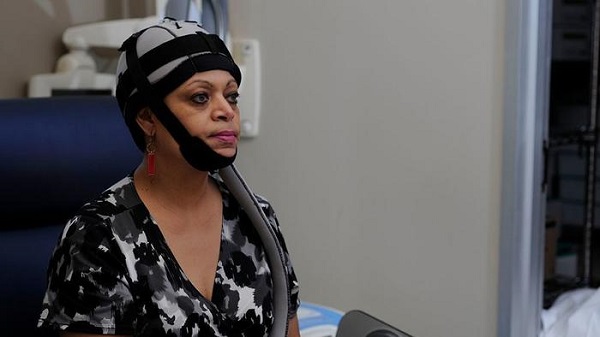
woman wearing cooling cap

Cooling cap proved to reduce hair loss from chemotherapy.

One year after the US Food and Drug Administration approved the testing of a cooling cap system as a way to prevent hair loss of patients who are undergoing chemotherapy, a new clinical trial strengthens the case for the wide use of similar devices.

For their study, researchers from the Baylor College of Medicine in Houston tested a new but similar device called the Orbis Paxman Hair Loss Prevention System on 95 breast cancer patients which randomly received a cooling cap for testing. The clinical trial reveals that the device helped 51 percent of patients to maintain a good amount of hair after four rounds of treatment. This is a significant improvement compared to the patients who did not receive the device and who lost all their hair after rounds of chemotherapy.

Hair loss happens during chemotherapy because the treatment kills cells that divide rapidly, a trait specific to cancer as well as hair cells. The idea of a cooling cap is to reduce the amount of hair loss by reducing the amount of the chemotherapy drugs to the cells on our head. This is possible by cooling a patient’s scalp to around 66 degrees Fahrenheit. The cooler temperature leads to the constriction of blood vessels reducing overall blood flow to the region by 20 to 40 percent. This means that the chemotherapy agent which travels through the bloodstream will also reach hair cells in reduced quantity.

During the clinical trial, breast cancer patients wore the silicone cooling caps for 30 minutes before beginning the treatment. They kept the cap during the entire time of the chemotherapy as well as 90 minutes after the treatment was over.

To examine the results, the researchers brought in independent evaluators to determine how the patients’ hair looked like without knowing that they wore a cooling cap during chemotherapy.  The study will include a follow-up period with the patients for up to five years to determine if the reduction of the chemotherapy agent to the scalp leads to the development of cancer cells in the area.

The clinical trial was funded by the Paxman Cooling company, the producer of the cooling cap which is meant to replace the DigniCap Scalp Cooling System approved by the FDA last year.

Image source: Baylor College of Medicine

Filed Under: Health

Study Finds that the Flu Vaccine During Pregnancy Doesn’t Cause Autism in Kids

December 4, 2016 By Michael Turner Leave a Comment

nurse giving a flu vaccine to a woman

The flu virus of flu vaccine does not cause autism in kids during pregnancy.

A new research study manages to strengthen the findings of other similar studies seeking to combat the idea that the flu vaccine causes autism in kids. The novel aspect of the study is that it examined whether or not the pregnant women who either have the flu or get the flu vaccine are increasing their children’s chance of developing autism.

The study which was published in JAMA Pediatrics analyzed an extensive amount of data on approximately 197,000 children who were born between 2000 and 2010 and were registered in the Kaiser Permanente Northern California healthcare system after a period of gestation of at least 24 weeks.

Researchers also conducted follow-ups analysis on the children in periods from two years and up to 15 years. They discovered that 1.6 percent of the kids were diagnosed with ASD. Among the mothers of 1.6 percent of kids, only fewer than 1 percent had the flu while being pregnant, and only around 23 percent of the mothers received a flu vaccine during their pregnancy.

These findings led researchers to conclude that there was no correlation between a mother either being infected with the flu virus or receiving the vaccine to combat or prevent it, and her not yet born child. Lisa Croen, the senior author of the study firmly emphasized the lack association between autism in children and whether or not the mothers had the flu or got the flu vaccine during their pregnancy.

The researchers encouraged women to get the flu vaccine without any reservations to its effects on children during pregnancy. They also did not recommend any changes in the United States’ vaccination policy.

Although there were a number of studies examining whether the flu vaccine causes autism in children of young age, there was no previous research of its effects during pregnancy. Researchers found that previous studies only analyzed the symptoms of influenza in pregnant mothers and not the vaccine during the pregnancy or after it.

Those studies produced mixed results among which an increased risk for premature labor and delivery as well as higher risk of birth defects. Scientists are hopeful that the new study will help future mothers make more informed decisions about their own health and that of their babies.

Image source:

Filed Under: Health

BMW Improves the I3 Electric Car for 2017

November 28, 2016 By Michael Turner Leave a Comment

BMW I3

BMW wants to redesign their I3 electric car for 2017.

Not all companies that dominated the conventional car industry were able to translate their previous success to the electric car market. One case is BMW, which hasn’t seen much demand for its I3 electric car. However, the company hopes that a redesign coupled with some new features will provide the vehicle the boost it needs to attract more customers.

Despite the company’s reputation, BMW has only sold around 25,000 units of their I3 hatchbacks in 2015.  For this reason, BMW’s plans for the 2017 version of their i3 electric car includes both a front and rear end redesign, probably to make the car look a bit more modern. Unfortunately, no images have been released or leaked as of yet, so it remains unclear how the car will actually end up looking once BMW is finished.

The report issued by the German publication Welt am Sonntag, which has revealed the company’s plan, also shows that among the changes planned by BMW for the I3 electric car, a new battery technology stands out as a better reason to consider buying the car.  The current version of BWM I3 has a range of 114 miles on a full charge which can be increased up to 180 miles through a “range extender.”

Unfortunately, the report doesn’t precisely specify what the future range will be, but it does mention that it should be an increase of less than 50 percent. As such, I3 2017 standard range will still very likely be under 200-miles. Although the higher range can lead to a wider appeal, the I3 electric car is still well below what other EV’s can offer such as Tesla’s Model S with its 300-miles range. However, the fully-featured Model S also costs almost three times as much as the $47,450 i3. It is unknown if the price of the redesigned i3 will remain the same or if it will be slightly increased.

BMW hopes that their future autonomous cars will have better luck than their electric cars. The company has started a collaboration with Intel and Mobileye in order to create an open platform for self-driving vehicles by 2021.

What do you think of BMW’s plans for their I3 electric car?

Image source: Wikimedia

Filed Under: Tech & Science

Doppler Labs Here One Earbuds Delayed until 2017

November 23, 2016 By Michael Turner Leave a Comment

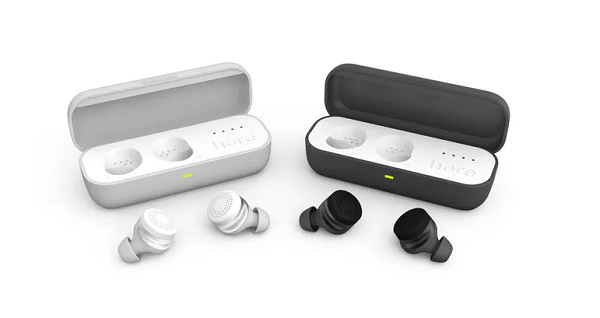
Doppler Labs Here One earbuds

Doppler Labs delayed their Here One earbuds.

Anyone with long commutes during their day knows the pleasure of using a pair of headphones to listen to your favorite music while you traverse the often loud and noisy city. However, listening to music loud enough on your headphones can block any outside sounds. This type of sensory deprivation is dangerous as sounds often provided warnings of dangers.

Doppler Labs, an audio startup company, is addressing this situation by developing a pair of wireless earbuds called Here One that, besides streaming music, can augment the sounds of the environment you are in. Although the earbuds were previously announced in June and were scheduled to ship in November, Doppler Labs have decided to push their launch date until February 2017.

Some of the situations the earbuds are uniquely designed to address is listening to music while walking down the street but still being able to hear the sounds of an incoming car. Another example is when you’re at a sporting event, the Here One earbuds provide you with reduced crowd noise while focusing the field action and also streaming stats about the match and the players.

Thanks to the innovative functionality of the earbuds, Doppler Labs has established partnerships with various companies and institutions for unique content and features like getting a custom audio commentary when going to the Philharmonic, or your own travel guide when visiting the San Francisco Museum of Fine Arts. Other partnerships involve the New York Mets, JetBlue, Coachella, Cleveland Cavaliers, and others to come.

According to Noah Kraft, the CEO of Doppler Labs, although they wished the earbuds could have been delivered as scheduled, especially so considering that Apple sold millions of jack-less iPhone 7s, the company still has to perform a validation build on a mass market scale.

Doppler labs will probably miss out on a lot of product sales if they don’t launch before the holidays. However, they could risk losing even more if the product was not up to the promised standards. Additionally, this extra time also gives the company time to add new features to the earbuds by forming even more partnerships with different organizations to that users can enjoy a unique experience.

Are you planning on buying the wireless earbuds from Doppler Labs?

Image credit: Doppler Labs

Filed Under: Tech & Science

Women Have Greater Risks of a Zika Infection

November 18, 2016 By Michael Turner Leave a Comment

Zika virus representation

Study finds that women have a higher risk of a Zika infection through sex.

The Zika virus led to a massive number of people getting infected across the world. Although it is more commonly spread through mosquitoes, sexual intercourse with an infected person can also lead to the infection of the other persons. A new study reveals that in this scenario, women have a higher risk than men of being infected.

Researchers from the Gladstone Institute performed a study regarding the transmission of the Zika virus through sex. According to, Shomyseh Sanjabi, the lead author of the study, and an investigator at the Gladstone research organization, the virus triggers a delay in the immune response of a woman’s genital organ. This delay is what allows the virus to mostly go undetected when it’s transmitted through sex. Their researchers’ finding support previous epidemiological studies which showed that women have a higher risk of a Zika infection.

If you’re not familiar yet with the Zika virus, then you should know that if infected, adults have mild symptoms which pass after a few days or weeks at most. However, the virus has long-term effects when it manages to infect pregnant women as it causes babies to be born with various birth defects like microcephaly, an abnormally small head, and brain. Cases of microcephaly in Brazil and the rest of South America have skyrocketed to several thousand since the outbreak of the virus back in 2015.

For their study, Gladstone researchers used female mice which were infected with the Zika virus either through mosquito bites or vaginally. In normal cases, the infection of a cell leads to the release of interferon. This molecule represents the body’s first defense against a variety of harmful pathogens. In its fight with the virus, interferon triggers a response from our immune system to attack the virus.

After three days of close examination of the mice infected with the Zika, researchers discovered that mice infected by mosquitoes had a much stronger response of their immune systems compared to those infected vaginally. Closer analysis revealed that the latter group of mice didn’t have any detectable levels of interferon in their genitalia.

The immune systems of this group of mice only began combating the virus only one week since the initial Zika infection, when it reached lymphoid tissues. After eventually eliminating the virus from their systems, researchers still found small traces of the virus in the mice’s vagina.

The study was published on November 16th in the Journal of Experimental Medicine.

Image source: Wikipedia

Filed Under: Health

Russian Antitrust Investigates Microsoft after Kaspersky Complaint

November 14, 2016 By Michael Turner Leave a Comment

Satya Nadella in front of a screen

Kaspersky complaint leads to Microsoft anticompetitive investigation.

The founder of the antivirus developer company Kaspersky Lab, Eugene Kaspersky has complained about Microsoft’s Windows 10 anticompetitive bundling of the Defender antivirus with their OS. This led Kaspersky to file a complaint with competition authorities in both Russia and the EU.

Most industry experts speculated that the regulators won’t act soon enough to make a difference in Microsoft’s policy or that their action won’t compel any considerable changes. However, it seems that the Russian antitrust authority known as the Federal Antimonopoly Service (FAS) has opened an investigation last Thursday into Microsoft’s policy.

More specifically, the institution is trying to determine if Microsoft’s actions in bundling Windows 10 with Defender and making the installation of third-party antivirus software harder, was a violation of the Federal Law “On Protection of Competition.” More specifically, the Part 1 Article 10 of the law which forbids companies which have a dominant position in the market to engage in activities that prevent, restrict or eliminates competition as well as infringing on the interests of other actors, be it companies or consumers.

Kaspersky apparently issued the complaint with the anticompetition authority after he spent several months in talks with Microsoft, attempting to address the issue directly with the company. Unfortunately, all his effort proved exhausting and fruitless.

Kaspersky made his frustration public in a blog post, in which he also stated the main issues he has with Windows 10 and how it treats third-party security software developers. First, when a user upgrades to Windows 10, other antivirus software is recommended to be uninstalled as part of the process. The program won’t be spared even if you select it to be kept.

Second, Kaspersky criticizes the fact that Microsoft allows third-party developers only a period of six days to adapt their software to new Windows 10 versions compared to the two months they had on previous operating systems. This isn’t anywhere close to sufficient time for Kaspersky to provide their quality service and they risk losing customers to Defender.

Finally, Kaspersky also claims that Windows 10 conceals when a license expired or its signatures are out-of-date in order to automatically switch back to Defender. Additionally, the Kaspersky complaint also mentions the below average quality of Defender as a security system.

What do you make of the Kaspersky complaint?

Image source: Wikimedia

Filed Under: Tech & Science

Red Squirrels Are Carriers of Leprosy, Scientists Are Worried

November 11, 2016 By Michael Turner Leave a Comment

baby red squirrels in tree

According to scientists, red squirrels are carriers of the bacterium that causes human leprosy.

Scientists recently discovered that red squirrels carry a type of bacteria that causes human leprosy. The researchers made the discovery after they had noticed many British squirrels had unexplained sores on their body. It seems like there is no immediate threat, but scientists are worried that if leprosy begins developing antibiotic resistance, a new plague could spread rapidly.

What Causes Leprosy?

Leprosy is caused by the Mycobacterium lepromatosis bacteria. The disease affects the body’s skin, eyes, respiratory tract, and peripheral nerves.

Hansen’s disease, as leprosy is also called, killed hundreds of thousands in Europe during the Middle Ages. Back then, the illness was associated with moral corruption and treatment was available in leprosariums, institutions ran by the church.

Now, the treatment consists of an antibiotics cocktail. Multidrug therapy has proved itself useful in the majority of cases, the risk of infection disappearing after the first dose. The rate of relapse after the treatment is also low, and very few resistance cases were confirmed over the years.

How Are Red Squirrels Connected to the Disorder?

Scientists gathered a sample of one hundred red squirrel cadavers from Ireland, Scotland, and England. According to the genetic screening tests, all specimens collected from England’s Brownsea Island carried both the Mycobacterium lepromatosis and the Mycobacterium leprae bacteria.

The researchers mentioned that the infection was discovered in specimens who presented symptoms of the disease. Some of the animals were overtly diseased with patches of missing fur, damaged nerve endings, and swollen feet, ears, snouts, and eyes.

How Is the Study Useful?

The UK has not registered any case of leprosy for hundreds of years, mainly because the contact between humans and the animals is limited.

However, Charlotte Avanzi, a researcher at the Federal Institute of Technology in Switzerland and lead author of the study, declared that the research could prove useful for countries where the disease is prevalent.

The United States, for example, is still registering leprosy cases. The same stands for India. In total, there are 200,000 leprosy cases reported each year.

Until recently, scientists believed that the disease could only be spread through human contact. The first animal discovered to be a carrier was the armadillo. Now, red squirrels are joining the list.

Even though there are slight chances of another leprosy outbreak, scientists are advising people to steer clear of red squirrels and avoid any physical contact with the animals.

Image source: Wikipedia 

Filed Under: Science

  • « Previous Page
  • 1
  • …
  • 5
  • 6
  • 7
  • 8
  • 9
  • …
  • 26
  • Next Page »

Subscribe to Blog via Email

Enter your email address to subscribe to this blog and receive notifications of new posts by email.

Join 11 other subscribers

Recent Articles

police handcuffs man

German Man Probed In Poisoning That Killed 21 Employees Since 2000

June 29, 2018 By Kenneth Scott Leave a Comment

Chicken wings bar

Intoxicated South Carolina Man Punches Waitress Who Refused to Serve Him Alcohol

June 29, 2018 By Karen Jackson Leave a Comment

gaming

New Zealand gamer Who Flew Halfway Across The World for Virginia Teen Gets Shots By Her Mother

June 28, 2018 By Cristopher Hall Leave a Comment

party

Former Virginia Tech Freshman Sentenced to 50 Years in Prison for Stabbing a Girl to Death

June 28, 2018 By Roxanne Briean Leave a Comment

bonfire

British Couple Sentenced to Life in Prison for Torturing and Murdering French Nanny

June 27, 2018 By Deborah Campbell Leave a Comment

pay phone

Texas Father of Girl Disappeared in the 80s Ignored by Authorities

June 26, 2018 By Cristopher Hall Leave a Comment

bottled water

San Francisco Woman Threatened to Call Police on Girl Who Sold Ice Water for Disneyland Trip

June 25, 2018 By Roxanne Briean Leave a Comment

Maplewood Park

Missouri Man Robbed by Date and Accomplice in Park

June 22, 2018 By Nancy Young Leave a Comment

coding

New York Man Sentenced in Cyberstalking Former Girlfriend, Mailing Drugs to Her Dorm

June 22, 2018 By Deborah Campbell Leave a Comment

headphones

Bose Poised to Launch Sleepbuds, In-Ear Headphones That Help You Sleep

June 21, 2018 By Nancy Young Leave a Comment

Police light

Intoxicated Female Driver in Custody for Pulling Arresting Officer by the Hair

June 21, 2018 By Kenneth Scott Leave a Comment

kitchen

Restaurant Manager Arrested and Charged in Shooting Death of Co-Worker over Negative Yelp Reviews

June 20, 2018 By Karen Jackson Leave a Comment

plastic container

Pennsylvania Couple Charged in Violent Death of Infant Discovered Buried in Cat Litter

June 19, 2018 By Cristopher Hall Leave a Comment

tailpipe

Minnesota Teen Gets Head Stuck In Oversized Tailpipe Winstock Music Festival

June 18, 2018 By Karen Jackson Leave a Comment

Pages

  • About Us
  • Contact us
  • Privacy Policy
  • Privacy Policy GDPR
  • Staff
  • Terms and Conditions

Recent Posts

  • German Man Probed In Poisoning That Killed 21 Employees Since 2000 June 29, 2018
  • Intoxicated South Carolina Man Punches Waitress Who Refused to Serve Him Alcohol June 29, 2018
  • New Zealand gamer Who Flew Halfway Across The World for Virginia Teen Gets Shots By Her Mother June 28, 2018
  • Former Virginia Tech Freshman Sentenced to 50 Years in Prison for Stabbing a Girl to Death June 28, 2018
  • British Couple Sentenced to Life in Prison for Torturing and Murdering French Nanny June 27, 2018
  • Texas Father of Girl Disappeared in the 80s Ignored by Authorities June 26, 2018
  • San Francisco Woman Threatened to Call Police on Girl Who Sold Ice Water for Disneyland Trip June 25, 2018

Categories

  • Business
  • Entertainment
  • Finance
  • Headlines
  • Health
  • Life
  • Nature
  • Science
  • Sports
  • Tech & Science
  • Travel
  • Uncategorized
  • United States
  • World

Copyright © 2026 ArgyllFreePress.com
About · Privacy Policy · Terms of Use · Contact