Argyll Free Press

Growing News Network

Wednesday, December 31, 2025
Log in
  • Business
  • Finance
  • Sports
  • Tech & Science
    • HP Envy 4500 Review
    • LG Optimus 170 Review
    • iPod Touch 6th Generation Review
    • HTC One M8 Accessories Set-up
    • Surrealist Games You Must Play
    • Hisense Sero 8 Review
    • Dell Latitude e7440 Review
    • HP Laserjet 1536dnf mfp Review
    • Garmin Fenix 2 Review
    • Skype Vs Viber
    • Best Video Conferencing Software
    • Sony mdr 1r Headphones Review
    • Canon Rebel t3i Review
    • Sennheiser Momentum 2-0 Review
  • Travel
  • Headlines
  • Health
  • United States

Adélie Penguins In Antarctica Endangered by Climate Change

June 30, 2016 By Michael Turner Leave a Comment

adelie penguins

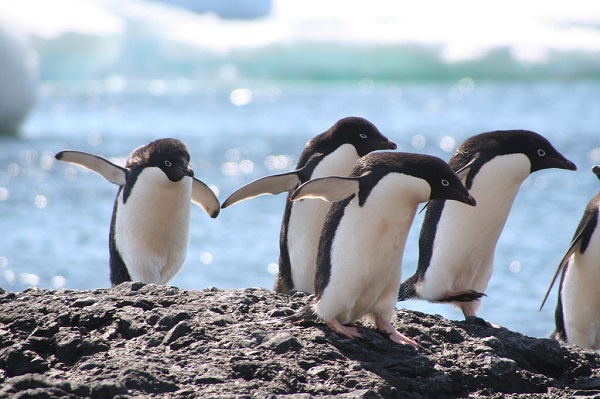
A new climate study has more bad news to deliver on the front of global warming and its bad influence on the populations of Adélie penguins in Antarctica.

The ice-free and rocky land is favored by these tuxedo-clad birds for breeding. As glaciers have melted gradually over the centuries, Adélie penguins seemed to thrive in the once icebound land.

However, it seems that the Antarctic climate has reached a tipping point, and researchers claim that future warming will likely contribute to the further decline of Adélie colonies.

“It is only in recent decades that we know Adélie penguins population declines are associated with warming, which suggests that many regions of Antarctica have warmed too much and that further warming is no longer positive for the species,” explained Megan Cimino, a researcher at the University of Delaware in the College of Earth, Ocean and the Environment.

Cimino, who’s one of the study’s co-authors, added that Adélie penguins live in colonies all along the Antarctic, and prefer rocky patches of ground for breeding from October through February. This is one of the traits that differentiate them from emperor penguins, which have no trouble breeding on ice.

Previous studies had already found serious declines in the populations of Adélie penguins in particular regions of Antarctica (West Antarctica was the worst affected).

In order to determine the impact of climate on the future of bird populations, Cimino’s team analyzed head counts from real colonies, in addition to satellite imagery and temperature data of vast regions of Antarctica that are either ice-bound or ice-free.

Thanks to high-resolution satellite imagery, the researchers were also able to accurately estimate the penguin colony size. After cross-referencing this data with unusual climate patterns between 1981 and 2010, Cimino combined the results with climate models to predict future sea ice and temperature, and its impact on future penguin populations.

Some of the Adélie penguins will have it rough: the models show that by 2060, roughly 30 percent of the colonies will have suffered a drop in numbers, while another 60 percent of colonies will be in serious decline by the end of this century.

According to the report in the journal Scientific Reports, at least half of the Adélie penguins could disappear by 2099. Colonies in the West Antarctic Peninsula are the most prone to face declining penguin populations.
Image Source: Flickr
Filed Under: Tech & Science Tagged With: Adélie Penguins, climate change, Global Warming, penguin populations in Antarctica, sea temperature

Strange Watermelon Snow Phenomenon Spreads in the Arctic

June 25, 2016 By Cristopher Hall Leave a Comment

pink snow

The watermelon is one of the favorite fruits of the summer season and everyone wants a piece of it. However, there’s a different kind of “watermelon” that can be experienced only by going outside in snowy places.

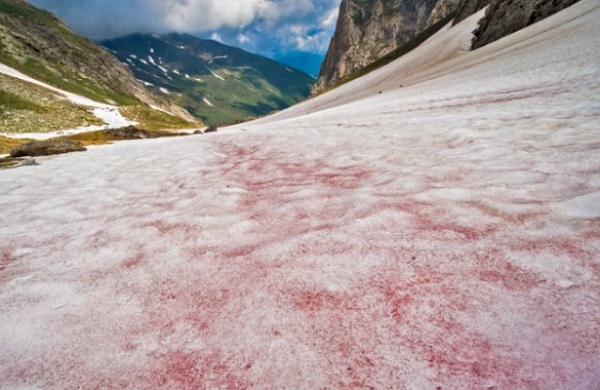
Known as ‘watermelon snow,’ this phenomenon takes place the summer heat melts the snowy leftovers of winter. The pinkish nuance of the snow is caused by the sun, which leads to algal blooms that thrive in liquid water and freezing temperatures.

It’s a vicious cycle: firstly, the green organisms flourish under the hot sun, creating a sort of natural sunscreen to color the snowy slopes in pink and sometimes bright red. On the other hand, adding color darkens the snow, which leads to a quicker and faster paced meltdown.

According to Stefanie Lutz, a geobiologist working with the GFZ German Research Center for Geosciences and the lead study author, there’s a similarity between this phenomenon and what happens when we wear only black T-shirts instead of white ones.

Besides the fact that it feels much hotter than it is, this heat causes extra melting in the snow. Dr. Lutz and colleagues from several institutions, including the University of Leeds, have published a study on the matter in the journal Nature Communications.

As they analyzed the microbes that thrive in the summer snow, the international team noticed that even though these bacterial communities vary widely from place to place, they are an important factor in climate change.

So important, in fact, that the team has requested that watermelon snow be taken into consideration when experts create climate models to predict the downward direction of the environment.

Even though researchers are still trying to determine just how large the pink blooms can get, Dr. Lutz believes that they can spread all over the Arctic during summertime.

“Based on personal observations, a conservative estimate would be 50 percent of the snow surface on a glacier at the end of a melt season,” she wrote in an email. “But this can potentially be even higher.”

There’s a long list of factors that are turning the Arctic in a giant popsicle that’s rapidly melting down and the red snow algae is one of the many that’s still unaccounted for.
Image Source: Science Alert

Filed Under: Tech & Science Tagged With: climate change, flourishing pink algae, pink snow, watermelon snow

Norway Is the First Country To Commit to Zero Deforestation

June 11, 2016 By Cristopher Hall Leave a Comment

alt= deforestation

Sometimes it seems that only the bad news makes headlines, so here’s a piece of good news: On May 26, the Norwegian government pledged to zero deforestation on its territory.

The Scandinavian nation committed to no longer using and acquiring products that encourage the loss of forestry. The laudable decision was included in the recommendation of Action Plan on Nature Diversity by Norway’s Standing Committee on Energy and Environment.

According to the committee, the government should consider supporting biodiversity protection with the funds offered by the Government Pension Fund Global (GPFG). They also asked for the creation of a separate biodiversity policy.

As a global sovereign wealth fund, GPFG is mainly focused on climate change policies with deforestation. However, the fund has yet to establish a specific policy for biodiversity protection.

The country’s pledge is a win for Rainforest Foundation Norway, which has been lobbying for this kind of commitment for several years.

Nils Hermann Ranum, the leader of the Rainforest Foundation Norway policy and campaign, said that “Over the last few years, a number of companies have committed to cease the procurement of goods that can be linked to the destruction of the rainforest.”

Thus, it is encouraging that the Norwegian state has also decided to follow suit and set up new demands regarding public procurements. After this victory, Ranum hopes that other countries, such as Germany and the UK, will decide to commit to zero deforestation.

It would be the next logical step, seeing that all of them have already entered in September 2014 into a joint declaration at the UN Climate Summit in New York. Zero deforestation is something the European countries had promised to support on a national level.

Similarly, they also committed to coming up with solid policies in terms of sustainable procurement of beef, soy, timber, and palm oil.

According to a previous study, about 40 percent of total tropical deforestation from 2000 to 2011 was due to palm oil, wood, soy and beef products from only seven countries.

In these countries — Argentina, Malaysia, Bolivia, Paraguay, Papua New Guinea, Brazil, and Indonesia — the deforestation rates are the worst globally; they also rank at 44 percent as sources of carbon emissions.

Norway’s pledge has made history: It’s the first country to make it, hoping that other countries will see the benefits to our planet and do the same.
Image Source: Flickr

Filed Under: Tech & Science Tagged With: carbon emissions, climate change, man-made changes, Norway pledges support to zero deforestation, UN Climate Summit, zero deforestation

Cold Water Upwelling in Antarctic Seas Could Explain Climate Change Paradox

May 31, 2016 By Kenneth Scott Leave a Comment

alt= Antarctic ice melting

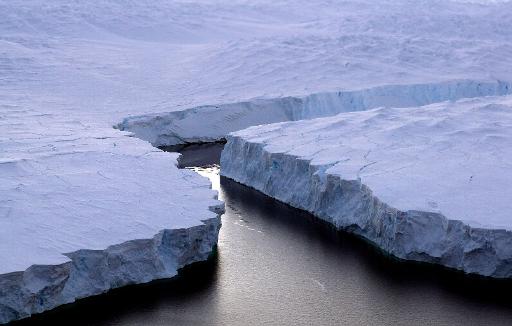
It seems that in spite of the global warming that melts the Arctic ice, the ocean around Antarctica maintains a persistent chill caused by ancient cold waters surfacing from the depths after hundreds of years.

According to a U.S. study, the Southern Ocean off Antarctica could be the last place on Earth to react to the man-made climate change, thanks to a lag of centuries that affects waters emerging from up to 5,000 meters deep.

A lot of people still doubt current scientific findings saying that human use of fossil fuels is the cause of an increasing warming of the planet.

This seeming paradox of expanding winter sea ice around Antarctica in recent decades and a rapid decrease of ice in the Arctic is something they often point to in their reasoning.

“Our findings are a step toward resolving the mystery,” explained senior author Kyle Armour of the University of Washington, Seattle, in the journal Nature Geoscience.

He noted the fact that cold water keeps surfacing helps to explain the fact that sea ice persists in large masses. However, it does not explain the trend of expanding, which other studies have associated with shifts in winds off the massive frozen continent.

The recent report found that warm waters in the Gulf Stream get colder as they flow north into the North Atlantic, then go under and loop south towards Antarctica as part of a great aquatic conveyor belt that completes once every few centuries.

In the end, winds in the Southern Ocean surrounding Antarctica send surface waters northwards and encourage the upwelling of the chill, ancient waters from the abyssal depths.

This could be an explanation for why the surface of the Southern Ocean has warmed by just 0.02 degree Celsius per decade since 1950, which is considerably less than the global average of 0.08 degrees.

Scientists are still unsure if the cold waters could also help in delaying the melting of ice locked up on the continent in Antarctica; one of the biggest worries is that the melt could sharply raise global sea levels.

Colin Summerhayes of the Scott Polar Research Institute, who was not involved in the study, said that “even water that cool is still warm enough to melt the ice at the base of the ice shelves.”
Image Source: Phys.org

Filed Under: Tech & Science Tagged With: Antarctic seas, Arctic pole, climate change, Cold Water Upwelling in Antarctic Seas Could Explain Climate Change Paradox, Southern Ocean, upwelling water

NASA Reports on Temperature Records Scored in February

March 15, 2016 By Karen Jackson Leave a Comment

reported warmer temperatures than it was normally expected for February

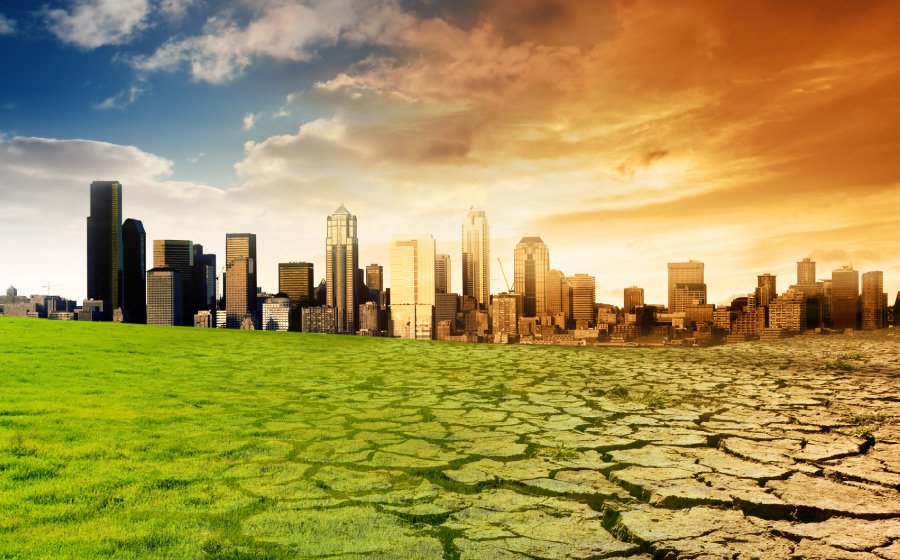
Even if it wasn’t that apparent to everyone, it wasn’t only a few regions in the world that reported warmer temperatures than it was normally expected for February on average. However, recent studies on the matter have concluded in some shocking results that are downright puzzling. Scientists say that this past February was the hottest recorded in the past 135 years, at least according to NASA logs.

While that alone is slight worrying, the fact that concerned scientists even more was the very margin that this year’s temperatures have gone beyond the expected average of the last decades. The temperatures recorded this year were 2.43 degrees Fahrenheit or 1.35 degrees Celsius warmer than previously recorded averages between 1951 and 1980, and approximately 0.8 degrees Fahrenheit warmer than the previous world record that took place in February 1998.

With this record, we are now in the 10th month in a row that sets a record, and becomes the 2nd time this has happened in the history of the last century. The last time there were temperature records being set 10 months in a row occurred in 1944.

Last time February temperatures scored a record is believed to have been caused by the El Nino event, which was described as a prolonged warming in the Pacific Ocean, raising the water temperatures slightly through the phenomenon known as ‘southern oscillation’. With higher water temperatures, global temperatures are bound to rise as well.

This time around, however, El Nino is nowhere present, so the culprit has been narrowed down to one remaining possible suspect: the high and still increasing levels of carbon dioxide found in the Earth’s atmosphere. Carbon dioxide emissions are known to have drastically changed a number of factors that slowly led to the climate change we are dealing with in the present.

These shocking results that NASA is forwarding come with a certain degree of urgency for something to be done regarding greenhouse gas emissions. Last year in December, 195 nations’ representatives met in Paris and agreed to start efforts of cutting down gas emissions to a net 0 by the year 2100; something that is hoped to be achieved through switching out fossil fuels as a primary resource for solar and wind power. However, the change is easier said than done, and seeing the rapid pace at which carbon dioxide emissions seem to affect our climate, scientists urge authorities to act faster.

Image Source: 1

Filed Under: Tech & Science Tagged With: carbon dioxide effects, climate change, greenhouse gas emissions, temperature average record

Subscribe to Blog via Email

Enter your email address to subscribe to this blog and receive notifications of new posts by email.

Join 10 other subscribers

Recent Articles

police handcuffs man

German Man Probed In Poisoning That Killed 21 Employees Since 2000

June 29, 2018 By Kenneth Scott Leave a Comment

Chicken wings bar

Intoxicated South Carolina Man Punches Waitress Who Refused to Serve Him Alcohol

June 29, 2018 By Karen Jackson Leave a Comment

gaming

New Zealand gamer Who Flew Halfway Across The World for Virginia Teen Gets Shots By Her Mother

June 28, 2018 By Cristopher Hall Leave a Comment

party

Former Virginia Tech Freshman Sentenced to 50 Years in Prison for Stabbing a Girl to Death

June 28, 2018 By Roxanne Briean Leave a Comment

bonfire

British Couple Sentenced to Life in Prison for Torturing and Murdering French Nanny

June 27, 2018 By Deborah Campbell Leave a Comment

pay phone

Texas Father of Girl Disappeared in the 80s Ignored by Authorities

June 26, 2018 By Cristopher Hall Leave a Comment

bottled water

San Francisco Woman Threatened to Call Police on Girl Who Sold Ice Water for Disneyland Trip

June 25, 2018 By Roxanne Briean Leave a Comment

Maplewood Park

Missouri Man Robbed by Date and Accomplice in Park

June 22, 2018 By Nancy Young Leave a Comment

coding

New York Man Sentenced in Cyberstalking Former Girlfriend, Mailing Drugs to Her Dorm

June 22, 2018 By Deborah Campbell Leave a Comment

headphones

Bose Poised to Launch Sleepbuds, In-Ear Headphones That Help You Sleep

June 21, 2018 By Nancy Young Leave a Comment

Police light

Intoxicated Female Driver in Custody for Pulling Arresting Officer by the Hair

June 21, 2018 By Kenneth Scott Leave a Comment

kitchen

Restaurant Manager Arrested and Charged in Shooting Death of Co-Worker over Negative Yelp Reviews

June 20, 2018 By Karen Jackson Leave a Comment

plastic container

Pennsylvania Couple Charged in Violent Death of Infant Discovered Buried in Cat Litter

June 19, 2018 By Cristopher Hall Leave a Comment

tailpipe

Minnesota Teen Gets Head Stuck In Oversized Tailpipe Winstock Music Festival

June 18, 2018 By Karen Jackson Leave a Comment

Pages

  • About Us
  • Contact us
  • Privacy Policy
  • Privacy Policy GDPR
  • Staff
  • Terms and Conditions

Recent Posts

  • German Man Probed In Poisoning That Killed 21 Employees Since 2000 June 29, 2018
  • Intoxicated South Carolina Man Punches Waitress Who Refused to Serve Him Alcohol June 29, 2018
  • New Zealand gamer Who Flew Halfway Across The World for Virginia Teen Gets Shots By Her Mother June 28, 2018
  • Former Virginia Tech Freshman Sentenced to 50 Years in Prison for Stabbing a Girl to Death June 28, 2018
  • British Couple Sentenced to Life in Prison for Torturing and Murdering French Nanny June 27, 2018
  • Texas Father of Girl Disappeared in the 80s Ignored by Authorities June 26, 2018
  • San Francisco Woman Threatened to Call Police on Girl Who Sold Ice Water for Disneyland Trip June 25, 2018

Categories

  • Business
  • Entertainment
  • Finance
  • Headlines
  • Health
  • Life
  • Nature
  • Science
  • Sports
  • Tech & Science
  • Travel
  • Uncategorized
  • United States
  • World

Copyright © 2025 ArgyllFreePress.com
About · Privacy Policy · Terms of Use · Contact