Argyll Free Press

Growing News Network

Tuesday, January 20, 2026
Log in
  • Business
  • Finance
  • Sports
  • Tech & Science
    • HP Envy 4500 Review
    • LG Optimus 170 Review
    • iPod Touch 6th Generation Review
    • HTC One M8 Accessories Set-up
    • Surrealist Games You Must Play
    • Hisense Sero 8 Review
    • Dell Latitude e7440 Review
    • HP Laserjet 1536dnf mfp Review
    • Garmin Fenix 2 Review
    • Skype Vs Viber
    • Best Video Conferencing Software
    • Sony mdr 1r Headphones Review
    • Canon Rebel t3i Review
    • Sennheiser Momentum 2-0 Review
  • Travel
  • Headlines
  • Health
  • United States

Chrome OS is Here to Stay, Says Google

November 3, 2015 By Nancy Young Leave a Comment

Chrome OS is here to stay, says Google

Google has announced that Chrome OS is here to stay, and that the company doesn’t have any plans to let the software get rusty. However, the big G has plans to mix and match Chrome OS with the beloved Android.

At the end of October, The Wall Street Journal has surfaced that the search engine giant’s line of Chromebooks would feature a fusion between its Android OS and Chrome OS.

Chromebooks are low-cost laptops animated by Chrome OS.

Google, which is now part of the Cali-based Alphabet, is backing Chrome OS and the company is throwing their full support. The software is unique in more than one way – it takes advantage of the cloud in order to run.

Don’t mistake Chrome OS with the Chrome browser – while they may seem to be exactly the same, these two pieces of software are fundamentally different.

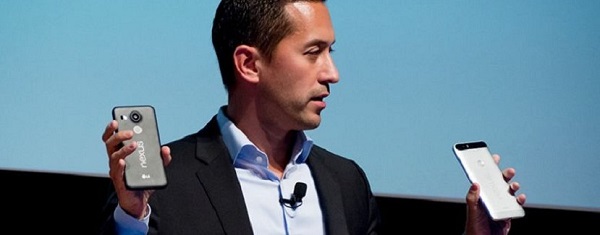
Hiroshi Lockheimer, the head of Chrome OS and all of the company’s Android projects, has announced Monday that they have no plans to falter development. In his statement, he continues to add that Chrome OS is here to stay.

However, even if Chromebooks will be equipped with a ChromeOS/Android blend, how many users will notice the difference? Chromebooks are quite popular among students that look for budget laptops.
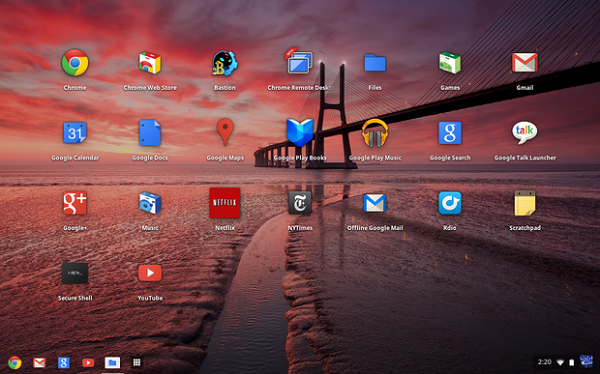
Google notes that Chrome OS is here to stay

Chrome OS interface

These low-cost laptops have received good to great reviews in the past, but, unfortunately for Google, their product line ranked only for three percent of last year’s laptop shipments.

This is according to market research firm International Data Corporation, or IDC for short.

Chromebooks don’t usually make their way to homes or offices. Schools seem to favor their low retail price – $150; and students who need a lightweight laptop for projects, essays and casually browsing the interwebz.

Google notes that more than 30,000 new Chromebooks are brought to life in classrooms every day across the US. According to IDC, in the 2014 education market, Chromebooks comprised almost 30 percent of laptops.

Lockheimer has said that Chromebooks fans shouldn’t worry that their laptop will go obsolete. This mainly because Google is working to develop their software even further, attempting to bridge the gap between Chrome OS and Android.

Google is planning to release a brand new media player for Chrome, along with a visual rebranding in order to make it look more like the company’s other products.

After TWSJ has published their piece last week, Lockheimer has publicly come out to defend the company’s stance on Chrome OS. He even tweeted that Google is more than committed to their software.

The bottom line is that, Chrome OS is here to stay – one way or another.
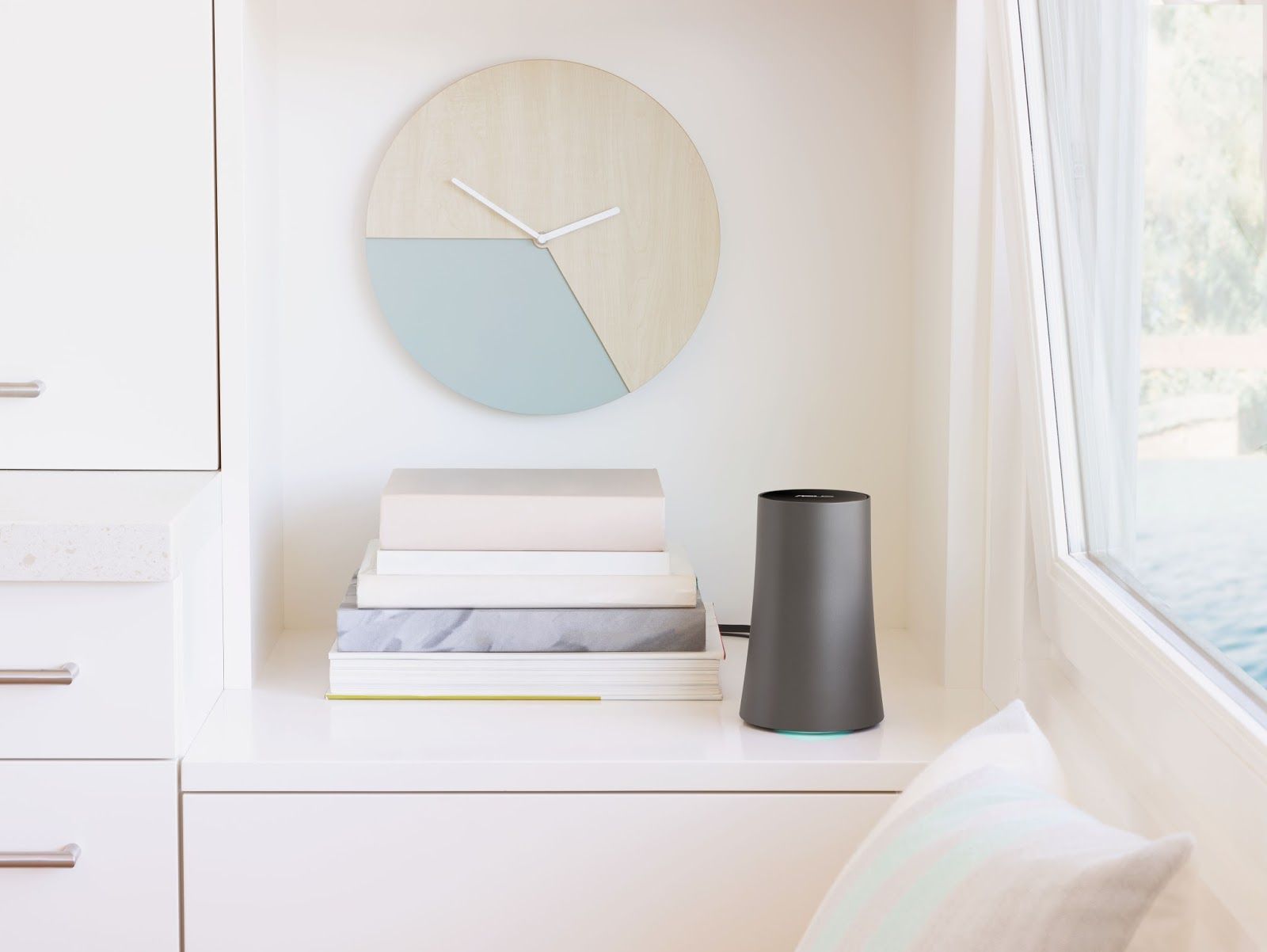
Image Source: 1, 2

Filed Under: Headlines Tagged With: Alphate, Chrome OS, Chromebooks, Google, Hiroshi Lockheimer

Google and ASUS Release A New OnHub Wireless Router

October 30, 2015 By Deborah Campbell Leave a Comment

The New OnHub Wireless Router from Google in partnership with ASUS was released.

Google has just released a second OnHub wireless router in what is envisaged to be a “growing OnHub family”, as the company states on its website. This time, their partners were ASUS, while the first OnHub wireless router was created in partnership with TP-Link and released this past summer, in August.

That first one represented a bold step forward as regards design and functionality. Because due to its minimalist design and sleek vase-like appearance it means it does not have to be placed out-of-sight. Like regular routers tend to be, in an attempt to hide what many homeowners consider ugly antennae and messy cables sprouting from them like the tentacles of a small alien kill-bot.

From a functionality point of view, this first OnHub was created with the purpose of having an easy to setup, mobile app controlled router that can better manage the wi-fi signal distribution to all your devices in accordance with their actual needs, as opposed to traditional routers which use proximity to them as the criteria.

So, the first OnHub’s fixed that problem by allowing you to prioritize a single device, making sure it gets the fastest speed as well as sporting a front-facing antenna reflector that could boost signal range in that direction.

So if the first OnHub did that, why did Google and ASUS release a new OnHub wireless router so soon?

Because this new version, apart from having all the general characteristics of its predecessor, replaces its one direction boost approach to the signal distribution problem with an even better one. You can now boost wi-fi on any particular device with a wave of the hand over the top of the unit, giving you complete control which device you boost, not just in one direction, but wherever it is in the house at the time.

And even when not boosting a particular device, the new OnHub wireless router “will intelligently select the best combination of antennas to direct Wi-Fi to your devices, based on their location and orientation” using proximity sensors.

The unit comes with a power adapter and an Ethernet cable. Once powered and with the Ethernet cable connected to your Internet-giving source, all you have to do is install the Google On app and set up the router (easily done).

After that, the Google On app takes care of everything. It shows you your network’s status: if everything is working ok (and suggestions to help if not), how many devices are connected, how much wi-fi they each use. With one tap, it reveals your password and “lets you text or email it to friends”. And it automatically updates your router software “when your network is quiet so it won’t interrupt your connection”.

OnHub ASUS sells for 219.99 $ and can connect up to 128 devices at one time.

Image source: 1.

Filed Under: Headlines Tagged With: asus, Google, Google OnHub, Google OnHub ASUS, Google second OnHub, new Google OnHub ASUS

New Chromecast Audio Google Dongle

October 23, 2015 By Kenneth Scott Leave a Comment

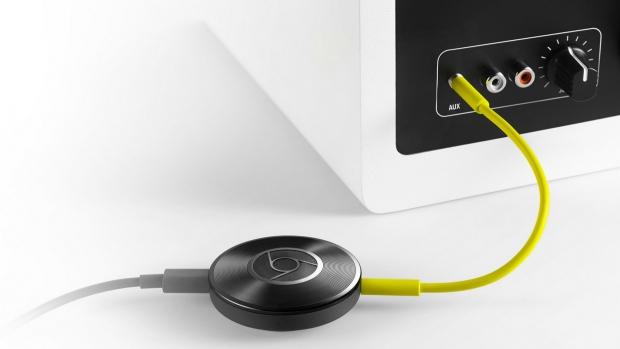
The Chromecast Audio Google dongle was recently released.

As per the definition given on Wikipedia, a dongle is a small piece of hardware that attaches to a computer, TV, or other electronic device in order to enable additional functions, which functions are available just as long as the dongle is attached.

Google’s first released Chromecast device allows you to connect your phone (iPhone, Android), laptop (Mac and Windows) or tablet (iPhone, Android) to any TV you own, as long as it supports HDMI, through a dongle, in just 3 steps.

You just plug in the dongle, allow Chromecast to access your Wi-Fi on the phone, tablet or laptop you’re using and then press the cast button in Chrome to … well, cast whatever Chromecast supported app you want to the TV. And you can send a whole lotta stuff to your TV from: TV and movie sites like HBO now, to music from Spotify, Pandora and others, to photos and videos like Youtube, all the way up to games and even simple chrome tabs to search what you want. All of this for 35$.

Well, following on the success of the first one, the new Chromecast Audio Google dongle recently released, also for 35$, is identical regarding ease of installation and mode of operation to the one above (same supported platforms, same 3 easy steps).

It only differs in focus, being oriented, as the name implies, towards audio systems instead of TV. Which means it no longer has the HDMI connection and instead can connect only to an audio system via the following inputs: 3.5mm, RCA and optical. Once connected, the same logic applies as above: you can play whatever you want (from phone, laptop or tablet to your cool audio system) as long it’s supported by Chromecast (and many things are).

Also good to know is that it works with practically any type of speakers, even older hi-fi ones.

The dongle is powered by a micro-USB, but in the box you receive from Google you also get a 5-inch auxiliary cord and a power adapter.

Ty Pendlebury of CNET, points out that according to the tests they made, the maximum for the digital output is 28 bit/48 kHz, despite the fact that Google claims it could go up to 28 bit/96 kHz.

Another problem discovered by Chris Davies of SlashGear is that sometimes there was a little syncing delay between the YouTube video on the screen and the sound being played through the speakers.

But these two issues are minor compared to the versatility and great audio quality that Chromecast audio offers for the very affordable price of 35$. Value-for-money wise, this tiny dongle is a pretty big deal.

Image source: 1.

Filed Under: Headlines Tagged With: Chromecast, Chromecast Audio, dongle, Google, Google Chromecast Audio, Google Chromecast Audio dongle

Porsche Ditches Android Auto Over CarPlay

October 7, 2015 By Karen Jackson Leave a Comment

Porsche Ditches Android Auto and chooses in its stead Apple's CarPlay

Porsche ditches Android Auto and choose Apple’s CarPlay instead due to some privacy concerns. Porsche unveiled the many features that their 2017 911 model will pack, but unfortunately for Google, Android Auto isn’t one of them.

Motor Trend reports that Porsche didn’t opt out of Android Auto because of technological reasons. The 2017 911 won’t feature Google’s AA because of ethical reasons. Its massively upgraded PC system can easily run it as well as Apple’s CarPlay.

Motor Trend continues by stating that if Porsche would have went through with Google, they would have been obligated to hand over valuable data such as engine revs, oil and coolant temp, throttle position, vehicle speed and other significant information. This basically means that Google would have been allowed to read the complete OBD2, which is the on-board diagnostic dump.

Also, offering so much information to a multi-billion dollar company that is currently developing their own car isn’t really a good idea. Simply put, Porsche doesn’t want their secret sauce to be leaked to another future competitor.

Porsche Ditches Android Auto Over Apple CarPlay for its new 2017 911 model

Porsche 2017 911 interior

Yet, Apple doesn’t need the on-board diagnostic dump, it just wants  to know if CarPlay is in use while the car is moving.

So, Porsche ditches Android Auto because Google wants to be some sort of helicopter parent.

However, Google comes with a rebuttal and denies that it collects so much data from Android Auto enabled vehicles. The company told PCMag that they take privacy very seriously and they don’t grab data as the Motor Trend articles claims. Google notes that they offer the user a chance to opt in to share the information, because doing so will improve the Android Auto experience – a more accurate navigation via the car’s GPS and if the system is hands-free, or not, when in Drive mode.

Porsche Ditches Android Auto Over CarPlay because of privacy reasons

2017 911 Porsche concept

Google follows by saying that sharing the GPS location with the driver’s smartphone can save power juice and it’s more accurate. AA requires to know if the user’s car is in drive or park for obvious safety reasons. Also, if it’s night or day in order to better optimize the vehicle’s screen for viewing.

This isn’t the first time these issues come to light. During the Summer, Reuters showcased that the majority of auto manufacturers aren’t that keen to share valuable data of your travels with Google and Apple solely because both companies are trying to break into the auto industry. This means that it will cost everyone a lot of money because two tech giants want to take a chunk of the auto-moto pie.

Apple and Google cars are coming. When, we don’t know. What we do know is that they will definitely change the industry.

Image Source: 1, 2, 3

Filed Under: Headlines Tagged With: Android Auto, CarPlay, Google, Porsche

Google Glass Team Re-Branded as Project Aura, Not Ara

September 17, 2015 By Roxanne Briean Leave a Comment

Project Aura Rebranding

Project Aura is Google’s new Glass team name. This time around Google is looking mostly at business rather than focusing on consumers.

The Project Aura team has been hiring straight from Amazon’s Lab126. Software developers, engineers and even project managers are being swooped over to Google’s side – It is unknown at the moment if there were cookies involved or not.

Regardless, Google capitalized on Amazon’s phase 1 of laying off staff members. Due to their Fire smartphone failure, Amazon fired more than a dozen engineers.

Ivy Ross will be in charge of Project Aura. However, she still reports to Google’s head of connected-home business Nest Tony Fadell. There hasn’t been any significant change in the hierarchy that comprises the Glass team. Ross previously ran the project.

While Project Aura is working hard on the new iteration of the Glass, the team is also meddling with other kinds of wearable technology. This is according to job descriptions found on LinkedIn.

One software development manager that worked on Lab126, and later on joined Project Aura in August of 2015, described the project simply as Glass and Beyond. He also noted on his LinkedIn profile that the team is developing cool wearables.

Dimitry Svetlov, the manager in this case, didn’t quickly reply to a message seeking answers on LinkedIn, the Wall Street Journal adds.

Unfortunately for Google, their first try at selling the Glass failed, miserably. Partly do to the whole NSA scandal and because it featured a more than hefty price. Their first iteration of Glass retailed at $1,500.

People across the US were seeing Google’s Glass as a devilish thing that someone can use to record them in public places without nobody noticing.

Project Aura is the new Google Glass name

Google couldn’t handle the backlash. They stopped selling the Glass in January and the company’s execs confirmed that their device was clearly not ready for consumers.

Eric Schmidt, Executive Chairman at Google, noted earlier this year that the big G won’t give up trying to develop and market the Glass because they see this kind of technology as having a huge potential.

It’s a new market that doesn’t yet have a standard of quality imposed.

In the last couple of months, Google has been spreading Glass 2.0 to select few companies in the energy, health care and manufacturing industries.

Project Aura won’t have a consumer release this year, and rumors have it that they probably won’t have it ready even for 2016. What we do know is that it’s going to be released sometimes in the near future.

Will you give it another go when the time comes? Do you think people will forever hate the Glass?

Image Source: 1, 2

Filed Under: Headlines Tagged With: Aura, Glass, Google, Google Glass, Ivy Ross, Project Aura, Tony Fadell, Wearable

No Hiding The Google OnHub Router In a Corner

August 31, 2015 By Nancy Young Leave a Comment

No Hiding The Google OnHub Router In a Corner

If dealing or handling routers is not your cup of tea, the new Google OnHub router has got you covered. The $200 device hit the shelves on August 31st, promising to solve humankind’s problems with router blinking lights and unattractive cords.

What makes the Google OnHub router so special? First of all, it’s quite a sight for sore eyes. You definitely won’t be throwing this in a corner, hiding it in a drawer or sticking a brown paper bag on top of it.

Secondly, it’s easy to set up. That means you won’t waste hours on the phone with customer support to get help for installing it and answering questions like “Is your device plugged in?”.

The first tests all seem to sing Google OnHub’s praises. Compared to an Apple router, the Google OnHub was faster by six megabites per second and performed better on long distance tests, from three rooms away.

No Hiding The Google OnHub Router In a Corner

The cylindrical device comes with a swappable shell in black and blue, with Google pinkie promising there will be other colors in the future.

Google OnHub doesn’t light up like a Christmas tree and it only blinks when it wants to tell you something. You can also adjust the brightness so it doesn’t ruin your mojo.

You can setup the Google OnHub only through a mobile app, iOs or Android. The steps are easy to follow. The same app shows you how many devices are currently using the network and it also keeps you in the loop with how much data each of them is eating up. You can prioritize the devices if you have a God complex.

The nifty app of the Google OnHub also allows you to share your network with guests (instead of passing around a stained piece of paper) and it will also help you pinpoint any issues, suggesting ideas for fixing them. You can also manage the router remotely, which comes in handy if your parents were born in the 50s.

No Hiding The Google OnHub Router In a Corner

Google OnHub is made by TP-LINK, a third party networking hardware maker. Other companies are bound to design and start selling their own versions of the OnHub, like the Taiwanese company ASUS.

The router has some other aces up its sleeve, in the form of unactivated features. The Google OnHub will have Bluetooth and ZigBee low power wireless which will probably be activated at a later date by an automatic update.

Excited to get your hands on the Google OnHub? Personally, I’m more excited to see if this router will turn into a hub for all the devices in my house.

Image sources 1, 2, 3

Filed Under: Headlines Tagged With: Google, onhub, router, wireless

Has Google Rigged Search Results in India?

August 31, 2015 By Roxanne Briean Leave a Comment

Google Rigged Search Results in India

The CCI, which is the Competition Commission of India, is investigating the big G. They think Google rigged search results in India. If found guilty, Google might be fined 10 percent of the company’s income. That’s a whooping $1.4 billion.

The CCI has received complaints from more than 30 companies around the world. Facebook, Flipkart, Hungama Digital, MakeMyTrip and Nokia’s maps division are among the companies who have told on Google.

The main issue here is that Google has been gaming search results to display their own content and services more obviously, regardless of the fact that other sources have a higher hit rate.

The report filed by CCI notes also notes that sponsored links that are shown in results show a direct correlation with the amount of money an individual, or a company, spends on adverts with sneaky-Google. Flipkart, an ecommerce portal, states that they are a victim in this case.

Google needs to respond until the 10th of September. The company has to present itself in front of a seven member commission on the 17th, a week later. The commission is headed by Chairman Ashok Chawla.

Can we say that Google rigged search results for certain? Welp, we can’t say for sure. However, what we can say is that Google is acting more mischievous than it normally does. A few months ago, in March, the CCI fined Google with $166,000 for failing to cooperate.

More so, just last week they rejected claims that they are rigging search results in Europe. Google faces the exact same charges on the EU front.

Has Google Rigged Search Results in India?

We expect a decision being made until the end of the year. If Google is found guilty, they can be fined up to $6.7 billion, or a 10 percent payment of its annual revenue.

If this goes south for G, the decision will most likely be challenged at the Supreme Court. If they still won’t win, the CCI commission will ask the company to make major changes regarding the way they do business.

This is the first time a case goes globally where an antitrust body is formed and rises against Google.

According to Ms. Vestager, who is a Danish politician, Google is also being investigated by the European Union regarding their dominance over its Android OS.

Kent Walker denied these accusations last Thursday via a blog-post. Kent added that Google hasn’t reduced online competition at all, in fact, the company has sent approximately 20 billion referrals to various Internet companies across Europe over the past 10 years. This lead to a 227 percent increase in traffic for the websites targeted.

We’ll see how our search-engine Lord and Savior gets out of this one. What do you think? Is Google knowingly profiting from their stance of top-dog?

Image Source: 1, 2

Filed Under: Headlines Tagged With: Facebook, Flipkart, Google, Google Rigged Search Results, Hungama Digital, India, MakeMyTrip, nokia

Introducing YouTube Gaming, Twitch’s Competitor

August 29, 2015 By Michael Turner Leave a Comment

YouTube Gaming Launched by Google

YouTube Gaming is Twitch’s main competitor. YouTube was already a big player, but Google doesn’t want it to become old and stale. The big G, starting with the 26th of August, has begun promoting YouTube Gaming as a separate dedicated website and app aimed at, go figure, gaming.

Users who want Call of Duty search results won’t have to go through Carly Rae Jepsen’s Call Me Maybe.

Yet, this wasn’t the main problem.

Esports popularity has grown tremendously over the past five years and Twitch was the main hub for it. Google can’t let this happen. If they succeed in their endeavor, if the company manages to separate different gaming content, they can rest assured that people will use it.

If you build it, they will come.

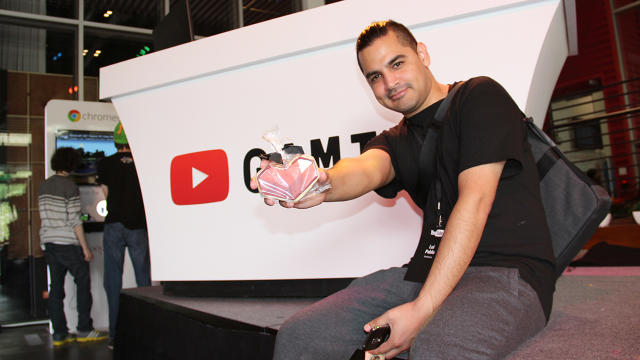
YouTube Gaming - Lui Calibre

Lui Calibre, whose site has 3.5 million subscribers, holds a cookie in the shape of the YouTube Gaming App’s heart logo. Photo: Susan Karlin.

YouTube Gaming resembles Netflix when it comes to watching a stream. It stays true to it roots, but you won’t notice the vanilla components that made the video service popular. Comments can be seen on the side, you can give a streamer either a thumbs-up or a thumbs-down and you can subscribe to their channel.

It’s really not that hard to use, and I’m inclined to think that the main YouTube page would benefit from looking like this.

The biggest difference lies in its essence. It’s gaming-oriented. There’s a list where you can see what games are trending, there are featured channels, and there are even landing pages for certain games.

Results are divided into categories like live shows, popular videos and pre-recorded Let’s Play vids.

The Android app looks a lot like Twitch’s, but its desktop counterpart is more fine-detailed. It looks sleeker, better organized and easier to use.

YouTube Gaming Android App

But this isn’t how you poach users from Twitch. Better features and great content creators will, however. The benefit of rewinding a stream in case you’ve missed its beginning is definitely a start.

Currently, Twitch’s most viewed channel racks-up approximately 32,000 viewers. YouTube’s most popular channel has around 11,000 – these may be users who are just trying out the service. Also, because YouTube features channels on its front page.

People don’t think of YouTube as a live streaming hub, but they’re starting to.

YouTube Gaming - PewDiePie Content Creator

Felix Kjellberg aka PewDiePie

Let’s take PewDiePie. He’s a huge part of YouTube and YouTube Gaming. He creates content especially for the video service. Because he uses Google’s video platform as his second home, he keeps people coming back.

If Felix Kjellberg decides to leave for Twitch, the majority of his fan-base will leave along with him. I’m curious to see if dividing YouTube in two will be worthwhile for Google, or if it’s a big mistake.

What do you think? Is Google making a mistake? Will Twitch reign supreme? Tell us in the comments section down below.

Image Source: 1, 2, 3, 4

Filed Under: Headlines Tagged With: Felix Kjellberg, gaming, Google, Live Streaming, PewDiePie, twitch, youtube, YouTube Gaming

Google Glass Ain’t Dead, Now It’s More Enterprise Oriented

August 1, 2015 By Karen Jackson Leave a Comment

Google Glass second generation

Google Glass ain’t dead, and it’s going to make a come-back sometime this year, or mayhaps even in 2016. It will look almost the same, but this time it will be more enterprise oriented.

Google hasn’t admitted, yet, that their first iteration of Google Glass was a big flop, mainly because of the NSA leaks, and the big G is trying once again to make G-Glass happen.

Rumors have it that the new Glass, which is basically the same as the company’s first product, design wise, will cost less than $1,500 so enterprises will be enticed in buying them, instead of other smart glass devices already released on the market.

The second gen Google Glass device has already been distributed to Glass at Work partners, notes Re/code.

Can Google make a stance in the smart glass market? There are a few consumer oriented smart glasses set to release in 2016 like the ODG R7, but it will retail at almost $3,000. Microsoft’s HoloLens will also debut in 2016, and the augmented reality device already has a cult following, mainly because of their Minecraft demo.

Google Glass competitor ODG R7

Google Glass competitor ODG R7

The team behind the development of Google Glass, which is lead by Tony Fadell, who took control of the project only last year, hasn’t released any technical specs, nor any information regarding a new software update, but sources note that they are working towards developing a more user-friendly, and highly intuitive interface.

Enterprise-specific augmented-reality apps have a high demand, and enterprises are more keen on testing smart glasses, and experiment to see if it helps them on the long run. Not like average consumers, who quickly disinherited the Google Glass after its launch.

The FBI was called at a cinema by an usher, because he thought someone with Google Glass was recording the movie, and streaming it live to his friends, or on the internet. The man in cause was indeed wearing Google Glass, but he had a prescription for them, and no footage was found on his device.

Paranoia drives to more paranoia.

But this isn’t to say that Google has completely put the lid on a consumer version for their G-Glass. They are still in partnership with Luxottica, a giant glass manufacturer who played a huge part in developing the Glass 1.0.

Sources close to Google, and Fadell, note that the company is secretly working on releasing a consumer friendly device. Fadell discussed the topic with BBC, and noted that – ” it’s going to take time to get it right.”, and Google needs to make a long-term commitment, and continue to invest money in wearables.

Image Source: 1, 2

Filed Under: Headlines Tagged With: G-Glass, Google, Google Glass, Google Glass second generation

Pinterest Sets Diversity Goals For 2016

July 31, 2015 By Deborah Campbell Leave a Comment

Pinterest Sets Diversity Goals For 2016

In an announcement made on July 30th, 2015, Pinterest released their diversity goals for the upcoming year, in an attempt to hold themselves accountable on the new changes.

The photo sharing website broke the ice in the industry by publicly posting their diversity goals on their blog. They explained the positive step as an effort to address the important issue of diversity that plagues the tech industry.

While many other companies out there have taken small steps in tackling the problem, Pinterest is the first to take the matter in their hands and display a pro active attitude. Admitting there has been an increase in the company’s female employees number in 2014, Pinterest still wants to take on even more responsibility and set even higher goals.

Pinterest also formally undertook the task of increasing the percentage of underrepresented ethnic backgrounds among its employees.

Pinterest Sets Diversity Goals For 2016

How does Pinterest intend to put its plan into execution? They’re thinking of expanding the number of universities they use for recruiting and even launch an internship program aimed at first and second years.

What is more, Pinterest will take another measure by teaming up with Paradigm and encouraging the implementation of a training and mentorship program. They are also considering starting some “inclusion labs” on the premises in order to find new improvement ways towards their goals.

One of Pinterest’s four diversity goals is entirely dedicated to implementing a Rooney rule-type condition according to which at least one person pertaining to a minority background and one female candidate are interviewed for each leadership position available.

Pinterest Sets Diversity Goals For 2016

Pinterest’s continuous efforts in fighting for tech diversity, are sustained by engineer Tracy Chou. Through a blog post from 2013 she required tech companies to publicly release the hard data they have on diversity, estimating the actual numbers will be lower than anyone wanted to admit.

And she was right. As a consequence, tech companies started sharing the data and even Google opened up. According to their 2015 report, only 30% of jobs at Google are owned by women.

What else is on Pinterest’s agenda? They want to pump up the total number hiring rate for full time engineers to eight percent. They also plan on boosting their hiring rates for every non engineering role to twelve percent.

The five year old company currently has around five hundred employees and over 83 percent of the global users are women who plan their vacations, look for do it yourselves, and find inspiration for their weddings. Pinterest doesn’t display ads, but companies can display their products on pinboards.

Image sources 1, 2, 3

Filed Under: Headlines Tagged With: diversity goals, Google, Pinterest

  • « Previous Page
  • 1
  • 2
  • 3
  • 4
  • Next Page »

Subscribe to Blog via Email

Enter your email address to subscribe to this blog and receive notifications of new posts by email.

Join 10 other subscribers

Recent Articles

police handcuffs man

German Man Probed In Poisoning That Killed 21 Employees Since 2000

June 29, 2018 By Kenneth Scott Leave a Comment

Chicken wings bar

Intoxicated South Carolina Man Punches Waitress Who Refused to Serve Him Alcohol

June 29, 2018 By Karen Jackson Leave a Comment

gaming

New Zealand gamer Who Flew Halfway Across The World for Virginia Teen Gets Shots By Her Mother

June 28, 2018 By Cristopher Hall Leave a Comment

party

Former Virginia Tech Freshman Sentenced to 50 Years in Prison for Stabbing a Girl to Death

June 28, 2018 By Roxanne Briean Leave a Comment

bonfire

British Couple Sentenced to Life in Prison for Torturing and Murdering French Nanny

June 27, 2018 By Deborah Campbell Leave a Comment

pay phone

Texas Father of Girl Disappeared in the 80s Ignored by Authorities

June 26, 2018 By Cristopher Hall Leave a Comment

bottled water

San Francisco Woman Threatened to Call Police on Girl Who Sold Ice Water for Disneyland Trip

June 25, 2018 By Roxanne Briean Leave a Comment

Maplewood Park

Missouri Man Robbed by Date and Accomplice in Park

June 22, 2018 By Nancy Young Leave a Comment

coding

New York Man Sentenced in Cyberstalking Former Girlfriend, Mailing Drugs to Her Dorm

June 22, 2018 By Deborah Campbell Leave a Comment

headphones

Bose Poised to Launch Sleepbuds, In-Ear Headphones That Help You Sleep

June 21, 2018 By Nancy Young Leave a Comment

Police light

Intoxicated Female Driver in Custody for Pulling Arresting Officer by the Hair

June 21, 2018 By Kenneth Scott Leave a Comment

kitchen

Restaurant Manager Arrested and Charged in Shooting Death of Co-Worker over Negative Yelp Reviews

June 20, 2018 By Karen Jackson Leave a Comment

plastic container

Pennsylvania Couple Charged in Violent Death of Infant Discovered Buried in Cat Litter

June 19, 2018 By Cristopher Hall Leave a Comment

tailpipe

Minnesota Teen Gets Head Stuck In Oversized Tailpipe Winstock Music Festival

June 18, 2018 By Karen Jackson Leave a Comment

Pages

  • About Us
  • Contact us
  • Privacy Policy
  • Privacy Policy GDPR
  • Staff
  • Terms and Conditions

Recent Posts

  • German Man Probed In Poisoning That Killed 21 Employees Since 2000 June 29, 2018
  • Intoxicated South Carolina Man Punches Waitress Who Refused to Serve Him Alcohol June 29, 2018
  • New Zealand gamer Who Flew Halfway Across The World for Virginia Teen Gets Shots By Her Mother June 28, 2018
  • Former Virginia Tech Freshman Sentenced to 50 Years in Prison for Stabbing a Girl to Death June 28, 2018
  • British Couple Sentenced to Life in Prison for Torturing and Murdering French Nanny June 27, 2018
  • Texas Father of Girl Disappeared in the 80s Ignored by Authorities June 26, 2018
  • San Francisco Woman Threatened to Call Police on Girl Who Sold Ice Water for Disneyland Trip June 25, 2018

Categories

  • Business
  • Entertainment
  • Finance
  • Headlines
  • Health
  • Life
  • Nature
  • Science
  • Sports
  • Tech & Science
  • Travel
  • Uncategorized
  • United States
  • World

Copyright © 2026 ArgyllFreePress.com
About · Privacy Policy · Terms of Use · Contact