Argyll Free Press

Growing News Network

Saturday, February 14, 2026
Log in
  • Business
  • Finance
  • Sports
  • Tech & Science
    • HP Envy 4500 Review
    • LG Optimus 170 Review
    • iPod Touch 6th Generation Review
    • HTC One M8 Accessories Set-up
    • Surrealist Games You Must Play
    • Hisense Sero 8 Review
    • Dell Latitude e7440 Review
    • HP Laserjet 1536dnf mfp Review
    • Garmin Fenix 2 Review
    • Skype Vs Viber
    • Best Video Conferencing Software
    • Sony mdr 1r Headphones Review
    • Canon Rebel t3i Review
    • Sennheiser Momentum 2-0 Review
  • Travel
  • Headlines
  • Health
  • United States

How the Star Trek Series Is Slowly Becoming Our Reality

March 7, 2016 By Michael Turner Leave a Comment

our current reality is not that far off from the Star Trek universe

Anyone who has watched any of the good old series, be it Voyager or The Next Generation at two different moments in time will be able to tell you how our current reality is not that far off from the Star Trek universe anymore. Sure, we still can’t travel at the speed of light, never mind ten times faster than it. But so many physics concepts and contraptions that show up in the famous series are more or less part of our current reality.

Talking computers that can receive tasks via voice communication? Do Siri, Cortana and Google Now ring a bell? Those little PDAs they used to read reports are actually something we would call ‘primitive tablets’ of our days. Video and voice calling? Ha, way ahead of you. And those holodecks they have on the USS Enterprise may be a step up from our Microsoft HoloLens and the other VR or AR technologies coming out this year, but it’s still 2016. Star Trek only happens several hundred years in the fictional future, so we’re definitely ahead of track.

The latest news we got from German scientists from the University of Jena only confirm this even further. Their long-term efforts and research in the field of teleportation are starting to yield much more promising results that we could’ve hoped for so early.

Teleportation has been a terribly sought for concept for humanity, strongly apparent, especially during the 20th century. In spite of countless efforts and experiments, no physical object has yet to be teleported anywhere. But while the concept is still baffling scientists at work when it comes to full-fledged objects, it seems that its elusive nature has been decrypted when it comes to anything larger than the quantum scale.

For years, teleportation of data in the form of electrons and light particles has been a known concept that scientists tried to use as basis for further research. But that gave little to no insight regarding how teleportation could be made reality at larger scales, given the elementary particles’ very particular nature.

However, Alexander Szameit and his team recently managed to demonstrate how the concept of teleportation can and exists outside of the quantum realm. However, in order for us to be able to achieve the much sought-after teleportation, a special kind of laser beams should be used. These lasers would help link the information that you wish to transmit to a particular property of the light, resulting in instant transmission.

The only issue with this concept is that it still limits teleportation regarding spatial coordinates; the concept currently functions only on a local basis.

Image Source: 1

Filed Under: Tech & Science Tagged With: object teleportation, science fiction, star trek universe, teleportation

New Steam Store Feature For Avid Bundle Fans

March 3, 2016 By Michael Turner Leave a Comment

Steam Store Feature

A new Steam Store feature gives you a price reduction of a game bundle if you already own other games from the series. Apparently, this comes as a sort of solution to the issue of Steam bundles you will often find during Steam sales. Say you already own the first two games of a series and you find the third one at a heavily discounted price with the only catch that it’s part of an ‘entire series’ bundle and you’d end up with duplicates of the previous titles.

That is great news for gamers awaiting the upcoming Steam sales and dire news for those who relied on and their friends getting duplicates and hoping they could squeeze off some free games from them.

This dynamic pricing mentality is a feature that makes a lot of sense for both the user and Valve. The former group will finally be able to not miss any more games simply because they find it redundant to pay $20 for a 4-game bundle when you already own 3 of them. The latter should find that they are able to increase sales that way as people feel less reluctant at purchasing bundles if they don’t have to deal with the idea of duplicates and wasted money.

The exact way this works is that if the Steam service detects that you own some of the titles in the Bundle you are viewing and considering buying, you will get a price reduction directly proportional to the titles you already own. That way, next sale you find should allow you to finish your series collection of whatever title you wish without having to spend extra resources.

Whether this means that during events such as Steam Summer Sale, we will be getting bundles and the individual games in it also at reduced price or not, is not yet known.

This piece of news itself has not yet been disclosed officially, at least not by Valve through a public announcement. However, various third party entities have retrieved official documentation from secure sources suggesting that this is a change planned by the company for the near future.

However, this change will only apply to games being purchased directly through Steam. Any kind of third party service that offers Steam keys for bundles and the like are not eligible for the feature. To list a few examples, G2A.com or HumbleBundle will not be made part of the upcoming change.

Image Source: 1

Filed Under: Tech & Science Tagged With: Bundle price reduction, Steam bundle, Steam games, Steam pricing

The Energy Efficient Biological Super Computer

February 29, 2016 By Michael Turner Leave a Comment

The Energy Efficient Biological Super Computer

While it’s a very long title to be presented by, the energy efficient biological super computer doesn’t even quite cut what it can really do or what it is truly capable of. The super computer in question was engineered at the McGill University by Senior computer scientists Dan Nicolau, together with his son, Dan Jr., after more than 10 years of efforts and hard work. At one point throughout their development, they were joined by an entire team of researchers from the United States, Germany, Norway, Sweden and Canada.

The concept that was used in its construction is something that has been studied for decades: by making use of a biochemical known as Adenosine triphosphate (ATP), internal energy can be transferred among cells. By applying the same concept in the case of a computer, it results in a machine that is capable of solving problems of high complexity with a lot less energy.

The way that is achieved? The earlier synthetic semiconducting circuitry that is usual to be used in supercomputers has been given up in favor of ATP-powered protein strings. They are not limited by the threat of overheating because it doesn’t rely on circuitry as we know it, and also manages to mix in a much lower energy consumption than regular type of construction. Add to that the fact that this super computer has the same size as a hardcover book and the invention becomes even more impressive.

Supercomputers as they are known nowadays are gigantic constructions that take up entire rooms the size of basketball courts. They are limited in ability proportionately to their size, and they require amazing amounts of power to both keep going as well as cooling.

Alternatively, the biological computer would use up less than 1 percent of the power a current supercomputer does. Both Dan Nicolau and his son believe that their concept of a biological supercomputer could become reality and be put to practical use in nearly 10 years. The molecules that are needed to get such systems going are known to be cheap and the progress they have made so far with the concept promises applicability in a matter of years, even if at this point the idea has only been tested in terms of calculations work.

Image Source: 1

Filed Under: Tech & Science Tagged With: biological circuitry, biological supercomputer, McGill University, supercomputer

Fast Radio Burst Spotting Results in Success for the First Time

February 26, 2016 By Michael Turner Leave a Comment

Fast Radio Burst Spotting Results in Success for the First Time

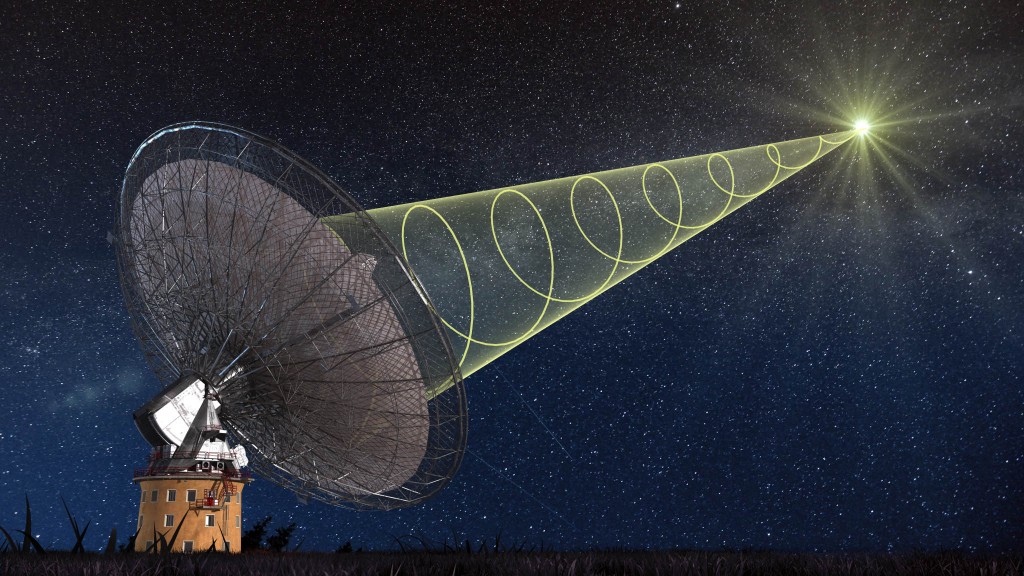
Recent news tell us that a fast radio burst spotting results in success for the first time. FRBs are extremely high-energy astrophysical phenomena that manifest through transient radio pulses that only last a few milliseconds. Because of that, they are usually extremely hard to find or detect. Records only show 17 occurrences ever being spotted until February 2016; most of them, however, were not detected at the time of occurrence. Usually, when one would be discovered, it would be a result of looking through months and even years of recorded data being reviewed by scientists.

A fast radio burst is a staggering event; despite their very short-lived duration, they are amazingly powerful. Scientists have estimated that a phenomenon as FRB can generate as much as energy as our Sun creates in roughly 10,000 years. Their origin is just as enigmatic, even though this could very well be an effect of how difficult catching and observing one in real time is.

So far researchers hadn’t been able to detect the nature of these events – what causes them, where they come from or how they manifest. Studying pieces of data that were out of date and without having access to the kind of information you needed in order to pinpoint the origin of a fast radio burst that had occurred months ago for example was like trying to find a needle in a haystack.

However, astronomers from the National Astronomical Observatory of Japan’s Subaru telescope and the ones from Commonwealth Scientific and Industrial Research Organisation (CSIRO) recently announced a breakthrough. For the first time, scientists were able to catch a fast radio burst taking place as it was taking place thanks to the preparation they had done in advance.

By setting up a system that gave the scientists an early warning whenever a signal was received, they would send out word to other observatories to zoom in to a particular spot on the sky where the FRB was detected. This system was probably inspired by NASA’s Swift space telescope that does the same, except with gamma ray bursts.

So thanks to this type of collaboration, scientists from different places on the planet were able to not only witness a fast radio burst happening, but also to pinpoint the mysterious location that it had originated from. The answer was that the FRB that had been spotted was coming from a galaxy 6 billion light years away. A galaxy that didn’t thrive in star formation, following studies showed, meaning that these phenomena could not be a result of that.

Image Source: 1

Filed Under: Tech & Science Tagged With: fast radio burst spottin g, fast radio bursts, FRB, nasa

How Nature Inspires Innovative Technology

February 25, 2016 By Michael Turner Leave a Comment

How Nature Inspires Innovative Technology

It seems there is no better muse for innovative tools than nature itself – and it’s almost hilarious just how nature inspires innovative technology in our days. There is a shocking amount of ingenuity scientists take from the way things work in the nature in order to bring some new contraption into the class of innovations – whether they manifest in terms of utility or leisure.

Just recently, some researchers were discussing what a ‘roach’ robot would be like if it was built in order to assist with natural disaster such as earthquakes or collapsed buildings. By studying the way roaches move and manage to squeeze through spaces much smaller than their normal size, a prototype was begun shortly after.

Now, another group of scientists is moving their gaze towards another aspect of nature that can help mankind with using air as a source of water. Their inspiration? It’s more than just one thing this time around: a darkling beetle, a species of carnivorous plant and even a cactus. However, the final result is far from looking like any of the above.

Instead, the end result is a material covered in microscopic bumps. But it’s an overstatement to say that it can just draw water out of thin air like that. Instead, these panels that were built by MIT graduate student Kyoo-Chul Park excel at drawing water out of foggy atmosphere. This is achieved thanks to the nature of the surfaces that are made to allow water to condense on them.

So in essence, a phenomenon scientists noticed in the beetles that live in southern Africa was how they managed to survive on less than a centimeter of rain in an entire year. The way the beetles do that is by harvesting fog that is incoming from the Atlantic Ocean by pointing their bodies upwards and letting them serve as a surface for water to condense on.

But that alone was not enough. Upon closer inspection they noticed that the bodies of the insects display a series of small bumps made from something that would attract water, while the spaces between them were water-repelling. Therefore, water would be collected onto the bumps, while the ‘valleys’ created by them would serve as channels that would help the water travel.

Using that concept, scientists were able to design a surface that would do the exact same thing and allow the same process to take place. By placing such panels in places where water supplies are scarce or the weather is hot enough to not allow clouds to coalesce and rain, this could prove as a solution.

Image Source: 1

Filed Under: Tech & Science Tagged With: condensation, desert beetle, water capture, water capture in desert

The Unsettling Army of Robots from Boston Dynamics

February 24, 2016 By Michael Turner Leave a Comment

The Unsettling Army of Robots from Boston Dynamics

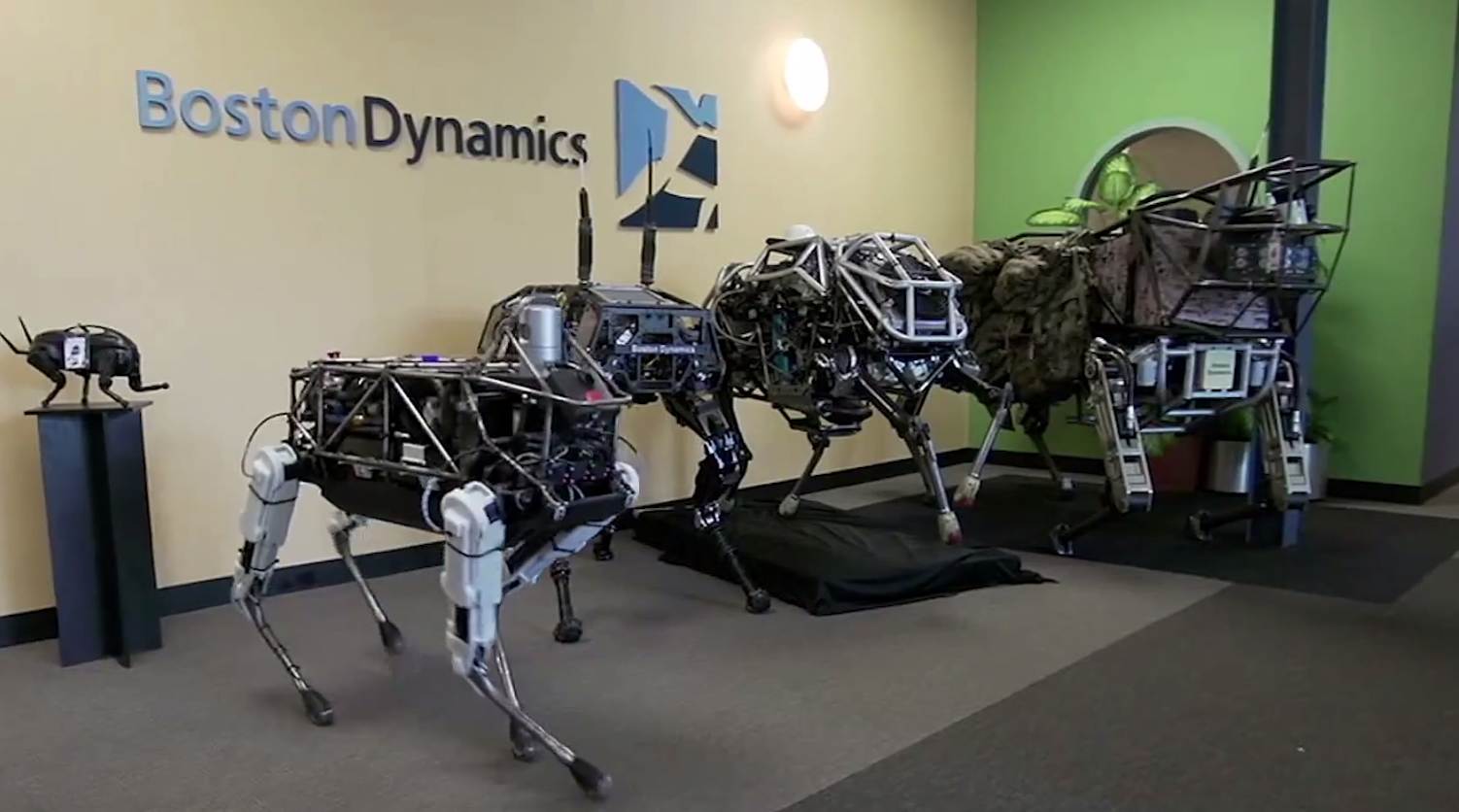
A series of recent videos are showcasing the unsettling army of robots from Boston Dynamics, featuring their rather frightening set of abilities. This time around the robots in question are actually full-fledged, differently shaped machines that display different sets of abilities. From the very first glance you take on any of these robots manufactured by the company supported by Google, you will notice that the trademark feature of them all is locomotion.

The main idea behind all of these robots is a new method that allows them to move, walk and even run very similarly to how the factor of inspiration behind their construction does. Some of the robots are human-like, like Atlas and PETMAN, while others mimic various types of animals such as dogs, cheetahs and horses. Each robot that Boston Dynamics has built was made for a particular study reason.

For example, the LS3 is a four legged robot designed to go anywhere marines and soldiers would go on foot, being able to walk on any time of damaged terrain and carry huge amounts of weight – up to 400 lbs and able to walk for as long as 20 miles or 24 hours on a single fuel charge.

The PETMAN, on the other hand, is a robot that was designed to test chemical protection clothing and was made in such a manner that it would be agile and very flexible in order to suit its purpose. The fact that the PETMAN is able to balance itself is not even the most stunning ability that the robot is capable of. In fact, the robot is capable of simulating human reactions and controls temperature, humidity and sweating according to the tasks he is put up to.

But Boston Dynamics is up to a lot more than that. So far they’ve also designed wall-climbing robots, leaping robots, robots that can run as fast as 29 miles per hour on level ground and much more.

But while the concepts themselves are astounding to read about, watching the videos posted on the Boston Dynamics website is a whole different story that the word ‘unsettling’ can hardly describe. While the demonstrations done by the scientists manage to make their point well to showcase the robots’ ability to maintain their balance or get back up after they have been shoved and fell over, it’s hard to get over just how wrong it feels.

All of these robots may be obviously human-made, but their likeliness to live and sentient beings becomes frightening to say the least, especially when the demonstration needs to get a little rougher in order to show just how capable the robots are. Anyone watching these videos will at least once think about how the robots would feel about all of this if one day they become truly conscious.

Image Source: 1

Filed Under: Tech & Science Tagged With: Boston Dynamics, locomotion robotics, Robots, walking robots

NASA Makes a Call to Artists Interested in Space

February 22, 2016 By Michael Turner Leave a Comment

NASA Makes a Call to Artists Interested in Space

NASA makes a call to artists interested in space, but in a different manner than the one you would expect. it’s unclear whether this is another method of raising awareness of human advancement when it comes to space travel, or simply a method of expressing the wonder of exploration. And the National Aeronautics and Space Administration is also giving artists a chance at it too.

The subject of the artistic pieces expected to be received by NASA is what the artists envision a journey aboard NASA’s Origins, Spectral Interpretation, Resource Identification, Security-Regolith Explorer – also known as OSIRIS-REx – spacecraft would be like. This is not just a hypothetical expedition though; the OSIRIS-REx will, in fact, be the first task of this sort to be commissioned by the United States. The craft will be sent to an asteroid where it will collect samples which it will then return to Earth.

However, the launch won’t happen until September this year, which gives artists plenty of time to prepare their entries, as part of the #WeTheExplorers campaign. The pieces submitted will be saved on a data chip and sent away with the spacecraft. And they won’t be alone either, as OSIRIS-REx already carries the data stored from more than 442,000 names submitted through a different campaign that took place in 2014, known as “Messages to Bennu”.

Both of these endeavors succeed in showing the trip that this mission has represented up until now, starting with the creation and building of the craft and ending with its ultimate goal of reaching an asteroid in order to study it closely.

But the campaign holds more than just room for painters. You can submit almost every kind of art: sketches, photos, poems, videos, songs or any other form of artistic manifestation you can think of that could be stored on a chip and sent out on a craft to outer space. As long as it reflects what you think it means to be a space explorer.

Submissions will be accepted via Twitter and Instagram until March 20th the latest and you can read more details regarding how you can take part in this program on www.asteroidmission.org/WeTheExplorers. It may not be space travel per se, but this way anyone can take part in the voyage that the OSIRIS-REx is about to embark upon.

Image Source: 1

Filed Under: Tech & Science Tagged With: nasa, OSIRIS-REx, Space missions, WeTheExplorers

CDC Offers Insight on How to Get Enough Sleep

February 19, 2016 By Michael Turner Leave a Comment

CDC Offers Insight on How to Get Enough Sleep

Standing for the Centers for Disease Control and Prevention, CDC offers insight on how to get enough sleep after a recent study resulted in the shocking conclusion that nearly a third of the population of the United States does not rest properly. This was the conclusion drawn by the group after studying more than 400,000 individuals across all 50 states.

It is known that a healthy amount of daily sleep involves at least 7 hours of shuteye. Failure in sleeping for at least that long will not only affect your work, family and social life, but has dire consequences and effects on the overall health of both the body and the mind. Studies suggest that lack of sleep is one of the main factors that increase the risk of obesity, diabetes, heart disease and mental illness.

There seems to be an increase of occurrences of individuals not getting enough sleep, and all signs suggest that the likeliness of that happening in this era is strongly related to unhealthy habits, technology dependency as well as stress and overworking. While the study reported that across the United States 65.2 percent of the participants were getting a healthy amount of sleep, the most affected states such as Hawaii only scored 56.1 percent of healthy sleepers, while South Dakota went up to 71.6 percent of people getting at least 7 hours of sleep a day.

This led CDC to the conclusion that there needs to be an initiative to increase public awareness and offer education regarding healthy sleep. The group believes that this is not just something that should be done by independent, non-profit organizations, but that companies and corporations should also join in and offer these types of things to its employees. Especially in the case of shift workers and high activity sectors.

It is worrying to see just how much the sleep factor has been missed out on in case of the multiple types of health concerns that individuals are educated on. There is plenty of effort put in educating the contemporary society about why we should eat right, not live a sedentary life, quit smoking or do things in excess, but not so much about sleeping.

CDC proceeded to forward several pieces of advice to people facing sleeping issues, including how to plan your sleeping in order to ensure you get the minimum requirement of hours a day, as well as factors that could lead to disrupting a normal sleeping cycle, such as exposure to blue light when it’s near bed time.

Image Source: 1

Filed Under: Health Tagged With: CDC Study, Centers for Disease Control and Prevention, Healthy Sleep, Healthy Sleep Education

Hubble Space Telescope Detected the Composition of Super Earth Atmosphere

February 17, 2016 By Michael Turner Leave a Comment

Hubble Space Telescope Detected the Composition of Super Earth Atmosphere

The mere capabilities of space observation tools these days has become truly outstanding as proved recently – the Hubble Space Telescope detected the composition of super earth atmosphere. The telescope studied a particular super earth known as 55 Cancri e, also called Janssen.

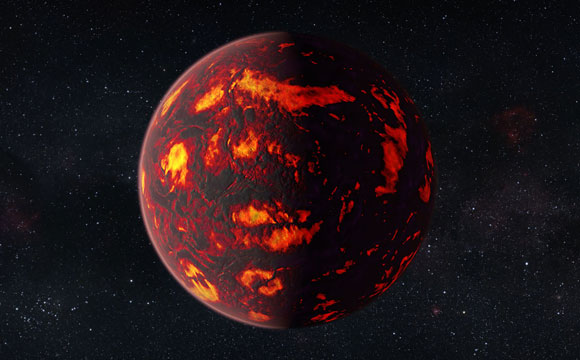
55 Cancri e is an extrasolar planet that orbits Copernicus, a G-type star 41 light years away from the Earth. In terms of astronomic distances, this counts as close to our own solar system, but still unfeasibly far away from human or probe travel at the current time. 55 Cancri e is called a super earth because It is larger than our very own Earth, but its mass remains smaller than the ones found on gas giants in a solar system.

Which is what makes the fact that the Hubble Space Telescope was able to not just spot it, but also thoroughly study it and the composition of its atmosphere. 55 Cancri e is a planet that lies very close to its sun, resulting in a temperature that goes up to 3,600 degrees Fahrenheit (2,000 degrees Celsius).

By applying a new method of observation and analysis, the Hubble Spacce Telescope was able to look closely at what the atmosphere of this planet is like, in hopes of understanding and expanding the knowledge we have on super earths across the Milky Way. This is an important study as it’s believed that super earths are the most often found type of planet in our galaxy. Now that a characterization of this type of planet has been made, researchers can understand better what they should be looking for when studying other planets.

55 Cancri e is a very exotic example of a super earth regardless, and most likely one of the most inhospitable scenarios to begin with. Because it’s orbiting so close to its host star, it completes one orbit every 18 hours. Scientists have detected that its atmosphere is mostly comprised of hydrogen and helium, extremely dry with no indications of any water vapors. Although it was originally believed that 55 Cancri e had an interior heavily consisting of carbon, gaining the title of a possible ‘diamond planet’. After the most recent studies, however, it was detected that the core may not be as carbon-rich as previously thought, but instead the atmosphere proved to contain hydrogen cyanide instead.

Given these discoveries as they were made thanks to the Hubble Space Telescope, scientists can now understand the way the planet evolved and they took the chance to express the surprise at seeing at how much of its primordial gas atmosphere the 55 Cancri e super earth has retained.

Researchers will certainly continue to apply this new analysis technique on other smaller, cooler planets that the telescope can pick up on in search for more knowledge of alien planets.

Image Source: 1

Filed Under: Tech & Science Tagged With: 55 Cancri e, 55 Cancri e atmosphere, Janssen Planet, Super Earth

New Horizons Helps Map the Geological Formation of Pluto

February 16, 2016 By Michael Turner Leave a Comment

New Horizons Helps Map the Geological Formation of Pluto

Seeing a real life photo of the dwarf planet is not quite enough, you’d think, but New Horizons helps map the geological formation of Pluto too. It was only recently that NASA released a photo the space craft took of the area known as Sputnik Planum on the surface of the tiny member of the Kuiper Belt. But while that was what the public was shown, it wasn’t the only photo taken by New Horizons.

After the staggering discovery that the original picture taken by New Horizons with its Long Range Reconnaissance Imager (LORRI) in July 2015 was actually displaying floating glaciers, because of the density difference between the water ice as well as the frozen nitrogen that the planet’s plain mostly consists of, scientists took a closer look to what are the components that create Pluto’s geography.

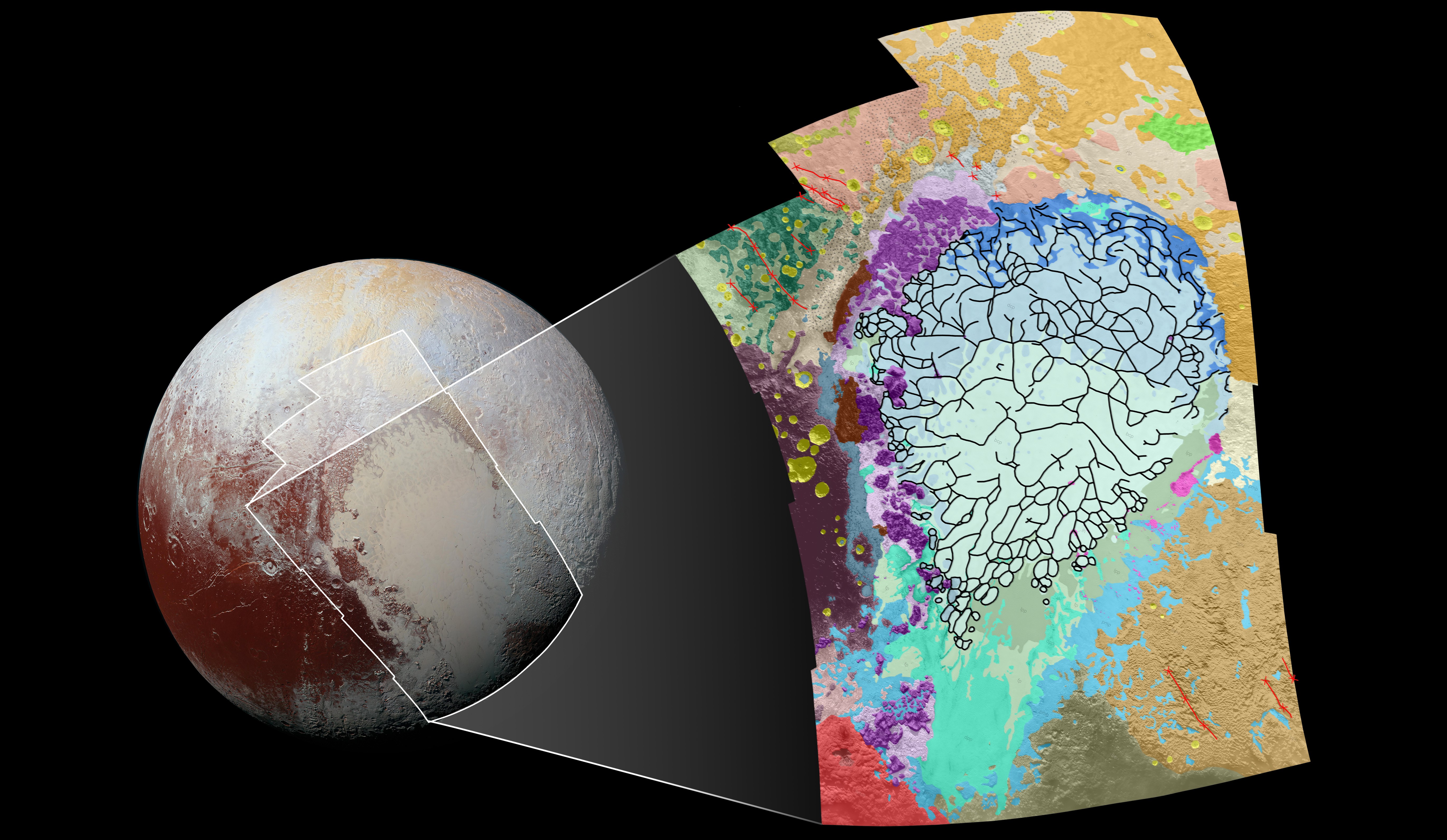
Researchers have actually managed to map as much as 1,290 miles across and around the Sputnik Planum in different visual wavelengths, depicting the different types of terrain on the surface of the frozen planet. The colored history of the map that was rendered in a scale of 1,050 feet per pixel should be able to reveal more of the geographical formation of the planet.

Therefore, purple areas indicate the blocky mountain edge of the Sputnik Planum, described by NASA as chaotic and angular and pink is the representation of floating ice. Yellow areas represent well-preserved impact craters while the darker brown areas are various types of uplands. To the west of Sputnik Planum, you can see rugged, heavily cratered material, while the very south western corner of the image shows hummocky mound material and a possible cryovolcanic feature named Wright Mons.

There are a lot of things scientists can gather from images such as this one because they provide a huge amount of insight into the history of the geographical formation of the planet’s surface. Considering that New Horizons has reached its destination and did its purposed flyby of Pluto last summer, now heading to unknown parts of the solar system, this was a secluded chance for humanity to see and try to understand the things that we may not see in person in the next few decades.

The geologic map was obtained by creating a mosaic of the 12 images that the LORRI device took of the planet during its flyby of Pluto from a range of 48,000 miles from the surface. Scientists say that this is a very important resource for the study of the planet as it’s an efficient method of understanding the processes that have undergone on Pluto to result in the planet’s battered and intriguing surface.

Image Source: 1

Filed Under: Tech & Science Tagged With: Kuiper Belt, new horizons, Pluto geography, pluto images

  • « Previous Page
  • 1
  • …
  • 10
  • 11
  • 12
  • 13
  • 14
  • …
  • 26
  • Next Page »

Subscribe to Blog via Email

Enter your email address to subscribe to this blog and receive notifications of new posts by email.

Join 11 other subscribers

Recent Articles

police handcuffs man

German Man Probed In Poisoning That Killed 21 Employees Since 2000

June 29, 2018 By Kenneth Scott Leave a Comment

Chicken wings bar

Intoxicated South Carolina Man Punches Waitress Who Refused to Serve Him Alcohol

June 29, 2018 By Karen Jackson Leave a Comment

gaming

New Zealand gamer Who Flew Halfway Across The World for Virginia Teen Gets Shots By Her Mother

June 28, 2018 By Cristopher Hall Leave a Comment

party

Former Virginia Tech Freshman Sentenced to 50 Years in Prison for Stabbing a Girl to Death

June 28, 2018 By Roxanne Briean Leave a Comment

bonfire

British Couple Sentenced to Life in Prison for Torturing and Murdering French Nanny

June 27, 2018 By Deborah Campbell Leave a Comment

pay phone

Texas Father of Girl Disappeared in the 80s Ignored by Authorities

June 26, 2018 By Cristopher Hall Leave a Comment

bottled water

San Francisco Woman Threatened to Call Police on Girl Who Sold Ice Water for Disneyland Trip

June 25, 2018 By Roxanne Briean Leave a Comment

Maplewood Park

Missouri Man Robbed by Date and Accomplice in Park

June 22, 2018 By Nancy Young Leave a Comment

coding

New York Man Sentenced in Cyberstalking Former Girlfriend, Mailing Drugs to Her Dorm

June 22, 2018 By Deborah Campbell Leave a Comment

headphones

Bose Poised to Launch Sleepbuds, In-Ear Headphones That Help You Sleep

June 21, 2018 By Nancy Young Leave a Comment

Police light

Intoxicated Female Driver in Custody for Pulling Arresting Officer by the Hair

June 21, 2018 By Kenneth Scott Leave a Comment

kitchen

Restaurant Manager Arrested and Charged in Shooting Death of Co-Worker over Negative Yelp Reviews

June 20, 2018 By Karen Jackson Leave a Comment

plastic container

Pennsylvania Couple Charged in Violent Death of Infant Discovered Buried in Cat Litter

June 19, 2018 By Cristopher Hall Leave a Comment

tailpipe

Minnesota Teen Gets Head Stuck In Oversized Tailpipe Winstock Music Festival

June 18, 2018 By Karen Jackson Leave a Comment

Pages

  • About Us
  • Contact us
  • Privacy Policy
  • Privacy Policy GDPR
  • Staff
  • Terms and Conditions

Recent Posts

  • German Man Probed In Poisoning That Killed 21 Employees Since 2000 June 29, 2018
  • Intoxicated South Carolina Man Punches Waitress Who Refused to Serve Him Alcohol June 29, 2018
  • New Zealand gamer Who Flew Halfway Across The World for Virginia Teen Gets Shots By Her Mother June 28, 2018
  • Former Virginia Tech Freshman Sentenced to 50 Years in Prison for Stabbing a Girl to Death June 28, 2018
  • British Couple Sentenced to Life in Prison for Torturing and Murdering French Nanny June 27, 2018
  • Texas Father of Girl Disappeared in the 80s Ignored by Authorities June 26, 2018
  • San Francisco Woman Threatened to Call Police on Girl Who Sold Ice Water for Disneyland Trip June 25, 2018

Categories

  • Business
  • Entertainment
  • Finance
  • Headlines
  • Health
  • Life
  • Nature
  • Science
  • Sports
  • Tech & Science
  • Travel
  • Uncategorized
  • United States
  • World

Copyright © 2026 ArgyllFreePress.com
About · Privacy Policy · Terms of Use · Contact