Argyll Free Press

Growing News Network

Monday, February 2, 2026
Log in
  • Business
  • Finance
  • Sports
  • Tech & Science
    • HP Envy 4500 Review
    • LG Optimus 170 Review
    • iPod Touch 6th Generation Review
    • HTC One M8 Accessories Set-up
    • Surrealist Games You Must Play
    • Hisense Sero 8 Review
    • Dell Latitude e7440 Review
    • HP Laserjet 1536dnf mfp Review
    • Garmin Fenix 2 Review
    • Skype Vs Viber
    • Best Video Conferencing Software
    • Sony mdr 1r Headphones Review
    • Canon Rebel t3i Review
    • Sennheiser Momentum 2-0 Review
  • Travel
  • Headlines
  • Health
  • United States

Researchers Develop New Porous Graphene Material

January 8, 2017 By Roxanne Briean Leave a Comment

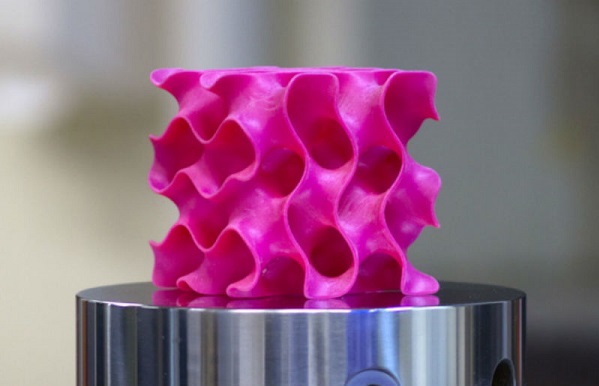
graphene material

Researchers new strong and lightweight material using porous graphene.

Graphene has been hailed has one of the most incredible materials to be ever invented. However, researchers initially had trouble finding practical applications for it. Thanks to increasing amount of research programs around the world, scientists are able to discover incredible ways to use this amazing material.

The newest application comes for MIT researchers which developed a material using porous graphene. This allows it be 10 times as strong as steel but only having five percent of its density, which means that it is incredibly light.

The researchers detailed their invention in a new study published in the journal Science Advances.  It reveals how Markus Buehler and his colleagues were able to fuse and compress the graphene flakes in order to create a new material while addressing some of the weakness of the material at the same time.

Graphene was known for its strength ever since its discovery. However, when the material is formed into a 3D shape it loses some of the strength it had when it was in a simple 2D form. Fortunately, the researchers were able to address the problem by changing not its composition but its structure. When the graphene is formed into a unusual geometric pattern which can resemble a sponge of some sorts.

For their study, the MIT researchers looked at the individual atoms of the graphene’s structure. After an extensive observation and analysis, they were able to create a mathematical framework which matches the predicted results of experiments involving the porous graphene.

Building on this framework, the researchers use heat and pressure to compress the various graphene flakes. This resulted in a stable and strong structure which has a similar form to certain corals and diatoms. The porous graphene has large ration between its area and volume.

According to the researchers, despite the fact the graphene is just an atom thick, the new geometrical structure maintains its strength without adding to its heft. As such, the porous graphene material can be used in the construction industry by creating strong and light materials.

Additionally, the as the newly discovered form also includes air spaces within it means that it can also be used as part of filtration system or to improve insulation properties.

Image credit: MIT
Filed Under: Science

Study Tracks Migratory Patterns of Flying Bugs

December 25, 2016 By Nancy Young Leave a Comment

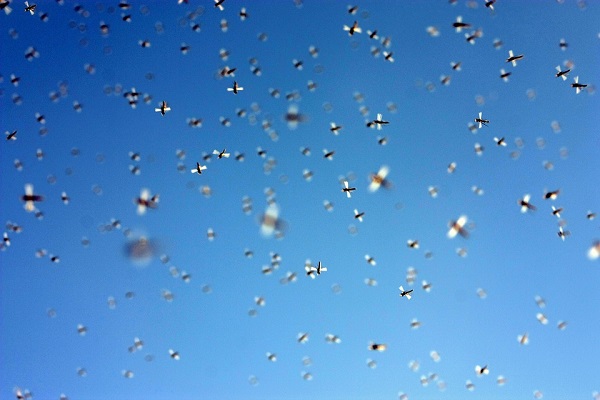
flying bugs close-up photo

Flying bugs migrate in numbers over 3 trillion each year in England.

Insects capable of flight also migrate around the world depending the season, similar to birds. However, until now, not much was known regarding their numbers since they are hard to spot and count. Thanks to a new study, south-central England is the site where over 3 trillion flying bugs pass through.

The study which offered a rough approximation of the number of migratory flying bugs across this area in England was published in the journal Science, by a team of researchers led by Jason Chapman, a University of Exeter entomologist.

Chapman states that scientists mostly ignore the migratory patterns of insects, except that of the monarch butterfly, as they focus on more charismatic birds such as the Arctic tern, and others. However, flying bugs deserve being properly studied due to their immense potential of having either a positive or negative impact on the environment.

Chapman also went on to say that due to England’s relatively cold and damp climate, repeating the experiment in other regions of the world would very likely exceed the 3 trillion number of flying bugs found to travel through England.

For their study, the researchers monitored the seasonal migratory patterns of various insects such as the marmalade hoverfly among others. Flying bugs can be especially hard to count, due to their size and the altitudes they fly at. As such, Chapman and his colleagues had to resort to a number of specialized tools like narrow beams of radar which were pointed to the sky to spot bigger insects while using nets attached on small blimps to sample the smaller insects which fly at lower altitudes.

Besides offering an approximate number of insects that migrate throughout the south-central part of England, the researchers also discovered that migration mostly happens during daytime. Noting the lack of similar studies for other regions in the world, Chapman hopes to eventually see an increased interest in the migratory patterns of insects around the planet, as they carry both diseases as well as nutrients with them.

The study provides important data to scientists interest in learning how diseases can appear in regions, even without humans transporting them.

What do you think about the migratory patterns of flying bugs across England? Are you surprised at a number of insects?

Image source: Pixabay

Filed Under: Science

China Launched Carbon-Tracking Satellite

December 22, 2016 By Deborah Campbell Leave a Comment

pollution in Beijing

China has launched its first carbon-tracking satellite.

China is among the countries affected the most by pollution and has been one of the leading supports of climate change initiatives like the Paris Agreement. Recently, it has successfully launched its first carbon-tracking satellite into orbit.

The name of the satellite is TanSat, as “Tan” means carbon in Chinese. It was deployed on top of the country’s Long March 2D booster on Wednesday, December 22nd, from the Jiuquan Satellite Launch Centre, located in the Gobi Desert of Mongolia.

The TanSat carbon-tracking satellite was first started in the first months of 2011, and it was initially scheduled to launch at the end of 2015. The satellite passed both the Preliminary Design Review as well as the Critical Design Review. However, Chinese officials did not reveal what led to the series of delays during the Satellite Readiness Review stage. Nonetheless, all hurdles were passed and the satellite has been deployed into Earth’s orbit.

The TanSat project was developed by Chinese Academy of Sciences, and it features two deployable solar arrays which are capable of sustaining it for its three-year-long mission. The satellite’s main purpose is to monitor the global distribution of carbon dioxide in the atmosphere. China hopes that the collected data will help scientists better understand the impact of carbon dioxide and its contribution to climate change as well as its variation throughout the seasons.

The satellite will monitor the global levels of carbon every 16 days, with a high degree of accuracy. The data will also be used for a wide range of project in various research fields such as meteorology and oceanography. The launch came after a new study revealed that greenhouse gas emissions have remained stable due to cuts made by China. The country hopes that the new mission will be followed by a further decline in their carbon emissions.

Besides the TanSat satellite, the rocket also launched one high-resolution and two spectrum micro-nano satellites. They are meant to monitor the agriculture and forests in China. The launch of their carbon-tracking satellites makes China the third country to deploy such a satellite into orbit, behind the United States and Japan.

What do you think about China’s carbon-tracking satellite? Should other countries follow suit?

Image source: Flickr

Filed Under: Science

NASA Sends Wireless Leak Detection System to the ISS

December 20, 2016 By Michael Turner Leave a Comment

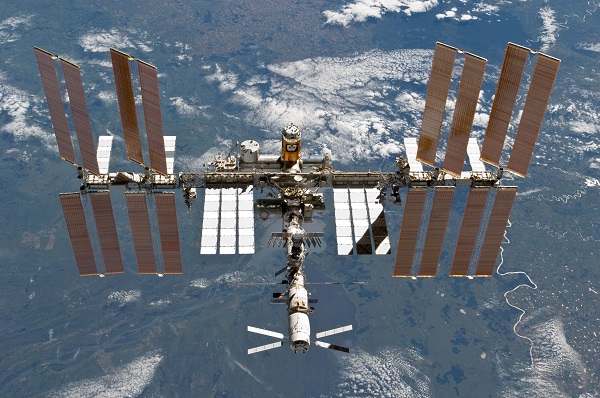
ISS spacecraft

ISS astronauts will install a wireless leak detection system.

NASA is constantly on the lookout for useful technologies and inventions which could help them in their various endeavors. One such invention is a wireless leak detection system created by graduate students from the University of Maine, which will be sent to the International Space Station.

The prototype wireless leak detection system was extensively tested by NASA in a variety of situations in their inflatable lunar habitat as well as in the Wireless Sensing Laboratory located on the Orono campus. The device can improve the safety of the ISS crew as well as that of other astronauts in future missions and space activities.

The prototype was developed by electrical engineering graduate students Lonnie Laborite and Cassey Clark. They were also part of the safety tests conducted at NASA’s Johnson Space Center in Houston. Their invention will be the first piece of hardware develop by researchers from the University of Maine, and which will get to function in space for an extensive amount of time. The wireless leak detection system consists of a monitoring tool which is able to detect leaks in the spacecraft to avoid loss of air or heat, which could pose serious safety concerns.

The graduate students’ project was funded by NASA grant consisting of $100,000 for a period of three years. The recipient was a University of Maine professor of electrical and computer engineering, Ali Abedi. The project was part of the Maine Space Grant Consortium started in 2014.

The wireless leak detection project was one of a total of five in the United States to receive funding from NASA, meant for the research and development of technology which could be used onboard the ISS. The project also received support from Vincent Caccese, a mechanical engineering professor at the University of Maine.

The leak detection system will be delivered to the ISS through NASA’s upcoming resupply mission. It consists of three identical boxes which the astronauts will install on the ISS and they will begin collecting data for two intervals of around 30 hours. The compiled data will be delivered back to the UMaine researchers, and eventually, the hardware will be returned to Earth so that the researchers can study it, see how it hold up in space, and try to improve the next generation.

Image source: Wikimedia

Filed Under: Science

Scientists Discover Sun-Like Star Which Ate Planets

December 19, 2016 By Deborah Campbell Leave a Comment

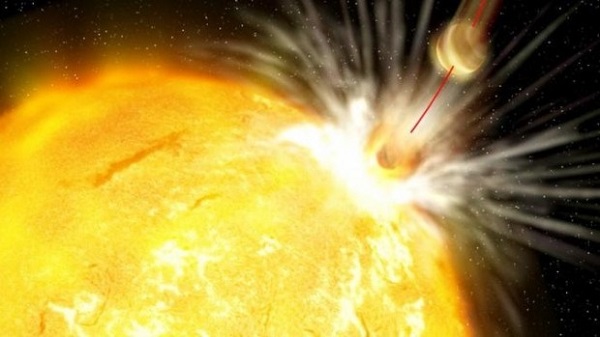
sun-like star eating planets

Scientists discover a sun-like star which ate some of its planets.

A team of scientists has announced their discovery of a sun-like star which has destroyed some of its own planets. Researchers can use this behavior to determine what could happen to our solar system in the future.

Researchers from the La Silla Observatory in Chile used the 3.6-meter telescope to study a star they found around 300 light-years away from Earth. What makes this sun particularly interesting to observe is that it consumed some of the planets in its system and scientists think it may provide useful data to determine what fate some of the planet’s in our solar system can expect in the future.

Although there isn’t any chance for our sun to start destroying planets, at least not in the near future, scientists hope to use their discovery to learn more about the evolution and life cycles of solar systems. This discovery complement the overall exploration efforts of scientists around the world in their attempt to learn how the universe works.

Scientists discovered the sun-like star named HIP68468 after it was part of a study with the purpose of discovering planets that orbit stars which are very similar to our own sun. Although researchers discover an increasing number of exoplanets, they still haven’t found one that orbits a solar twin which has the same characteristics of our sun in terms of size, luminosity, and color.

The study, which was published in the Astronomy & Astrophysics journal, revealed that it found evidence regarding the existence of a super-Neptune as well as a super-Earth orbiting the sun-like star. The evidence must still be reviewed, but if it’s confirmed then this discovery would mark the first time that scientists have found an Earth-like exoplanet orbiting a solar twin.

The scientists think that star might have consumed some of its planets because a six billion years old star should not have as much lithium as they found it to have. This finding coupled with a number of other elements associated with rocky planets led scientists to conclude that the only explanation must be that it consumed some of its planets.

The research team has emphasized the lack of any immediate danger of our solar system, as the sun is 1.5 billion years younger than HIP68468. They also will continue to monitor 60 solar twins in hopes of finding more Earth-like exoplanets.

Image credit: Gabi Perez/Instituto de Astrofísica de Canarias Illustration

Filed Under: Science

Exoplanet has Clouds Made of Vaporized Jewels

December 13, 2016 By Kenneth Scott Leave a Comment

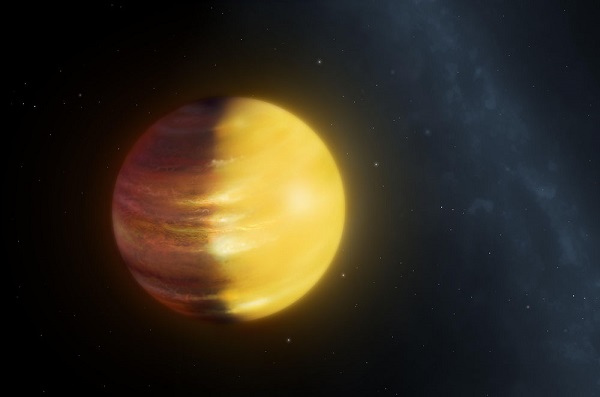
bright orange exoplanet

Gas giant exoplanet has clouds made of vaporized jewels.

When you consider how vast the Universe really is, then the possibilities for various scenarios and extreme or just weird conditions on planets are likely to be discovered by scientists. One such strange discovery is that of a giant exoplanet with extreme weather conditions and clouds made of vaporized jewels.

Scientists analyzing data provided by NASA’s Kepler space telescope have discovered a huge alien planet. What makes it particularly interesting is that it has powerful winds consisting in bright clouds made from various types of vaporized jewels formed due to the high temperatures.

The exoplanet named HAT-P-7b has been under extensive observation between 2009 and 2013. Scientists conducted several studies regarding the strange conditions of the planet and determined that it is 40 percent bigger than Jupiter while being around 1,040 light-years away from Earth.  Researchers observed that the planet completes a trip around its star every 2.2 Earth-days and has an average temperature of 4,180 degrees Celsius.

A fascinating aspect of the exoplanet is its clouds. They are mainly composed of corundum which is a material that forms sapphires and rubies. Corundum is also a colorless material which condenses at temperatures found on the day side of the planet. However, scientists are more excited that they have discovered another gas giant with weather outside our solar system.

The lead author of the study, David Armstrong, from the University of Warwick, England has stated that their results show how strong winds circle around the planet and transport its unique clouds to the day side from its night side. The speeds of the winds can change dramatically which leads to huge cloud formations that eventually dissipate. This phenomenon is what causes the high brightness of the planet which can be visually stunning when viewed from up close.

Based on the amount of light reflected over time, scientists determined that the exoplanet presents evidence of an atmosphere. However, since the planet is just a gas giant it does not have any land which makes it unsuitable for human exploration in the future. The scientists’ study was published in the journal Nature Astronomy on December 12, 2016.

What do you think about the discovery of this planet with clouds of vaporized jewels?

Image credit: University of Warwick

Filed Under: Science

Contaminated Water from Fukushima Reaches US West Coast

December 12, 2016 By Karen Jackson Leave a Comment

Fukushima power plant

Contaminated water from Fukushima has reached the United States.

Five years after the nuclear disaster at the Fukushima plant in Japan caused by a tsunami, which led to contaminated water leaking into the ocean, which it seems to have reached the shores of the west coast of the United States.

Seaborne radiation from the Fukushima disaster has been detected for the very first time near the US, by researchers from the Woods Hole Oceanographic Institution. They reported that a compound known as cesium-134, classified as the fingerprint of the Fukushima plant, was detected in the water retrieved from the Tillamook Bay and Gold Beach in the state of Oregon.

Woods Hole is part of a collaboration of scientific and non-profit organizations known as the Fukushima InFORM. This institution has monitored the course of the radiation plume from Fukushima as it made its way across the Pacific through the oceanic currents. To make matters worse, cesium-134 has also been detected in salmon from Canadian waters.

Researchers were quick to state that the levels of radiation detected in the water do not pose any danger to people or the environment. The levels of cesium-134 were very low and thus, unable to harm anyone who decides to take a swim in those waters or eat the sea life from the region. Scientists emphasized the fact that the radiation levels from a single X-ray are 1,000 times stronger than the radiation you would be subjected to if you swim every day for an entire year into the particular waters.

The same status also applies to the Canadian salmon, which the researchers involved with the InFORM project reported to have found in the Okanagan Lake. Despite testing positive for cesium-134, the levels are a thousand times lower than the standard set by Health Canada.

The Fukushima Dai-chi incident was the biggest nuclear disaster since Chernobyl and was caused by a 9.0 earthquake and the tsunami that followed it. Despite the dangers posed by the radiation, no direct casualty was ever discovered. However, the nuclear disaster led to an increase in cancer deaths in the following. The estimated number of deaths are between 130 and 640.  A new report from 2015 revealed that 137 children from the region, were found to have thyroid cancer.

Image source: Flickr

Filed Under: Science

Scientists Develop Gentle Bot with Human Touch

December 12, 2016 By Deborah Campbell Leave a Comment

Gentle Bot hand

Scientists developed a soft robotic hand named Gentle Bot.

A lot of challenges need to be met before robots will become available for consumers. However, thanks to the hard work scientists, the fear that robots can easily harm us with their metal hands will gradually become unfounded. They have developed a robot hand with a human-like touch.

Researchers from the Cornell University, Ithaca, New York, have revealed in their study, published in the journal Science Robotics, that they developed a robot hand with sensitive and soft touch known as the Gentle Bot. The robot hand is able to touch and manipulate fragile items as well as being able to sense their shape and texture.

The lead author of the article, Huichan Zhao, a doctoral candidate in mechanical engineering, has revealed that their Gentle Bot is not using motors to power the joints. Instead, the robot hand is soft and comes equipped with many sensors, both outside and inside it. This invention will allow developers to close the gap between human and robot hands.

 A cruder version of the soft robotic technology is already in use in warehouses where they have to handle food and other types of fragile products. The novel aspect of the scientists’ invention is that it is able to handle even more delicate items than ever before. Although the technology requires further research, it holds the potential for various applications in robotics, allowing them to safely interact with humans, as well as in other fields like prosthetics.

Before this invention, robots could only detect the items they were holding if they conducted electricity. Thanks to the technology demonstrated by the Gentle Bot, for the soft robot hand to sense the items, they only need to conduct light. This is due to the fact that the robot hand is equipped stretchy optical waveguides with LEDS built-in. This sensor is able to detect any small alterations in the amount of the light that goes into the device, acting similar to nerves.

The Gentle Bot also has the added benefit of being cheaper to make. Robot hands which rely on light signals rather than electricity can be produced with cheaper materials. This, in turn, could lower the cost of all of its applications, from robots to prosthetics.

Image credit: Huichan Zhao/Organic Robotics Lab, Cornell University

Filed Under: Science

Scientists Mix Graphene with Silly Putty to Create Sensitive Monitors

December 11, 2016 By Cristopher Hall Leave a Comment

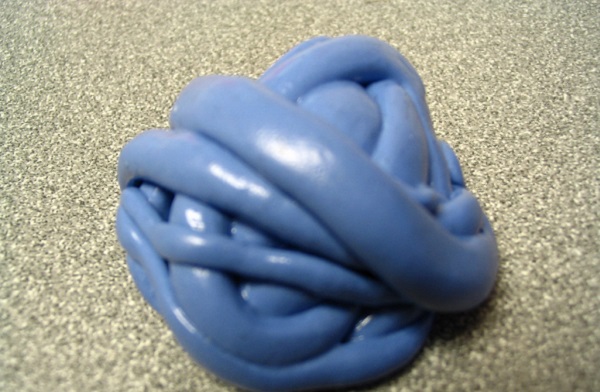
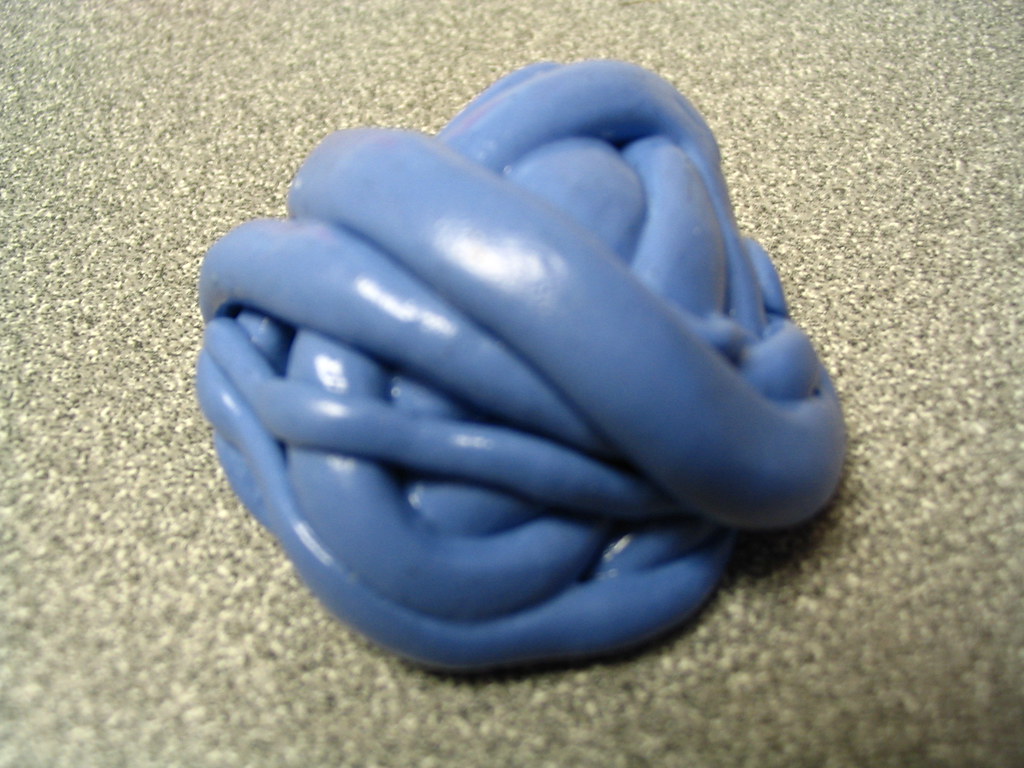
blue silly putty

Scientists mix Silly Putty with graphene to create G-Putty.

Since the discovery of graphene which many hail as a wonder material capable of being the foundation for a new technological revolution, scientists tried to find new applications for it. Now, they have combined it with Silly Putty to create a very sensitive type of monitor.

A team of researchers led by Jonathan Coleman, a scientist at Trinity College Dublin, Ireland, have found a new, inventive way of using the very versatile graphene in combination with the children’s toy known as Silly Putty. They published their discovery in the journal Science on Thursday.

Graphene has crystal-like formation the size of an atom, its capable of conducting electricity and its derived from a larger block of graphite. The material was first isolated by Russian-born scientists which received the Nobel Prize for their discovery back in 2010.

The Irish researchers named their new invention G-Putty. It has the capability of dramatically changing its conductivity when it any form of pressure is applied to it, either from being stretched or squashed.  Coleman revealed that by compressing or stretching the G-Putty by even one percent of its normal size, it leads to a change in its conductivity by a factor of five, which is a very drastic change.

Coleman and his team also discovered that the new G-Putty has 500 times increased sensitivity to various strain sensors. To demonstrate its sensitivity, the researchers wanted to see if its picks up the steps of a small spider as it walks across the surface. Although the experiment faced some hurdles as controlling the spider proved difficult, the G-Putty did indeed detect the spider’s footsteps.

Its highly sensitive capacity enables a variety of medical applications as a monitor of various human functions, be it a baby’s breath, its heartbeat, and even blood pressure. However, further testing is still required before the researchers apply their invention for real world applications.

The idea of combining the graphene with Silly Putty belongs to one of Coleman’s graduate students, Conor Boland. He was interested to find out what would happen if the graphene gets mixed with the Silly Putty which is basically a specific type of polymer.

What do you think about this new invention?

Image source: Flickr

Filed Under: Science

Giraffes Are Now Facing a Silent Extinction

December 10, 2016 By Nancy Young Leave a Comment

two giraffes

Giraffes are now considered a vulnerable species after a sharp decline in population.

After the populations of giraffes, which are the world’s tallest animals, declined by 40 percent in the last 30 years, conservationists have decided to add them to the official list of threatened and endangered species.

Although giraffes were once classified by the International Union for the Conservation of Nature (IUCN) as being among the species of least concern, now the organization announced a reclassification of their status. The official announcement came during a biodiversity meeting in Mexico and determined that giraffes are now a vulnerable species.

Julian Fennessy, the co-chair of the giraffe specialist group with the IUCN, stated that despite their common presence in zoos and safaris, the animals are currently undergoing a silent extinction process. He noted that their populations dropped from around 151,000 in 1985 to below 100,000 last year. The main cause of the decline is very likely to be the gradual loss of habitat. However, poaching and various disease also contributed to the decline.

The animals are especially vulnerable from poaching in war-torn regions. For example, in South Sudan, there have been reports that the certain subspecies of giraffes have gone extinct already. Poachers in these types of regions target giraffes because of they can offer up to 600 pounds of meat as well as very valuable skin.

Nonetheless, conservationists expressed optimism regarding the ability to turn things around for the vulnerable animals.  There are several ongoing conservation efforts in Africa. For example, South Africa’s conservation projects can provide clues on how to better protect several vulnerable species including giraffes.

Fortunately, giraffes can be very appealing to the general public and alert them to the plight of the animals should provide conservation efforts in both public as well as material support from potential donors. Giraffes can be excellent mascots to promote sympathy for all endangered species and their conservation efforts.

 The IUCN World Conservation Congress which took place back in September urged members to enhance the monitoring of protection areas of the iconic animals with the purpose of both assuring their safety as well as counting the exact number of animals inside the respective areas.

What do you think about the declining giraffe numbers?? Should IUCN take more drastic measures to protect the animals?

Image source: Wikimedia

Filed Under: Science

  • « Previous Page
  • 1
  • …
  • 10
  • 11
  • 12
  • 13
  • 14
  • 15
  • Next Page »

Subscribe to Blog via Email

Enter your email address to subscribe to this blog and receive notifications of new posts by email.

Join 10 other subscribers

Recent Articles

police handcuffs man

German Man Probed In Poisoning That Killed 21 Employees Since 2000

June 29, 2018 By Kenneth Scott Leave a Comment

Chicken wings bar

Intoxicated South Carolina Man Punches Waitress Who Refused to Serve Him Alcohol

June 29, 2018 By Karen Jackson Leave a Comment

gaming

New Zealand gamer Who Flew Halfway Across The World for Virginia Teen Gets Shots By Her Mother

June 28, 2018 By Cristopher Hall Leave a Comment

party

Former Virginia Tech Freshman Sentenced to 50 Years in Prison for Stabbing a Girl to Death

June 28, 2018 By Roxanne Briean Leave a Comment

bonfire

British Couple Sentenced to Life in Prison for Torturing and Murdering French Nanny

June 27, 2018 By Deborah Campbell Leave a Comment

pay phone

Texas Father of Girl Disappeared in the 80s Ignored by Authorities

June 26, 2018 By Cristopher Hall Leave a Comment

bottled water

San Francisco Woman Threatened to Call Police on Girl Who Sold Ice Water for Disneyland Trip

June 25, 2018 By Roxanne Briean Leave a Comment

Maplewood Park

Missouri Man Robbed by Date and Accomplice in Park

June 22, 2018 By Nancy Young Leave a Comment

coding

New York Man Sentenced in Cyberstalking Former Girlfriend, Mailing Drugs to Her Dorm

June 22, 2018 By Deborah Campbell Leave a Comment

headphones

Bose Poised to Launch Sleepbuds, In-Ear Headphones That Help You Sleep

June 21, 2018 By Nancy Young Leave a Comment

Police light

Intoxicated Female Driver in Custody for Pulling Arresting Officer by the Hair

June 21, 2018 By Kenneth Scott Leave a Comment

kitchen

Restaurant Manager Arrested and Charged in Shooting Death of Co-Worker over Negative Yelp Reviews

June 20, 2018 By Karen Jackson Leave a Comment

plastic container

Pennsylvania Couple Charged in Violent Death of Infant Discovered Buried in Cat Litter

June 19, 2018 By Cristopher Hall Leave a Comment

tailpipe

Minnesota Teen Gets Head Stuck In Oversized Tailpipe Winstock Music Festival

June 18, 2018 By Karen Jackson Leave a Comment

Pages

  • About Us
  • Contact us
  • Privacy Policy
  • Privacy Policy GDPR
  • Staff
  • Terms and Conditions

Recent Posts

  • German Man Probed In Poisoning That Killed 21 Employees Since 2000 June 29, 2018
  • Intoxicated South Carolina Man Punches Waitress Who Refused to Serve Him Alcohol June 29, 2018
  • New Zealand gamer Who Flew Halfway Across The World for Virginia Teen Gets Shots By Her Mother June 28, 2018
  • Former Virginia Tech Freshman Sentenced to 50 Years in Prison for Stabbing a Girl to Death June 28, 2018
  • British Couple Sentenced to Life in Prison for Torturing and Murdering French Nanny June 27, 2018
  • Texas Father of Girl Disappeared in the 80s Ignored by Authorities June 26, 2018
  • San Francisco Woman Threatened to Call Police on Girl Who Sold Ice Water for Disneyland Trip June 25, 2018

Categories

  • Business
  • Entertainment
  • Finance
  • Headlines
  • Health
  • Life
  • Nature
  • Science
  • Sports
  • Tech & Science
  • Travel
  • Uncategorized
  • United States
  • World

Copyright © 2026 ArgyllFreePress.com
About · Privacy Policy · Terms of Use · Contact