Argyll Free Press

Growing News Network

Thursday, April 16, 2026
Log in
  • Business
  • Finance
  • Sports
  • Tech & Science
    • HP Envy 4500 Review
    • LG Optimus 170 Review
    • iPod Touch 6th Generation Review
    • HTC One M8 Accessories Set-up
    • Surrealist Games You Must Play
    • Hisense Sero 8 Review
    • Dell Latitude e7440 Review
    • HP Laserjet 1536dnf mfp Review
    • Garmin Fenix 2 Review
    • Skype Vs Viber
    • Best Video Conferencing Software
    • Sony mdr 1r Headphones Review
    • Canon Rebel t3i Review
    • Sennheiser Momentum 2-0 Review
  • Travel
  • Headlines
  • Health
  • United States

BMW Remotely Traps Thief Inside Stolen Car

December 6, 2016 By Karen Jackson Leave a Comment

BMW 550I

BMW workers remotely locked a thief inside the stolen car.

It seems that anyone thinking of borrowing the new BMW 550i without proper notice to its owner, should have second thoughts about doing so, otherwise they might end up being remotely locked inside the car.

This was the situation with a car thief in Seattle which was caught thanks to the car’s ability to have certain features like locking the doors remotely controlled. The car served as a temporary holding cell until the police reached the location of the stolen car to apprehend him.

This situation has been revealed thanks to a report from the Seattle Police Department posted on its blog. According to the post, the car thief found out that he had been remotely locked inside a stolen BMW only on Sunday morning, after waking up for sleeping inside the car.

The report also reveals that the thief found the unlocked BMW 550i in a parking garage. The owner of the car loaned the vehicle to a friend who apparently forgot the keys inside it. This scenario proved too hard to resist for the thief who took it out for a drive. Once the owner discovered that his car has been misplaced, being very likely that it was stolen, he contacted the local police.

The police also decided to contact BMW employees in order to get the location of the car. However, the BMW workers were able to do more than that as they remotely locked the thief inside the car, without even his knowledge.

When the police arrived at the car’s location in Ravenna neighborhood in Seattle, the thief was found sleeping inside it. According to their report, the thief was a 38-year-old man who was also carrying a small quantity of methamphetamine. The man was arrested and booked into the King County Jail for both auto theft and drug possession.

This seems to be one of the most useful scenarios where the smart systems and advanced technology of a car was able to prevent a major loss for the owner. The situation does seem to be good PR for BMW and their series 5 vehicles, despite the privacy concerns of some potential customers.

What do you think about this whole situation? Are you convinced that a smart car and connected car is necessary in this day and age?

Image source: Wikimedia
Filed Under: Tech & Science

Honda NeuV Concept Car is Capable of Sensing Emotions

December 6, 2016 By Deborah Campbell Leave a Comment

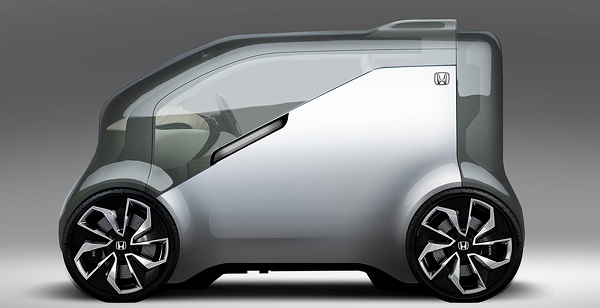
Honda NeuV concept car

Honda NeuV concept car comes with an emotion engine for enhanced conversations.

In recent times, tech companies have invested a lot in improving AI technologies to bring their services to a whole other level. With the newest concept car reveal, it seems that Honda is also keen on being part of the upcoming AI revolution. The Honda NeuV is able to sense and understand the emotions of its drivers.

The company describes their product as being an automated EV for commuter equipped with an AI system that they’re calling the “emotion engine” which will be capable of emotions. More specifically, the AI system creates new possibilities of interaction with humans as it will react to owner’s conversations and his emotions. The purpose of the emotion engine is to create a deeper emotional bond with the car.

It seems that for the first time in years, car enthusiasts will finally be justified to say that a car has a specific personality. However, no other details about the full scope and capacity of the emotion engine are available at this moment. The car will officially be revealed at next year’s Consumer Electronics Show in Las Vegas, where Honda will very likely release more information about the EV

The Honda NeuV is part of the company’s Cooperative Mobility Ecosystem which hopes to harness the power of AI, big data as well as robotics to enhance and transform the user’s mobility experience. Hopefully, the technology will prove to be more useful than just having a conversational bot in your car.

A car capable of sensing and understanding emotions will very likely prove to be controversial for some customers, especially those concerned about their privacy. Nonetheless, at least the AI will be able to feel some emotions, unlike most people who are left empty when laying eyes on the design of the car, which looks like a box with wheels.

Nonetheless, the Honda NeuV seems to be specifically designed to be small and very lightweight, optimized for people who only use it to commute around the city, being capable of dealing with heavy traffic and parking issues. Hopefully, for Honda, they will be able to turn around the current lack of interest in this type of vehicles.

What do you think about the Honda NeuV?

Image credit: Honda

Filed Under: Tech & Science

EU Urges Faster Action Against Hate Speech from US Tech Giants

December 5, 2016 By Cristopher Hall Leave a Comment

European Union Flag

The EU urges tech companies to take faster action on hate speech.

In May 2016, several US tech companies such as Microsoft, Facebook, Google, and Twitter signed a code of conduct which required them to address the issue of hate speech on their platforms in a more efficient way. However, it seems that since then, companies have underperformed in this task.

As a consequence, the European Union has urged the signatories of the code of conduct as well as other media platforms to take a more proactive attitude in combating hate speech, posts which promote violence and terrorism.

Until now, tech companies did not approach this issue with the attention it deserves, as cracking down on hate speech may seem like a breach of the right to free speech, and as a result, they would lose users. As such, they were not very efficient in their task.

EU officials have stated that in practice the tech companies in question only reviewed 40 percent of recorded cases in less than 24 hours. The number goes up to 80 percent after 48 hours. This falls behind the objectives set by the code of conduct which requires companies to take action against dangerous content in 24 hours.

This means that the objectives imposed by the EU can be realistically achieved through a consolidated effort on behalf of the companies. The EU’s recent statement on this issue is to urge the companies to do as they have pledged, otherwise, they will be forced to comply with new laws that would regulate how the companies should address hate speech.

Among the companies who signed the code of conduct, it seems that Google’s YouTube platform was the fastest one to act against reports of hate speech, while Twitter seems to have been the slowest one. A report on the company’s performance reveals that only 316 cases received a proper response out of a total of 600 what were recorded in a specific period. Additionally, content which was flagged as hate speech was only deleted in 163 cases.

This situation has been addressed by Vera Jourova, an EU Justice Commissioner, who stated that companies only have a few months to demonstrate that the non-legislative approach can work by acting more quickly and efficient in combating hate speech.

Image source: Wikimedia

Filed Under: Tech & Science

Nissan Self-Driving Cars Tow Cars at Oppama Plant

December 5, 2016 By Roxanne Briean Leave a Comment

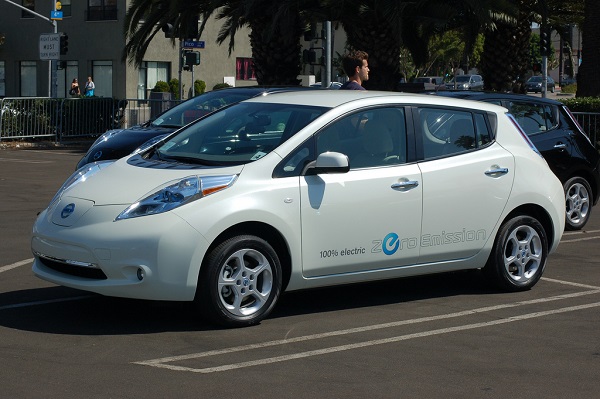
Nissan Leaf electric car

Nissan self-driving cars are towing other cars at their Japan factory.

Many tech and car companies are testing their autonomous car technology for its eventual commercial release, some in more controlled conditions than others. However, it seems that Nissan is using the self-driving cars they have developed to tow other cars around in one of their factories in Japan.

Nissan, a well-known Japanese automaker isn’t going to be outdone by other companies in the race to release the first commercial autonomous cars. For this purpose, they have begun testing the current level of their technology on a number of Leaf electric cars which are used at their Oppama Plant in Japan transport other cars on a trailer to the wharf, after which they will be loaded onto transport ships.

Nissan believes that testing self-driving technology in this manner will help shipping companies save money as well as boost efficiency. The company’s tests are also used to collect data and knowledge on how to make cars adequately safe for general use on public roads.

Nissan hopes to use the technology for their Oppama plant by 2019, after which if it does prove highly beneficial, to implement it in the rest of their factories across the world. However, at this point, the company still has to resolve the various issues of the self-driving technology. During the media demonstration event, one car did have some troubles as it refused to move.

Nissan quickly acknowledged the issue, with Kazuhiro Doi, vice-president of the company, stating these types of glitches are unique challenges to the self-driving car technology which removes the human drivers for mechanical operations.

Currently, at their Oppama Plant, Nissan only has two self-driving Leaf cars. However, in order to autonomously tow all the vehicles produced there, the company needs another five such vehicles. Also, at this point, human drivers are still required to get into each towed vehicle to drive them up to their specified wharf.

The driverless towing tests taken place in Japan is the results of Nissan’s partnership with Renault SA of France. Although a media demonstration was only recent made available, the cars started towing operations since last year.

What do you think about Nissan’s towing tests using self-driving cars?

Image source: Wikimedia

Filed Under: Tech & Science

Facebook Imitates Snapchat Discover to Offer Curated News

December 3, 2016 By Karen Jackson Leave a Comment

Facebook website

Facebook is developing Collections, its own versions of Snapchat Discover.

Part of an ongoing effort to resolve its fake news problem, which only recently company executives have recognized as an issue, Facebook is reportedly trying to develop its own feature similar to that of Snapchat Discover. It is a way to offers user more factual and relevant information from a selection of media partners.

According to two people who are familiar with Facebook’s latest project and attempt to prevent the spread of fake news on the platform, the company is developing a new feature which will showcase various lists of curated content from trusted publishers directly to users’ news feeds.

The function of the new feature which is being called Collections is very similar to that of Snapchat Discover which offers news articles, videos, and other types of content provided by a select number of media partners.

In recent weeks, Facebook has approached a number of media and entertainment companies in order to establish an agreement for various types of content which will be available for Collections. Unfortunately, the company has not disclosed any date for when the feature will be available or at least in a testing phase.

Although this seems like a very good way for Facebook to deal with its fake news problem, at this point there is no certainty whether the new feature will actually be released or not. The company is known for experimenting with new services and often changing its mind about their release.

However, if Facebook is indeed serious with releasing Collections then it could also represent a way for the company to make various publishers even more reliant on the platform to reach their audiences, which is very good for the social network, besides being a way to mitigate the spread of fake news.

Although Facebook has repeatedly stated that it does not want to be an arbiter of truth or even to decide what is newsworthy for all of their users, this seems like an unavoidable measure the company has to take to deal with its fake news. If it will be release, Collections will very likely prove controversial at first, and it will very likely alienate some users who reject’s Facebook media partners.

What do you think about Facebook’s attempts to imitate Snapchat Discover?

Image source: Flickr

Filed Under: Tech & Science

DroneShield Launched the Anti-Drone Gun

November 29, 2016 By Cristopher Hall Leave a Comment

anti-drone gun

DroneShield launched their anti-drone gun on Monday.

The advent of commercial drone technology has facilitated exploring, filming and capturing images from perspectives that were otherwise inaccessible to many. However, as with any technology, drones can be used for a variety of illegal activities or at the very least can be an inconvenience you want to avoid. For these reasons, DroneShield has invented a new anti-drone gun which can safely return the drone to the ground.

DroneShield solution to the problem was the invention of an anti-drone gun that looks more like a rocket launcher than anything else. Despite its looks and monstrous size, the gun handles any drone problems with kindness. It is able to jam the signal between the drone and the pilot, forcing the aircraft to land quickly on the ground and not destroy it or damaging it in any way you would expect going by the looks of the gun.

The anti-drone gun has an additional feature capable of triggering the drone’s “return to home” functionality. This can be very useful when you’re trying to determine the location of the person operating the drone. DroneShield’s invention is bound to be a welcome addition to the tools of authorities who are having trouble catching drones with net launchers and other devices.

The ability to safely return the drone to the ground without any kind of damages can be extremely useful for authorities who are hoping to inspect the devices used in various illegal activities as well as preserve them as evidence.

The anti-drone gun shaped like a rocket launcher is already available since Monday. DroneShield, which is based in Sydney, Australia, plans to market the device globally and will only be available for purchase by those legally able to buy it. The CEO of the company, Peter James, has stated that their list of clients includes military and government agencies as well security services for civil infrastructure and VIP protection.

The anti-drone gun weighs around 13-pounds and can be operated by only one person. It has a range of 1.25 miles, which is more than enough for most situations and locations. However, it seems that the jamming technology could be used for a variety of other purposes besides drone management.

Image source: DroneShield

Filed Under: Tech & Science

MIT AI Can Imagine the Future Through Videos

November 29, 2016 By Roxanne Briean Leave a Comment

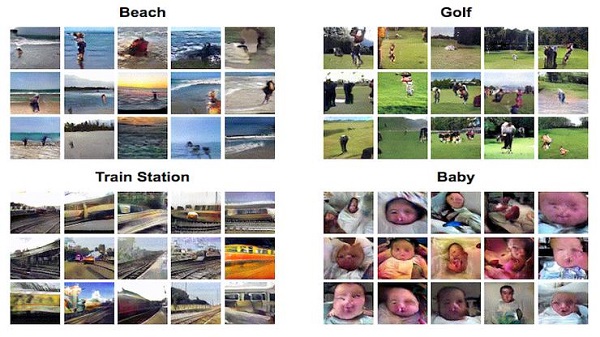
video test samples

MIT AI is able to imagine the future of still images through videos.

Despite the capacity of artificial intelligence for learning which has enabled advanced in various technologies, AI is still not fully able to imitate our brain’s power of imagination. An AI can have a hard time forming images, sensations, and ideas if they a lack a direct input. However, this may very well change thanks to MIT researchers who developed AI who is able to imagine the future of still images by producing videos.

A team of researchers from the Computer Science and Artificial Intelligence Laboratory (CSAIL) at MIT, led by Carl Vondrick, managed to create a deep learning algorithm that after examining still images of various objects, people, and environments, it creates videos showing what it thinks might happen in the future of each still image like the picture of train station expecting a train to arrive.

Vondrick also collaborated with MIT professor Antonio Torralba and Hamed Pirsiavash from the University of Maryland, Baltimore. Although they are not the first ones to try this sort of AI innovation, their algorithm adds new techniques like the capacity to process an entire scene at once.

Their work is detailed in a paper which will be presented at the Conference on Neural Information Processing Systems in Barcelona, taking place next week. They reveal that developing the AI’s capacity for imagining the future was possible after exposing the algorithm to over 2 million videos of simple activities and scenes found throughout our daily life. Additionally, all the videos were found in the wild with no label or description to help the Ai figure out what was happening in each one.

Afterward, researchers used a method known as adversarial learning to pit an AI that could generate videos featuring a probable future of a scene based on still images, with another AI that was meant to determine and discriminate between what seems real and what is a fake video.

After repeated experiments, the video generator AI could create more increasingly realistic videos of what might happen in certain images, so much so that it was able to fool the second AI. Human subjects even deemed the imagined videos to be more realistic in 20 percent more cases.

The ability to imagine the future through videos can be used for smarter video recognition of various objects in security footage, adding animation to still images, and more.

Image credit: MIT

Filed Under: Tech & Science

BMW Improves the I3 Electric Car for 2017

November 28, 2016 By Michael Turner Leave a Comment

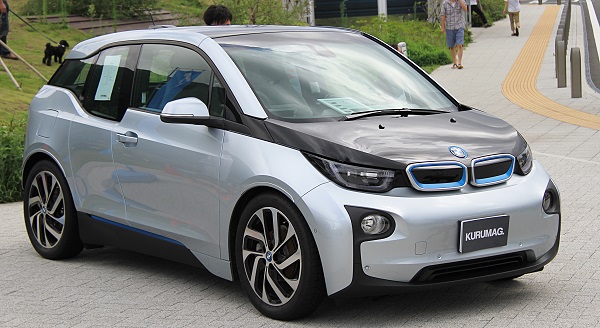
BMW I3

BMW wants to redesign their I3 electric car for 2017.

Not all companies that dominated the conventional car industry were able to translate their previous success to the electric car market. One case is BMW, which hasn’t seen much demand for its I3 electric car. However, the company hopes that a redesign coupled with some new features will provide the vehicle the boost it needs to attract more customers.

Despite the company’s reputation, BMW has only sold around 25,000 units of their I3 hatchbacks in 2015.  For this reason, BMW’s plans for the 2017 version of their i3 electric car includes both a front and rear end redesign, probably to make the car look a bit more modern. Unfortunately, no images have been released or leaked as of yet, so it remains unclear how the car will actually end up looking once BMW is finished.

The report issued by the German publication Welt am Sonntag, which has revealed the company’s plan, also shows that among the changes planned by BMW for the I3 electric car, a new battery technology stands out as a better reason to consider buying the car.  The current version of BWM I3 has a range of 114 miles on a full charge which can be increased up to 180 miles through a “range extender.”

Unfortunately, the report doesn’t precisely specify what the future range will be, but it does mention that it should be an increase of less than 50 percent. As such, I3 2017 standard range will still very likely be under 200-miles. Although the higher range can lead to a wider appeal, the I3 electric car is still well below what other EV’s can offer such as Tesla’s Model S with its 300-miles range. However, the fully-featured Model S also costs almost three times as much as the $47,450 i3. It is unknown if the price of the redesigned i3 will remain the same or if it will be slightly increased.

BMW hopes that their future autonomous cars will have better luck than their electric cars. The company has started a collaboration with Intel and Mobileye in order to create an open platform for self-driving vehicles by 2021.

What do you think of BMW’s plans for their I3 electric car?

Image source: Wikimedia

Filed Under: Tech & Science

Japan Wants to Build the World’s Fastest Supercomputer

November 27, 2016 By Kenneth Scott Leave a Comment

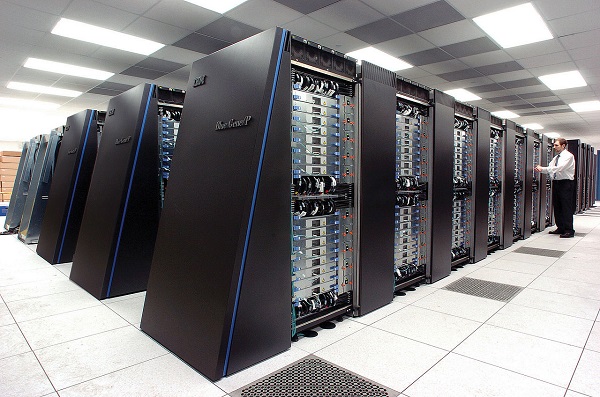
IBM Blue Gene supercomputer

Japan wants to build the world’s fastest supercomputer.

Japan was once the at the forefront of technological innovation both for ordinary consumers as in various industries like computing. In recent times, it has fallen behind other countries like China which currently own’s the fastest supercomputer in the world. However, Japan is hoping for a tech revival by building a superefficient supercomputer in 2017.

By building the world’s fastest supercomputer, Japan is hoping to help the country’s various manufacturers by providing a platform used to develop new technology and improve the current state of medical diagnostics, advance the field of robotics as well enhance driverless cars. Additionally, developing such a supercomputer would bring renown back to the once technologically-famed country.

Currently, China’s Sunway TaihuLight is the best supercomputer, capable of delivering 93 petaflops at an energy consumption of over 15 megawatts. One petaflop is equal to one million billion floating-point calculations per second.

In order to top the TaihuLight, the Ministry of Economy, Trade, and Industry will invest $173 million in Japan’s National Institute of Advanced Industrial Science and Technology (AIST).  Scientists are planning to build the supercomputer with a processing power of 130 petaflops by the end of 2017. Besides being 50 percent more powerful than China’s computer, AIST hopes to build the computer to be as energy efficient as possible.

Researchers are developing technologies that would bring the power consumption to under 3 megawatts. This would be extremely impressive and it would be ten times more energy efficient than Japan’s current computer, the Oakforest-PACS.

What sets Japan’s goal in regards to a supercomputer apart from other countries, is that they plan to optimize it for deep learning as well as various other AI applications. This unlike the goals of other countries who mainly use theirs from calculations in regards to atmospheric modeling or simulations of nuclear weapons.

The upcoming supercomputer will be called ABCI, short of AI Bridging Cloud Infrastructure and it will be made available for a fee to Japanese corporations and startup companies for a certain fee after it’s completed. Currently, only the bidding phase for the project has begun and it’s scheduled to close on December 8th.

What do you think about Japan newest technological endeavor?

Image source: Wikimedia

Filed Under: Tech & Science

OnePlus 3T Starts Shipping the US

November 26, 2016 By Karen Jackson Leave a Comment

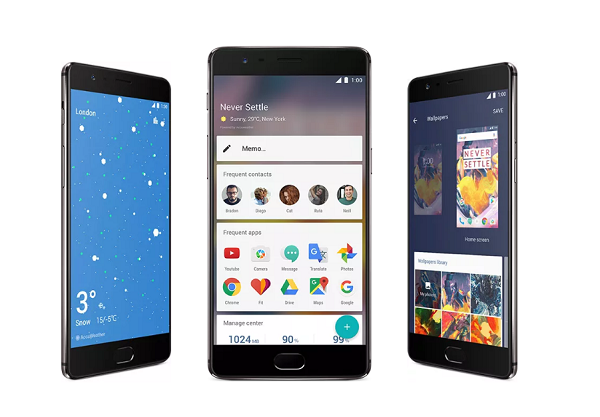
OnePlus 3T

OnePlus 3T smartphone is close to a world-wide release.

OnePlus is one of the many Chine smartphone manufacturers. However, unlike most, the first smartphone they’ve launched in 2016, the OnePlus 3, was praised as an excellent device and has become quite popular around the world. Now, the company is close to a worldwide release of the improved OnePlus 3T with the phones already being shipped in the US.

Both phones include high-end specs and feature. However, the OnePlus 3T is to the company like what the “+” version of the iPhone is to Apple. Although both devices are similar in design and dimensions, the new and improved version will feature a more powerful system on chip (SoC), a better front-facing camera, and a larger battery. Additionally, costumers will be able to choose between two different storage variants.

The original One Plus 3 launched back in June with good reviews, but that didn’t stop the company to work on a premium version. The OnePlus 3T has already started shipping devices on November 22nd in the US, with European customers will be able to receive their new phones starting on November 28th. The company made the announcement that it will launch in India and probably the rest of the world as well on December 2nd.

If you’re not yet familiar with the new phone, you should know that it costs $439 in the US, and in Europe, it will be priced at $439. Regarding its technical specs, the OnePlus 3T comes with a 5.5-inch FHD (1920 x 1080) AMOLED display. It will include 6 GB of RAM with either 64GB or 128 GB storage capacity which will not be expandable.  The device will be powered by Qualcomm’s Snapdragon 821 64-bit quad-core CPU coupled with an Adreno 530 GPU for demanding graphical applications.

One of the most impressive features of the device is that it will include a 16-megapixel camera on both the front and the back, but with different sensors. This will assure that your selfies will look as good as any other picture.  The OnePlus 3T will include Android 6.0.1 Marshmallow. However, it will feature the company’s own OxygenOS with the latest update which includes new feature and fixes.

Finally, the large 3,400mAh battery will include the company’s very fast Dash Charge technology.

Image credit: OnePLus

Filed Under: Tech & Science

  • « Previous Page
  • 1
  • …
  • 12
  • 13
  • 14
  • 15
  • 16
  • …
  • 114
  • Next Page »

Subscribe to Blog via Email

Enter your email address to subscribe to this blog and receive notifications of new posts by email.

Join 11 other subscribers

Recent Articles

police handcuffs man

German Man Probed In Poisoning That Killed 21 Employees Since 2000

June 29, 2018 By Kenneth Scott Leave a Comment

Chicken wings bar

Intoxicated South Carolina Man Punches Waitress Who Refused to Serve Him Alcohol

June 29, 2018 By Karen Jackson Leave a Comment

gaming

New Zealand gamer Who Flew Halfway Across The World for Virginia Teen Gets Shots By Her Mother

June 28, 2018 By Cristopher Hall Leave a Comment

party

Former Virginia Tech Freshman Sentenced to 50 Years in Prison for Stabbing a Girl to Death

June 28, 2018 By Roxanne Briean Leave a Comment

bonfire

British Couple Sentenced to Life in Prison for Torturing and Murdering French Nanny

June 27, 2018 By Deborah Campbell Leave a Comment

pay phone

Texas Father of Girl Disappeared in the 80s Ignored by Authorities

June 26, 2018 By Cristopher Hall Leave a Comment

bottled water

San Francisco Woman Threatened to Call Police on Girl Who Sold Ice Water for Disneyland Trip

June 25, 2018 By Roxanne Briean Leave a Comment

Maplewood Park

Missouri Man Robbed by Date and Accomplice in Park

June 22, 2018 By Nancy Young Leave a Comment

coding

New York Man Sentenced in Cyberstalking Former Girlfriend, Mailing Drugs to Her Dorm

June 22, 2018 By Deborah Campbell Leave a Comment

headphones

Bose Poised to Launch Sleepbuds, In-Ear Headphones That Help You Sleep

June 21, 2018 By Nancy Young Leave a Comment

Police light

Intoxicated Female Driver in Custody for Pulling Arresting Officer by the Hair

June 21, 2018 By Kenneth Scott Leave a Comment

kitchen

Restaurant Manager Arrested and Charged in Shooting Death of Co-Worker over Negative Yelp Reviews

June 20, 2018 By Karen Jackson Leave a Comment

plastic container

Pennsylvania Couple Charged in Violent Death of Infant Discovered Buried in Cat Litter

June 19, 2018 By Cristopher Hall Leave a Comment

tailpipe

Minnesota Teen Gets Head Stuck In Oversized Tailpipe Winstock Music Festival

June 18, 2018 By Karen Jackson Leave a Comment

Pages

  • About Us
  • Contact us
  • Privacy Policy
  • Privacy Policy GDPR
  • Staff
  • Terms and Conditions

Recent Posts

  • German Man Probed In Poisoning That Killed 21 Employees Since 2000 June 29, 2018
  • Intoxicated South Carolina Man Punches Waitress Who Refused to Serve Him Alcohol June 29, 2018
  • New Zealand gamer Who Flew Halfway Across The World for Virginia Teen Gets Shots By Her Mother June 28, 2018
  • Former Virginia Tech Freshman Sentenced to 50 Years in Prison for Stabbing a Girl to Death June 28, 2018
  • British Couple Sentenced to Life in Prison for Torturing and Murdering French Nanny June 27, 2018
  • Texas Father of Girl Disappeared in the 80s Ignored by Authorities June 26, 2018
  • San Francisco Woman Threatened to Call Police on Girl Who Sold Ice Water for Disneyland Trip June 25, 2018

Categories

  • Business
  • Entertainment
  • Finance
  • Headlines
  • Health
  • Life
  • Nature
  • Science
  • Sports
  • Tech & Science
  • Travel
  • Uncategorized
  • United States
  • World

Copyright © 2026 ArgyllFreePress.com
About · Privacy Policy · Terms of Use · Contact