Argyll Free Press

Growing News Network

Monday, February 2, 2026
Log in
  • Business
  • Finance
  • Sports
  • Tech & Science
    • HP Envy 4500 Review
    • LG Optimus 170 Review
    • iPod Touch 6th Generation Review
    • HTC One M8 Accessories Set-up
    • Surrealist Games You Must Play
    • Hisense Sero 8 Review
    • Dell Latitude e7440 Review
    • HP Laserjet 1536dnf mfp Review
    • Garmin Fenix 2 Review
    • Skype Vs Viber
    • Best Video Conferencing Software
    • Sony mdr 1r Headphones Review
    • Canon Rebel t3i Review
    • Sennheiser Momentum 2-0 Review
  • Travel
  • Headlines
  • Health
  • United States

The IKEA Smart Lights Will Come With Support For Siri, Alexa, And More

May 25, 2017 By Kenneth Scott Leave a Comment

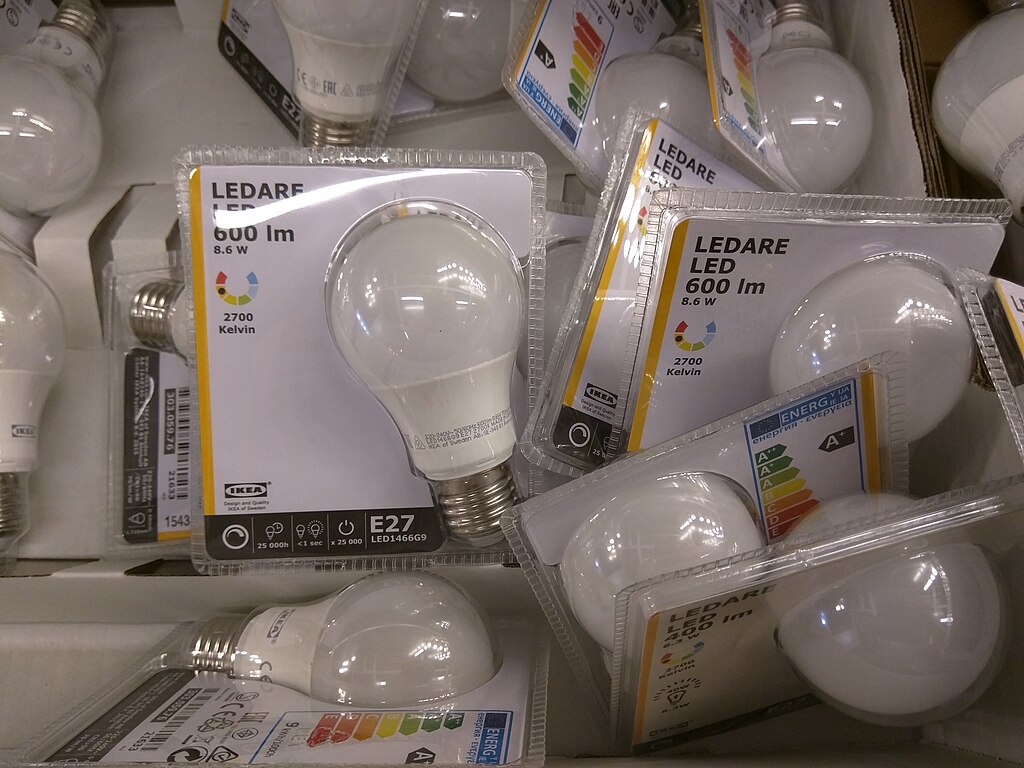
ikea smart lights bulbs

IKEA announced that its smart lights would come with increased connectivity options for digital assistants such as Alexa.

Earlier this week, IKEA issued a press release which announced the increased connectivity of its smart lights range. This will soon come with integrated support for Amazon’s Alexa, Apple’s Siri and HomeKit, and the Google Assistant.

IKEA’s smart light bulb, called Trådfri, can presently only be controlled via an app or remote control. Still, it will soon offer integration with a digital assistant at the user’s choice.

IKEA’s Smart Lights, Just a First Step in the Smart Home Products Area

IKEA is one of the biggest furniture sellers in the world as it operates in 28 countries through 340 stores. Which could also mean that it is one of the most likely and capable retailers to introduce smart home appliances to tech-savvy users.

The company’s smart lights are already available in a number of selected countries. Their digital assistant integration may also help them become more accessible.

“By ensuring that our products work with others on the market, we take another step to meet people’s needs and make it easier to interact with the products for the smart home,” said Björn Block.

He is the leader of the IKEA Home Smart. Jeanette Skjelmose, the Business Area Manager for Lighting and IKEA Home Smart, also stated that the division considers that smart home technology should be accessible to anyone.

The Trådfri range of smart lights includes a number of sensing, remote-controlled, and dimming light fixtures. It also comes with the “Gateway”, a hub device which enables the connectivity with the user’s home network.

Now controlled through an app, this will also be used for the digital assistant integration. It will also support its connectivity with thermostats, ceilings fans, and other smart home appliances. The integration and support should start being rolled out sometime in the latter half of 2017 and will first become available to US and UK users.

Image Source: Wikimedia

Filed Under: Tech & Science

Google Honored The Anniversary Of The Antikythera Mechanism With New Doodle

May 18, 2017 By Kenneth Scott Leave a Comment

Antikythera mechanism

Google brought homage to the Antikythera mechanism by transforming it into a doodle for its anniversary.


Earlier this week, Google released another one of its already famous doodles. Its latest subject was the Antikythera mechanism or what is considered as being one of the world’s first computers.

This doodle made its debut on May 17th, a date which marks the 115th anniversary of the discovery of this unique relic. Discovered by Greek scientists, this is now part of the collections of the National Archaeological Museum in Athens.

The Antikythera Mechanism and Its Complex Nature and History

The mechanism got its name from the place in which it was discovered. Back in 1902, Valerios Stais, a Greek archeologist, detected a “corroded chunk of metal” as he was sifting through artifacts recovered from a shipwreck in Antikythera.

The particular piece looked like a wheel or gear. Further research revealed that it was, in fact, a part of the Antikythera mechanism. This is the ancient variant of an analog astronomical computer.

“The Antikythera mechanism tracked planetary positions, predicted lunar and solar eclipses, and even signaled the next Olympic Games. It was probably also used for mapping and navigation,” stated Google.

In the same post to announce its release, the company also offered some historical data about the ‘device’. The mechanism features a frontal dial, which offers both solar and zodiacal calendars. On its back side, it came with several other dials, which represented the celestial cycles.

Thanks to 3D tomography, scientists were able to generate computer models of the Antikythera mechanism. These revealed its complex system, based on over 30 “sophisticated gears” as intricate as even some 18th-century clocks. All these pieces are contained by a case, about the size of a shoebox, made out of bronze and wood.

Initially, the mechanism was believed to date back to about 85 BC. The latest research suggests that it may be even older. More precisely, it could date back to around 150 BC.

Specialists continue studying this impressive mechanism and its inner workings as they are also trying to find its exact purpose. Google stated, through its doodle, that the Antikythera mechanism can still open “a skyful of knowledge and inspiration”.

Image Source: Wikimedia

Filed Under: Tech & Science

CERN Announced The Inauguration Of The Linac 4 Linear Accelerator

May 12, 2017 By Cristopher Hall Leave a Comment

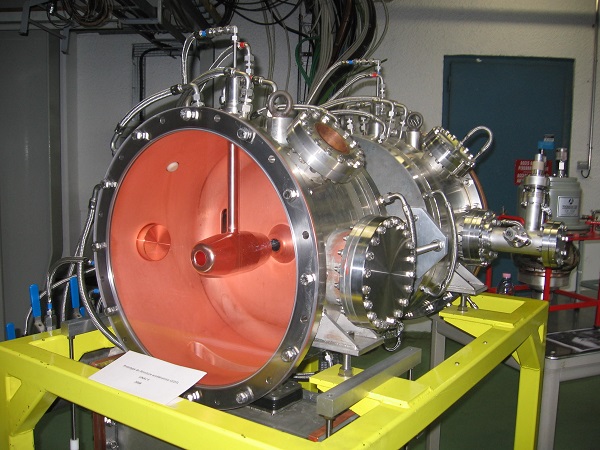
linac 4 machine

The new LINAC 4 linear accelerator was formally commissioned at CERN.

In a ceremony conducted in Switzerland on May 9, the new LINAC 4 linear accelerator was formally commissioned at CERN. This new device is but the first step in a number of upgrades coming for the 17-mile collider. Many more changes are going to be made over the coming years. Still, this first one is the key to boosting its power by a factor of five.

Linac 4, A New Light at CERN

LINAC 4 is designed to inject high energy beams directly into the accelerator complex. The plan is to have it up and running by 2021 and at full power by 2025. It will be hooked up to the greater track during the expected shutdown from 2019 to 2021.
“This high-luminosity phase will considerably increase the potential of the LHC experiments for discovering new physics and measuring the properties of the Higgs particle in more detail,” said Director General, Fabiola Gianotti, in a press release about the ceremony.
He continued by pointing out that Linac 4 “is a modern injector” It may also be the first key in the facility’s ambitious plan to upgrade its program. This should help lead “up to the High-Luminosity LHC.”
The Higgs boson is probably the most famous discovery made at CERN. This previously-theorized particle had eluded scientists for years. Now, this new machine will help them peer further into that particle’s nature. Many believe it will be capable of helping provide more than ten times the data currently collected.
This linear accelerator is about ninety meters long, and it was built gradually over the last decade. It is replacing the LINAC 2, which is approaching the age of forty.
A $93 million investment was made in the construction, and the negative hydrogen ions it will inject into the accelerator will triple the power level to over 160 million electronvolts. By the time it is in full operation, they hope to take it to over a quarter billion.
Image Source: Wikimedia

Filed Under: Tech & Science

Cassini Spacecraft Reports A Success As It Shoots Through Saturn’s Rings

April 29, 2017 By Michael Turner Leave a Comment

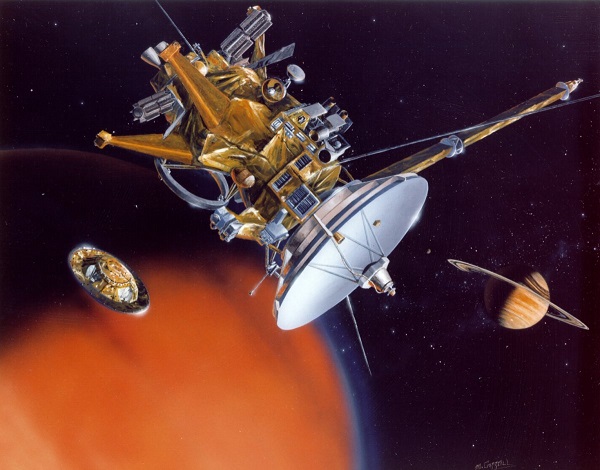
cassini spacecraft

The Cassini spacecraft, launched towards Saturn in 1997, reported its first successful dive through Saturn’s rings.

The Cassini spacecraft, launched towards Saturn in 1997, is considered one of the most successful space exploration missions in NASA’s history. The last two decades have provided huge amounts of data and images. As the mission approaches its final days, it promises to deliver even greater drama.

The Cassini Spacecraft Reported One Dive Down, 21 to Go

Cassini has been exploring Saturn’s rings, its moons, and the planet itself for nearly two decades. The final journey for the aging spacecraft will be certainly its most exciting. Twenty-two diving maneuvers have been planned and plotted by NASA engineers. These dives will take the craft closer to the planet than ever before.

They will do so as Cassini dips between its outer atmosphere and its innermost rings.The first maneuver has been completed, and scientists are waiting to see the data. This takes about twenty hours to reach Earth from the spacecraft.

With each succeeding dive, NASA hopes to gain more information about the nature of Saturn’s rings. They will also try to establish what makes up the outer atmosphere of the planet. In the end, they’ll also take a look at what exists at its core.

These dives, however, are not without risk. Scientists studying Saturn exhausted a great deal of effort over the last few decades measuring and examining the planet’s majestic ring system. Most of their conclusions lead them to believe there is a gap of around 1,200-miles between the interior ring and the outer edge of Saturn’s atmosphere.

They are aiming for that space with each dive, hoping to gather data from both phenomena. Saturn’s rings are composed of ice, rock, and other materials held by the gas giant’s gravity. There is some fear that Cassini might strike a stray piece during the maneuvers. But the engineers are monitoring it as closely as they can to avoid potential catastrophe.

If all goes according to plan, the sturdy craft will make one final dive into the planet itself on September 15.

Image Source: Wikimedia

Filed Under: Tech & Science

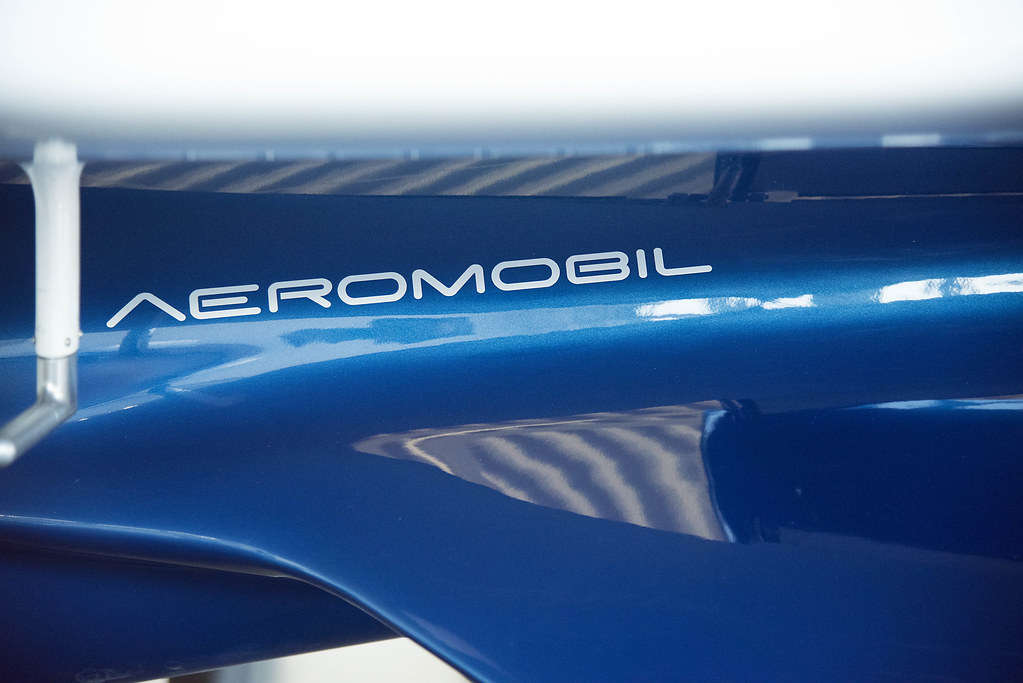
AeroMobil’s First Flying Car Will Allegedly Be Running In The 2020s

April 24, 2017 By Michael Turner Leave a Comment

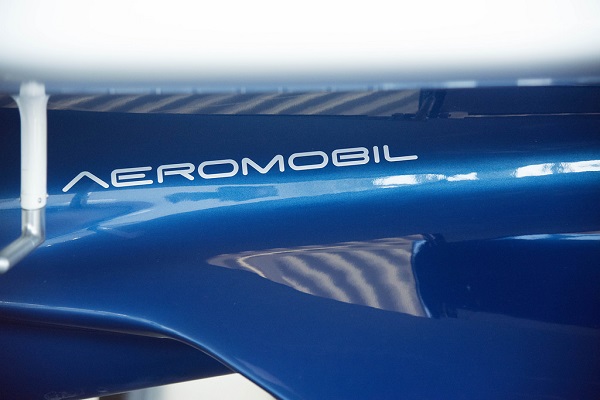
aeromobil first flying car

AeroMobil will be looking to release its first flying car sometime in the 2020s.

Ever since the first days of science fiction, futurists have imagined flying cars. From Flash Gordon to the Jetsons, many envisioned them to be right around the corner of history. Now, these may actually be here, as a Slovakian startup company has committed to bringing their first flying car design to the market as early as 2020.

Is The First Flying Car Finally Here?

At the international car premiere show, Top Marques Monaco, Slovakian based Aeromobil showed off the prototype of their new design. Sleek and sporty, it can convert from land mode to flight mode in less than three minutes. When on the ground, it has a top speed of one hundred miles per hour. It also has a range of over 450 miles. In the air, it can travel at over 220 miles per hour with close to the same range. This is estimated at around 465 miles. There will only be 500 of the vehicles made in the initial design. These are expected to sell for between $1.3 and $1.6 million.The vehicle is only approved to operate in Europe, and owners will be required to possess a pilot’s license. A runway will be necessary for all takeoffs and landings. Currently, the company is moving forward with getting the first flying car approved for use in the United States. Once that happens, they plan on introducing it in China.

What makes this car different from designs being pursued by companies like Uber and Zee.Aero is that it uses a runway. The others are looking at VTOL (Vertical Take-Off and Landing) designs. They would only require landing pads, or maybe no more than a driveway.

“The infrastructure and nature of today’s society simply doesn’t leave much space for flying cars, unfortunately.” This is according to Juraj Vaculik, the AeroMobil CEO.
Image Source: Flickr

Filed Under: Tech & Science

Facebook Is Out To Develop A New Brain To Computer System

April 20, 2017 By Kenneth Scott Leave a Comment

computer system users

During the F8, Facebook revealed its plans for a new brain to computer system and interface.

In its second day of the F8 event, Facebook revealed that it is looking to develop a new brain to computer system and interface. This will allegedly allow its user to type directly with their mind.

The company is even looking to create a tech that will allow its users to “hear” with their skin. This new, ambitious tech is being developed by a team of over 60 people, all part of the R&D Division.

Details on these revolutionary plans came from Regina Dugan. She is the head of the R&D Division Building 8. The information was released during the second day of the F8. This is an annual software and developer conference hosted by Facebook in San Jose, California.

As part of the presentation, Facebook released a demo video meant to present this new tech’s abilities and applications. The company is aiming to create a software that will allow its users to type up to 100 words per minute. This is around five times faster than the average writing speed on a smartphone. Also, this new technology will be exclusively brain-powered, which would make its speed even the more impressive.

Dugan stated that: “It is these words, words that you have already decided to send to the speech center of your brain that we seek to turn into text.”

Also, she stated that Facebook will be looking to develop a non-invasive such technology. One that could also become a “speech prosthetic” for people with disabilities, disorders, or even a new AR input method.

The Brain to Computer System Is Not The Only Innovation

The secretive Building 8 is also reportedly developing a “hear through your skin” technology. According to Dugan, this will be based on the “Tacoma Method” and a special arm sleeve. This latter comes with an actuator system, which lets the user “feel the acoustic shape of a word on her arm”.

Presently, this system still has a limited “tactile vocabulary”. As it is, Dugan emphasized the fact that both these technologies are still in the making. As such, they are still some years away from being ready.

Image Source: Flickr

Filed Under: Tech & Science

This New Device Could Be The Latest Water Source In The Desert

April 17, 2017 By Cristopher Hall Leave a Comment

new device in desert

A team of researchers developed a new technique for pulling water from thin air.

Researchers at MIT or the Massachusetts Institute of Technology and the University of California at Berkeley developed a new technique for pulling water from thin air. This new device makes use of something called an MOF (metal-organic framework). These compounds formed from metals and organic molecules are extremely porous, capable of pulling both water, methane, and carbon dioxide from the air, making future applications potentially limitless, besides providing a new water source.

This Is A New Device for Drawing Water from Thin Air

The MOF powder, made from a combination of adipic acid and zirconium metal, is placed in a device called a water collector, which then absorbs water molecules directly from the air. Even in the driest parts of Earth, water still floats in the air as evaporated particles.

Once the MOF pulls in all the water it can and becomes completely saturated, the powder can then be heated to release it. As the water frees from the substrate, it gathers at the bottom of the collector. In fact, the current prototype uses sunlight to heat the MOF and release the water. As such, it requires no external sources of energy.
Previous methods using materials like zeolites require large amounts of energy to free up the water once it is trapped. Not so with the MOF design. According to researcher’s calculations, larger amounts of powder could produce more water. Two pounds of MOF might be able to produce as much as three liters in a twelve hour period.The new device prototype was described in a paper released by the journal Science. It works in areas with as low as twenty percent humidity. On larger scales, it could be used in order to provide an emergency water source in drought situations. Or it could work for small communities that have little or no access to public drinking water supplies.

Image Source: Wikimedia

Filed Under: Tech & Science

Microsoft Has Just Stopped Offering Its Security Bulletins

April 15, 2017 By Roxanne Briean Leave a Comment

microsoft security bulletins

Starting with this week, Microsoft will stop releasing its security bulletins.

Starting with this week, Microsoft will stop releasing its security bulletins. These were considered a common fixture as the company has been offering them for quite some years now.

In these reports, Microsoft presented the vulnerabilities it had detected throughout the month. It also brought the accompanying patches needed by its customers. These were considered an especially useful feature for administrators in charge of IT operations.

Microsoft First Announced The Demise Of The Security Bulletins Late Last Week

Microsoft first announced its plans of eliminating the security bulletins back in November 2016. However, it was uncertain about its preferred methods. The last Tuesday bulletin was initially planned for January, and its replacement process should have become available starting on February 14th.

However, in February, the company announced that it would be getting rid of that month’s Patch Tuesday. This decision came just a few hours before releasing the update, which also rendered the timeframe null.

As such, Microsoft decided to offer one more month of security bulletins. It did so as this reportedly gave its clients more time to prepare and move to the SUG. This latter is the “Security Updates Guide” which works as a database content portal.

Users can access, sort, and filter the portal’s content according to need. For example, they can filter it according to the patch’s released date, the affected software, or the Common Vulnerabilities and Exposures (CVE) identifier, among others.

The market was keyed in on the lack of security bulletins earlier this week. On April 11th, Microsoft released cumulative updates for Windows, Office, Internet Explorer, and several other products.

As it is, the company presented its new SUG site as a way in which admins can “view and search security and vulnerability information in a single online database.”

It remains to be seen how well users will adapt to the new format. The company believes that administrators will adapt to the new system and they hope that the will even find it easier to use.

Image Source: Flickr

Filed Under: Tech & Science

Google’s Fact Check Will See A News And Search Expansion

April 10, 2017 By Cristopher Hall Leave a Comment

google fact check

Google announced late last week that it would be expanding its Fact Check tag to Google News and some Search results.

Google announced late last week that it would be expanding its Fact Check tag. This was first introduced last October, but only on Google News and in a small number of countries. At the time, the Internet giant company was joined in its task by Jigsaw. Now, Google stated that it would be extending this tag to include both its Google News and some Search results.

The Fact Check Tag Should Start Being Generally Available In Both News And Search

According to Google, its “Fact Check” tag should include information that has been fact checked by both organizations specialized in this area and by news publishers. Following the received feedback, the company reportedly decided to expand this service. As such, this will become globally available, across all supported languages. Also, it will start being used in Search results, as well. Initially, it was only introduced for Google News.

The company states that, from now on, as the user conducts a search, they will receive an ‘authoritative result’ which contains fact checked data. One that has been verified by one or more public claims. In its statement, Google stated that:

“The snippet will display information on the claim, who made the claim, and the fact check of that particular claim.”

However, Google also stated that this tag wouldn’t be available for quite ‘every search result’. Also, as the facts are verified by multiple publishers, these may also reach different conclusions for the same claims. The company emphasized that the ‘fact checks are not Google’s’. As it is, they are reportedly presented so that people can make ‘more informed judgments’.

Google considers that its readers and users will find it easier to make an informed decision as they note who considers what, even when the various publishers reach different conclusions on the same fact. As such, people should allegedly have ‘an easier time’ assessing and reviewing such fact checks.

Image Source: Wikimedia
Filed Under: Tech & Science

Facebook Makes 360-degree Live Stream Available For Everybody

March 30, 2017 By Kenneth Scott Leave a Comment

360-degree live stream Facebook

Facebook just made 360-degree Live Stream available for every user, with a compatible camera.

If you love social media sites and you also love taking videos, this new feature is the ideal one for you. Facebook just made the 360-degree Live Stream available for every user. This feature is not a new one. It has been available since December, but only for a few users.

The first page where the option was launched was National Geographic’s Facebook account. The company now announced that they are going to make it available for any user, worldwide. Live streaming on Facebook has been a very successful addition to the regular posts. More and more people live stream nowadays.

The 360-degree live stream is even better. This is because it combines both the love for videos and virtual reality. The 360-degree live streams can be a gateway to VR. Facebook has been trying to make people buy VR since they made Oculus in 2014. Maybe now it will succeed.

The problem is that not everybody can use this feature. In order to create a 360-degree live stream, you need to have a compatible camera. Some of those cameras include Giroptic IO, ALLie Camera, Insta360, and Samsung Gear 360. More professional cameras like Nokia OZA and Z CAM S1 are compatible too.

Facebook mentioned that they are going to talk to other manufacturers in order to add more compatible devices. Once other manufacturers add more cameras, more people will be able to do 360-degree live stream.  This type of live stream is almost the same as the normal one. People can still receive likes and comments while they are 360-degrees live streaming.

Facebook mentioned that people need to make some privacy setting before they go live. This way they can decide who can see the video. Users also need to write a description for the live video before starting to film it. People will see comments and likes from their camera interface. This feature is a really interesting one and it also is a step closer to virtual reality. The 360-degree live stream is going to get people closer to VR and maybe, more will buy VR headsets like Oculus.

What is your opinion about this feature? Are you going to post 360-degree live streams on Facebook?

Image source: Pexels

Filed Under: Tech & Science

  • « Previous Page
  • 1
  • …
  • 4
  • 5
  • 6
  • 7
  • 8
  • …
  • 114
  • Next Page »

Subscribe to Blog via Email

Enter your email address to subscribe to this blog and receive notifications of new posts by email.

Join 10 other subscribers

Recent Articles

police handcuffs man

German Man Probed In Poisoning That Killed 21 Employees Since 2000

June 29, 2018 By Kenneth Scott Leave a Comment

Chicken wings bar

Intoxicated South Carolina Man Punches Waitress Who Refused to Serve Him Alcohol

June 29, 2018 By Karen Jackson Leave a Comment

gaming

New Zealand gamer Who Flew Halfway Across The World for Virginia Teen Gets Shots By Her Mother

June 28, 2018 By Cristopher Hall Leave a Comment

party

Former Virginia Tech Freshman Sentenced to 50 Years in Prison for Stabbing a Girl to Death

June 28, 2018 By Roxanne Briean Leave a Comment

bonfire

British Couple Sentenced to Life in Prison for Torturing and Murdering French Nanny

June 27, 2018 By Deborah Campbell Leave a Comment

pay phone

Texas Father of Girl Disappeared in the 80s Ignored by Authorities

June 26, 2018 By Cristopher Hall Leave a Comment

bottled water

San Francisco Woman Threatened to Call Police on Girl Who Sold Ice Water for Disneyland Trip

June 25, 2018 By Roxanne Briean Leave a Comment

Maplewood Park

Missouri Man Robbed by Date and Accomplice in Park

June 22, 2018 By Nancy Young Leave a Comment

coding

New York Man Sentenced in Cyberstalking Former Girlfriend, Mailing Drugs to Her Dorm

June 22, 2018 By Deborah Campbell Leave a Comment

headphones

Bose Poised to Launch Sleepbuds, In-Ear Headphones That Help You Sleep

June 21, 2018 By Nancy Young Leave a Comment

Police light

Intoxicated Female Driver in Custody for Pulling Arresting Officer by the Hair

June 21, 2018 By Kenneth Scott Leave a Comment

kitchen

Restaurant Manager Arrested and Charged in Shooting Death of Co-Worker over Negative Yelp Reviews

June 20, 2018 By Karen Jackson Leave a Comment

plastic container

Pennsylvania Couple Charged in Violent Death of Infant Discovered Buried in Cat Litter

June 19, 2018 By Cristopher Hall Leave a Comment

tailpipe

Minnesota Teen Gets Head Stuck In Oversized Tailpipe Winstock Music Festival

June 18, 2018 By Karen Jackson Leave a Comment

Pages

  • About Us
  • Contact us
  • Privacy Policy
  • Privacy Policy GDPR
  • Staff
  • Terms and Conditions

Recent Posts

  • German Man Probed In Poisoning That Killed 21 Employees Since 2000 June 29, 2018
  • Intoxicated South Carolina Man Punches Waitress Who Refused to Serve Him Alcohol June 29, 2018
  • New Zealand gamer Who Flew Halfway Across The World for Virginia Teen Gets Shots By Her Mother June 28, 2018
  • Former Virginia Tech Freshman Sentenced to 50 Years in Prison for Stabbing a Girl to Death June 28, 2018
  • British Couple Sentenced to Life in Prison for Torturing and Murdering French Nanny June 27, 2018
  • Texas Father of Girl Disappeared in the 80s Ignored by Authorities June 26, 2018
  • San Francisco Woman Threatened to Call Police on Girl Who Sold Ice Water for Disneyland Trip June 25, 2018

Categories

  • Business
  • Entertainment
  • Finance
  • Headlines
  • Health
  • Life
  • Nature
  • Science
  • Sports
  • Tech & Science
  • Travel
  • Uncategorized
  • United States
  • World

Copyright © 2026 ArgyllFreePress.com
About · Privacy Policy · Terms of Use · Contact