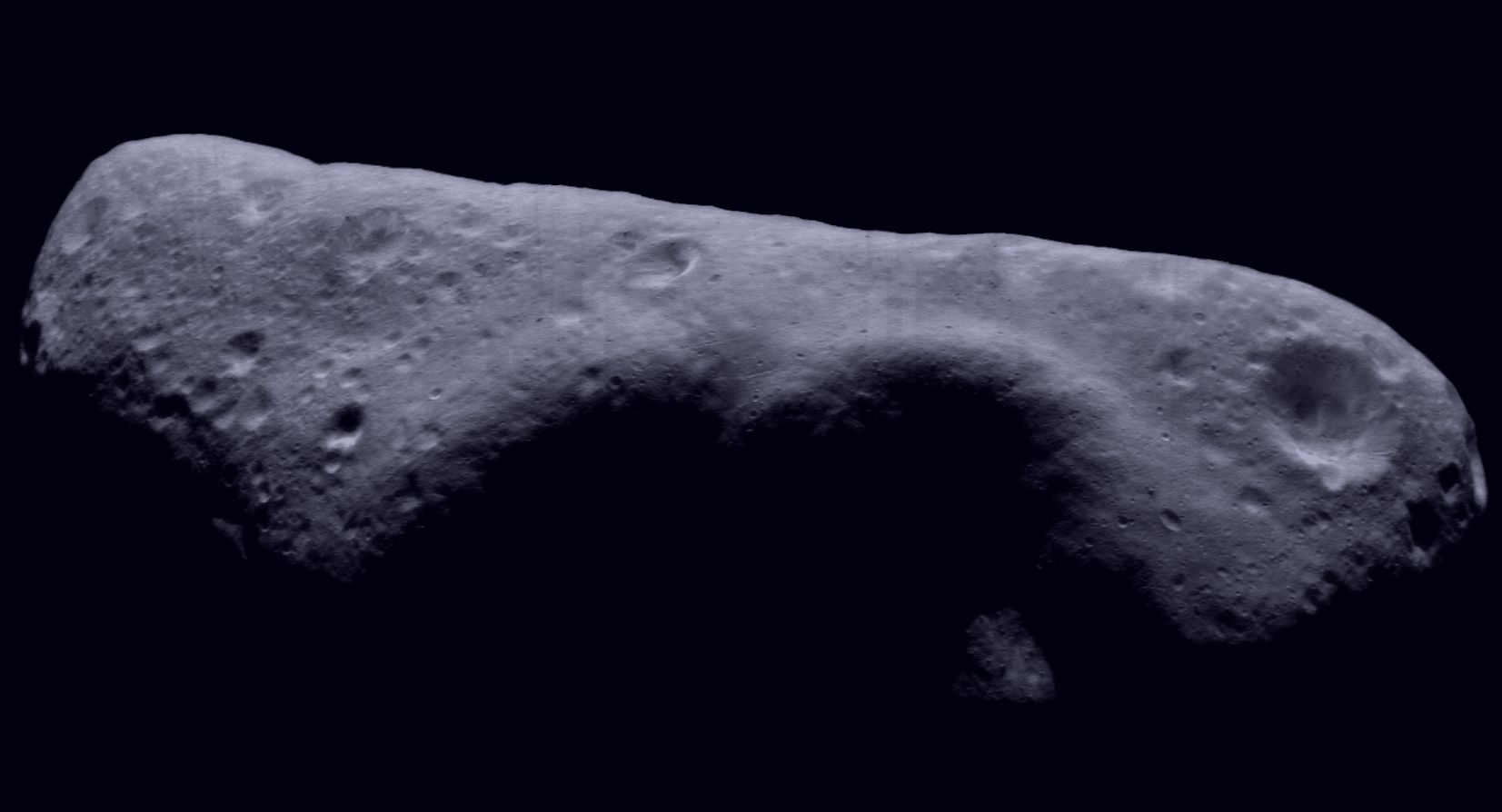
It would appear that we are in good hands as Russian scientists are preparing to defend Earth from asteroids. Should that ever occur, of course. One of the major fear of mankind as a species living on a rock in space has obviously always been having other, smaller rocks knock right into ours and wipe us clean off the planet and make us share the same fate as the dinosaurs did.
Debris and passing objects in outer space have a tendency to hover in between the gravitational pull of various larger bodies. However, depending on a number of factors, it not unlikely for these objects to enter a collision course with larger planets at times, resulting in what cannot be perceived as anything other than disaster.
While photos taken of the other planets and natural satellites in our solar system show a lot of scarring caused by asteroids, meteorites and comets onto their surface, our planet is surprisingly smooth and untainted. Even if it also has had its fair share in the past.
Naturally, in order to avoid such happenings, mankind has developed a system to repel, destroy or change the course of objects that come near the Earth’s atmosphere. However, we do require years, if not decades of preparation in order to be able to withstand such happenings. While so far, mankind has used ways of changing objects’ trajectories in order to avoid impact, there are news of an asteroid named Apophis coming dangerously close to planet Earth in the year 2036.
And because of that, Russia has announced via the Russian news agency TASS that scientists are currently in process of tweaking ballistic missiles ICBMs and testing their capabilities in expectation of this asteroid. However, the ICBMs and remotely controlled ballistic missiles that deliver nuclear weapons, designed to be capable of completely destroying bodies that have 20 to 50 meters in size.
But those are meteors, mere portions of larger bodies. In case of the asteroid 99942 Apophis, it is a near-earth object that scores a diameter of nearly 325 meters and may impose some complications. An asteroid the size of Apophis is believed to impact Earth roughly every 80,000 years.
Scientists will require millions of dollars of funding as well as government permission to improve and prepare missiles capable to deal with an asteroid that size. Given that it’s about nuclear weapons, all this is easier said than done.
Image Source: 1
