Argyll Free Press

Growing News Network

Monday, January 19, 2026
Log in
  • Business
  • Finance
  • Sports
  • Tech & Science
    • HP Envy 4500 Review
    • LG Optimus 170 Review
    • iPod Touch 6th Generation Review
    • HTC One M8 Accessories Set-up
    • Surrealist Games You Must Play
    • Hisense Sero 8 Review
    • Dell Latitude e7440 Review
    • HP Laserjet 1536dnf mfp Review
    • Garmin Fenix 2 Review
    • Skype Vs Viber
    • Best Video Conferencing Software
    • Sony mdr 1r Headphones Review
    • Canon Rebel t3i Review
    • Sennheiser Momentum 2-0 Review
  • Travel
  • Headlines
  • Health
  • United States

YouTube Gaming Makes Mobile Game Streaming Possible

March 10, 2016 By Cristopher Hall Leave a Comment

YouTube gaming app has a surprise for us

The latest version of the YouTube gaming app has a surprise for us. What do you think you need to stream your favorite games? A much higher than average computer, a stable connection and throw in a few pieces of professional equipment if you want to make things classier? Google disagrees; Google thinks that the next step of game streaming is to make it mobile. And by that we mean the fact that the tech giant has just released a build that allows you to play your favorite mobile phone games and stream t for others to watch.

However, so far this feature has only made it in several areas around the globe. More specifically, it is only available in Australia, New Zealand, Ireland and Canada at the current time, but will most likely be stretched out to the rest of the world when it starts picking up public. Not to mention that the only platform that can currently take it is Android.

And come to think of it, this change was blatantly in our face and soon to happen given the fact that mobile technology these days is becoming more and more proficient, and will most likely soon reach the capabilities of average computers. 3D gaming has developed onto the mobile platform – whether we’re talking smartphones or tablets – at an alarming rate in the past years, luring some companies into doing things such as devising controllers for your phone.

And because streaming is an unexplainable but extremely powerful source of entertainment of our days (see famous YouTubers that own gaming channels such as PewDiePie), Google realized it was about time it was made available for the mobile medium as well. Think about this: your phone has the technology, if not a strong 4G connection, then surely a stable WiFi back at home at least, an inbuilt webcam and a microphone. Provided that you remember to not cover the camera with your thumb while you play, this will be just like regular gaming streaming.

The YouTube Gaming app comes with a multitude of features that were made for both the streamers and the viewers. While streaming can be down live whenever you decide for it from a simple drop down menu, anyone watching you via mobile doesn’t need to have their freedom sacrificed and remain in the app fullscreen to be able to hear you while they reply to a text. Instead, they get pop out the stream and concern themselves with what they need to do while the video is still running.

Image Source: 1
Filed Under: Tech & Science Tagged With: Android game streaming, Google, mobile game streaming, Youtube gaming app

Google Chrome Music Lab Offers Musical Education

March 10, 2016 By Roxanne Briean Leave a Comment

Chrome Music Lab

The tech giant is unmistakably attempting to tackle dozens of projects simultaneously, as another one dubbed Chrome Music Lab just hit the news feed this morning. According to Google, this is a feature that comes to help out in things such as educations – whether we’re talking academic or personal – by employing a series of experiments that allow the users to explore various musical pieces and understand how they work.

But this is not a feature that comes for no reason whatsoever. It has been created as a way to celebrate this year’s Music in Our Schools Month. As a result, Chrome Music Lab was made available and accessible to anyone with an internet connection. The feature was also made to be particularly easy to use and user-friendly, regardless of the age of the user. Very young children, mid-schoolers and adults alike can easily explore the workings of music using a variety of platforms: desktops, tablets and smartphones alike are compatible with the website that hosts the Music Lab.

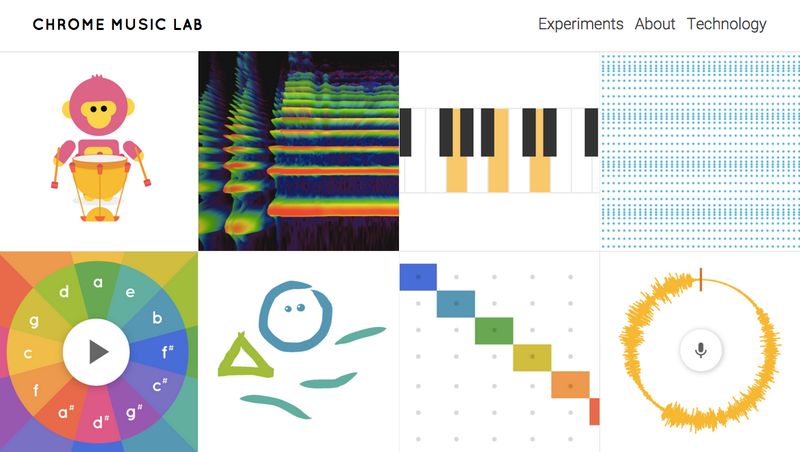
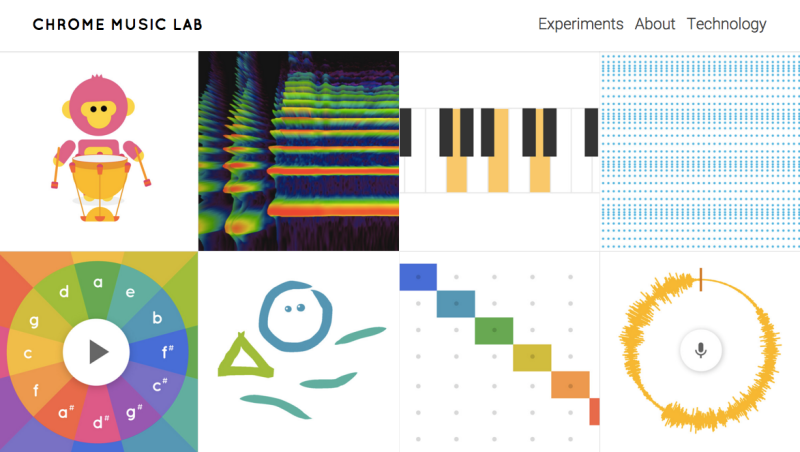
The Chrome Music Lab consists of 12 different ‘experiments’ that you can play around with, each one depicting a different aspect of music, which you can pretty much figure out from the title of the experiment. The listings so far include Rhythm, Spectrogram, Chords, Sound waves, Arpeggios, Kandinsky, Melody Maker, Voice Spinner, Harmonics, Piano Roll, Oscillators and Strings.

All of the above are made thanks to the collaboration of coders and musicians that made use of the Web Audio API and open source code. The API permits creating and editing music within the browser, while the open source quality offers anyone experienced and willing the freedom to experiment and create their own version of experiments in the Music Lab, for example.

All of the previously submitted experiments make use of colorful animations, clear sounds and very easy to understand illustrations of how sound from various instruments work, how chords work, and even giving you a little freedom in creating some accidental songs while playing with it. Every one of the 12 currently present on the website are cleverly made and intuitive in making the experience as pleasant for the user as possible as it doesn’t let things get too hectic.

This is a great method that teachers and educators could apply in schools to not only give children an easier way of understanding the workings of music but also nurture their creative spirit.

Image Source: 1

Filed Under: Tech & Science Tagged With: Chrome Music Lab, Google, Google Chrome, Interactive Music Education

The Uncanny Employment That Google Made

March 8, 2016 By Roxanne Briean Leave a Comment

employment of 4chan founder Chris Poole

Google recently made a move that raised a huge question mark above the head of various members of the public – the employment of 4chan founder Chris Poole. Poole is a notorious presence in the online community, especially when it comes to bringing people together; or rather set them up for a method of freely expressing themselves under the anonymity of the internet.

In other words, Chris “Moot” Poole is the face of the very controversial website 4chan that he founded back in 2003, originally intended as an image-sharing hub for those interested in and fans of Japanese anime. An unquestionably innocent project, you would think, but given the website’s lack of censorship, 4chan soon became a rather controversial place to be in, at times becoming downright offensive to groups and individuals and the birthplace of the concept that we nowadays call ‘memes’.

However, Poole sold its website to the founder of the popular Japanese message board 2channel – the very inspiration of 4chan, before it went off track into an entirely different direction that nobody saw coming.

But while you cannot place the blame of an entire rather gigantic community on the name of one person, the public reacted with the least enthusiasm when they heard that tech giant Google had actually hired Poole in their company, for an unknown position. While no official information has been provided on the nature of Poole’s role in Google, rumors hint that he may be placed in charge of the failing Google Plus social platform.

According to Poole’s blog in a post he made right after the announcement that Google was picking him up, whatever position he will be occupying within Google will be making use of his experience of working for a dozen years in building online communities. While this isn’t the only likely option that Poole has at Google, it is most likely that Google+ will fall into his responsibility.

Google Plus has had an abysmally low rate of success with its users, who almost always chose the more popular alternatives when it came to social platforms. Despite numerous efforts that Google made to make up for the failings of its social platform, attempting to appeal to a different group of targeted users and whatnot, Google+ is currently still slowly advancing towards its imminent death.

Is Poole’s employment a sign that Google is giving its social platform another chance, or will the former 4chan founder play a completely different role within the company?

Image Source: 1

Filed Under: Tech & Science Tagged With: 4chan, Chris Poole, Google

Google Starts Guarding Users Against Deceptive Content

February 5, 2016 By Karen Jackson Leave a Comment

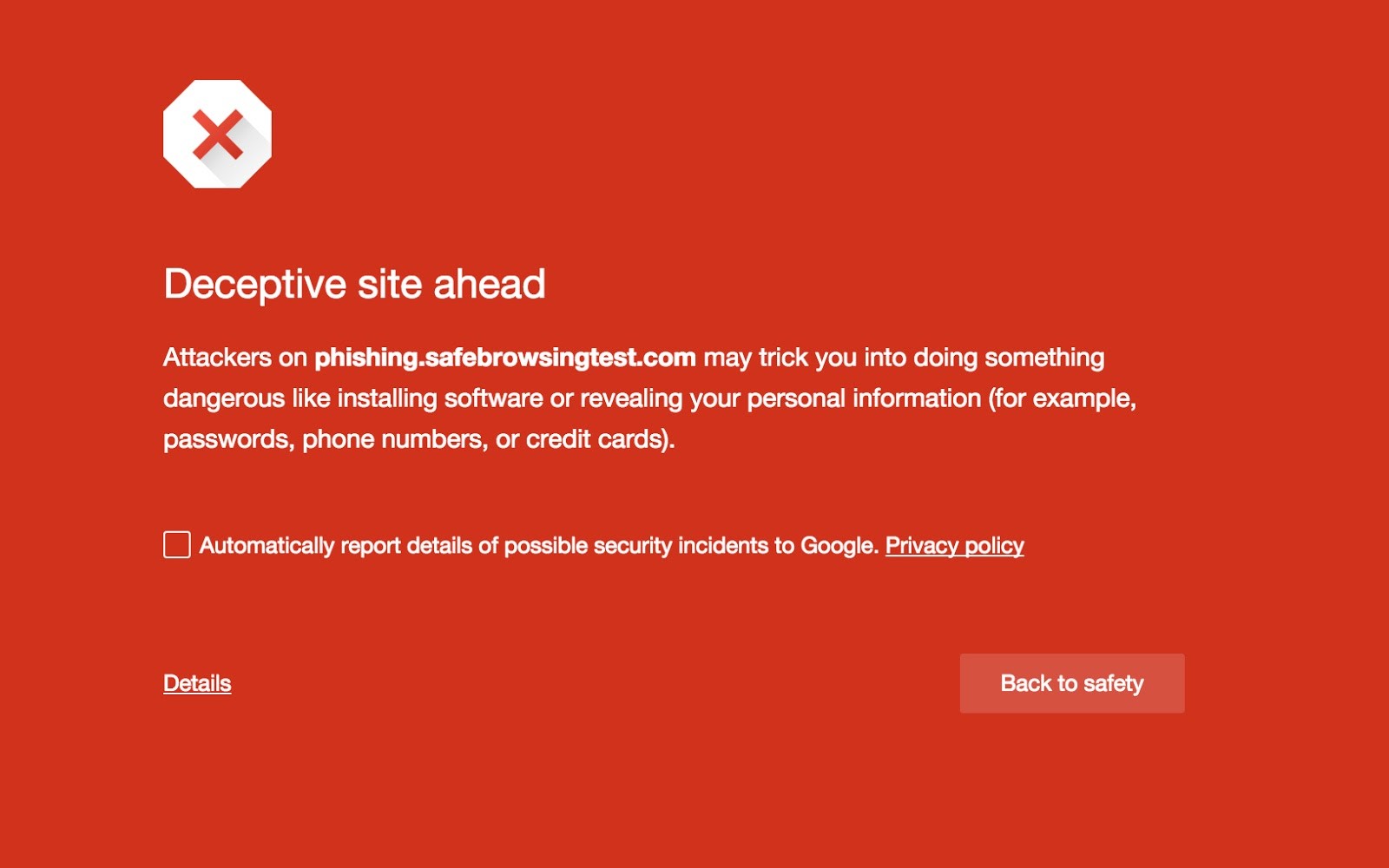
Google Starts Guarding Users Against Deceptive Content

Chrome, one of the most popular Internet browsers tightens up its security even further as Google starts guarding users against deceptive content. The way it does that is in reference to the kind of ‘hidden’ links that anyone can – at one point – fall victim to.

For example, even if one is particularly careful about which parts of a website they click on and are careful enough to even look at the true URL that is displayed in the bottom left part of the browsers, it can still happen that sometimes, a seemingly innocent download button or link may actually turn out to be something different. Sometimes it’s ads, other times it can lead you to more worrying things such as malware or viruses.

Google announced that its browser, Chrome, will also start working in accordance with the social engineering policy that was announced in November by the company. According to it, the browser will analyze embedded content on a web page and try to determine whether it falls into the category of social engineering, whenever it attempts to act, look or feel like a trusted entity.

As a result, Chrome should prevent you for actually accessing any dangerous content by adding a gateway webpage before you actually reach the malicious website’s content. Similar to what antivirus programs have been doing for years, basically. The red gateway page will let you know that the content on the website you’re trying to access may be dangerous for you, give you details about it and prevent further action.

There is no mention of a ‘Proceed’ button yet, or whether the browser will or will not allow you to venture out on the targeted website. This is obviously a great addition to the browsing experience, but if you look at it both ways, it may have a problem here or there. Firstly, it’s certain that websites that always indulge in the irritating ‘advertising’ practices will end up getting flagged and the users kept safe from them. However, it is not unheard of for websites that do not truly have malicious content on them to also get flagged.

Without knowing what exactly triggers the new Chrome feature to prevent access to a website when it considers it ‘dangerous’, there is a chance that some smaller, innocent websites but with a poor design choice and desperate to pay for the bills via some questionable ads will also end up getting flagged and inaccessible.

Image Source: 1

Filed Under: Tech & Science Tagged With: chrome, chrome social engineering, Google, malicious websites

Lyft Gets $500 Million from General Motors

January 4, 2016 By Nancy Young Leave a Comment

Lyft Gets $500 Million from General Motors

Lyft gets $500 million from General Motors and joins the race for the first consumer-ready self-driving car system.

Lyft is valued at $5.5 billion due to financing from GM, Saudi Arabia’s Kingdom Holding CO., Japanese e-commerce giant Rakuten Inc. and Janus Capital Management.

This is the first time a large automaker joins forces with a ride-sharing company. Considering that they are a huge threat to auto sales, as more and more urban commuters prefer to hail a ride from Uber or Lyft rather than owning a car, an alliance doesn’t seem so shocking.

With Google, Uber, Tesla and Apple heading towards autonomous vehicles, the industry is trying to adapt and reshape itself.

General Motors have announced that it would work closely with Lyft on developing a self-driving car system that would let customers order a vehicle via their smartphone, tablet or personal computer, and have said car arrive at their door step with no driver.

General Motors President Dan Ammann has said in an interview that the very first large-scale deployment of self-driving cars will be in demand on ride-sharing platforms – as in Uber and Lyft.

GM is known to have already started developing autonomous cars, and that it plans on testing a fleet of vehicles at their Detroit technical center in 2016, but there’s no news regarding on the phase of development with Lyft. Ammann has declined to comment on the status.

The fleet of vehicles will be comprised of 2017 Chevrolet Volts.

Also, GM has confirmed that their Super Cruise tech, which has been in development since 2012, will be finally available in the 2017 version of the Cadillac CT6.

In the following months, the car-manufacturer giant plans to build a series of rental-car centeres where Lyft drivers have the possibility of renting vehicles at lower, discounted prices.

Lyft had previously managed to raise about $1 billion from investors across the world including hedge-fund behemoth Carl Icahn, Middle Kingdom-based ride-hailing company Didi Kuaidi Joint Co., Tencent Holding Ltd., Alibaba Group Holding Ltd., US-located Founders Fund, Coatue Management and Andreessen Horowitz.

After receiving funds from Carl Icahn, back in May of 2015, Lyft was valued at $2.5 billion.

Even though that seems to be quite huge, its direct competitor, Uber, has raised a total of about $12 billion both in equity and debt.

Uber Technologies have also managed to raise, roughly, the same funds as Uber, but the Cali-based ride-sharing company is valued at $64.6 billion – higher than even GM’s market value, which stands at $53 billion.

Image Source: 1

Filed Under: Headlines Tagged With: General Motors, GM, Google, Lyft, Self Driving Cars, uber

Facebook, Google, Twitter Hate Speech Agreement

December 16, 2015 By Michael Turner Leave a Comment

Facebook, Twitter and Google logos.

The new Facebook, Google, Twitter hate speech agreement reached today is the conclusion of the German government’s efforts of the past months to eliminate hate speech from social media platforms in the country.

In accord with the agreement, these three companies will delete any hate speech present in discussions under their control within 24 hours.

Which, as you can imagine, raises the much dreaded specter of censorship. Or at least censorship should be a much dreaded specter in a democratic state.

However, the issue is a tad more complicated, as human affairs often are.

Because the German government’s efforts to curb and hopefully eliminate hate speech completely come amid the growing tensions caused by the refugee crisis.

The fact that this government has to deal with more than 1 million refugees received this year alone, for which it is directly responsible, makes it understandable that they have to take practical, effective measures like the hate speech agreement, and not just put out declarations and urge the population to play nice.

Also worth taking into consideration is that hate speech is illegal by German law, meaning hatred promoted against any segments of the population. So asking foreign companies to forbid users on German territory to use it is not that much of a stretch.

Still, the problem of censorship remains. Where does freedom of speech end?

According to Heiko Maas, the German Justice Minister:

When the limits of free speech are trespassed, when it is about criminal expressions, sedition, incitement to carry out criminal offenses that threaten people, such content has to be deleted from the net. And we agree that as a rule this should be possible within 24 hours.

Germany has asked Facebook to help it better manage the refugee crisis by fighting online racism on its platform since September this year and they initially refused.

That prompted the German government to put on more pressure and in the past few months it started investigating four Facebook executives, including Martin Ott, the managing director for all of Central, Northern and Eastern Europe, claiming they had not done enough to control hate speech and are directly responsible for Facebook’s failure in this direction.

Facebook responded at the time by saying that Martin Ott and all of its employees in Germany have done nothing wrong, performed their duties flawlessly and the accusations lack merit.

Now, it seems Facebook, along with Google and Twitter, have finally decided to agree to the German government’s request. Whether because they see eye-to-eye or because they finally caved to the pressure is hard to determine.

But starting today, users of these social media platforms will be able to report hate speech so that it gets deleted within 24 hours. Specialist teams have been set up to deal with such reports.

Whether for good or for ill, this is happening. What are your thoughts?

Image source: 1.

Filed Under: Headlines Tagged With: Facebook, Facebook Germany, Facebook Google and Twitter, Facebook hate speech, free speech, Germany hate speech agreement, Google, hat speech, hate, hate speech agreement, speech, Twitter

Google D-Wave 2X Quantum Computer Controversy

December 14, 2015 By Karen Jackson Leave a Comment

A D-Wave 2X Quantum Computer is installed at the NASA Ames Research Center

Last week, Google’s AI team announced that its tests at NASA’s Ames Research Center on the D-Wave 2X quantum computer yielded exceedingly pleasing results: it was 100.000.000 times faster at solving the problems set to it than a conventional computer using quantum annealing as opposed to the simulated annealing conventionally used for such problems.

Yes, you read that right. Google partnered with NASA, a consortium of universities (the Universities Space Research Association – USRA) and with D-Wave Systems Inc. in 2013 so that the first three organizations could test and refine the latter company’s quantum computers to further the development of AI and space travel.

Since its Orion prototype quantum computer, presented around 2007 D-Wave has gradually increased the technology’s capabilities. If the Orion prototype worked on a 16-qubit processor, the current D-Wave 2X works on one with more than 1000 qubits.

The way quantum computers are supposed to work is that, because of the strange phenomena that take place at a quantum level, qubits can have both a 0 and 1 value as well as an additional 0 and 1 at the same time value, due to superposition.

Since conventional processors operate with just 2 alternative values (1 or 0), quantum computers should theoretically be way faster.

And judging by Google’s announcement last week, the theory proved out as their AI team demonstrated these incredible speeds using the D-Wave 2X quantum computer.

Or did they? Because here’s the catch.

Ever since its first claims at having built a functional quantum computer, D-Wave has been consistently surrounded both by awe, excitement and praise, as well as by criticism, accusations and dismissal by respected scientists.

The first camp is pretty clearly defined by the Google, NASA and USRA scientists working with the computers and other non-affiliated ones.

But the second one shouldn’t be neglected either, boasting prominent names such as Umesh Vazirani (one of the founders of the theory of quantum complexity), Wim van Dam of UC Santa Barbara and Scott Aaronson of MIT, the latter proclaiming himself the “Chief D-Wave Skeptick” (with a short hiatus) for quite some time.

Making matters more confusing is that an article published in Nature in 2011, does support D-Wave’s technological claims, stating that the company’s chips do show some of the quantum mechanical properties required for quantum computing.

But does that mean that D-Wave computers actually operate on a quantum level? Wim van Dam and others believe there is no way to tell for sure at the moment. And the more hardcore critics like Varizani or Aaronson say that D-Wave misunderstood some quantum principles, that its claimed speedup flat out isn’t true and that they inflate their results.

Still, Google claims that the results are real and really quantum. And hints at future applications like fast and optimized space travel plotting, drug testing, airport coordination, encryption and many others.

Time will tell. What do you think?

Image source: 1.

Filed Under: Headlines Tagged With: D-Wave, D-Wave 2X quantum computer, D-Wave quantum computer, Google, Google AI team, Google quantum computing, nasa, Nasa Ames Research Center, quantum computer, quantum computing.

Chromebit HDMI Stick Finally Launched by Google and ASUS

November 17, 2015 By Roxanne Briean Leave a Comment

Chromebit HDMI stick is developed by ASUS and Google

The Chromebit HDMI stick, which is basically a Chrome OS-based tiny computer on a stick, has finally launched. It costs $85 and it was developed by two tech industry giants – Google and ASUS.

It weights 75 grams, that is 2.6 ounces, and you can stick the Chromebit into any HDMI port – you can hook it to a large TV screen, or the average computer monitor. Regardless of what you choose, it just needs to have an HDMI port. It has 16 gigs of internal storage – slow and cheap eMMC storage, however; and 2 gigs of RAM.

In more than one way, it resembles the old Chromecast OS on a stick. Yet, the Chromebit is larger and bulkier. It ships with its very own charger, and it has a built-in USB port, unlike the old Chromecast.

You can find it in two colours – Tangerine Orange and Cacao Black. Yet, I don’t find a motive for picking colours for this kind of product. It will most certainly disappear behind your screen. Considering this, I don’t even understand why there’s a bright orange model.

The USB port is a great addition. Owners can pair the stick with a Bluetooth keyboard and mouse. You can also hook wired peripherals to the Chromebit. Given that USB hubs exist, owners could very well connect multiple devices to it.

It’s best used in the edu district – read, schools; call centers and enterprises that require web based apps for their day-to-day work. The Chromebit can very well turn your living room into a tight media center as well. Also, considering that it can turn any screen into a modern app boutique, hotels and stores can take full advantage of the Chromebit HDMI stick.

Don’t expect a power-house. Its quad-core Rockchip SoC, which is the life-line of the stick, isn’t designed with performance in mind. It is aimed at outputting a reliable and easy to get into experience.

Chromebit will be available in the U.S. at Fry’s, Amazon and Newegg. Quite interesting, Best Buy, which is Google’s old Chrome OS buddy, isn’t part of the list of vendors – at least, for the moment.

The Chromebit HDMI stick will be available in the UK, Canada, Australia, Denmark, Japan, Finland, Norway, New Zealand, Sweden, Spain and Taiwan also.

Google is constantly finding new ways to alleviate the burden of not having a PC. With the Work and Education service, customers can opt it for the new single-app kiosk mode for $24 a year, per user.

Yet, Google for Work and Education is only available in the U.S. and Canada.

Image Source: 1

Filed Under: Headlines Tagged With: asus, Chrome OS, Chromebit, Chromebit HDMI stick, Google, HDMI stick

Google Play Books Update Pleases Comic Book Fans

November 13, 2015 By Roxanne Briean Leave a Comment

Google Play Books update gets comic book friendly features

There’s a lot of page turning involved when reading physical media. Comic book fans have always gotten the short end of the stick, realizing this, Google set to make things right. The new Google Play Books update is more friendly to comic books and graphic novel fans.

The latest Google Play Books update streamlines the experience of devouring comic books and graphic novels on mobile platforms – read, smartphones and tablets.

Google notes that when someone reads a comic book, or a graphic novel, that individual is becoming deeply involved with the story and art, the pacing and dialogue, in a manner that suits himself. If you tried to read a comic on a small tablet or smartphone screen, you know how nerve wrecking it is.

So that’s why Google is introducing a vertical scrolling experience specially designed for comic book use in landscape mode.

In order for you to take advantage of this new feature, you just need to flip your smartphone or tablet on its side. This will automatically display the graphic novel or comic book in landscape mode.

The new Google Play Books update also makes the store’s library of visual goodies easier to navigate. Now, The Play Store has a dedicated tab called – comics destination; along with a curated list of comic books and graphic novels.

Google is also offering recommendations on what comic books to read next based on what you’ve previously read.

Google notes that their Play store offers a wide variety of comic books from the major players in the industry. This includes – Marvel, Image, Dark Horse, IDW and DC Comics. And boy, aren’t those comic books incredibly binge-worthy.

You can find series like Deadpool, Justice League, The Walking Dead and Mortal Kombat – everything a newcomer and a die-hard fan needs.

Just to make sure everyone understands how much Google respects its comic book and graphic novel fans, the search engine behemoth is offering free comic books from some of the most popular series in the industry – The Walking Dead, My Little Pony, Orphan Black, The X-Files and other awesome comics.

However, for your interest, Google isn’t the only platform for comic book goodies. If you don’t fancy the almighty Google, you can take a look at ComiXology, which offers the same, if not better, streamlined experience for comic books. It also has guided viewing.

To be honest, it seems like Google is using this free comic give-away as a bait to entice new users to use their business, rather than a wholeheartedly thank you for their existing comic book customers.

All of these new changes are set to hit the Play store in the next few days, says Google. They will be available for iOS sometime in the near future. Please note that these changes will be available to comic book fans that reside in Canada, U.S., the UK, Australia, Ireland, India, Singapore, New Zealand and South Africa.

Filed Under: Headlines Tagged With: Comic Books, Google, Google Play Books, Google Play Books Update, Graphic Novel

Google About Me Tool Makes Privacy Easy

November 11, 2015 By Nancy Young 2 Comments

Google just launched a new privacy tool called About Me

In their ongoing efforts to make their services better, the mammoth tech company Google have come up with a great and handy new addition to their services.

In case you’re confused as to what services those are, considering that Google is currently being involved in many projects from areas as diverse as robotics, internet infrastructure to genetics, the services in question are the Internet related ones that it offers its users like the search engine that made Google into the hugely successful company it is today, Youtube, Gmail, Maps etc.

And the mentioned addition is the new Google About Me tool which just solved the problem of privacy regarding all the disparate data that Google had collected from users from the various above-mentioned services.

Before this new tool, users couldn’t easily see, in one place, all their collected personal information that was shared to other users across the various services.

But now, the Google About Me tool makes it a reality. You just have to go there and you can not only see everything in one place, but you can edit the date and, most importantly, remove it. With certain limitations.

For example, you cannot remove your photo or your entire name. You can only remove the last name if you desire. But your first name is mandatory. This is probably because Google uses your photo and name to identify you as opposed to other users.

Another no-no is deleting your entire birthday. You can hide the year if you want, but the day and month will remain inaccessible. This probably has to do with Google wanting to monitor the activity of its underage users.

Of course, if you’re not interested in deleting personal information that others see, you can go the opposite way and add information. And Google will give you prompts of what it thinks would be useful like: where you work and where you were educated, contact info etc.

The Google About Me app change came because Google no longer requires users to have a Google+ account in order to access its services (as it did), so since there are now those who do have an account (and could see their visible personal info there) and those who do not, yet personal information is collected from both, it was necessary to find an efficient, fair solution.

Which they did through this neat tool.

Another feature of the tool currently in development is to let you see how other users see you across Google’s services with a preview option in the About Me app, called “View as public”.

Overall a welcome change and another step towards efficiency and simplification.

Image source: 1.

Filed Under: Headlines Tagged With: Google, Google About Me, Google tool, New Google About Me tool, new Google tool, new Google tool About Me

  • 1
  • 2
  • 3
  • 4
  • Next Page »

Subscribe to Blog via Email

Enter your email address to subscribe to this blog and receive notifications of new posts by email.

Join 10 other subscribers

Recent Articles

police handcuffs man

German Man Probed In Poisoning That Killed 21 Employees Since 2000

June 29, 2018 By Kenneth Scott Leave a Comment

Chicken wings bar

Intoxicated South Carolina Man Punches Waitress Who Refused to Serve Him Alcohol

June 29, 2018 By Karen Jackson Leave a Comment

gaming

New Zealand gamer Who Flew Halfway Across The World for Virginia Teen Gets Shots By Her Mother

June 28, 2018 By Cristopher Hall Leave a Comment

party

Former Virginia Tech Freshman Sentenced to 50 Years in Prison for Stabbing a Girl to Death

June 28, 2018 By Roxanne Briean Leave a Comment

bonfire

British Couple Sentenced to Life in Prison for Torturing and Murdering French Nanny

June 27, 2018 By Deborah Campbell Leave a Comment

pay phone

Texas Father of Girl Disappeared in the 80s Ignored by Authorities

June 26, 2018 By Cristopher Hall Leave a Comment

bottled water

San Francisco Woman Threatened to Call Police on Girl Who Sold Ice Water for Disneyland Trip

June 25, 2018 By Roxanne Briean Leave a Comment

Maplewood Park

Missouri Man Robbed by Date and Accomplice in Park

June 22, 2018 By Nancy Young Leave a Comment

coding

New York Man Sentenced in Cyberstalking Former Girlfriend, Mailing Drugs to Her Dorm

June 22, 2018 By Deborah Campbell Leave a Comment

headphones

Bose Poised to Launch Sleepbuds, In-Ear Headphones That Help You Sleep

June 21, 2018 By Nancy Young Leave a Comment

Police light

Intoxicated Female Driver in Custody for Pulling Arresting Officer by the Hair

June 21, 2018 By Kenneth Scott Leave a Comment

kitchen

Restaurant Manager Arrested and Charged in Shooting Death of Co-Worker over Negative Yelp Reviews

June 20, 2018 By Karen Jackson Leave a Comment

plastic container

Pennsylvania Couple Charged in Violent Death of Infant Discovered Buried in Cat Litter

June 19, 2018 By Cristopher Hall Leave a Comment

tailpipe

Minnesota Teen Gets Head Stuck In Oversized Tailpipe Winstock Music Festival

June 18, 2018 By Karen Jackson Leave a Comment

Pages

  • About Us
  • Contact us
  • Privacy Policy
  • Privacy Policy GDPR
  • Staff
  • Terms and Conditions

Recent Posts

  • German Man Probed In Poisoning That Killed 21 Employees Since 2000 June 29, 2018
  • Intoxicated South Carolina Man Punches Waitress Who Refused to Serve Him Alcohol June 29, 2018
  • New Zealand gamer Who Flew Halfway Across The World for Virginia Teen Gets Shots By Her Mother June 28, 2018
  • Former Virginia Tech Freshman Sentenced to 50 Years in Prison for Stabbing a Girl to Death June 28, 2018
  • British Couple Sentenced to Life in Prison for Torturing and Murdering French Nanny June 27, 2018
  • Texas Father of Girl Disappeared in the 80s Ignored by Authorities June 26, 2018
  • San Francisco Woman Threatened to Call Police on Girl Who Sold Ice Water for Disneyland Trip June 25, 2018

Categories

  • Business
  • Entertainment
  • Finance
  • Headlines
  • Health
  • Life
  • Nature
  • Science
  • Sports
  • Tech & Science
  • Travel
  • Uncategorized
  • United States
  • World

Copyright © 2026 ArgyllFreePress.com
About · Privacy Policy · Terms of Use · Contact