
A new section is about to change the future of the Facebook pages of people who have passed away as Facebook creates legacy contact for profiles of deceased persons, meaning, someone will handle their data aftewards.
Facebook has revealed a brand new tool that allows users to decide what happens to their Facebook account after they pass way,and could also be called a will for their social media pages.
The new settings will let users to decide whether their pages should be deleted for good. Or they can choose a “legacy contact” a some sort of web executor who can manage their internet data.
So far, the status of a Facebook profile after the death of the user, has been kind of foggy. The family members of the person who had just passed away, were able to contact the social media network and ask them to take down the page or turn it into a memorial. But the road has not been steady.
There have been clients contacting Facebook to ask for the page of their deceased child to remain memorialized, but there was one family member that reached Facebook and asked them to delete the page, explained a lawyer from the Minneapolis firm, Gray Plant, James Lamm.
The new protocols would allow the user’s legacy person to update a memorial page, which includes the posting of a adapted message from the person deceased, would download that person’s posts and publish updates at the top of the profile.
Even so, Facebook will not allow access of the legacy person to the private messages sent among users.
Facebook has proved to be an amazing tool also when it comes to grieving the loss of a loved one, remembering that person and celebrating their life. These were clear signs that Facebook should put more work into supporting the grieving families and friends.
The new policy of Facebook, is a sequel of what Google did in 2013, when it started its Inactive Account Manager, a service which allows friends or family members to take over the Google belongings of the deceased person.
Users of Google are the ones deciding who will get access and to which files. For example, a woman could let her husband download all the images stored in her Google account, but could block the access to her e-mail messages from her account of Gmail.
The new tool of Facebook might be a following of the efforts of a commission of legislators from several states to adopt a law that would facilitate the access of relatives to the deceased person’s online files. The state of Delaware has passed this legislation and Massachusetts would consider it.
However Facebook and other web companies are against this legislation, as it would give the relatives of the deceased person complete access to his/hers documents. Lets say, if the family would have access to emails and messages that contain embarrassing information about the person who just died and his/hers friends. This could also have an impact on the privacy of the ones who were in contact with the dead person, for example revealing identities of members of Alcoholics Anonymous who chatted trough mails.
Here is how you can create your Facebook Legacy Contact
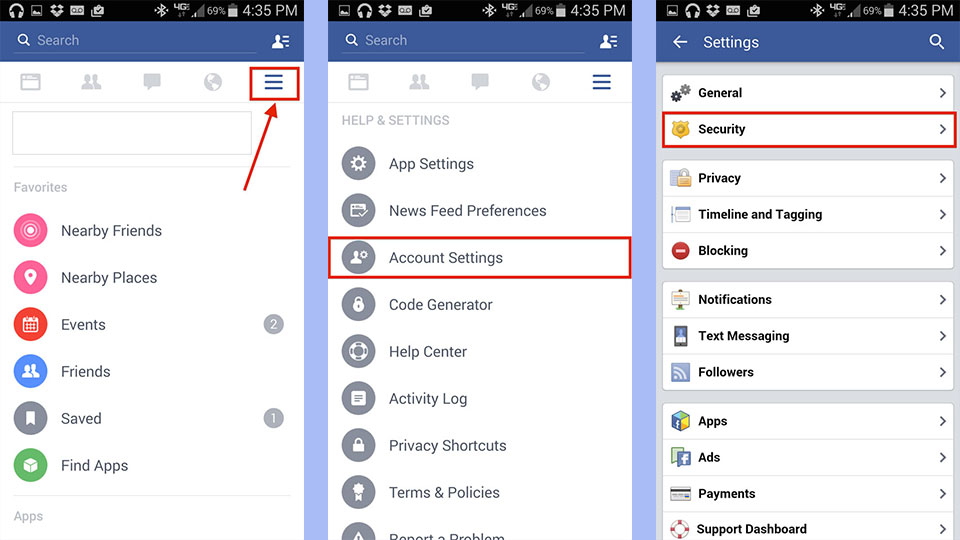
Go on Facebook and press the symbol with three bars that can be found either at the top or bottom of the page
Scroll down until you reach the section called” Help & Settings” and press on “Account Settings”
When in Settings, pick the second tab from the first setion, called “Security”
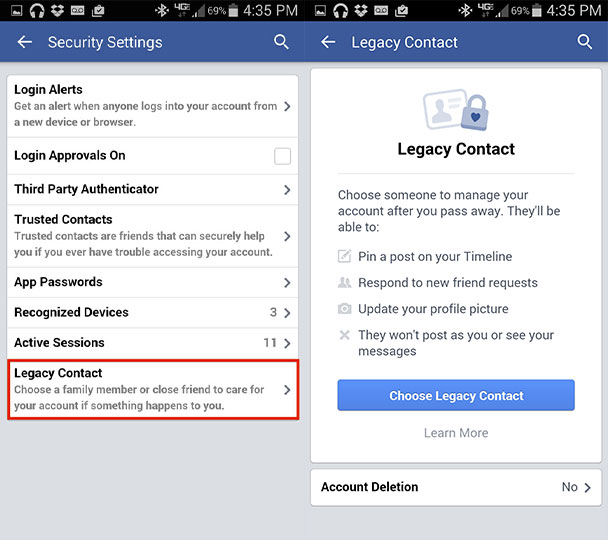
At the bottom of the security options, you will find a “Legacy contact” and there you will be informed on what your designated Legacy Contact will be allowed to do.
If you don’t wish to designate a person, you can choose for your account to be deleted after your death. Even though this option is not recommended, but it is your call.
For more information regarding the creation of a legacy contact go to Facebook’s FAQ Legacy Contact page.
Image Source: NBC news
Image Source: The Hoops News
