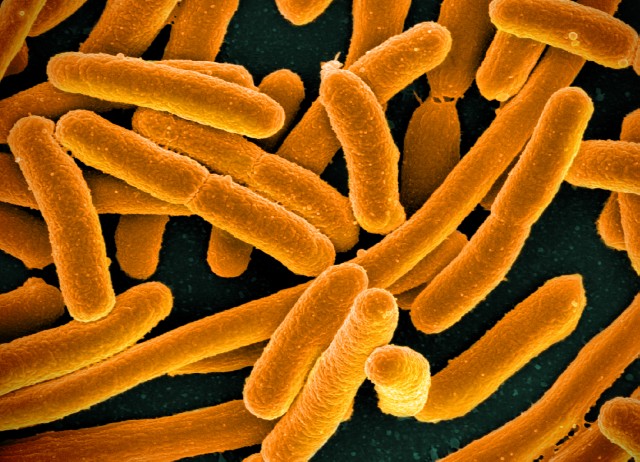
According to a recent study, Earth may host about 1 trillion species of microbes.
According to the latest data from the Earth Microbiome Project, there are about 1 trillion microorganisms living on our planet, of which only 10 million have been so far identified.
Indiana University researchers based their research on extensive datasets and computer models. The study was published May 2 in the journal Proceedings of the National Academy of Sciences.
Scientists used data from federal, academic, and private science sources to gather the largest dataset on microbial life to date. The team had access to scientific data on 5.6 million animal and plant species from more than 35,000 sites around the world. The only site that was not scrutinized was Antarctica.
Biologists said that estimating the number of species living on our planet has been one of biology’s greatest challenges to date. The team deemed their new estimates for microbial life forms “rigorous.” Jay T. Lennon of IU Bloomington College of Arts and Sciences explained that until now science lacked the instruments to accurately assess the number of microbial species dwelling on our planet.
But state-of-the-art genetic sequencing methods gave scientists troves of new data to explore for the new estimates.
The study was funded by the National Science Foundation whose goal is to fill large gaps in mankind’s knowledge about the planet’s biodiversity by 2020. Simon Malcomber, head of the NSF, praised the findings and noted that we have a lot more to learn about microbial diversity.
Microbial life forms are single-celled organisms including bacteria and some species of fungi. Previous attempts to estimate the number of species living on Earth either skipped microorganisms or based their estimates on biased information.
Lennon explained that some older studies based their estimates on just 100 microbes when one gram of soil can hold up to one billion microbes. This means that microbial life forms were often under-sampled in the past.
The new study used data on 20,376 bacteria and microscopic fungi and nearly 15,000 plants, animals, and birds. The data was extracted from several collections including the Human Microbiome Project and Tara Oceans Expedition.
Next, the research team used scaling laws to estimate the number of species living on Earth. Scientists scaled the number of species found in a specific area with the size of that area. This is how they learned that there must be about 1 trillion species of microbes living in the world.
Study authors, however, acknowledged that counting the actual number of microbial species is a nearly impossible task. So far, researchers working for the Earth Microbiome Project have been able to identify just 10 million species.
Image Source: Flickr
