Argyll Free Press

Growing News Network

Tuesday, January 20, 2026
Log in
  • Business
  • Finance
  • Sports
  • Tech & Science
    • HP Envy 4500 Review
    • LG Optimus 170 Review
    • iPod Touch 6th Generation Review
    • HTC One M8 Accessories Set-up
    • Surrealist Games You Must Play
    • Hisense Sero 8 Review
    • Dell Latitude e7440 Review
    • HP Laserjet 1536dnf mfp Review
    • Garmin Fenix 2 Review
    • Skype Vs Viber
    • Best Video Conferencing Software
    • Sony mdr 1r Headphones Review
    • Canon Rebel t3i Review
    • Sennheiser Momentum 2-0 Review
  • Travel
  • Headlines
  • Health
  • United States

NASA Laser Propulsion System Could Revolutionize Space Travel

February 23, 2016 By Cristopher Hall Leave a Comment

NASA Laser Propulsion System Could Revolutionize Space Travel

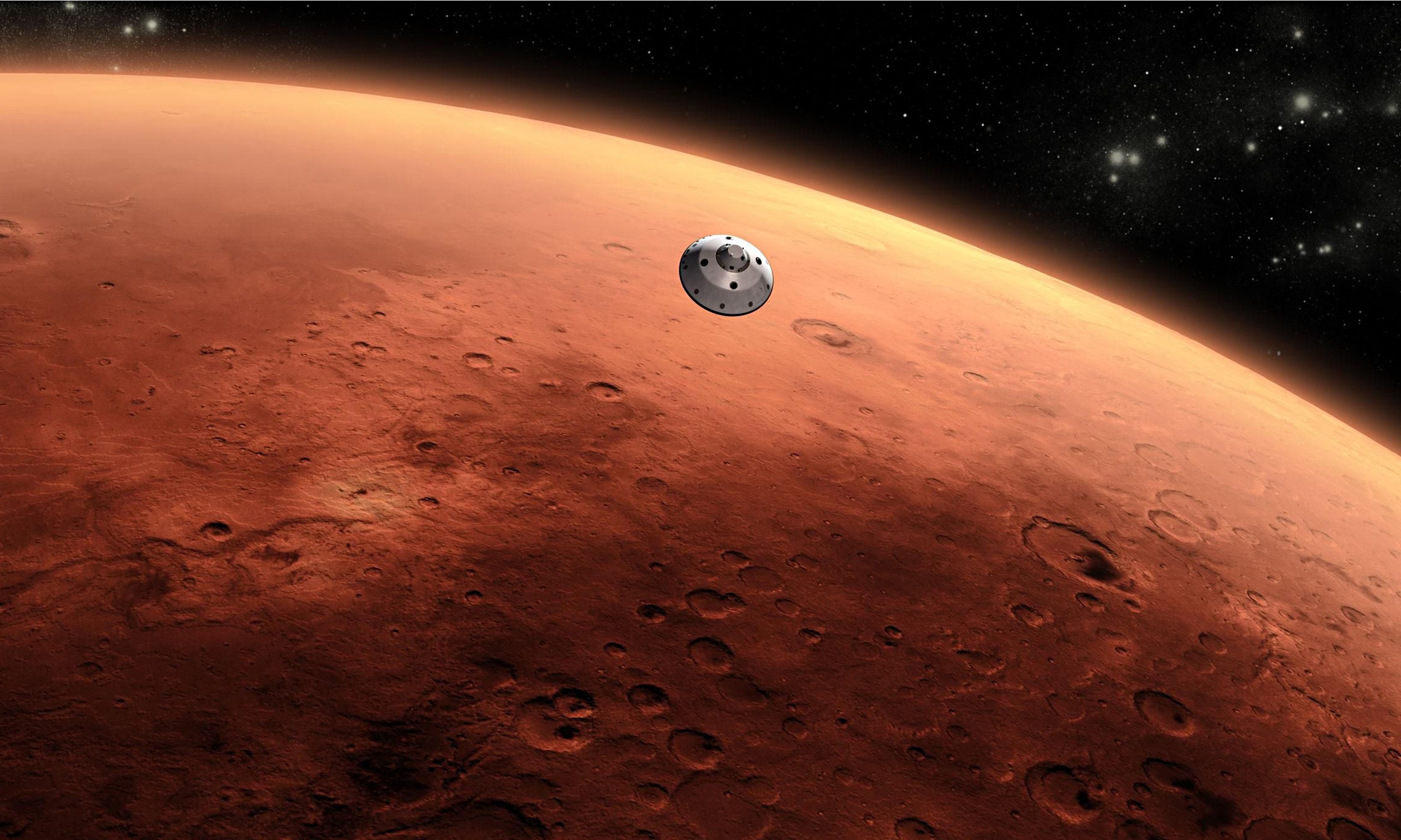
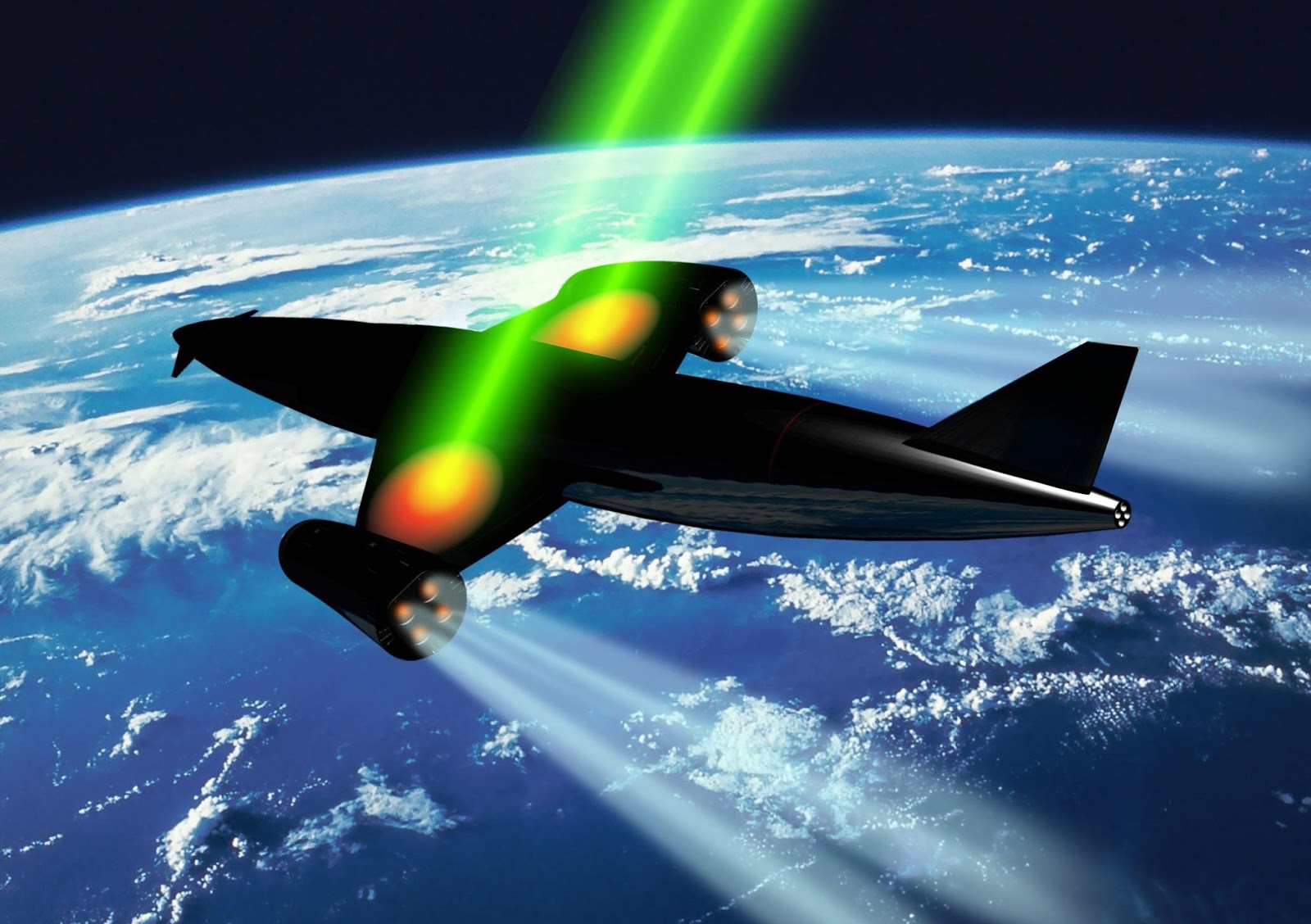
A new project from the National Aeronautics and Space Administration currently being developed, the NASA Laser Propulsion System could revolutionize space travel. This would allow for much faster space travel than it has been known until now; trips to Mars could be completed in as little as 3 days, in comparison to their current estimated time of completion of 6 months to 2 years, depending on the orbital position of both the Earth and the Red Planet in relation to the sun.

Sadly, however, this concept is still a bit of technological marvel when it comes to scientists to put it in practice right away. The way researchers are thinking of making this work is by finding a way to apply the rules and methods they do in the case of particles used in accelerators. With the current knowledge and technology it’s not an issue to get particles to move at the speed of light, but larger scale objects – such as a spacecraft would be – are a completely different story.

So far, large scale objects have not been able to achieve 3% of that speed because of physical limitations of the human-made technology so far. There are simply some laws of nature that mankind has yet to discover workarounds to.

However, one scientist working for NASA has considered a different method of making it work, and it feels like it was partly inspired by Bill Nye’s solar sail idea that was depicted in the ‘Think Big’ scenario. However, this time around it won’t be photons coming from the sun carrying space crafts to other places in our solar system, but instead it would be lasers.

And this time around, the theory is actually applicable at a larger scale too, not just applicable at a small scale like particle accelerators do. Laser propulsion is something that is already used and there’s little to no limitation from taking it up to a larger scale; large enough to send space shuttles all the way to Mars. This is the kind of idea that is not only feasible in a realistic, ‘to-be-achieved’ in the next decade method of reaching further parts of our solar system, but also a much better way of launching various types of shuttles as part of manned or unmanned expedition.

The fuel-based propulsion is not only inefficient, expensive but also potentially harmful to a number of things. By employing laser propulsion technology instead, launching space crafts into outer space would be easier, does not face fuel limitations and comes with a lot more efficiency when it comes to long distances.

Image Source: 1
Filed Under: Tech & Science Tagged With: Laser Propulsion, nasa, NASA Development, Space Travel

NASA Makes a Call to Artists Interested in Space

February 22, 2016 By Michael Turner Leave a Comment

NASA Makes a Call to Artists Interested in Space

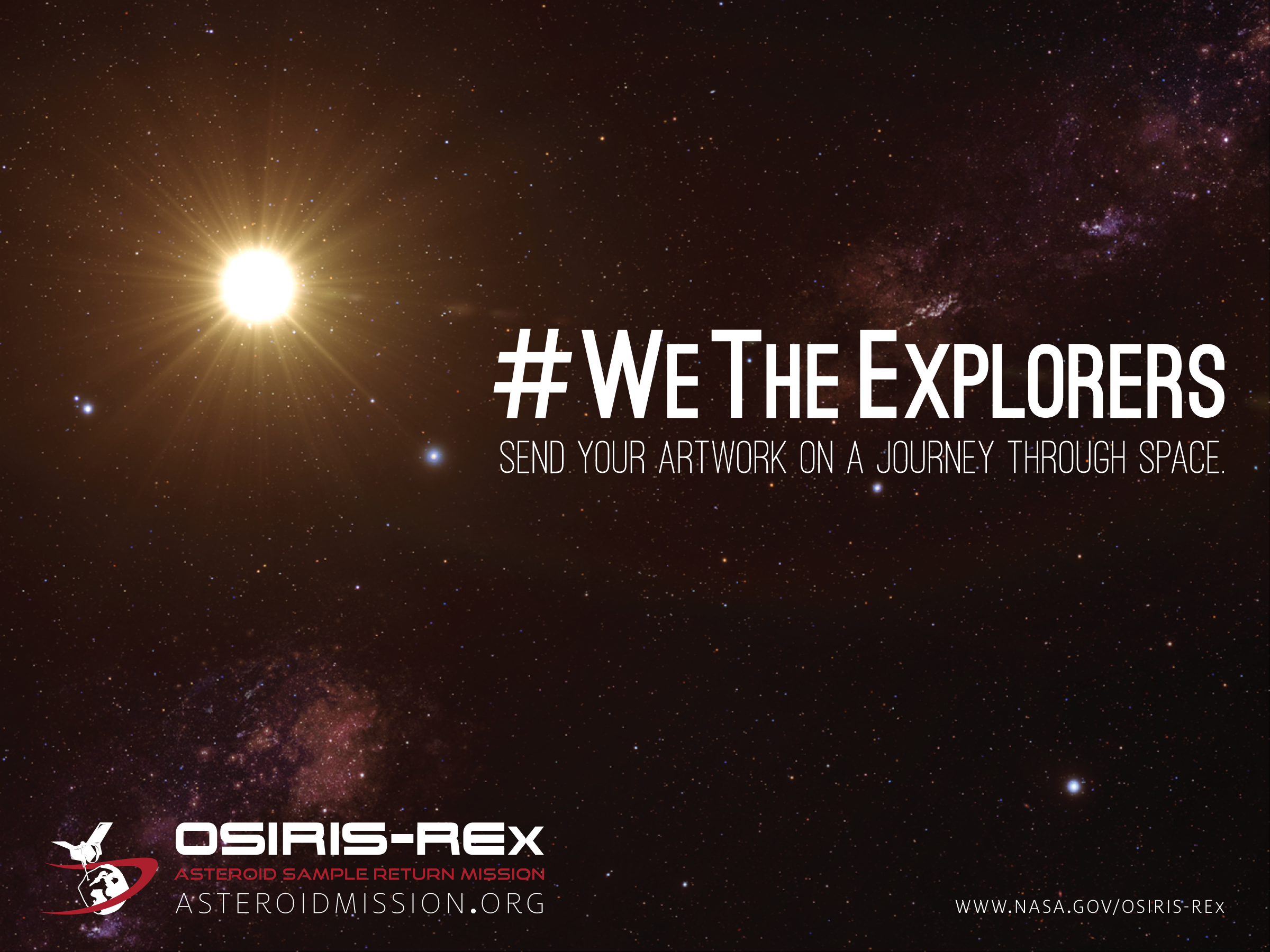
NASA makes a call to artists interested in space, but in a different manner than the one you would expect. it’s unclear whether this is another method of raising awareness of human advancement when it comes to space travel, or simply a method of expressing the wonder of exploration. And the National Aeronautics and Space Administration is also giving artists a chance at it too.

The subject of the artistic pieces expected to be received by NASA is what the artists envision a journey aboard NASA’s Origins, Spectral Interpretation, Resource Identification, Security-Regolith Explorer – also known as OSIRIS-REx – spacecraft would be like. This is not just a hypothetical expedition though; the OSIRIS-REx will, in fact, be the first task of this sort to be commissioned by the United States. The craft will be sent to an asteroid where it will collect samples which it will then return to Earth.

However, the launch won’t happen until September this year, which gives artists plenty of time to prepare their entries, as part of the #WeTheExplorers campaign. The pieces submitted will be saved on a data chip and sent away with the spacecraft. And they won’t be alone either, as OSIRIS-REx already carries the data stored from more than 442,000 names submitted through a different campaign that took place in 2014, known as “Messages to Bennu”.

Both of these endeavors succeed in showing the trip that this mission has represented up until now, starting with the creation and building of the craft and ending with its ultimate goal of reaching an asteroid in order to study it closely.

But the campaign holds more than just room for painters. You can submit almost every kind of art: sketches, photos, poems, videos, songs or any other form of artistic manifestation you can think of that could be stored on a chip and sent out on a craft to outer space. As long as it reflects what you think it means to be a space explorer.

Submissions will be accepted via Twitter and Instagram until March 20th the latest and you can read more details regarding how you can take part in this program on www.asteroidmission.org/WeTheExplorers. It may not be space travel per se, but this way anyone can take part in the voyage that the OSIRIS-REx is about to embark upon.

Image Source: 1

Filed Under: Tech & Science Tagged With: nasa, OSIRIS-REx, Space missions, WeTheExplorers

NASA Envisions Futuristic Interplanetary Vacation Posters

February 14, 2016 By Roxanne Briean Leave a Comment

NASA Envisions Futuristic Interplanetary Vacation Posters

A fairly unexpected but duly appreciated jewel hit the official website news feed recently, showing us the way NASA envisions futuristic interplanetary vacation posters. At least for when that will be a thing of the day. Once again, this is the work of the Jet Propulsion Laboratory situated in Pasadena, California. The same group of people has been responsible for a huge amount of recent marketing and other means of delicately trying to grasp people’s attention towards the importance of space travel.

Only recently they released a video of a regular day at the Jet Propulsion Laboratory, including a tour of it. They also showed how future astronauts train and prepare for potential space missions. They seem to be on a spree, possibly part of NASA’s attempt to open the eyes of the public in the direction of space discovery.

It is known that NASA recently made a statement, saying that the funds necessary for both manned missions they want to undertake – another landing on the Moon as well as a trip to Mars – are incredibly high and unfortunately unrealistic to achieve. Because of that, the National Aeronautics and Space Administration will have to only settle for one or the other to be performed in the next 20 years. Considering one mission of this scale would cost roughly half a trillion dollars, NASA is turning to the public and also attempting to obtain financial help from federal funds.

The posters that made their way to the internet as part of the Visions of the Future series in an attempt to spark interest of the public towards the world that we would live in if space travelling and vacations would become a reality. The Jet Propulsion Laboratory visual strategist Dan Goods talked about the style that was chosen for the posters as being inspired from what science fiction artists and writers saw the future to be like in mid 20th century.

And as a matter of fact, most of them do look like excellent book cover ideas for Robert A. Heinlein book revisions. The 14 posters depict different destinations, and to each their very respective traits and most known features.

That way, you are invited to experience the charm of gravity assist on an aligned series of gas giants as Jupiter, Saturn, Uranus and Neptune, something that happens only every 175 years, invited to visit the already historic (by then) sites of Mars, the last celestial body to be known to have water on it – Ceres, the icy Europa or the colorful auroras of Jupiter. Otherworldly destinations make their appearance too, listing Kepler-15B, the planet that orbits around two suns, the ‘red Earth’ from another solar system or places such as the rogue planet PSO J318.5-22 – the one that doesn’t orbit a sun.

You can find all the posters available for download here.

Image Source: 1

Filed Under: Tech & Science Tagged With: nasa, National Aeronautics and Space Administration, Visions of the Future, Visions of the Future Posters

NASA Is Hiring Astronauts for the Mars Mission

February 13, 2016 By Deborah Campbell Leave a Comment

NASA Is Hiring Astronauts for the Mars Mission

Applications are now open for anyone ambitious but qualified as NASA is hiring astronauts for the Mars mission – whenever that will happen. While original plans involved the year 2020 for the first manned mission to the surface of the red planet, it may not happen until several years later, depending on how well funding the mission from the public and federal resources goes.

Regardless, NASA has decided that a manned mission to the planet of promise is the next biggest step in human evolution and achievement. And because the organization came to the conclusion that it cannot afford to focus on both a potential Mars mission as well as another landing on the Moon, it seems to have, after all, chosen that Mars should be the next destination for mankind.

The National Aeronautics and Space Administration is therefore placing all their efforts in raising funds for the Mars mission and training its future team of astronauts to be. For the first time in four years, NASA is hiring the next generation of astronauts; however, only one of them could eventually actually go to the Red Planet.

The team of astronauts would be training at Johnson Space Center in Houston; and that’s no easy feat. Anyone hoping to leave in a space shuttle for another planet one day needs to have excellent physical condition to begin with, but also a hefty amount of specialized training. That includes things such as spending a long time underwater and performing tasks in what is very similar to a zero gravity scenario, understand and train in the harsh conditions of outer space as well as prepare for a real life, real scale shuttle launch.

But being an astronaut is not only about being physically and mentally fit for the trip. NASA is currently looking for individuals who have a bachelor’s degree in math, science or engineering, with experience or with a military background as the minimum requirements.

NASA also places a lot of emphasis on communication skills. A 2 years long mission on a space craft requires a high degree of communication skills and teamwork, especially if you take into account that the individuals who will be joining need to be able to work together comfortably in the tight confines of a space ship.

Even though the next class of astronauts is only looking for 8 to 14 people, more than 6,100 applicants have already shown their interest in the mission.

Image Source: 1

Filed Under: Tech & Science Tagged With: Mars mission, nasa, NASA Astronauts, NASA hiring

NASA Can Only Afford One Mission to Either Mars or the Moon

February 5, 2016 By Kenneth Scott Leave a Comment

NASA Can Only Afford One Mission to Either Mars or the Moon

Despite initial aspirations and hopes for mankind to both step on the Moon again or venture to the next planet in line, NASA can only afford one mission to either Mars or the Moon. Former director of National Aeronautics and Space Administration Goddard Space Flight Center, Tom Young, has taken the time to talk about the reality of achieving these longtime goals of humanity.

It is a known fact that the reason NASA hasn’t sent any human expeditions out to the Moon for 44 years for example. Manned missions such as that not only take a huge amount of time and preparation to get going, but are also ridiculously expensive (billions of dollars at least) and right now not much else than a reason for humans to be able to say they stepped on a different planet or satellite, depending on case.

Although NASA has been actively advertising its ‘Journey to Mars’ campaign and also considering returning to the Moon for the first time in decades, Tom Young has openly stated that it’s very clear to him and the NASA organization that doing both is not something they can afford, having to focus their attention on just one of the two options.

While the moon has been a dreamed-of destination for mankind for decades, Mars still remains that one place where our species has yet to set foot on. A trip to Mars is a lot more difficult than it sounds on paper for a wide variety of reasons, beyond the mere financial and technological limitations. A trip to Mars would have to be done only at specific moments throughout Mars’ and the Earth’s movement along their orbits to minimize the time it actually takes for a spacecraft to reach it. At best, a flight to Mars could take 6 months. At worst, nearly 2 years.

NASA released a report called ‘Pathways to Exploration’ in 2014, in which it realistically stated that a manned expedition to Mars would be possible in the next 20 to 40 years, with the base expense of half a trillion dollars for it. Tom Young also made a point regarding the dire need for humanity to not give up their ambition for manned outer space exploration, but not at the cost of making frivolous plans, especially when so much money is at stake.

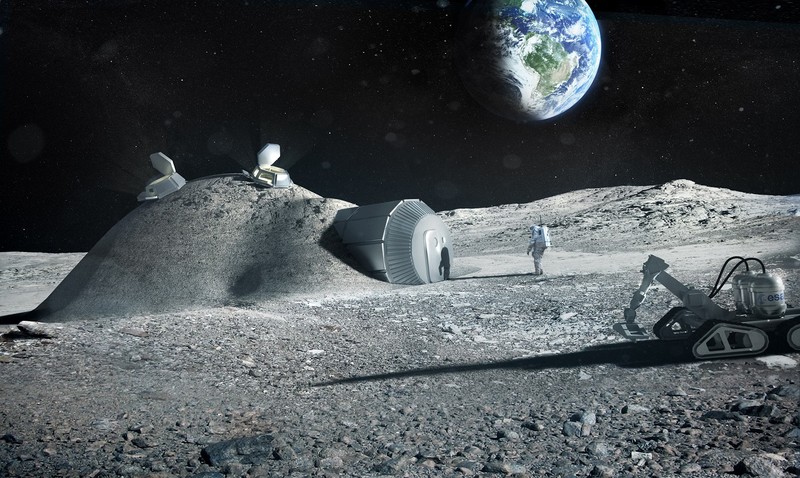
However, another ‘back-up’ plan that NASA has thought of is ‘a pit stop at the moon’ in humanity’s quest to reach further parts of our solar system. Instead of making the direct trip from Earth to Mars, establishing a moon base could help humans learn how to survive in alien worlds and develop technologies that would allow them to be more prepared for more ambitious plans such as Mars.

Image Source: 1

Filed Under: Tech & Science Tagged With: manned space exploration, Mars mission, Moon Mission, nasa

Google D-Wave 2X Quantum Computer Controversy

December 14, 2015 By Karen Jackson Leave a Comment

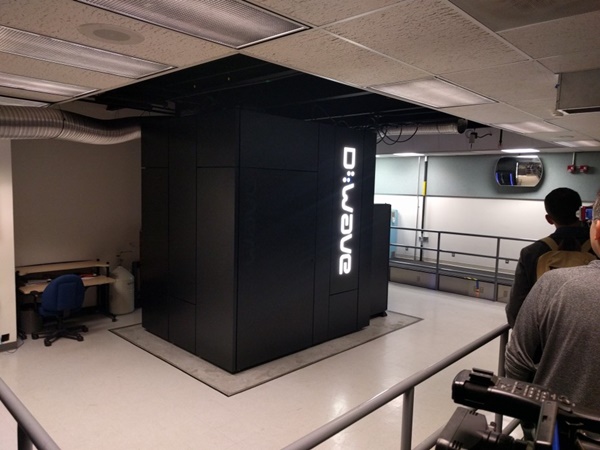
A D-Wave 2X Quantum Computer is installed at the NASA Ames Research Center

Last week, Google’s AI team announced that its tests at NASA’s Ames Research Center on the D-Wave 2X quantum computer yielded exceedingly pleasing results: it was 100.000.000 times faster at solving the problems set to it than a conventional computer using quantum annealing as opposed to the simulated annealing conventionally used for such problems.

Yes, you read that right. Google partnered with NASA, a consortium of universities (the Universities Space Research Association – USRA) and with D-Wave Systems Inc. in 2013 so that the first three organizations could test and refine the latter company’s quantum computers to further the development of AI and space travel.

Since its Orion prototype quantum computer, presented around 2007 D-Wave has gradually increased the technology’s capabilities. If the Orion prototype worked on a 16-qubit processor, the current D-Wave 2X works on one with more than 1000 qubits.

The way quantum computers are supposed to work is that, because of the strange phenomena that take place at a quantum level, qubits can have both a 0 and 1 value as well as an additional 0 and 1 at the same time value, due to superposition.

Since conventional processors operate with just 2 alternative values (1 or 0), quantum computers should theoretically be way faster.

And judging by Google’s announcement last week, the theory proved out as their AI team demonstrated these incredible speeds using the D-Wave 2X quantum computer.

Or did they? Because here’s the catch.

Ever since its first claims at having built a functional quantum computer, D-Wave has been consistently surrounded both by awe, excitement and praise, as well as by criticism, accusations and dismissal by respected scientists.

The first camp is pretty clearly defined by the Google, NASA and USRA scientists working with the computers and other non-affiliated ones.

But the second one shouldn’t be neglected either, boasting prominent names such as Umesh Vazirani (one of the founders of the theory of quantum complexity), Wim van Dam of UC Santa Barbara and Scott Aaronson of MIT, the latter proclaiming himself the “Chief D-Wave Skeptick” (with a short hiatus) for quite some time.

Making matters more confusing is that an article published in Nature in 2011, does support D-Wave’s technological claims, stating that the company’s chips do show some of the quantum mechanical properties required for quantum computing.

But does that mean that D-Wave computers actually operate on a quantum level? Wim van Dam and others believe there is no way to tell for sure at the moment. And the more hardcore critics like Varizani or Aaronson say that D-Wave misunderstood some quantum principles, that its claimed speedup flat out isn’t true and that they inflate their results.

Still, Google claims that the results are real and really quantum. And hints at future applications like fast and optimized space travel plotting, drug testing, airport coordination, encryption and many others.

Time will tell. What do you think?

Image source: 1.

Filed Under: Headlines Tagged With: D-Wave, D-Wave 2X quantum computer, D-Wave quantum computer, Google, Google AI team, Google quantum computing, nasa, Nasa Ames Research Center, quantum computer, quantum computing.

Kepler Discovers Kepler-452b Which Resembles Earth

July 26, 2015 By Karen Jackson Leave a Comment

NASA discoveres Kepler-452b

So NASA’s Kepler just discovered a planet that resembles Earth – dubbed the Kepler-452b, and it revolves around a G-type star like ours.

The Kepler-452b is 60 percent more massive than Earth, and this is a good thing – previous discovered planets which NASA considered to be habitable, weren’t. Mainly due to them revolving around a cool star, or having no solid, rocky surfaces.

This is starting to shape-up like the intro to one of Asimov’s Foundation books.

This exoplanet Kepler-452b, NASA thinks, has a gravity twice that of Earth’s, and thicker, and more cloudier atmosphere. Which the average Joe can only think of meaning more rain. Rain equals water. Water equals life. Boom. We just discovered aliens. I would like my money now Stephen Hawking.

Kepler-452b system

If we’re lucky, there might be life starting to frolic around under those dense clouds. If we’re unlucky, the exoplanet is home to a highly-advanced alien life form which doesn’t take too kindly to other beings visiting them.

The Kepler-452b is slower than our Earth. Consider this – our year consists of 365 days, theirs might be 385.

Alas, this isn’t the first time that NASA announced that the Kepler found an exoplanet that might be habitable. It may prove to be just another lifeless planet. Sure, we can’t be the only ones in this vast universe.

NASA boasts that it has discovered, to date, about 4,675 possible planets, and they will be adding new fancy high-tech telescopes to their arsenal – they will be equipped with a 3,200 megapixel camera, and they are called Large Synoptic Survey Telescopes.

Kepler-452b habitable zone

” On the 20th anniversary year of the discovery that proved other suns host planets, the Kepler exoplanet explorer has discovered a planet and star which most closely resemble the Earth and our Sun. This exciting result brings us one step closer to finding an Earth 2.0.” noted John Grunsfeld, associate administrator of NASA’s Science Mission Directorate.

Earth 2 might just exist, but is it okay, for humanity, to find other life-forms? Even Stephen Hawking says no. Think of it this way. When Columbus, and Amerigo Vespucci, discovered the new land we call today America, they went on a crusade of killing every single human that inhabited the continent. After many years, European colonists did the same. Who’s there to say that otherworldly being won’t do the same? And who’s there to say that we won’t do the same?

Will we become the hunters, or the hunted in this new space era?

Image Source: 1, 2, 3

Filed Under: Headlines Tagged With: Aliens, Aline Life Forms, Kepler, Kepler-452b, nasa

Jupiter’s Moon Europa Could Hold Salt

May 15, 2015 By Roxanne Briean Leave a Comment

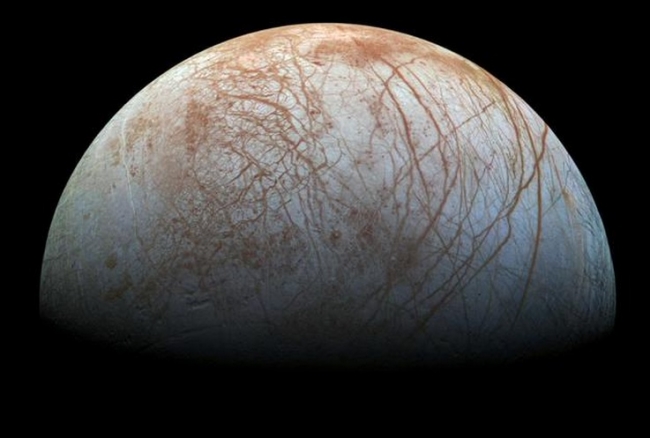
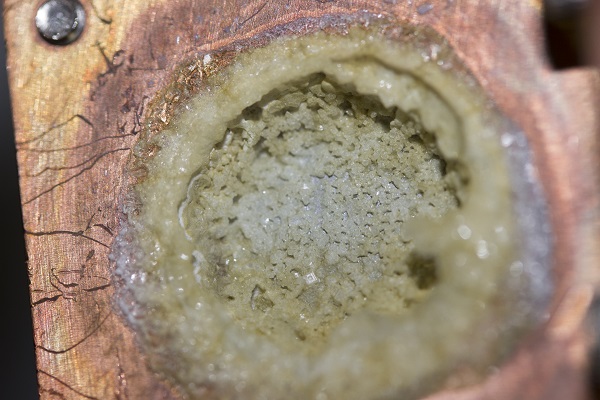
Europa covered in dark material

Dark material coating has been seen on the surface of Jupiter’s Moon Europa – this isn’t news, because researchers have been trying to study it for the past decade. Now scientists say that it might be salt rising up to the icy surface from an underground ocean.

Because Jupiter has a powerful magnetic field, radiation from it might influence the colour of the salt – hence why it’s dark, not grey to white.

Lab experiments have been conducted at the space agency, and scientists are trying to pin-point if the frozen Europa can sustain life or not. But at the moment uncertainty floats in the air. In an article that we posted on Tuesday we talked about a robotic eel, and how it is the perfect data gatherer that could solve this mystery. Until experiment can be made on the surface of Europa, nobody knows for sure if Jupiter’s Moon is a place suited for life-forms, or whether the dark material coating truly is salt or not.

Curt Niebur, an Outer Planets Program scientist based at NASA’s headquarters in Washington, D.C. has stated for NASA’s official website that – “We have many questions about Europa, the most important and most difficult to answer being, is there life? Research like this is important because it focuses on questions we can definitively answer, like whether or not Europa is inhabitable. Once we have those answers, we can tackle the bigger question about life in the ocean beneath Europa’s ice shell.”

Salt on Europa?

NASA’s experiment – Europa-in-a-can – involves recreating the exact setting of the Moon in space – near vacuum conditions, cold temperatures, and heavy radiation. Scientists have added samples from various compounds to the surface of the man-made Moon – common tablet salt, and salt mixed with water to name a few. When the samples were bombarded with intense radiation, and under minus 280 degrees Fahrenheit temperature, they started to turn a yellow-brown colour that might match what is seen on the surface of the real Moon.

Kevin Hand, a planetary scientist based at the space agency’s Jet Propulsion Laboratory in Pasadena, Calif, who is also the study leader, has been reported of saying that – ” This work tells us the chemical signature of radiation-baked sodium chloride is a compelling match to spacecraft data for Europa’s mystery material. If it’s just salt from the ocean below, that would be a simple and elegant solution for what the dark, mysterious material is.”

Image Source: 1, 2

Filed Under: Headlines Tagged With: Europa, Jupiter, Jupiter's Europa, Jupiter's Moon Europa, nasa

NASA Wants to Explore Europa With a Robotic Eel

May 12, 2015 By Kenneth Scott Leave a Comment

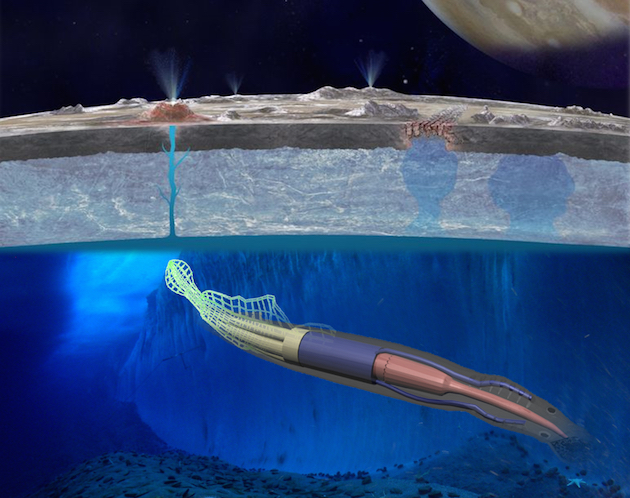
NASA wants to send a robotic eel to Europa

No, NASA hasn’t gone all cuckoo on us, and they really do have a great point to make on why a robotic eel is just the perfect thing to explore Jupiter’s Europa.

This shouldn’t come as a surprise to anyone, considering that NASA wants to explore Saturn’s moon, Titan, with a submarine.

The amphibious worm-like robot that you can see in the picture just down below is actually a rover outfitted specifically for Europa’s icy climes, and it’s quite different from the previously underwater-used robotical fish called Deep-SCINI which was used to discover new species of fish in the deep seas beneath Antarctica.

NASA wants to use a robotic eel

There aren’t any power outlets on Titan, go figure, so where’s the robotic eel going to take its energy from? Well NASA is looking into implementing a sort of antenna that could harness the power from “locally changing magnetic fields.” – this is slowly starting to become a science-fiction tale.

15 different proposals were awarded $100,000 each in NASA’s phase one of Innovative Advanced Concepts, or for short NIAC. If the concepts prove to work, the second phase will commence, and it will consist of a $500,000 funding for the winner.

Amongst the robotic eel, there are also other toys that dwell in the science-fiction department.

An unmanned pair of gliders that could do the exact same type things as orbital satellites is one to look out of. When stacked, they could work together to keep themselves in Earth’s atmosphere for basically years – and they also cost a ton less than what orbital satellites are made of.

NASA logo

The next piece of gear that has got my attention is ” robotic crawlers, hoppers and soccer-ball style buckey-bots” – I beg your pardon? What? They are inexpensive, and could possibly map locations and look for water and nitrogen. Their creators have decided to name them CRICKET, which stands for Cryogenic Reservoir Inventory by Cost-Effective Kinetically Enhanced Technology.

Please note that all of these new toys have not yet been proven to work properly, and are still in concept phase, but when proof comes out, be sure that you, dear reader, will be amongst the first to know.

What do you think? Will NASA employ a robotic eel to do its bidding? Or CRICKET will reign supreme?

Image Source: 1, 2, 3

Filed Under: Headlines Tagged With: Jupiter's Europa, nasa, Robotic Eel, Space

NASA is Keen On Analysing the Remains of a Supernova

May 4, 2015 By Roxanne Briean Leave a Comment

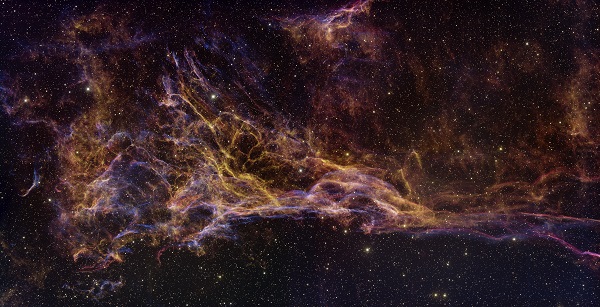
NASA mission to the remains of a supernova

NASA wants to probe the remains of a supernova that exploded 20,000 years ago – examining the Cygnus Loop may result in one of the biggest, and fruitful, experiments in our history.

The mission will involve a probe which will analyse the contents of the Cygnus Loop. A sounding rocket will gather data emitted from the stellar event – to be more exact, x-rays are still being emitted, and scientists think that they can find crucial information by analysing them; crucial information that can lead to a better understanding of what supernovas are made of.

Also, scientists hope that by studying Cyngus Loop’s contents, they will shine a bright light on one of the biggest questions that has plagued our world. What is the Universe made out of? The new data that NASA will acquire will most likely sprout a ton of new questions regarding our stance in the universe, and our fate in the infinite unknown.

On May the 2nd, NASA launched OGRESS – Off-plane Grating Rocker for Extended Source Spectroscopy – from White Sands Missile Range, in New Mexico.

A following voyage is planned for 2018 on the star Capella.

NASA isn't the only one that tries to meddle with the universe

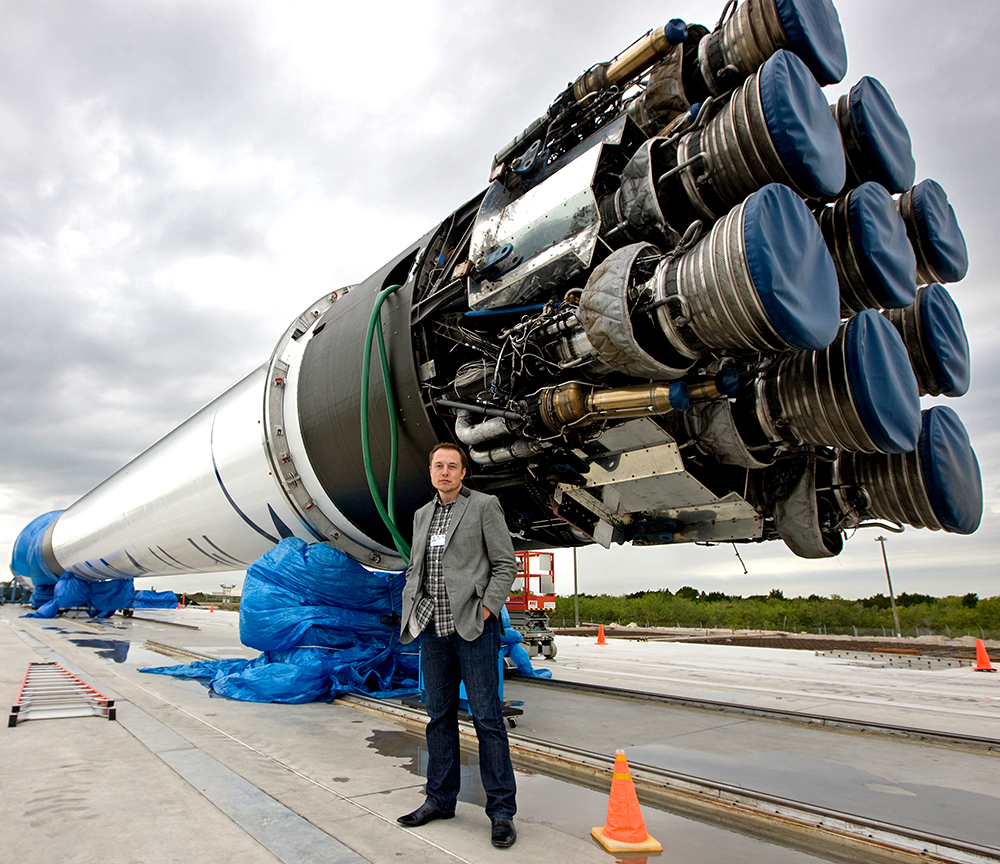
But NASA isn’t the only one trying to breach the universe’s hard, and mysterious, wall. Elon Musk, the famous tech billionaire with a huge passion for spaceflight, and all space related things, is known for trying to be one of the pioneers that would make human life multi-planetary. Unfortunately he is encountering some technical difficulties, regarding his rockets taking off, and then actually landing them, without the whole utter destruction thing – here’s a YouTube video of the Falcon 9 landing failure.

NASA has some tight competition from Mars One

Also, Dutch entrepreneur Bas Lansdorp is leading the private spaceflight project called Mars One – a non-profit organization with its roots in the Netherlands that plans to form a colony on Mars by 2027. The plans are that on 2027 the first humans will arrive on Mars, and every two years additional teams will be added. The goals is that by 2035 there would be 20 people living on Mars.

Slowly, but surely, humanity is entering a new space era, and in 100 years Mars will probably be a tourist destination.

NASA competition from Blue Origin

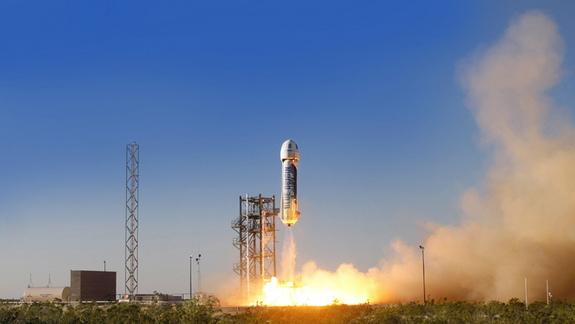
Amazon founder Jeff Bezos also has a company with interests in space. Called Blue Origin, the company is doing the same research in reusable crafts like SpaceX, and on the 29th of April they have successfully launched, and landed their space-ship. Although everyone is bashing them for the design of the ship. Yes, it looks phallic, but do we really care? It’s taking people up-to-and-back from the heavens. Take a look at Blue Origin’s first flight.

It saddens me that companies don’t team up, and share their research. They are doing a great job, undoubtedly, but let’s be real for a second – they are seeing this as a huge opportunity that will make them even more rich in the future. Frank Herbert was right, corporate driven houses will conquer space, not governments.

Image Source: 0, 1, 2, 3, 4

Filed Under: Headlines Tagged With: Bas Lansdorp, Blue Origin, Elon Musk, Jeff Bezos, mars one, nasa, SpaceX

  • « Previous Page
  • 1
  • 2
  • 3
  • Next Page »

Subscribe to Blog via Email

Enter your email address to subscribe to this blog and receive notifications of new posts by email.

Join 10 other subscribers

Recent Articles

police handcuffs man

German Man Probed In Poisoning That Killed 21 Employees Since 2000

June 29, 2018 By Kenneth Scott Leave a Comment

Chicken wings bar

Intoxicated South Carolina Man Punches Waitress Who Refused to Serve Him Alcohol

June 29, 2018 By Karen Jackson Leave a Comment

gaming

New Zealand gamer Who Flew Halfway Across The World for Virginia Teen Gets Shots By Her Mother

June 28, 2018 By Cristopher Hall Leave a Comment

party

Former Virginia Tech Freshman Sentenced to 50 Years in Prison for Stabbing a Girl to Death

June 28, 2018 By Roxanne Briean Leave a Comment

bonfire

British Couple Sentenced to Life in Prison for Torturing and Murdering French Nanny

June 27, 2018 By Deborah Campbell Leave a Comment

pay phone

Texas Father of Girl Disappeared in the 80s Ignored by Authorities

June 26, 2018 By Cristopher Hall Leave a Comment

bottled water

San Francisco Woman Threatened to Call Police on Girl Who Sold Ice Water for Disneyland Trip

June 25, 2018 By Roxanne Briean Leave a Comment

Maplewood Park

Missouri Man Robbed by Date and Accomplice in Park

June 22, 2018 By Nancy Young Leave a Comment

coding

New York Man Sentenced in Cyberstalking Former Girlfriend, Mailing Drugs to Her Dorm

June 22, 2018 By Deborah Campbell Leave a Comment

headphones

Bose Poised to Launch Sleepbuds, In-Ear Headphones That Help You Sleep

June 21, 2018 By Nancy Young Leave a Comment

Police light

Intoxicated Female Driver in Custody for Pulling Arresting Officer by the Hair

June 21, 2018 By Kenneth Scott Leave a Comment

kitchen

Restaurant Manager Arrested and Charged in Shooting Death of Co-Worker over Negative Yelp Reviews

June 20, 2018 By Karen Jackson Leave a Comment

plastic container

Pennsylvania Couple Charged in Violent Death of Infant Discovered Buried in Cat Litter

June 19, 2018 By Cristopher Hall Leave a Comment

tailpipe

Minnesota Teen Gets Head Stuck In Oversized Tailpipe Winstock Music Festival

June 18, 2018 By Karen Jackson Leave a Comment

Pages

  • About Us
  • Contact us
  • Privacy Policy
  • Privacy Policy GDPR
  • Staff
  • Terms and Conditions

Recent Posts

  • German Man Probed In Poisoning That Killed 21 Employees Since 2000 June 29, 2018
  • Intoxicated South Carolina Man Punches Waitress Who Refused to Serve Him Alcohol June 29, 2018
  • New Zealand gamer Who Flew Halfway Across The World for Virginia Teen Gets Shots By Her Mother June 28, 2018
  • Former Virginia Tech Freshman Sentenced to 50 Years in Prison for Stabbing a Girl to Death June 28, 2018
  • British Couple Sentenced to Life in Prison for Torturing and Murdering French Nanny June 27, 2018
  • Texas Father of Girl Disappeared in the 80s Ignored by Authorities June 26, 2018
  • San Francisco Woman Threatened to Call Police on Girl Who Sold Ice Water for Disneyland Trip June 25, 2018

Categories

  • Business
  • Entertainment
  • Finance
  • Headlines
  • Health
  • Life
  • Nature
  • Science
  • Sports
  • Tech & Science
  • Travel
  • Uncategorized
  • United States
  • World

Copyright © 2026 ArgyllFreePress.com
About · Privacy Policy · Terms of Use · Contact