As more time passes and we advance into the year, there seems to be an undeniable trend happening. It would be a false statement to say that this is a new thing however; it’s been happening for years but it seems to have gotten way more powerful recently. Strangely enough, concomitantly with the release of the iPhone 6 Plus.
Apple seems to have set a new trend when they decided to have a reset on their own principle and forget about the whole small and powerful design for their phones. They took a leap of faith by now switching to the trend themselves and making bigger, but still powerful phones.
The only reason that the iPhone 6 came in two variants was probably something done that way to make sure it appeals to both new customers and already loyal fans of the Apple products.
These days, everyone is pushing the size limit on the phones they design with no regret. If producers want to not have their devices classified as phablets, they still go as far as they can with the display size. Hybrids even more so. Even tablets seem to be getting the same treatment: take as an example Apple’s leaked mold for the new tablet they seem to be preparing for later this year.
Given the recent study that proved that the bigger phones get, the less users turn to their tablets for day to day use, the company seemed to have become riled up with the information and acting accordingly.
Xiaomi – ‘The Apple of the East’
If you’re wondering why I keep making Apple references, well, it’s not a bias towards the company. It’s simply because the Chinese developer that we will be turning our attention towards now is Xiaomi, a company that has, on several occasions, been labeled as “Apple of the East” thanks to the uncanny resemblance between its smartphones appearance and Apple’s mobile phone products.
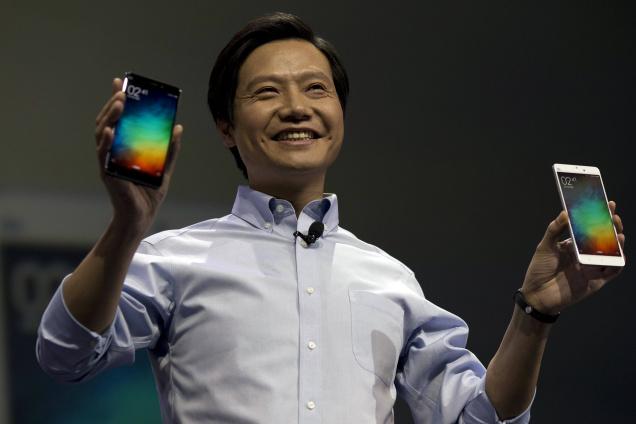
Its latest release however seems to have been putting extra effort in leaping away from the label in question as the two new releases brought by the Chinese company look anything BUT Apple. If anything, they resemble Android devices way more. We were able to get several sneak previews of the two new flagship devices Xiaomi is bringing to the market – dubbed Mi Note and Mi Note Pro – and by the looks of it, the pair of phones is ready to take on a challenge head on. Hoping to be able to compete with the success that the iPhone 6 Plus has scored in China, even the company itself started off its presentation campaign with comparisons between their new devices and the phablet version of the latest iPhone, made in the most direct way possible.
The occasion that brought the two flagship smartphones into the spotlight was last week’s press event in Beijing. Attendees were able to view and tinker around with the phone, and truth be told, impressions seem to only speak of good things. News of the Mi Note’s variant’s release say that we should be expecting this phone to hit stores on January 27th while its Pro version won’t make it out into the light and into consumer’s pockets until March 2015. This is only speaking for Chinese stores as well as stores in India as there is no news of release anywhere else so far.
Mi Note & Mi Note Pro Specs
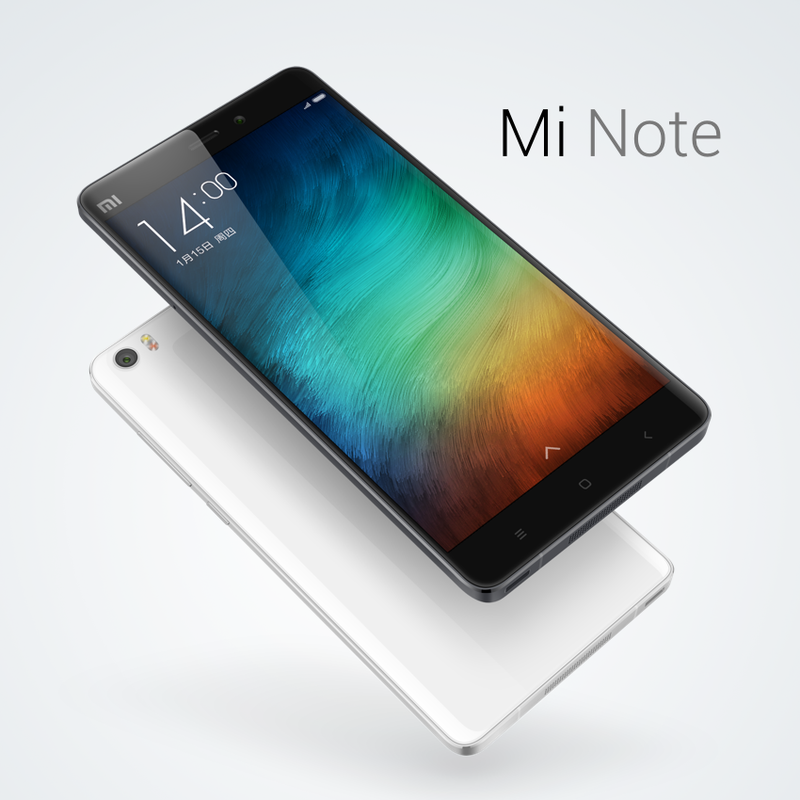
So let’s talk specs and details for a little while. While there’s no visual, design difference between the two models, the Pro version is rightfully entitled that because it packs up a harder hardware kick. In terms of design, the company has certainly exceeded themselves – the entire thing looks polished and incredibly well built.
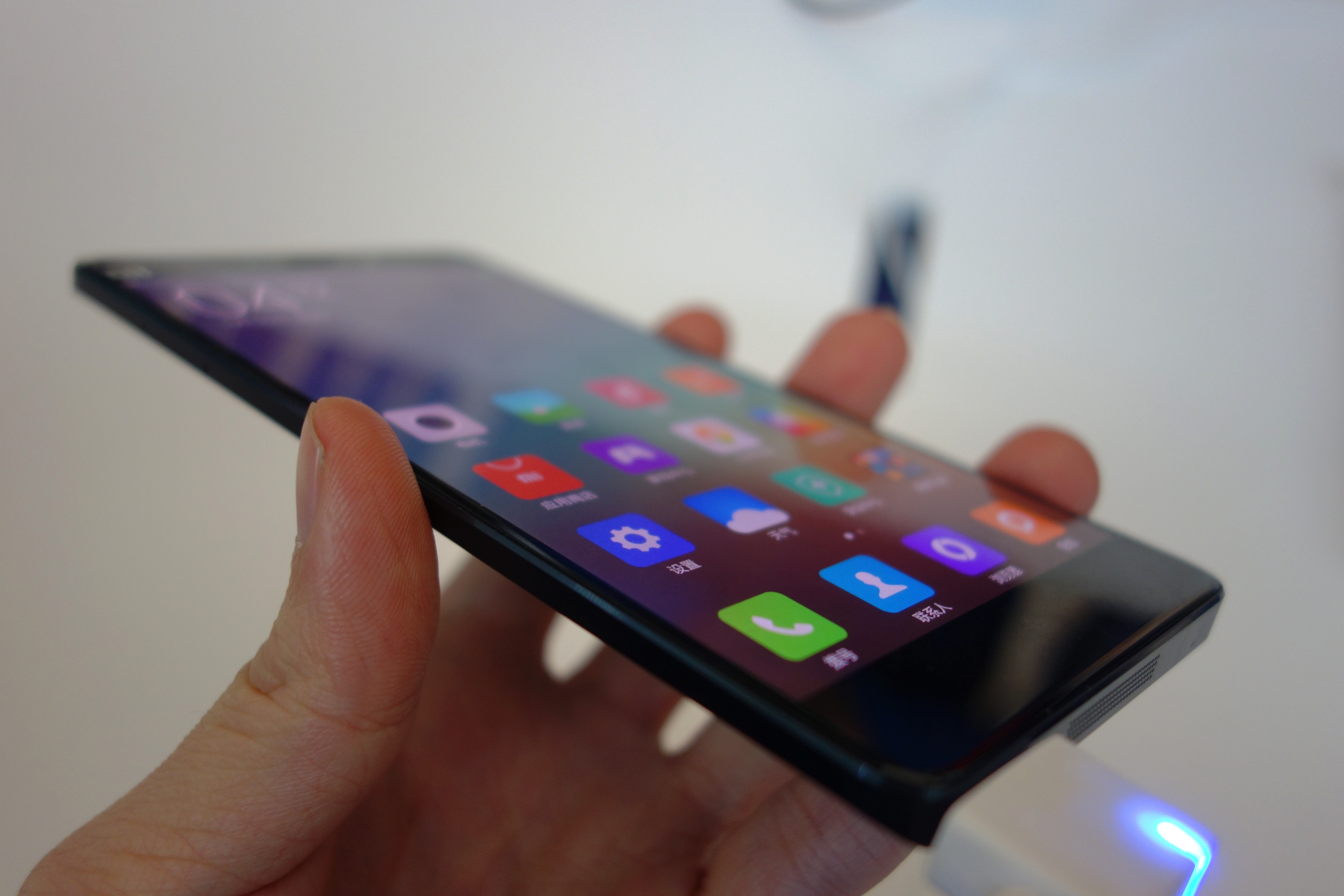
Including a metal case that so many producers run away from these days to be able to cut on prices, the phone was claimed to feel like a well-crafted piece of jewelry. Both of the Mi Note phablets make use of Corning’s Gorilla Glass 3 with a 2.5D curve on the front – just like its iPhone 6 counterpart – and 3D curve on the back. During the event it was showcased just how durable the glass is to scratches and damage, including the powerful self-healing capabilities that more and more phones adopt these days for their screen’s health. Said screen also includes an anti-glare coating that was also used in the iPad Air 2, reducing reflection when stood in sunlight and improving viewing angles just as well.
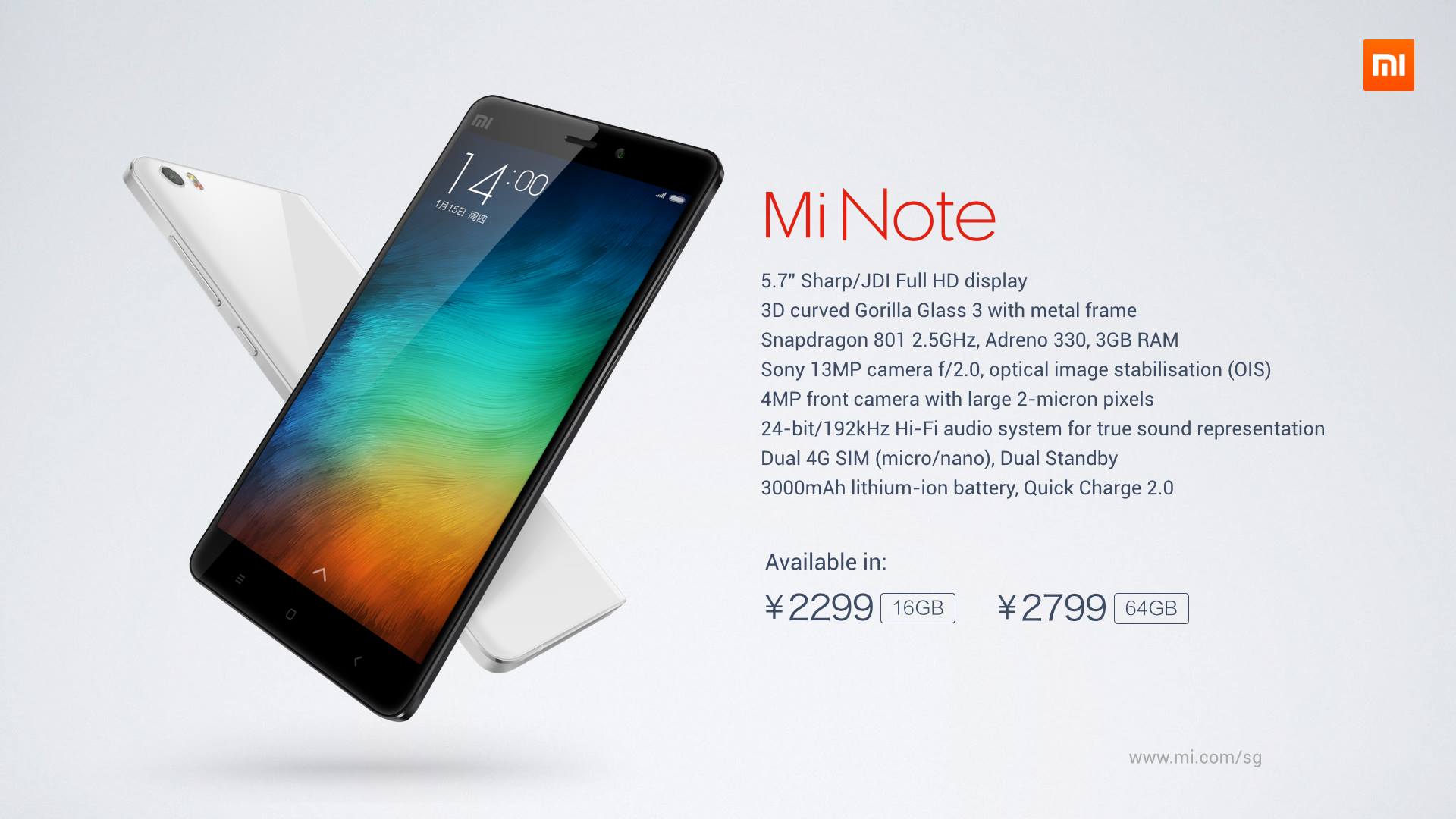
Both phones are of the same 5.7 inch display screen, measuring 155.1 x 77.6 x 7 mm in overall dimensions and not weighing more than 161 grams. Both versions have dual SIM capacity and can take both micro SIMS and nano SIMS as well. The full HD display as an IPS LCD capacitive touchscreen capable of 16 million colors and a 1440 x 2560 pixel resolution, summing up to a 515 pixel density.
That’s a staggering number for your regular ppi, which only means that displays will show amazingly crisp, vivid and colorful images to entertain you, whether it’s media watching or enjoying the photos you took with your own hands.
While we’re on the photo taking portion of the phone description, again – both phones prove to pack the same amount of megapixels stored in both the front and rear cameras. Xiaomi used a 4 megapixel front camera with 2 micron pixels for both models – that is something you may have seen before in the HTC One M7 and M8 respectively if you keep up with changes in the smartphone world. There are also 13 megapixel cameras placed on the phones rear, and they pack quite a lot of photo-taking, video-recording potential.
They are packed with optical image stabilization, a two-tone flash developed by well-known producer Phillips, a Sony CMOS sensor and six-element lens. Photos taken on both versions were quite outstanding and held close to absolutely no reason for complaint on their quality. The rear cameras can shoot photos in 4128 x 3096 pixel resolutions and videos in 1080p at 30 frames per second, while the front facing ones can still do 1080p themselves.
Audio-wise, Xiaomi claimed with 100% certainty that the ESS ES9018K2M audio chip that it incorporated in both the Mi Note and Mi Note Pro is the highest quality audio chip on any phone made until today. While this might not be something users get that involved in – unlike the display for example – as most people prefer to use a pair of headphones on their phone, speakers are gaining some ground when it comes to phablets and the way they are starting to replace other viewing ports for media and such.
Onto the part where we discuss differences between the two versions of the Mi Note. While not even close to weak, the regular Mi Note packs a Qualcomm Snapdragon 801 Quad-core 2.5 GHz Krait 400 CPU and an Adreno 330 GPU. No less than 3 GB of RAM make their way on this beauty, making multitasking and memory consuming apps the least of your problems. Wait until you see the Mi Note Pro version however.
Xiaomi’s Mi Note Pro is officially one of the first smartphones or phablets out there to make use of the Qualcomm Snapdragon 810, released at the end of last year. The exact model of the chipset, for those interested is Qualcomm MSM8994 Snapdragon 810, packing both a quad-core 1.5 GHz Cortex-A53 and a Quad-core 2 GHz Cortex-A57 CPUs. The graphics processing unit is considerably newer than its Mi Note counterpart as well, an Adreno 430 model being included in this version as well. 1 extra GB of RAM can also be found on the Pro variant in comparison to Mi Note’s 3 GB memory.
Such a beautiful design however doesn’t seem to have been able to pack a microSD card slot without ruining the feng shui of the ordeal. Yup, that’s right, no extra storage for individuals grabbing either of these models. The Mi Note comes in two storage options – both 16 GB and 64 GB while the Mi Note Pro version remains exclusive on the 64 GB storage. Considering there’s no expansion to the storage, it might not be a bad idea to grab the larger storage version if you do decide on purchasing Xiaomi’s newest flagship wonder.
Both devices support Long Term Evolution technology and over 3,000 mAh batteries under their hoods. In terms of special features that the developer might have come up with for its users, there is one thing that is strongly worth mentioning: to make one-handed navigation and usage easier on its users, given the ungodly size the Mi Note displays, Xiaomi added support to the phones, allowing you to shrink the screen and adjust the size of it according to the preferences of the person using the device.
Conclusion
The release of the two devices will be complimented by Android’s latest 5.0 Lollipop operating system to enhance all of its features even further with the help of the OS’s Material Design. The pricing of the two phablets is shockingly low for the power they pack in their midst: considering we are talking about phones bought out of contract here, the pricing for the Mi Note starts at $376 for the 16 GB version, while the pricing for the Mi Note Pro is estimated to start somewhere at $534.
Xiaomi has definitely exceeded itself with these two tech monsters. Known to be the 4th biggest smartphone producer worldwide and proclaimed 3rd most powerful in Q3 of 2014, activates only in China, India and partially in other countries of Southeast Asia. The two phablets are certain to score a great amount of success in China the very least, considering that it’s not only the largest market for mobile phones with displays larger than 5.5 inches, but also scores the most shipments of phablets than the following 10 phablet markets combined – as it has been stated by analyst Melissa Chau from IDC.
Image Sources: Source 1, Source 2, Source 3, Source 4, Source 5
