OnePlus is the company that feels like it came out of nowhere, set and ready to overthrow the balance of the giants in the smartphone market and sweep them off their feet through highly competing devices but shockingly low prices. The first OnePlus was a success that managed to conquer a lot of ground by striking at the oh-so-desired phablet market by sporting comparable, high-end specs and much, much lower prices. It was not without faults however.
Just earlier this year the second phablet of the manufacturer came out – the self-proclaimed 2016 Flagship Killer that was OnePlus 2, another outstanding 5.5” phablet that looks like it will hold its ground very well against competitors – at least for the price class that it’s part of. However, OnePlus decided that it’s time to touch down on the more classic and exponentially more accessible market of smartphones. Thus the OnePlus X came to be – a smartphone that aims to achieve what its bigger brothers have, but from a different perspective this time around.
The OnePlus X has just been released earlier this month and is already available for purchase directly off of their website for the regular Onyx variant. But the means of getting your hands on one of the new OnePlus X Ceramic smartphones is far from simple. You can only get one of those if you get a select invite from a friend who is already part of the “select group” or obtain an invitation through various competitions posted online. There were only 10,000 units manufactured so far and the product is listed as out of stock at the moment on the official website.
In comparison to OnePlus’ previous productions, the OnePlus X naturally doesn’t raise the bar as high on the specs and stats spreadsheet, but still manages to pack a staggering amount of power in its 5 inches, while keeping the price as low as $249.
Pros:
- Beautiful Design
- Incredibly Cheap
- Comparable to High-End Devices
- Good Battery Life
Cons:
- Doesn’t contain the latest hardware on the market
- Doesn’t innovate in any way, only matches Competition
- No Type-C USB charging
- Difficult to acquire
OnePlux X Design
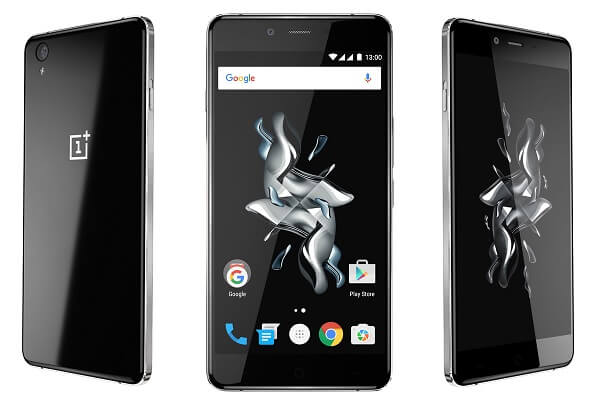
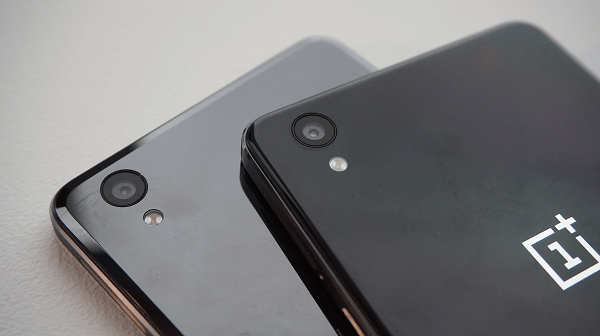
Starting with the very way the phone is built, the OnePlus X is different and still outstanding. Please correct me if I’m wrong, but I haven’t heard of any other manufacturer making use of zirconia ceramic in their smartphone builds yet. Well, this Chinese manufacturer has managed to do it. Surely, that is a limited edition of the OnePlus X, but it’s a worthy mention.
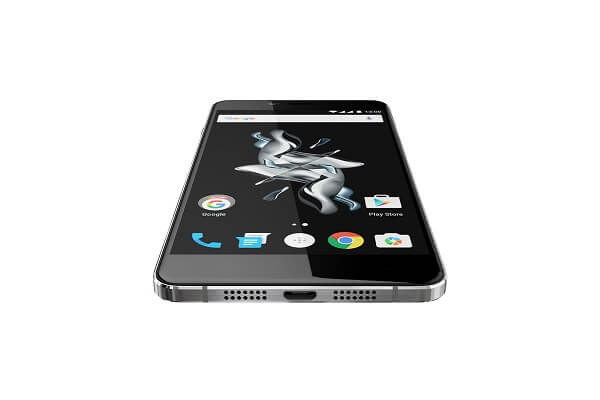
We’ll be reviewing the regular model however, that features an anodized aluminum body with chamfered edges all around the frame. They are different that the curved glass design meaning that they’re placed there for aesthetic purposes alone. All along the edge of the phone, there is an indented metallic surface that both helps give the phone a great grip but also looks amazingly good in sunlight. While that is a mention-worthy design choice, the aluminum alloy is known to be a pretty malleable metal which, when cut so thin might suffer from damage and dents when you don’t expect it. While it hasn’t happened yet, you might be the unfortunate owner of accidental key dents in the sides of your phone following a higher impact for example.
The same ridged mesh cut that was featured on the OnePlus 2 phablet buttons is present here to – and even feels even more premium class cut than before. The corners of the phone are beautifully rounded, similar to how the most recent Apple iPhone 6 was designed.
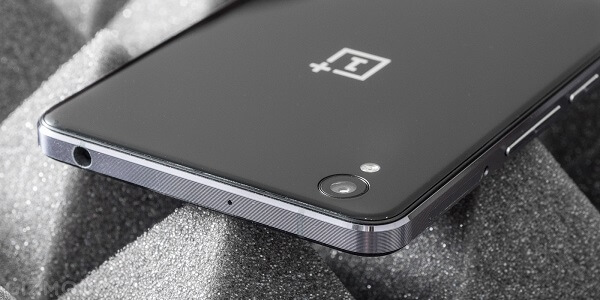
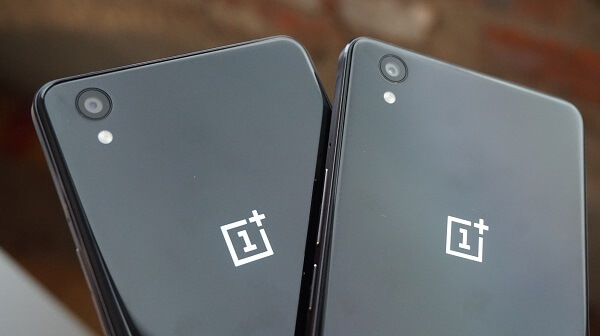
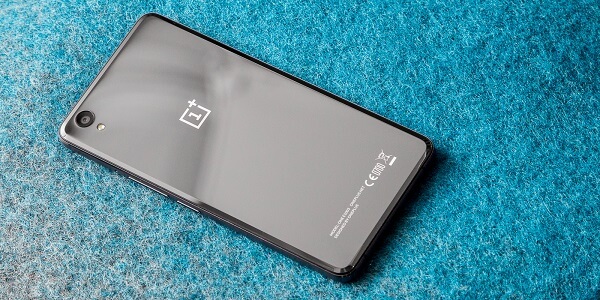
The back of the phone looks great, covered with a layer of Corning Gorilla Glass 4, giving the phone a glossy and smooth look. Behind the layer you can see the OnePlus logo shining in a contrasting color. Despite the fact that by looking at it one could think that the phone has a slippery back, that’s far from the truth. With the entire body of the phone spelling elegance and stability, there is one aspect which I found slightly disappointing.
The beautiful phone back that I’ve been praising has attracts fingerprints and smudges like there is no tomorrow. If you’re planning to put it in a case, then that should be of no concern to you, otherwise you’ll find yourself nervously wiping at it quite often to give it back its tidy, straight out of the box look. In the top-left corner of the phone you’ll find the rear camera sensor along with a LED flash.
For the 140 x 69 x 6.9 mm dimensions (or 5.51 x 2.72. 0.27 inches alternatively), the phone only weighs 138 grams (the limited edition of Ceramic build weighs 160 grams instead). Compared to the Samsung Galaxy S6, it’s the same size and comparable dimensions: slightly smaller and narrower, but adding 0.1 mm in thickness. No matter how you look at it though, the phone is outstanding in design, easy to use single-handedly, with more than a few thoughtful physical features.
In terms of button placement, everything is kept simple yet intelligent. The left side features the alert button: for the OnePlus X, it is no longer a 2 setting button. Instead, it uses 3 different settings – receive all notifications, receive only priority notifications (set up through the phone’s user interface) or not allow notifications to go through. The power button along with the volume rocker rest on the right side. In this respect, I feel like the design choices could’ve been an idea better: there is a risk that you may accidentally keep tapping the power button when you’re actually just trying to turn down the volume. The buttons are right next to each other and aren’t palpably different.
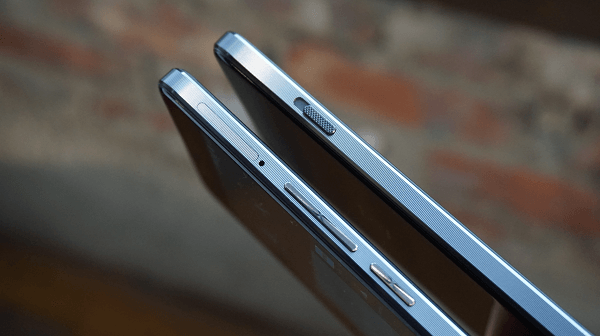
Right above the power button and volume rocker you will find a combined storage slot for either a microSD card or second SIM slot – unusual for the western market but relatively common in the Chinese one. The top side is where you will find the 3.5 mm headphone jack, on the left side.
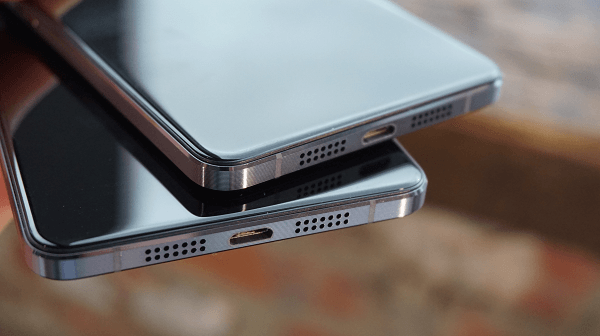
The bottom edge of the phone is once again a beautifully designed portion of the phone. To either side of the micro-USB charging port that lies straight in the middle, you will notice strips of speaker holes. However, one design flaw let’s call it even though it’s probably just a poor design decision rather is the fact that out of the two strips, only one of the actual speaker, the other being used as a microphone. That one aspect managed to create a lot of confusion on forums because of that from individuals who thought the second speaker was defective.
With a ~71.3% screen to body ratio, you can imagine that the display stretches properly over the phone’s surface. It goes all the way up to the chamfered edges on its left and right, while only leaving a narrow bezel visible on the top and bottom sides of the phone. The top hosts the front facing camera, while the bottom features 3 touch buttons that assist with navigation.
Lastly, the one detail that OnePlus X has managed to achieve near perfectly is the fact that the antenna lines of the phone are almost completely hidden behind the Corning Gorilla Glass 4 layer on the smartphone’s back. The only portion where they show are the top and bottom edge of the phone.
OnePlus X Display
If you ever got your hands on the OnePlus 2 phablet, everything you loved about the display on that device you will find on the OnePlus X just as well. The exact same crisp AMOLED capacitive touchscreen display is present here too, except it is 0.5 inches smaller. At only 5 inches however, the screen still maintains an amazing resolution and inherent pixel density. The maximum resolution that you’ll be able to enjoy on the OnePlus X display is 1920 x 1080. While not the absolute maximum you find these days on handheld smart devices, it still gets a giggle out of me when I think about my older 24” monitor back home that has a maximum native resolution of 1920 x 1080 – a fact that can help us realize just how far smartphone screen technology has gone.
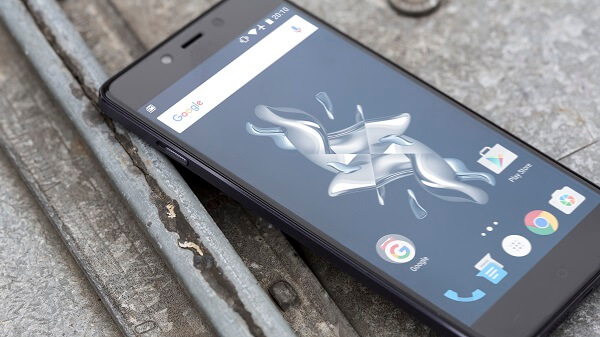
With a 441 ppi pixel density, the full HD display is as crisp as you would expect, with an outstanding level of detail. Because it’s an AMOLED build, it is particularly bright and fares well in sunlit areas. However, in order to be able to state that the display of the OnePlus X is truly bright, you do need to crank up the brightness levels to, or at least close to maximum. On default brightness, the screen doesn’t stand out that much in terms of brightness. Similarly, the black levels are deep, offering a great contrast.
Colors are vivid and crisp, making the phone absolute eye-candy – that is, if you’re willing to accept a little color oversaturation, but not a truly upsetting amount. Viewing movies or videos on YouTube is an experience as good as you would have on any other high-end smartphone of the late 2015. Viewing angles are great; however, this is becoming a less and less important thing to mention as most new smart devices have adopted high-quality display builds that support a large viewing angle.
OnePlus X Specifications & Performance
Completely remove the price tag element from the picture for a second and take a look at the OnePlus X benchmark results. The OnePlus X scored the following: 23680 points in the Quadrant Benchmark, 41125 in the AnTuTu Benchmark 5, 937 in Geekbench 3 Single-Core benchmark and 2428 in the Geekbench 3 Multi-core benchmark. Now compare them to the LG G4 scores: 26736 in Quadrant benchmark, 48947 in the AnTuTu Benchmark 5, 1134 in the Single-Core and 2428 in the multi-core Geekbench 3 respectively.
Now let me remind you that the LG G4 is a pretty successful phablet that came out this year that were you to purchase you’d pay somewhere around $500 or more for. The OnePlus X doesn’t even raise the bar to phablet standards and yet will cost you $249. With that number-heavy introduction, let’s move onto what hardware we’ll be finding inside the OnePlus X.
The processor in the OnePlus X is a quad-core 2.3 GHz Krait 400 CPU with a Qualcomm Snapdragon 801 chipset. I’ll have to give it to it, the Snapdragon 801 chipset has been around a while. And even if older models do receive some facelifts as they start to age, it’s not last gen of core processing units. Regardless, it’s more than sufficient for anything you would ever want your OnePlus X to perform.
Also contained in the chipset is the Adreno 330 graphics processing unit – featuring a 578 MHz clock rate in the Snapdragon 801. Albeit a 2013 production, the GPU will handle even more demanding games, provided of course we’re not talking about upcoming 3D 2016 games which might still work decently, with the occasional frame rate drop.
Brought to compliment the GPU and CPU of the OnePlus X come no less than 3 GB of RAM memory – plenty to handle a great amount of simultaneous processes, multitasking and not lagging behind when you aim to stress test it a little.
Ultimately, the OnePlus X comes with a default internal storage of 16 GB – unfortunately the only storage variant you get like that by default. The good news is that like not so many others (especially not the newest devices that are released these days) it features a microSD card slot which you can use to give yourself up to 128 extra GB of storage space.
OnePlus X Software & Features
The OnePlus X runs a very basic looking Android 5.1 Lollipop operating system that’s been bestowed with the Oxygen OS user interface to spice things up and give the phone a unique look. While the OS is far from cluttered with third party apps or bloatware that one would expect with the personalized skins some manufacturers come up with, the Oxygen UI is far from it.
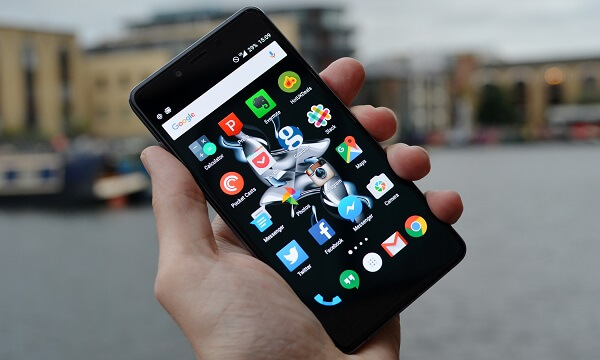
While it’s a shame that the OnePlus X, albeit a production less than a month old, did not come with the latest 6.0 Marshmallow operating system, the manufacturer has promise a rather speedy update. So current or future OnePlus X users will either start using it right away with the latest Android OS variant or won’t have to wait much longer for it (no official due date to speak of at the current time however).
The Oxygen UI overlay has a refreshing and simplistic look, only matching that in its utility. Everything is either where you expect it to be or intuitively placed; you won’t be having a hard time navigating around the operating system as a native Android user since it’s hardly different from the stock version.
There are a few features that the UI comes with, specific to the OnePlus devices. One of the iconic things you’d be getting is the gesture menu: you don’t have to necessarily unlock your phone in order to access some of its basic apps. By tracing shapes on the screen you can gain immediate access to features such as messaging or your music. There is also no easier way to access your most common content – be it contacts, widgets, apps or whatnot – than by having it all gathered up in one window.
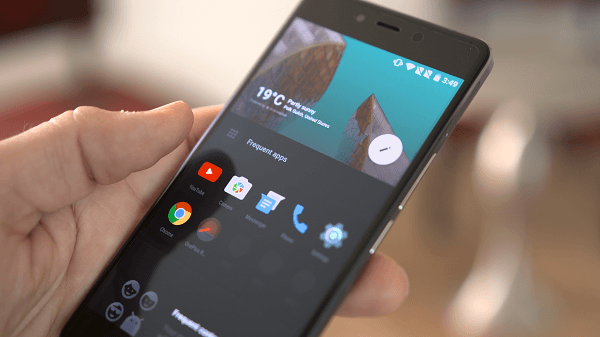
Customization is not a lacking aspect of the OnePlus X – or rather, the Oxygen UI which you can find on the other OnePlus devices as well – while there’s a dark and a light theme you can choose from, there are several accent colors you can choose from to personalize your phone to your own liking. On the customization note, it’s worth mentioning that the Oxygen UI keyboard (OnePlus Swiftkey) is slightly different than you may be used to but the Google Keyboard has also been included so you may at any time switch to it to enjoy the swipe typing that the latter offers.
OnePlus X Camera
It’s no surprise anymore that despite all the efforts that are put into manufacturing viable cameras for smart devices they’re still a far way off from replacing your DSLR on your next vacation. For most devices a camera (or even two cameras) have become mandatory even if they end up being underwhelming and downright unusable. Most comparable devices (in terms of price) are hardly worth mentioning in the camera aspect. However, if we’re to look at what the OnePlus X camera has to offer and weigh it against the price you would pay for the handset, you’re actually in for a treat.
The first feature that the 13-megapixel rear camera comes with that you may not find in many others is the phase detection autofocus – basically the ability to take focused shots either while you’re in motion on your subject is in motion, promising that all the detail of your photos will be captured in less than 0.2 seconds. Hilariously enough however, there was a slight lack of detail in close-up shots for some reason. Another moment where the autofocus may struggle a little more is in dim-lit environments where your photos may turn out to have a considerable amount of fuzz. Colors are vibrant and sharp and will look realistic in most cases.
There is a solution to anything that may be amiss with your photo in terms of noise and clarity, but it comes with the camera’s software rather than actual photo capturing hardware. There is a feature called Clear Image that will allow your phone to actually take 10 different shots of a single scene and combine them afterwards into a very high quality photo. Naturally, this feature can only be used for static shots however as a moving subject immortalized through Clear Image will turn into a complete blur and nothing more.
There are plenty of other features you can enjoy on the OnePlus X camera app, but most are not that unique and you have probably seen on other smartphones – such as the Beauty, HDR or Panorama modes. To top it off, you can also shoot video with the rear camera: 1080p at 30 frames per second and 720p at 120 frames per second.
There is also a front facing 8 megapixel camera that while not impressive in its own right, does everything you would expect it to do in a timely and satisfactory manner – whether we’re talking selfies or video conferences.
OnePlus X Battery & Verdict
The battery packed in the OnePlus X isn’t outstanding in any particular sense: the Li-Po 2,525 mAh battery is a decently sized pack for a device of this level of performance, and even larger than the ones found is some competitors. The battery life is decent to say the least, a charge being able to last you 30 to 35 hours on low to average usage. It seems to be faring a little better than other smartphones when it comes to hardware-intensive activities however; watching movies for example will not burn through your charge in a couple of hours, but it will eat up about 15% of your battery every hour.
The one major downside is that the manufacturer didn’t add Type-C USB charging to the OnePlus X. It would’ve been quite the treat to not only be able to have all this technology packed into this shockingly good phone, but also have it charge on the fly. But I fear that’s a little more than just wishful thinking.
To wrap up, the OnePlus X is truly a masterpiece of Chinese manufacture. Despite the reluctance one may show at eastern smartphone producers – mostly based on experience with low-end, affordable devices – you shouldn’t look at the OnePlus X that way. Considering that it costs less than a half you would pay for most comparable devices and doesn’t skip on the design and hardware aspects either, you should consider that a plus right away.
However, there’s no reason to lie to ourselves and say that the OnePlus X is the absolute best you can get: true, it is one of the best you can get for this amount of money but still a long way behind the best and newest devices out on the market.
You can get the OnePlus X for $299, provided you are part of the OnePlus club – in the sense that you received an invite – whether it’s through friends or competitions. There are no other ways of getting this smartphone as of now however, so the waiting list is not only long, but not guaranteed either.
