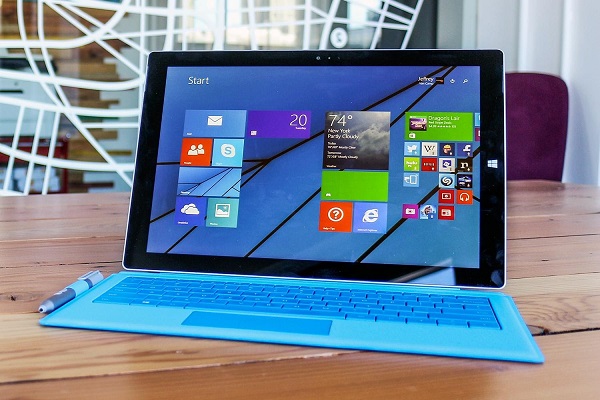
If you wanted to purchase Microsoft’s Surface 3 tablet, we’re sorry to announce that ship has sailed. The tech company has made it official: the production and sales of this device from the Surface series is winding down, set to be ceased completely by December 2016.
For those browsing through Microsoft Store recently, this is probably not news anymore. Only one product is currently still available, and it comes with 64GB of storage, 2GB of memory, Wi-Fi and 4G LTE capabilities (for the price of $500).
Next to any other version of the Surface 3 tablet, the availability listing says “Email me when available” for those trying to order the device online, but don’t hold your breath waiting for those.
But what prompted Microsoft to make this decision?
“Since launching Surface 3 over a year ago, we have seen strong demand and satisfaction amongst our customers. Inventory is now limited and by the end of December 2016, we will no longer manufacture Surface 3 devices,” reads a statement from the tech company.
So what’s the future of Microsoft’s entry-level tablet? The firm has yet to unveil if it has any plans for a Surface 4, as there are no signs yet. While the next gen of Surface would make a good counterbalance for Surface Pro 4, such a move would jeopardize the fate of Surface Pro 3.
Microsoft sources revealed that the company is apparently uncertain about what to do next. If it decides for a successor to the Surface 3 tablet, the hardware would probably hit the market in the spring of 2017, once Windows 10 Redstone 2 is unveiled.
It makes sense that Microsoft would want to have a combined launch for the next major update for the OS and the new Windows 10 hybrid tablet/laptops (matching hardware for the next generation of software).
It’s also possible that an entry-level tablet cannot find a place in the future of the Surface brand, particularly because these products are meant to be a combination of the benefits of having a good laptop (and tablet) and the sleek elegance of an Apple device.
Some of the Surface 3 specs were not well received by critics, including the average battery life and the slower Intel Atom processor; the two-in-one device was best used for lighter Windows tasks.
Image Source: YouTube
