Argyll Free Press

Growing News Network

Friday, April 17, 2026
Log in
  • Business
  • Finance
  • Sports
  • Tech & Science
    • HP Envy 4500 Review
    • LG Optimus 170 Review
    • iPod Touch 6th Generation Review
    • HTC One M8 Accessories Set-up
    • Surrealist Games You Must Play
    • Hisense Sero 8 Review
    • Dell Latitude e7440 Review
    • HP Laserjet 1536dnf mfp Review
    • Garmin Fenix 2 Review
    • Skype Vs Viber
    • Best Video Conferencing Software
    • Sony mdr 1r Headphones Review
    • Canon Rebel t3i Review
    • Sennheiser Momentum 2-0 Review
  • Travel
  • Headlines
  • Health
  • United States

Stem Cells May Help Restore Lost Vision

January 16, 2017 By Cristopher Hall Leave a Comment

the left eye of a woman

Researchers were able to restore light vision to mice using stem cells.

A new study reveals the fact that scientists were able to restore vision in mice which suffered from eye diseases which thought to lead to irreversible vision loss. They were able to restore the mice’s vision by using stem cells.

Researchers were able to grow retina tissue in a lab using the versatile stem cells. They managed to successfully transplant the tissue into the mice which had the end-stage retinal degeneration disease. After the completion of the procedure on a number of mice, 40 percent were able to see light in the following period.

This experiment marks the first time that researchers were able to transplant cells with the capacity to sense light, more specifically, the light receptors on the retina, were able to connect to the mice’s nervous systems and transmit the light signals to its brain.

The study detailing the experiment was published in the journal Stem Cell Reports by a team of researchers led by Dr. Michiko Mandai, the lead author of the paper and deputy project leader at RIKEN Center for Developmental Biology in Japan.

The researchers plan to continue their work and eventually improve the operation by increasing the number of connections between the cells located in the degenerated retina and the transplant of stem cells. The increased number of connection would allow the mice to see larger figures and movement besides light.

The findings of the study offer a promising future for the 15 million people in the US or the 170 million worldwide which suffered age-related retinal degeneration. However, further research is required even before the scientists attempt human trials.

For their study, the researchers were able to convert skin cells collected from an adult mouse into induced pluripotent stem cells. Afterward, they converted the stem cells into the retinal tissue which was transplanted into the mice.

To determine the results of the experiment, the researchers used a shuttle avoidance test. It involved a box which insulated both sound and light and had two chambers separated by a wall featuring a small opening to allow the mice to move between the rooms. The researchers trained the mice to respond to a shock and light signal and move to the other room. After a period, they removed the shock stimulant, only leaving the light. If the mice still followed the trained behavior than it means that they saw the light.

Image source: Wikimedia

Filed Under: Health

FFC Issues Concerns Over AT&T and Verizon’s Zero-Rating Services

January 12, 2017 By Cristopher Hall Leave a Comment

FCC building

FCC voices serious concerns of zero-rating services.

While the FCC might look and act differently in a few weeks in the upcoming administration, currently the watchdog keep guarding the importance of net neutrality in the current market of diverse options and programs like AT&T’s and Verizon’s zero-rating services.

In the last few years, the practice of zero-rating has gained a lot of steam among major internet and other service providers. It consists in the fact that one company does not the count the amount of traffic of certain apps and other services toward general bandwidth caps. This allows a company to stimulate streaming services while offering clients a reduced price on said services.

However, when things seem too good to be true it’s because they usually are. Using zero-rating services leads to the possibility for a company to benefit from it themselves which is a clear violation of net neutrality rules. In the FCC’s latest report, the organization reveals the process of investigating this very matter in regards to the services offered by companies AT&T and its DirecTV Now, as well as Verizon.

Out of the two companies which have been the subject of the FCC’s investigation, Verizon’s situation isn’t that problematic, at least not yet, unless it decides to expand its zero-rating services to more types of content than just short-form video.

However, AT&T seems to be in deep water with the FCC as the report voices serious concerns about the company’s Sponsored Data program which poses many problems for healthy market competition. Furthermore, the company’s response to previous FCC inquiries has not addressed the initial concerns that its practices violate the General Conduct Rule of net neutrality.

The rule allows internet and other types of data providers to mostly do as they want as long as they don’t develop anticompetitive practices. However, this seems to be the case with AT&T’s zero-rating services, more specifically its DirecTV streaming service.

While the company claims that it offers the same terms for all its zero-rating services, besides DirecTV which acts like a subsidiary company. However, they still maintain a strong connection, so much so, that it’s able to benefit from the zero-rating services and thus get the required bandwidth at a lower price than other companies which have to pay a significant cost for every gigabyte of bandwidth.

Image source: Flickr

Filed Under: Tech & Science

FTC Sues D-Link over Unsecure Products

January 8, 2017 By Cristopher Hall Leave a Comment

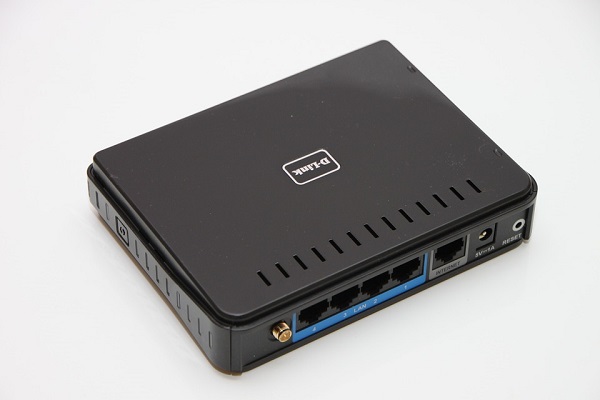
D-Link router

FTC has issued a lawsuit against D-Link over unsecured products.

The Taiwanese D-Link corporation is mostly known for producing several routers and cameras. New documents reveal that the United States’ Federal Trade Commission has filed a lawsuit against the D-Link Systems, the company’s US subsidiary. The suit concerns the fact that the company did not properly secure their products.

The FTC issued a public complaint to a court on Thursday, claiming that D-Link did not take any reasonable measures to protect their routers as well as their internet connected cameras from largely known and reasonable-enough risks of unpermitted access.  Furthermore, the lawsuit also mentions the fact that the company did not test the devices for any security flaws, or made any attempts to keep its security keys strictly confidential, nor did they attempt to secure login information on mobile devices.

The FTC complaint strongly suggests that D-Link lack of addressing security concern has left thousands of owners of either routers or cameras completely unprotected and thus vulnerable to any hacker attack. Such an attack on an unprotected device could easily lead to the compromise of personal information.

However, the complaint and the overall lawsuit does not contain any breach of the D-Link Systems device. This has led the company to contest the FTC’s claim in court, maintaining that while the FTC says people are at risk, it has failed to show any evidence of such a breach of their security.

A federal court will be the one to determine whether or not to adopt a no harm, no foul position. In most similar cases, such as the 2013 complaint against TRENDnet ofter unsecured cameras as well as the one in 2016 against ASUS over unsafe routers, the companies reached an agreement with the FTC.

The lawsuit against D-Link is a test on the power of the FTC, which worries about the safety of consumers. Even more so in the age of the Internet of Things (IoT) which has seen an increasing number of unsecured products connected on the same network as a computer with private information. The FTC is trying to fill the security gaps produced by the lack of any laws that require such devices to have a minimum of security.

What do you think about the FTC’s lawsuit against D-Link?

Image source: D-Link

Filed Under: Tech & Science

Fiat Chrysler and Google Develop Android Infotainment System

January 3, 2017 By Cristopher Hall Leave a Comment

Chrysler logo on car

Google’s Waymo and Fiat Chrysler developed an Android infotainment system.

Although the Google has officially renounced the idea of developing its own self-driving car, it is still keen on developing the required technology through the recently established Waymo department. It seems that Google’s success with Android on phone and tablets wasn’t enough for them, and have also developed an Android infotainment system in partnership with Fiat Chrysler.

Waymo’s partnership with Fiat was mostly based on the automaker delivering a fleet of Chrysler Pacifica minivans to Waymo, where they can be equipped with the self-driving technology and then released on the streets for testing. It seems that their collaboration consisted in more than it was previously announced, as they have announced that future Fiat Chrysler cars will feature the upcoming Android infotainment which also functions as a platform to connect your car to the Android ecosystem.

Patrick Brady, the Director of Android Engineering at Google, revealed that the company is committed to developing Android as an automotive platform, which allows for a deep integration with vehicles in a seamless and safe way.

The new infotainment system is called Uconnect and will be based on Android Nougat 7.0 to provide a wide range of features, such as compatibility with the Android app for traditional in-car controls like heat, the AC, radio, and more.

This collaboration on the development of an infotainment system will integrate Fiat cars into Google’s ecosystem. It will give customers a lot of options regarding how they want to customize and control the features of the car, while Fiat Chrysler is still able to maintain control over the brand, design of their interface and their customer relationship.

Many Android fans wouldn’t prefer that automaker such as Fiat Chrysler to have control over both the look and the feel of a car’s Android software. However, auto companies do have to meet certain strict rules in designing the interface as to prevent driver distraction and they do like to maintain control over the general customer experience in their car, despite outsourcing most of the software.

The Android infotainment system will be available for testing during the Consumer Electronics Show in Las Vegas on January 5th.

Image source: Pixabay

Filed Under: Tech & Science

Gionee M2017 Launched in China

December 27, 2016 By Cristopher Hall Leave a Comment

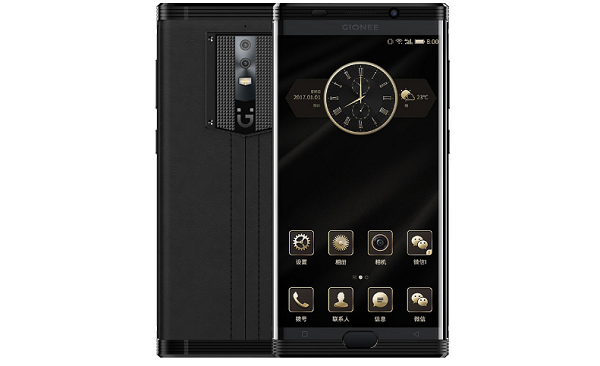
Gionee M2017

Gionee M2017 is available for pre-order in China.

China is one of the world’s largest markets for smartphones regarding their production as well as sale. As a result, there a large number of lesser-known companies who are trying to make strides with the Chinese consumers. One of the most recent devices to launch is the Gionee M2017 after it was previously revealed through a number of leaks.

The phone was previously reported to receive certification from TENAA, which is China’s equivalent to the US’s FCC. However, the company did not issue any precise release date for the device, only stating that it will release in 2016. As the year comes to the end, the launch of the device was inevitable and it finally became official today.

The previous leaks showcasing the capabilities, design and features of the Gionee M2017 can be found the official version of the powerful smartphone which has an interesting, sports design.  The phone casing is mostly made out of metal, with a black leather-like material on the back.

In regards to its technical specs, the Gionee M2017 features a curved 5.7-inch QHD (2560 x 1440) AMOLED display protected by sapphire glass. The screen is slightly overkill for a smartphone but it will surely turn some heads, as the whole purpose of the phone seems to be to attract attention.

The Gionee M2017 is powered by mid-range Snapdragon 653 64-bit octa-core processor coupled with an Adreno 510 GPU for high-fidelity graphics. The phone has a whopping 6 GB of RAM, two SIM card slots, which will allow for multiple provider connections. It also comes in two variants of storage capacity, 128 GB/ 256 GB.

The Gionee M2017 features two back camera sensors, a 12-mp and 13-mp cameras coupled with a LED flash. The front of the device is home to an 8-mp camera. The phone will ship with Android 6.0 Marshmallow with the Gionee Amigo OS 3.5 installed on top of it. Finally, the phone will be powered by a huge 7,000 mAh battery which also includes Qualcomm’s Quick Charge 3.0.

The phone will come in two editions, the standard one costing $1,007 depending on your storage capacity, while the special edition which features Italian custom alligator leather on the back will drive you $2, 446 back for just the 128 GB model.

Image credit: Gionee

Filed Under: Tech & Science

Honda Is in Talks to Work with Google’s Waymo on Self-Driving Tech

December 22, 2016 By Cristopher Hall Leave a Comment

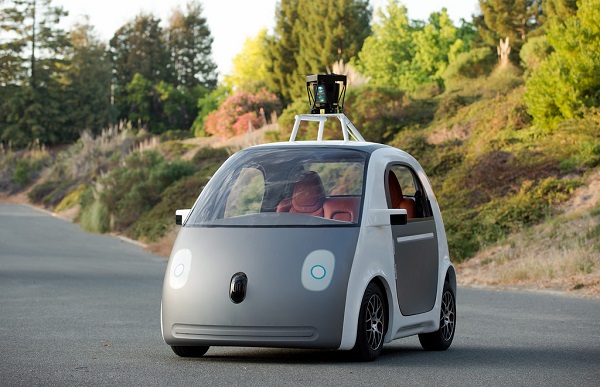
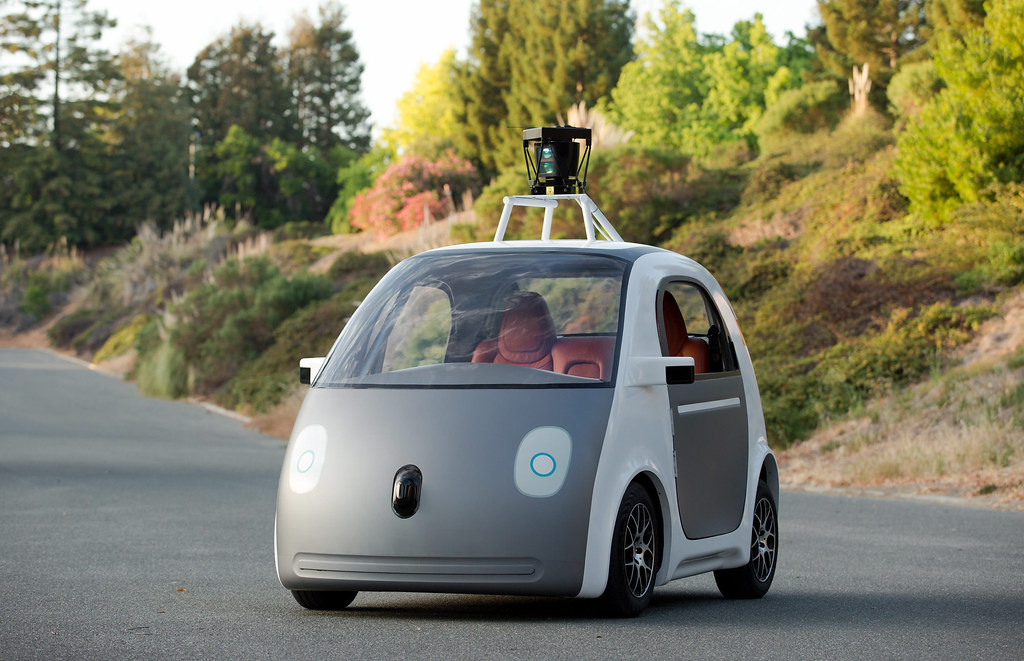
self-driving tech in google car

Honda is in talks with Honda to establish a collaboration regarding self-driving tech.

After Google has revealed that they’re stopping the development of their own self-driving car, the company’s division was renamed Waymo, and it is currently interested in collaborating with established automakers so that they can implement their self-driving tech in their cars.

Google’s Waymo and a Honda Motor’s subsidiary responsible for research and development, are currently in talks to form a partnership. The collaboration would likely involve integrating Waymo’s self-driving tech with Honda’s vehicles. More specifically, Waymo will have to install a number of sensors, radars, as well as a computing platform and its software on a number of Honda cars for testing.

Although Honda has its ongoing efforts at developing the required technology for a self-driving car, their partnership with Waymo will allow the company to explore a different approach in bringing the self-driving tech to the market.

Patrick Moorhead, the president and main analyst at Moor insights & Strategy said that these types of collaborations between an established automaker and a tech company investing into self-driving tech are to be expected and makes sense for both companies. Developing a fully autonomous car requires a great deal of resources and effort, a task which can be facilitated by joining the expertise of each company. He also expects that Apple will very likely announce a similar collaboration with another company, by developing only the self-driving tech and not the entire car.

Honda is aiming to release fully self-driving cars for public use by 2020. However, until then, they have said that if a partnership is established with Waymo, then the company’s R&D engineers from both Silicon Valley and Tochigi, Japan will work closely with Waymo developers from Novi, Michigan as well as Mountain View, California.

Additionally, the collaboration will consist with Honda delivering a number of vehicles which can be modified with the self-driving tech from Waymo. These vehicles will then join the company’s existing fleet of test autonomous cars tested around the US. Waymo has already established such a partnership with Fiat Chrysler which has already supplied the company with 100 Chrysler Pacifica Minivan ready for testing.

Neither Google nor Waymo specifically, released any statements on the discussions with Honda.

Image source: Flickr

Filed Under: Tech & Science

Twitter Limits User Data Sharing with Law Enforcement

December 17, 2016 By Cristopher Hall Leave a Comment

Twitter logo on phone

Twitter has announced that it will limit user data sharing with law enforcement.

Twitter is among the largest social media networks in the world, with a very large number of users in the US. However, like most similar companies, Twitter collects a lot of user data consisting in your tweeting habits, the location and device you tweeted from and more. The company’s policy is to not use the data for surveillance but one subsidiary firm did exactly that.

The official policy of Twitter was to prohibit the use of data meant for surveillance. However, the American Civil Liberties Union discovered a social media monitoring firm called Dataminr, which the social media company owns. Dataminr has repeatedly taken various government contracts which give local and federal law enforcement agencies access to news alerts based on user data collected by Twitter.

ACLU discovered that Dataminr managed to act contrary to Twitter’s official policy due to the fact that it worked with fusion centers and through public records requests.  The firm collaborated with 77 fusion centers around the United Stated, which enabled Dataminr to search billions of both real-time and historical public tweets, which then could be shared with government agencies.

Facing mounting pressure from ACLU and its supporters as well as informed Twitter users, the company has decided to cut Dataminr’s access to those fusion centers. However, the social media monitoring firm has disputed the claim of Nicole Ozer, the technology, and civil liberties policy director at ACLU California. Dataminr stated that it never gave clients direct access to either historical tweets or bulk Twitter data, as it only uses data to issue breaking news alerts, without sharing the data with any customers.

Twitter backed Dataminr claim, maintaining that the first was gradually assigned to focus more on creating news alerts, and the remnants of a geospatial analysis program that the ACLU discovered was just an abandoned experiment.

Dataminr has further stated that it will continue to offer a limited version of their news alerts to government agencies to help them in their response to a situation. They continue to emphasize that direct firehose access to user data has never been the case in the first place.

Are you a Twitter user? If so, what do you think about this situation?

Image source: Pixabay

Filed Under: Tech & Science

Scientists Mix Graphene with Silly Putty to Create Sensitive Monitors

December 11, 2016 By Cristopher Hall Leave a Comment

blue silly putty

Scientists mix Silly Putty with graphene to create G-Putty.

Since the discovery of graphene which many hail as a wonder material capable of being the foundation for a new technological revolution, scientists tried to find new applications for it. Now, they have combined it with Silly Putty to create a very sensitive type of monitor.

A team of researchers led by Jonathan Coleman, a scientist at Trinity College Dublin, Ireland, have found a new, inventive way of using the very versatile graphene in combination with the children’s toy known as Silly Putty. They published their discovery in the journal Science on Thursday.

Graphene has crystal-like formation the size of an atom, its capable of conducting electricity and its derived from a larger block of graphite. The material was first isolated by Russian-born scientists which received the Nobel Prize for their discovery back in 2010.

The Irish researchers named their new invention G-Putty. It has the capability of dramatically changing its conductivity when it any form of pressure is applied to it, either from being stretched or squashed.  Coleman revealed that by compressing or stretching the G-Putty by even one percent of its normal size, it leads to a change in its conductivity by a factor of five, which is a very drastic change.

Coleman and his team also discovered that the new G-Putty has 500 times increased sensitivity to various strain sensors. To demonstrate its sensitivity, the researchers wanted to see if its picks up the steps of a small spider as it walks across the surface. Although the experiment faced some hurdles as controlling the spider proved difficult, the G-Putty did indeed detect the spider’s footsteps.

Its highly sensitive capacity enables a variety of medical applications as a monitor of various human functions, be it a baby’s breath, its heartbeat, and even blood pressure. However, further testing is still required before the researchers apply their invention for real world applications.

The idea of combining the graphene with Silly Putty belongs to one of Coleman’s graduate students, Conor Boland. He was interested to find out what would happen if the graphene gets mixed with the Silly Putty which is basically a specific type of polymer.

What do you think about this new invention?

Image source: Flickr

Filed Under: Science

EU Urges Faster Action Against Hate Speech from US Tech Giants

December 5, 2016 By Cristopher Hall Leave a Comment

European Union Flag

The EU urges tech companies to take faster action on hate speech.

In May 2016, several US tech companies such as Microsoft, Facebook, Google, and Twitter signed a code of conduct which required them to address the issue of hate speech on their platforms in a more efficient way. However, it seems that since then, companies have underperformed in this task.

As a consequence, the European Union has urged the signatories of the code of conduct as well as other media platforms to take a more proactive attitude in combating hate speech, posts which promote violence and terrorism.

Until now, tech companies did not approach this issue with the attention it deserves, as cracking down on hate speech may seem like a breach of the right to free speech, and as a result, they would lose users. As such, they were not very efficient in their task.

EU officials have stated that in practice the tech companies in question only reviewed 40 percent of recorded cases in less than 24 hours. The number goes up to 80 percent after 48 hours. This falls behind the objectives set by the code of conduct which requires companies to take action against dangerous content in 24 hours.

This means that the objectives imposed by the EU can be realistically achieved through a consolidated effort on behalf of the companies. The EU’s recent statement on this issue is to urge the companies to do as they have pledged, otherwise, they will be forced to comply with new laws that would regulate how the companies should address hate speech.

Among the companies who signed the code of conduct, it seems that Google’s YouTube platform was the fastest one to act against reports of hate speech, while Twitter seems to have been the slowest one. A report on the company’s performance reveals that only 316 cases received a proper response out of a total of 600 what were recorded in a specific period. Additionally, content which was flagged as hate speech was only deleted in 163 cases.

This situation has been addressed by Vera Jourova, an EU Justice Commissioner, who stated that companies only have a few months to demonstrate that the non-legislative approach can work by acting more quickly and efficient in combating hate speech.

Image source: Wikimedia

Filed Under: Tech & Science

DroneShield Launched the Anti-Drone Gun

November 29, 2016 By Cristopher Hall Leave a Comment

anti-drone gun

DroneShield launched their anti-drone gun on Monday.

The advent of commercial drone technology has facilitated exploring, filming and capturing images from perspectives that were otherwise inaccessible to many. However, as with any technology, drones can be used for a variety of illegal activities or at the very least can be an inconvenience you want to avoid. For these reasons, DroneShield has invented a new anti-drone gun which can safely return the drone to the ground.

DroneShield solution to the problem was the invention of an anti-drone gun that looks more like a rocket launcher than anything else. Despite its looks and monstrous size, the gun handles any drone problems with kindness. It is able to jam the signal between the drone and the pilot, forcing the aircraft to land quickly on the ground and not destroy it or damaging it in any way you would expect going by the looks of the gun.

The anti-drone gun has an additional feature capable of triggering the drone’s “return to home” functionality. This can be very useful when you’re trying to determine the location of the person operating the drone. DroneShield’s invention is bound to be a welcome addition to the tools of authorities who are having trouble catching drones with net launchers and other devices.

The ability to safely return the drone to the ground without any kind of damages can be extremely useful for authorities who are hoping to inspect the devices used in various illegal activities as well as preserve them as evidence.

The anti-drone gun shaped like a rocket launcher is already available since Monday. DroneShield, which is based in Sydney, Australia, plans to market the device globally and will only be available for purchase by those legally able to buy it. The CEO of the company, Peter James, has stated that their list of clients includes military and government agencies as well security services for civil infrastructure and VIP protection.

The anti-drone gun weighs around 13-pounds and can be operated by only one person. It has a range of 1.25 miles, which is more than enough for most situations and locations. However, it seems that the jamming technology could be used for a variety of other purposes besides drone management.

Image source: DroneShield

Filed Under: Tech & Science

  • « Previous Page
  • 1
  • …
  • 5
  • 6
  • 7
  • 8
  • 9
  • …
  • 38
  • Next Page »

Subscribe to Blog via Email

Enter your email address to subscribe to this blog and receive notifications of new posts by email.

Join 11 other subscribers

Recent Articles

police handcuffs man

German Man Probed In Poisoning That Killed 21 Employees Since 2000

June 29, 2018 By Kenneth Scott Leave a Comment

Chicken wings bar

Intoxicated South Carolina Man Punches Waitress Who Refused to Serve Him Alcohol

June 29, 2018 By Karen Jackson Leave a Comment

gaming

New Zealand gamer Who Flew Halfway Across The World for Virginia Teen Gets Shots By Her Mother

June 28, 2018 By Cristopher Hall Leave a Comment

party

Former Virginia Tech Freshman Sentenced to 50 Years in Prison for Stabbing a Girl to Death

June 28, 2018 By Roxanne Briean Leave a Comment

bonfire

British Couple Sentenced to Life in Prison for Torturing and Murdering French Nanny

June 27, 2018 By Deborah Campbell Leave a Comment

pay phone

Texas Father of Girl Disappeared in the 80s Ignored by Authorities

June 26, 2018 By Cristopher Hall Leave a Comment

bottled water

San Francisco Woman Threatened to Call Police on Girl Who Sold Ice Water for Disneyland Trip

June 25, 2018 By Roxanne Briean Leave a Comment

Maplewood Park

Missouri Man Robbed by Date and Accomplice in Park

June 22, 2018 By Nancy Young Leave a Comment

coding

New York Man Sentenced in Cyberstalking Former Girlfriend, Mailing Drugs to Her Dorm

June 22, 2018 By Deborah Campbell Leave a Comment

headphones

Bose Poised to Launch Sleepbuds, In-Ear Headphones That Help You Sleep

June 21, 2018 By Nancy Young Leave a Comment

Police light

Intoxicated Female Driver in Custody for Pulling Arresting Officer by the Hair

June 21, 2018 By Kenneth Scott Leave a Comment

kitchen

Restaurant Manager Arrested and Charged in Shooting Death of Co-Worker over Negative Yelp Reviews

June 20, 2018 By Karen Jackson Leave a Comment

plastic container

Pennsylvania Couple Charged in Violent Death of Infant Discovered Buried in Cat Litter

June 19, 2018 By Cristopher Hall Leave a Comment

tailpipe

Minnesota Teen Gets Head Stuck In Oversized Tailpipe Winstock Music Festival

June 18, 2018 By Karen Jackson Leave a Comment

Pages

  • About Us
  • Contact us
  • Privacy Policy
  • Privacy Policy GDPR
  • Staff
  • Terms and Conditions

Recent Posts

  • German Man Probed In Poisoning That Killed 21 Employees Since 2000 June 29, 2018
  • Intoxicated South Carolina Man Punches Waitress Who Refused to Serve Him Alcohol June 29, 2018
  • New Zealand gamer Who Flew Halfway Across The World for Virginia Teen Gets Shots By Her Mother June 28, 2018
  • Former Virginia Tech Freshman Sentenced to 50 Years in Prison for Stabbing a Girl to Death June 28, 2018
  • British Couple Sentenced to Life in Prison for Torturing and Murdering French Nanny June 27, 2018
  • Texas Father of Girl Disappeared in the 80s Ignored by Authorities June 26, 2018
  • San Francisco Woman Threatened to Call Police on Girl Who Sold Ice Water for Disneyland Trip June 25, 2018

Categories

  • Business
  • Entertainment
  • Finance
  • Headlines
  • Health
  • Life
  • Nature
  • Science
  • Sports
  • Tech & Science
  • Travel
  • Uncategorized
  • United States
  • World

Copyright © 2026 ArgyllFreePress.com
About · Privacy Policy · Terms of Use · Contact