Argyll Free Press

Growing News Network

Thursday, April 16, 2026
Log in
  • Business
  • Finance
  • Sports
  • Tech & Science
    • HP Envy 4500 Review
    • LG Optimus 170 Review
    • iPod Touch 6th Generation Review
    • HTC One M8 Accessories Set-up
    • Surrealist Games You Must Play
    • Hisense Sero 8 Review
    • Dell Latitude e7440 Review
    • HP Laserjet 1536dnf mfp Review
    • Garmin Fenix 2 Review
    • Skype Vs Viber
    • Best Video Conferencing Software
    • Sony mdr 1r Headphones Review
    • Canon Rebel t3i Review
    • Sennheiser Momentum 2-0 Review
  • Travel
  • Headlines
  • Health
  • United States

A New Type of 3D Printers Could Be the Future of Prosthetics

February 16, 2016 By Roxanne Briean Leave a Comment

A New Type of 3D Printers Could Be the Future of Prosthetics

A team comprised of biomedical researchers at Wake Forest Institute for Regenerative Medicine gave news that a new type of 3D printers could be the future of prosthetics. And the reason they did that was because they just managed to successfully complete a device that took 10 years to develop; one that can print different types of tissue such as bone, cartilage and muscle.

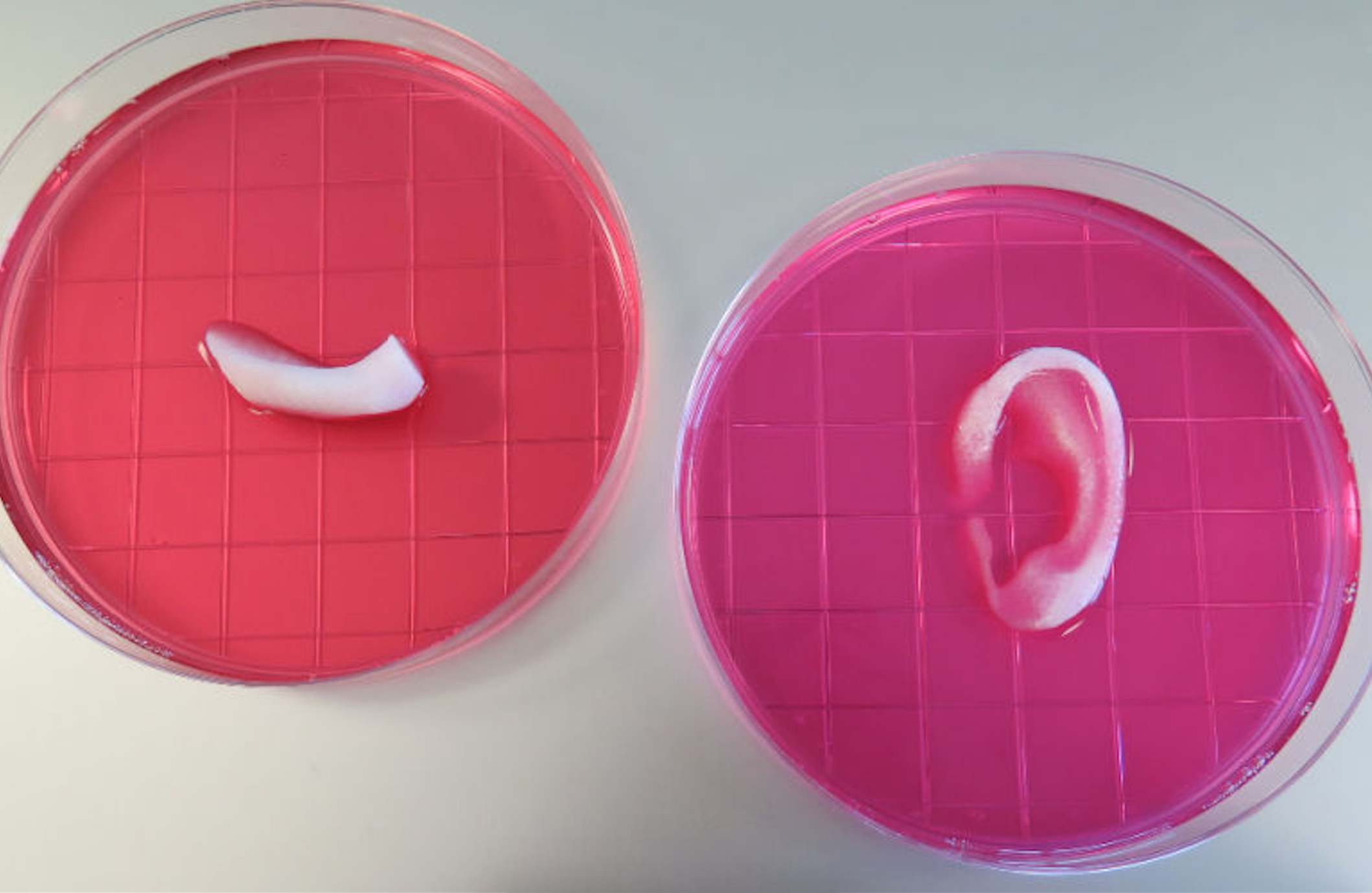
This invention is capable of turning simple tissues into large and complex shapes such as human ears. But they are more than just simple prosthetics as they are, for the lack of a better word, alive. They consist of real, evolving and natural human cells that don’t act only as a filler. Initial experiments of printing things such as growing muscle or small bones, which later got implanted into animals showed that these 3D tissue prints actually survive and thrive in the host body.

While the study and development of the 3D printer used for these ‘prosthetics’ has been undergoing for years, the scientists working on it had two seemingly impossible to breach barriers. One was being able to print out bone or cartilage that wouldn’t fall apart; the other was building them in such a way that they would be accepted by a living organism, as well as function, adapt and evolve along with it.

Surprisingly though, they managed to achieve passing the second problem using a gel created from live human or animal cells as well as a biodegradable plastic called polycaprolactone. The latter is the material responsible for keeping the printed structure well bound together and sound while the growing cells start developing. With time, the plastic degrades away, leaving only alive cells – now stable and being able to remain in place by themselves – as the only material that the structure is made of.

This was the most important breakthrough of the entire development of the 3D tissue printer; by printing out the structures in an intermittent pattern, alternating the plastic gel with real tissue, the printed result can withstand the incipient phase of its life until cells begin developing and regenerating into the spaces that the degradable plastic leaves behind.

The first real experiment of a 3D printed prosthetic being implanted in a rat – in this particular case it was a strip of printed muscle – had amazing results. Not only that the muscle survived and developed into the rat’s body, but after initial lack of response to electric prodding, the muscle started to grow both blood vessels and nerves.

Future research will most likely lead to even more proficient 3D tissue printers that could aid human beings receive new body parts for implanting.

Image Source: 1
Filed Under: Health Tagged With: 3D Bioprinter, 3D Tissue Printer, Printed tissue, Wake Forest Institute for Regenerative Medicine

Manmade Artificial Brains That Could Revolutionize Neuroscience

February 15, 2016 By Deborah Campbell Leave a Comment

Manmade Artificial Brains That Could Revolutionize Neuroscience

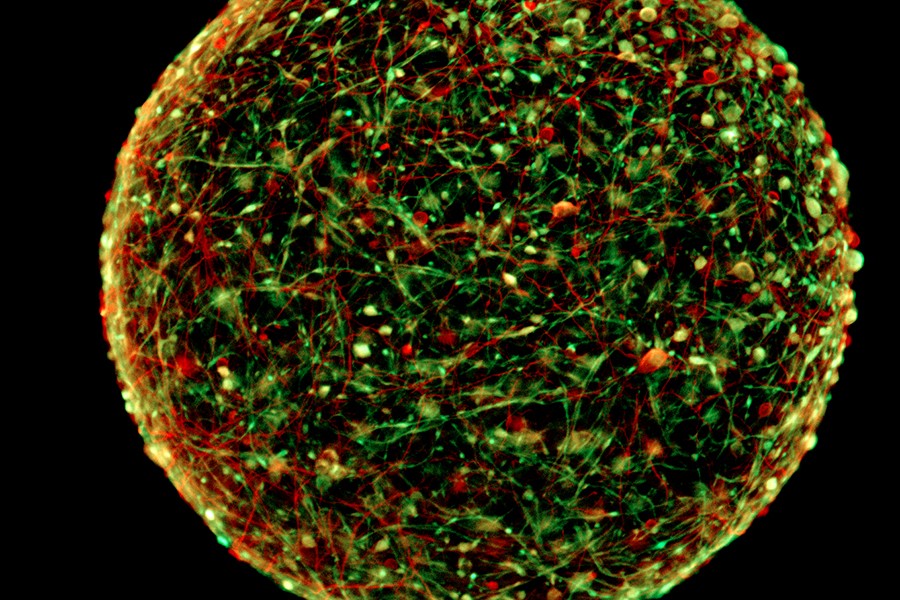
Researchers from Johns Hopkins Bloomberg School of Public Health have developed manmade artificial brains that could revolutionize neuroscience. However, they are not exact replicas of the human brain, but instead tiny models made of human neurons and cells that have the overall size of 350 micrometers and are made up of adult human stem cells.

The method that the scientists applied to create these tiny organs is by managing to make human skin cells act like stem cells, which then were made to morph to grow into brain cells.

Even if small in size, these tiny brains can actually be mass produced and could easily replace animal testing of drugs and study regarding numerous mental health disorders such as Alzheimer’s or autism. Because they exhibit characteristics very similar to the human brain, they can be easily used in laboratory experiments and probably end up earning better results than experimenting on lab rats for example.

These artificial brains are also called organoids and elicit much better results and responses to treatments whenever the scientists attempt to test a drug on them, simply due to the resemblance to how real, full-fledged human brains work.

However, these miniscule brains do take roughly 10 weeks spent in special incubators to finally develop into an organ that could be experimented and tested on. Researchers said that while testing drugs and studying their effect on rodent brains has earned some results too, humans function differently than the lab rats do and because of that, results will differ on way too many occasions – roughly 95%.

One could argue that the tiny brains could not be a fair representation of a full-fledged, real scale brain, but as long as they are made from human cells and are bound to react in the same way as the real thing, they are a lot more likely to return more accurate results.

The best part about the ability to create these small-scale brains is the fact that researchers can downright take cells from a patient with a particular genetic disorder to create a tiny replica of his brain and be able to easily target the particular mechanisms of it in order to triangulate the phenomenon better.

This is what the scientists reported after only the first phase of the experiment with the stem-cell based tiny brains. In time, the technology could mature to a level where the replicas would be a lot more accurate and be able to mimic the way the human brain works even better. This could lead to numerous breakthroughs in neuroscience and its implications in a great number of mental illnesses.

Image Source: 1

Filed Under: Health Tagged With: Artificial small scale brains, Human Brain Replica, Neuroscience, Stem Cells

The Reason Why We Should Cover Our Mouth When We Sneeze

February 14, 2016 By Cristopher Hall Leave a Comment

The Reason Why We Should Cover Our Mouth When We Sneeze

It would appear there’s a lot more we can discover about the way things happen as soon as we put a slow motion camera to work, and here’s the reason why we should cover our mouth when we sneeze – as this is one of the latest and best examples of the staggering reality of such a common act such as sneezing.

The act was studied by MIT (Massachusetts Institute of Technology) scientists in a laboratory on three different subjects. By making use of two high-speed cameras and having the subjects stand in front of a black backdrop while they were having a sneezy fit induced, the researchers captured some nearly frightening images. While we may have previously thought that only the really bad sneezes were the times when we would become like a human Mount Vesuvius, we couldn’t have been more mistaken.

While there is some variation, it would appear that every sneeze launches a cascade of fluid of similar amounts that flies out in the air, collapsing into droplets and spreading on a surprisingly wide range. The variation is caused by things such as saliva and respiratory tract fluids elasticity or volume.

After analyzing a little over 100 different sneezes and their patterns, it was observed that the previous belief regarding the act was wrong. While it was believed that the droplets of fluid are formed before they leave the respiratory tract, it turns out that the truth is the polar opposite.

When we sneeze, the expelled fluid comes out in the form of a balloon that progressively breaks down more and more into smaller fragments that manage to spread onto a very large area. This was a very important discovery for researchers as it can help them understand and map the spread of infections and diseases as well as sort out the individuals who are most prone to spreading viruses.

Lydia Bourouiba, the lead of the team in charge of this experiment and the person who runs MIT’s Fluid Dynamics of Disease Transmission Laboratory, discussed the effect of the new discoveries in addition to the research that was done back in 2014. According to that study, it was revealed that sneezing and coughing may result in a far wider spread than droplet expelling.

This study is an important step in the researcher’s attempt to understand and try to contain seasonal viruses that get spread through coughing and sneezing. Even if just a starting point, researchers could manage to measure, map and even simulate the effects and spread of virus contamination in order to build prevention strategies.

Image Source: 1

Filed Under: Health Tagged With: disease spread study, Massachusetts Institute of Technology, seasonal viruses, sneezing

Scientists Say That This Is Why We Truly Sigh

February 9, 2016 By Kenneth Scott Leave a Comment

Scientists Say That This Is Why We Truly Sigh

While a sigh was previously regarded as a sign of sadness or weariness, scientists say that this is why we truly sigh: it’s a life-sustaining reflex that is vital for human being to keeps their lungs from collapsing. And unsurprisingly enough, it has nothing to do with your mood or your current emotions. As a matter of fact, people tend to sigh a lot more than they realize – studies average it at about 12 times an hour, so every 5 minutes.

But it’s become the kind of reaction people only realize they have when they only do it half-consciously – which is when the situation is dire – and thus previously only connected it to that. However, researchers from several universities such as California, Los Angeles and Stanford, have been running a thorough experiment on the neural circuitry of sighing and actually managed to find the place where sighing actually originates from in our brains.

According to Jack Feldman, neurobiology professor at UCLA and senior author on the paper that was released on this topic said that the study could lead to the discovery that some people require treatment for not sighing enough or sighing too much as the process of sighing is central to the health of our lungs.

According to the study, the need to sigh originates from a part of the brain that forces a double inhalation every now and then in order to reinflate some of the 500 million alveoli in our lungs. The alveoli are responsible for letting oxygen enter the bloodstream and carbon dioxide to be released and removed instead. These alveoli will occasionally collapse and the only way to make them functional again is to bring in a higher volume of air in so they re-expand.

But apparently the suspicions behind sighing aren’t all that new. Feldman has been studying the effect of studying on rats for several years, seeing that rodents are the only other animals who sigh regularly and even more than humans do. During his experiments, Feldman managed to get a rat to sigh up to 400 times an hour by making use of a molecule called bombesin into the lower part of its brain stem.

That portion of our brain is responsible with being the breathing control center of the body. It decides not only how fast we breathe but also what type of breath we take or how deeply we breathe: yawns, sighs, sniffs, coughs and so on. There’s yet no telling what effect sighing has from an emotional perspective and why humans and rodents seem to sigh more when stressed or upset.

Image Source: 1

Filed Under: Health Tagged With: neural circuitry of sighing, reason behind sighing, sighing, sighing origin

Mice Experiment Could Lead to Prolonging Human Lifespans

February 4, 2016 By Nancy Young Leave a Comment

Mice Experiment Could Lead to Prolonging Human Lifespans

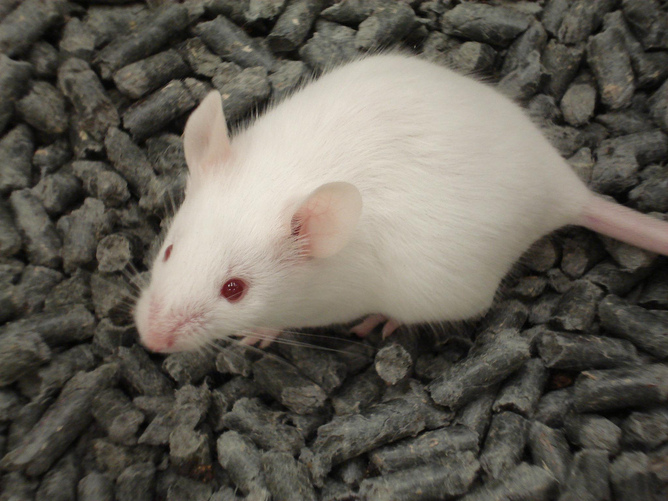
Researchers have been at work with trying to do something relatively strange but this mice experiment could lead to prolonging human lifespans. For the past several months, scientists have been attempting to run a series of experiments on mice that involve clearing dead and retired cells from the animals’ bodies.

Because the same way as computer registries gather errors and corrupted sections the more you use a PC, the same way living bodies seem to be working. The cells in our body seem to slowly accumulate damage through the process of living itself. Because of the damage in their DNA, they could also develop into cancerous cells. While some cells manage to repair themselves, others self-destruct and lastly, some retire.

The process of cellular retirement involves a state where cells do not divide nor grow anymore and remain in a state known as senescence. As human beings age, the number of retired cells also accumulates and creates a great number of the changes that we see in the bodies of the elderly.

The scientists attempted to see just what impact these retired cells really do have on living animals by running an experiment on mice. For a few months-long period of time, they cleared the retired cells from the mice’s bodies repeatedly, then stopped to compare the results.

Two mice of the same genetic information and the exact same age – out of which only one had undergone the retired cell cleaning experiment – were thus compared and the results were astonishing. While the one that had not received the treatment has graying and deteriorating fur and developing cataracts in an eye, the other one looks as normal and as healthy as it had long before reaching old age.

By zapping the retired cells from the mice’s bodies, scientists were able to not only increase their lifespan by between 18 and 35 percent, but also keep them healthier and prevent a great number of diseases. Researchers stated that 18 months into their lives – and after having received 6 months of treatment – the mice that had been subjected to the experiment were a lot more active, seemed to maintain their kidney and heart functions a lot better and overall felt lively regardless of species or sexes of the mice.

The next step of the experiment is to see if starting such a treatment later could still earn beneficial effects and ‘undo’ age-related decline. If this technique will be applicable in human being, it could lead to being one of the biggest discovery in the past decade at least. However, humans are a lot trickier than rodents and applying the same kind of purging retired cell treatment could come with numerous side effects. So it’ll be a while until scientists manage to find a way to make it work for human beings.

Image Source: 1

Filed Under: Health Tagged With: health experiments, laboratory experiments, retired cells, senescence

Whether You Are a Night Owl or Early Bird May Be Decided By Genes

February 3, 2016 By Deborah Campbell Leave a Comment

Whether You Are a Night Owl or Early Bird May Be Decided By Genes

Whether you are a night owl or early bird may be decided by genes, recent study suggests. Although in previous decades, late sleepers would often just be considered lazy and ‘improper’, people could not have been more wrong than that. Even though once just another representative of the animal reign, who had to be out early to hunt and in early to keep safe from night predators, the human being has evolved and changed a huge amount.

It would appear that similarly to how human genes have developed in plenty of other aspects, they now carry a lot more information than one would believe – one of which would be the kind of sleeper you are. Even if you have a job that has you wake up at 7 AM every day doesn’t make you an early bird; however, the way you feel when waking up at different times will denote what kind of sleeper you are. And apparently the information is stored in your DNA.

A recent study performed on no less than 89,283 individuals of various backgrounds and traits was performed, where subjects submitted their DNA and sleeping pattern information in order for the scientists to be able to determine where there are any common elements between people whose circadian rhythms possess the same patterns.

According to the large scale study, researchers have found that there are no less than 15 versions of genes that play a role in making you either a late sleeper or a morning person. Out of the 15 genetic variants, seven seemed to play a direct role in the circadian rhythm, while the others were related to sensing light. While some, if not most of us have been living our lives thinking that whether we were late sleepers or morning people was just part of who we were, it would appear that there is a strong biological reason behind it too.

According to the study, most people over 60 deemed themselves morning people, while in the age range below that, the statistic showed that 48.4% of the women and only 39.7% of the men said they were early wakers. Thanks to this study, scientists can start looking into genetics as the reason behind a wide variety of conditions and diseases.

The study was conducted by consumer genetics company 23andMe.

Image Source: 1

Filed Under: Health

Scientists Advance On the Quest to Unravel the Human Brain Mystery

February 2, 2016 By Karen Jackson Leave a Comment

Scientists Advance On the Quest to Unravel the Human Brain Mystery

Thanks to a full scale 3D printout of the human brain, scientists advance on the quest to unravel the human brain mystery. Or one of them, at least. The focus of this particular study was for the scientists involved to study the way the brain develops its characteristic folds when it starts developing. By creating a fake gel brain that mimics the exact way it looks in fetal form and studying it closely, several scientists at Harvard University may have unraveled some very important facts about the way the human cortex works.

The purpose of the study is the hope that some of the physical implications behind certain mental disorders could be explained in the end. Scientists have believed that some psychological issues may be at least partially caused by the structure of gray matter and either overfolding or underfolding of the human brain.

The experiment was done by using a 3D printing technique based on magnetic resonance images of the way the brain looks in human fetuses. Made from a special type of gel, it was then coated with another layer of a similar gel that swells when absorbing a solvent. The purpose of this was the emulation of constrained cortical expansion – just the way it does in developing human brains.

Once the fake brain was put in a solvent, it took mere minutes until the mold started slowly morphing into the very familiar wrinkly shape of the human brain, by first developing deeper regions in the top most part and then slowly compressing even further.

This is a very important experiment that has more applicability than it may seem. Firstly, it proves that brain development is reliant on more than just biochemical processes, also employing physical forces in its growth. This study could play a major role in neurodevelopment study, with the potential of gaining real life applicability in detecting, diagnosing, treating and even preventing a great number of neurological disorders.

The fold patterns that the human brain displays has been a major interest for scientists for a very long time; especially since it was discovered that it doesn’t seem to be a common factor between animals for example. According to various studies, the folded structure of the human brain actually enables a better connectivity across the cortex. The structure itself starts developing somewhere in the 23rd week of pregnancy and continue to develop until soon after birth.

Image Source: 1

Filed Under: Health Tagged With: brain study, harvard university, human brain, human cortex

A New Method to Track Your Health

February 2, 2016 By Deborah Campbell Leave a Comment

A New Method to Track Your Health

While wearable tech has been one of the largest sources of interest shown by modern society in the past few years, they haven’t done much to find a new method to track your health. Usual activity and fitness trackers will make use of GPS and accelerometers as sensors in order to keep track of the amount of steps you take in a day or how much sleep you’re getting. Occasionally also put in a heart monitor in to keep track of your heart’s activity and even manually fill in your daily diet – that is as far as activity trackers go.

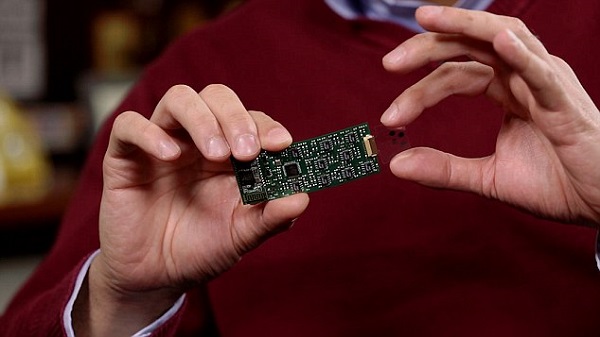
However, a more recently developed tracker has been thought of by inventor Ali Javey – an electrical engineering and computer science professor at the University of California-Berkeley – promises to do a lot more than that. His device is able to measure sweat chemicals such as glucose, lactate, sodium and potassium. This would allow the device to track and alert the users of health issues such as dehydration, fatigue and even more.

This officially promises to be the first tracker of its kind for the mere reason that it is able to track multiple chemicals at the same time in a non-invasive manner. This is a great way to gain accurate results when trying to keep your health in check as individual types of tracking would not be able to become meaningful. As soon as the tracker is able to pick up on the chemicals in your sweat, it would immediately transmit data to the synced smartphone.

The way the new tracker is built allow a clear reading of the chemicals in your sweat by employing the help of five different sensors, placed on a flexible circuit board that will take your body temperature into account too. A flexible sensor array is added into the band to ensure continuous analysis and ensure that everything is done real time.

This type of device could turn out to be incredibly useful for individuals who have different types of ailments that affect the level of any of the chemicals that get released through swear. The device could pick up on the signal and notify the wearer to take medication or drink water. Furthermore, a professor of integrative biology at the University of California-Berkeley – George Brooks – also claims he hopes to see some application of this type of device as a replacement to regular blood tests to give a non-invasive alternative to patients.

Image Source: 1

Filed Under: Health Tagged With: Activity Tracker, Fitness Tracker, health tracker, swear sensor tracker

One Way Dogs Find Out How You Feel

February 1, 2016 By Michael Turner Leave a Comment

One Way Dogs Find Out How You Feel

A recent study reveals the surprising discovery of one way dogs find out how you feel. It’s always been known and told said from generation to generation that you shouldn’t act aggressively not fearful around dogs in order to prevent them from attacking you. While that kind of behavior read relies on the dogs’ ability to read body language, the study in question suggests that they can also read facial expression, just the way humans do amongst themselves.

It’s unclear whether this is something that dogs inherited since their domestication or whether it has been an ability that they have always possessed. It is, however, most certainly related to the dog-human relationship as not only are they capable of telling what the mood of a person is, but also know to react to it. From this perspective, this phenomenon could easily be considered taught response.

For example, when house dogs sense that a person is angry, they tend to look away. Researchers from the University of Helsinki in Finland, Europe believe that in the evolutionary process dogs have learned how to detect both congenial moods as well as hostile attitudes as another method of self-preservation. That is why sometimes, even if the canines have no issue with making eye contact with other representatives of their race, may sometimes display reluctance at doing it with the human species.

the researchers conducting the study used 31 dogs, belonging to 13 different breeds, that were trained through positive reinforcement and clicker-based response to stay in front of a screen without being told or forced to do so. Throughout the series of images that were shown to each dog separately, the researchers made use of eye gaze tracking to distinguish the ways the subjects reacted to different emotions of humans or other dogs.

According to the study, dogs would spend a great amount of time staring at the eye area – much more than other portions of the face such as the mouth or nose – but overall based their reaction upon a complete scan of the face. That suggests that dogs can tell what you fell after they scan the entirety of your face, not just from a single reaction such as a smile.

When shown images of other dogs, however, the subjects seemed to focus on other features rather than the eyes – as it had been in the case of humans. When the image of an aggressive dog was shown on the screen, the subjects would linger more on the mouth rather than eyes.

Image Source: 1

Filed Under: Health Tagged With: canine studies, dogs can read facial expreessions, dogs reading human emotions, the way dogs read emotions

Death Count Due to Cancer Rises in China

February 1, 2016 By Karen Jackson Leave a Comment

Death Count Due to Cancer Rises in China

Recent reports suggest the fact that the death count due to cancer rises in China with every year. In 2015, nearly 2.8 million deaths were accounted by cases of cancer inside the country alone – and that accounted for nearly one fifth of the worldwide deaths that occurred during the entirety of last year. 2.8 million deaths in a year translate into nearly 7,500 deaths on a daily basis over the length of 2015.

However, this is hardly news for the Chinese populace as the country has been dealing with the increasing mortality rate due to cancer for nearly 6 years. The most common forms of cancer seem to be lung cancer, gastric cancer, liver and esophageal cancers – forms that are hardly prominent in other countries, such as the United States; here, the aforementioned forms only sum up to be roughly 20% of the cases. In China, they represent 57% of the total cases of cancer.

The reason behind this the ghastly number of lung cancer incidents goes deep within other issues that the country is currently facing. It is common knowledge that China is facing one of the worst cases of air pollution in the entire world. On top of that, the second reason behind the great number of occurrences is also the large percentile of smokers in the populace.

A research led by author Dr. Chen Wanqing has concluded that most cancer occurrences in the Chinese population are created by air pollution, while most of the preventable cancers are the result of bad habits such as smoking – which can manifest as lung or stomach cancer, and even spreads to both in some cases.

As terrifying as the cancer-inflicted death count in China was in 2015, it doesn’t even come close to the fact that 4.3 million new cancer cases were found in the country over the past 12 months. The cancer cases seem to be diagnosed in men at as much as a 2:1 ratio in comparison to women and are 10% more likely to occur in rural places.

For example, out of all the deaths recorded in 2015, 165.9 cases were recorded in males versus 88.8 in females for every 100,000 citizens in rural areas. Urban areas scored 149 male cases versus 109.5 female cases for every 100,000 citizens – a worrying increase in exposure to the latter category.

While air pollution is the most well-known and worrying factor that leads to cancer cases in China, smoking only coming in second, the issue spreads to even more worrying factors such as soil and water contamination.

Image Source: 1

Filed Under: Health Tagged With: cancer in china, china air pollution, deaths due to cancer in china, lung cancer in china

  • « Previous Page
  • 1
  • …
  • 28
  • 29
  • 30
  • 31
  • 32
  • …
  • 42
  • Next Page »

Subscribe to Blog via Email

Enter your email address to subscribe to this blog and receive notifications of new posts by email.

Join 11 other subscribers

Recent Articles

police handcuffs man

German Man Probed In Poisoning That Killed 21 Employees Since 2000

June 29, 2018 By Kenneth Scott Leave a Comment

Chicken wings bar

Intoxicated South Carolina Man Punches Waitress Who Refused to Serve Him Alcohol

June 29, 2018 By Karen Jackson Leave a Comment

gaming

New Zealand gamer Who Flew Halfway Across The World for Virginia Teen Gets Shots By Her Mother

June 28, 2018 By Cristopher Hall Leave a Comment

party

Former Virginia Tech Freshman Sentenced to 50 Years in Prison for Stabbing a Girl to Death

June 28, 2018 By Roxanne Briean Leave a Comment

bonfire

British Couple Sentenced to Life in Prison for Torturing and Murdering French Nanny

June 27, 2018 By Deborah Campbell Leave a Comment

pay phone

Texas Father of Girl Disappeared in the 80s Ignored by Authorities

June 26, 2018 By Cristopher Hall Leave a Comment

bottled water

San Francisco Woman Threatened to Call Police on Girl Who Sold Ice Water for Disneyland Trip

June 25, 2018 By Roxanne Briean Leave a Comment

Maplewood Park

Missouri Man Robbed by Date and Accomplice in Park

June 22, 2018 By Nancy Young Leave a Comment

coding

New York Man Sentenced in Cyberstalking Former Girlfriend, Mailing Drugs to Her Dorm

June 22, 2018 By Deborah Campbell Leave a Comment

headphones

Bose Poised to Launch Sleepbuds, In-Ear Headphones That Help You Sleep

June 21, 2018 By Nancy Young Leave a Comment

Police light

Intoxicated Female Driver in Custody for Pulling Arresting Officer by the Hair

June 21, 2018 By Kenneth Scott Leave a Comment

kitchen

Restaurant Manager Arrested and Charged in Shooting Death of Co-Worker over Negative Yelp Reviews

June 20, 2018 By Karen Jackson Leave a Comment

plastic container

Pennsylvania Couple Charged in Violent Death of Infant Discovered Buried in Cat Litter

June 19, 2018 By Cristopher Hall Leave a Comment

tailpipe

Minnesota Teen Gets Head Stuck In Oversized Tailpipe Winstock Music Festival

June 18, 2018 By Karen Jackson Leave a Comment

Pages

  • About Us
  • Contact us
  • Privacy Policy
  • Privacy Policy GDPR
  • Staff
  • Terms and Conditions

Recent Posts

  • German Man Probed In Poisoning That Killed 21 Employees Since 2000 June 29, 2018
  • Intoxicated South Carolina Man Punches Waitress Who Refused to Serve Him Alcohol June 29, 2018
  • New Zealand gamer Who Flew Halfway Across The World for Virginia Teen Gets Shots By Her Mother June 28, 2018
  • Former Virginia Tech Freshman Sentenced to 50 Years in Prison for Stabbing a Girl to Death June 28, 2018
  • British Couple Sentenced to Life in Prison for Torturing and Murdering French Nanny June 27, 2018
  • Texas Father of Girl Disappeared in the 80s Ignored by Authorities June 26, 2018
  • San Francisco Woman Threatened to Call Police on Girl Who Sold Ice Water for Disneyland Trip June 25, 2018

Categories

  • Business
  • Entertainment
  • Finance
  • Headlines
  • Health
  • Life
  • Nature
  • Science
  • Sports
  • Tech & Science
  • Travel
  • Uncategorized
  • United States
  • World

Copyright © 2026 ArgyllFreePress.com
About · Privacy Policy · Terms of Use · Contact