Argyll Free Press

Growing News Network

Monday, February 2, 2026
Log in
  • Business
  • Finance
  • Sports
  • Tech & Science
    • HP Envy 4500 Review
    • LG Optimus 170 Review
    • iPod Touch 6th Generation Review
    • HTC One M8 Accessories Set-up
    • Surrealist Games You Must Play
    • Hisense Sero 8 Review
    • Dell Latitude e7440 Review
    • HP Laserjet 1536dnf mfp Review
    • Garmin Fenix 2 Review
    • Skype Vs Viber
    • Best Video Conferencing Software
    • Sony mdr 1r Headphones Review
    • Canon Rebel t3i Review
    • Sennheiser Momentum 2-0 Review
  • Travel
  • Headlines
  • Health
  • United States

Only 30 Specimens Left of the Vaquita Marine Mammal

February 4, 2017 By Kenneth Scott Leave a Comment

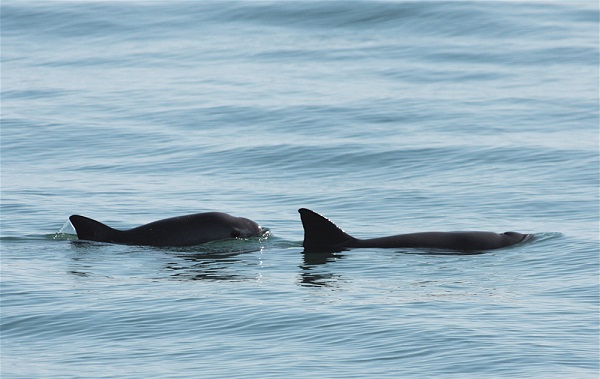
vaquita marine mammal

The world’s smallest marine mammal has only 30 specimens left.

Vaquita is the world’s smallest porpoise marine mammal and despite the best efforts of international conservation and local conservation groups, the species is almost close to extinction. Experts from the International Committee for the Recovery of the Vaquita, think that its number have decreased to just 30 specimens.

The most significant decrease in the numbers of the marine mammal occurred between 2015 and 2016, almost by 50 percent. This number goes up to a 90 percent drop over the past five years. Conservations stated that the main threat to their existence are gill nets. These types of nets are mostly used to capture fish and shrimp, as well as the endangered totoaba fish. The swim bladder of this marine animals is considered a delicacy in several parts of Asia and thus sells accordingly, with around $5,000 for just a pound.

Although the vaquita is not directly targeted, the marine mammal gets entangled in the growing number of nets meant for the totoaba and eventually drowns. According to the latest CIRVA report published in November, the situation has gradually gotten worse for the world’s smallest marine mammal despite the existing measure for its protection and enforcement efforts.

The vaquitas are the only species of porpoise to live in the warm waters of the Gulf of California. In response to the situation of the animal, both the U.S. and the Mexican government have increased their efforts to combat illegal fishing in the area including Navy patrols and temporarily banning the use of gill nets in the waters of the vaquita.

Mexican conservation officials hope to save the endangered marine mammal by capturing several specimens and transporting them to a protected area where they can breed in safety. This plan will involve experts in acoustic monitoring and in the capture of porpoise. The trained dolphins of the US Navy will also be involved in this preservation effort.

Unfortunately, the plan does carry some inherent risks as the animals have never been kept in captivity and some believe that they will die during the relocation attempt. Groups like Greenpeace and the World Wildlife Fund have urged the Mexican government to reconsiders its strategy.

Image source: Flickr

Filed Under: Science

Hawaii Bill Seeks to Implement Full Renewable Transportation

January 30, 2017 By Nancy Young Leave a Comment

white electric car

Hawaii has a new bill for 100 percent renewable transportation by 2045.

The state of Hawaii of the United States is one of the most progressive ones when it comes to environmental protection policies. The state legislature has introduced a new bill which seeks to implement complete renewable transportation by 2045.

This goal joins the currently implemented target of having all the energy utilities in Hawaii coming from renewable sources also by 2045. The renewable transportation bill is being supported by the Blue Planet Foundation. Jeff Mikulina, the director of the organization, has stated that Hawaii needs to develop a proper vision for its future of transportation, as currently, the majority of fossil fuels go to the transportation industry.

The new renewable transportation bill would not require that the residents of the state discard their fossil fuel-powered cars, at least not yet. This sentiment was emphasized by Representative Chris Lee, the chairman of the Energy and Environment house committee.

Nonetheless, the bill proposes a somewhat ambitious goal, especially in a state where out of an estimated 1 million cars on the road, there are only around 5,000 electric cars. Unfortunately, Hawaii is not a big enough market to decide the trends of the auto industry and, as such, the state is somewhat dependent on the decision they make. Therefore, the new renewable transportation bill does not impose a strict mandate, just a relative goal.

Some of the details of the bill are still being worked out since its introduction into the state legislature. It remains to be seen if it will pass or not, as Hawaii seems keen on becoming a trend setter for renewable energy despite the fact that new US president favors more conventional sources of energy.

In addition to the transportation bill, lawmakers have also introduced a new bill which seeks to increase the required number of charging stations across the state. Currently, there is only one station for every 100 parking spaces. This bill could help incentivize more residents to purchase electric cars, as they would have more charging options.

The renewable transportation bill is also supported by local auto dealerships, but the move to electric cars will require a massive marketing campaign in order to convince residents about its benefits.

Image source: Wikimedia

Filed Under: Science

Scientists Can Change the Taste of Store Tomatoes by Altering Genes

January 28, 2017 By Cristopher Hall Leave a Comment

store tomatoes

Store tomatoes may have an improved taste in the coming years.

Thanks to the invention of pesticides and other chemicals which allows vegetable and fruits to grow bigger and without being destroyed by pests, we now are able to produce enough food to feed our growing population, despite the huge food waste. However, in the process, vegetables like store tomatoes have lost their highly-appreciated taste.

Researchers from the University of Florida have revealed in a new study published in the journal Science on Thursday, that they have discovered what exactly determines the taste of the tomatoes and how they can change it for the better. The study reveals that the scientists compared the genetic makeup as well as the flavor profile of store tomatoes with those of ancestral and heirloom varieties. Thus, they were able to identify which specific chemical compounds makes the tomatoes more delicious.

Knowing what determines the taste of tomatoes is only half the battle in restoring the flavor of all store vegetables. Researchers are now hard at work to restore the original flavors in store tomatoes by crossbreeding them with varieties of the heirloom fruit. However, the researchers emphasized that the constant need for large and sturdy vegetables and fruits means that their original taste cannot be fully restored. Nonetheless, store tomatoes might see a drastic improvement in taste in the coming years.

The focus on bigger and more sturdy vegetables and fruits only started after World War II, as ravaged countries needed to feed their people and farmers had better profits with larger products as they were paid by the pound. The trade-off in taste wasn’t really noticed at first, but now it is quite apparent.

For their study, the researchers sequenced the genome of over 400 tomato varieties and even performed taste tests on 101 types of the fruit, while recording which ones were the most appreciated by a group of people. They concluded that the taste in the preferred tomatoes was determined by 25 chemical compounds known as volatiles.

The researchers discovered that in store tomatoes, 13 of those compounds were drastically reduced. They hope to restore the taste of the tomatoes without compromising their size. However, a better taste may inevitably lead to a shorter shelf life and thus, to an increase in price.

Image source: Flickr

Filed Under: Science

Science Created The First Stable Semisynthetic Organism

January 27, 2017 By Nancy Young Leave a Comment

dna stable semisynthetic organism

A team of scientists managed to create the first stable semisynthetic organism which is a breakthrough in the area.

A team of scientists managed to create the first stable semisynthetic organism, an achievement based on many years of work and which could open up many new paths.

Three years ago, a team of researchers reported a breakthrough. They presented the first organism with 6 bases. The genetic base of all the DNA-based life forms is based on four bases. These are A, T, G, and C. Or more exactly, adenine and thymine. And also guanine and cytosine.

In 2014, the scientists presented an organism that had 6 bases. Four of them, the aforementioned ones, were natural. The other two were artificial. They were titled X and Y.

The research team is part of the La Jolla, California Scripps Research Institute. They were led by Floyd Romesberg. At the time, the researchers were able to incorporate their new base pair. This was introduced into an E. coli bacterium. Still, the ensuing organism did not maintain the pair. It was eliminated during the division process.

The X and Y were slowly dropped. And the extra information they left behind was limited. Even though the DNA was modified, the data was left incomplete.

Now, Romesberg and his team beat the process. They were able to create the first stable semisynthetic organism. This is also a modified bacterium.

A research paper on the matter was released earlier this week. It was published in the Proceedings of the National Academy of Sciences. Available online since January 23, it is titled as follows. “A semisynthetic organism engineered for the stable expansion of the genetic alphabet”.

The stable semisynthetic organism was seen to be able to retain its synthetic base. They have remained in the DNA after the division process. This modified bacterium is based on three pairs. They are A-T, C-G, and the new X-Y.

Romesberg went to offer some details. According to him, the first semisynthetic organism had an unstable genome. This latter has to be stable throughout the lifespan. And not just for a day.

This first stable semisynthetic organism is able to do so. It has managed to maintain its extra information. As such, Romesberg declared that they have made it more life-like.

Researchers used a nucleotide transporter. This helped them create the modified bacterium. With help from the transporter, the semisynthetic organism was able to hold on to the X-Y pair. As it was maintained, the added pair was also copied. And it then distributed across the cell membrane.

CRISPR-Cas9 was used in order to test the results. This is a gene-editing tool. With it, the scientists analyzed the now stable semisynthetic organism.

They looked for cells containing the synthetic base. Such cells could have been marked as foreign. Because of this, the organism would have destroyed them.

For the moment, the added synthetic bases just exist. The stable semisynthetic organism has no utility for them. This fact has been specifically programmed. First of all, the scientists meant to determine if the bases could just survive.

It remains to be seen if the microbes will be imbued with the power to read the added code. Or when they may be determined to do so. According to the researchers, the current organism is a breakthrough in itself.

And making them read the code could open up a new path. It may help create protein currently unavailable in nature. As such, new medicine and drugs could be developed.

More research on the matter is nonetheless needed. Presently, the researchers pointed out the following fact. The study can be considered the foundation for future research and discoveries.

Image Source: Flickr

Filed Under: Science

Antarctica’s Larsen C Ice Shelf Crack Keeps Expanding

January 23, 2017 By Cristopher Hall Leave a Comment

Larsen C ice shelf

The crack in the Larsen C ice shelf has expanded by 6 miles in three weeks.

In December 2016, scientists warned the world about the formation and expansion of a massive rift in one of the world’s largest glaciers, the Larsen C ice shelf. Since it was first discovered, scientists have examined its evolution and determine that in the last three weeks the crack has increased in length by 6 miles.

Iceberg calvings are becoming increasingly common as the average temperatures at both of the planet’s poles keep increasing. However, what makes this case particularly important is the sheer size of the iceberg which scientists think will break apart from the main ice shelf in the upcoming months.

If the current pattern continues, the Larsen C ice shelf will continue to grow. Currently, there are only 12 miles of ice which still connects the iceberg from the main part of the ice shelf. However, when it finally breaks apart from Larsen C, which is Antarctica’s fourth largest ice shelf, the resulting iceberg will be the size of the state of Delaware.

Furthermore, scientists believe that the calving of the iceberg will only lead to more instability as Antarctica has lost around 10 percent of its total floating ice, and will further accelerate any further loss of ice.

Scientists which keep a close eye on the crack in the ice shelf are part of a program known as Project Midas. In consists in the monitoring of the rift as well as the assessment of the iceberg’s impact, after it calves. The future event will be the largest one in the last century. Scientists part of Project Midas such as Adrian Luckman believe with certainty that the calving will occur in the coming months.

Due to the fact that iceberg breaking apart from the main ice shelf is mainly floating ice, it will not increase global sea level. The iceberg will continue to float away from Antarctica, but it will gradually begin to melt as temperatures increase. Furthermore, its calving will expose the land ice to the ocean. Another future calving of land ice will surely lead to a much higher increase in sea water levels of around 10 centimeters.

What do you think about the crack in the Larsen C ice shelf?

Image source: Wikimedia

Filed Under: Science

Australian Megafauna Driven Extinct by Humans

January 23, 2017 By Michael Turner Leave a Comment

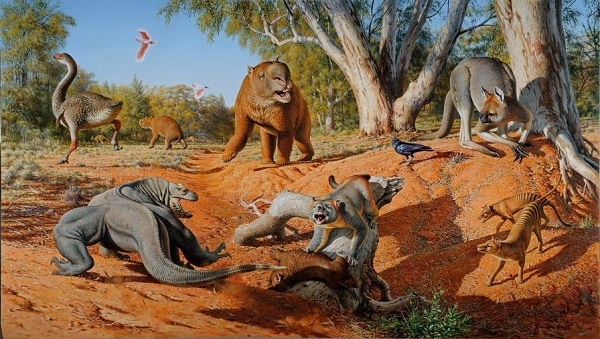
a representation of megafauna

Australian megafauna was driven to extinction by humans.

The wildlife regions of Australia tend to be portrayed as places where anything can kill you. However, a new study has discovered that among all animals, humans are still the most dangerous as they have driven the Australian megafauna to extinction.

Environments can look radically different without the intervention of humans. This was the case of Australia which has large areas covered in dense forests populated with bigger animals than we see today. Scientists know that the Australian megafauna died out 45,000 years ago, but the cause of its phenomenon remains of the point of contention among researchers.

A new study hopes to resolve the disputes between scientists by revealing the definitive cause of the extinction of the megafauna. Therefore, the study argues that as is the case with other species driven to extinction, human activity and not other factors like climate change led to the gradual extinction of the large species of animals.

More specifically, when humans first arrived in Australia, it is very likely that they began hunting the large animals for food. The researchers believe that even limited hunting has had a large impact on the populations of the Australian megafauna over thousands of years.

The study, published in the journal Nature Communications, reveals that Australia experienced a much quicker extinction phenomenon compared to other regions like Africa, where the largest animals gradually disappeared over 130,000 years due to a combination of factors like changes in climate, human hunting and the disappearance of their habitat. In Australia, 85 percent of large animals weighing more than 97 pounds started to dwindle more than 50,000 years ago.

According to Dr. Sander van der Kaars, the lead author of the study and a palaeoecologist from the Monash School of Earth, Atmosphere, and Environment, the researchers discovered that the extinction of the Australian megafauna took place precisely between 45,000 and 43,100 years ago. They also did not find an association of the phenomenon with climate fluctuations or changes in vegetation and biomass. The disappearance of the large animals is mostly consistent with the excessive hunting of humans.

What do you think about the study’s results? Do you believe the Australian megafauna was driven extinct by humans or did the changing climate of the region played an important role?

Image source: Monash University

Filed Under: Science

Ruby Seadragon Captured on Video

January 14, 2017 By Nancy Young Leave a Comment

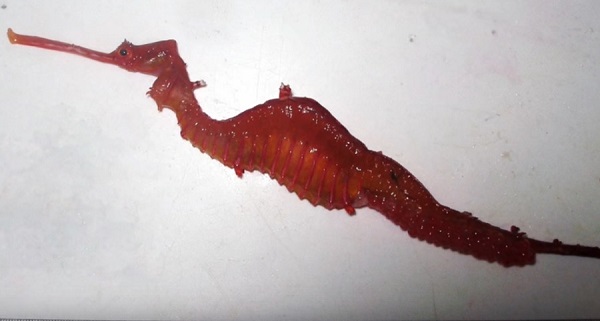
Ruby seadragon

Scientists capture on video the mysterious Ruby Seadragon.

Our planet’s ocean holds a myriad of marine ecosystems which many remain unexplored. As such, it is no surprise that scientists are able to find new species of marine animals every so often. Among one of the most recently discovered species is the ruby seadragon which was even captured on video for the first time.

Until now, scientists have discovered a total of three species of seadragons, the Common, Leafy and the Ruby seadragon. However, the first two species are quite well documented and were observed in their natural system plenty of times, the ruby seadragon proved more elusive.

Researchers from the Scripps Institution of Oceanography at the University of California at San Diego, in collaboration with scientists from the Western Australian Museum have conducted a scientific expedition to film the mysterious animals in the wild, just off the coast of Western Australia.

The research team used a small remotely operated vehicle, equipped with a camera, to explore the waters at around 164-feet deep. It was only several days of exploring that the researchers were able to capture the first sightings of the mysterious species in the wild. They filmed two Ruby Seadragons near the Recherche Archipelago of Western Australia, and the scientists have new information regarding their habitat, behavior, and anatomy.

The captured seadragons lead to the conclusion that the Ruby Seadragon lacks the ornate appendages which are similar to leafs. They once thought that this characteristic was found among all seadragons, based on the findings in the previously analyzed Common and Leafy subspecies. They use the appendages to camouflage in seaweed or kelp meadows as a way to avoid predators.

Scientists became aware of the Ruby seadragon subspecies due to preserved specimens that were collected around a hundred years ago. Although the remains were initially misidentified as belonging to the Common or Leafy Seadragons, the researchers were able to discern that it’s a new subspecies as they assembled a rotating 3D model of the animals using a computer tomography scan from more than 5,000 X-ray slices. They were particularly intrigued by the lack of the leafy appendages.

However, the only way to confirm the existence of the Ruby Seadragon was to actually observe in the wild. The research team accomplished their objective by partnering with Total Marine Technology, ROV company based in Australia.

Image source: Scripps Oceanography/UC San Diego

Filed Under: Science

Draining African Peatland Leads to Massive Carbon Release

January 13, 2017 By Karen Jackson 1 Comment

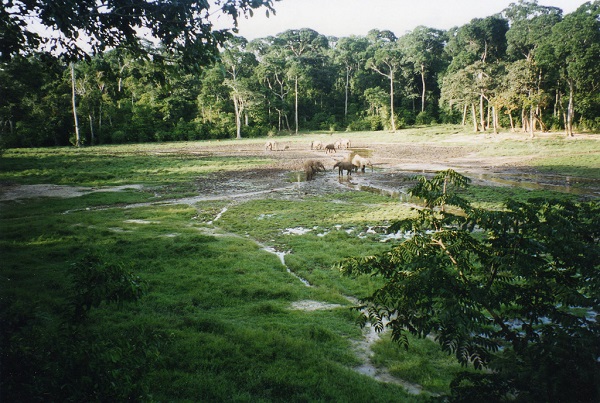
jungle in the Congo basin

African peatland has been discovered in the Congo basin.

Large swaths of forest and jungle can capture a lot of carbon from our atmosphere. These areas can be under threat from human development as countries seek to expand the land meant for agriculture. However, a study has revealed that draining the recently discovered African peatland can lead to a massive release of carbon into the atmosphere.

In the Congo Basin of central Africa, scientists were able to discover a previously unknown peatland. They believe that the area is the world’s largest peatland system and possibly one of the region’s most efficient carbon sinks.

The African peatland was discovered by Greta Dargie and her colleagues from the University College London. She is also the lead author of the study which was published in the journal Nature on Wednesday. In their study, the scientists reveal that if the area is drained due to the expansion of agriculture or dries out, then it could lead to the release massive amounts of carbon into the atmosphere, more specifically 20 years’ worth of fuel emissions produced by the United States.

Tropical wetlands are known for being filled with significant quantities of decomposed organic matter, also known as peat, which makes them some of the world’s carbon-rich ecosystems. As such, protecting them is a great strategy for not only preserving the local natural environment but preventing any increase in global climate change.

The importance of peatlands around the world has gained international attention in the last few years, mainly because of the large-scale fires in Indonesia. Farmers looking to expand agricultural land for the production of palm oil burned carbon-rich tropical peatlands. This types of activities lead to the release of around 1.5 billion tons of carbon dioxide into our atmosphere, worsening the effects of climate change for the entire planet.

Scientists were already aware of the existence of peatlands throughout the tropical region of Asia and South America, but there were only scarce reports about such carbon-rich areas in Africa and the Congo basin, despite exhibiting the same characteristics.

The team that discovered the large African peatland was formed with researchers from both Britain as well as the Republic of Congo. They used satellite data and an elevation model to help them identify regions rich in peat.

Image source: Flickr

Filed Under: Science

Scientists Developed Artificial Spider Silk

January 11, 2017 By Nancy Young Leave a Comment

spider silk in a web

Scientists were able to produce artificial spider silk.

Scientists have developed a new way of creating artificial spider silk using protein molecules. By using only 10 rice grains’ weight they can produce up to 1,5 miles of thread which is almost as strong as the natural fiber. Spider silk is known for its amazing properties but harvesting and applying it in real-life situations have proven difficult and expensive.

A team of international researchers from Spain, Sweden, the UK, and China has built a spinning device by taking inspiration from the spider anatomy. The machine is able to create synthetic silk more efficiently than any spider while still maintaining its amazing properties such as being stronger than Kevlar and being 30 times thinner than a human hair. Furthermore, the artificial silk is easier overall to produce and harvest, thus making it considerably cheaper than the real thing.

The study, published in the journal Natural Chemical Biology, reveals that the natural spider silk is made of several protein molecules commonly known as spidroins. They can be found in the spider’s silk glands and can be found in a very concentrated solution.

When the spider wants to release the web, the solution is squeezed through a small duct with an acidic and high-pressure environment which forces the molecules to link together and form the spider silk. As you know, spiders use it to create their webs which wouldn’t be possible if the silk wasn’t strong and had very low density.

Researchers experienced difficulties replicating the process the spider used. They were able to synthesize the spidroin protein molecules by programming bacteria and yeast to produce it but had trouble linking the molecules together into the fiber. However, they were able to create the artificial spider silk by developing their own narrow duct from what is known as a glass capillary tube measuring only 10 to 30 microns wide at the tip.

The researchers were successful in creating 125 milligrams of protein molecules using a liter of bacterial culture. As the molecules linked together, the researchers ended up with a km of silk from just their initial liter of bacterial culture. Despite being somewhat inferior to the natural silk, their silk was still superior in strength and elasticity than all other previous attempts at replicating the natural material.

Image source: Pixabay

Filed Under: Science

Hubble Reveals Star-Grazing Exocomets

January 9, 2017 By Karen Jackson Leave a Comment

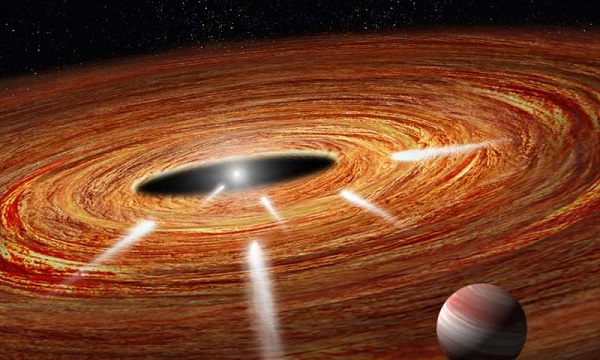
star-grazing exocomets

Hubble discovered indirect evidence of star-grazing exocomets.

Despite the fact that Hubble will soon be replaced by a mode advanced new generation of a telescope, it is still able to provide scientists amazing new discovery about the Universe. His latest one was made possible through the Imaging Spectrograph (STIS) and the Cosmic Origins Spectrograph (COS), which provided indirect evidence of several exocomets falling into a star known as HD 172555.

Unfortunately, obtaining this type of indirect evidence of star-grazing exocomets by detecting the gasses they produce after they fall into the star, is the best data that Hubble can provide as it is unable to directly observe them.

The determined pattern of star-grazing exocomets is similar to that of our solar system’s own comets which end up falling into the sun. However, the HD 172555 star is located around 95 light years away from Earth, and scientists discovered that it’s quite young, with an age of around 23 million years old. This age places it in the period where planets usually form.

Additionally, the star is part of the Beta Pictoris Moving Group, which is located in a stellar nursery and is only the third solar system discovered to contain star-grazing exocomets. The two previously detected star system with exocomets are also quite young, being below 40 million years old.

A group of researchers led by Carol Grady from the Eureka Scientific Inc. group located in Oakland, California in collaboration with researchers from NASA’s Goddard Space Flight Center from Maryland, believe that the gravity of an undiscovered gas giant planet the size of Jupiter is what determines the exocomets to fall into the star.

Scientists also believe that similar comets in our solar system have delivered water and other precursors for life to Earth, in its early stages of life. After an extensive analysis of all three star systems with star-grazing exocomets, the researchers concluded that their activity may be common to young solar systems.

The activity of star-grazing comets coincides with the teenage period of star’s life and provides insight into the early years of our own solar system, and the degree that such comets contributed to the formation of life on Earth as they carry water and other elements like carbon.

What do you think about Hubble’s newest discovery?

Image credit: NASA

Filed Under: Science

  • « Previous Page
  • 1
  • …
  • 9
  • 10
  • 11
  • 12
  • 13
  • …
  • 15
  • Next Page »

Subscribe to Blog via Email

Enter your email address to subscribe to this blog and receive notifications of new posts by email.

Join 10 other subscribers

Recent Articles

police handcuffs man

German Man Probed In Poisoning That Killed 21 Employees Since 2000

June 29, 2018 By Kenneth Scott Leave a Comment

Chicken wings bar

Intoxicated South Carolina Man Punches Waitress Who Refused to Serve Him Alcohol

June 29, 2018 By Karen Jackson Leave a Comment

gaming

New Zealand gamer Who Flew Halfway Across The World for Virginia Teen Gets Shots By Her Mother

June 28, 2018 By Cristopher Hall Leave a Comment

party

Former Virginia Tech Freshman Sentenced to 50 Years in Prison for Stabbing a Girl to Death

June 28, 2018 By Roxanne Briean Leave a Comment

bonfire

British Couple Sentenced to Life in Prison for Torturing and Murdering French Nanny

June 27, 2018 By Deborah Campbell Leave a Comment

pay phone

Texas Father of Girl Disappeared in the 80s Ignored by Authorities

June 26, 2018 By Cristopher Hall Leave a Comment

bottled water

San Francisco Woman Threatened to Call Police on Girl Who Sold Ice Water for Disneyland Trip

June 25, 2018 By Roxanne Briean Leave a Comment

Maplewood Park

Missouri Man Robbed by Date and Accomplice in Park

June 22, 2018 By Nancy Young Leave a Comment

coding

New York Man Sentenced in Cyberstalking Former Girlfriend, Mailing Drugs to Her Dorm

June 22, 2018 By Deborah Campbell Leave a Comment

headphones

Bose Poised to Launch Sleepbuds, In-Ear Headphones That Help You Sleep

June 21, 2018 By Nancy Young Leave a Comment

Police light

Intoxicated Female Driver in Custody for Pulling Arresting Officer by the Hair

June 21, 2018 By Kenneth Scott Leave a Comment

kitchen

Restaurant Manager Arrested and Charged in Shooting Death of Co-Worker over Negative Yelp Reviews

June 20, 2018 By Karen Jackson Leave a Comment

plastic container

Pennsylvania Couple Charged in Violent Death of Infant Discovered Buried in Cat Litter

June 19, 2018 By Cristopher Hall Leave a Comment

tailpipe

Minnesota Teen Gets Head Stuck In Oversized Tailpipe Winstock Music Festival

June 18, 2018 By Karen Jackson Leave a Comment

Pages

  • About Us
  • Contact us
  • Privacy Policy
  • Privacy Policy GDPR
  • Staff
  • Terms and Conditions

Recent Posts

  • German Man Probed In Poisoning That Killed 21 Employees Since 2000 June 29, 2018
  • Intoxicated South Carolina Man Punches Waitress Who Refused to Serve Him Alcohol June 29, 2018
  • New Zealand gamer Who Flew Halfway Across The World for Virginia Teen Gets Shots By Her Mother June 28, 2018
  • Former Virginia Tech Freshman Sentenced to 50 Years in Prison for Stabbing a Girl to Death June 28, 2018
  • British Couple Sentenced to Life in Prison for Torturing and Murdering French Nanny June 27, 2018
  • Texas Father of Girl Disappeared in the 80s Ignored by Authorities June 26, 2018
  • San Francisco Woman Threatened to Call Police on Girl Who Sold Ice Water for Disneyland Trip June 25, 2018

Categories

  • Business
  • Entertainment
  • Finance
  • Headlines
  • Health
  • Life
  • Nature
  • Science
  • Sports
  • Tech & Science
  • Travel
  • Uncategorized
  • United States
  • World

Copyright © 2026 ArgyllFreePress.com
About · Privacy Policy · Terms of Use · Contact