Argyll Free Press

Growing News Network

Wednesday, April 29, 2026
Log in
  • Business
  • Finance
  • Sports
  • Tech & Science
    • HP Envy 4500 Review
    • LG Optimus 170 Review
    • iPod Touch 6th Generation Review
    • HTC One M8 Accessories Set-up
    • Surrealist Games You Must Play
    • Hisense Sero 8 Review
    • Dell Latitude e7440 Review
    • HP Laserjet 1536dnf mfp Review
    • Garmin Fenix 2 Review
    • Skype Vs Viber
    • Best Video Conferencing Software
    • Sony mdr 1r Headphones Review
    • Canon Rebel t3i Review
    • Sennheiser Momentum 2-0 Review
  • Travel
  • Headlines
  • Health
  • United States

Natural Changes And Human Activity Blamed For Sea Ice Loss

March 14, 2017 By Nancy Young Leave a Comment

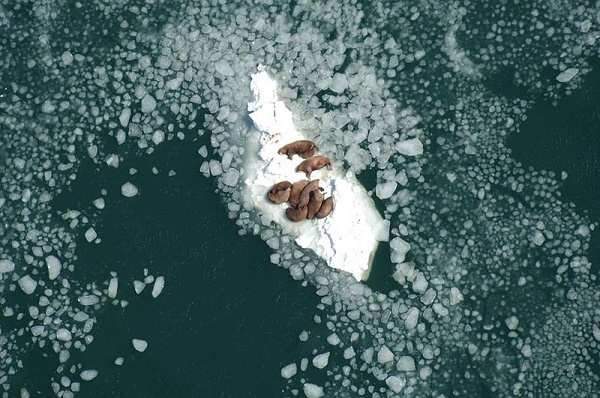
human activity responsible for sea ice loss

Since less than 50% of sea ice loss was caused by natural changes, this leaves more than 50% to human activity

We all know about the loss of sea ice in the Arctic. Apparently, there are two factors that affected the Arctic sea ice. One of them is human activity. Despite the fact that human activity is an important factor, natural changes are also the ones that caused the loss of sea ice.

A new study shows that there are two factors that should be taken into consideration when we talk about sea ice loss. This study is a rare attempt because it wanted to quantify the contribution of nature and humans to this problem. Despite the fact that it is hard to calculate for sure the effects of human and the contribution of nature, the researchers were able to estimate them.

Natural Changes Affected The Sea Ice

Although many people don’t believe in climate change, its effects can be seen. The Arctic is an area that has been affected by this phenomenon. The sea ice is melting, more and more, every day. This change is also affecting the animals that live there. Polar bears, for instance, are endangered animals due to the fact that they are losing their habitat.

People have been debating a lot on the matter of natural changes causing sea ice loss. This study showed that almost 60% of the sea ice decline was caused by changes in atmospheric circulation. When they combined the results from the summertime changes and the fall and winter one, they observed that nature is the one to blame for 40-50% of sea ice loss.

Human Activity affecting the Arctic

Since less than 50% of sea ice loss was caused by natural changes, this leaves a 50% to human activity. Researchers mentioned that this is not great news at all. This shows that human activity has an effect on the entire world

“Continuing to put carbon dioxide and other emissions into the atmosphere is having a direct negative impact on the Arctic, including sea ice,” mentioned Twila Moon from the University of Bristol

This research was conducted in order to help people understand the damage that was done to the Arctic. The scientists mentioned that it is important to know the factors that affect the sea ice before we can try to save it.

Image source: Wikipedia
Filed Under: Science

The Woolly Mammoth May Have Died-Out Due to DNA Mutations

March 5, 2017 By Michael Turner Leave a Comment

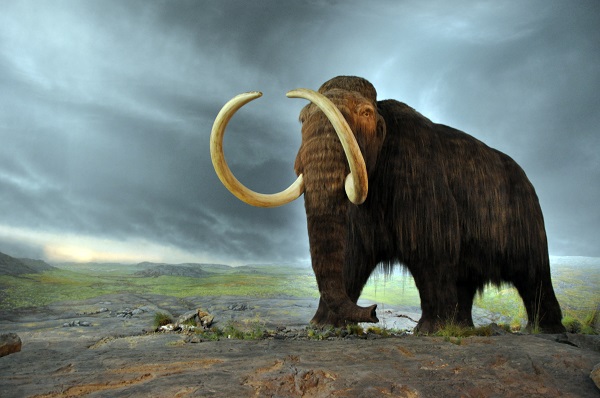
a woolly mammoth on the field

Study finds woolly mammoth specimens suffered genetic meltdown.

While some scientists explore the possibility of bringing back to life the now-extinct woolly mammoth species, others are trying to explain what caused its relatively sudden disappearance. A new study has found that the species acquired too many unnecessary DNA mutations which caused genetic disease and other problems.

Woolly mammoths were among the most common large herbivores roaming the plains of North America and Siberia. Scientists believe that they first developed more than 700,000 years ago, but their population started to decline quite suddenly, after the end of the last ice age which occurred around 10,000 years ago.

Scientists believe that the main cause of their quick disappearance was a combination of factors such as a warming climate and increased hunting by humans. Smaller population persisted on isolated islands in the north until they too vanished more than 3,700 years ago.

Now, a team of researchers from the University of California, Berkeley, managed to compare the genomes of two different woolly mammoth specimens. One specimen was 45,000-years old from Siberia while the other one lived around 4,300-years ago on the Wrangel Island, off the coast of Russia.

The younger specimen was among the last one of its species but provided the researchers with invaluable knowledge about the changes suffered by the species. They discovered that compared to the older mammoth, the younger specimen had suffered multiple mutations which proved harmful to the normal reproductive functions, which played a big role in the extinction of the species.

The scientists believe that while specimens living on isolated islands managed to avoid human hunters, the years of inbreeding led to the formation of harmful DNA mutations, which practically rendered natural selection completely ineffective.

Normally, in large populations groups, those types of mutations eventually disappear due to natural selection as they cannot compete with specimens which have other beneficial mutations. However, smaller groups have no available mechanism to address this issues and they eventually go extinct.

The researchers believe that the bad DNA mutations affected the olfactory receptors and urinary proteins, which, in turn, affected their social status and mate choice of the woolly mammoth. While the research was limited to only one specimen, the scientists believe that the same changes affected almost all the members of that population.

Image source: Wikipedia

Filed Under: Science

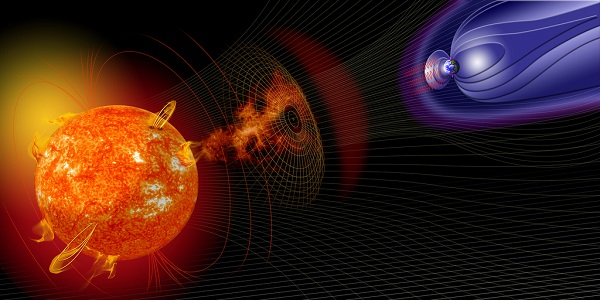
Solar Storms Can Remove Electrons from Earth’s Atmosphere

March 5, 2017 By Kenneth Scott Leave a Comment

Solar storm with Earth's magnetic field

Solar storms can cause electrons to be removed from our atmosphere.

A new study reveals the phenomenon behind strange events in the Earth’s atmosphere such as the highly popular Northern Lights found across the Arctic. The cause may be due to the capacity of solar storms to remove electrons from our planet’s atmosphere.

The study was conducted by researchers from NASA’s Jet Propulsion Library, DTU Space, the University of Brunswick and the University of Illinois, who wanted to gained a better understanding of the effects of solar storms.

The researchers learned that Earth is exposed to large quantities of electrically charged particles every time a solar storm occurs. This, in turn, can lead to the creation of storms on our planet and even generate the aesthetically-pleasing Northern Lights.

However, the solar eruptions which take place on the surface of the Sun also have the effect of eliminating electrons from Earth’s atmosphere over a considerably large area. Furthermore, the solar events can be quite disruptive for navigation and communication systems, especially those at higher altitudes.

The researchers reveal that during solar storms, electrons are being sent into Earth’s ionosphere, almost 50 miles above the surface. As a result, the magnetic field of Earths is weakened, allowing the electrons and other particles to pass through the ionosphere, where normally they would just be reflected.

While this already a known phenomenon, the recent research reveals that at the same time as that phenomenon, another one occurs which leads to massive amounts of electrons being removed from the atmosphere.

The researchers were able to monitor the overall effects of one solar storm taking place over the Arctic in 2014. They observed how electrons were almost vacuum-cleaned from large areas measuring 500 to 1,000 kilometers. This phenomenon takes place in areas with a high density of electrons, areas known as patches.

The study was published in the journal Radio Science. The authors reveal that the explanation behind this electron-removal phenomenon is found in the various geomagnetic processes which take place in the magnetic field of the planet but in a different direction from where the Sun is located.

What do you think about the study’s findings? Have you seen the Northern Lights in person?

Image source: Flickr

Filed Under: Science

Scientists Reveal Why Pandas Are Black and White

March 4, 2017 By Kenneth Scott Leave a Comment

an adult panda bear

Pandas use their black and white coloring to camouflage and communicate.

Internet users often like to point out that the panda, being black, white, Asian and adored by people all over the world, should be the perfect argument against racism. However, beyond the superficial symbolism, scientists claim to have discovered the mystery behind the animal’s unusual color pattern.

The same researchers who unravel why zebras have a pattern of black and white stripes, as a way to repel biting flies, have now managed to uncover the mysteries of the panda, which they published in the journal Behavioral Ecology.

The study was the result of a collaboration between California State University, Long Beach, and the University of California, Davis. It reveals that the black and white color pattern of the pandas has two main functions: communication and camouflage.

The unique characteristic of pandas has long intrigued scientists, especially since the fact that they are the only animal with this pattern, it has made unraveling the mystery behind it so much harder. However, according to the Tim Caro, the lead author of the study, and a professor at the Department of Wildlife and Conservation Biology at UC Davis, they were able to discover its meaning and purpose only after they began treated each part of its body as a separate area.

This allowed the team of researchers to compare the various regions of fur of the pandas’ body to the light and dark colored regions of 195 other carnivore species in the animal kingdom, as well as with that of 39 bear subspecies related to the panda.

The scientists also tried to match the black areas of the pandas to different behavioral and ecological variables as a way to determine their unknown function. Thanks to these comparisons, the scientists found that most parts of the pandas such as the face, neck, rump, and belly, is white. This helps camouflage vulnerable and vital areas of the animal in snowy habitats. While, the black areas of the bear, found on its arms and legs, help it to better hide in shade.

Scientists believe that their unique coloring is caused by their diet, which is mostly limited to bamboo. Its fur is an adaptive mechanism meant to camouflage it for all periods of the year, as it does not hibernate.

Image source: Wikipedia

Filed Under: Science

Rocky Planet Formation Found in Binary System

March 1, 2017 By Deborah Campbell Leave a Comment

rocky planet in orbit

Scientists found a rocky planet orbiting two stars, similar to Tatooine.

Considering the incredible expanse of the Universe it isn’t that hard to believe that it may contain even particular system described in works of science-fiction such as the Star Wars universe’s Tatooine planet which orbits around two stars.

Scientists have recently found evidence of a rocky planet formation formed from shattered asteroids which are currently orbiting a pair of stars. This suggests that among the many possibilities of an infinite Universe, even scenarios described in fiction may very well be possible.

However, the most important aspect of the discovery is that it suggests that rocky planet formations may very well be capable of surviving the death of their own stars, according to the study’s researchers. Despite the fact that our planet only orbits one star, there many other star system home to two or more stars, orbiting each other. In fact, scientists have even discovered system with up to seven stars.

Planets like Star Wars’ Tatooine, which orbit two stars, are known as circumbinary planets. The first discovery of such a planet happened in 2011. The planet has been named Kepler-16b and it is gas giant located around 200 light-years away from Earth.

Until now, all the circumbinary planets that were discovered were found to be gas giants, and astronomers became skeptical that they would ever find a rocky planet which orbits two stars, similar to Tatooine, where Luke Skywalker lived at the start of the series.

According to Jay Farihi, the lead author of the study, and an astrophysicist at the University College London, circumbinary rocky planets seem to be incredibly rare due to the fact that the gravity of two stars would impede the various parts of dust and rock to stick together and form a planet, as they push and pull from different directions.

The scientists discovered the first circumbinary rocky planet in a star system known as SDSS 1557, which is located around 1,000 light-years away from Earth. It was first thought to only include a white dwarf, but a closer analysis revealed the existence of another star, a brown dwarf equal in mass to around 65 Jupiters.

What do you think about the discovery? Are you excited about the discovery of a planet similar to Tatooine?

Image credit: Mark Garlick, UCL, University of Warwick and University of Sheffield

Filed Under: Science

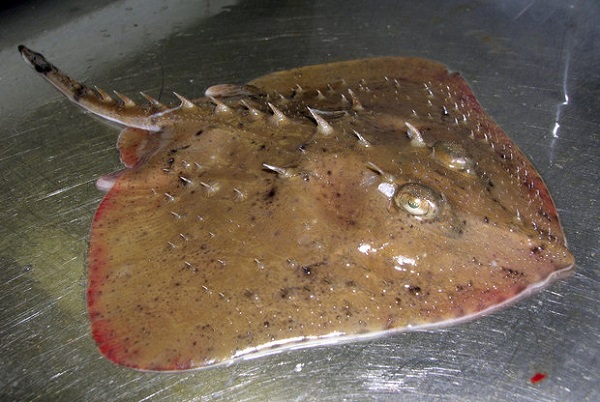
The Thorny Skate Is Not an Endangered Species Yet

February 27, 2017 By Karen Jackson Leave a Comment

a thorny skate specimen

The thorny skate does yet warrant the protection of the Endangered Species list.

Despite the fact that the populations of the thorny skate have declined in the last few years, the federal government agencies have ruled that the species will not be added to the Endangered Species list, at least not yet.

The ruling came in opposition with the assessments made by a number of environmental groups which believed that the recent population loss of the thorny skate in the northwest Atlantic Ocean, was just significant enough so that it warrants the protection of the Endangered Species Act.

Unfortunately, the US National Marine Fisheries Service disagreed with the assessment made by conservation groups, who were hoping to see the implementation of a marine protection habitat for the bottom-dwelling species of fish.

The Federal Register published documents on Friday, which reveal that the federal agency concluded that the thorny skate species is currently not in any danger of extinction in all or a significant portion of its habitat range. The agency also reports that the species will not become endangered anytime soon, while at the same time it agreed with reports from environmental groups showing the decline of the fish’s population.

The National Marine Fisheries Service’s report states the population of the species is just five percent lower than what it was in when it reached its recorded peak back in the 1970s, as they thorny skate still remains quite numerous in a large part of their habitat range, located between Greenland and South Carolina, with hundreds of millions of specimens.

The petition to add the thorny skate to the Endangered Species list was started by the Animal Welfare Institute and Defenders of Wildlife, which sought to implement new fishing restrictions and habitat protection for the species.

The call to protect the species, especially those living in the Gulf of Maine, which is a commercial fishing area, has been met with resistance from a number of fishing groups. While the thorny skate has been protected for being harvested commercially since 2003, it is being caught as bycatch in other fisheries, which mostly capture cod and other types of skates.

What do you think about the federal agency’s conclusion about the population of the fish species?

Image source: NOAA

Filed Under: Science

Neanderthal DNA Still Affects Modern People

February 26, 2017 By Deborah Campbell Leave a Comment

a neanderthal man

Neanderthal DNA still affects the traits of modern humans.

When scientists analyzed our entire genetic history, they found remnants of Neanderthal DNA. Now, a new study reveals that those genes still affects modern people in regards to their appearance and health. While Neanderthals are believed to have died out more than 40,000 years ago, it seems that they still make their presence felt today.

Remnants of Neanderthal DNA can still be found in our genes due to the fact that our ancestors had mated with the less-evolved species, and thus passed their genes further down to the next generations. Now, researchers from the United States have shed some light on how their genes still affect modern people.

According to Joshua Akey, a co-author of the study and a geneticist at the University of Washington stated that the ancient DNA influence several traits of modern humans such as height and the chance of suffering from diseases like schizophrenia and lupus. The impact of the Neanderthal DNA is still considerable despite the fact that the last human-Neanderthal mating like occurred more than 50,000 years ago.

Previous studies have shown that the Neanderthal genetic variants are linked to vulnerabilities to several conditions. However, the mechanisms which caused those effects still eludes scientists. Therefore, the team of researchers started to collect data from the Genotype-Tissues Expression Project, which analyzed people who carry both the modern and the Neanderthal version of a gene.

Using this data, the scientists were able to create a clearer picture and better understand how the Neanderthal genes affect the traits of modern humans, in a quite pervasive and important way. For example, the Neanderthal version of the gene known as ADAMTSL3 is tied to both schizophrenia and height. The study found that, overall, causal mutation and the way in which genes are turned on or off in humans today, have been inherited from Neanderthals.

The study, published in the journal Cell, emphasizes the fact that the interbreeding with the Neanderthals still remains a source of worry for modern humans as it leads to a greater genomic complexity. The researchers also want to examine how other hominid species like the Denisovans contribute to our genetic makeup.

What do you think about the study’s findings?

Image source: Flickr

Filed Under: Science

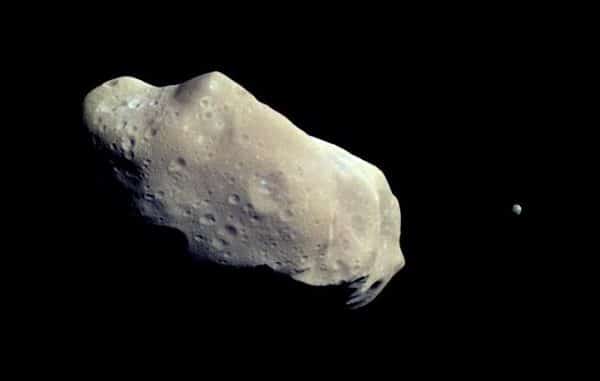
NASA Prepares Two Future Asteroid Missions

February 25, 2017 By Nancy Young Leave a Comment

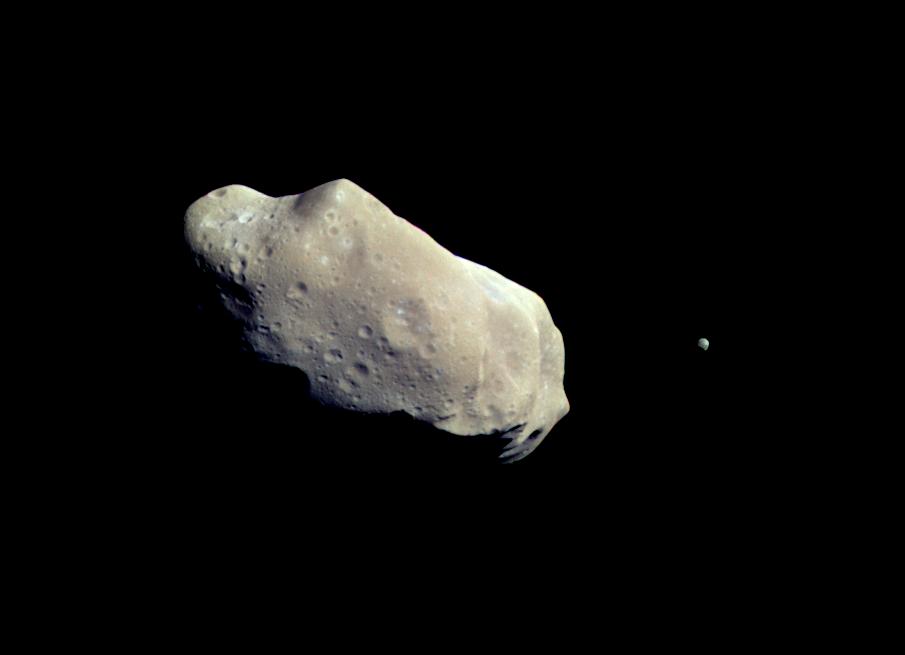
asteroid in space.

NASA is preparing for two future asteroid missions.

In its endeavor to explore outer space as much as possible in order to better understand the world around us, NASA has announced two new asteroid missions in the coming decade. The mission will involve learning more about asteroid found in Jupiter’s gravity as well as those located in the solar system’s asteroid belt.

The first of the two asteroid missions part of the Discovery Program is titled Lucy and is scheduled to launch in 2021 towards Jupiter. Scientists calculated that it will arrive in its orbit in 2025, where it will begin studying Trojan asteroids trapped in the planet’s gravity. Its mission will last between 2027 and 2033 as it will explore up to six Trojan asteroids in two groups.

One group leads and the other one trails Jupiter in a 12-year circuit around the sun. The Trojan asteroids are of interest to scientists because they are relics of a previous era in the history of our solar system. The Lucy spacecraft is designed to help scientists learn as much as possible from the analysis of six asteroids.

The Lucy spacecraft will be developed by Lockheed Martin, while the overall mission will be managed by NASA’s Goddard Space Flight Center located in Greenbelt, Maryland.  According to NASA’s statement, the development of the spacecraft will cost around $450 million.

The second mission announced as part of NASA’s Discovery Program will consist in exploring a particular asteroid found in the solar system’s asteroid belt. This specific asteroid known as Psyche garnered the attention of scientists because it is a unique metal asteroid which has never been visited before.

The Psyche mission is scheduled to launch in 2023 and has quite a long way to go considering that the 16 Psyche asteroid is located at three times the distance between Earth and the sun. Furthermore, the asteroid itself is quite large in size, measuring a diameter of 130 miles.

What makes it particularly interesting to scientists is the fact that it mostly comprised of metals such as iron and nickel, unlike other asteroids which have rocky or icy bodies. Scientists are eager to learn if the asteroid is the exposed core of a former planet.

Image source: Wikimedia

Filed Under: Science

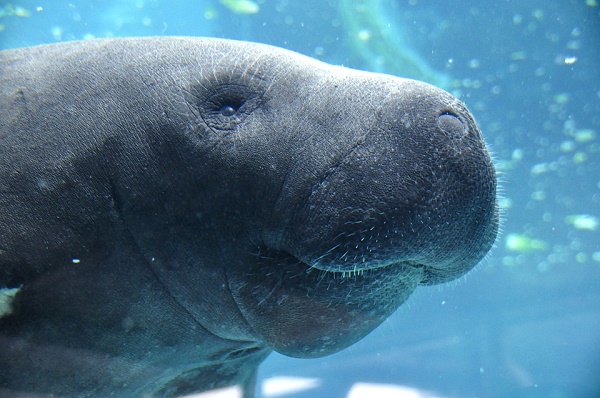
Record Number Of Manatees Might Make Them Lose Endangered Status

February 23, 2017 By Deborah Campbell Leave a Comment

manatees endangered status

Manatees might lose their endangered status.

Manatees are listed as endangered and this might change in a few weeks. The US Fish and Wildlife Service is going to decide whether or not the manatees are going to remain listed as endangered. The service is planning on listing the manatees as threatened.

The agency wants to list the animal as threatened due to the fact that it started to recover. The number of manatees in Florida has reached a new record. There are more than 6,000 specimens. Until now, in Florida, there were 3,400 specimens.

This record number of manatees has been seen for the last 3 years. This means that the manatees are recovering and that the endangered status is too much for them. This means that the decision to list them as threatened is better for their recovery.

Despite the fact that this is a sign of recovery, the manatees should be watched and protected at all times. The number of manatees in Florida is affected by the cold waters in the winter and by motorboats that are found along the coastlines. In order to increase the number of manatees, Florida invests $2 million every year.

The Endangered Species List uses the endangered status for species that are facing extinction. The threatened status is used for animals that are likely to become endangered in the future. Many people believe that the manatees should maintain the same status, despite their numbers increasing. They believe that the species is not recovered and that they need more time before their status can be changed.

The US Fish and Wildlife Service mentioned that there are limited resources and that is why they have to focus on the animals that are considered endangered. When there are too many animals with this status, they can’t help them all. They have to list the manatees as threatened because they have recovered enough for the moment.

The agency also mentioned that this does not mean that the manatees will lose their protection. They are still going to be protected under the Marine Mammal Protection Act and the Endangered Species Act. We’ll just have to wait and see what the US Fish and Wildlife Service decides.

Do you think that the manatees should be listed as threatened? Do you think that they are recovered?

Image source: Pixabay

Filed Under: Science

Scientists Create Bulletproof Origami Shield

February 20, 2017 By Roxanne Briean Leave a Comment

black origami shield

Scientists invent a lighter and more compact bulletproof origami shield.

Personal bulletproof technology, from Kevlar vests to shields, has saved a lot of lives during dangerous situations. However, in the case of shields, the major drawback was that they are compact, large, heavy and quite hard to handle adequately.

A new invention from a team of engineers from Brigham Young University, promises to address these issues with a bulletproof origami shield. The shield is as strong as Kevlar, being able to deflect most bullets shot from pistols and revolvers, while it can fold as origami paper.

According to one of the researchers involved in the design of the origami shield, professor Larry Howell, the engineers collaborated with SWAT teams, a federal special agent as well as various police officers, in order to better understand what they wanted and needed from a bulletproof shield

The main concerns of the law enforcement agents were that current shields are quite heavy, as they are made from solid steel and can weigh up to 100 pounds. Another major concern is that the cumbersome shields can only protect one person at a time.

In order to address these concerns, the scientists went on to create a lightweight shield, which was compact for increased portability and was even able to protect more agents during dangerous situations.

The new origami shield is capable of easily folding when it is not being used. This makes it much more compact than regular shields, allowing it to be easily transported and deployed where it is needed the most. A user only needs five seconds to expand the bulletproof shield which can act as a cover fire barrier for police officers. Scientists were able to cut the weight of the shields to just 55 pounds, almost half of the current solid steel ones.

The shield makes use of 12 layers of Kevlar deployed in a common creasing pattern similar to that of origami. The new invention had a remarkable efficiency which surprised even the engineers, who initially thought that shots for .44 Magnum would end up tipping over the shield, which didn’t happen.

What do you think about this new bulletproof origami shield? Do you think it will be mass deployed in various situations?

Image credit: Brigham Young University

Filed Under: Science

  • « Previous Page
  • 1
  • …
  • 7
  • 8
  • 9
  • 10
  • 11
  • …
  • 15
  • Next Page »

Subscribe to Blog via Email

Enter your email address to subscribe to this blog and receive notifications of new posts by email.

Join 11 other subscribers

Recent Articles

police handcuffs man

German Man Probed In Poisoning That Killed 21 Employees Since 2000

June 29, 2018 By Kenneth Scott Leave a Comment

Chicken wings bar

Intoxicated South Carolina Man Punches Waitress Who Refused to Serve Him Alcohol

June 29, 2018 By Karen Jackson Leave a Comment

gaming

New Zealand gamer Who Flew Halfway Across The World for Virginia Teen Gets Shots By Her Mother

June 28, 2018 By Cristopher Hall Leave a Comment

party

Former Virginia Tech Freshman Sentenced to 50 Years in Prison for Stabbing a Girl to Death

June 28, 2018 By Roxanne Briean Leave a Comment

bonfire

British Couple Sentenced to Life in Prison for Torturing and Murdering French Nanny

June 27, 2018 By Deborah Campbell Leave a Comment

pay phone

Texas Father of Girl Disappeared in the 80s Ignored by Authorities

June 26, 2018 By Cristopher Hall Leave a Comment

bottled water

San Francisco Woman Threatened to Call Police on Girl Who Sold Ice Water for Disneyland Trip

June 25, 2018 By Roxanne Briean Leave a Comment

Maplewood Park

Missouri Man Robbed by Date and Accomplice in Park

June 22, 2018 By Nancy Young Leave a Comment

coding

New York Man Sentenced in Cyberstalking Former Girlfriend, Mailing Drugs to Her Dorm

June 22, 2018 By Deborah Campbell Leave a Comment

headphones

Bose Poised to Launch Sleepbuds, In-Ear Headphones That Help You Sleep

June 21, 2018 By Nancy Young Leave a Comment

Police light

Intoxicated Female Driver in Custody for Pulling Arresting Officer by the Hair

June 21, 2018 By Kenneth Scott Leave a Comment

kitchen

Restaurant Manager Arrested and Charged in Shooting Death of Co-Worker over Negative Yelp Reviews

June 20, 2018 By Karen Jackson Leave a Comment

plastic container

Pennsylvania Couple Charged in Violent Death of Infant Discovered Buried in Cat Litter

June 19, 2018 By Cristopher Hall Leave a Comment

tailpipe

Minnesota Teen Gets Head Stuck In Oversized Tailpipe Winstock Music Festival

June 18, 2018 By Karen Jackson Leave a Comment

Pages

  • About Us
  • Contact us
  • Privacy Policy
  • Privacy Policy GDPR
  • Staff
  • Terms and Conditions

Recent Posts

  • German Man Probed In Poisoning That Killed 21 Employees Since 2000 June 29, 2018
  • Intoxicated South Carolina Man Punches Waitress Who Refused to Serve Him Alcohol June 29, 2018
  • New Zealand gamer Who Flew Halfway Across The World for Virginia Teen Gets Shots By Her Mother June 28, 2018
  • Former Virginia Tech Freshman Sentenced to 50 Years in Prison for Stabbing a Girl to Death June 28, 2018
  • British Couple Sentenced to Life in Prison for Torturing and Murdering French Nanny June 27, 2018
  • Texas Father of Girl Disappeared in the 80s Ignored by Authorities June 26, 2018
  • San Francisco Woman Threatened to Call Police on Girl Who Sold Ice Water for Disneyland Trip June 25, 2018

Categories

  • Business
  • Entertainment
  • Finance
  • Headlines
  • Health
  • Life
  • Nature
  • Science
  • Sports
  • Tech & Science
  • Travel
  • Uncategorized
  • United States
  • World

Copyright © 2026 ArgyllFreePress.com
About · Privacy Policy · Terms of Use · Contact