Argyll Free Press

Growing News Network

Friday, April 17, 2026
Log in
  • Business
  • Finance
  • Sports
  • Tech & Science
    • HP Envy 4500 Review
    • LG Optimus 170 Review
    • iPod Touch 6th Generation Review
    • HTC One M8 Accessories Set-up
    • Surrealist Games You Must Play
    • Hisense Sero 8 Review
    • Dell Latitude e7440 Review
    • HP Laserjet 1536dnf mfp Review
    • Garmin Fenix 2 Review
    • Skype Vs Viber
    • Best Video Conferencing Software
    • Sony mdr 1r Headphones Review
    • Canon Rebel t3i Review
    • Sennheiser Momentum 2-0 Review
  • Travel
  • Headlines
  • Health
  • United States

Old Burger King Toy Becomes Game Boy Color Nano

June 7, 2016 By Karen Jackson Leave a Comment

gameboy color

Whenever someone at Emulators and Raspberry Pi is feeling creative, a new hot commodity is produced, and with their latest product, you can’t blame them for making sure people still enjoy the classics.

When McDonald’s launched its Happy Meal boxes that could easily be turned into Google Cardboard compatible VR headsets, people thought they were quite innovative. However, rival Burger King could be ahead of the competition when it comes to mixing tech with food.

It was the year 2000 when the fast food chain had started to give away gaming handhelds that looked like smaller versions of the Nintendo GameBoy Color. Evidently, it couldn’t hold a light to the original Nintendo device, but it was capable of playing analog games inside.

But with today’s technological advancements, it was really only a matter of time before a toy got an accurate GameBoy makeover. Such was the case of ChaseLambeth, a Reddit user who thought of the brilliant idea of placing a Raspberry Pi Zero inside a plastic Game Boy Color toy.

The toy is, of course, not an actual Game Boy Color, because a tilting ball maze had been built on the inside. However, the simple concept lowered the cost normally needed to enjoy a Game Boy.

But there was a problem: Despite working on his little project for months, ChaseLambeth couldn’t figure out the volume issue. Basically, the many parts wouldn’t fit inside the toy.

He thought of giving up until he stumbled across an Instagram user who’d had the same idea, only he had succeeded. His copy of the game – which ChaseLambeth calls the Game Boy Color Nano – was ready for order.

The other designer had installed the same components, and the RetroPie emulator OS for Raspberry Pi was used to emulate the Game Boy Color.

In theory, the OS is capable of supporting even more emulators, but considering the number of buttons and the specific layout, the result might not be the same when other emulators are used.

The Nano costs $250 but it might be worth it; at that price, you get a toy mod that wired the buttons to actually control the RPi Zero, featuring a 2-inch LCD display for graphics, in addition to speakers. The result is nothing short of a masterpiece.
Image Source: YouTube

Filed Under: Tech & Science Tagged With: Burger King toy, Game Boy Color, Game Boy Color Nano, Happy Meal box Cardboard

Facebook Says It Does Not Eavesdrop On Your Conversations

June 6, 2016 By Deborah Campbell Leave a Comment

alt= Facebook app open on iphone

Facebook has denied in an official blog post that it is eavesdropping on people’s conversations to deliver targeted ads and to alter their News Feeds.

According to its spokesperson, Facebook only uses its access to people’s microphones for certain features. This announcement was made in response to recent rumors saying that the social network can and is listening through people’s smartphone mics to better target advertising based on what they are talking about.

But Facebook clearly stated that the device’s microphone is only used by the social network for features that require it and that the ads people see on Facebook are based only on their use on the platform.

Even though the suggestion that Facebook’s ears might be always open had been thrown around in anecdotal reports for years, the possibility was boosted last week. But the site swiftly denied those rumors.

“Facebook does not use your phone’s microphone to inform ads or to change what you see in News Feed,” the company wrote in a blog post on 2 June.

“Some recent articles have suggested that we must be listening to people’s conversations in order to show them relevant ads. This is not true. We show ads based on people’s interests and other profile information – not what you’re talking out loud about.”

Facebook also pointed out that, as with any other app, it asks for access to your phone’s mic so it can use it for specific features. “We only access your microphone if you have given our app permission and if you are actively using a specific feature that requires audio,” the site explained.

What features, you’re asking? Recording a video requires the mic, for instance, as well as including music or other audio in the status updates.

But if you’re still not convinced and you don’t want Facebook snooping around, you can easily turn off your microphone for Facebook – or any other app, for that matter.

Some features will become unusable, but it will mean that Facebook will no longer ‘hear’ anything since you’ve turned off microphone access at the level of the operating system.

To deny Facebook’s access, all you have to do is head to the privacy settings on iOS or Android and toggle the permissions that the app is given.
Image Source: Yahoo!

Filed Under: Tech & Science Tagged With: Facebook accused of listening in, Facebook eavesdrops, Facebook target ads, Facebook uses microphone access

Massive Interest in Amazon’s Alexa: Voice Assistant Has Over 1,000 Skills

June 5, 2016 By Karen Jackson Leave a Comment

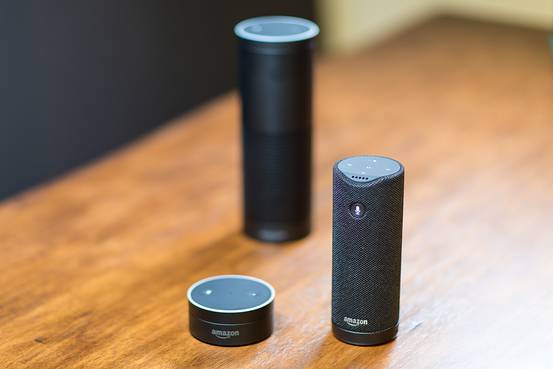
amazon products

We live in an all-connected world in which Amazon’s Echo speaker, and its descendants, Tap and Dot, are the royal family. Amazon’s products are growing in popularity as more consumers prefer ‘smart’ speakers for their homes.

But the interest for internet-connected homes has also spurred interest in the developer world in the form of add-ons dubbed “skills.” These allow devs all around the world to teach Amazon’s voice assistant Alexa new tricks, like ordering you a pizza or calling you an Uber.

Today, Amazon announced that the app store for Alexa’s skills – so to speak – has surpassed 1,000. Given that the Echo has only become universally available last June (it was invitation only before that), the new milestone is definitely notable.

At the same time, Alexa’s voice and functionalities have also been integrated into other connected devices, such as the Fire TV; thanks to Amazon’s open platform, third-party hardware makers could also implement the assistant into their products.

What’s even more impressive is the quick acceleration of this third-party “app” ecosystem; only in January of this year, Alexa’s skills section only contained some 130 apps.

In the announcement, Amazon highlighted the more notable additions to Alexa’s selection of skills, such as those from Domino’s, Capital One, Fitbit, SmartThings, Uber, and more.

According to Rob Pulciani, director of Amazon’s Alexa, the community size of the third-party developer around its personal assistant has reached into the “tens of thousands.” That means developers are at least interested in toying around with Alexa, even if not all of them are actually creating new apps.

While Alexa’s capabilities have steadily improved over time, Amazon now needs to solve the problem of discovery. Alexa’s skill section – its personal “app store” that pairs with the connected speaker or other Alexa-powered devices – is at this point merely bare bones.

Search is rocky, and there are no top charts or categories to browse through, as with other app stores. Seeing that there are more than 1,000 apps already, Amazon needs to figure out how to highlight the best of them, so users can actually find them.
Image Source: Wall Street Journal

Filed Under: Tech & Science Tagged With: Alexa app skills, alexa personal assistant, Amazon, amazon alexa, Amazon Dot, Amazon Tap

Honking Not Limited to Human Drivers, Google Says

June 4, 2016 By Michael Turner Leave a Comment

alt= woman honking

Just imagine this: You’re stuck in bad traffic, and some driver behind you lost its cool and is now supporting its palm on the honk even though there’s clearly nowhere to go.

You turn around to say something, but you realize there’s no one behind the wheel – the car is being annoying autonomously! With a little bit of luck, this scenario won’t happen anytime soon.

However, Google has announced the groundwork for autonomous honking is already here, as the self-driving fleet of cars has started learning how and when to honk.

The news was first spotted Business Insider in Google’s Self-Driving Car Project Monthly Report, which unveiled new data from May. In the report, Google explained that there’s no need to worry about impolite and annoying self-honking cars – in theory at least.

Apparently, the company is teaching its vehicles to be polite and considerate. “Our self-driving software is designed to recognize when honking may help alert other drivers to our presence — for example when a driver begins swerving into our lane or backing out of a blind driveway,” the report stated.

To make sure the cars won’t be honking unnecessarily, Google is programming the cars’ software to see the difference between actual honk-demanding situations and the often false positives.

During the development phase, Google’s test drivers note down every time the car toots without cause, making sure the error can be eliminated in the next version of the car’s software.

The cars have been taught more than just one type of honks, using a different one depending on the scenario: two short toots are reserved for when a car ahead is slowly reversing back into the self-driving car, but there are also longer honks that call to action in more urgent situations.

Google also released report details about the sound its self-driving cars make. Unlike gasoline-powered cars, electric cars are inherently quiet, so manufacturers had to add a sonic hum that made the car’s presence known to pedestrians and cyclists.

In Google’s own words, the sound is meant to be “friendly and a little futuristic.” Eventually, its self-driving cars will learn to predict how other drivers on the road respond to a situation-specific honk of the horn.
Image Source: AOL

Filed Under: Tech & Science Tagged With: Google self-driving project, Honking, human drivers, Self Driving Cars, self-driving cars learn to honk

New Ground Lights Could Boost Pedestrian Safety in Australia

June 3, 2016 By Cristopher Hall Leave a Comment

alt= walking and texting

In this time and day, it’s no longer a surprise to bump into people on the street, or even to see people calmly walking into light poles. Why? Because we’ve become accustomed to having our eyes glued to our smartphones’ screens even when we’re walking.

But Sydney, Australia, wants to help people affected by this problem that turns most smartphone users into digital zombies.

Authorities in New South Wales are preparing a program to deploy ground lights at street level so people who are too busy checking their feed won’t die while crossing the street.

For this pilot program, ground level traffic lights will be installed, with further implementation possible after residents will offer feedback. The first phase of the project will last for six months, during which ground-level embedded street lights will be placed in five locations from Sydney’s business district.

The initiative will reach a cost of approximately AUS $250,000 (US $180,663). According to Bernard Carlon, the Executive Director at Centre for Road Safety, it’s worth it.

“We need to create a road system that keeps [pedestrians] safe, and this includes situations when they may not be paying attention,” he explained. Seeing that pedestrian casualties are on the rise in Australia – that’s what statistics say – the authorities might be onto something here.

Evidently, excessive smartphone use is only partially responsible for the 61 pedestrians who lost their lives in 2015 in a New South Wales road accident. However, the 49 percent surge (compared to 2014’s casualties) calls for any action that promises to improve the situation.

Street level lights should be in the line of view of pedestrians who can get into dangerous traffic situations because they are looking at their mobile screens. The new lights will provide additional warning, complementing traditional signals and lights.

Australia is not the first to implement extra warning signals for pedestrian safety. After a teenage girl died in a railroad accident earlier this year in the German town of Augsburg, authorities started a similar initiative at two stations within the town.

Should the pilot program prove successful in reducing the number of accidents, the local authorities are considering installing more ground level warning lights. Young people in Germany even have a name for the phone users perpetuating the phenomenon: “smombies.

Image Source: Droid App

Filed Under: Tech & Science Tagged With: additional warning, ground lights, pedestrian safety, road accident risk, smombies, walking and texting

Facebook Messenger Adds New Emojis with Diverse Skin Tones

June 3, 2016 By Nancy Young Leave a Comment

skin tones

Not all emojis were created equal, at least not when it comes to the differences between Android and iOS. We’ve all been there: you want to send the shocked emoji from Android and it looks like a ghost on iOS.

But thanks to the new update for Facebook Messenger, all those emotions will no longer be lost in translation.  Not only did the app redesign its 1,500-plus emojis, but has also added 100 new ones.

The best part is that all Messenger users will see the same little pictograms, regardless of the platform they’re using. This means that it doesn’t matter if you’re using Facebook Messenger on desktop, the Web, or on mobile devices – the emojis will deliver the meaning you intended.

The problem with emoji keyboards designed specifically for one OS is that some emoji won’t even appear correctly on another platform; all you see instead is a broken-looking black box or something that doesn’t even make sense.

“Emojis have changed the way we talk to each other — whether it’s a smiley face to show you’re happy, a thumbs up, or a pizza when hungry, emojis are a fun, easy way to express yourself when words just aren’t enough — and people love them,” wrote Facebook in an official blog post.

According to their data, some 10 percent of mobile messages in-app features at least one emoji. And not only do we have a new standard for emoji, we also have been given new ones.

The updated emojis were designed to be more diverse – racially and ethnically speaking. Many of the 100 new emojis are focused on improving our choices in terms of gender and skin tones.

Facebook said that the multi-colored emojis are meant to “create a more balanced mix that’s more representative of our world.” Among the new female-positive emojis are a female pedestrian, swimmer, police officer, runner, and surfer, with more on the way in the near future.

The social network also wants to help people find the right emoji for each situation, so it added am emoji picker. No, artificial intelligence and machine learning are not involved in this feature; the emoji picker simply allows you to select emojis faster with the help of a shortcut.

The redesigned emojis are rolling out today with the latest update of Facebook Messenger.
Image Source: Vocativ

Filed Under: Tech & Science Tagged With: Facebook Messenger introduces new emoji, female swimmer emoji, new emoji, new female emoji, new skin tones for emoji

Microsoft Wants to Win VR Without Actually Releasing a VR Headset

June 1, 2016 By Deborah Campbell Leave a Comment

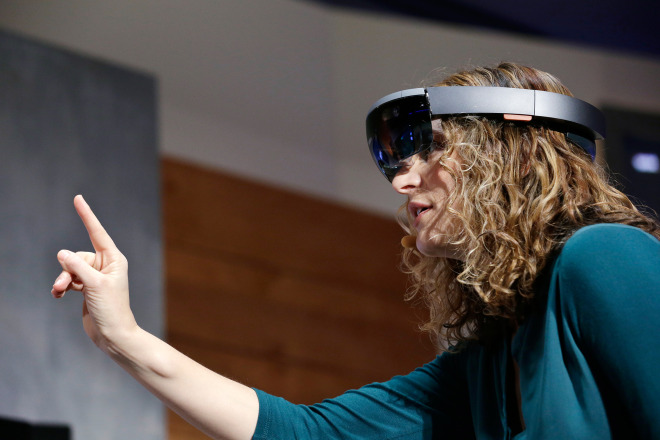
alt= Microsoft's Lorraine Bardeen demonstrates a hologram device at an event demonstrating new features of its flagship operating system Windows at the company's headquarters Wednesday, Jan. 21, 2015, in Redmond, Wash. Executives demonstrated how they said the new Windows is designed to provide a more consistent experience and a common platform for software apps on different devices, from personal computers to tablets, smartphones and even the company's Xbox gaming console. (AP Photo/Elaine Thompson)

Even though virtual reality is upon us, the arrival of Microsoft’s HoloLens won’t be for a while longer.

Microsoft isn’t keen on building its own traditional VR headset, and it doesn’t have a release date for its magical augmented reality (AR) headgear. So until that happens, Microsoft has concocted a plan.

It wants to use the allure of VR and AR to sell VR headset manufacturers, developers, and users on its Windows 10 operating system. Microsoft announced on Wednesday that Windows Holographic won’t be simply a special version of Windows that connects to its HoloLens headset.

Sometime soon, Microsoft wants to bring all its features to the traditional versions of Windows 10, which means opening up the floodgates for VR headset makers to develop their own headsets for computers using Microsoft’s most recent OS.

But Microsoft grand vision needs all those headsets to play nice with Windows, too. If successful, the plan would allow people to work together from across different time zones as if they were in the same office, regardless of the headset each of them is using.

Even if one person would be using an HTC Vive and their colleague a HoloLens, Microsoft’s new platform would allow them to see each other and their surroundings so they could collaborate on their project.

This will be made possible with the help of the HoloLens’ sensors; as they scan the room, Microsoft’s platform can share that visual data with the HTC Vive user as well.

Of course, this unbelievable scenario only really works if at least one person has purchased a $3,000 HoloLens Development Kit – which hasn’t even made it to the shelves yet.

But Microsoft’s plan doesn’t have to wait some more years until a consumer-ready version of the HoloLens will arrive; before the idea of VR and AR collaboration will bear fruit, the company hopes to inspire as many developers as possible to create Universal Windows Applications for VR headsets right now.

The catch is that if they start using Microsoft’s standard, the applications they build now will work just as well on AR headsets like the HoloLens later.

Microsoft’s idea is simpler pitch than asking VR developers to build apps for the HoloLens itself, which might not be released yet for some years.
Image Source: Wired

Filed Under: Tech & Science Tagged With: AR, Augmented Reality, HoloLens, microsoft, virtual reality, VR

Cold Water Upwelling in Antarctic Seas Could Explain Climate Change Paradox

May 31, 2016 By Kenneth Scott Leave a Comment

alt= Antarctic ice melting

It seems that in spite of the global warming that melts the Arctic ice, the ocean around Antarctica maintains a persistent chill caused by ancient cold waters surfacing from the depths after hundreds of years.

According to a U.S. study, the Southern Ocean off Antarctica could be the last place on Earth to react to the man-made climate change, thanks to a lag of centuries that affects waters emerging from up to 5,000 meters deep.

A lot of people still doubt current scientific findings saying that human use of fossil fuels is the cause of an increasing warming of the planet.

This seeming paradox of expanding winter sea ice around Antarctica in recent decades and a rapid decrease of ice in the Arctic is something they often point to in their reasoning.

“Our findings are a step toward resolving the mystery,” explained senior author Kyle Armour of the University of Washington, Seattle, in the journal Nature Geoscience.

He noted the fact that cold water keeps surfacing helps to explain the fact that sea ice persists in large masses. However, it does not explain the trend of expanding, which other studies have associated with shifts in winds off the massive frozen continent.

The recent report found that warm waters in the Gulf Stream get colder as they flow north into the North Atlantic, then go under and loop south towards Antarctica as part of a great aquatic conveyor belt that completes once every few centuries.

In the end, winds in the Southern Ocean surrounding Antarctica send surface waters northwards and encourage the upwelling of the chill, ancient waters from the abyssal depths.

This could be an explanation for why the surface of the Southern Ocean has warmed by just 0.02 degree Celsius per decade since 1950, which is considerably less than the global average of 0.08 degrees.

Scientists are still unsure if the cold waters could also help in delaying the melting of ice locked up on the continent in Antarctica; one of the biggest worries is that the melt could sharply raise global sea levels.

Colin Summerhayes of the Scott Polar Research Institute, who was not involved in the study, said that “even water that cool is still warm enough to melt the ice at the base of the ice shelves.”
Image Source: Phys.org

Filed Under: Tech & Science Tagged With: Antarctic seas, Arctic pole, climate change, Cold Water Upwelling in Antarctic Seas Could Explain Climate Change Paradox, Southern Ocean, upwelling water

No Fix For Sleep of Death Bug on Microsoft’s Surface Book

May 30, 2016 By Nancy Young Leave a Comment

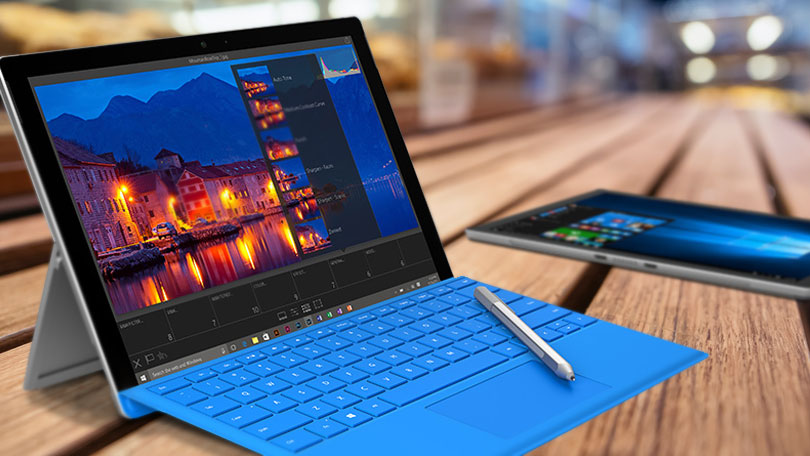
surface book

According to Microsoft’s most recent quarterly earnings report, the Surface line has become increasingly popular, growing to be the leader in its More Personal Computing line of business.

But despite Surface’s quick rise to fame, its future may depend on the company’s ability to address a reliability issue that has become the nightmare of many users.

Known as “Sleep of Death,” the bug holds the power to ruin the beauty that Surface is. From a performance perspective, it’s a good laptop and one that users could be really happy with.

But the problems occur when the laptop is not in use, because whenever the system goes to sleep for a few hours or more, chances are high that it’s not going to wake up – at least, not the same way it went under.

Overnight long sleep periods seem to result in unexpected system crashes. According to reviews of users who have experienced the unfortunate bug, the start of a workday usually involves bringing the Surface Book back from an annoying full shutdown.

And the bug doesn’t occur overnight only; the laptop can die over the span of a few meetings, or a slightly longer flight. You can be sure the Surface won’t make it if you’ve let it in Sleep mode.

The problem has become so widespread that it even has a name: Sleep of Death has become a turn-off among Surface users, particularly where Surface Pro 4 and Surface Book are concerned.

For example, searching “sleep of death Surface” on Reddit, the popular social news website, will yield some 50 relevant threads. Even more worrying is the fact that typing in the same search on Microsoft’s own support forums will return more than 75,000 results.

And it’s not rocket science to understand what the Sleep of Death stands for. When you leave your laptop in sleep mode, chances are it’s going to shut down. Then, it and needs to be powered back up, leaving users sifting through auto-saved versions of files, hoping they will avoid losing or corrupting their data.

At the moment, Microsoft doesn’t have any solutions for this problem, and if this has happened to you, pray that you’re still in the 30-day warranty period. Otherwise, you’re stuck with a malfunctioning laptop that you pay a load of money to have.
Image Source: PC Magazine

Filed Under: Tech & Science Tagged With: Microsoft Surface Book, Sleep of Death

Google’s Project Ara Could Be So Much Better

May 29, 2016 By Kenneth Scott Leave a Comment

project ara

The excitement of fans of Google’s Project Ara has been long gone, but news of the modular smartphone could bring some of the fire back. According to Phonebloks’ Dave Hakkens, however, that should not be the case.

In fact, Hakkens believes that Project Ara has much more potential than what Google has done with it so far. Recent updates from the search company talk of the modular smartphone with its working prototype.

For one, Hakkens’s disappointment was caused by Google’s decision to fit the essential specs – such as the processor, sensors, antenna, screen and battery – in the core skeleton of the phone. Among the external modules are the camera, speakers, and projector.

Phonebloks has a similar concept for the modular smartphone, but there is no actual product yet in sight. According to Engadget, Hakkens partnered with Google and Motorola on Project Ara.

Phonebloks was meant to help decrease electronic waste caused by the continued purchasing of new phones; instead, users could simply upgrade each part that has become obsolete.

Phonebloks shares its vision with Project Ara, except that Google has already announced a working prototype. The company is now trying to figure out how to make the modular smartphone look more appealing to consumers because a plain blocky device is not necessarily enticing.

But there’s a problem, says Hakkens. The system implemented by Google for their modular smartphone does not encourage collaboration but competition. He believes that the modular smartphone should have been created as an “open system,” one that would allow developers to help improve the end product.

“However, it isn’t truly open. Everything happens under the umbrella of Google. They are in charge, they make the rules. They can decide to suddenly change the connectors, or design,” Hakkens explained in a blog post.

He added that Google did one thing well: pushing through with the Project Ara modular smartphone. However, the company has the resources and the brain to make something much better than this.

Google’s focus right now – as far as Project Ara is concerned – shouldn’t be to make a smartphone that would sell, but rather “a smartphone for the future.” Thankfully, a lot could change in the time that the project remains under development.
Image Source: Ars Technica

Filed Under: Tech & Science

  • « Previous Page
  • 1
  • …
  • 28
  • 29
  • 30
  • 31
  • 32
  • …
  • 114
  • Next Page »

Subscribe to Blog via Email

Enter your email address to subscribe to this blog and receive notifications of new posts by email.

Join 11 other subscribers

Recent Articles

police handcuffs man

German Man Probed In Poisoning That Killed 21 Employees Since 2000

June 29, 2018 By Kenneth Scott Leave a Comment

Chicken wings bar

Intoxicated South Carolina Man Punches Waitress Who Refused to Serve Him Alcohol

June 29, 2018 By Karen Jackson Leave a Comment

gaming

New Zealand gamer Who Flew Halfway Across The World for Virginia Teen Gets Shots By Her Mother

June 28, 2018 By Cristopher Hall Leave a Comment

party

Former Virginia Tech Freshman Sentenced to 50 Years in Prison for Stabbing a Girl to Death

June 28, 2018 By Roxanne Briean Leave a Comment

bonfire

British Couple Sentenced to Life in Prison for Torturing and Murdering French Nanny

June 27, 2018 By Deborah Campbell Leave a Comment

pay phone

Texas Father of Girl Disappeared in the 80s Ignored by Authorities

June 26, 2018 By Cristopher Hall Leave a Comment

bottled water

San Francisco Woman Threatened to Call Police on Girl Who Sold Ice Water for Disneyland Trip

June 25, 2018 By Roxanne Briean Leave a Comment

Maplewood Park

Missouri Man Robbed by Date and Accomplice in Park

June 22, 2018 By Nancy Young Leave a Comment

coding

New York Man Sentenced in Cyberstalking Former Girlfriend, Mailing Drugs to Her Dorm

June 22, 2018 By Deborah Campbell Leave a Comment

headphones

Bose Poised to Launch Sleepbuds, In-Ear Headphones That Help You Sleep

June 21, 2018 By Nancy Young Leave a Comment

Police light

Intoxicated Female Driver in Custody for Pulling Arresting Officer by the Hair

June 21, 2018 By Kenneth Scott Leave a Comment

kitchen

Restaurant Manager Arrested and Charged in Shooting Death of Co-Worker over Negative Yelp Reviews

June 20, 2018 By Karen Jackson Leave a Comment

plastic container

Pennsylvania Couple Charged in Violent Death of Infant Discovered Buried in Cat Litter

June 19, 2018 By Cristopher Hall Leave a Comment

tailpipe

Minnesota Teen Gets Head Stuck In Oversized Tailpipe Winstock Music Festival

June 18, 2018 By Karen Jackson Leave a Comment

Pages

  • About Us
  • Contact us
  • Privacy Policy
  • Privacy Policy GDPR
  • Staff
  • Terms and Conditions

Recent Posts

  • German Man Probed In Poisoning That Killed 21 Employees Since 2000 June 29, 2018
  • Intoxicated South Carolina Man Punches Waitress Who Refused to Serve Him Alcohol June 29, 2018
  • New Zealand gamer Who Flew Halfway Across The World for Virginia Teen Gets Shots By Her Mother June 28, 2018
  • Former Virginia Tech Freshman Sentenced to 50 Years in Prison for Stabbing a Girl to Death June 28, 2018
  • British Couple Sentenced to Life in Prison for Torturing and Murdering French Nanny June 27, 2018
  • Texas Father of Girl Disappeared in the 80s Ignored by Authorities June 26, 2018
  • San Francisco Woman Threatened to Call Police on Girl Who Sold Ice Water for Disneyland Trip June 25, 2018

Categories

  • Business
  • Entertainment
  • Finance
  • Headlines
  • Health
  • Life
  • Nature
  • Science
  • Sports
  • Tech & Science
  • Travel
  • Uncategorized
  • United States
  • World

Copyright © 2026 ArgyllFreePress.com
About · Privacy Policy · Terms of Use · Contact