Argyll Free Press

Growing News Network

Friday, April 17, 2026
Log in
  • Business
  • Finance
  • Sports
  • Tech & Science
    • HP Envy 4500 Review
    • LG Optimus 170 Review
    • iPod Touch 6th Generation Review
    • HTC One M8 Accessories Set-up
    • Surrealist Games You Must Play
    • Hisense Sero 8 Review
    • Dell Latitude e7440 Review
    • HP Laserjet 1536dnf mfp Review
    • Garmin Fenix 2 Review
    • Skype Vs Viber
    • Best Video Conferencing Software
    • Sony mdr 1r Headphones Review
    • Canon Rebel t3i Review
    • Sennheiser Momentum 2-0 Review
  • Travel
  • Headlines
  • Health
  • United States

Florida Brewery Wants to Save Marine Animals with Edible Beer Rings

May 29, 2016 By Cristopher Hall Leave a Comment

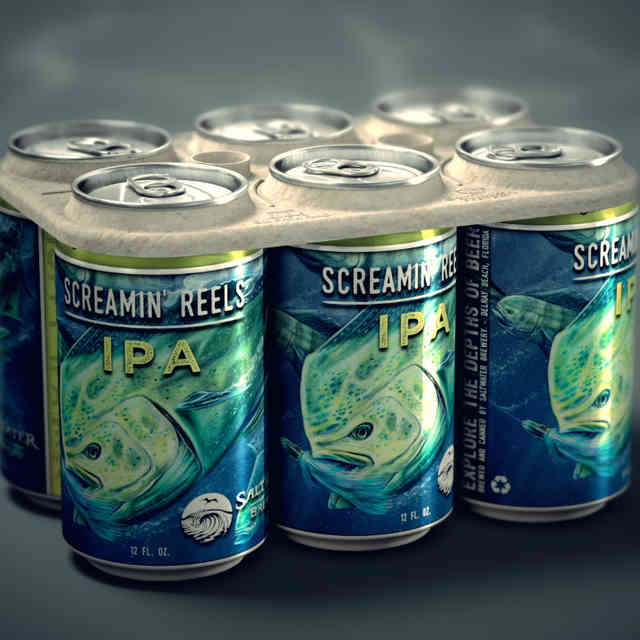
edible beer rings

Saltwater Brewery came up with a way to provide marine animals with food instead of killing them: meet the biodegradable packing design of the edible beer rings.

According to co-founder Chris Gove of the Florida-based microbrewery, the rings are made from wheat and barley waste, some of the natural byproducts of making beer.

Gove believes the company’s pragmatic solution is the answer to repurposing waste in the brewing process. At the same time, the edible rings could contribute to the fight against ocean plastic pollution.

A couple of hours of being in the ocean and the packaging starts to disintegrate; in turn, this prevents fish or other sea animals getting caught up in the rings. However, it takes two to three months for the wheat and barley products to completely disappear in the ocean.

That’s also the time it takes for the rings to compost if left on the beach – although in that scenario, soil, humidity, composition, and temperature also play a role.

Alternatives to traditional plastic rings do exist; PakTech’s recycled plastic can carrier is 100% recyclable, as well as Fishbone’s cardboard holder. However, these don’t decrease the risk of wildlife getting stuck in them or ingesting them.

The Saltwater Brewery edible alternative is the result of a collaboration with the advertising agency We Believers. “Our main challenge was figuring out what material would be sustainable and sturdy enough to hold a six-pack of beer,” explained Marco Vega, co-founder of We Believers.

The company produced the first batch of 500 edible six pack rings with the help of 3D-printed plastic molds. But because plastic molds are not suitable for mass manufacturing, Saltwater is looking into creating metal molds capable of producing out 400,000 ring units each month.

“We estimate the initial mass-produced batch will cost around 25 cents per unit – about 10 cents more than the recyclable plastic six-pack rings Saltwater is [currently] using,” says Vega.

Even though he thinks consumers would be willing to pay more for the eco alternative, he expects costs to quickly drop. This will be the case especially if more craft brewers and major beer companies decide to implement this technology into their own products.
Image Source: Thrillist

Filed Under: Tech & Science Tagged With: edible beer rings, marine animals, ocean plastic pollution, Saltwater Brewery, save marine life

Manhattanhenge Will Bathe New York City in Light On Memorial Day

May 28, 2016 By Karen Jackson Leave a Comment

Manhattanhenge

Manhattanhenge – also known as the Manhattan Solstice – is a biannual event that marks the fact that the setting sun is perfectly aligned with the streets of the main street grid of Manhattan, in New York City.

This year, the Manhattanhenge will light up the days of New York City on Memorial Day, which falls on the last Monday of May (on the 30th). The event is possible because roadways in this portion of the NYC are aligned in a grid, where avenues are arranged on a north-south line, while streets are laid out west to east.

The Manhattanhenge occurs near the summer solstice, adorning skyscrapers with rich red light. This year, residents will want to be on the lookout on two occasions: on May 29 and 30, and on July 11 and 12.

During the event on Memorial Day, the sun will be visible as a half-circle; in July, the whole disk of the sun will bathe the Big Apple in red light. Named after the Stonehenge in England, the Manhattanhenge was also designed to create a magnificent display on certain dates.

The effect has originated during the 19th century, “when they made these 90-degree angles they created a bull’s-eye for the sun to hit. Manhattanhenge are the days of the year when the sun hits the bull’s-eye,” explained Jackie Faherty of the American Museum of Natural History.

Surprisingly, New York City is not alone in capturing the sun’s rays in creative ways; various cityhenges have been designed in urban areas around the world. Among the better-known are Chicagohenge, Bostonhenge, Montrealhenge, and Phillyhenge.

However, the events take place at different times in different places. People wishing to view these popular cityhenges – and others – should consult a local planetarium to see the best time to go outdoors.

For the techies, there are also several apps that allow users to track the position of the sun at different times throughout the day. That can also help to highlight the best times to take a walk on these avenues bathed in sunlight.

These occurrences can actually take place in any city where streets run west to east, so look for that in your city and let us know if you spot a new undiscovered cityhenge.
Image Source: RSVLTS

Filed Under: Tech & Science Tagged With: American Museum of Natural History, Bostonhenge, cityhenges, Manhattanhenge, Memorial Day, Memorial Day 2016

Ultimate Ears’ New Roll 2 Is Louder and More Colorful

May 24, 2016 By Karen Jackson Leave a Comment

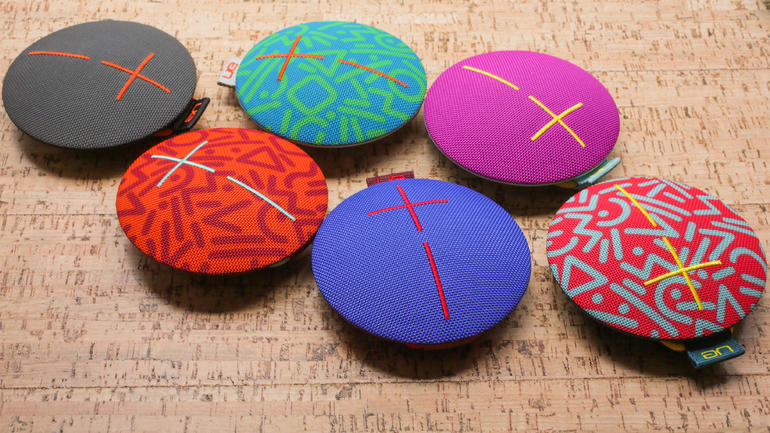
roll 2

In a world dominated by cylindrical or squarish Bluetooth speakers, it’s not difficult for Ultimate Ears’ circular Roll 2 to stand out. Especially since it was freshly updated to suit music-lovers on the move.

It hasn’t changed in form, remaining the same saucer-sized disk of rubber and tough fabric; its handy bungee cord loop is still on the back, and it’s still waterproof. For the same price of $99.99, the secrets of the new Roll 2 are all on the inside.

First of all, the new speaker is more powerful than its predecessor – 15 percent more than before – with crisp sounds even at higher volumes. Just like before, two Roll 2 units can be paired together to give off a broader sound stage, while battery life sticks at nine hours.

Range is another factor that has changed significantly; with the original Roll, you couldn’t put it further away than 65 feet from its Bluetooth A2DP source; the Roll 2 has been upgraded to remain connected at 100 feet.

Obviously, that’s the best-case scenario, assuming that there’s nothing in-between your phone and your Roll 2 to interfere with the signal. At the same time, you can also plug in the source via the old-school 3.5mm aux-in, if it doesn’t have a Bluetooth radio.

This jack and the microUSB charging port are both covered by a rubber flap, which is a clever way to keep them both waterproof. According to the description of the speaker, they are also waterproof themselves, which means you don’t have to worry about them getting wet if you haven’t closed the flap all the way.

In terms of external differences, UE has released a couple new color schemes: you can choose from the new Habanero and Tropical Anime, in addition to the ones you’ve had before: the grey/black Volcano, blue Atmosphere, and purple Sugar Plum.

Seeing that the “Floatie” was such a success as a pool and tub-friendly accessory for the Roll, UE has decided to include the inflatable ring as standard with every Roll 2. After you blow it up, the Floatie becomes a clever support for the Roll 2, making up for the fact that the speaker itself doesn’t float on its own.

As Amazon has released its own Bluetooth speaker since the first Roll made it on the shelves, it becomes clearer that the portable speaker market is moving forward.
Image Source: CNET

Filed Under: Tech & Science Tagged With: circular Roll 2, Floatie, Roll 2 Bluetooth speaker, Roll speaker, Ultimate Ears

Jaybird’s Freedom Bluetooth Earbuds, Review

May 23, 2016 By Cristopher Hall Leave a Comment

jaybird

If you’ve ever wanted to invest in earbuds that won’t fall out of your ears when you run, you probably found glowing reviews about the products created by Jaybird.

While the company’s previous headsets had already been impressive, the new sports earbuds in the Freedom X line are simply marvelous. Marketed by Jaybird as “the smallest pair of earbuds the company has ever made,” the new Freedom Wireless Bluetooth Buds are the dream of any runner.

This latest pair of Freedoms has tiny earbuds (about 20 percent thinner than their predecessors), produced by metal injection molding, not plastic.

The process is not usually used for Bluetooth headphones because it increases the potential for signal drop-out, but Jaybird has done it. The company said it has worked around this caveat by moving all of the technology from the buds into the three-button remote attached to the headphones.

A four-hour battery life doesn’t sound like much and using them while they’re charging is an awful tethered situation.

Buying the new Freedoms comes with a portable battery charger packing an extra four hours for when you need them. The portable charger works via Micro USB, and you can take it with you on the go. While you probably won’t go on a run with the charger attached, it can be convenient in other situations.

Last but not least, Jaybird announced it was also releasing MySound, a companionship mobile app for the earbuds. Downloadable for free, the app runs on both iOS and Android and offers customizable EQ settings.

A cool feature included in the app is the one-tap action that can configure your headphones to sound like those of Jaybird-sponsored athletes, such as Kerri Walsh Jennings. Unfortunately, MySound only works with the latest Freedom headphones, also to be compatible with future Jaybirds.

With all the features packed into the tiny earbuds, the steep price of $200 might sound worthwhile – if you can afford them. While there are other sporty Bluetooth headphones out there with much lower price tags, the latest addition to the Freedom line could appeal to more aesthetically conscious consumers.

But you probably won’t be complaining when you hear the crisp sound that doesn’t stutter or interrupt when you put your smartphone in your pocket.

Image Source: Tech We Love

Filed Under: Tech & Science Tagged With: Bluetooth earbuds, Freedom, Jaybird earphones, Jaybird Freedom, wireless headphones

The iBot Could Make a Comeback with Toyota’s Help

May 23, 2016 By Kenneth Scott Leave a Comment

the ibot

When the iBot made its first appearance 16 years ago, a lot of people got really excited. We hadn’t seen anything like this motorized wheelchair with its special features; not the least of which was the fact that the user could be elevated to the eye level of a standing person.

More than allowing people with disabilities to entertain more natural communication with those walking alongside the chair, the iBot also came with the impressive ability to tackle uneven terrain.

The multi-wheel machine did not stumble at steps either, offering its users a new level of independence they had never experienced before. But a pretty big obstacle stood in the way of making the iBot a success: the cost.

At $25,000, the motorized wheelchair came with a prohibitive price tag that eventually forced the company to halt production in 2009.

But count on inventor Dean Kamen to not give up on his dream of taking the iBot to the larger public. Even though he moved on to create the Segway – using similar balancing technology – Kamen was convinced there was a way for the wheelchair to give freedom to people with disabilities.

As a matter of fact, Kamen just announced a new partnership with Japanese automaker Toyota, which he hopes will be a second shot at making the iBot a viable alternative to the traditional wheelchair.

“I’m happy to tell you that our goal is to bring back the iBot,” Kamen said in a video (below) that was posted online on Sunday. “We’d like to take everything that was great about the original iBot and then enhance it with 15 years of improvements in technology.”

In the video, the iBot is shown riding on uneven terrain, climbing stairs, and crossing thresholds with no trouble at all, which proves Kamen’s point that the machine could give people more of the freedom, flexibility, and independence they need.

The partnership is meant to combine DEKA’s vision with Toyota’s expertise and experience in mobility technology. The Japanese company also hopes to use the development of Kamen’s company in balancing technologies for “medical rehabilitative therapy and potentially other purposes.”

Even though Kamen has yet to reveal details about the availability of the second-generation iBot – or about its new price – Toyota’s support represents a significant step toward making the machine a reality for more people who need it.


Image Source: YouTube

Filed Under: Tech & Science Tagged With: balancing techniques, electric wheelchair, iBot, Toyota

Japanese Startup Plans Man-Made Meteor Shower For 2020 Olympics

May 22, 2016 By Michael Turner Leave a Comment

meteor shower

It’s clear that Japan is taking seriously the fact that the next Olympics will be held in their country in 2020. A massive pyrotechnic display won’t do – Japanese startup Star-ALE plans to create a man-made meteor shower that will kick off the Olympic Games four years from now.

Called Sky Canvas, the artificial meteor shower will be a magnificent light show, nothing like what we’ve seen before. According to its creators, the phenomenon will be visible from an area of more than 120 miles.

And to make that happen, you need the pyrotechnics to be set above ground – and why not directly up in space? Even though the Tokyo Olympics is still years away, Star-ALE will start launching tests next year, with a series of microsatellites carrying with a special kind of pyrotechnics.

About 500 to 1,000 “source particles” will be sent in space with each microsatellite. When these special pellets re-enter Earth’s atmosphere, the friction will ignite them, causing them to glow in a man-made meteor shower effect.

At an altitude of about 35 to 50 miles, the fake shooting stars will cover the skies in a spectacular space display. Unlike a local pyrotechnics display, this space show will be visible for roughly 30 million spectators, who can just look up and marvel at the advancement of science.

According to Star-ALE founder and CEO Lena Okajima, Sky Canvas can create more than just one shooting star – the goal is having a “real meteor shower” as the project’s biggest entertainment goal.

However, making the sky a screen for your project doesn’t come cheap. Each of the beautiful pellets costs about a million yen (US $8,100). It’s also worth noting that the price doesn’t include the expenses for developing and launching the microsatellites.

The secret formula for the “shooting stars” has already been tested at the Nihon University. Shinsuke Abe, an aerospace engineering associate professor who led the research, explains that the pellets’ burning brightness was measured to rise above Tokyo’s light pollution.

At the same time, Star-ALE has also considered the challenges of a cloudy sky on the night of the show. That’s why they made sure the space display can be called off at least 100 minutes before the launch.

Thanks to this feature, the party organizers will have enough time to reschedule the space show for when the sky is clearer. It will also ensure that they don’t throw money out the window and not get to see it burn in colorful explosions.
Image Source: Lifehacker

Filed Under: Tech & Science Tagged With: man-made meteor shower, space show, Tokyo Olympics, Tokyo Olympics 2020

Scientists Explain Increase of Shark Attacks in Hawaii

May 21, 2016 By Kenneth Scott Leave a Comment

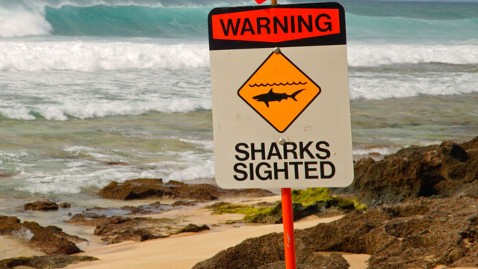
shark sighted

According to a recent study on the Hawaiian shark populations showed that it is indeed true that sharks prefer the waters near some of Maui’s most popular and crowded beaches, which leads to an increasing number of shark attacks each year.

One of the things that scientists at the Hawaii Institute of Marine Biology say is the most important is that swimmers should not fear sharks. As absurd as that sounds – have these guys ever seen Jaws? – it’s a natural conclusion of their study.

Instead, the researchers point to the role the study can have in teaching people how to coexist with their aquatic friends. “Swimming in the ocean is swimming in what amounts to a wilderness environment. Sharks are part of this environment,” explained Bruce Anderson of Hawaii’s Division of Aquatic Resources.

Contrary to what movie franchises like Jaws seem to instill in our minds, the ocean is the sharks’ homes, which means that when we go swimming it the ocean, we’re figuratively stepping on their turf.

Once we accept that it’s normal to have sharks in the wild, we also must learn to take precautions so we avoid meeting one face to face. Unless we’re being careful, these unpleasant encounters are going to occur from time to time.

With warming ocean temperatures comes a certain expansion of the typical shark habitats, which, in turn, increased the numbers of encounters between human and sharks. But are sharks to blame, or should humans share some of the responsibility for the bloody results?

According to the study, the number of humans partaking in ocean recreation increases with each year, meaning that more people are taking up surfing or paddleboarding – both of which will put humans right in the middle of the sharks’ living, eating and socializing environment.

So why are sharks attracted to Hawaiian waters? Partly, it’s because of the food supply and the coral reefs, but also because that area is also a popular mating season hangout for sharks.

The study reached the same conclusion as the 2015 International Shark Attack File report: more people in the ocean doing recreational activities will generally an increase in the number of shark bites in Hawaii – and other places around the world, for that matter.

Peacefully coexisting with sharks can only happen when people are informed. You shouldn’t swim in murky water or go near dead animals, such as seals. “When it comes to shark interactions, an ounce of prevention is worth a pound of cure,” the authors added.
Image Source: ABC News

Filed Under: Tech & Science Tagged With: Hawaii beaches, ocean recreational activities, sharks, sharks sighted, swimming with sharks

Fertilizers Are Killing the Planet

May 20, 2016 By Nancy Young Leave a Comment

"Algae resulted from fertilizer use"

Leaked fertilizers cause the production of algae that make water undrinkable.

Usually, when looking for the people and the chemicals responsible for climate change and the increased toxicity levels on our planet, we turn our attention to power plants, the oil industry, and fossil fuels. When it comes to pollution, nobody thinks about farms, but the truth is fertilizers are killing the planet as much as fossil fuel exploitation is.

The Nobel Prize laureate Carl Bosch and his associate, Fritz Haber, are the inventors of the fertilizer. According to the estimates, the two men saved roughly 40 percent of the world population with the chemical compound, but now, things are going south for the farms that prefer to use the synthetic version instead of the eco-friendly one.

It seems that the runoff that makes its way into rivers, lakes, streams, and oceans boosted the amount of algal blooms and “dead zones” all over the United States. From the Great Lakes to the Gulf of Mexico, Water Works companies are complaining that they are spending from $4000 to $7000 per day to purify the drinking water, stripping it of the nitrates that come from the excess fertilizer.

Moreover, according to an article published in the “Geophysical Research Letters” journal, animal agriculture and fertilizer use is one of the main contributors to air pollution all around the world.

This is not the first study to point out the fact that farms are salvation and damnation at the same time. A couple of months ago, an independent researcher was claiming that the methane produced by cattle is thinning the ozone layer more than the oil industry.

The previously cited study may not be so drastic, but it does reach similar conclusions. Unfortunately, ever since the chemical fertilizer was invented, the world population boomed. If its use were to be banned, billions would starve.

The author of the paper argues that countries in which the level of air pollution has already reached alarming rates, like the United States and China, farms should redirect their attention to the more expensive, but healthier eco-fertilizers.

On the other hand, countries in Africa where air pollution levels are not concerning could continue to use the chemical product until an alternative is found.

Fertilizers are killing the planet, and we need to find a solution to replace them gradually with something greener.

Image source: Wikipedia

Filed Under: Tech & Science Tagged With: air pollution, fertilizers, water pollution

Google I/O Conference: Expect Virtual Reality Unveiling

May 18, 2016 By Kenneth Scott Leave a Comment

google io

On Wednesday, Google is holding its annual conference that the company uses as a launching pad for its latest innovations and products. This year, the search giant is expected to jump on the bandwagon of virtual reality and artificial intelligence.

Even though Google has kept silent over its plans until the big event, the conference agenda that was revealed clearly hints to virtual reality and artificial intelligence as the focal points.

Words like “machine learning” that are in the plan spurred speculation that Google will soon be releasing a VR headset to compete with Facebook’s new Oculus Rift device, but also with Samsung’s Gear VR and the Vive from HTC and Valve.

The conference will be packed with bloggers and reporters from around the world, ensuring that whatever the company presents to the audience will be featured in stories, articles, and pictures delivered to the larger public.

Thousands of computer programmers will also attend the three-day showcase, presenting Google with the opportunity to convince them why they should develop apps and other services compatible with its gadgets and its Android operating system for mobile devices.

About 80 percent of the world’s smartphones are powered by Android, probably because Google allows any device maker to use the software for free.

The search giant affords that because once you have Android on your phone, you also get a package of Google’s services, such as its search engine, maps, and others. These, in turn, give Google the opportunity to include the digital ads that represent a large source of its revenue.

This year’s conference – called Google I/O – is being held at an amphitheater a few blocks from its headquarters in Mountain View, California. With a seat capacity of more than 6,000, the new amphitheater could accommodate a way larger crowd than Google’s former San Francisco venue from the past years.

It would not be Google’s first dive into virtual reality as two years ago the company unveiled an inexpensive headset called Google Cardboard. But the new efforts are expected to be more serious, given the sophisticated options that are now available for sale.

Virtual reality is presented by analysts as the next big thing in the technology realm, which creates an artificial, three-dimensional world for the user. At the same time, artificial intelligence is also touted as the tech that will create software acting and behaving as humans.
Image Source: Trusted Reviews

Filed Under: Tech & Science Tagged With: Google conference, Google dives in virtual reality, Google I/O 2016, virtual reality

AI System Recreates Nobel-Prize Winning Scientific Experiments

May 17, 2016 By Cristopher Hall Leave a Comment

ai replicates experiment

We could all do with a shorter work week, so Australian physicists thought they could do themselves a favor and create an AI that doesn’t need much oversight.

This artificial intelligence system can run and even enhance complex physics experiments, allowing human scientists to concentrate on research design and high-level problems. We would all love to leave the nuts and bolts of our job to a robotic lab assistant.

Three physicists won the Nobel Prize in 2001 for the process that creates a Bose-Einstein condensate, a hyper-cold gas, and this AI system was able to replicate the experiment much better than any scientist could. Thanks to directed radiation, a group of atoms are slowed nearly to a standstill, resulting in all kinds of interesting effects.

The team at the Australian National University cooled a small amount of gas down to 1 microkelvin — a millionth of a degree above absolute zero — then ceded control over to the AI.

The system was then supposed to figure out ways to apply its lasers and control other factors to cool the atoms down to a few hundred nanokelvin (i.e. a billionth of a degree). After repeating the process dozens and dozens of times, the AI found increasingly efficient ways to do so.

Paul Wigley, a co-lead researcher from ANU, explained that the AI managed to do things “a person wouldn’t guess, such as changing one laser’s power up and down, and compensating with another.”

It was surprising to witness the machine learning to do the experiment by itself, from the beginning, in under an hour. “It may be able to come up with complicated ways humans haven’t thought of to get experiments colder and make measurements more precise,” he added.

Even though Bose-Einstein condensates have powerful properties, their extreme sensitivity to fluctuations in energy makes the process of developing and maintaining them particularly difficult.

With AI systems, many parameters can be monitored at once and the process is quickly adjusted in ways that humans could not understand or replicate. As a result, condensates are created faster, under better conditions, and in greater quantities.

It’s also useful that the AI doesn’t ask for lunch breaks or take vacations. Michael Hush, the other co-lead researcher at the University of New South Wales, said that “it’s cheaper than taking a physicist everywhere with you.”
Image Source: Wired.uk

Filed Under: Tech & Science Tagged With: AI system replicates experiment, artificial intelligence, Bose-Einstein condensate, hyper-cold gas

  • « Previous Page
  • 1
  • …
  • 29
  • 30
  • 31
  • 32
  • 33
  • …
  • 114
  • Next Page »

Subscribe to Blog via Email

Enter your email address to subscribe to this blog and receive notifications of new posts by email.

Join 11 other subscribers

Recent Articles

police handcuffs man

German Man Probed In Poisoning That Killed 21 Employees Since 2000

June 29, 2018 By Kenneth Scott Leave a Comment

Chicken wings bar

Intoxicated South Carolina Man Punches Waitress Who Refused to Serve Him Alcohol

June 29, 2018 By Karen Jackson Leave a Comment

gaming

New Zealand gamer Who Flew Halfway Across The World for Virginia Teen Gets Shots By Her Mother

June 28, 2018 By Cristopher Hall Leave a Comment

party

Former Virginia Tech Freshman Sentenced to 50 Years in Prison for Stabbing a Girl to Death

June 28, 2018 By Roxanne Briean Leave a Comment

bonfire

British Couple Sentenced to Life in Prison for Torturing and Murdering French Nanny

June 27, 2018 By Deborah Campbell Leave a Comment

pay phone

Texas Father of Girl Disappeared in the 80s Ignored by Authorities

June 26, 2018 By Cristopher Hall Leave a Comment

bottled water

San Francisco Woman Threatened to Call Police on Girl Who Sold Ice Water for Disneyland Trip

June 25, 2018 By Roxanne Briean Leave a Comment

Maplewood Park

Missouri Man Robbed by Date and Accomplice in Park

June 22, 2018 By Nancy Young Leave a Comment

coding

New York Man Sentenced in Cyberstalking Former Girlfriend, Mailing Drugs to Her Dorm

June 22, 2018 By Deborah Campbell Leave a Comment

headphones

Bose Poised to Launch Sleepbuds, In-Ear Headphones That Help You Sleep

June 21, 2018 By Nancy Young Leave a Comment

Police light

Intoxicated Female Driver in Custody for Pulling Arresting Officer by the Hair

June 21, 2018 By Kenneth Scott Leave a Comment

kitchen

Restaurant Manager Arrested and Charged in Shooting Death of Co-Worker over Negative Yelp Reviews

June 20, 2018 By Karen Jackson Leave a Comment

plastic container

Pennsylvania Couple Charged in Violent Death of Infant Discovered Buried in Cat Litter

June 19, 2018 By Cristopher Hall Leave a Comment

tailpipe

Minnesota Teen Gets Head Stuck In Oversized Tailpipe Winstock Music Festival

June 18, 2018 By Karen Jackson Leave a Comment

Pages

  • About Us
  • Contact us
  • Privacy Policy
  • Privacy Policy GDPR
  • Staff
  • Terms and Conditions

Recent Posts

  • German Man Probed In Poisoning That Killed 21 Employees Since 2000 June 29, 2018
  • Intoxicated South Carolina Man Punches Waitress Who Refused to Serve Him Alcohol June 29, 2018
  • New Zealand gamer Who Flew Halfway Across The World for Virginia Teen Gets Shots By Her Mother June 28, 2018
  • Former Virginia Tech Freshman Sentenced to 50 Years in Prison for Stabbing a Girl to Death June 28, 2018
  • British Couple Sentenced to Life in Prison for Torturing and Murdering French Nanny June 27, 2018
  • Texas Father of Girl Disappeared in the 80s Ignored by Authorities June 26, 2018
  • San Francisco Woman Threatened to Call Police on Girl Who Sold Ice Water for Disneyland Trip June 25, 2018

Categories

  • Business
  • Entertainment
  • Finance
  • Headlines
  • Health
  • Life
  • Nature
  • Science
  • Sports
  • Tech & Science
  • Travel
  • Uncategorized
  • United States
  • World

Copyright © 2026 ArgyllFreePress.com
About · Privacy Policy · Terms of Use · Contact