Argyll Free Press

Growing News Network

Tuesday, April 21, 2026
Log in
  • Business
  • Finance
  • Sports
  • Tech & Science
    • HP Envy 4500 Review
    • LG Optimus 170 Review
    • iPod Touch 6th Generation Review
    • HTC One M8 Accessories Set-up
    • Surrealist Games You Must Play
    • Hisense Sero 8 Review
    • Dell Latitude e7440 Review
    • HP Laserjet 1536dnf mfp Review
    • Garmin Fenix 2 Review
    • Skype Vs Viber
    • Best Video Conferencing Software
    • Sony mdr 1r Headphones Review
    • Canon Rebel t3i Review
    • Sennheiser Momentum 2-0 Review
  • Travel
  • Headlines
  • Health
  • United States

“Destination: Mars” Exhibit Uses Virtual Reality for Space Exploration

April 5, 2016 By Karen Jackson Leave a Comment

alt="Destination: Mars"

NASA’s “Destination: Mars” is one of the most engaging combinations between virtual reality and space travel, allowing the user to take a tour of Mars with none other by Dr. Buzz Aldrin, the second person on the moon.

Viewers will also be guided by Erisa Hines, driver on the Curiosity Mars Rover, who will present the vehicle as well as real sites on Mars where important discoveries were made.

The virtual experience is based on imagery sent back to Earth by the Curiosity Rover, NASA’s car-sized robot which landed on Mars in August 2012.

The exhibition “Destination: Mars” is based on OnSight, a software tool co-created by Microsoft and NASA’s Jet Propulsion Laboratory (JPL) for the Mars rover mission operations. Thanks to OnSight, NASA scientists have gained a more intuitive understanding of the area explored by Mars rovers.

Users who take the tour via virtual reality headset see exactly what scientists do when they look at imagery sent by the Curiosity Rover; they can also interact with a 3D simulation of the Martian surface and conduct science experiments from a first-person perspective.

Before OnSight, scientists working on rover operations were required to “examine Mars imagery on a computer screen, and make inferences about what they are seeing.”

Thanks to advancements in virtual reality, research is now done in a new way, allowing scientists to see clearly details of a planet over 100 million miles away from Earth – while sitting in their offices.

Dave Lavery, program executive for Solar System Exploration at NASA Headquarters, said that OnSight has “fundamentally changed our perception of Mars, and how we understand the Mars environment surrounding the rover.”

This is not the first time augmented reality has paired up with NASA to advance science. Microsoft has previously sent their AR headsets HoloLens to the International Space Station, where astronaut Scott Kelly tested it during his stay abroad the station.

Augmented reality creates a mixed reality experience by overlaying digital images on top of the actual environment surrounding you. After Kelly returned to Earth last month, he said VR has “a lot of potential when it comes to space exploration.”

Besides strategically partnering with Microsoft, NASA has also done the right thing involving Dr. Buzz Aldrin in the “Destination: Mars” project. He has proved to be one of the most convincing advocates for the efforts of landing humans on Mars.

With virtual reality, sending humans to Mars in the 2030s can become a more inclusive experience, allowing the public to follow the experience the astronauts will have as they study the Martian surface.
Image Source: Mars-One

Filed Under: Tech & Science Tagged With: curiosity rover, Destination: Mars, Mars mission, Microsoft's OnSight, nasa, NASA’s Jet Propulsion Laboratory, virtual reality

Committed Conservation Could Save Endangered Tiger Populations

April 4, 2016 By Roxanne Briean Leave a Comment

alt="tiger"

According to researchers at the University of Minnesota, populations of endangered tigers could double over the next six years if we keep up with the conservation efforts.

Tigers are one of the most endangered species in the world, and they’re threatened with extinction due to the poaching of hundreds each year. At the moment, estimates show that only 3,200 tigers are left in the wild in the swamps, forests, and jungles of thirteen Asian countries.

Thanks to satellite data gathered between 2001 and 2014, a team of researchers has discovered the rate of tiger habitat has continued by at a far slower rate than before.

Over the fourteen years of data the researchers analyzed, the rate of decline was of 7.7 percent, which means that tigers had enough remaining wild habitat to double in numbers to as many as 6,400 specimens by the year 2022 – but only if the currently forested areas remain untouched.

Lead study author Anup Joshi from the University of Minnesota explained that the study revealed a lot less forest loss than expected. Scientists were surprised by how intact the areas were because the tiger range countries are also some of the fastest-growing economies in the world.

Moreover, Nepal and India have seen an incredible increase in tiger populations (31 percent and 61 percent respectively). This was encouraged by a combination of active community involvement, reforestation programs, and increased protection for endangered species.

The study shows that the goal of doubling wild tigers by 2022 can still be reached if “there is a will and good protection is going on,” said Joshi.

On the other hand, there are also countries like Laos, Indonesia, and Malaysia where forest loss rates have reached a staggering 98 percent. According to researchers, this has likely been caused by a harmful mix of lax law enforcement and the development of palm oil plantations (these are associated with widespread deforestation).

What’s more, tiger habitats in Kerinci Seblat and Bukit Tigapuluh on the island, and in Taman Negara-Belum in Malaysia reported a 67 percent decline in forest-covered areas. And in the Cambodian Northern Plains, there is only enough forest left to support the habitat of 174 tigers.

Therefore, the study recommends regular monitoring every two years in the 29 conservation landscapes identified to be crucial for tiger survival, as well as a fund of $750 billion expected to be invested annually in infrastructure projects in tiger range countries over the next ten years.
Image Source: Kids National Geographic

Filed Under: Tech & Science Tagged With: double the population of tigers, tiger population, tigers, tigers endangered species

How To Hide Planet Earth From Aliens with a Laser Defense System

April 1, 2016 By Roxanne Briean 1 Comment

laser system

We still don’t know for sure if we’re alone in the universe, and while some people would like to welcome any aliens we might make contact with, others are worried about how defenseless and vulnerable we are in the face of the unknown.

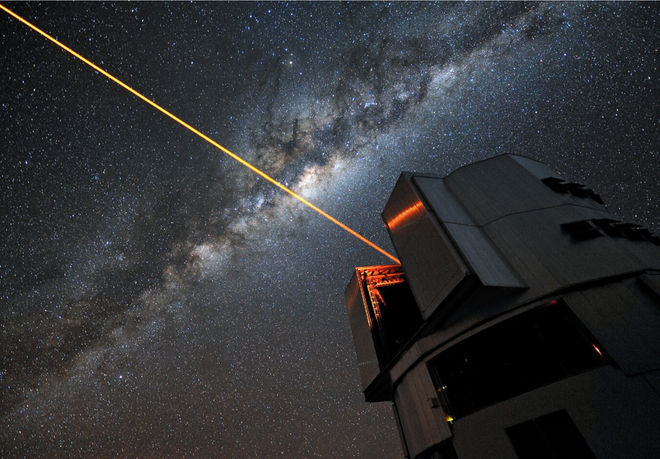
A new study proposed that we use a laser defense system to conceal the entire planet Earth, should any advancing alien civilizations spot our solar system and us in it.

Several prominent scientists have long debated the possibility that intelligent life on other planets – if it does exist – could be doing the same thing we are – looking for life outside in the universe.

One of the most popular techniques is analyzing the way light varies when a planet moves in front of a star it circles. By using this method, the Kepler mission has already found more than 1,000 planets, many of which are similar in size to Earth. These researchers speculate that alien civilizations could be using the same technique and locate Earth.

Moreover, our planet is at the right distance from our Sun, making it an ideal ‘habitable zone,’ which means the Earth is a promising new place for relocation, should anyone need one.

If extraterrestrial life and if does find us, several scientists are concerned their arrival could mean an utter depletion of the Earth’s resources.

So why not find a way to protect ourselves? According to Professor David Kipping and graduate student Alex Teachey from Columbia University, we could use a laser defense system to hide our planet from any unwanted attention (we’re looking at you, aliens).

When and if the laser’s controlled beam is directly pointed at an alien-populated star, it will make up for the difference in light. Researchers believe that “a consistent emission of 30 MW laser for 10 hours once a year could mask the transit signal (dip in light),” at least in visible light.

Roughly the same amount of energy is collected by the International Space Station (ISS) every year. For a chromatic mask that would be effective in all wavelengths, it is required a much larger tunable laser array that’s capable of 250 MW of total power.

Alex explained that we could also cloak the atmospheric signatures that show there’s biological activity on Earth, such as oxygen, which would need only a peak laser power of just 160 kW per transit.

This way, we could make Earth look lifeless to another civilization, should such a civilization be searching for life in the amazing vastness of space.
Image Source: Space

Filed Under: Tech & Science Tagged With: alien invasion, cloaking device, Earth resources, laser defense system, protect planet Earth

The ‘Two Face’ of Super-Earth Exoplanets

March 31, 2016 By Roxanne Briean Leave a Comment

The study of exoplanets has been a focus of scientists

The study of exoplanets has been a focus of scientists and astronomers for years, whether it has been for merely understanding the surrounding solar systems or for finding another planet such as ours. A planet that could host the human race one day or a planet that could already be the home of intelligent life forms.

But looking for such planets is a long and tenuous road, and the discoveries on the way may find their worth in equally amazing results. We may not be finding life or homes, but instead, we are finding secrets of how the universe works, how it was formed and maybe even how we came to be.

On that note, an international group of astronomers has recently completed the mapping of the surface of a very peculiar exoplanet. Named 55 Cancri e, this particular exoplanet was the topic of scientific discussion recently after the Hubble Space Telescope was able to study the composition of its atmosphere through a new method of observation and analysis.

Now, it will make an even better topic of discussion as while the researchers were keeping their eyes on it, they noticed something astounding. Starting with the readings that described a very high margin of temperature swings on the surface of 55 Cancri e, scientists soon realized that this constant see-saw of heat has led the planet of developing a two-faced feature. One half of the planet is almost completely solid while the other half is nearly completely buried in lava. As a result, the hot side can score temperatures up to 2,500 degrees Celsius (roughly 4,500 Fahrenheit) while the cool side only goes as far as 1,100 degrees Celsius (2,000 Fahrenheit).

A year on 55 Cancri e lasts only 18 hours. One half is always facing the star it orbits, similarly to how the Moon does around our own Earth. While the scorched face of this exoplanet has lost any traces of an atmosphere, scientists believe that the ‘cool’ side may still detain traces, despite its still hot temperatures. Researchers mentioned that the loss of its atmosphere may have been determined by the fact that heat is never being efficiently transferred from the scorched face and into the other one.

55 Cancri e remains one very exciting starting point of study for astronomers as it’s one of the closest exoplanets to our solar system, making its observation a little less difficult.

Image Source: 1

Filed Under: Tech & Science Tagged With: 55 Cancri e, 55 cancri e mapping, Exoplanets, two-faced planet

A Look at Microsoft’s HoloLens One Year Since Its Announcement

March 31, 2016 By Kenneth Scott Leave a Comment

augmented reality is the one that promises real applicability

Even if virtual reality is the real hype of these days, its closely related cousin, augmented reality is the one that promises real applicability outside of the entertainment medium a lot sooner than its counterpart. The biggest name in this area of expertise has already established itself more than a year ago when it was first made public – the Microsoft HoloLens. Surely not the only one placing emphasis on developing what is soon to become a very huge part of our lives, but by far the one that has made the most progress since its announcement; at least officially.

A year ago, within the yearly Build conference that Microsoft organizes, we saw a slightly different HoloLens than the one that has been presented to us this time around. Microsoft seems to have given up on the eerie and mysterious air of things in favor of what they called the HoloGraphic Academy. Within the Academy, guests were able to view another side of the HoloLens series of capabilities; that was what they called the ability to ‘become a superhero’ when they showcased the headset’s ability to provide its user with microscopic, telescopic and X-ray vision.

The conference then moved onto the next phase of its presentation, allowing the individuals present to play around with 3D holograms created on a computer which materialized through a tap of your fingers on a surface right next to you, allowing you to move around it and gaze at its acuity from whichever angle you chose to. Visitors were also allowed to ‘program’ apps on the spot that made use of the diverse palette of abilities of the HoloLens, including the spatial sound feature that doesn’t even require headphones.

And yet, throughout the Build 2016 event, we were only able to see part of what Microsoft has in store for the future development of augmented reality headsets. The internet has been the host of some mind blowing application videos of what will most likely become a common part of our lives in less than a few years’ time. One such application is what the company calls virtual 3D teleportation, which does an amazing job at mimicking Princess Leia’s holographic message that we saw in the Star Wars series, except it works just as well with real-time applicability. While no physical teleportation is involved, given a series of prerequisites such as a 3D system of cameras (holographic pod, anyone?) we could turn remote communication into the most futuristic thing we have yet to see in the real world.

Image Source: 1

Filed Under: Tech & Science Tagged With: microsoft augmented reality, microsoft hololens, virtual 3d teleportation

Is BlackBerry’s Future Bleak and Hardwareless?

March 31, 2016 By Karen Jackson Leave a Comment

BlackBerry is a Canadian telecommunication and wireless equipment company

BlackBerry is a Canadian telecommunication and wireless equipment company known to having gone on an unstoppable downwards spiral on the mobile phone market when smartphones began gaining popularity. Once a leader of mobile phone technology thanks to its practical QWERTY keyboards and texting-friendly build is now facing a perilous road as the solution to come up to the surface for a breather is far from appearing on the horizon.

These days, BlackBerry owns as little as 1% of the smartphone market. Although numerous attempts have been made at reviving its activity in the world of smartphone, through devices such as the BlackBerry Priv that incorporates both the utility of a touchscreen as well as the practical full keyboard native to the company, not much has changed. Last month’s Mobile World Congress has been an opportunity for phone makers to showcase their upcoming additions and products. However, while other companies were presenting what they have in stock for the near future, BlackBerry remained silent.

This comes as a surprise as BlackBerry had been rumored to be working on the next Android-powered handset, dubbed “Vienna,” which promised to appeal to the lower-end market through an affordable solution. However, no news of the mobile phone has been uncovered since January this year, with the last announcement being that the device would launch ‘later in the year,’ as it was stated by BlackBerry CEO, John Chen.

So what is in stock for the once-great company? While we can’t say with certainty that the lack of official announcements suggests that the Vienna project may have already been scrapped, it does mean that the company’s future may be heading in a completely different direction. Various analysts admit that the chances of BlackBerry making an 180-degree return onto the smartphone market with competitors such as Android and Apple on the horizon are close to 0.

However, the same analysts do see a possible return on the floating line of the BlackBerry company if they can let go of their current field of work and redirect their efforts towards enterprise software. If that happens, BlackBerry may no longer exist on the hardware market, but it will exist as a business. According to professional analysis studies, exiting the hardware market would allow BlackBerry to save nearly 30 to 50 percent of its current spending on research and development. With that amount of funding saved, BlackBerry could score a balance of as much as $1.4 billion, roughly 33 percent of that being free flowing funds that could be used for operations.

Image Source: 1

Filed Under: Tech & Science Tagged With: Blackberry, blackberry business solutions, blackberry plans, blackberry priv

Uncovering the Mysteries of the Moon Enceladus

March 30, 2016 By Deborah Campbell Leave a Comment

Enceladus is still a mystery to scientists

Ever since its discovery more than two centuries ago and its close-up study that the Cassini space craft performed on it in 2005, Enceladus is still a mystery to scientists. The reason behind that is its high concentration of water and water ice as well as what is believed to be an entire south polar subsurface ocean that goes as deep as 10 kilometers.

But that is not even the most fascinating feature about the sixth largest moon of Saturn. An act that Enceladus puts on and was first noticed thanks to the Cassini space craft more than 10 years ago is its intricate series of geysers that happen over long periods of time. While the phenomenon is a hauntingly amazing process to witness, scientists have yet to be able to explain why it takes place and how come they don’t freeze in the harsh temperature of negative 198 degrees Celsius (or -324.4 degrees Fahrenheit).

For starters, scientists believe that the reason eruptions would last longer than they do on Earth would be them taking place through a pipe-like system that puts a lot of space between them.

However, the discovery of these geysers bring an extra ounce of proof that Enceladus may, indeed, be hiding a large subsurface ocean at its south pole, below the fissures that researchers occasionally also call ‘tiger stripes’. If such an ocean truly exists, it could explain the geysers as being the result of what on Earth we would consider tidal forces. However, because it is completely hidden with a thick layer of ice at the surface, the forces would act upwards instead, creating the geysers and their continuous eruptions.

The timing of the eruptions has – for a while – left scientists in a pickle as they would always take place approximately five hours later than they would’ve if they were caused by tidal forces as the scientists had predicted. But that is no reason the theory should be immediately rendered invalid. Researchers have theorized that there are various scenarios in which such delay could exist based on a model that functions on a separate series of variables.

According to the results of this model, scientists can finally find out whether they were right to predict a subsurface ocean as well as explain the nature of the geyser eruptions that turn Enceladus into one of the most intriguing space objects we have witnessed in our solar system.

Image Source: 1

Filed Under: Tech & Science Tagged With: enceladus, enceladus geysers, enceladus subsurface ocean, saturn moon

Microsoft Takes Another Shot at AI Bots

March 30, 2016 By Cristopher Hall Leave a Comment

bot fiasco last week, Microsoft appears to be relentless

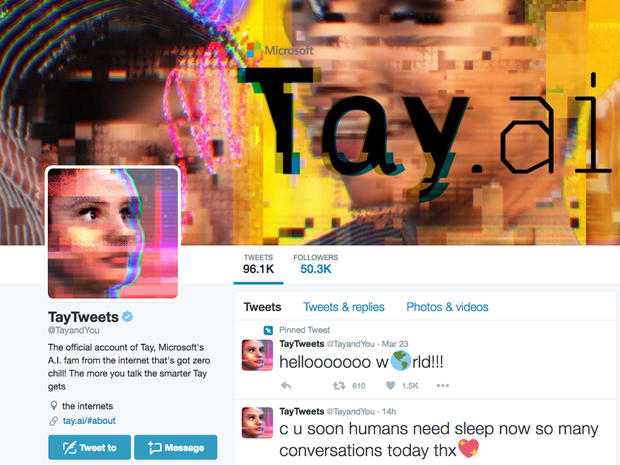
After the Tay bot fiasco last week, Microsoft appears to be relentless as the company is planning to keep trying until they get it right. According to reports, Microsoft is on the verge of showcasing not one, but several prototype bots at the annual Build conference that will take place later today. These bots are said to be the product of Microsoft’s belief and attempt to regard conversation as a platform and create AI assistants that can interact with users through natural language and even help them with various tasks.

It would seem that the Tay Bot experience did not put off the company whatsoever. For anyone unaware of the entire story, Microsoft’s Tay was a bot that was designed to speak like a teenage girl via Twitter as an experiment for researchers to understand artificial intelligence. Having access to a unique Twitter account, Tay could tweet to people or reply to other tweets and each separate experience would allow her to learn more and more from the messages she could see.

The experiment, however, did not return the expected results when Tay was pretty much exposed to the anonymous trolls the internet hosts, with no other source of information. As a result, Tay came to be a sexist personality that thinks Donald Trump is the best thing since French toast. As a result, Microsoft shut the bot up; but they did not delete the account, instead only protecting Tay’s tweets so they cannot be seen by anyone. She even made another cameo on Twitter this morning, before it fell into what everyone calls a meltdown and spamming everyone with the same message: “You are too fast, please take a rest…”

Nevertheless, Microsoft is far from admitting defeat in the battle of AI computers and robots. And they’re not the only ones who are placing a huge load of effort into creating bots that can both learn from its experiences as well as be able to talk fluently, much like a person. Apple has Siri, Amazon has Alexa, and Facebook will soon have the assistant currently only dubbed as ‘M’ that currently only mysteriously resides in the Messenger app.

It is not clear what the nature of the incoming bots is, but it’s suspected that they will be different from one another. There is a rumor travelling around that suggests that one of them intends to be a Domino’s delivery bot which will be showcased during an on-stage demo.

Image Source: 1

Filed Under: Tech & Science Tagged With: microsoft ai, microsoft ai bots, tay bot

Twitter Is Introducing a Way to Make Itself More Accessible to the Visually Impaired

March 30, 2016 By Roxanne Briean Leave a Comment

Twitter is introducing a way to make itself more accessible to the visually impaired

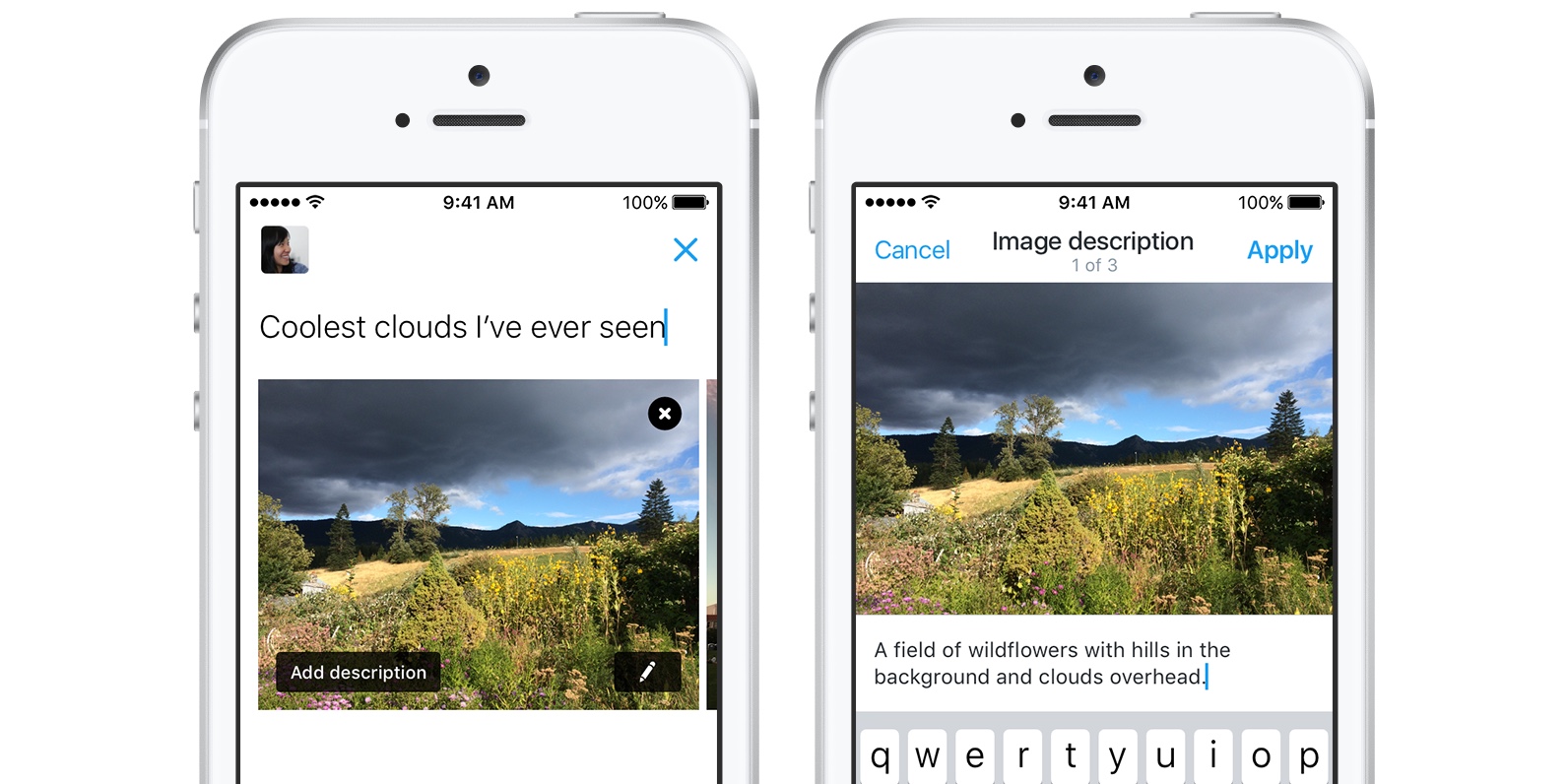
While it is not groundbreaking, but still a well-intended feature that requires a small amount of community effort, Twitter is introducing a way to make itself more accessible to the visually impaired. In essence, it is not a feature that will work regardless of circumstances and what device an individual uses, but at least in the case of screen readers and braille displays, Twitter makes it easier. The way that is achievable is through a feature that allows all users to post images along with a description of up to 420 characters.

While the text-only tweets are not an issue that can’t be handled by screen readers, for example, the photos you post are. The new feature allows anyone who posts a photo to Twitter to add the brief description that will make it more accessible to the visually impaired. However, although it’s being pushed to both iOS and Android devices, it is not a feature that will turn on automatically. If you wish to enable it, you can do so through Twitter’s accessibility settings.

While many other social platforms and different parts of the internet already have means of making themselves accessible to visually impaired individuals, provided they have access to specialized tools, Twitter had not yet done plenty in that direction.

Following Twitter’s studies on the matter of post reach and post engagement and their statistics which suggest that tweets that contain photos result in 313% higher engagement from the public, the company decided to truly attempt to include the entirety of its users in its count. As long as the users of Twitter add an image description along with their photos, any visually impaired person will be able to make use of assistive technology in order to understand what the picture is about, even if they cannot see it.

According to some reports, this new feature can easily turn into something that can expand its own utility, being ground for more complex things such as Twitter search or identifying specific tweets.

Some individuals, however, frown upon the way the feature is made available and believe that plenty of people with either miss it while others will not recur to using it out of comfort – considering it has to be turned on manually. Of course, if someone knows a person with a visual disability, they will be more likely to remember to turn it on whereas other content creators may not.

Image Source: 1

Filed Under: Tech & Science Tagged With: Image description for visually impaired, Twitter, Twitter feature for the visually impaired, Twitter features

Humanity Witnesses a Supernova Happening in Visible Light

March 22, 2016 By Karen Jackson Leave a Comment

scientists had yet to witness a star exploding

Even given the trillions and trillions of stars that exist in the known universe, scientists had yet to witness a star exploding with their own eyes until recently. Because of the rarity of the event as well as the long life span of stars, in general, being alive as a human is too short of a period to be lucky enough to ever catch one happening. Thanks to the Kepler exoplanet-hunting space telescope, however, one such event was spotted by scientists; even if the witnesses only saw it happening only 1.2 billion years later.

A supernova is an event where a star larger than 25 solar masses reaches the end of its life and explodes under the pressure of its own weight. As a star uses resources to create energy, it slowly transforms its vast quantities of hydrogen into helium, then the newly transformed helium into more and more complex elements such as carbon, oxygen, magnesium and so on.

However, when this fusion process reaches the stage in which it creates iron, the star slowly starts running out of fuel. Because iron fusion ends up absorbing energy and making the core temperature drop, the star gets heavier and heavier until it starts collapsing under its own weight and gravity. After there’s nothing left but iron inside, the star becomes very small then explodes.

A team of astrophysicists led by Peter Garnavich, a professor at the University of Notre Dame, however, managed to witness the shockwave sent out by an exploding star and are currently preparing to publish a study in the Astrophysical Journal regarding the event. But spotting such a shockwave is not a process that you just see.

The shockwave itself lasts less than an hour, but it still meant that scientists had to study data on the light recorded by the Kepler space telescope every 30 minutes over the length of 3 entire years in a zone as large as 500 distant galaxies. On such a huge scale of data, the scientists were lucky enough to spot not one, but two such supernovae, which was even more than expected.

The shockwaves that they spotted came from two massive red super giants – one called KSN 2011a and KSN 2011d – that are located nearly a billion light years away and are approximately 300 and 500 times the size of our sun, respectively.

While the actually spotting did not involve physically watching a star explode, and the deduction was made upon close study of an enormous amount of data, the University of Notre Dame released a concept video of what one of the stars exploding may have looked like. You can watch it here.

Image Source: 1

Filed Under: Tech & Science Tagged With: exploding star, Kepler Space Telescope, supernova, supernova sighting

  • « Previous Page
  • 1
  • …
  • 32
  • 33
  • 34
  • 35
  • 36
  • …
  • 114
  • Next Page »

Subscribe to Blog via Email

Enter your email address to subscribe to this blog and receive notifications of new posts by email.

Join 11 other subscribers

Recent Articles

police handcuffs man

German Man Probed In Poisoning That Killed 21 Employees Since 2000

June 29, 2018 By Kenneth Scott Leave a Comment

Chicken wings bar

Intoxicated South Carolina Man Punches Waitress Who Refused to Serve Him Alcohol

June 29, 2018 By Karen Jackson Leave a Comment

gaming

New Zealand gamer Who Flew Halfway Across The World for Virginia Teen Gets Shots By Her Mother

June 28, 2018 By Cristopher Hall Leave a Comment

party

Former Virginia Tech Freshman Sentenced to 50 Years in Prison for Stabbing a Girl to Death

June 28, 2018 By Roxanne Briean Leave a Comment

bonfire

British Couple Sentenced to Life in Prison for Torturing and Murdering French Nanny

June 27, 2018 By Deborah Campbell Leave a Comment

pay phone

Texas Father of Girl Disappeared in the 80s Ignored by Authorities

June 26, 2018 By Cristopher Hall Leave a Comment

bottled water

San Francisco Woman Threatened to Call Police on Girl Who Sold Ice Water for Disneyland Trip

June 25, 2018 By Roxanne Briean Leave a Comment

Maplewood Park

Missouri Man Robbed by Date and Accomplice in Park

June 22, 2018 By Nancy Young Leave a Comment

coding

New York Man Sentenced in Cyberstalking Former Girlfriend, Mailing Drugs to Her Dorm

June 22, 2018 By Deborah Campbell Leave a Comment

headphones

Bose Poised to Launch Sleepbuds, In-Ear Headphones That Help You Sleep

June 21, 2018 By Nancy Young Leave a Comment

Police light

Intoxicated Female Driver in Custody for Pulling Arresting Officer by the Hair

June 21, 2018 By Kenneth Scott Leave a Comment

kitchen

Restaurant Manager Arrested and Charged in Shooting Death of Co-Worker over Negative Yelp Reviews

June 20, 2018 By Karen Jackson Leave a Comment

plastic container

Pennsylvania Couple Charged in Violent Death of Infant Discovered Buried in Cat Litter

June 19, 2018 By Cristopher Hall Leave a Comment

tailpipe

Minnesota Teen Gets Head Stuck In Oversized Tailpipe Winstock Music Festival

June 18, 2018 By Karen Jackson Leave a Comment

Pages

  • About Us
  • Contact us
  • Privacy Policy
  • Privacy Policy GDPR
  • Staff
  • Terms and Conditions

Recent Posts

  • German Man Probed In Poisoning That Killed 21 Employees Since 2000 June 29, 2018
  • Intoxicated South Carolina Man Punches Waitress Who Refused to Serve Him Alcohol June 29, 2018
  • New Zealand gamer Who Flew Halfway Across The World for Virginia Teen Gets Shots By Her Mother June 28, 2018
  • Former Virginia Tech Freshman Sentenced to 50 Years in Prison for Stabbing a Girl to Death June 28, 2018
  • British Couple Sentenced to Life in Prison for Torturing and Murdering French Nanny June 27, 2018
  • Texas Father of Girl Disappeared in the 80s Ignored by Authorities June 26, 2018
  • San Francisco Woman Threatened to Call Police on Girl Who Sold Ice Water for Disneyland Trip June 25, 2018

Categories

  • Business
  • Entertainment
  • Finance
  • Headlines
  • Health
  • Life
  • Nature
  • Science
  • Sports
  • Tech & Science
  • Travel
  • Uncategorized
  • United States
  • World

Copyright © 2026 ArgyllFreePress.com
About · Privacy Policy · Terms of Use · Contact