Argyll Free Press

Growing News Network

Tuesday, April 21, 2026
Log in
  • Business
  • Finance
  • Sports
  • Tech & Science
    • HP Envy 4500 Review
    • LG Optimus 170 Review
    • iPod Touch 6th Generation Review
    • HTC One M8 Accessories Set-up
    • Surrealist Games You Must Play
    • Hisense Sero 8 Review
    • Dell Latitude e7440 Review
    • HP Laserjet 1536dnf mfp Review
    • Garmin Fenix 2 Review
    • Skype Vs Viber
    • Best Video Conferencing Software
    • Sony mdr 1r Headphones Review
    • Canon Rebel t3i Review
    • Sennheiser Momentum 2-0 Review
  • Travel
  • Headlines
  • Health
  • United States

Jaybird’s Freedom Bluetooth Earbuds, Review

May 23, 2016 By Cristopher Hall Leave a Comment

jaybird

If you’ve ever wanted to invest in earbuds that won’t fall out of your ears when you run, you probably found glowing reviews about the products created by Jaybird.

While the company’s previous headsets had already been impressive, the new sports earbuds in the Freedom X line are simply marvelous. Marketed by Jaybird as “the smallest pair of earbuds the company has ever made,” the new Freedom Wireless Bluetooth Buds are the dream of any runner.

This latest pair of Freedoms has tiny earbuds (about 20 percent thinner than their predecessors), produced by metal injection molding, not plastic.

The process is not usually used for Bluetooth headphones because it increases the potential for signal drop-out, but Jaybird has done it. The company said it has worked around this caveat by moving all of the technology from the buds into the three-button remote attached to the headphones.

A four-hour battery life doesn’t sound like much and using them while they’re charging is an awful tethered situation.

Buying the new Freedoms comes with a portable battery charger packing an extra four hours for when you need them. The portable charger works via Micro USB, and you can take it with you on the go. While you probably won’t go on a run with the charger attached, it can be convenient in other situations.

Last but not least, Jaybird announced it was also releasing MySound, a companionship mobile app for the earbuds. Downloadable for free, the app runs on both iOS and Android and offers customizable EQ settings.

A cool feature included in the app is the one-tap action that can configure your headphones to sound like those of Jaybird-sponsored athletes, such as Kerri Walsh Jennings. Unfortunately, MySound only works with the latest Freedom headphones, also to be compatible with future Jaybirds.

With all the features packed into the tiny earbuds, the steep price of $200 might sound worthwhile – if you can afford them. While there are other sporty Bluetooth headphones out there with much lower price tags, the latest addition to the Freedom line could appeal to more aesthetically conscious consumers.

But you probably won’t be complaining when you hear the crisp sound that doesn’t stutter or interrupt when you put your smartphone in your pocket.

Image Source: Tech We Love

Filed Under: Tech & Science Tagged With: Bluetooth earbuds, Freedom, Jaybird earphones, Jaybird Freedom, wireless headphones

AI System Recreates Nobel-Prize Winning Scientific Experiments

May 17, 2016 By Cristopher Hall Leave a Comment

ai replicates experiment

We could all do with a shorter work week, so Australian physicists thought they could do themselves a favor and create an AI that doesn’t need much oversight.

This artificial intelligence system can run and even enhance complex physics experiments, allowing human scientists to concentrate on research design and high-level problems. We would all love to leave the nuts and bolts of our job to a robotic lab assistant.

Three physicists won the Nobel Prize in 2001 for the process that creates a Bose-Einstein condensate, a hyper-cold gas, and this AI system was able to replicate the experiment much better than any scientist could. Thanks to directed radiation, a group of atoms are slowed nearly to a standstill, resulting in all kinds of interesting effects.

The team at the Australian National University cooled a small amount of gas down to 1 microkelvin — a millionth of a degree above absolute zero — then ceded control over to the AI.

The system was then supposed to figure out ways to apply its lasers and control other factors to cool the atoms down to a few hundred nanokelvin (i.e. a billionth of a degree). After repeating the process dozens and dozens of times, the AI found increasingly efficient ways to do so.

Paul Wigley, a co-lead researcher from ANU, explained that the AI managed to do things “a person wouldn’t guess, such as changing one laser’s power up and down, and compensating with another.”

It was surprising to witness the machine learning to do the experiment by itself, from the beginning, in under an hour. “It may be able to come up with complicated ways humans haven’t thought of to get experiments colder and make measurements more precise,” he added.

Even though Bose-Einstein condensates have powerful properties, their extreme sensitivity to fluctuations in energy makes the process of developing and maintaining them particularly difficult.

With AI systems, many parameters can be monitored at once and the process is quickly adjusted in ways that humans could not understand or replicate. As a result, condensates are created faster, under better conditions, and in greater quantities.

It’s also useful that the AI doesn’t ask for lunch breaks or take vacations. Michael Hush, the other co-lead researcher at the University of New South Wales, said that “it’s cheaper than taking a physicist everywhere with you.”
Image Source: Wired.uk

Filed Under: Tech & Science Tagged With: AI system replicates experiment, artificial intelligence, Bose-Einstein condensate, hyper-cold gas

Clinton Charity Steered $2M to Clinton Friends’ For-Profit

May 15, 2016 By Cristopher Hall Leave a Comment

'Bill and Hillary Clinton'

Bill and Hillary Clinton’s non-profit foundation allegedly redirected $2 million to their close friends’ for-profit.

According to an investigative reporting from The Wall Street Journal, Clinton Global Initiative (CGI) redirected a $2 million pledge to a for-profit owned by family friends and fellow Democrats of the Clintons.

The move was highly unusual since CGI is committed to attracting funds and grants and redirecting them to non-profits to make the world better. But in 2010, the funds mysteriously went to Energy Pioneer Solutions Inc., a privately owned firm that makes homes more energy efficient through insulation.

The Journal also found that Mr. Clinton pulled some strings at the Energy Department and with help from former Energy Secretary Steven Chu he managed to obtain an $820,000 federal grant for his friends’ company. Mr. Chu recently denied any involvement in the issue.

The CGI is a program run by the Clintons and their daughter Chelsea. The group has been under fire for its shady businesses with some of the world’s governments and corporations that may influence Hillary’s decisions if she makes it to the Oval Office

Nevertheless, CGI has claimed ever since that it has “strong donor integrity and transparency practices.”

Yet, the deal with Energy Pioneer Solutions Inc. is also borderline illegal as tax-exempt non-profits such as CGI are expected to act in the public interest. According to the Internal Revenue Service, such entities are not allowed to act “for the benefit of private interests.”

And there are a lot of private interests in Energy Pioneer Solutions, which was founded by Democrat Scott Kleeb, who owns 29 percent of the company. Another 29 percent belongs to Julie Tauber McMahon, a close acquaintance of Mr. Clinton while 10 percent is owned by fellow democrats and long-time friends of the Clinton family, Mark Weiner and Andrew Tobias.

The Clinton Foundation denied the allegations on Thursday when the charity’s spokesperson Craig Minassian said that no federal law was broken in 2010.

Minassian explained that the Clintons made many friends and professional connections throughout their political careers. Therefore, it should not be a surprise that the family decided to work with these people to make a better world through CGI afterwards.

The spokesperson added that CGI is committed to reducing dependency on fossil fuels and tackle climate change challenges. So, it was only natural to redirect some funds to a company that strives to make homes less dependent on fossil fuels.

Image Source: YouTube

Filed Under: United States Tagged With: Clinton Foundation, Clinton Global Initiative, Julie Tauber McMahon

State Judge Orders 72-Hour Shutdown of WhatsApp in Brazil

May 4, 2016 By Cristopher Hall Leave a Comment

'WhatsApp Icon'

The judicial order to interrupt the tremendously popular chat service for 72 hours affected nearly 100 million Brazilians

On Monday afternoon, 100 million Brazilians were declined access to the popular messaging service WhatsApp after one state judge decided to suspend the service for 72 hours. Mobile operators that failed to comply with the ruling risked a fine of $142,000 per day.

But after an emergency appeal, the service was back Tuesday afternoon.

About half of Brazil’s population uses the service. In the South American country, WhatsApp is even more popular than Facebook, which owns the app. About 91 percent of Brazilian phone users use the service to chat for free. Worldwide, 900 million users log in WhatsApp every day.

Judge Marcel Maia Montalvão, who issued the order, has eyed Facebook once more a couple of months ago when he ordered the arrest of the company’s VP for South America, Diego Dzodan, for failing to hand over sensitive information to investigators in a drug-trafficking case.

Dzodan was locked up for 24 hours. But he argued before an appellate court that the encryption used by cell phones didn’t allow Facebook to have access to any communication.

In the wake of the recent ruling, WhatsApp executives said that they cannot hand over information that they currently don’t have. According to a national newspaper, the judicial order to shutdown the service for three full days is related to the same drug-trafficking case.

The deadlock, however, stems from a larger controversy over the appropriateness of the use of end-to-end encryption offered by some tech companies to protect their users’ privacy. When such encryption is set in place, only phone users can read the content of their communication, not the companies themselves.

But the move is not well-tolerated by government agencies that are either involved in criminal investigations or mass surveillance programs. The issue often resulted in nasty PR wars such as the Apple-FBI standoff we all have witnessed last month.

Because of end-to-end encryption, WhatsApp was unable to comply with a subpoena that demanded critical information on specific users of the service. So, the situation led to the judicial order that blocked the service nationwide on Monday.

Around the world, some governments are already taking steps to ban end-to-end encryption from their residents’ mobile phones. The White House, as well, has recently contemplated legislation to create backdoor access in encryption for federal agencies.

Image Source: Flickr

Filed Under: Tech & Science Tagged With: Brazil, Facebook, whatsapp, WhatsApp in Brazil, WhatsApp shutdown

Microbe Census: Earth Home to 1 Trillion Species

May 3, 2016 By Cristopher Hall Leave a Comment

'E-Coli Bacteria'

According to a recent study, Earth may host about 1 trillion species of microbes.

According to the latest data from the Earth Microbiome Project, there are about 1 trillion microorganisms living on our planet, of which only 10 million have been so far identified.

Indiana University researchers based their research on extensive datasets and computer models. The study was published May 2 in the journal Proceedings of the National Academy of Sciences.

Scientists used data from federal, academic, and private science sources to gather the largest dataset on microbial life to date. The team had access to scientific data on 5.6 million animal and plant species from more than 35,000 sites around the world. The only site that was not scrutinized was Antarctica.

Biologists said that estimating the number of species living on our planet has been one of biology’s greatest challenges to date. The team deemed their new estimates for microbial life forms “rigorous.” Jay T. Lennon of IU Bloomington College of Arts and Sciences explained that until now science lacked the instruments to accurately assess the number of microbial species dwelling on our planet.

But state-of-the-art genetic sequencing methods gave scientists troves of new data to explore for the new estimates.

The study was funded by the National Science Foundation whose goal is to fill large gaps in mankind’s knowledge about the planet’s biodiversity by 2020. Simon Malcomber, head of the NSF, praised the findings and noted that we have a lot more to learn about microbial diversity.

Microbial life forms are single-celled organisms including bacteria and some species of fungi. Previous attempts to estimate the number of species living on Earth either skipped microorganisms or based their estimates on biased information.

Lennon explained that some older studies based their estimates on just 100 microbes when one gram of soil can hold up to one billion microbes. This means that microbial life forms were often under-sampled in the past.

The new study used data on 20,376 bacteria and microscopic fungi and nearly 15,000 plants, animals, and birds. The data was extracted from several collections including the Human Microbiome Project and Tara Oceans Expedition.

Next, the research team used scaling laws to estimate the number of species living on Earth. Scientists scaled the number of species found in a specific area with the size of that area. This is how they learned that there must be about 1 trillion species of microbes living in the world.

Study authors, however, acknowledged that counting the actual number of microbial species is a nearly impossible task. So far, researchers working for the Earth Microbiome Project have been able to identify just 10 million species.

Image Source: Flickr

Filed Under: Tech & Science Tagged With: microbe census, microbial life, microorganisms, number of microbes

Newly Discovered Amazon Reef May Be Under Threat

April 24, 2016 By Cristopher Hall Leave a Comment

corals

Sometimes, Mother Nature doesn’t care about her own rules, and that’s when researchers discover a new 600-mile coral reef located at the mouth of the Amazon River.

If you’re wondering what’s wrong with that sentence, let us break it down to you. Coral reefs usually cover the ocean floors, and they almost never live in riverbeds, where the waters get murky and the sunlight cannot shine through.

That’s why it was a complete surprise for a team of Brazilian and American scientists to find this mature reef in the Amazon. It seems to stretch across more than 3,600 square miles and is at a depth of about 30 to 120 meters below the muddy waters.

Unfortunately, the unexpected finding was made at a site already marked for oil explorations. Scientists, the government, and oil companies are still quite flabbergasted about how a huge coral reef like this has gone unnoticed for so long.

Even though reefs generally thrive in sunlit, clear waters, this Amazon reef appears to defy nature and stubbornly live beneath the murkiest of waters – beaming with algae, corals, fish, sponges, and stars alike.

However, the oil plans for the area pose a great threat to the coral reefs. Certain regions have already undergone the start of the exploration for oil; presumably, the Brazilian government has sold roughly 80 blocks of the area at the mouth of the river for this very purpose.

Moreover, it’s possible that 20 of these 80 blocks – 25 percent of the entire area – is already producing oil; this operation might be happening right above the endangered coral reef.

The study’s authors warn about the major environmental challenge caused by such large-scale industrial activities.

“These [exploration] blocks will soon be producing oil in close proximity to the reefs, but the environmental baseline compiled by the companies and the Brazilian government is […] largely based on sparse museum specimens,” they added.

But oil production is not the only threat to the Amazonian reef; industrial fisheries and climatic changes also pose an incredible danger.

And looking at the situation on a global scale, researchers raised a red flag regarding the largest coral reef bleaching on record.

The study discovered the coral reef appears to be home to 73 different species of fish, more than 60 species of sponges, starfish, lobsters, and other reef life.

Each day we find out more about the growing need to protect our fragile marine ecosystems. The details of the newly discovered reef have been featured in the journal Science Advances.
Image Source: Aqua World

Filed Under: Tech & Science

Pornography Declared a Public Health Crisis in Utah

April 20, 2016 By Cristopher Hall Leave a Comment

utah porn

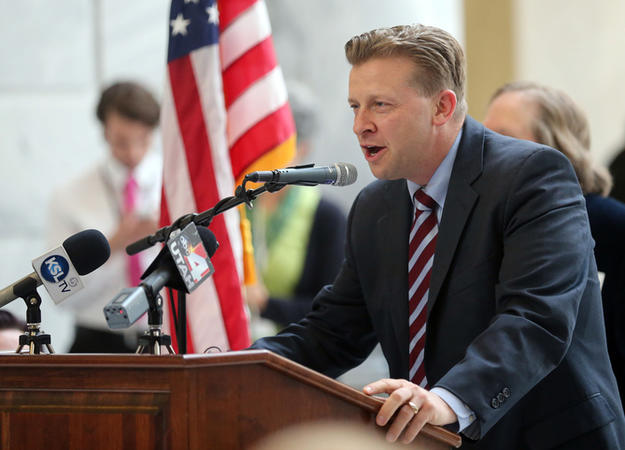
Utah is the first American state to call pornography for what it is: a “public health crisis.” But will other states follow suit, using the momentum to create a shift on the subject? Experts think so.

However, it’s impossible for such decisions not to be strongly opposed. Some medical practitioners, as well as activists for the LGBT community, see the move as a form of religious conservatism.

But Utah’s stance represents a breakthrough for researchers who have long said pornography is an industry that harms men, women, children, and human relationships.

After the Utah Senate and House of Representatives unanimously passed the resolution on Tuesday, Utah Gov. Gary Herbert (R) also signed it.

According to Gail Dines, a professor of sociology at Wheelock College in Boston, the Utah resolution is promising because “pornography is not defined as a moral issue, but as a harms-based issue.”

Meanwhile, people on both sides of the pornography debate put question marks on the scientific data presented by the other side. Dr. Dines is one of those who claim that more than 40 years of peer-reviewed research says it loud and clear: pornography is damaging.

She stated that using a public-health approach is justifiable in a society where “pornography is the major form of sex education, and hardcore pornography is now mainstream porn.”

For decades, feminists have tried raising public awareness of pornography’s contribution to the elevated levels of sexual violence against women. There is also a plethora of pediatricians, psychologists, and parents who talk about the negative effects, especially on children.

The Utah resolution looks at pornography through a long list of problems associated with it, such as sex trafficking, the abuse of women, family breakdown, and the fact that the average boy is first exposed to graphic material at the young age of 11.

On the other side of the debate, some members of the medical community argue that using the term addiction can be manipulative and fear-inducing.

According to David Ley, a clinical psychologist in Albuquerque, N.M., added that “by telling a teenager to be afraid of something and not do it, we are creating a situation where that teen is going to be compelled to be interested in it.”

However, Dr. Dines said that other states are already thinking of joining the trend and adopting Utah-like resolutions. Pornography in 2016 can be likened to smoking in the 1950s; people say it’s not harmful, but eventually, research trumps all, and scientific reason wins.
Image Source: Desert News

Filed Under: United States Tagged With: hardcore porn, mainstream porn, pornography as public health issue, sex addiction, Utah pornography resolution

YouTube Launches 360-Degree Live Stream and Directional Audio

April 19, 2016 By Cristopher Hall Leave a Comment

coachella

Last week, YouTube announced that 360-degree video live streaming was now supported on the platform, and that the Coachella music festival was the first to use the new feature.

It was back in March 2015 that support for 360-degree videos was first launched, allowing musicians, athletes, brands, and creators to do some incredible things with the new technology.

But as 360-degree live streaming comes on YouTube, chief product officer Neal Mohan wrote on the company’s Google Blog that even more fans will be invited into the world of the people they follow.

At the same time, the video platform announced the launch of directional audio for on-demand videos for the Android operating system.

This allows users to hear audio in 360-degree videos in relation to the angle they choose to view the live stream, which makes for “a more immersive experience.”

YouTube has also provided users with a playlist of six 360-degree videos using directional audio, but the function can only work on Android devices for now; the company said its availability will expand over time.

Mohan also made some people very happy by announcing that some of the Coachella performances were going to be live streamed in 360 degrees this past weekend.

Sadly, users did not get to hear the live Coachella performances in spatial audio because this feature is only supported on on-demand videos.

YouTube is the first video platform to support live 360-degree video streaming and spatial audio at this scale. The Google-owned service also had to incorporate some technical improvements to the site to live 360-degree videos possible and working as seamless as it can.

According to a report from The Verge, creators are now able to live stream 360 videos at a whopping resolution of 1440p and 60 frames per second.

But there is a significant hurdle in trying to take advantage these new features; they only work if creators set up a new camera rig that’s integrated with YouTube.

The prices of the new camera rigs that take advantage of these new features range from cheaper $350 Ricoh Theta and the newly announced $ALLie Camera, to the higher-end Orah 4i available for $1,800.

If you can’t afford to experiment with live 360-degree videos, there are some YouTube Space locations that you can go to and try it out. These new features could provide YouTube with some momentum before the annual I/O Conference in May.

Google is also looking forward to launching a new version of the Cardboard VR goggles after all 360-degree videos on YouTube have been made compatible with the accessory last fall.
Image Source: Android Authority

Filed Under: Tech & Science Tagged With: 360-degree videos, Coachella 2016, YouTube 360-degree videos, YouTube directional audio

Global Maternal and Child Deaths Could Be Prevented with $5 per Person

April 11, 2016 By Cristopher Hall Leave a Comment

alt="Mother and Child eating"

A new analysis conducted by the Johns Hopkins Bloomberg School of Public Health has found that millions of children and mothers could be saved from dying each year with less than $5 per person.

Featured in The Lancet on April 9th, the findings suggest that expanding basic health care services – such as nutritional supplements, contraception, and medication for serious illnesses – in 74 low- and middle-income nations could save many lives.

Reports show that these 74 countries account for more than 95 percent of the world’s maternal and child fatalities occur annually. In 2015, roughly six million children under the age of 5 died, as pregnancy-related causes also killed more than 300,000 women across the globe.

Back in September of 2000, world leaders committed to reducing maternal and child mortality by 2015; however, the new numbers fall short of those goals.

In 2000, the Millennium Development Goals called for “a two-thirds reduction in child mortality from 1990 levels and a three-quarters reduction in maternal mortality from 1990 levels.”

Study author Robert Black, Ph.D., at the Department of International Health at the Bloomberg School, said that a vast majority of these deaths could be avoided if affordable solutions were designed for the populations that needed them the most.

Black’s analysis suggested that keeping more mothers and children alive was not such an expensive investment, and it required a minimum cost per person for expanding access to care. Black presented his conclusions at the Consortium of Universities for Global Health conference, San Francisco.

Researchers discovered that reaching 90 percent of the target populations with health care services could end up saving four million lives could every year.

Some of the most critical interventions included in the study are about improving pregnancy and delivery care, treating life-threatening infectious diseases (diarrhea, pneumonia, and malaria), and providing better childhood nutrition.

By offering these services, 1.5 million newborn deaths could be prevented, in addition to 149,000 maternal deaths. They could also avert 849,000 stillbirths, the equivalent of more than a third of all annual stillbirths.

According to the researchers’ estimates, an investment of “$6.2 billion in low-income countries, $12.4 billion in lower-middle-income countries, and $8 billion in upper middle-income countries” would be needed.

While that sounds like a lot, these sums represent an average investment per person of just $4.70 overall. In other words, essential health services could help people who need them the most with less than $5 per person.

The cost of expanding coverage is not a great impediment, either, as community health workers or primary health centers can provide the majority of these services.
Image Source: President’s Choice

Filed Under: Health Tagged With: basic health care services, life-threatening infectious diseases, maternal and child deaths, newborn deaths, saving millions of lives with basic medical services, third world countries

Volvo Plans To Experiment with Self-driving Cars In China

April 7, 2016 By Cristopher Hall Leave a Comment

volvo self-driving

No one knows for sure when self-driving cars will really hit the market, helping us go effortlessly wherever we need to go. This uncertainty is caused by too many unknown variables, such as the advancement of technology, regulations, and consumer acceptance.

However, none of these factors could keep Volvo from offering the public a date for the launch of its self-driving vehicle: 2020. The carmaker wants to eliminate all serious injuries and deaths caused in traffic by the end of the decade.

There’s only so much automatic braking, airbags, and other tech can do to keep us alive on the road, so Volvo plans to involve use automated driving in the equation.

As soon as next year, the company wants to verify the tech in the real world by putting 100 passengers in robocars for a pilot test in Gothenburg, Sweden. Today, April 7, 2016, Volvo announced it plans to do the same thing in China.

The Chinese road transportation system is one of the most challenging in the world, but Volvo hopes to make self-driving cars part of the solution that will make it better.

According to Erick Coelingh, Volvo’s chief of the self-driving division, the details have yet to be settled. The company is still unclear about the when or the where the China trial will begin, but it’s safe to say one of the country’s many megacities will start sporting the robocars in just a few years.

For the trial, Volvo is looking for commuters who come to the city via the highway. These people will represent Volvo’s diverse customer base, and all they have to do is stay awake and sober in the driver’s seat.

Why is the highway bit important? Because Volvo’s vehicles are not entirely autonomous yet. In Gothenburg, Sweden, the company will use XC90 hybrid SUVs, modified with the ability to handle a simple driving environment: no intersections, traffic signals, pedestrians, and cyclists.

The car will learn some new traffic behaviors, such as the ability to slide between lanes or make room for emergency vehicles. It will also be programmed to alert the human when their highway exit is coming up so they can take over.

But why was China Volvo’s next choice for the testing program? According to Coelingh, this nation is the brand’s biggest market right now, in dire need of something to fix its transportation system.

As it is, China deals with brutal air pollution, terrible congestion, and over 200,000 traffic-related deaths annually.
Image Source: QZ

Filed Under: Tech & Science Tagged With: Self Driving Cars, Volvo autonomous cars, Volvo self driving car concept, Volvo trials in Gothenburg

  • « Previous Page
  • 1
  • …
  • 10
  • 11
  • 12
  • 13
  • 14
  • …
  • 38
  • Next Page »

Subscribe to Blog via Email

Enter your email address to subscribe to this blog and receive notifications of new posts by email.

Join 11 other subscribers

Recent Articles

police handcuffs man

German Man Probed In Poisoning That Killed 21 Employees Since 2000

June 29, 2018 By Kenneth Scott Leave a Comment

Chicken wings bar

Intoxicated South Carolina Man Punches Waitress Who Refused to Serve Him Alcohol

June 29, 2018 By Karen Jackson Leave a Comment

gaming

New Zealand gamer Who Flew Halfway Across The World for Virginia Teen Gets Shots By Her Mother

June 28, 2018 By Cristopher Hall Leave a Comment

party

Former Virginia Tech Freshman Sentenced to 50 Years in Prison for Stabbing a Girl to Death

June 28, 2018 By Roxanne Briean Leave a Comment

bonfire

British Couple Sentenced to Life in Prison for Torturing and Murdering French Nanny

June 27, 2018 By Deborah Campbell Leave a Comment

pay phone

Texas Father of Girl Disappeared in the 80s Ignored by Authorities

June 26, 2018 By Cristopher Hall Leave a Comment

bottled water

San Francisco Woman Threatened to Call Police on Girl Who Sold Ice Water for Disneyland Trip

June 25, 2018 By Roxanne Briean Leave a Comment

Maplewood Park

Missouri Man Robbed by Date and Accomplice in Park

June 22, 2018 By Nancy Young Leave a Comment

coding

New York Man Sentenced in Cyberstalking Former Girlfriend, Mailing Drugs to Her Dorm

June 22, 2018 By Deborah Campbell Leave a Comment

headphones

Bose Poised to Launch Sleepbuds, In-Ear Headphones That Help You Sleep

June 21, 2018 By Nancy Young Leave a Comment

Police light

Intoxicated Female Driver in Custody for Pulling Arresting Officer by the Hair

June 21, 2018 By Kenneth Scott Leave a Comment

kitchen

Restaurant Manager Arrested and Charged in Shooting Death of Co-Worker over Negative Yelp Reviews

June 20, 2018 By Karen Jackson Leave a Comment

plastic container

Pennsylvania Couple Charged in Violent Death of Infant Discovered Buried in Cat Litter

June 19, 2018 By Cristopher Hall Leave a Comment

tailpipe

Minnesota Teen Gets Head Stuck In Oversized Tailpipe Winstock Music Festival

June 18, 2018 By Karen Jackson Leave a Comment

Pages

  • About Us
  • Contact us
  • Privacy Policy
  • Privacy Policy GDPR
  • Staff
  • Terms and Conditions

Recent Posts

  • German Man Probed In Poisoning That Killed 21 Employees Since 2000 June 29, 2018
  • Intoxicated South Carolina Man Punches Waitress Who Refused to Serve Him Alcohol June 29, 2018
  • New Zealand gamer Who Flew Halfway Across The World for Virginia Teen Gets Shots By Her Mother June 28, 2018
  • Former Virginia Tech Freshman Sentenced to 50 Years in Prison for Stabbing a Girl to Death June 28, 2018
  • British Couple Sentenced to Life in Prison for Torturing and Murdering French Nanny June 27, 2018
  • Texas Father of Girl Disappeared in the 80s Ignored by Authorities June 26, 2018
  • San Francisco Woman Threatened to Call Police on Girl Who Sold Ice Water for Disneyland Trip June 25, 2018

Categories

  • Business
  • Entertainment
  • Finance
  • Headlines
  • Health
  • Life
  • Nature
  • Science
  • Sports
  • Tech & Science
  • Travel
  • Uncategorized
  • United States
  • World

Copyright © 2026 ArgyllFreePress.com
About · Privacy Policy · Terms of Use · Contact