Argyll Free Press

Growing News Network

Sunday, May 3, 2026
Log in
  • Business
  • Finance
  • Sports
  • Tech & Science
    • HP Envy 4500 Review
    • LG Optimus 170 Review
    • iPod Touch 6th Generation Review
    • HTC One M8 Accessories Set-up
    • Surrealist Games You Must Play
    • Hisense Sero 8 Review
    • Dell Latitude e7440 Review
    • HP Laserjet 1536dnf mfp Review
    • Garmin Fenix 2 Review
    • Skype Vs Viber
    • Best Video Conferencing Software
    • Sony mdr 1r Headphones Review
    • Canon Rebel t3i Review
    • Sennheiser Momentum 2-0 Review
  • Travel
  • Headlines
  • Health
  • United States

Most Fertility Apps Unreliable in Preventing or Achieving Pregnancy

July 5, 2016 By Nancy Young 2 Comments

Woman using smarphoneA new study revealed that women should not fully rely on fertility apps to learn when they are the most fertile over the course of one month. Researchers found that only 6 of nearly 100 reviewed fertility apps were accurate in pinpointing ovulation.

Dr. Marguerite Duane, lead author of the study and researcher with Georgetown University School of Medicine, noted that fertility apps are becoming hugely popular as more and more women seek to have a tighter control over their pregnancy.

Additionally, knowing when they are the most fertile throughout a month helps women fend off pregnancies in a more natural way than conventional birth control methods. Fertility apps allow women know their fertile time in the menstrual cycle.

Most fertility apps track ovulation, or the time when the woman is the most likely to get pregnant, based on data on her menstrual cycle. Some apps predict ovulation by looking at women’s basal body temperature (BBT) as well, but this is not very accurate. Study authors explained that shifts in the women’s BBT occur 2-3 days AFTER ovulation.

Several apps help women keep an eye on their fertility by tracking changes in their cervical mucus. When the mucus changes consistency and color this means that women are getting closer to ovulation.

The new study revealed, however, that there are nearly 100 fertility apps to download through Google Play or iTunes. About 55 apps said in their terms of service that they should not be used to plan or avoid pregnancy. These apps were not taken into account during the research.

Researchers were left with just 40 apps to analyze. Each app was assessed under a five-point rating system. For the highest score, an app needed to meet as many of 10 criteria considered crucial to prevent pregnancy.

Study investigators learned that only 30 apps pinpointed ovulation and fertility days. However, only six app were the most accurate apps and had no false negatives. The apps which failed to predict ovulation saw a boost in their accuracy if users had undergone training in fertility awareness.

Study authors do not recommend randomly using a fertility app just because your friend does. Dr. Duane advises women to first get proper training in their fertility times and use the fertility apps that scored at least four on accuracy and authority in the latest study.

The study is slated to be published this week in the Journal of the American Board of Family Medicine.

Image Source: Pixabay

Filed Under: Health Tagged With: family planning, fertility apps, ovulation, pregnancy, pregnancy prevention

Oracle Loses $3 Billion to HP in Itanium Lawsuit

July 3, 2016 By Nancy Young 1 Comment

Oracle chairman Larry Ellison delivering a speechOn Thursday, a Silicon Valley jury ordered Oracle to pay Hewlett Packard Enterprise $3 billion in damages in a trial revolving around now-defunct Itanium technology. The Redwood City-based company pledged to appeal the verdict.

HP argued in the trial that Oracle’s breaching of a contract led to the decline of a profitable line of business computers. In 2011, Oracle single-handedly decided to cease the development of a database and other software designed to power Itanium chip-based computer systems. Itanium is part of Intel’s line of microprocessors, but a less popular one.

HP which is focused on developing hardware such as servers and laptops said in the trial that Oracle revealed its intentions to hurt its business when it hired former HP chief executive Mark Hurd in 2011. In the meantime, Oracle entered the server business by purchasing Sun Microsystems Inc.

John Schultz of HP Enterprise argued that Oracle’s refusal to provide further support to HP’s Itanium-based server systems in the spring of 2011 led to serious damages to both the company and its customers.

Oracle chairman Larry Ellison denied allegations. He replied that his company’s actions were a response to Intel’s decision to stop providing support to Itanium. Intel said in the trial that this wasn’t the case.

Industry analysts believe that the $3 billion verdict should be “eye-opening.” On the other hand, the trial is not expected to harm Oracle’s reputation or shares as the company is currently valued at about $170 billion. Furthermore, HP Enterprise could see a lot less money than requested in court after the appeals.

Reportedly, Oracle got back in the Itanium support business after another court ruled it to do so. Oracle executive VP and general counsel Dorian Daley recently told reporters that the company’s 2011 decision echoed the future of Itanium-based platforms.

Daley noted that two lawsuit have proven that the microprocessor was nearing the end of its life cycle, while HP was perfectly aware of the situation but kept it hidden from customers and shareholders.

The latest trial, which began in May, represents the second huge courtroom loss in Oracle’s history. In late May, another California jury ruled that Google hasn’t infringed Oracle’s copyright on Java code as it had used it under the “fair use” policy. Oracle is preparing to appeal that verdict too.

Image Source: Wikimedia

Filed Under: Tech & Science, Uncategorized Tagged With: Hewlett Packard Enterprise, Itanium lawsuit, Itanium microprocessors, Oracle Corp, Oracle-HP lawsuit

Plants Can Assess Risks and Make Decisions Accordingly, Study

July 2, 2016 By Nancy Young 1 Comment

For the first time ever, scientists were able to prove that plants can make decisions based on the perceived level of risk and variable conditions.

If that’s not the first step toward sentient plants, able of thinking and moving to their own accord – Harry Potter’s Whomping Willow, anyone? – I don’t know what is.

On a more serious note, however, scientists discovered that pea plants were putting out more roots if placed in pots of soil with higher levels of nutrients, similar to the animals’ behavior of devoting more energy and resources to foraging and hunting when food is plenty.

Then, researchers separated the pea plant’s roots in two pots with variable conditions. One pot was offering the plant a constant level or nutrients while the second one sustained rising and falling levels.

The soil in one pair of pots was consistently of poor quality, while the solid in another pair featured an above average supply of nutrients.

According to the researchers’ hypothesis, the plants would choose to “grow more roots in the variable soil when the constant quality was low, and opt to devote root resources to the constant pot when soil quality was better.”

Surprisingly so, the pea plants’ roots followed this exact prediction. Their adaptive behavior is much like the decision making that takes place in the human brain when we’re faced with risk variables. In general, humans are more likely to gamble or take risks when they’re less at stake. When times are good, taking a risk comes with less gain.

“To our knowledge, this is the first demonstration of an adaptive response to risk in an organism without a nervous system,” said Alex Kacelnik, a zoologist and researcher at Oxford University.

The authors explained that their study’s purpose was not to prove that plants are somehow intelligent, like other animals or humans. Instead, their focus was on showing that they are rather complex and act on particularly interesting behaviors.

Theoretically, their findings could be classified as biological adaptations, as the plants have developed processes that help them exploit natural opportunities as efficiently as possible.

Published in the journal Current Biology, the study suggests other varying models of behavioral economics could be used to predict this interesting decision making of plants.
Image Source: Tumblr

Filed Under: Tech & Science Tagged With: Current Biology, pea plant, plants, plants take risks, sentient plants

South Korea Tests Warning Traffic Signs for Smartphone Users

June 26, 2016 By Nancy Young Leave a Comment

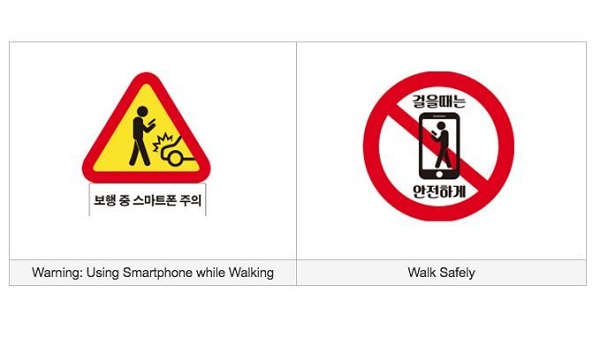
traffic signs to warn smartphone users

Smartphones pose a certain danger to their owners – and it’s not just because they could potentially cause cancer. It’s also because you could be hit by a car because you’re not paying attention to the world around you.

To a certain extent, we’re all familiar with seeing people on the street with their faces glued to their smartphones’ screens, but how many of us have thought of the danger this type of behavior implies?

In an attempt of keeping pedestrians safe in traffic, South Korea’s Metropolitan Government has partnered with the National Police Agency, Seoul, and came up with a series of preventive measures.

As part of a pilot initiative, the Seoul government has unveiled two new warning signs; they are meant to raise aware of this modern problem. One of them reads, “Warning: Using Smartphone while Walking,” and it will be placed near street crossings, cautioning pedestrians of the dangers of getting hit by a car while texting.

The second one, which portrays a pedestrian with a smartphone in his hand, is designed to discourage people from using their phones – and getting lost in their digital activity – while they’re walking in public spaces. This one reads, “Walk Safely.”

To begin with, the authorities will test the program in five districts of Seoul (City Hall, Hongdae, Gangnam Station, Yonsei University, and Jamsil Station). These areas have been identified as reporting high levels of smartphone-related accidents among citizens between 10 and 30 years old.

Some people consider these preventive measures as silly, but they are meant to save the lives of people absorbed by their smartphones. However, it’s not the first time we see this kind of warning signs installed in cities.

In the town of Augsburg, Germany, authorities have implemented a similar program which included the installment of luminous traffic lights at the floor level. These were designed to catch the attention of smartphone users who did not look up before crossing the street.

Another pilot program was tested in a theme park in Chongqing, China, a few years ago, as well as in parts of Washington DC. Both cities had created walking lanes for people who texted.
Image Source: Mashable

Filed Under: Tech & Science Tagged With: floor traffic lights, Seoul traffic signs, traffic signs for smartphone addicts, walking and texting

Bramble Cray Melomys Are Now Officially Extinct

June 17, 2016 By Nancy Young Leave a Comment

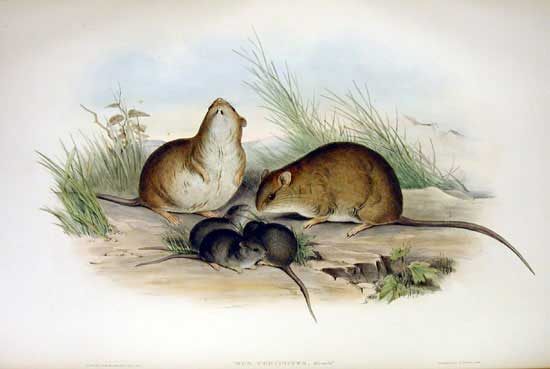
drawing of Bramble Cray melomys

Climate change is starting to make more and more victims. First, the coral reefs from Australia started to bleach, now, an entire species of mammals has disappeared forever. The Bramble Cray melomys are now officially extinct due to climate change caused by humans.

The Bramble Cray melomys were a species of small, brown rodents that lived on an island off the Papua New Guinea’s coast. Due to the fact that they were fragile beings dependent of their habit, the changing climate has dwindled their numbers up to the point of extinction.

Researchers believe that the Bramble Cray melomys were affected by flooding and ever-rising sea levels. According to a Queensland University biologist, Luke Leung, this is the first time that scientist documented a climate change-caused extinction.

Back in the 1970s, Bramble Cray melomys were flourishing on the tiny island. A census from that time showed a couple of hundred of individuals running around the small landmass. In 2011, after the island’s shape significantly changed due to climate change, another census found only 12 melomys.

The main problem is the fact that the island was consistently flooded by storm surges, leaving little to no space for the non-amphibious animals that populated it.

In 2014, Leung and his colleagues came back to look for the Bramble Cray melomys, but all they found was a smaller, partially flooded island with scarce vegetation. There were no signs of the melomys anywhere.

The rodents depended on the vegetation for shelter and food. When the local flora started dying out due to persistent floods, the mammals, who were probably not good swimmers of their own, starting dying out too.

Resit Akҫakaya, a Stony Brook University biologist, believes that the Bramble Cray melomys are not the only species to go extinct due to climate change. According to him, other mammals might have disappeared due to climate change without leaving a trace because there are still plenty of undiscovered species on the planet.

The current rate of extinction is suggesting that we are heading towards a mass extinction event. Usually, these occur at the end of an age and are followed by a boom of other species. Unfortunately, geologically speaking we are far from the end of our current age, but the changes that humans caused to the planet’s climate are causing all sorts of inexplicable phenomenon.

Image source: Wikipedia

Filed Under: Tech & Science Tagged With: bramble cray melomys, Bramble Cray Melomys Are Now Officially Extinct

Medical Staff More Careful About Hand Hygiene When Watched

June 13, 2016 By Nancy Young Leave a Comment

washing handss

Hand hygiene should be strictly followed by one and all, but the case is even stronger when it comes to doctors. According to a new study, however, medical staff becomes negligent sometimes and falls victim to the Hawthorne Effect.

A team of researchers at the Santa Clara Valley Medical Center (SCVMC), San Jose, explained that the said effect occurs when people change their behavior if they know someone is keeping an eye on them.

The findings showed that hand hygiene practice among doctors differed when they know they are being evaluated than when not. Researchers at SCVMC sent two types of investigators to evaluate hand hygiene: Infection Prevention (IP) nurses, and high-school and college-aged volunteers.

Over the course of the study, Maricris Niles, an infection prevention analyst at SCVMC, noticed that the groups were differing in their opinion. The IP nurses – considered as the hygiene patrol in hospitals – noticed increased compliance rates.

However, the Hawthorne Effect was found upon further investigation. According to Lisa Hansford, one of the recognizable IP nurses at SCVMC, when nurses or doctors knew someone in authority is supervising, they would follow proper procedure of hand hygiene.

But if they thought no one was watching, they would skip using alcohol. IP nurses observed the hygiene compliance rate was around 57 percent, whereas in the case of hospital volunteers, it was a much lower 22 percent.

It’s a massive gap that shocked the research team. Nancy Johnson, infection prevention manager at SCVMC, said that the medical staff might get so caught up in the work that they need someone to remind them to follow hand hygiene.

To make sure that the high-school and college-aged volunteers performed viable assessments, they were trained beforehand; because they were not consistently recognized as authority figures by hospital staff, they were able to provide more accurate data on hand hygiene.

Researchers explained they found “a very consistent trend that our Infection Prevention nurses were seeing something different than what volunteers were seeing.” The nurses and providers who did not use alcohol to wash their hands did so as soon as they would recognize the hygiene auditors.

Because the phenomenon is not new and the problem is more spread, the team at SCVMC has launched a series of interventions to drive the medical staff’ compliance rates higher.
Image Source: Coverall Blog

Filed Under: Health Tagged With: doctors and nurses hand hygiene, hand hygiene, hygiene auditors, medical staff

Healthy Fats in Mediterranean Diet Won’t Cause Weight Gain

June 7, 2016 By Nancy Young Leave a Comment

alt= Mediterranean foods

You don’t have to fear that if you decided to follow an eating plan that also includes healthy fats like nuts and olive oil will cause you to gain unwanted weight.

A new study delivers good news to people who prefer the Mediterranean diet – which does include healthful fats – and not a diet that’s low in fat. The study authors suggest that the unnecessary fear of these healthy fats may be caused by current health guidelines.

“More than 40 years of nutritional policy has advocated for a low-fat diet, but we’re seeing little impact on rising levels of obesity,” explained study author Dr. Ramon Estruch, a researcher at the University of Barcelona, Spain.

According to the study’s results, following a Mediterranean diet rich in vegetable fats had little to no effect on waist circumference and overall body weight compared to individuals who preferred a low-fat diet.

In recent years, the Mediterranean diet has made a comeback on an international level, making a name for itself as a diet with plenty of health benefits. It also includes healthy fats, such as fish, vegetable oils, and nuts.

However, Estruch pointed in a press release that “not all fats are created equal.” The study revealed nothing that would imply “unrestricted diets with high levels of unhealthy fats such as butter, processed meat, sweetened beverages, desserts or fast-foods are beneficial.”

For the study, more than 7,400 women and men in Spain participated; the subjects were aged 55 to 80. They were asked to follow one of three eating plans: an unrestricted-calorie Mediterranean diet rich in nuts; an unrestricted-calorie Mediterranean diet rich in olive oil; or a low-fat diet meant to avoid any type of dietary fat.

More than 90 percent of the participants were overweight or obese and all of them had Type-2 diabetes or high heart risk. After five years, total fat intake dropped from 40 percent to 37 percent in the group following the low-fat diet, and increased in both Mediterranean diet groups, from 40 percent to 42 percent.

In all three groups, waist circumference did increase slightly, though it did less so in the participants on the healthy fat diets. The report’s results were featured in The Lancet Diabetes & Endocrinology.
Image Source: Medical News Today

Filed Under: Health Tagged With: healthy fats, mediterranean diet, nuts, olive oil, restrictive diet, weight gain

Facebook Messenger Adds New Emojis with Diverse Skin Tones

June 3, 2016 By Nancy Young Leave a Comment

skin tones

Not all emojis were created equal, at least not when it comes to the differences between Android and iOS. We’ve all been there: you want to send the shocked emoji from Android and it looks like a ghost on iOS.

But thanks to the new update for Facebook Messenger, all those emotions will no longer be lost in translation.  Not only did the app redesign its 1,500-plus emojis, but has also added 100 new ones.

The best part is that all Messenger users will see the same little pictograms, regardless of the platform they’re using. This means that it doesn’t matter if you’re using Facebook Messenger on desktop, the Web, or on mobile devices – the emojis will deliver the meaning you intended.

The problem with emoji keyboards designed specifically for one OS is that some emoji won’t even appear correctly on another platform; all you see instead is a broken-looking black box or something that doesn’t even make sense.

“Emojis have changed the way we talk to each other — whether it’s a smiley face to show you’re happy, a thumbs up, or a pizza when hungry, emojis are a fun, easy way to express yourself when words just aren’t enough — and people love them,” wrote Facebook in an official blog post.

According to their data, some 10 percent of mobile messages in-app features at least one emoji. And not only do we have a new standard for emoji, we also have been given new ones.

The updated emojis were designed to be more diverse – racially and ethnically speaking. Many of the 100 new emojis are focused on improving our choices in terms of gender and skin tones.

Facebook said that the multi-colored emojis are meant to “create a more balanced mix that’s more representative of our world.” Among the new female-positive emojis are a female pedestrian, swimmer, police officer, runner, and surfer, with more on the way in the near future.

The social network also wants to help people find the right emoji for each situation, so it added am emoji picker. No, artificial intelligence and machine learning are not involved in this feature; the emoji picker simply allows you to select emojis faster with the help of a shortcut.

The redesigned emojis are rolling out today with the latest update of Facebook Messenger.
Image Source: Vocativ

Filed Under: Tech & Science Tagged With: Facebook Messenger introduces new emoji, female swimmer emoji, new emoji, new female emoji, new skin tones for emoji

No Fix For Sleep of Death Bug on Microsoft’s Surface Book

May 30, 2016 By Nancy Young Leave a Comment

surface book

According to Microsoft’s most recent quarterly earnings report, the Surface line has become increasingly popular, growing to be the leader in its More Personal Computing line of business.

But despite Surface’s quick rise to fame, its future may depend on the company’s ability to address a reliability issue that has become the nightmare of many users.

Known as “Sleep of Death,” the bug holds the power to ruin the beauty that Surface is. From a performance perspective, it’s a good laptop and one that users could be really happy with.

But the problems occur when the laptop is not in use, because whenever the system goes to sleep for a few hours or more, chances are high that it’s not going to wake up – at least, not the same way it went under.

Overnight long sleep periods seem to result in unexpected system crashes. According to reviews of users who have experienced the unfortunate bug, the start of a workday usually involves bringing the Surface Book back from an annoying full shutdown.

And the bug doesn’t occur overnight only; the laptop can die over the span of a few meetings, or a slightly longer flight. You can be sure the Surface won’t make it if you’ve let it in Sleep mode.

The problem has become so widespread that it even has a name: Sleep of Death has become a turn-off among Surface users, particularly where Surface Pro 4 and Surface Book are concerned.

For example, searching “sleep of death Surface” on Reddit, the popular social news website, will yield some 50 relevant threads. Even more worrying is the fact that typing in the same search on Microsoft’s own support forums will return more than 75,000 results.

And it’s not rocket science to understand what the Sleep of Death stands for. When you leave your laptop in sleep mode, chances are it’s going to shut down. Then, it and needs to be powered back up, leaving users sifting through auto-saved versions of files, hoping they will avoid losing or corrupting their data.

At the moment, Microsoft doesn’t have any solutions for this problem, and if this has happened to you, pray that you’re still in the 30-day warranty period. Otherwise, you’re stuck with a malfunctioning laptop that you pay a load of money to have.
Image Source: PC Magazine

Filed Under: Tech & Science Tagged With: Microsoft Surface Book, Sleep of Death

Antidepressants Prescribed Not Just for Depression

May 27, 2016 By Nancy Young Leave a Comment

"Blister of antidepressants"

According to a new study conducted by researchers at the McGill University, doctors tend to prescribe antidepressants for a wide array of disorders. The professionals in charge of the study believe that this practice should stop seeing as the medication is not approved by the FDA for the treatment of other conditions.

The article published in the “Journal of the American Medical Association” magazine stated that approximately three in ten prescriptions for antidepressants released by Quebec medical practitioners are not on the FDA’s approved list.

The CDC estimates that approximately 1 in 10 Americans were prescribed antidepressants. However, almost half of them are taking the drugs for other conditions.

Antidepressants are prescribed for the treatment of other conditions besides depression because some physicians noticed that they are more efficient than the ones created specifically for the disorders in question.

For example, there is a group of doctors that believe that antidepressants show better results in the treatment of a number of anxiety disorders, pain syndromes, and sleep disturbances. The physicians also think that the drugs used to treat depression cold show results in cases in which other treatments failed.

“For insomnia use, most knowledgeable internists prescribe many of these medications because they are more efficient and less problematic than drug indicated for insomnia, such as Lunesta and Sonesta, which can have addiction counter-indications,” declared an MD from the Langone Medical Center in New York.

Furthermore, there is evidence of doctors using antidepressants to treat chronic pain even though they were not designed for pain management.

The authors of the study did take into consideration the fact that the majority of doctors are using antidepressants efficiently, but they also point out the fact that this practice goes “by ear”, in the sense that there are no clinical trials that attest the efficiency of antidepressants in the treatment of other disorders besides depression.

This “word-of-mouth” kind of practice can prove to be dangerous to patients seeing as the doctors that are prescribing depression medication for chronic pain or insomnia are basing their opinion on the results they, or their peers, had with a small sample of patients.

The FDA needs scientific proof that the medication is efficient in the treatment of other conditions. Until then, physicians are advised to prescribe drugs according to each specific illness.

Image source: Torange

Filed Under: Health Tagged With: antidepressants, antidepressants prescribed for more than depression, depression, drugs

  • « Previous Page
  • 1
  • …
  • 12
  • 13
  • 14
  • 15
  • 16
  • …
  • 36
  • Next Page »

Subscribe to Blog via Email

Enter your email address to subscribe to this blog and receive notifications of new posts by email.

Join 11 other subscribers

Recent Articles

police handcuffs man

German Man Probed In Poisoning That Killed 21 Employees Since 2000

June 29, 2018 By Kenneth Scott Leave a Comment

Chicken wings bar

Intoxicated South Carolina Man Punches Waitress Who Refused to Serve Him Alcohol

June 29, 2018 By Karen Jackson Leave a Comment

gaming

New Zealand gamer Who Flew Halfway Across The World for Virginia Teen Gets Shots By Her Mother

June 28, 2018 By Cristopher Hall Leave a Comment

party

Former Virginia Tech Freshman Sentenced to 50 Years in Prison for Stabbing a Girl to Death

June 28, 2018 By Roxanne Briean Leave a Comment

bonfire

British Couple Sentenced to Life in Prison for Torturing and Murdering French Nanny

June 27, 2018 By Deborah Campbell Leave a Comment

pay phone

Texas Father of Girl Disappeared in the 80s Ignored by Authorities

June 26, 2018 By Cristopher Hall Leave a Comment

bottled water

San Francisco Woman Threatened to Call Police on Girl Who Sold Ice Water for Disneyland Trip

June 25, 2018 By Roxanne Briean Leave a Comment

Maplewood Park

Missouri Man Robbed by Date and Accomplice in Park

June 22, 2018 By Nancy Young Leave a Comment

coding

New York Man Sentenced in Cyberstalking Former Girlfriend, Mailing Drugs to Her Dorm

June 22, 2018 By Deborah Campbell Leave a Comment

headphones

Bose Poised to Launch Sleepbuds, In-Ear Headphones That Help You Sleep

June 21, 2018 By Nancy Young Leave a Comment

Police light

Intoxicated Female Driver in Custody for Pulling Arresting Officer by the Hair

June 21, 2018 By Kenneth Scott Leave a Comment

kitchen

Restaurant Manager Arrested and Charged in Shooting Death of Co-Worker over Negative Yelp Reviews

June 20, 2018 By Karen Jackson Leave a Comment

plastic container

Pennsylvania Couple Charged in Violent Death of Infant Discovered Buried in Cat Litter

June 19, 2018 By Cristopher Hall Leave a Comment

tailpipe

Minnesota Teen Gets Head Stuck In Oversized Tailpipe Winstock Music Festival

June 18, 2018 By Karen Jackson Leave a Comment

Pages

  • About Us
  • Contact us
  • Privacy Policy
  • Privacy Policy GDPR
  • Staff
  • Terms and Conditions

Recent Posts

  • German Man Probed In Poisoning That Killed 21 Employees Since 2000 June 29, 2018
  • Intoxicated South Carolina Man Punches Waitress Who Refused to Serve Him Alcohol June 29, 2018
  • New Zealand gamer Who Flew Halfway Across The World for Virginia Teen Gets Shots By Her Mother June 28, 2018
  • Former Virginia Tech Freshman Sentenced to 50 Years in Prison for Stabbing a Girl to Death June 28, 2018
  • British Couple Sentenced to Life in Prison for Torturing and Murdering French Nanny June 27, 2018
  • Texas Father of Girl Disappeared in the 80s Ignored by Authorities June 26, 2018
  • San Francisco Woman Threatened to Call Police on Girl Who Sold Ice Water for Disneyland Trip June 25, 2018

Categories

  • Business
  • Entertainment
  • Finance
  • Headlines
  • Health
  • Life
  • Nature
  • Science
  • Sports
  • Tech & Science
  • Travel
  • Uncategorized
  • United States
  • World

Copyright © 2026 ArgyllFreePress.com
About · Privacy Policy · Terms of Use · Contact