Argyll Free Press

Growing News Network

Sunday, May 3, 2026
Log in
  • Business
  • Finance
  • Sports
  • Tech & Science
    • HP Envy 4500 Review
    • LG Optimus 170 Review
    • iPod Touch 6th Generation Review
    • HTC One M8 Accessories Set-up
    • Surrealist Games You Must Play
    • Hisense Sero 8 Review
    • Dell Latitude e7440 Review
    • HP Laserjet 1536dnf mfp Review
    • Garmin Fenix 2 Review
    • Skype Vs Viber
    • Best Video Conferencing Software
    • Sony mdr 1r Headphones Review
    • Canon Rebel t3i Review
    • Sennheiser Momentum 2-0 Review
  • Travel
  • Headlines
  • Health
  • United States

Cracking Paint Exemplifies Why Space Objects Have Different Sizes

March 3, 2016 By Nancy Young Leave a Comment

Space Objects Have Different Sizes

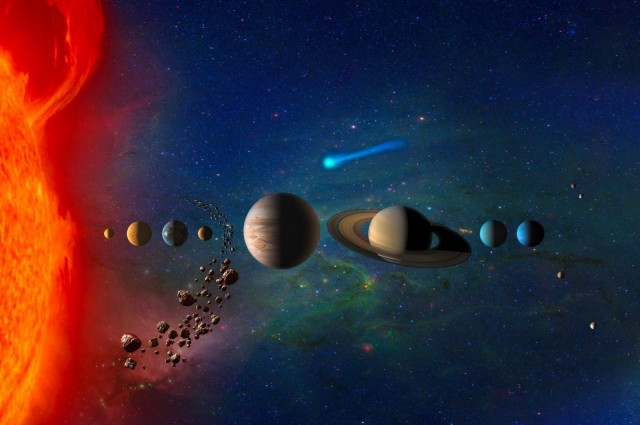
A Duke University theorist used a very simple and easy to understand example to explain why space objects have different sizes in our universe at least. It’s very well known to all of us that for example Jupiter is about 318 Earths in size while Mercury is about 0.05 Earths in mass. But while we take facts such as these for granted, if you stop to think about it, the difference in size when it comes to star or planet formation is slightly difficult to grasp.

The study that was eventually published in the Journal of Applied Physics on behalf of professor and mechanical engineer Adrian Bejan and R.W. Wagstaff explains why some objects slowly form into bigger shapes while others remain small scale planets. In order to make the explanation easy to grasp, he used a very earthly principle. The way wall paint has a tendency to crack after it has dried.

Apparently, the universe is prone to using the same principles as paint when it coalesces and forms objects. The most basic condition that the entire principle is based on is the need of matter to release tension that builds up inside of it because of the mere existence of the gravitational force, still elusive in nature to scientists.

The analogy that Bejan has made between the formation of planets and stars and cracking paint relies on a very similar kind of inward pull that space objects display. When pain dries, it starts shrinking and this creates a very large amount of tension over the entire surface. At a certain point, the tension is high enough to make the dried paint crack in order to relieve it. But this is not something that happens randomly, and instead, the release happens in the quickest way possible – according to physics principles.

Because of that principle, a certain hierarchy of zones where the paint is more prone to crack is formed – for example the zones that are at least slightly weaker in construction: either a portion where the layer is at least slightly thinner than the rest and so on.

Because the entire universe relies on this tension to be released, some bodies are prone to be subjected to the constructal law. This law states that any flowing system that is allowed to change freely over time will trend toward an easier flowing architecture. Following that type of thinking, in a universe where every single body was of the same size, the tension would have a hard time being relieved because of the very uniform gravitational pull that all of the physically identical bodies would exert.

Image Source: 1

Filed Under: Tech & Science Tagged With: constructal law, Duke University, space object size, space object size difference

McDonalds Introduces Happy Goggles VR Headset

March 1, 2016 By Nancy Young Leave a Comment

McDonalds VR

McDonalds is introducing – for a limited time only – its very own take on virtual reality headsets and introducing them in the famous Happy Meals menus for kids: the McDonalds VR. However, not all McDonalds restaurants are doing this as so far only the ones in Sweden have adopting bundling these Google Cardboard-like devices into their menu. It’s actually pretty bright as the VR headsets don’t even come separately, but instead can be assembled from the packaging that the meal’s contents come in.

The offer is a one-time thing that only 14 restaurants from Sweden will be offering over the next two weekends, and they also come in a limited number: only 3,500 Happy meal boxes will be made available. This will be done on the occasion of the Swedish recreational holiday known as ‘Sportlov’ when families usually go skiing to celebrate it.

Naturally, along the VR headsets that you can make from the Happy Meal packaging, McDonalds created a skiing VR game named ‘Slope Stars’ that you can start putting the virtual reality gear to use with. The game needs to be downloaded off of the respective application online stores (App Store or Google Play) and can be played without the VR headset too, but naturally, the experience will be enhanced that way.

On the other hand, you can use the McDonalds Happy Goggles with any VR-capable mobile game that you can find in the app stores as it contains everything you would ever need to make it work. The way kids are supposed to transform their Happy Meals into VR devices is by simply tearing and cutting along some marked lines and folding the box in a particular way (instructions included, of course), then inserting in the VR lenses that you can find included in the package as well.

The smartphone that you have to put in the VR headset is your responsibility, however.

The new McDonalds VR package is made in collaboration with the Swedish alpine ski team that officially endorsed the ‘Slope Stars’ VR game. It is not known if Google had anything to do with the headset in question, given the uncanny resemblance, but the McDonalds VR set employs the same kind of construction as the Google Cardboard.

And all you have to do in order to get it – as long as you’re in Sweden the next 2 weeks – is to make sure you get there fast enough to catch one of the 3,500 limited edition packages and be prepared to whip out an extra $4.10 for it.

Image Source: 1

Filed Under: Tech & Science Tagged With: Google cardboard, McDonalds VR, Virtual Reality headset, VR Headset

New Horizons Data Still Keeps Shedding Light on Pluto

February 26, 2016 By Nancy Young Leave a Comment

New Horizons Data Still Keeps Shedding Light on Pluto

Even if it has been more than half a year since the probe’s fly-by of Pluto, the New Horizons data still keeps shedding light on Pluto. Images of the planet and data reads have been incoming from the distant probe ever since it has gone out of hibernation and gone back in action. This data has gone through multiple testing phases and research with the scientists from NASA since; after that, the data has slowly been made available to the public in order to share with the rest of humanity just how far our species has gone.

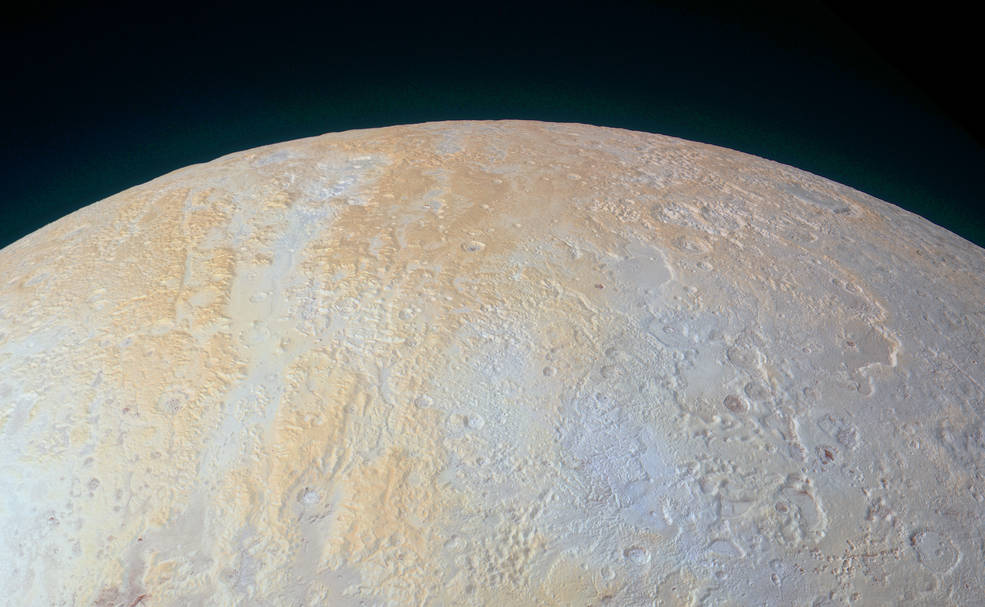
The most recent discovery that has been thrown our way by the NASA newsfeed is a beautiful picture of Pluto’s North Pole. The image was taken by New Horizons using the Ralph/Multispectral Visible Imaging Camera (MVIC), at an altitude of 21,100 miles from the surface of Pluto and about 45 minutes after the probe’s closest approach to the dwarf planet on July 14th 2015.

The image depicts heavily battered terrain and incredibly long canyons scarring the entirety of that area. The canyons run through Pluto’s Lowell Region – also known as the Percival Lowell area – some of them as wide as 45 miles across. A closer study made on the nature of the canyons that seem to run close to the north pole of the planet has revealed that the ravines walls appear to look old; at least older than other, sharper canyon regions that were found on the planet.

Scientists have theorized two possible reasons for that: one would be that the canyons in this region are made of weaker materials that degrade faster. The other explanation would suggest that Pluto had tectonic activity in the past. The deepest of canyons measure about 2.5 miles depth in this particular region. Researchers also theorized that their creation may very well have been a result of subsurface ice melting below the ground, eventually causing a cave-in.

Scientists have also made a point of observing the yellow terrains that are particularly visible closer to the North Pole than they are in the other regions of the planet. While it’s not with a hundred percent certainty, scientists suspect that the hue is a result of methane deposits that ended up being processed more by the solar radiation than bluer terrain in other zones on the planet.

Image Source: 1

Filed Under: Tech & Science Tagged With: new horizons, Pluto, Pluto North Pole, pluto surface

Scott Kelly’s Year in Space Will Be Completed Soon

February 25, 2016 By Nancy Young Leave a Comment

Scott Kelly’s Year in Space Will Be Completed Soon

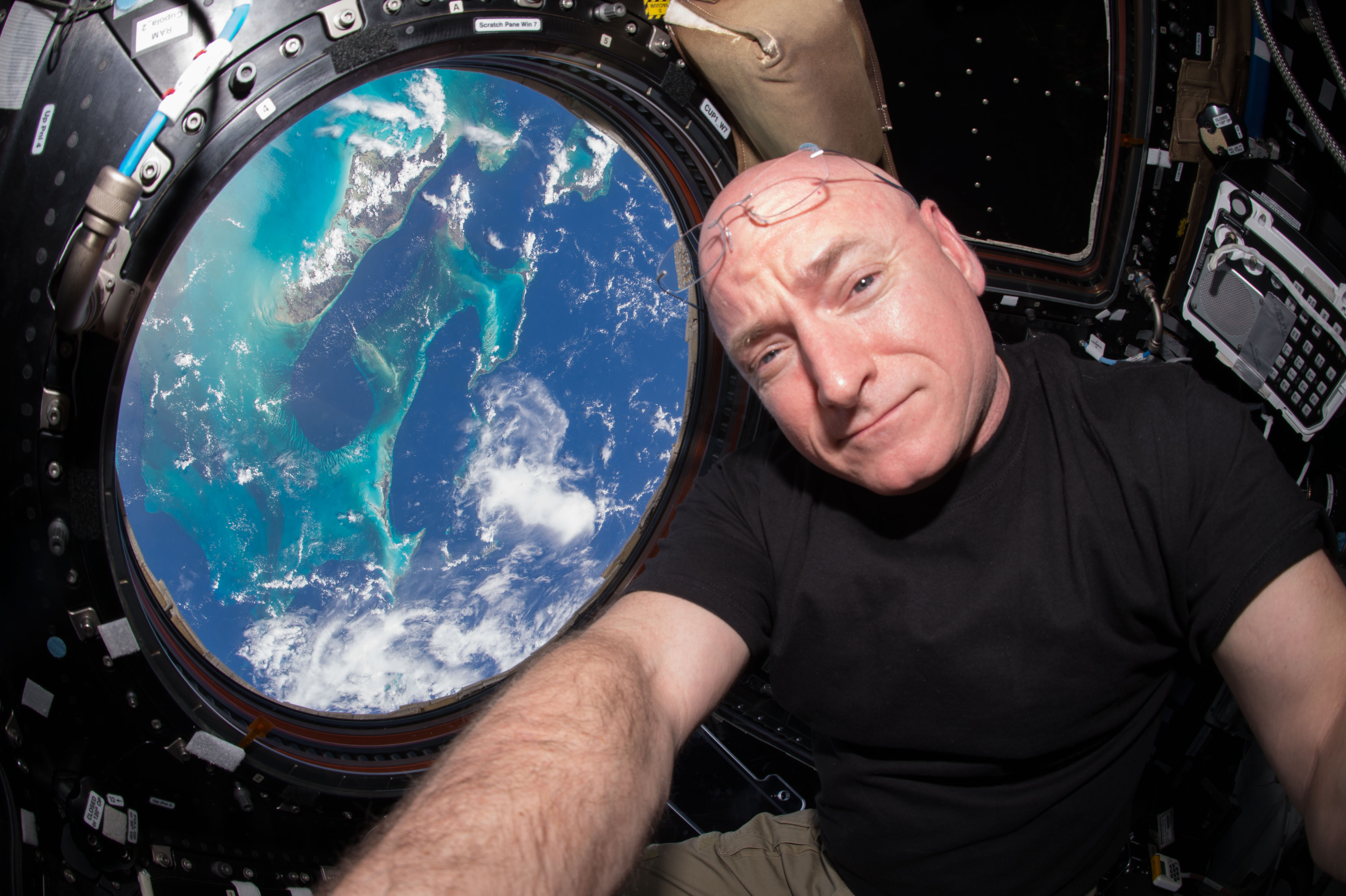
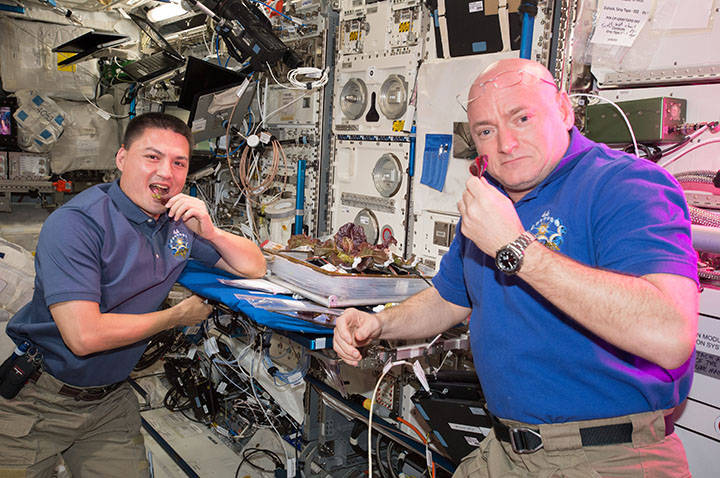
Scott Kelly’s Year in space will be completed soon, in just several days from now. March 1st 2016 marks the day when astronaut and engineer and retired U.S. Navy Captain Scott Kelly will return to the surface of the Earth, after having spent 340 days on the International Space Station in one go. While Scott Kelly is not the first or the only astronaut to spend such a long time in outer space, but currently holds the record for the most overall time spent – 520 days.

Scott Kelly made an impression on the hearts of many back on Earth, not to mention the fact that he is centric to an experiment that involves his identical twin brother, which hopes to determine the physical and psychological changes that astronauts undergo while in outer space.

To the fans and people back on Earth, he has been an inspiration to say the least and communicated more than anyone would have ever expected from him. By using various social media platforms such as Twitter or Tumblr, Scott Kelly kept in touch with the thousands of people following his year-long story spent on the International Space Station. Whether it was the breathtaking photos he would take of amazing looking sunrises as they are seen from space, the aurora borealis or the night-lit cities of our planet, Kelly continued to post at least a photo a day from the ISS, more than 200 miles above the planet’s surface.

On Tumblr, he took nearly an entire day to answer question coming from numerous people following him about what life in space is really like. Between joking about how he’ll be taller than his brother when he comes back and realizing how he has grown fond of the space station, a fact that makes him feel like he will miss the ISS, Scott Kelly says he will welcome the return to Earth.

His press atop the International Space Station has meant a lot more than it would seem, the experiment that him and his brother are part of only being one of many. All of the studies and experiments run on board of the ISS are preliminary steps that mankind needs to take in preparation of a manned expedition to Mars, the Red Planet. On top of studying how the human body fares when exposed to life in outer space for a prolonged amount of time, the astronauts on the ISS also studied methods of crop growing while in space, for example.

Image Source: 1

Filed Under: Tech & Science Tagged With: International Space Station, ISS, Scott Kelly, Year in space

Sony Is Hosting Its Own Press Event Next Month

February 24, 2016 By Nancy Young Leave a Comment

Sony Is Hosting Its Own Press Event Next Month

It would seem that March is going to be an incredibly eventful month for tech giants all over the world. Apple is organizing a press event that everyone believes will be the moment when the company showcases its next iPad and the fabled iPhone 5se. IBM is staring its very own, personalized trek down the VR path down in Tokyo with its next generation VRMMO alpha testing of Sword Art Online: The Beginning.

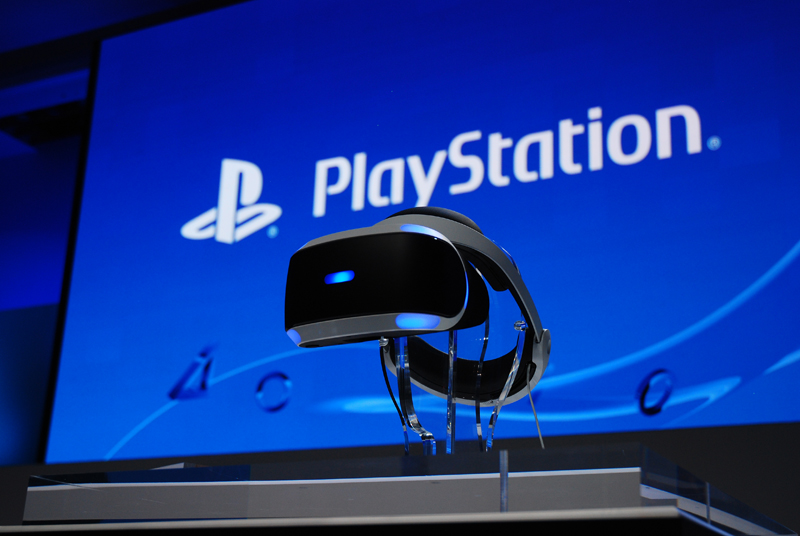
It would appear that Sony has a few things to show us as well, as the company just started sending out invites to their exclusive PlayStation VR press event. This event will be taking place during the Game Developer Conference in San Francisco on March 15th. While in no way a surprise, it seems that Sony is having their own run on the virtual reality highway, and what has been announced so far regarding it seems pretty promising.

Not to mention that Sony originally unveiled their VR project – at that time dubbed Project Morpheus – all the way back in 2014 and has been bringing improvements to their PlayStation VR headset since. Apparently, one of the latest updates to it was the addition of a 120 Hz capable OLED display together with re-projection technology that will allow users to transform their experiences.

However, ever since that moment, the company went rather quiet on what they were preparing with the virtual reality headset, to only speak out now. The PlayStation VR is scheduled to be released in the second half of this year, only a little later than competitors’ own releases (Oculus Rift, HTC Vive, etc.). However, the company is keeping things rather hushed up until the fateful day of the press event that has been planned.

The invitations that have been sent out so far read that this is an invitee-only event that will begin at 2 PM PT and include hands-on demonstrations of what the new PlayStation VR is truly capable of. The event is scheduled to last roughly 4 hours, with the doors opening an hour prior to the presentation.

This will mark the first time in nearly half a year when Sony is willing to talk about their endeavors in the area of virtual reality since their last announcement that was made at Paris Games week in October 2015. Now, the only problem for individuals who are trying to stay up to date and present in the world of technology would be which event to attend, as Apple is holding its own on the very same day.

Image Source: 1

Filed Under: Tech & Science Tagged With: PlayStation VR, sony, Sony Press Event, Sony Virtual Technology

How Facebook Changes the Internet and the World

February 23, 2016 By Nancy Young Leave a Comment

How Facebook Changes the Internet and the World

While the particular brand is merely one of many that have a major impact on the online environment, it is vital to realize just how Facebook changes the internet and the world. There is a number of powers currently at work in the world we live in, and the internet is rapidly gaining even more ground in our lives than it has before.

Just recent reports are stating that the number of internet users on a global scale grew by 300 million individuals in the last year. So while at the end of 2014 there were 2.9 billion internet users globally, the end of 2015 marked the 43% milestone – 3.2 billion people online were reported to be connected to the internet in one way or another. That includes having a data plan on your phone, portable hotspots, cable or fiber and so on.

The reason behind the increase is most definitely not single. Along with the fact that prices for data have gone down and data package variety has increased in a dynamic manner, more people were capable of gaining access to a method of going online, even in the case of lower incomes. While it is not a globally valid fact, 2014 also registered an increase in global incomes, making the price of being online frugal in some places.

Mobile broadband coverage is another contributing factor that a recent study Facebook has done in regards to the state of connectivity post 2015. More than 400 million individuals were taken into the range of 3G or 4G connectivity as carriers expanded the number of areas where mobile data functions. It should be no surprise that by the year we are in now, a staggering amount of the global internet traffic is done mostly via mobile means. While in first world countries such as the United States, mobile internet is a thing of comfort and flexibility, there are parts of the world that only have that as their only method of going online.

However, that is not the only thing that Facebook has been doing lately. Apparently, with the use of a technology involving artificial intelligence learning machine, the tech giant is using its immense reach and the social network’s photo tagging features to create an enormous map of where people live.

This will yield the company even more data regarding the state of connectivity that could help with their study and elucidate factors such as population density and its impact on connecting to the Internet. Such a large scale move could also lead to developing a method of handling and managing natural disasters in the future. So far, Facebook has managed to map 21.6 million square kilometers across the globe with the use of 350 terabytes worth of images.

Image Source: 1

Filed Under: Tech & Science Tagged With: Facebook geo-tagging, Facebook study, Facebook technology, State of Connectivity 2015

NASA Is Building An Improved Hubble Telescope

February 19, 2016 By Nancy Young Leave a Comment

NASA Is Building An Improved Hubble Telescope

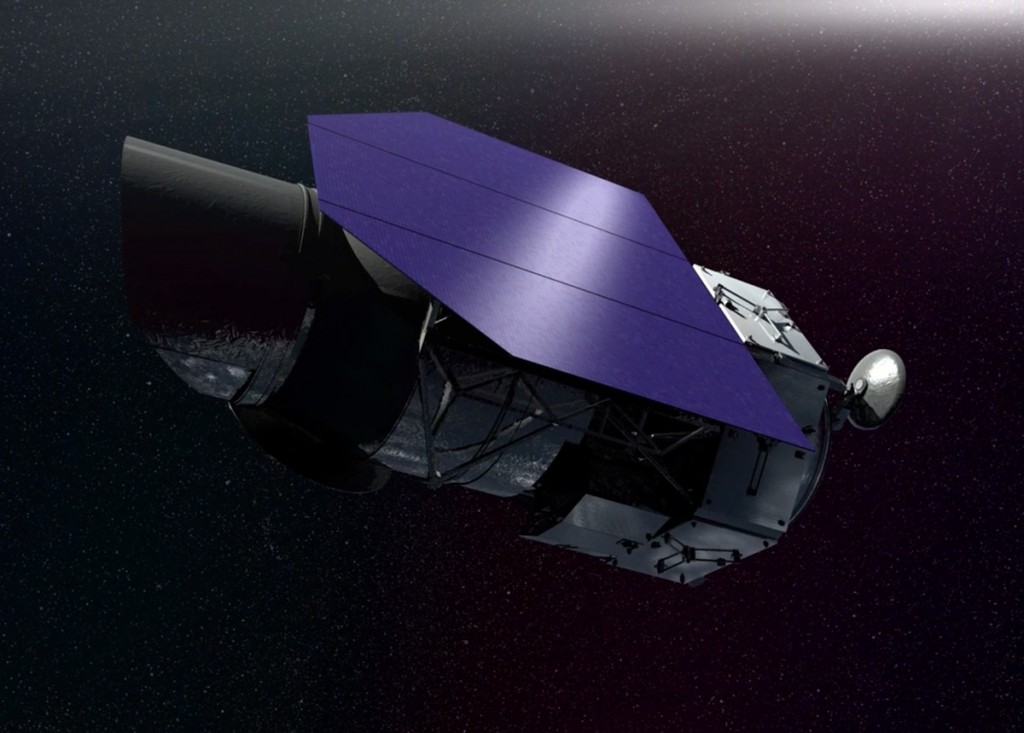
It would seem that the grounded FAST telescope is not the only one aspiring to places further away as NASA is building an improved Hubble telescope, featuring a field of view 100 times wider than before. The new telescope being built by the National Aeronautics and Space Administration has been dubbed the Wide-Field Infrared Survey Telescope (WFIRST) and is expected to be put to work in mid-2020s.

The space telescope is being built with the aspiration of searching for alien worlds beyond our solar system as well as a further study of dark energy and dark matter and their mysterious effects. The two objectives may seem wildly different from one another, but the former comes as a complement to already existent Kepler mission as well as the upcoming Transiting Exoplanet Survey Satellite project. The latter is simply a continuation of what scientists have been interested and baffled by for years.

Thanks to its construction, the WFIRST telescope will feature a new, wide-field survey tool that is accompanied by a coronagraph instrument that helps filter out effects such as glare from stars and reflected light. These usually make it hard for researchers to spot things such as dark matter and dark energy. But removing that factor also helps produce measurements of chemical composition of atmospheres of other worlds.

WFIRST will be able to measure with much better precision not only distances, but also tri-dimensional positions and shapes of distant galaxies, providing scientists with much better insight regarding the evolution and workings of the universe.

Once completed and sent out in outer space, the WFIRST telescope will take its position in the Earth-sun L2, a location that is considered a balance point situated at approximately 1 million miles from our planet, in a directly opposite orientation in relation to the sun.

The WFIRST telescope will be taking onto multiple quests of discovery, and thanks to the improved capabilities that it comes will, will certainly open up new paths of research for scientists, even in topics such as the growth of cosmic structures, cosmic expansion that is believed to happen with time, physics of atmospheres, and other top priority tagged issues of the astronomical community.

Image Source: 1

Filed Under: Tech & Science Tagged With: Dark energy study, Dark matter study, Hubble Telescope, New NASA Telescope

The Remedy to Urban Beliefs of Robot Uprising

February 17, 2016 By Nancy Young Leave a Comment

The Remedy to Urban Beliefs of Robot Uprising

Researchers at the Georgia Institute of Technology say they may have figured out the remedy to urban beliefs of robot uprising. Possibly one of the most popular themes in science fiction works and the like, the idea that robots created by mankind would one day become sentient and turn against their creators is an idea that strikes fear in many.

Now, this hasn’t so far been a real issue as the robots created up to this point in time are still far from becoming sentient and capable of getting at the level where they would make decisions of the likes found in Sci-Fi novels by themselves. However, it’s very well known that artificial intelligence is the focus of many tech giant companies out there, with some of them currently having entire departments focusing their finances and man force in order to develop AI’s known capabilities.

The methods that these companies apply is by devising systems that are capable or learning through experience. Anyone has, at one point, come in contact with system learning how to ‘behave’ according to the profile of the one using them is displaying. The simplest example would be the way Google searches work these days.

By gathering data about the kind of websites you visit, the things you post, the things you normally look up, what you type, what you watch and what you listen to, Google now makes it easier to find personalized results for you based on what it has learned about the user.

That’s the basic idea behind robot ‘psychology’ too. By exposing robots to multiple fields that they can draw their knowledge from, their prediction system would – in time – allow them to achieve outstanding levels of artificial intelligence.

However, this takes us to the main point that the scientists at Georgia Institute of Technology are trying to make; researchers and great scientific minds alike believe that a robot uprising is not out of the question when the robots will reach a certain level of understanding.

Which is why researchers have also tried to think of a method to prevent that from happening, even if we’re possibly a few decades early. They believe that by delivering good moral messages to robots, they may learn to peacefully live with humans. The first idea that the scientists thought of were actually fairy tales – a very simple method of teaching robots the difference between right and wrong, good and bad, similarly to how adults do with their children.

That way, robots may be able to adopt the values of the human society as it is nowadays.

Image Source: 1

Filed Under: Tech & Science Tagged With: artificial intelligence, Robot morality, Robot Uprising, Sentient Robots

Why Gardening in Space Is Important and Insightful

February 16, 2016 By Nancy Young Leave a Comment

Why Gardening in Space Is Important and Insightful

While more information about it was symbolically released around Valentine’s Day in order to make for a sweet nod to the holiday, here’s why gardening in space is important and insightful. Also recently mentioned in the Reddit AMA Scott Kelly – astronaut who has, at this point, lived on the International Space Station for nearly 10 months – did from the ISS, it would seem that scientists are more than just a little interested in the information they can gather from growing and harvesting plants in outer space.

The plants that were chosen for this experiment were a breed of Zinnia that underwent the Veggie ground control experiment at NASA’s Kennedy Space Center in Florida and simultaneously on the International Space Station. Recently, both were harvested and studied to see what impact growing them in a zero gravity and harsh outer space conditions had on the plant, in comparison to one that was grown in a similar method on Earth’s surface.

Earlier reports from the ISS mentioned that the Zinnia plants up there had an unexpected fungus growth occurrence that resulted in their withering. However, some of the plants managed to survive to the harvest day that was the 14th of February. After Scott Kelly managed to complete harvesting the Zinnia plants, he provided the researchers back on earth with a complete report regarding how to effectively grow plants in outer space.

An experiment such as this one, which seems small scale on first look can actually end up having ground-breaking results when the knowledge is applied on a longer span of time in the future. Considering mankind is planning to one day find a method of populating the red planet, Mars, gardening and farming knowledge such as that changes in nature when applied to the wildly different conditions of outer space.

Researchers have multiple things to worry themselves with when it comes to growing plants in outer space. Things such as long-duration seed stow and germination, the effect of pollen on the crew’s health and even things such as the psychological effect on individuals who would be in space for a prolonged time.

A NASA mechanical engineer working on the Veggie experiment explained how blooming flowers of the Zinnia plants are a very good demonstration for sustainable food crops, even in a harsh place such as the International Space Station or even beyond. With sustainable food crops, mankind can hope to be able to prolong manned mission durations and a possible method of sustenance for future trips.

Image Source: 1

Filed Under: Tech & Science Tagged With: International Space Station, ISS, Scott Kelly, Zinnia Plants on ISS

Russian Scientists Are Preparing to Defend Earth from Asteroids

February 15, 2016 By Nancy Young Leave a Comment

Russian Scientists Are Preparing to Defend Earth from Asteroids

It would appear that we are in good hands as Russian scientists are preparing to defend Earth from asteroids. Should that ever occur, of course. One of the major fear of mankind as a species living on a rock in space has obviously always been having other, smaller rocks knock right into ours and wipe us clean off the planet and make us share the same fate as the dinosaurs did.

Debris and passing objects in outer space have a tendency to hover in between the gravitational pull of various larger bodies. However, depending on a number of factors, it not unlikely for these objects to enter a collision course with larger planets at times, resulting in what cannot be perceived as anything other than disaster.

While photos taken of the other planets and natural satellites in our solar system show a lot of scarring caused by asteroids, meteorites and comets onto their surface, our planet is surprisingly smooth and untainted. Even if it also has had its fair share in the past.

Naturally, in order to avoid such happenings, mankind has developed a system to repel, destroy or change the course of objects that come near the Earth’s atmosphere. However, we do require years, if not decades of preparation in order to be able to withstand such happenings. While so far, mankind has used ways of changing objects’ trajectories in order to avoid impact, there are news of an asteroid named Apophis coming dangerously close to planet Earth in the year 2036.

And because of that, Russia has announced via the Russian news agency TASS that scientists are currently in process of tweaking ballistic missiles ICBMs and testing their capabilities in expectation of this asteroid. However, the ICBMs and remotely controlled ballistic missiles that deliver nuclear weapons, designed to be capable of completely destroying bodies that have 20 to 50 meters in size.

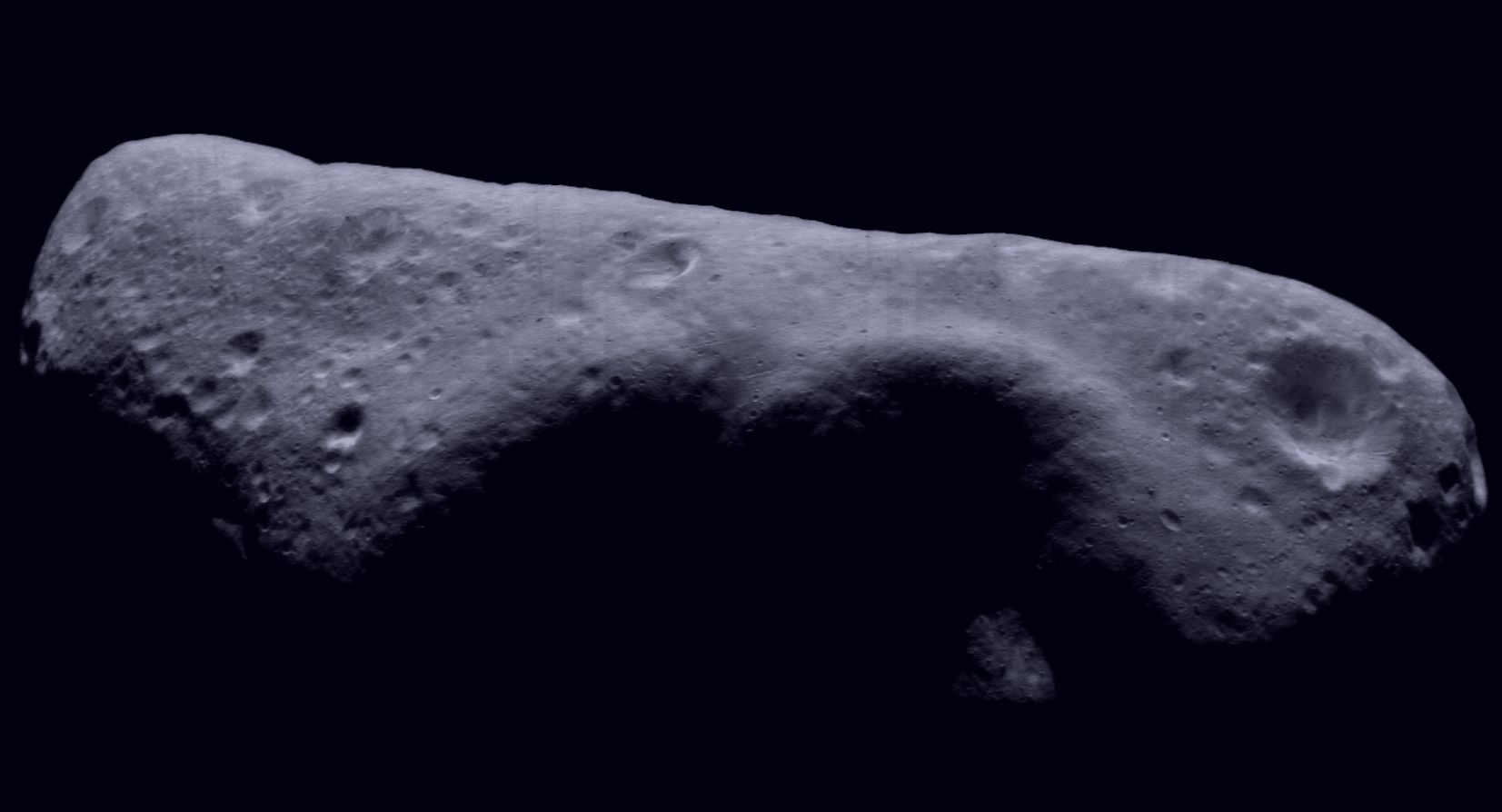
But those are meteors, mere portions of larger bodies. In case of the asteroid 99942 Apophis, it is a near-earth object that scores a diameter of nearly 325 meters and may impose some complications. An asteroid the size of Apophis is believed to impact Earth roughly every 80,000 years.

Scientists will require millions of dollars of funding as well as government permission to improve and prepare missiles capable to deal with an asteroid that size. Given that it’s about nuclear weapons, all this is easier said than done.

Image Source: 1

Filed Under: Tech & Science Tagged With: 99942 Apophis, Apophis Asteroid, asteroid impact avoidance, Asteroid impact on earth

  • « Previous Page
  • 1
  • …
  • 14
  • 15
  • 16
  • 17
  • 18
  • …
  • 36
  • Next Page »

Subscribe to Blog via Email

Enter your email address to subscribe to this blog and receive notifications of new posts by email.

Join 11 other subscribers

Recent Articles

police handcuffs man

German Man Probed In Poisoning That Killed 21 Employees Since 2000

June 29, 2018 By Kenneth Scott Leave a Comment

Chicken wings bar

Intoxicated South Carolina Man Punches Waitress Who Refused to Serve Him Alcohol

June 29, 2018 By Karen Jackson Leave a Comment

gaming

New Zealand gamer Who Flew Halfway Across The World for Virginia Teen Gets Shots By Her Mother

June 28, 2018 By Cristopher Hall Leave a Comment

party

Former Virginia Tech Freshman Sentenced to 50 Years in Prison for Stabbing a Girl to Death

June 28, 2018 By Roxanne Briean Leave a Comment

bonfire

British Couple Sentenced to Life in Prison for Torturing and Murdering French Nanny

June 27, 2018 By Deborah Campbell Leave a Comment

pay phone

Texas Father of Girl Disappeared in the 80s Ignored by Authorities

June 26, 2018 By Cristopher Hall Leave a Comment

bottled water

San Francisco Woman Threatened to Call Police on Girl Who Sold Ice Water for Disneyland Trip

June 25, 2018 By Roxanne Briean Leave a Comment

Maplewood Park

Missouri Man Robbed by Date and Accomplice in Park

June 22, 2018 By Nancy Young Leave a Comment

coding

New York Man Sentenced in Cyberstalking Former Girlfriend, Mailing Drugs to Her Dorm

June 22, 2018 By Deborah Campbell Leave a Comment

headphones

Bose Poised to Launch Sleepbuds, In-Ear Headphones That Help You Sleep

June 21, 2018 By Nancy Young Leave a Comment

Police light

Intoxicated Female Driver in Custody for Pulling Arresting Officer by the Hair

June 21, 2018 By Kenneth Scott Leave a Comment

kitchen

Restaurant Manager Arrested and Charged in Shooting Death of Co-Worker over Negative Yelp Reviews

June 20, 2018 By Karen Jackson Leave a Comment

plastic container

Pennsylvania Couple Charged in Violent Death of Infant Discovered Buried in Cat Litter

June 19, 2018 By Cristopher Hall Leave a Comment

tailpipe

Minnesota Teen Gets Head Stuck In Oversized Tailpipe Winstock Music Festival

June 18, 2018 By Karen Jackson Leave a Comment

Pages

  • About Us
  • Contact us
  • Privacy Policy
  • Privacy Policy GDPR
  • Staff
  • Terms and Conditions

Recent Posts

  • German Man Probed In Poisoning That Killed 21 Employees Since 2000 June 29, 2018
  • Intoxicated South Carolina Man Punches Waitress Who Refused to Serve Him Alcohol June 29, 2018
  • New Zealand gamer Who Flew Halfway Across The World for Virginia Teen Gets Shots By Her Mother June 28, 2018
  • Former Virginia Tech Freshman Sentenced to 50 Years in Prison for Stabbing a Girl to Death June 28, 2018
  • British Couple Sentenced to Life in Prison for Torturing and Murdering French Nanny June 27, 2018
  • Texas Father of Girl Disappeared in the 80s Ignored by Authorities June 26, 2018
  • San Francisco Woman Threatened to Call Police on Girl Who Sold Ice Water for Disneyland Trip June 25, 2018

Categories

  • Business
  • Entertainment
  • Finance
  • Headlines
  • Health
  • Life
  • Nature
  • Science
  • Sports
  • Tech & Science
  • Travel
  • Uncategorized
  • United States
  • World

Copyright © 2026 ArgyllFreePress.com
About · Privacy Policy · Terms of Use · Contact