Argyll Free Press

Growing News Network

Sunday, May 3, 2026
Log in
  • Business
  • Finance
  • Sports
  • Tech & Science
    • HP Envy 4500 Review
    • LG Optimus 170 Review
    • iPod Touch 6th Generation Review
    • HTC One M8 Accessories Set-up
    • Surrealist Games You Must Play
    • Hisense Sero 8 Review
    • Dell Latitude e7440 Review
    • HP Laserjet 1536dnf mfp Review
    • Garmin Fenix 2 Review
    • Skype Vs Viber
    • Best Video Conferencing Software
    • Sony mdr 1r Headphones Review
    • Canon Rebel t3i Review
    • Sennheiser Momentum 2-0 Review
  • Travel
  • Headlines
  • Health
  • United States

Fertilizers Are Killing the Planet

May 20, 2016 By Nancy Young Leave a Comment

"Algae resulted from fertilizer use"

Leaked fertilizers cause the production of algae that make water undrinkable.

Usually, when looking for the people and the chemicals responsible for climate change and the increased toxicity levels on our planet, we turn our attention to power plants, the oil industry, and fossil fuels. When it comes to pollution, nobody thinks about farms, but the truth is fertilizers are killing the planet as much as fossil fuel exploitation is.

The Nobel Prize laureate Carl Bosch and his associate, Fritz Haber, are the inventors of the fertilizer. According to the estimates, the two men saved roughly 40 percent of the world population with the chemical compound, but now, things are going south for the farms that prefer to use the synthetic version instead of the eco-friendly one.

It seems that the runoff that makes its way into rivers, lakes, streams, and oceans boosted the amount of algal blooms and “dead zones” all over the United States. From the Great Lakes to the Gulf of Mexico, Water Works companies are complaining that they are spending from $4000 to $7000 per day to purify the drinking water, stripping it of the nitrates that come from the excess fertilizer.

Moreover, according to an article published in the “Geophysical Research Letters” journal, animal agriculture and fertilizer use is one of the main contributors to air pollution all around the world.

This is not the first study to point out the fact that farms are salvation and damnation at the same time. A couple of months ago, an independent researcher was claiming that the methane produced by cattle is thinning the ozone layer more than the oil industry.

The previously cited study may not be so drastic, but it does reach similar conclusions. Unfortunately, ever since the chemical fertilizer was invented, the world population boomed. If its use were to be banned, billions would starve.

The author of the paper argues that countries in which the level of air pollution has already reached alarming rates, like the United States and China, farms should redirect their attention to the more expensive, but healthier eco-fertilizers.

On the other hand, countries in Africa where air pollution levels are not concerning could continue to use the chemical product until an alternative is found.

Fertilizers are killing the planet, and we need to find a solution to replace them gradually with something greener.

Image source: Wikipedia

Filed Under: Tech & Science Tagged With: air pollution, fertilizers, water pollution

Bill to Ban Abortions after 19 Weeks Heads to South Carolina Gov’s Desk

May 19, 2016 By Nancy Young Leave a Comment

'Gov. Nikki Haley Celebrating the Month of the Military Child'On Tuesday, the state legislature approved a bill designed to prevent women from having abortions after 19 weeks. It is now up to South Carolina governor Nikki Haley (pictured above) to decide whether the state will become the 17th to pass abortion restrictive legislation.

In March, Gov. Haley said she would certainly sign it off but she needed to check details before it reached her office.

About a dozen more states ban abortions after 19 weeks. In three states, legislation has been blocked by courts at feminists’ initiative. The U.S. Supreme Court hasn’t ruled yet whether the ban was constitutional.

South Dakota passed a similar law, which is slated to come into effect this summer. Utah now asks doctors to use anesthesia on the unborn babies if they are being aborted after 20 weeks.

In other states, regulators passed laws requiring admitting privileges for clinicians and one day of thought before the procedure for mothers. Many states have banned a popular abortion method used in the second trimester to crush the skulls and bones of the babies before taking them out.

Rep. Wendy Nanney, who proposed the new piece of legislation in South Carolina, is confident that the new rules would help the state “get rid of abortion altogether.” Nanney added that life begins at the conception so the new legislation does nothing less than protecting human life.

The bill passed in the House by a 79 to 29 vote. The Senate passed it by 36 to 9 two months prior.

Nevertheless, there are some exceptions to the new regulation. If the mother is in danger of losing her life or a doctor decides that the baby cannot be delivered alive, abortion is legal. But viable babies with severe ‘fetal anomalies’ can no longer be aborted under the new law.

The issue around fetal anomalies has been keeping the bill blocked in the Senate for years since Senators have fiercely debated over whether it should be a woman’s choice to terminate her baby if the child will be born disabled. In the end, opponents were able to obtain only an exception for the woman’s life.

Only four of the other 16 states with restrictive abortion legislation allow children to be aborted if a doctor believes that they would be born dead or die during delivery. South Carolina lawmakers copied Georgia’s legislation on this particular matter. Georgia banned 20-week abortions four years ago.

Image Source: Flickr

Filed Under: United States Tagged With: abortion after 19 weeks, abortion laws, governor Nikki Haley, South Carolina

Air Pollution Has Reached Unimaginable Levels, WHO Report

May 14, 2016 By Nancy Young Leave a Comment

pollution

Are you among the 3.9 billion people in this world who live in a city? You might just breathe polluted air, according to the latest report of the World Health Organization’s (WHO).

Not only are you inhaling toxic air, but you’re more likely to develop asthma or heart disease. WHO estimates that more than 80 percent of those living in urban settings exposed to air quality levels that don’t meet WHO’s limits.

The latest Global Urban Ambient Air Pollution report doesn’t bode good news, showing a dramatic difference between poorer and wealthier cities. Among low- and middle-income countries, 98 percent of their cities have heavily polluted air while the percentage drops to 56 in cities of high-income countries.

All of the 3,000 cities included in the report are have populations over 100,000, and WHO has collected information about their air quality. The organization is also responsible for setting air quality guidelines to help keep the level of air pollution under the limit.

This means local authorities are encouraged to take action, because the fine particulate matter that pollutes the air has the potential to pose serious health risk to the cities’ inhabitants, including premature death from asthma, lung cancer, and other diseases.

According to a recent study, air pollution plays a significant role in the death of 5.5 million people annually. Since most of this awful business is not caused by the actions of individuals, the responsibility of air quality control falls on the shoulders of governments.

But there’s also some good news: if concerned governments step up and take action, it’s fairly easy for these cities to increase their air quality.

The report also included data showing that over the 5 years, “more than 50 percent of the cities in high-income countries and more than 33 percent of the cities in low- and middle-income countries [..,] reduced their air pollution levels by more than 5 percent.”

WHO revealed that cities in the Southeast Asian regions and in the eastern Mediterranean have the worst air globally, where air pollution levels exceed five to 10 times the limits set by the organization.

Even though the worst air is usually found in the biggest cities on the globe, there are also smaller cities – like Onitsha, a Nigerian city with a population of 350,000 – which also top the list.
Image Source: Your Story

Filed Under: Health Tagged With: air pollution, low-income countries, WHO report

Podcasts Helps Researchers Locate Words in the Brain

April 30, 2016 By Nancy Young Leave a Comment

neuro

Podcasts, audiobooks, and digital storytelling, in general, have spiked over the last few years, making commute tolerable and helping us evade even if we don’t have a book or movie at hand.

But researchers at the University of California, Berkeley, were curious what happens in our brains when we listen to podcasts, so they had volunteers listen to stories from “The Moth Radio Hour” while their brain activity was recorded by an fMRI machine.

This experiment has helped them gain insight into the so-called “semantic system” in the human brain. The results could one day be translated into treatments for injuries that affect the ability to speak.

Alex Huth, the study’s lead author and one of the volunteers, listened to more than two hours’ worth of podcast episodes while positioned inside an fMRI machine. This helped him and his team create a map of sorts that shows how words are interpreted in the brain.

“Our subjects love to be in this experiment because they can just lie there and listen to these really interesting stories,” explained Huth.

However, because they kept laughing and destroying fMRI data with their movement, the researchers had to 3-D-print personalized “head cases” for each subject to maintain their heads stable.

The brain’s outer layer of tissue – the cerebral cortex – is known for its role in some of our higher functions, such as language abilities. Thanks to the fMRI recordings, researchers were able to see how this brain area reacted to the storytelling.

But instead of just observing which parts of the brain lit up, they tried to match the active region to particular words that played when that part fired up.

This process allowed researchers to create a map of word clusters linked to activity in various parts of the brain. Unlike previous beliefs, they noticed that both halves of the brain were involved in the semantic system, as over 100 areas in the cerebral cortex had activated during the experiments.

If a word had more meanings or was part of a memory network, more parts of the brain flared up. Take the word ‘dog,’ for example: when we hear it, we automatically envision one, already sense the smell and the feeling of the fur. But we also think about our childhood dog and the memories we have of it.

More than showing which parts of language fall in which region of the brain, the study allowed researchers to focus on a particular area or category of word types to see how they’re processed by the brain.
Image Source: Neurowiki

Filed Under: Tech & Science

Northern Lights Arise on Planet Jupiter

March 23, 2016 By Nancy Young Leave a Comment

extraordinary light show whenever solar storms collide with their magnetospheres

While people travel all the way to the northernmost circle of planet Earth to witness the faint but excruciatingly beautiful aurora borealis, planets like Jupiter get an extraordinary light show whenever solar storms collide with their magnetospheres. A group of scientists recently conducted a study on the effect of solar storms on Jupiter and observed an X-ray aurora that is about eight times brighter than what we are used to back on Earth.

The study is the first of its kind and was conducted by researchers from University College London (UCL) who were given access to NASA’s Chandra X-Ray Observatory. The phenomenon that takes place when a solar storm erupts and flies outwards towards the planets of a solar system had never been studied on other planets than ours before.

William Dunn, the author of the research, has used this study to achieve more than just witness the light shows that solar storms spark up at the poles of Jupiter. He believes that the reason behind the luminosity and brightness of the aurora on the gas giant is the result of the way Jupiter’s magnetosphere and the solar wind interact. Because both the magnetic field and the solar wind that comes into collision with it are large, powerful structures, the effect is magnified by a huge amount.

Dunn, Ph.D. student at UCL Mullard Space Science Laboratory, believes that studying this type impact and understanding its workings can help scientists better grasp the way in which magnetism works in the case of exoplanets, neutron stars, and brown dwarf stars.

According to the study, when the solar wind intensifies to the point that we can say a solar storm is taking place, and it hits Jupiter’s magnetosphere, it moves the boundary of this field almost 1.2 million miles through space. At the point of impact, the northern lights create a show of high energy X-rays that is larger than Earth’s very surface.

The study was completed by monitoring the emission of X-rays at the point of impact on Jupiter during two observations lasting a total of 11 hours. Based on the initial results, the researchers used the data to pinpoint the particular areas that the X-rays were coming from and further study the phenomenon.

A NASA spacecraft named Juno was launched back in 2011 and is close to reaching Jupiter. Its mission is to settle in a polar orbit when it reaches the gas giant in July and study the planet a lot closer than it has ever been done before.

A paper describing the entire study and its conclusions was published yesterday in the Journal of Geophysical Research – Space Physics.

Image Source: 1

Filed Under: Headlines Tagged With: Chandra X-Ray Observatory, Jupiter, Jupiter northern lights, nasa

Much Awaited Apple Press Event Takes Place Today

March 21, 2016 By Nancy Young Leave a Comment

The event that has filled the internet with predictions regarding the upcoming Apple releases

In less than 5 hours from now, the event that has filled the internet with predictions regarding the upcoming Apple releases will be taking place at 10 AM Pacific time today. Finally, the public’s theories regarding a possible new iPad model, the phone that is iPhone 5 sized but includes iPhone 6 standard of hardware as well as some news about what’s in store for the future of Apple Watch may be finally confirmed. Or otherwise, there’s no telling what surprises Apple has in stock for us.

As a pre-emptive move on behalf of Apple, in expectance of the event, the Apple Store has been closed temporarily since 4 AM PT, putting a pause to online shopping for now. According to reports, the website will be updated with the new suspected purchases once the press event begins later today and be recommissioned as a result.

Accessing the store website is still possible right now, allowing you to browse products, but effective purchases are offline. Attempting to make a purchase will greet you with the following message: “We can’t wait to show you what we have in store. Our virtual doors are just about to open. Thank you so much for your enthusiasm and your patience as we work to get everyone in as quickly as possible. Keep checking back, because it won’t be long now.”

However, those expecting some huge product announcement may end up slightly disappointed as it’s not very likely for Apple to announce major mobile devices during this time of year. It is more usual for the tech giant to announce or release its upcoming state of the art devices during fall, September and October scoring as the most likely time for them to do it.

Several reports speculate that this change of pace in Apple’s conduit may be the result of dwindling sales that the company seems to be confronted with as the market becomes diversified with highly performant devices that compete head to head with the former’s.

Apple’s tag line for the press event taking place today is ‘Let us loop you in’ which could very well be a teaser for one of two possible versions of the story. One is the suspected release of a whole new series of Apple Watch bands including a fashionable version of the Milanese Loop. The other may refer to where the Apple headquarters is located – 1 Infinite Loop – which would suggest something relating directly to their home office and appointed infrastructure.

Image Source: 1

Filed Under: Tech & Science Tagged With: Apple announcements, Apple Press Event, Apple upcoming releases, New Apple products

More Progress Made by NASA On the ‘Journey to Mars’ Project

March 16, 2016 By Nancy Young Leave a Comment

'Journey to Mars' project

The ‘Journey to Mars’ project that is forecast to be ongoing for the next several decades, planned to send manned space crafts to the surface of Mars is already in the works. Until human crews actually get to leave on the trip to the Red Planet, multiple test runs, lander and probe launches and many more will have to be done as prerequisites as humanity setting foot on another planet of our solar system is not an event to be taken lightly.

While NASA is already in process of recruiting the ‘Class of Mars’ that will select a mere 13 individuals out of thousands of applicants to be trained and maybe one day be sent out to the red planet, the real preparation is ongoing on multiple fronts at the same time.

Only recently, the National Aeronautics and Space Administration has made upgrades to a rocket engine and began testing it in preparation for the crewed flight that will take place and take humans outside of Earth’s orbit for the first time in 45 years.

The engine in question dubbed the Space Launch System – or SLS – has seniority, having previously helped launch no less than five different space shuttle missions. Its last launch took place back in 2011, so it was necessary that the rocket engine would receive a well-deserved upgrade. Thus, on the test flight that it was subjected to on March 10th, last week, the SLS was equipped with four RS-25 engines in its core and showcased its capabilities for an entire 8-minute long launch. This officially marked the first flight certification test of the engine since its update.

The SLS rocket engine, as it as right now, is a repurposed piece from the Shuttle program and will help carry a human crew to the surface of an asteroid by year 2025 and to the surface of planet Mars in the 2030s. Before these two assignments, however, the SLS is scheduled to take flight in 2018 to carry an unmanned Orion capsule into orbit along with 13 cubesats. Depending on the result of the launch, as well as the capability of engineers and scientists to handle anything that the engine might be lacking for greater-scale missions, it will be decided whether the next mission remains set for 2023 or a later date.

Image Source: 1

Filed Under: Tech & Science Tagged With: nasa, Rocket Engine, SLS Engine, Space Launch System Test Flight

Watching the Solar Eclipse from Outer Space

March 14, 2016 By Nancy Young Leave a Comment

catch the recent total solar eclipse

Unless you live in the Pacific or were on spot enough to catch the recent total solar eclipse that took place on March 9th on any of the live streams that were made available online, there is one more chance for you to witness a rare event. This time around, however, you may find yourself in more awe than you would have if you’d been watching from the surface of the earth.

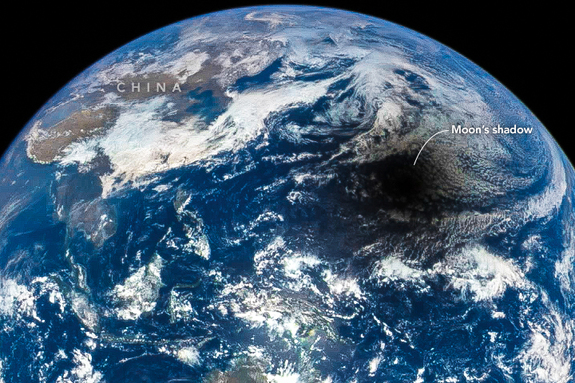
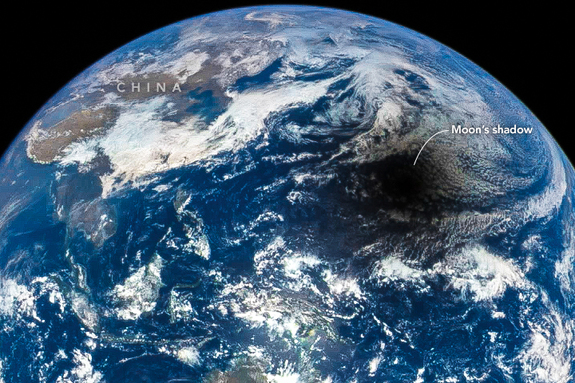
On behalf of Deep Space Climate Observatory satellite – also dubbed DSCOVR – a spacecraft that is currently stationary at nearly 1.5 million kilometers away from the Earth and towards the sun, NASA together with the U.S. National Oceanic and Atmospheric Administration (NOAA) released a video depicting the solar eclipse as it was witnessed from outer space on the fateful day of March 9th.

The video itself is made of multiple images that were combined to display the looming shadow that the moon made when forming a perfect line with the Earth and the Sun on either side. The shadow can be seen slowly moving from south-west to north-east across the Pacific Ocean before the ending of the eclipse on early March 9th.

The DSCOVR is a satellite that is in charge of watching solar eruptions – also known as coronal mass ejections – and emissions of powerful solar wind that it notifies the Earth in less than 30 minutes after first observing an event of such nature. However, other than its very proficient sensors, the DSCOVR also happens to be placed at a very fortunate vantage point that allows it to capture full-scale images of planet Earth using its EPIC – Earth Polychromatic Imaging Camera. This satellite is also responsible for the popular pictures  and gifs that were travelling on the internet last year on July 16th, of the moon supposedly ‘photobombing’ the Earth.

Ever since its launch in February 2015, DSCOVR has managed to capture numerous images of our planet and its surroundings. While the coming of the total solar eclipse had been calculated and foreseen for a fair while, the decision to capture it on camera via the DSCOVR was a last minute decision.

Because of that, calibrations needed in order to take a proper series of stills depicting the moon’s shadow passing over the Earth were not a hundred percent complete at the time of capture. However, scientists at NASA’s Goddard Space Flight Center in Greenbelt, Maryland, took it upon themselves to edit out the unnatural color selection that the pictures had originally been taken in and turn them into this video.

Image Source: 1

Filed Under: Tech & Science Tagged With: DSCOVR, how to pick a satellite tv provider, March 9th, total solar eclipse

MRO Is Celebrating 10 Years of Orbiting Mars

March 10, 2016 By Nancy Young Leave a Comment

NASA Mars Reconnaissance Orbiter

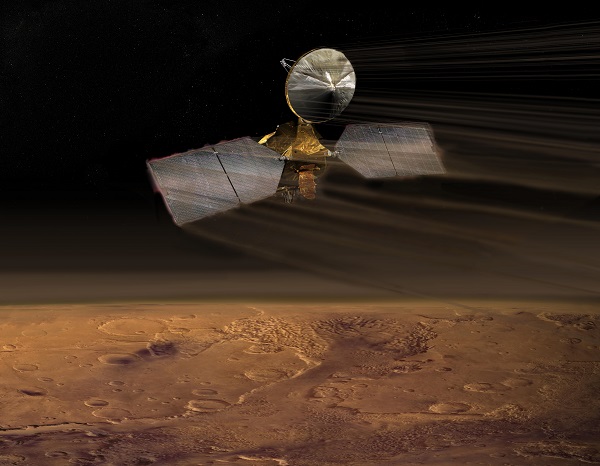
NASA Mars Reconnaissance Orbiter has now been in the Red Planet’s orbit for ten years, something that we celebrate this March 10th. The MRO is a spacecraft that NASA poured $720 million back in the early 2000s, and it was built alongside the Jet Propulsion Laboratory. After its launch on August 12th, 2005, the space shuttle successfully reached Martian orbit exactly ten years ago. After five months of aerobraking, the MRO entered its final position, joining up with five other active space crafts that had been doing the same since.

The MRO is responsible for a multitude of discoveries that humanity has made about the mysterious Red Planet, the very same that we one day hope to colonize and turn into our smaller home in space. Being equipped with an entire arsenal of scouting, surveying and analysis tools such as cameras, spectrometers, radars and many more, the MRO has transferred fantastic amounts of data back to Earth regarding the geology, weather, climate, stratigraphy and particular features of Mars’ surface.

The MRO mission was originally planned to last just a mere two Earth years, long enough for it to map the landscapes of Mars for potential future landing missions – manned or otherwise. Many such landings were, as a matter of fact, achieved by landers such as the Phoenix, further allowing mankind to explore and study particular areas of the Red Planet. A great amount of interest was shown towards the Martian Arctic where scientists believed they may find water ice.

Its two-year long mission got extended in the end, the Mars Reconnaissance Orbiter then taking upon the role of communication and navigation system for other probes travelling for the surface and orbit of Mars – whether they are rovers or problems.

However, as its mission began, the MRO took a considerable time to get its first pieces of visual data back to Earth. The first high-resolution image taken by the MRO happened as late as September 29th, 2006. Although the picture was taken from orbit, it showed a shocking amount of detail, being able to resolve items that were as small as 90 cm in diameter. One of such photos that were taken depicts the Candor Chasma region of Valles Marineris on Mars, showing geography that strongly resembles a place where rivers could’ve flown at one point in the very distant past; millions of years to be more exact.

The MRO mission is still, to this day, set to an indefinite duration and most likely, it will remain in commission for a long time to go.

Image Source: 1

Filed Under: Tech & Science Tagged With: Mars Reconnaissance Orbiter, MRO, nasa, Red Planet

Preparing for the Upcoming Total Solar Eclipse

March 7, 2016 By Nancy Young Leave a Comment

total solar eclipse

March 8th and 9th will mark very special days for anyone who likes to witness the rarer natural phenomena such as a total solar eclipse. Sadly, only skywatchers located in the Southeast Asia during those two days will be able to enjoy the entirety of it, while people situated in the Pacific islands will still be able to catch a partial eclipse.

And truth be told, that is a harshly limited amount of exposure. While this is not the kind of event that only takes place every hundred years or anything of the likes, it is still relatively rare. A total solar eclipse marks the moment when the moon passes between the Earth and the sun under a series of special requirements. Not only that the 3 need to be perfectly aligned, but the moon needs to be at a particular distance to the Earth in order to be able to cover up the entire sun on the skyline.

More precisely, this can only occur when the moon is at its perigee; also known as the moment when the Moon is at its closest point to our planet. This moment makes the moon appear larger in the night sky and also earns it the name of a supermoon.

Thus, once the alignment is complete, the moon will cast its more diffused penumbra and its concentrated umbra – the outer and inner shadow, respectively – mostly in the area of the Pacific Ocean.

The phenomenon will unfold in several locations on the surface of our planet, starting over Sumatra, Indonesia at 6 PM EST on Tuesday evening on the American time zone, then move over to Borneo, Sulawesi, continuing in a northeast manner across the Pacific Ocean and being barely noticeable close to the Hawaii before disappearing.

While the moon’s shadow will travel approximately 8,800 miles across the globe, its path (basically the diameter of the umbra) is merely 97 miles wide, restricting the zone where it will be visible to a very long and thin strip.

However, just because you’re not flying over the Pacific tomorrow doesn’t mean you can’t get to witness the total solar eclipse. With a little help from the Slooh robotic telescope will be capturing the event and streaming it to its service slooh.com here. You will be able to tune in at any time between March 8th 6 PM EST and 9 PM EST to watch it unfold.

Image Source: 1

Filed Under: Tech & Science Tagged With: skywatching, solar eclipse over the Pacific Ocean, total solar eclipse, total solar eclipse stream

  • « Previous Page
  • 1
  • …
  • 13
  • 14
  • 15
  • 16
  • 17
  • …
  • 36
  • Next Page »

Subscribe to Blog via Email

Enter your email address to subscribe to this blog and receive notifications of new posts by email.

Join 11 other subscribers

Recent Articles

police handcuffs man

German Man Probed In Poisoning That Killed 21 Employees Since 2000

June 29, 2018 By Kenneth Scott Leave a Comment

Chicken wings bar

Intoxicated South Carolina Man Punches Waitress Who Refused to Serve Him Alcohol

June 29, 2018 By Karen Jackson Leave a Comment

gaming

New Zealand gamer Who Flew Halfway Across The World for Virginia Teen Gets Shots By Her Mother

June 28, 2018 By Cristopher Hall Leave a Comment

party

Former Virginia Tech Freshman Sentenced to 50 Years in Prison for Stabbing a Girl to Death

June 28, 2018 By Roxanne Briean Leave a Comment

bonfire

British Couple Sentenced to Life in Prison for Torturing and Murdering French Nanny

June 27, 2018 By Deborah Campbell Leave a Comment

pay phone

Texas Father of Girl Disappeared in the 80s Ignored by Authorities

June 26, 2018 By Cristopher Hall Leave a Comment

bottled water

San Francisco Woman Threatened to Call Police on Girl Who Sold Ice Water for Disneyland Trip

June 25, 2018 By Roxanne Briean Leave a Comment

Maplewood Park

Missouri Man Robbed by Date and Accomplice in Park

June 22, 2018 By Nancy Young Leave a Comment

coding

New York Man Sentenced in Cyberstalking Former Girlfriend, Mailing Drugs to Her Dorm

June 22, 2018 By Deborah Campbell Leave a Comment

headphones

Bose Poised to Launch Sleepbuds, In-Ear Headphones That Help You Sleep

June 21, 2018 By Nancy Young Leave a Comment

Police light

Intoxicated Female Driver in Custody for Pulling Arresting Officer by the Hair

June 21, 2018 By Kenneth Scott Leave a Comment

kitchen

Restaurant Manager Arrested and Charged in Shooting Death of Co-Worker over Negative Yelp Reviews

June 20, 2018 By Karen Jackson Leave a Comment

plastic container

Pennsylvania Couple Charged in Violent Death of Infant Discovered Buried in Cat Litter

June 19, 2018 By Cristopher Hall Leave a Comment

tailpipe

Minnesota Teen Gets Head Stuck In Oversized Tailpipe Winstock Music Festival

June 18, 2018 By Karen Jackson Leave a Comment

Pages

  • About Us
  • Contact us
  • Privacy Policy
  • Privacy Policy GDPR
  • Staff
  • Terms and Conditions

Recent Posts

  • German Man Probed In Poisoning That Killed 21 Employees Since 2000 June 29, 2018
  • Intoxicated South Carolina Man Punches Waitress Who Refused to Serve Him Alcohol June 29, 2018
  • New Zealand gamer Who Flew Halfway Across The World for Virginia Teen Gets Shots By Her Mother June 28, 2018
  • Former Virginia Tech Freshman Sentenced to 50 Years in Prison for Stabbing a Girl to Death June 28, 2018
  • British Couple Sentenced to Life in Prison for Torturing and Murdering French Nanny June 27, 2018
  • Texas Father of Girl Disappeared in the 80s Ignored by Authorities June 26, 2018
  • San Francisco Woman Threatened to Call Police on Girl Who Sold Ice Water for Disneyland Trip June 25, 2018

Categories

  • Business
  • Entertainment
  • Finance
  • Headlines
  • Health
  • Life
  • Nature
  • Science
  • Sports
  • Tech & Science
  • Travel
  • Uncategorized
  • United States
  • World

Copyright © 2026 ArgyllFreePress.com
About · Privacy Policy · Terms of Use · Contact