Argyll Free Press

Growing News Network

Monday, February 2, 2026
Log in
  • Business
  • Finance
  • Sports
  • Tech & Science
    • HP Envy 4500 Review
    • LG Optimus 170 Review
    • iPod Touch 6th Generation Review
    • HTC One M8 Accessories Set-up
    • Surrealist Games You Must Play
    • Hisense Sero 8 Review
    • Dell Latitude e7440 Review
    • HP Laserjet 1536dnf mfp Review
    • Garmin Fenix 2 Review
    • Skype Vs Viber
    • Best Video Conferencing Software
    • Sony mdr 1r Headphones Review
    • Canon Rebel t3i Review
    • Sennheiser Momentum 2-0 Review
  • Travel
  • Headlines
  • Health
  • United States

Ceres Revealed Significant Traces Of Life’s Building Blocks

February 19, 2017 By Karen Jackson Leave a Comment

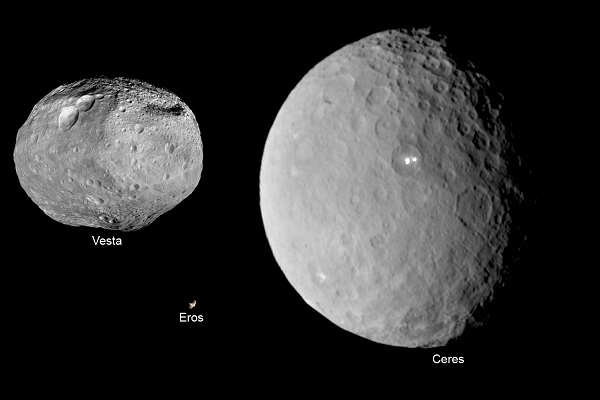
ceres

Ceres, the dwarf planet revealed traces of life’s building blocks, traces detected by the Dawn spacecraft.

A recently released study came with some significant news involving Ceres. The dwarf planet revealed traces of life’s building blocks, traces detected by Dawn. This latter is a NASA spacecraft.

For years now, science has been scouting the outer space in search of planets capable of holding life. Or at least ones which present it’s building discovery. According to a new study, they may have just found such a planet. On a somewhat unlikely space body.

Ceres is a dwarf planet, the 33 largest known space body of our Solar System. It is located within the asteroid belt situated between Mars’s and Jupiter’s orbits. It is also the belt’s largest object.

The dwarf planet seemed an unlikely location mostly due to its componence. This space body is composed of ice and rock. With an icy mantle and rocky core, it may have once held an internal liquid water ocean. And apparently, Ceres has many more secrets in store.

Back in 2007, NASA launched the Dawn space probe. Ever since then, the spacecraft has been studying the planet. Ceres is one of its two targets. Dawn is also studying Vesta, another well-known protoplanet.

And now, scientists released a new study about Ceres. This was published in the Science journal. Available online since February 17th, the paper was titled as follows. “Localized aliphatic organic material on the surface of Ceres”.

According to the research, Dawn revealed some interesting elements. Which show that Ceres might be hosting life’s building blocks. Or more exactly, it reported the presence of indigenously formed organic compounds.

These were detected by using Dawn’s equipment. The spacecraft has, amongst others, an infrared and visible mapping spectrometer. This revealed the following.

A very small area located in Ceres’s Inamahari crater may be holding organic compounds. This is located some 250 miles from the Ernutet crater. Which also revealed traces of such material.

Organic compounds were detected in an about 400 square miles area near the crater. Both Ernutet and Inamahari are situated in the planet’s northern hemisphere.

Simone Marchi went to offer additional details. One of the study co-authors, Marchi is also a Southwest Research Institute in Boulder, Colorado senior research scientist.

He stated as follows. Dawn’s discovery is very intriguing. Especially so as it traced a locally high concentration of organic materials. This could lead to strong implications in the astrobiology community, according to Marchi.

Ceres revealed traces of the following elements. It presents water ice, salts, and carbonates. And also ammonia-bearing hydrated minerals. Organic materials will now also be added to the list.

Dawn’s discovery also points out the following. Ceres sports the key ingredients for the development of life.

According to Marchi, the organic materials most likely have an internal source. They are unlikely to have arrived on an external impactor. The organic-rich areas also include materials which are endogenous to Ceres. More exactly, ammoniated and carbonate species.

Reportedly, the Ernutet crater rims are also apparently fresh. Which is in contrast to the overall region which seems to be ancient. And which is also heavily cratered.

Another element also supports the potential internal source of the organic material. Previous observations spotted fluid mobility on Ceres. And also presented the clear signatures of a pervasive hydrothermal activity.

Nonetheless, the formation process of Ceres’s organic material is currently unknown. More research on the matter will be needed.

Image Source: Wikimedia
Filed Under: Science

ExoMars Mission Has Been Fully Funded

February 14, 2017 By Roxanne Briean Leave a Comment

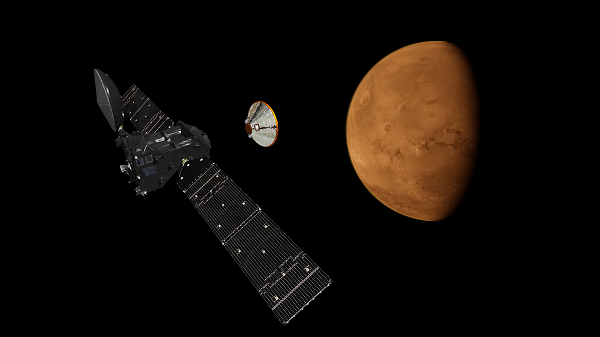
Mars lander

The upcoming ExoMars mission has been fully funded by EU officials.

The European Space Agency’s ExoMars mission had an uncertain fate after the test of the Schiaparelli lander ended in failure by crashing into Mars at high speed. However, it seems that the ESA managed to obtain the necessary funding for their upcoming mission.

Not many experts and scientists were expected to receive the green light to proceed with the ExoMars mission after disastrous results of the Schiaparelli module. It seems that the ministers from the European Union’s 22 member countries alongside representatives from Canada and Slovenia had more confidence in the ExoMars project. During their meeting in Lucerne, Switzerland, the ministers agreed to contribute the remaining $465 million required to start the ExoMars mission.

European officials have stated in the resulting resolution from the meeting that:

“The Agency is encouraged to strive to reap the benefits expected from the significant investments made through the ExoMars program, including those earmarked for the successful completion of the second ExoMars mission.”

Besides its uncertain future, the ExoMars mission also faced a number of budget shortfalls, which the ministers agreed to fill up while reasserting their faith in agency’s capabilities and the success of the mission. The highest contributors to the mission’s funds were Italy with $182 million, followed by the UK with around $87 million.

Scientists from the ESA are now steadily preparing for the second part of ExoMars mission which involves the landing of a rover as well as a surface platform on Mars. In preparation for the 2020 mission, the Trace Gas Orbiter which was deployed in the first phase is set to act a relay module for the future spacecraft. The attention of the second phase of the mission will be on the Mars rover, which will be able to make subsurface drilling explorations in an attempt to find various traces of life.

The Agency sought funding totaling around $12 billion for a number of activities, from satellite navigation to Earth observation and rocket development. The officials from each partner country decided on allocating $10.9 billion for the ESA’s space activities in hopes of achieving their vision of a United Space in Europe, each minister declaring its support for the development of the ESA. They also extended the Europe’s participation in the ISS until 2014.

Image source: ESA

Filed Under: Science

Human Activity Changes Climate 170 Times Faster than Nature

February 14, 2017 By Nancy Young Leave a Comment

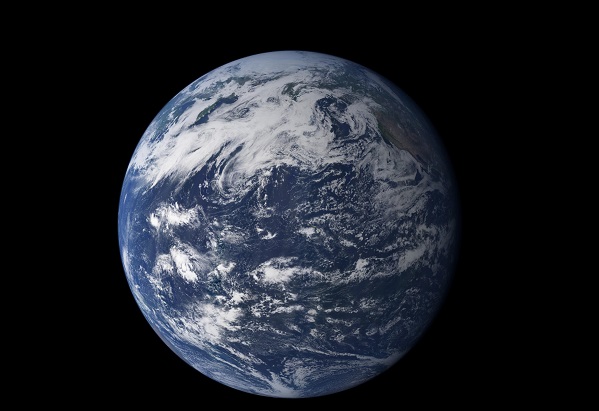
Planet Earth

Human activity has 170 times more impact on climate change than nature.

Climate Change is recognized by almost the entire world as a real and dangerous threat, but not many specific details were known regarding how much does human activity does increase the effects of climate change, although it is considered its main cause.

For the first time, scientists were able to develop a mathematical equation which they believe can accurately describe the impact that human activity has on the planet’s climate. Using this equation, the researchers were able to determine that our activity speeds up climate change by a factor of 170 times than the natural process.

The equation used to determine the impact of human activity was published in The Anthropocene Review, and developed by a team of researchers led by Will Steffen, an expert in climate change and a professor at the Australian National University.

Steffen, together with his colleagues and co-researcher, Owen Gaffney, from the Stockholm Resilience Center, developed what they are calling the “Anthropocene Equation” in order to determine the price impact of human activity on climate change. Their work serves as a strong argument against any climate change deniers claiming that the climate changes independent of our activity as a way to downplay any responsibility we have to address the issue.

In their study, the researchers note that while for the overwhelming part of our planet’s history, approximately 4.5 billion years, astronomical and various geophysical factors had the most influence on Earth. However, just in the past six decades, human activity led increasingly rapid change in climate leading to the period known as the Anthropocene. Human activity now rivals and even supersedes some of the forces of nature in shaping in the planet.

According to the scientists, the equation was developed by obtaining a clear picture of the rate of changes in the life-support system of the planet which includes aspects like the overall atmosphere, oceans, wetlands, forests, ice sheets, as well as the diversity of life. In their equation, scientists believe that current geophysical and astronomical forces tend to be zero due to their slow nature or incredible rarity, which have less impact than the overall human activity.

What do you think about the study’s findings?

Image source: Wikipedia

Filed Under: Science

NASA Wants to Drill into Europa’s Crust

February 13, 2017 By Michael Turner Leave a Comment

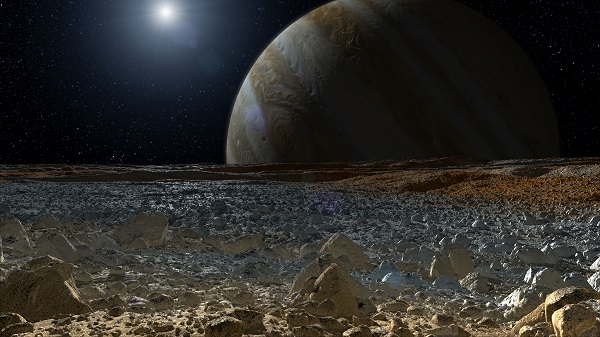
Euroa surface

NASA reveals plans to drill into Europa’s crust.

One of the many goals of NASA is to determine whether or not there are any other life forms in our solar system or outside of it. For this purpose, the agency’s latest ambition is to look for various signs of life on Europa, Jupiter’s moon, by drilling underneath its ice shell.

Scientists believe that beneath the Europa’ thick layers of ice measuring around 10 to 15 miles, there is a massive ocean which contains twice as much water as Earth’s entire seas. This is why many scientists are betting on Europa as the best chance of finding life in our solar system.

This belief is further strengthened by Hubble’s evidence of water-vapor plumes seen emanating from the moon’s south polar region. This finding suggests that the material from the ocean falls back again on the icy surface of the natural satellite.

NASA’s mission to Europa will involve the soft landing of a lander capable of analyzing various chemicals seen as signs of life. However, such a landing involves firing thrusters to slow down the rover’s approach to the surface. The thrusters use a lot of ammonia, which contains nitrogen, which would be spread around the surface, contaminating any possible chemical evidence of life.

Nitrogen is an essential chemical in lifeforms and contamination from the thrusters would make the scientists unable to determine the origins of the nitrogen they find on the surface of Europa, whether it was native on the Jupiter’s moon or if it was imported from Earth.

Usually, rovers can move around after they land so they can analyze areas that were not contaminated just like Curiosity did on Mars. However, scientists don’t know much about of the hazards on Europa and the rover could easily remain stuck in its landing region, which would be contaminated with Earth nitrogen in an area of around 30 feet.

Given these conditions, scientists believe that the best chance of detecting any signs of life using a rover would be underneath the surface of Europa. However, the lander will have to be equipped with drilling equipment so that it can pierce the hard layers of ice and obtain uncontaminated, pristine samples which can be analyzed for genuine chemical evidence of life.  Scientists believe that drilling 4-inches beneath the surface is just enough to avoid contamination.

Image credit: NASA

Filed Under: Science

Scientists Reveals New Bipedal Robot

February 13, 2017 By Kenneth Scott Leave a Comment

bipedal robot with man

Agility Robotics unveiled its new bipedal robot.

On one hand, artificial intelligence research has grown substantially over the last few years with numerous improvements made in the field, robotics, on the other hand, has not seen as many breakthroughs. Most humanoid robots are still quite weird, and their movements are not near as efficient as our biological bodies.

However, a team of researchers from Agility Robotics, hope to address this situation. They have developed a bipedal robot known by the name of Cassie, which they have revealed during one of the company’s routine tests.

Agility Robotics is the company that emerged from the ATRIAS project started by the Oregon State University. Its purpose is to create robots able to walk just like humans by focusing on legged locomotion. Their overall goal has a number of applications, but it is still quite far from becoming a reality.

Their most advanced work seems to be Cassie, which was built over a period of 16 months, thanks to a $1 million grant issued by DARPA, (Department of Defense’s Advanced Research Projects Agency). Despite the hopes of developing humanoid locomotion, Cassie’s design was inspired by animal behavior and morphology as it looks like the legs of a dinosaur such as a raptor.

Cassie’s legs include a hip joint with three degrees of freedom as well as flexible ankle joints, similar to that of a human’s legs. The company’s new bipedal robot is not just able to stand or walk, but even squat and balances itself. It not fragile enough to break even if somehow falls, much like other bipedal robots which even have trouble walking in a straight line.

This type of bipedal robot design could be helpful in a wide range of situations, from assisting soldiers in the field, or in emergency services like search and rescue missions. It can even be used in delivery services with the added benefit of being able to access locations where current wheeled robots or other devices can’t go.

A commercial version of Cassie will be available this month, which will soon receive several additions like arms and more advanced sensors in order to develop its autonomous capacities. Nonetheless, a lot of research is still required to reach the goal of robotic automation similar to that of humans.

Image source: Oregon State University

Filed Under: Science

Scientists Found That Warm Pacific Water Led to Large Seabird Deaths

February 11, 2017 By Karen Jackson Leave a Comment

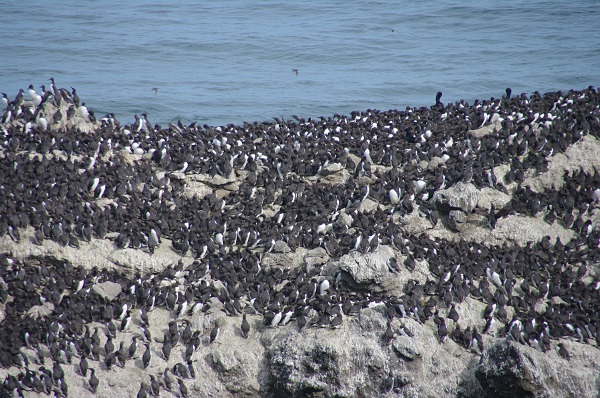
common murres resting on shore

Scientists believe that warm Pacific water led to the mass die-off of seabirds.

Whether we like to admit it or not, climate change is gradually making its presence felt throughout the world. It’s latest confirmed effect is that it led to the death of thousands of seabird deaths due to the warming of the Pacific water which in turn affected the fish the birds eat to survive.

Last year, scientists revealed that several thousand common murres, a prevalent North Pacific seabird, were found starved on the eastern shores of the United States, from California to Alaska. Since then, scientists have been trying to explain how that situation came to be.

Now, scientists believe that the elevated temperatures of the Pacific water affected not only the seabirds but whole marine ecosystems. However, the common murres are an indicator of the overall health of the region.  The explanation consists in the fact that because fish populations are gradually declining, seabirds and other animals have nothing to eat which leads to starvation.

While the effect of the warm Pacific water affects two major marine ecosystems along the US’ West Coast and Canada, the deaths of the seabirds also were also multiplied due to winter storms in the Gulf of Alaska.

The birds have fast-acting metabolism meaning that they have to eat a lot of to maintain their body mass. This also leads the birds to drop to the critical threshold for starvation in only just three days. The favorite prey of the seabirds includes small fish like pollock, capelin, which are also used in the fast-food industry in fish sandwiches. Their populations were extremely low in number during a survey taken in the summer of 2015.

As a result of the depleting food source, around 52,000 common murres were found dead throughout the West Coast, with 46,000 just in Alaska alone. To make matters worse, scientists believe that this number of deaths represent only a small fraction of the casualties, most of which never reached the shore. Some scientists estimate that around 500,000 common murres died in that period. The birds likely died from excruciating deaths, either starvation or drowning.

What do you think about this situation? Should we take more drastic action against climate change to prevent other similar situations?

Image source: Wikimedia

Filed Under: Science

Madagascar Gecko Species Sheds Its Scales to Evade Predators

February 10, 2017 By Nancy Young Leave a Comment

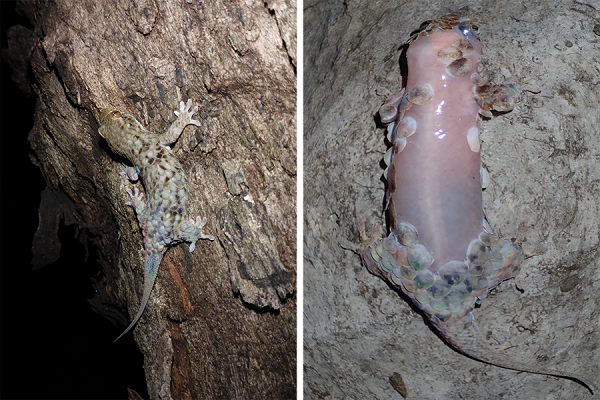
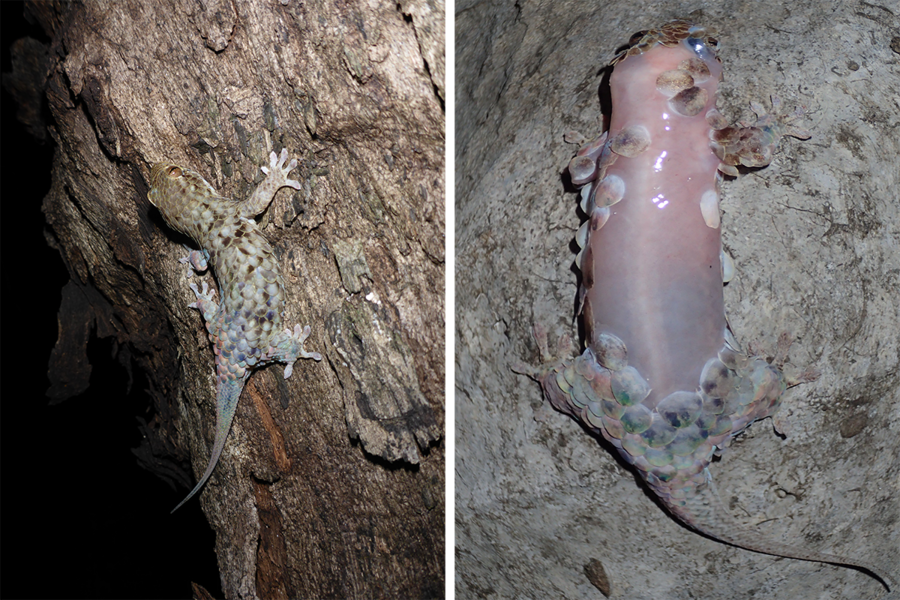
gecko shedding scales

A new gecko species shed its scale to evade predators.

Most animals use some sort of natural camouflage to avoid predators, thanks to the characteristics of their skin or fur. However, a new gecko species from Madagascar has a unique way of escaping its predators by shedding its scales.

The newly discovered Madagascar gecko species, called Geckolepis, is the first new species to be discovered in the last 75 years. The lizards have large scale similar to those of fish. However, what makes them fascinating is the ability to shed them when they come in contact with high levels of friction such as a predator’s mouth or even a scientist’s hand.

By removing its scales, the new gecko species basically becomes naked and remains so for a few weeks until they regenerate. The scientific community was aware of the existence of such gecko species for around 150 years. However, they have proven quite difficult to study. Nonetheless, the researchers persevered and were able to study them in detail and the mechanism that triggers the shedding of their scales.

The official name of gecko species, Geckolepis megalepis, revealed in a study published in the journal PeerJ, on Tuesday. This species of gecko has the largest scales among its other members of the genus.  According to the lead author of the study, Mark Scherz, a herpetology researchers from Germany, the gecko is able to escape from predators more easily due to the size of its scales. Gecko species with smaller scales have a much harder time evading predators.

Despite the excitement of the discovery of a new species of gecko, the animals are only threatened by the increased human activity on the island, which has led to major deforestation. The geckos live in small and fragmented regions on the island, and their survival depends on the preservation of its environment.

For their study, the researchers were able to capture three gecko specimens in the northern region of Madagascar known as the Ankarana Reserve. They were able to classify as an entirely new species after an extensive analysis of its size, shape, scales distribution, and other distinguishing features of its skeleton. They also discovered that regenerating the lost scales, comes at a high metabolic cost for the gecko.

Image source: Frank Glaw

Filed Under: Science

Massive Black Hole Is Beating The Longest Meal Record

February 8, 2017 By Cristopher Hall Leave a Comment

massive black hole

A massive black hole has been slowly destryoing a star for the last 10 years. And it is still an ongoing process.

According to research, a massive black hole could well be beating the record for the longest meal ever. Estimates show that it has been slowly eating a star. And this action has been going on for around 10 years.

Black holes are well known for being one of the most destructive space elements. An object swallowed up could be completely destroyed by such an unfortunate meeting. And a black hole’s victim could be any space object. From a tiny spacecraft to a star twice the size of the Sun.

Which actually seems to be the case. At least according to a recent study. A star twice as big as the sun is reportedly being swallowed up by a massive black hole. And this latter seems to be taking its sweet time. The slow destruction seems to have been going on for about 10 years now.

The meeting behind a planet and a black hole’s event horizon is known as TDE. This is the tidal disruption event. Quite a few such events have been spotted throughout the years. And most were seen to be quite short. In most cases, a TDE will last about a year.

Such events have a distinguishing mark. These are multi-wavelength X-ray flares. Such flares are produced as the stellar material starts being destroyed. As it enters the black hole, it will also heat up. When the TDE gets closer to the end, the flares it emits will also start getting fainter.

However, a newly released paper shows that the process is not always fast. Research on the matter was carried out by an international team of scientists. They were led by Dacheng Lin from the University of North Hampshire.

Study results were released earlier this week. They were published in the Nature Astronomy journal. Available online since February 06, the paper is titled as follows. “A likely decade-long sustained tidal disruption event”.

This record-breaking TDE was traced back to XJ1500+0154. This latter is a massive black hole situated some 1.8 billion light years away. The event was first spotted back in 2005. And the scientists have been tracking it ever since.

According to Lin, science has been witnessing an unexpected event. This massive black hole has been feasting on the same star for around 10 years. It is ten times longer than any previously recorded TDE.

No other such event has remained bright as long as this one. The research team based its study on data gathered by 3 orbiting telescopes. They all have X-ray detectors. One telescope is the NASA Chandra X-ray Observatory. Another is ESA’s XMM-Newton. The Swift Satellite is the third source.

Their observations were very important in gathering data about the cosmic event. And they led to the following theories. The event’s unexpected length could be explained in two possible ways.

One would be that the consumed star is massive. Estimates show that it could be twice as big as our Sun. Based on previous records, it may even be the biggest star to be involved in TDE.

The other theory states that this could be a first-time ever event. The consumed star is not necessarily big. But it may be the first to be fully and completely consumed in a TDE.

Yet, not even this process will last forever. The massive black hole could be finishing its meal sometimes over the next decades. Computer models show that its TDE flare will start diminishing in the following years. And the hole’s star supply will also drop significantly over the following decades.

Studies on this TDE may also help solve a bigger mystery. Research may be closer to establish the formation process behind supermassive black holes. Some such formations are believed to have grown very big, very fast some many billions of years ago.

Scientists believe that such formations could have already held some 1 billion solar masses. And that just about 1 billion years after the creation of the Universe.

Image Source: Wikimedia

Filed Under: Science

Scientists Unveil Blueprint for Modular Quantum Computer

February 6, 2017 By Deborah Campbell Leave a Comment

quantum computer

Scientists unveil blueprint for modular quantum computer

Quantum computing has long been considered to be the future of technology, but scientists were not able to reach that goal as of yet. However, an international team of researchers has unveiled their plans on how to build a large-scale quantum computer.

The team of researchers was led by scientists from the University of Sussex, who designed a blueprint for a modular quantum computer, which has the potential to be more powerful than any other system currently available. More specifically, scientists believe that quantum computing is capable of calculating processes millions of times faster than current computer technology.

However, before anyone starts building the modular quantum computer, the blueprint will be analyzed by various specialists in order to determine whether it is viable or not. If so, then we could see the development of the first quantum computer in the coming decade. The scientists published their findings and the actual blueprint in the journal Science Advances.

To compile and design the blueprint, researchers from the UK, Denmark, Japan, Germany and the US have combined their efforts and resources. The result is an actual plan to create a modular quantum computer on a large, something that once was thought of as impossible.

In other quantum computer-related news, researchers have revealed their plans on how to protect future quantum computers from external hacking attacks. Despite their advanced technology, even quantum computers, which hold information in multiple states, not just 0 and 1, can be hacked, according to the researchers. To showcase their claim, the researchers actually built the first high-dimensional cloning machine which was capable of intercepting a quantum message.

In analyzing the results of their experiments, the scientists found important clues which could help protect quantum networks from potential attacks. More specifically, cloning attacks inadvertently introduce specific noises in a channel. Scientists can combat external hacks by ensuring that the more information is contained in photons and monitor those observable noises as a way to strengthen the network’s resistance to external attacks.

However, the development of the large-scale modular quantum computer and securing its quantum networks will not be available anytime soon, if at all, depending on how viable the blueprint is.

Image credit: Wikimedia

Filed Under: Science

Scientists Create a Bat Bot

February 5, 2017 By Roxanne Briean Leave a Comment

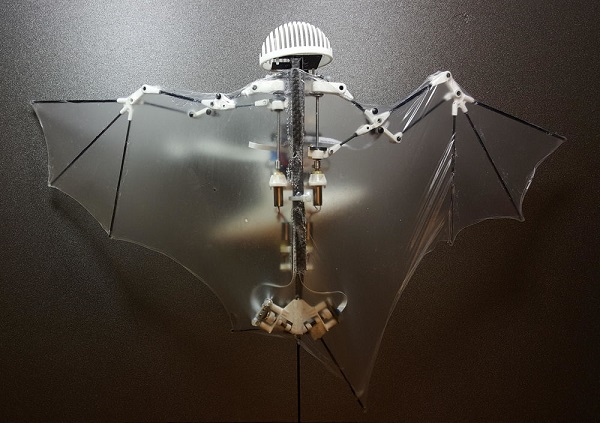
B2 bat bot

B2 bat bot replicated the flight mechanism of real bats.

Bats are fascinating creatures for scientists for several reasons, from the way they navigate the world around them to their flight mechanisms. Now, researchers were able to create a robot that simulates the key flight aspects of bats.

The bat bot has been officially dubbed as B2 and was developed by scientists from CalTech and the University of Illinois-Urbana-Champaign. The B2 bat bot features soft and articulated wings that are able to replicate the basic function of biological bats.

According to Alireza Ramezani, a researcher from the University of Illinois, the invention has successfully demonstrated the advanced design of a self-contained aerial robot which is able to fly not through propellers or engines but using flapping wings, that is also able to fly autonomously.

The design of the wings is very similar to that of the bats featuring wing conformations and dynamic wing articulations while weighing just 93 grams.

Researchers stated the biological bat has a flight mechanism which involves over 40 types of joints. These joints interlock the bones and various muscles with one another and lead to the creation of a musculoskeletal system which can change its shape and allows the bat to move in a number of independent directions.

The scientists were able to reduce the number of joints to nine in the bat bot, while still maintaining the same basic function as that of the biological bat. More specifically, the B2 robot uses a skeleton array capable of morphing thanks its silicone-based membrane skin. The bat bot changes its articulated structure even in mid-flight, without even losing the smooth and effective aerodynamic surface.

This function is quite similar to that of real bats whose wings act like a rubber sheet when they flap. The “sheet” fills up with air and starts to slightly deform, which at the end of its downstroke motion flap, the wing is able to push out the air as it springs back into its initial position. This mechanism is what amplifies the potential of flexible membranes.

The researchers believe that their bat bot can also be used to contribute to several biological studies on the mechanisms of bat flight. The robot can reconstruct several of the maneuvers performed by bats just by applying a few movement patterns.

The study detailing the invention of the B2 bat bot was published in the AAAS Science Robotics journal.

Image credit: Alireza Ramezani, Soon-Jo Chung, Seth Hutchinson

Filed Under: Science

  • « Previous Page
  • 1
  • …
  • 8
  • 9
  • 10
  • 11
  • 12
  • …
  • 15
  • Next Page »

Subscribe to Blog via Email

Enter your email address to subscribe to this blog and receive notifications of new posts by email.

Join 10 other subscribers

Recent Articles

police handcuffs man

German Man Probed In Poisoning That Killed 21 Employees Since 2000

June 29, 2018 By Kenneth Scott Leave a Comment

Chicken wings bar

Intoxicated South Carolina Man Punches Waitress Who Refused to Serve Him Alcohol

June 29, 2018 By Karen Jackson Leave a Comment

gaming

New Zealand gamer Who Flew Halfway Across The World for Virginia Teen Gets Shots By Her Mother

June 28, 2018 By Cristopher Hall Leave a Comment

party

Former Virginia Tech Freshman Sentenced to 50 Years in Prison for Stabbing a Girl to Death

June 28, 2018 By Roxanne Briean Leave a Comment

bonfire

British Couple Sentenced to Life in Prison for Torturing and Murdering French Nanny

June 27, 2018 By Deborah Campbell Leave a Comment

pay phone

Texas Father of Girl Disappeared in the 80s Ignored by Authorities

June 26, 2018 By Cristopher Hall Leave a Comment

bottled water

San Francisco Woman Threatened to Call Police on Girl Who Sold Ice Water for Disneyland Trip

June 25, 2018 By Roxanne Briean Leave a Comment

Maplewood Park

Missouri Man Robbed by Date and Accomplice in Park

June 22, 2018 By Nancy Young Leave a Comment

coding

New York Man Sentenced in Cyberstalking Former Girlfriend, Mailing Drugs to Her Dorm

June 22, 2018 By Deborah Campbell Leave a Comment

headphones

Bose Poised to Launch Sleepbuds, In-Ear Headphones That Help You Sleep

June 21, 2018 By Nancy Young Leave a Comment

Police light

Intoxicated Female Driver in Custody for Pulling Arresting Officer by the Hair

June 21, 2018 By Kenneth Scott Leave a Comment

kitchen

Restaurant Manager Arrested and Charged in Shooting Death of Co-Worker over Negative Yelp Reviews

June 20, 2018 By Karen Jackson Leave a Comment

plastic container

Pennsylvania Couple Charged in Violent Death of Infant Discovered Buried in Cat Litter

June 19, 2018 By Cristopher Hall Leave a Comment

tailpipe

Minnesota Teen Gets Head Stuck In Oversized Tailpipe Winstock Music Festival

June 18, 2018 By Karen Jackson Leave a Comment

Pages

  • About Us
  • Contact us
  • Privacy Policy
  • Privacy Policy GDPR
  • Staff
  • Terms and Conditions

Recent Posts

  • German Man Probed In Poisoning That Killed 21 Employees Since 2000 June 29, 2018
  • Intoxicated South Carolina Man Punches Waitress Who Refused to Serve Him Alcohol June 29, 2018
  • New Zealand gamer Who Flew Halfway Across The World for Virginia Teen Gets Shots By Her Mother June 28, 2018
  • Former Virginia Tech Freshman Sentenced to 50 Years in Prison for Stabbing a Girl to Death June 28, 2018
  • British Couple Sentenced to Life in Prison for Torturing and Murdering French Nanny June 27, 2018
  • Texas Father of Girl Disappeared in the 80s Ignored by Authorities June 26, 2018
  • San Francisco Woman Threatened to Call Police on Girl Who Sold Ice Water for Disneyland Trip June 25, 2018

Categories

  • Business
  • Entertainment
  • Finance
  • Headlines
  • Health
  • Life
  • Nature
  • Science
  • Sports
  • Tech & Science
  • Travel
  • Uncategorized
  • United States
  • World

Copyright © 2026 ArgyllFreePress.com
About · Privacy Policy · Terms of Use · Contact