Argyll Free Press

Growing News Network

Thursday, April 30, 2026
Log in
  • Business
  • Finance
  • Sports
  • Tech & Science
    • HP Envy 4500 Review
    • LG Optimus 170 Review
    • iPod Touch 6th Generation Review
    • HTC One M8 Accessories Set-up
    • Surrealist Games You Must Play
    • Hisense Sero 8 Review
    • Dell Latitude e7440 Review
    • HP Laserjet 1536dnf mfp Review
    • Garmin Fenix 2 Review
    • Skype Vs Viber
    • Best Video Conferencing Software
    • Sony mdr 1r Headphones Review
    • Canon Rebel t3i Review
    • Sennheiser Momentum 2-0 Review
  • Travel
  • Headlines
  • Health
  • United States

Report Shows That The Antarctica Penguin Population Is Shrinking

April 30, 2017 By Roxanne Briean Leave a Comment

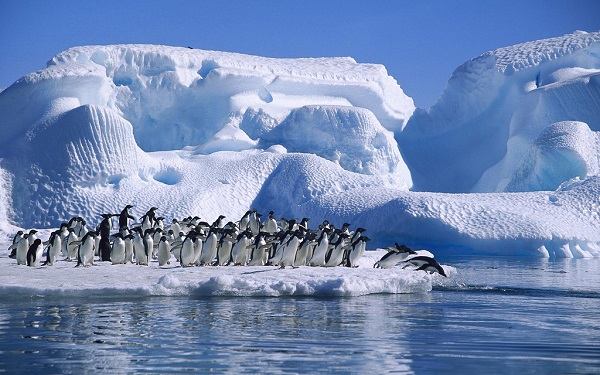
antarctica penguin population

Scientists estimate that the current Antarctica penguin population stands at around 12 million.

Scientists estimate that the current Antarctica penguin population stands at around 12 million. While that may seem like a high number, it has some specialists concerned.

They are quite convinced that it is not enough, and that the local populations are declining. Almost certainly, recent population die-offs can be connected to climate change, and as the Law of Natural Selection would determine, adaptability seems key to which penguins are surviving.

The five major species of penguins in Antarctica are the emperor, chinstrap, macaroni, Gentoo, and Adelie. Each has different feeding, nesting, and mating habits. As such, all of these species is being affected differently by the changes happening on and around the Antarctic continent.

Antarctica Penguin Population Numbers Are Shifting 

The lead researcher, Ron Naveen, has been counting penguins for thirty years. All in all, he has spent six years of his life on this icy continent. He believes that the Antarctica penguin population, along with the polar bear, may be the canary in the coal mine when it comes to climate change and its effects on our planet’s polar regions.
Adelie and chinstrap penguins seem to be facing the largest decline. Some scientists believe the lower population numbers are due to their dependence on krill instead of fish as their primary food source. The krill populations are decreasing as well.
Meanwhile, the types of fish that the other penguins feed on seem to be holding steady. The Gentoo species seems to be handling this change particularly well. There is also a difference in where these animals mate and nest.
Emperor and Adelie penguins raise their young all across the continent. The other species are mostly tied to the northern areas of the Antarctic Peninsula. This peninsula has probably seen some of the most drastic effects of climate change. These include the breaking of the Larson A and B ice shelves. Now, it also means the imminent cleavage of Larson C.
Image Source: Wikimedia


Filed Under: Science

Study Links Man-Made Climate Changes To Extreme Weather Events

April 26, 2017 By Cristopher Hall Leave a Comment

climate changes landscape

New study results say they can directly tie severe droughts and extreme weather events to climate changes.

This week, Noah Diffenbaugh of Stanford University released the results of a new study. These claim that they can directly tie severe droughts and extreme weather events to climate changes. As more and more data adds up, most of those changes are reportedly caused by human activity.

Climate Is Not Weather, But…

This new study looked at the recent events of the last few years and compared them to the frequency of similar events in previous decades. As it did so, it tried to find differences in severity, as well as what might be the cause of those differences.
“Our results suggest that the world isn’t quite at the point where every record hot event has a detectable human fingerprint, but we are getting close.” Diffenbaugh said.
In reference to the low Arctic sea ice in 2012, he replied that it would have been “extremely unlikely” to achieve such levels without the influence of global warming. Currently, the sea ice extent is at record-low values.This relatively new field of study is called extreme weather attribution. Reports show that the scientists’ interest in it by scientists is growing.  Questions often arise after extreme weather events, whether it be a hurricane or a drought. These ask whether the phenomenon is something more extreme than those in the past. Or is it that these events happen more often? Maybe it is both? This new field of science is aimed directly at producing the data necessary to find that out.

In the past, scientists have often avoided direct linkage of specific events to climate changes due to naturally fluctuating patterns. New research is pointing out that this may not be possible anymore.

Diffenbaugh also pointed out the “explosion of research”. This has been growing stronger over the last decade. It also reached the point where it will only take a few weeks after a major event to release research results on the matter. If events continue to increase in severity and regularity, this new field may become quite important.

Image Source: Pixabay

Filed Under: Science

New Study Offers A Rank Of The Effects Of An Asteroid Strike

April 22, 2017 By Deborah Campbell Leave a Comment

asteroid strike

Researchers studied the potential effects of an asteroid strike and its consequences on Earth.

A new study from University of Southampton researchers put together the potential scenarios for an asteroid strike and how it would affect the planet Earth. They then proceeded to rank those situations in terms of human loss. The picture their information painted was not a pretty one.

University Study Ranks Asteroid Strike Calamities Based On 50,000 Simulations

The research team based its study on a supercomputer. This analyzed over fifty thousand asteroid impact simulations on Earth. They used many different sizes for the objects, ranging from 15 to 400 meters. Also, they tested different angles and trajectories. The simulations also had the objects strike both land and water. From there, they determined the destructive consequences to both people and cities.They found seven major effects that would cause the most destruction. These are wind blasts, shockwaves, cratering, tsunamis, heat, flying debris, and seismic activity. As one would expect, they found land impacts to be the most devastating, gaining the highest place in their system.

Almost sixty percent of the total deaths would be due to the wind blasts and shockwaves, which could be strong enough to damage internal organs and knock down buildings. Thirty percent would be due to the tremendous heat created by the friction of the impact, especially if it strikes land. Tsunamis would lead to around a twenty percent mortality rate, with the remainder split among the other effects.Of course, the results varied widely depending on the many variables. The size of the object seems to be the most important factor, followed by the location of the impact. For a potentially lethal effect, an asteroid would seemingly have to be at least eighteen meters in diameter. Most smaller objects crumble and burn as they enter Earth’s atmosphere.

The researchers reminded everyone that the odds of such an asteroid strike are extremely small. These studies are often done for preparedness in case such a rare occurrence should happen. And astronomers are always on the watch.

“The likelihood of an asteroid impact is really low, but the consequences can be unimaginable.” This is according to the study lead, Clemens M. Rumpf.
Image Source: Flickr

Filed Under: Science

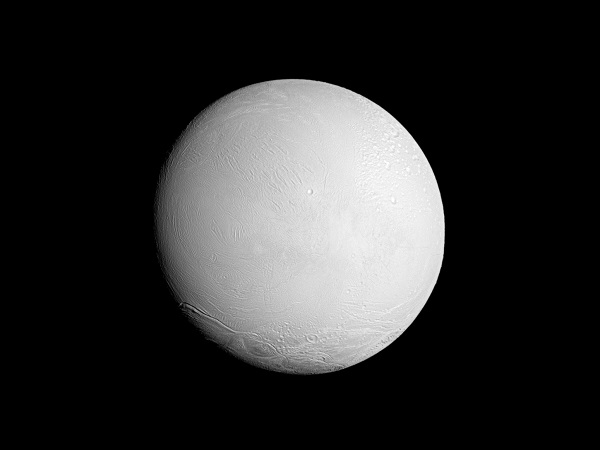
Enceladus Reveals The Chemical Energy Required By Life Forms

April 19, 2017 By Karen Jackson Leave a Comment

enceladus

Scientists believe that their instruments have found evidence of elemental hydrogen on Enceladus, Saturn’s moon.

Saturn’s moon, Enceladus, has long captured the imagination of scientists with its icy sheath of water on its surface. As such, NASA’s Cassini spacecraft has been exploring the ringed planted and its system of moons for over a decade. Now, scientists believe that their instruments have found evidence of elemental hydrogen. This is a key source of chemical energy for primitive life. A new study on the matter was published in the Science journal.

Enceladus Has The Base Compounds Needed for Alien Life Forms

Recently measured plumes of water shooting up from cracks in the surface of Enceladus have scientists intrigued. They believe this to be evidence of liquid water underneath its surface. Also, it could mark the presence of geothermal energy or vents that keep that water full of energy and nutrients. One of the main signatures of these potential nutrients is elemental hydrogen, which provides the necessary chemical energy.Cassini recently passed through one of these plumes, measuring the elements floating above the icy moon. The tests proved positive, adding more to the pile of evidence leading toward the potential for alien life on one of Saturn’s many satellites.

Jonathan Lunine of Cornell University, a study co-author, was quoted as saying:

“Combined with our knowledge that there’s an ocean under Enceladus, that it’s salty, that it contains organics and mineral interactions . . . it really completes the case for the ocean being habitable or being able to sustain life.”

Many biologists believe that the first life on Earth evolved around hydrothermal vents on the ocean floor. There, primitive bacteria fed on hydrogen cyanide and still do. It was only much later in the evolutionary scale that things like photosynthesis came to have a role in providing energy for living organisms.

The parallels are fascinating for scientists. As such, pressure is reportedly growing in the academic community for additional, more extensive missions to Saturn and Jupiter’s moons to look for life.

Image Source: Wikimedia

Filed Under: Science

New Images Reveal That Jupiter Also Has A Great Cold Spot

April 13, 2017 By Roxanne Briean Leave a Comment

jupiter great cold spot

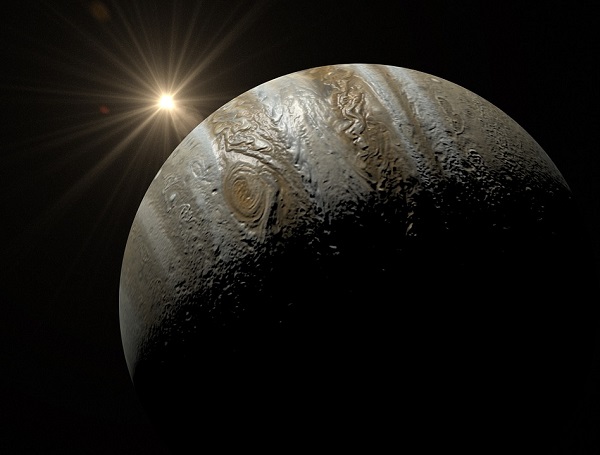
Recent observations reveal the fact that Jupiter can boast with its Great Cold Spot, not just the “Red” one.

Recent observations reveal the fact that Jupiter can boast with two “great spots”, not just one as initially believed. The Great Cold Spot, as it is being called, is a cooler area in the planet’s otherwise scorching atmosphere. Jupiter’s newest feature was discovered near its auroras and is the reason behind this dark and cold zone.

The Great Cold Spot On Jupiter Came As A Surprise To Scientists

For a long time, Jupiter has been known for hosting the “Great Red Spot”. Now, the most recent observations determined the existence of another such formation. The Great Cold Spot is situated high up in the atmosphere and expands over an area 24,000 km by 12,000 km. Although similar in size, the “spots” have very different properties.

The “Cold Spot” is about 200 degrees Celsius colder than it’s the atmosphere surrounding it. At the same time, it is still very hot with temperatures reaching in between 426 to 726 degrees Celsius. Also, according to research, the feature may have been created by the planet’s powerful polar auroras.

Jupiter’s magnetic field can interact with its atmosphere, which can drive currents of heat around the gas giant planet. However, this can also create a vortex of cooler gasses in the atmosphere’s outermost layers.

“This is the first time any weather feature in Jupiter’s upper atmosphere has been observed away from the planet’s bright aurorae.”

This was stated by Tom Stallard, a University of Leicester, UK researcher and the study’s lead author. The “cold” spot was spotted using the Cryogenic High-resolution Infrared Ehelle Spectrograph or CRIRES, an instrument of the ESO’s Very Large Telescope. Its data was also combined with information gathered by the NASA InfraRed Telescope Facility.

When combined, this resulted in 13,000 images which offered a variety of data. For example, for how long the spot has been there or its registered changes. As such, they revealed the area’s highly frequent changes, and also suggests that it “continually reform itself”. Research results on the matter were published in the Geophysical Research Letters journal.

Image Source: Pixabay 

Filed Under: Science

Scientists Use Technology To Study The Antarctic Whales

April 12, 2017 By Nancy Young Leave a Comment

antarctic whales

A team of scientists turned to technology in their mission to monitor and analyze Antarctic whales and their feeding habits.

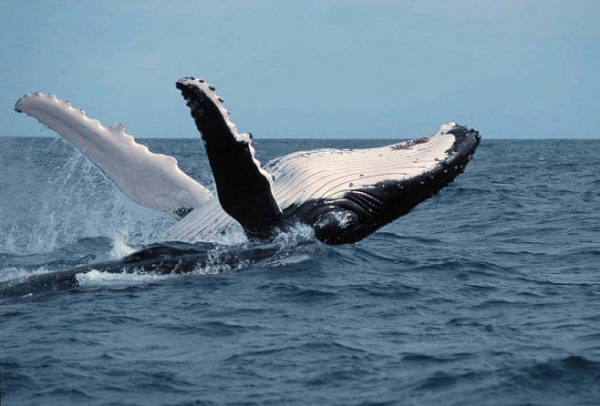
A team of scientists turned to technology in their mission to monitor and analyze Antarctic whales and their feeding habits. As such, the AAD or the Australian Antarctic Division started using electronic tags which come with cameras and motion sensors.

Such devices have been placed on humpback whales living in the Gerlache Strait, in the Antarctic. According to Ari Friedlaender, the project lead, this will give the team an idea as to where these gigantic mammals actually feed. Also, it will provide information such as their feeding frequency.

The tiny electronic tags will also provide various other data. For example, they may reveal the place where the Antarctic whales go to rest. Such insight on their habits could have a significant conservational value. The data may help in the management and the protection of both the Antarctic whales and their ecosystems.

The Tiny Cameras Placed On The Antarctic Whales Should Help Protect The Giant Mammals

These electronic tags should indicate any possible changes in the whales’ main food source, the krill population. As they do so, the devices will also be registering the effects of such fluctuations. Also, the tiny cameras can help report changes in the whales, their habits and habitat as they experience climate change or go through ocean acidification. It may also help determine the impact of commercial fishing on these mammals.

The tiny cameras get attached with help from suction cups which can last for about two days. As they fall off, they are then retrieved by the research team which then analyzes the gathered data.

“We have been able to show that whales spend a great deal of time during the days socializing and resting and then feeding largely throughout the evening and night time.”

The large humpback Antarctic whales are also not the only ones being monitored with help from electronic tags. Longer-term such devices were also placed on the smaller minke whales living in the Antarctic.

Image Source: Flickr

Filed Under: Science

Peggy Whitson Will Spend An Additional 3 Months Up In Space

April 8, 2017 By Deborah Campbell Leave a Comment

peggy whitson

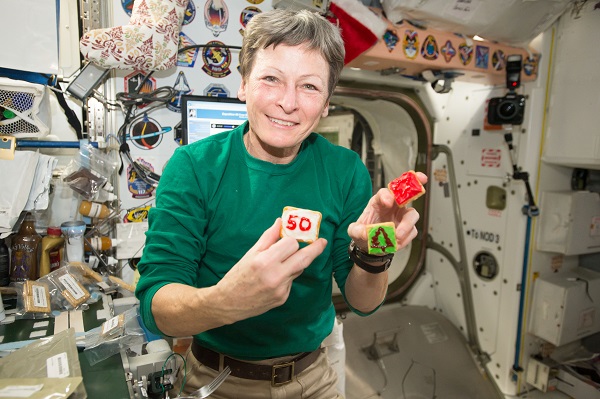
NASA announced earlier this week that Peggy Whitson will be spending three more months in space.

NASA announced earlier this week that Peggy Whitson, the famed female astronaut, has decided to extend her time in space. By doing so, she will be breaking yet another record and also bringing her contribution to Expedition 52 by rounding the mission complement.

Peggy Whitson Already Holds Several Space Records, And She Will Be Adding Even More

Presently, Peggy Whitson is the only female aboard the International Space Station or ISS. She has been there ever since November 17th, and her stay was close to coming to an end. Whitson already has over 370 days up in space under her belt.

Following her additional three months stay, she will be breaking yet another record. The astronaut will be surpassing Jeff Williams’s United States milestone of 534 cumulative days spent up in space. Whitson will also be the first woman to command the ISS twice. She was first in charge of the station back in 2008. Just recently, she also became the female astronaut to complete the most spacewalks.

Following the 3 months extension, Whitson will only return to Earth in September 2017. Her additional stay in space came as an effect of Russia’s decision to temporarily reduce its crew by 2. As such, the female astronaut will be rounding up the station’s 6-crew complement. This will help increase the general amount of time for the astronauts. During such periods, they will be able to carry out more experiments.

Whitson herself expressed her excitement at being offered the chance to extend her stay aboard the station. She stated as follows:

“Living and working aboard the space station is where I feel like I make the greatest contribution, […].”

Whitson also stated that she is trying to get the most out of her every stay up in space as she loves being there. These additional three months are reportedly just what she ‘would wish for.’

Image Source: Wikimedia

Filed Under: Science

Europe’s First Cave Fish Discovery Was A Lucky Find

April 7, 2017 By Cristopher Hall Leave a Comment

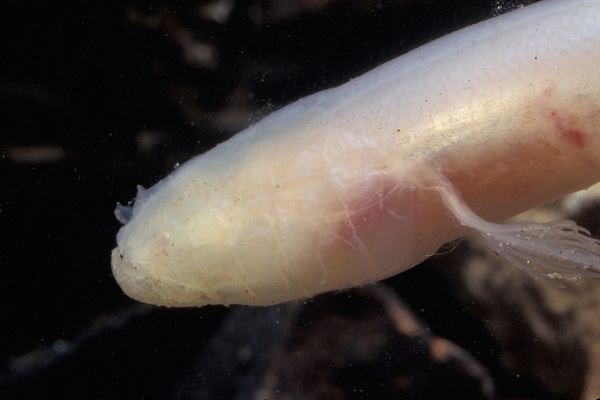
cave fish

Researchers have been studying cave fish, the first ever to be discovered in Europe.

Researchers have been studying cave fish, the first ever to be discovered in Europe. These are quite a lucky find as they were first spotted by hobby divers. They found the fish in an underground cavern situated in southern Germany.

According to preliminary research, these loaches may also be the as yet most northerly species of cave fish ever detected. The team believes that they split from their surface-dwelling relatives sometime in the last 20,000 years. A study paper on the matter was released in the Current Biology journal.

“We never would have expected something like this so there may be some other things out there.” This is according to Dr. Behrmann-Godel, one of the study researchers.

The European Cave Fish, Spotted Back In 2015, Was A Chance Discovery

This new research wouldn’t have been possible were it not for a chance discovery. A hobby diver was exploring the Danube-Aach cave system. Back in 2015, he first spotted such a specimen and managed to snap its photo. Then, he also managed to capture one, which fiinally led to this new study.

The researchers carried out a variety of analyses, including genetic ones. These revealed the close relation between the cave fish and the stone loaches swimming in the nearby waters. This has given rise to a number of questions, including the following: Should these cave dwelling fish be a new species, or not?

The German-based cave fish are a pinkish color and have no scales. Also, their skin is quite translucent, as the researchers are able to see the blood vessels running underneath it. They also seem to have a declining vision, one which would fit with their environmental conditions. As it is, more studies on the matter are still needed.

Also, according to the team, these may not be the last such species discovered in the German caves, as research in the area will most likely continue.

Image Source: Flickr

Filed Under: Science

A Solar Robot Skin More Sensitive Than Human Hands?

March 24, 2017 By Roxanne Briean Leave a Comment

robot skin

This electronic robot skin was created by a team of researchers from the University of Glasgow.

Robots are not just a fantasy anymore. More and more scientists are trying to design the perfect robot. The one that is both easy to use and efficient. As such, a new robot skin that is powered by the sun has been designed.

This electronic robot skin was created by a team of researchers from the University of Glasgow. They were able to design a self-powered robotic mitt. This robot skin is much more sensitive than a human hand. Professor Ravinder Dahiya is one of the engineers that developed the device. He says that this robot skin is the first of its kind.

The robotic mitt is a great step towards better prosthetic limbs for people. Due to the fact that it is much more sensitive is going to help people feel more than a normal “robotic hand” would. Researchers mentioned that this robot skin is actually a touch sensor. It is made from a single atomic layer of graphene.

In order to make it even better, researchers used solar power to make it work. The robotic skin needs 20 nanowatts of power for every square centimeter. The team of engineers managed to design the touch sensor in such a way as to make it self-powered. So as it takes energy from the sun.

“Whatever light is available, 98 percent is going and hitting the solar cell, it is generating power that can be used to get the sensitivity, the tactile feeling,” mentioned Prof. Ravinder Dahiya.

All the information and feature about this robot were published in the journal Advanced Functional Materials. The researchers mentioned that this robot skin can be used for many things. One of them is to create better prosthetics, but that is not all. The touch sensor can be used for more responsive touch screens.

Based on the fact that it is so slim and transparent is can be used for clothes or for health care devices. The robot skin is also cost efficient. The fact that it can be powered by the sun also makes it a solution for places where there is no electricity.

The team of researchers announced that they want to continue their work. Prof. Dahiya is making a 3-D printed prosthetic hand for this skin. The cost of the prosthetic is around $350. This price is a lot smaller than the one people have to pay for the normal battery-powered prosthetic hands.

Image source: Flickr

Filed Under: Science

Fluorescent Frog Was Found In Amazon

March 15, 2017 By Nancy Young Leave a Comment

fluorescent frog

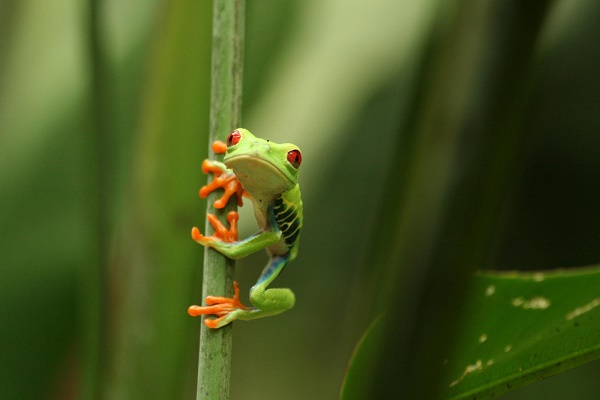
This fluorescent frog found in the Amazon can emit a lot of light.

Animals never stop surprising us. Researchers discover new species of animals every year. This time, a team of Brazilian scientists discovered a fluorescent frog in the Amazon basin. This is the only naturally fluorescent amphibian discovered, until now.

Researchers were amazed to see that this frog is naturally fluorescent. Despite the fact that some marine animals have this feature, this is the first amphibian that has it too. Normally, fluorescent material is usually painted as to glow in the black.

How is this frog fluorescent?

When they observed the unique frog, researchers started to study it. They found that this animal has a skin pigment that allows it to have this feature. When they saw this pigment they wanted to verify if the frog is really fluorescent. They shined a black light at the frog and it changed its color from yellow to neon green.

Once they observed this change, they investigated further. They found 3 molecules: L2, G1, and Hyloin-L1. All of these molecules had a hydrocarbon chain and a ring. This is unusual for molecules that make animals fluorescent. Researchers mentioned that they did not discover why this animal has this features and how it got it.

One thing they noticed is that this frog can emit a lot of light. This is also uncommon for these types of animals because they normally emit little light. Researchers mentioned that this frog needs to be studied more before they can know for sure what makes it shine so bright.

The difference between fluorescent animals and bioluminescent ones

There are many marine creatures that are fluorescent. For instance, corals, sea turtles, and sharks are able to use this skill. There are also some land animals which shine in the dark. Some scorpions and parrots have this feature. These animals are able to absorb light and re-emit it.

The difference between these animals and bioluminescent ones is in the way they transmit the light. Bioluminescent creatures emit this light based on a chemical reaction. Some of the creatures that can transmit light after chemical reactions include fireflies, glow worms, catfish, and flashlight fish.

What is your opinion about this frog? Did you know that there are fluorescent creatures?

Image source: Flickr

Filed Under: Science

  • « Previous Page
  • 1
  • …
  • 6
  • 7
  • 8
  • 9
  • 10
  • …
  • 15
  • Next Page »

Subscribe to Blog via Email

Enter your email address to subscribe to this blog and receive notifications of new posts by email.

Join 11 other subscribers

Recent Articles

police handcuffs man

German Man Probed In Poisoning That Killed 21 Employees Since 2000

June 29, 2018 By Kenneth Scott Leave a Comment

Chicken wings bar

Intoxicated South Carolina Man Punches Waitress Who Refused to Serve Him Alcohol

June 29, 2018 By Karen Jackson Leave a Comment

gaming

New Zealand gamer Who Flew Halfway Across The World for Virginia Teen Gets Shots By Her Mother

June 28, 2018 By Cristopher Hall Leave a Comment

party

Former Virginia Tech Freshman Sentenced to 50 Years in Prison for Stabbing a Girl to Death

June 28, 2018 By Roxanne Briean Leave a Comment

bonfire

British Couple Sentenced to Life in Prison for Torturing and Murdering French Nanny

June 27, 2018 By Deborah Campbell Leave a Comment

pay phone

Texas Father of Girl Disappeared in the 80s Ignored by Authorities

June 26, 2018 By Cristopher Hall Leave a Comment

bottled water

San Francisco Woman Threatened to Call Police on Girl Who Sold Ice Water for Disneyland Trip

June 25, 2018 By Roxanne Briean Leave a Comment

Maplewood Park

Missouri Man Robbed by Date and Accomplice in Park

June 22, 2018 By Nancy Young Leave a Comment

coding

New York Man Sentenced in Cyberstalking Former Girlfriend, Mailing Drugs to Her Dorm

June 22, 2018 By Deborah Campbell Leave a Comment

headphones

Bose Poised to Launch Sleepbuds, In-Ear Headphones That Help You Sleep

June 21, 2018 By Nancy Young Leave a Comment

Police light

Intoxicated Female Driver in Custody for Pulling Arresting Officer by the Hair

June 21, 2018 By Kenneth Scott Leave a Comment

kitchen

Restaurant Manager Arrested and Charged in Shooting Death of Co-Worker over Negative Yelp Reviews

June 20, 2018 By Karen Jackson Leave a Comment

plastic container

Pennsylvania Couple Charged in Violent Death of Infant Discovered Buried in Cat Litter

June 19, 2018 By Cristopher Hall Leave a Comment

tailpipe

Minnesota Teen Gets Head Stuck In Oversized Tailpipe Winstock Music Festival

June 18, 2018 By Karen Jackson Leave a Comment

Pages

  • About Us
  • Contact us
  • Privacy Policy
  • Privacy Policy GDPR
  • Staff
  • Terms and Conditions

Recent Posts

  • German Man Probed In Poisoning That Killed 21 Employees Since 2000 June 29, 2018
  • Intoxicated South Carolina Man Punches Waitress Who Refused to Serve Him Alcohol June 29, 2018
  • New Zealand gamer Who Flew Halfway Across The World for Virginia Teen Gets Shots By Her Mother June 28, 2018
  • Former Virginia Tech Freshman Sentenced to 50 Years in Prison for Stabbing a Girl to Death June 28, 2018
  • British Couple Sentenced to Life in Prison for Torturing and Murdering French Nanny June 27, 2018
  • Texas Father of Girl Disappeared in the 80s Ignored by Authorities June 26, 2018
  • San Francisco Woman Threatened to Call Police on Girl Who Sold Ice Water for Disneyland Trip June 25, 2018

Categories

  • Business
  • Entertainment
  • Finance
  • Headlines
  • Health
  • Life
  • Nature
  • Science
  • Sports
  • Tech & Science
  • Travel
  • Uncategorized
  • United States
  • World

Copyright © 2026 ArgyllFreePress.com
About · Privacy Policy · Terms of Use · Contact