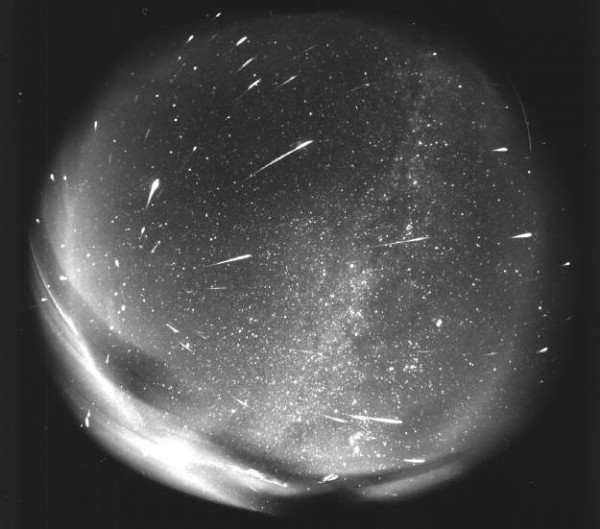
The Perseid meteor shower is something that astronomers are looking forward to seeing this August.
The Perseid meteor shower is something that astronomers are looking forward to seeing this August. Stargazers will be astonished by over 200 shooting stars an hour that will surely light up the night skies over Essex.
It is one of the most active cosmic events with two times more chances of shooting stars entering the Earth’s atmosphere. The meteor shower takes place every year between mid-July and late-August. There will be one disadvantage this year because the moon will grow from quarter to full during the peak of the meteor shower. This can only mean that with this growing moonlight, the smaller meteors won’t be observable.
NASA recommends going outside on the morning of the 12th of August, allowing our eyes several minutes to adjust to the light and then just enjoy the show. You can watch the meteor shower with the naked eye from everywhere, but it is desirable to avoid the city lights; the farther you are from the urban area, the more likely you are to see a greater show.
A Perseid is one of the most colorful and speedy meteors, so, when observing the night sky, you should be very careful not to miss the painted explosion.
A Perseid meteor shower is caused when the Earth is passing through the remains of the Swift-Tuttle Comet. We effectively go through a dust cloud from this comet. Swift-Tuttle left a gas and dust path on its orbit that the Earth’s orbit intercepts. The Earth quickly goes through it, and so, these particles built up in the atmosphere seem to be coming from Perseus’s direction.
NASA representatives said that this year the meteor shower would surpass the recent ones because of Jupiter’s gravity that will attract the particles closer. This way, Earth will go through the middle of the comet’s dust trail instead of just passing close to it.
Specialists assure us that the comet represents no threat to humanity. Because it is in its own orbit, a crossing with the Earth is less likely to occur for the next thousands of years.
The Swift-Tuttle comet was last seen close to Earth in 1992.
Image source:Wikipedia