Argyll Free Press

Growing News Network

Wednesday, April 22, 2026
Log in
  • Business
  • Finance
  • Sports
  • Tech & Science
    • HP Envy 4500 Review
    • LG Optimus 170 Review
    • iPod Touch 6th Generation Review
    • HTC One M8 Accessories Set-up
    • Surrealist Games You Must Play
    • Hisense Sero 8 Review
    • Dell Latitude e7440 Review
    • HP Laserjet 1536dnf mfp Review
    • Garmin Fenix 2 Review
    • Skype Vs Viber
    • Best Video Conferencing Software
    • Sony mdr 1r Headphones Review
    • Canon Rebel t3i Review
    • Sennheiser Momentum 2-0 Review
  • Travel
  • Headlines
  • Health
  • United States

NASA Laser Propulsion System Could Revolutionize Space Travel

February 23, 2016 By Cristopher Hall Leave a Comment

NASA Laser Propulsion System Could Revolutionize Space Travel

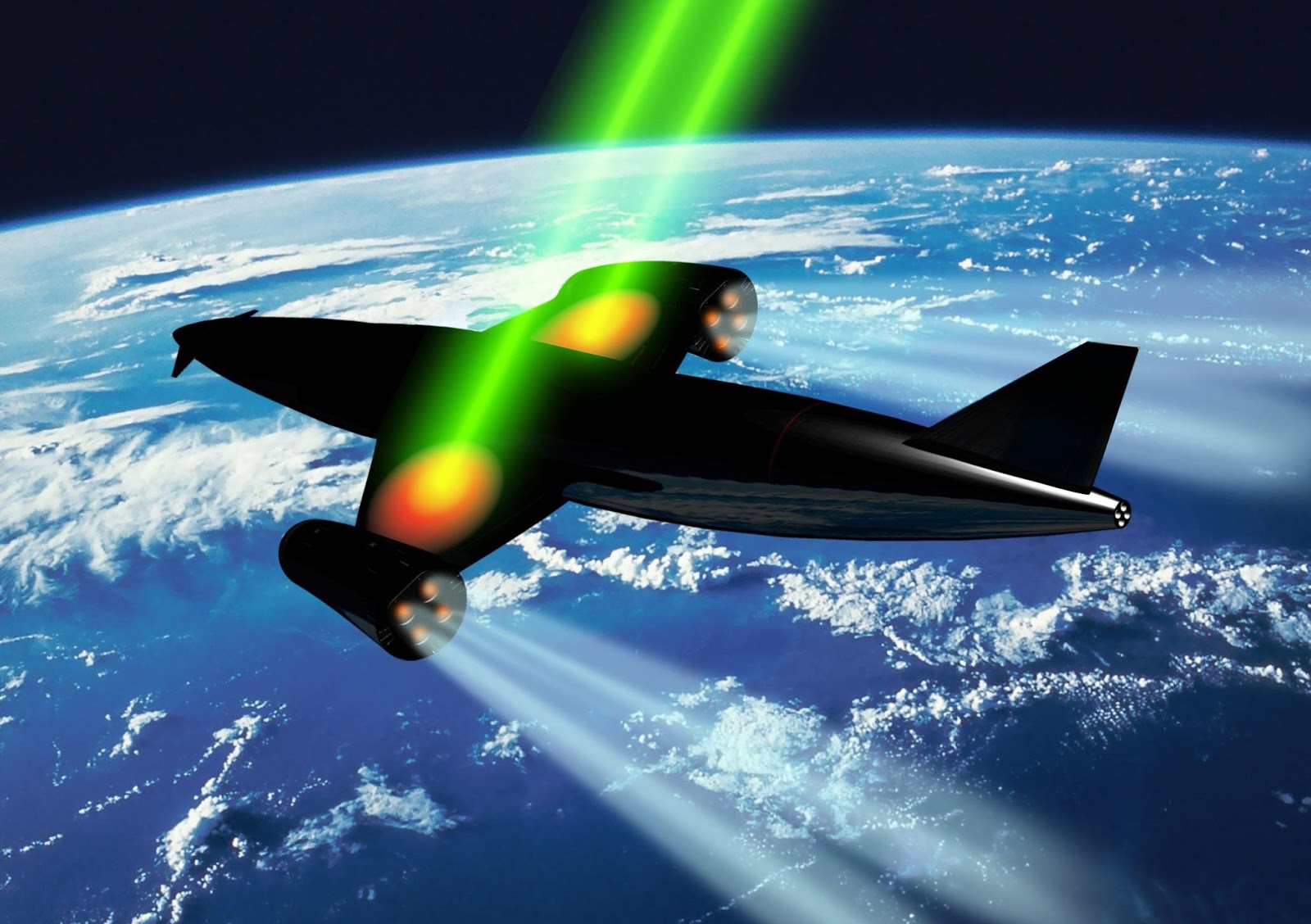
A new project from the National Aeronautics and Space Administration currently being developed, the NASA Laser Propulsion System could revolutionize space travel. This would allow for much faster space travel than it has been known until now; trips to Mars could be completed in as little as 3 days, in comparison to their current estimated time of completion of 6 months to 2 years, depending on the orbital position of both the Earth and the Red Planet in relation to the sun.

Sadly, however, this concept is still a bit of technological marvel when it comes to scientists to put it in practice right away. The way researchers are thinking of making this work is by finding a way to apply the rules and methods they do in the case of particles used in accelerators. With the current knowledge and technology it’s not an issue to get particles to move at the speed of light, but larger scale objects – such as a spacecraft would be – are a completely different story.

So far, large scale objects have not been able to achieve 3% of that speed because of physical limitations of the human-made technology so far. There are simply some laws of nature that mankind has yet to discover workarounds to.

However, one scientist working for NASA has considered a different method of making it work, and it feels like it was partly inspired by Bill Nye’s solar sail idea that was depicted in the ‘Think Big’ scenario. However, this time around it won’t be photons coming from the sun carrying space crafts to other places in our solar system, but instead it would be lasers.

And this time around, the theory is actually applicable at a larger scale too, not just applicable at a small scale like particle accelerators do. Laser propulsion is something that is already used and there’s little to no limitation from taking it up to a larger scale; large enough to send space shuttles all the way to Mars. This is the kind of idea that is not only feasible in a realistic, ‘to-be-achieved’ in the next decade method of reaching further parts of our solar system, but also a much better way of launching various types of shuttles as part of manned or unmanned expedition.

The fuel-based propulsion is not only inefficient, expensive but also potentially harmful to a number of things. By employing laser propulsion technology instead, launching space crafts into outer space would be easier, does not face fuel limitations and comes with a lot more efficiency when it comes to long distances.

Image Source: 1

Filed Under: Tech & Science Tagged With: Laser Propulsion, nasa, NASA Development, Space Travel

IBM Is Planning to Develop a Real Life Sword Art Online Project

February 23, 2016 By Roxanne Briean Leave a Comment

IBM Is Planning to Develop a Real Life Sword Art Online Project

Thanks to its Watson Cognitive Computing tech and SoftLayer cloud computing technologies that the company has access to, IBM is planning to develop a real life Sword Art Online project. Minus the correlation between dying in the game and dying in real life. However, according to the company, they wish to create a world that hosts a role-playing game just like the one depicted in the very popular anime series.

Coming as a massively multiplayer online role-playing game taking place in a purely virtual reality environment, the game would not only appease the hunger of avid gamers and fans of the long awaited concept of virtual reality gaming, but it will also be the first of its kind.

One of the best parts of it all is that it seems to actually be a recreation of the VR game that was depicted in the anime series as the IBM dubbed its project ‘Sword Art Online: The Beginning’. There is extremely little there is known about the project at the current time with more announcements due to be made between March 18th and March 20th, when there will be a Tokyo-based event on the theme. So far, all we know is that starting that date the alpha testing of the game will begin with no less than 208 testers situated in Tokyo.

While the game will be made to run on both the Oculus Rift and HTC Vive, it will also involve the use of a 3D body scanner that will translate your real life looks into the game to create your very own avatar. Not to mention that we won’t be using controllers to maneuver our way through the game – according to reports. Instead, motion controls are how people will be controlling their virtual reality characters. Something similar to the NerveGear VR from the anime show is still going to take a while to become reality; years the very least.

Sword Art Online: The Beginning will surely be different from what we’ve seen in the Japanese animation, but also be shockingly different from any previous gaming experience. The anime’s creator – who seems to also be involved with the development of the real life SAO Sword Art Online VRMMO – has personally stated that The Beginning will be ‘completely foreign’ from any other video game experience.

There is undoubted concern regarding a real life application that pretty much holds you physically immobile from the waist down in a world that promises a dozen more times of immersion levels that the video games of our day currently do. However, only time will be able to show us just how much reason for concern there really is.

Image Source: 1

Filed Under: Tech & Science Tagged With: IBM, SAO VR Game, Sword Art Online, VRMMO

How Facebook Changes the Internet and the World

February 23, 2016 By Nancy Young Leave a Comment

How Facebook Changes the Internet and the World

While the particular brand is merely one of many that have a major impact on the online environment, it is vital to realize just how Facebook changes the internet and the world. There is a number of powers currently at work in the world we live in, and the internet is rapidly gaining even more ground in our lives than it has before.

Just recent reports are stating that the number of internet users on a global scale grew by 300 million individuals in the last year. So while at the end of 2014 there were 2.9 billion internet users globally, the end of 2015 marked the 43% milestone – 3.2 billion people online were reported to be connected to the internet in one way or another. That includes having a data plan on your phone, portable hotspots, cable or fiber and so on.

The reason behind the increase is most definitely not single. Along with the fact that prices for data have gone down and data package variety has increased in a dynamic manner, more people were capable of gaining access to a method of going online, even in the case of lower incomes. While it is not a globally valid fact, 2014 also registered an increase in global incomes, making the price of being online frugal in some places.

Mobile broadband coverage is another contributing factor that a recent study Facebook has done in regards to the state of connectivity post 2015. More than 400 million individuals were taken into the range of 3G or 4G connectivity as carriers expanded the number of areas where mobile data functions. It should be no surprise that by the year we are in now, a staggering amount of the global internet traffic is done mostly via mobile means. While in first world countries such as the United States, mobile internet is a thing of comfort and flexibility, there are parts of the world that only have that as their only method of going online.

However, that is not the only thing that Facebook has been doing lately. Apparently, with the use of a technology involving artificial intelligence learning machine, the tech giant is using its immense reach and the social network’s photo tagging features to create an enormous map of where people live.

This will yield the company even more data regarding the state of connectivity that could help with their study and elucidate factors such as population density and its impact on connecting to the Internet. Such a large scale move could also lead to developing a method of handling and managing natural disasters in the future. So far, Facebook has managed to map 21.6 million square kilometers across the globe with the use of 350 terabytes worth of images.

Image Source: 1

Filed Under: Tech & Science Tagged With: Facebook geo-tagging, Facebook study, Facebook technology, State of Connectivity 2015

NASA Makes a Call to Artists Interested in Space

February 22, 2016 By Michael Turner Leave a Comment

NASA Makes a Call to Artists Interested in Space

NASA makes a call to artists interested in space, but in a different manner than the one you would expect. it’s unclear whether this is another method of raising awareness of human advancement when it comes to space travel, or simply a method of expressing the wonder of exploration. And the National Aeronautics and Space Administration is also giving artists a chance at it too.

The subject of the artistic pieces expected to be received by NASA is what the artists envision a journey aboard NASA’s Origins, Spectral Interpretation, Resource Identification, Security-Regolith Explorer – also known as OSIRIS-REx – spacecraft would be like. This is not just a hypothetical expedition though; the OSIRIS-REx will, in fact, be the first task of this sort to be commissioned by the United States. The craft will be sent to an asteroid where it will collect samples which it will then return to Earth.

However, the launch won’t happen until September this year, which gives artists plenty of time to prepare their entries, as part of the #WeTheExplorers campaign. The pieces submitted will be saved on a data chip and sent away with the spacecraft. And they won’t be alone either, as OSIRIS-REx already carries the data stored from more than 442,000 names submitted through a different campaign that took place in 2014, known as “Messages to Bennu”.

Both of these endeavors succeed in showing the trip that this mission has represented up until now, starting with the creation and building of the craft and ending with its ultimate goal of reaching an asteroid in order to study it closely.

But the campaign holds more than just room for painters. You can submit almost every kind of art: sketches, photos, poems, videos, songs or any other form of artistic manifestation you can think of that could be stored on a chip and sent out on a craft to outer space. As long as it reflects what you think it means to be a space explorer.

Submissions will be accepted via Twitter and Instagram until March 20th the latest and you can read more details regarding how you can take part in this program on www.asteroidmission.org/WeTheExplorers. It may not be space travel per se, but this way anyone can take part in the voyage that the OSIRIS-REx is about to embark upon.

Image Source: 1

Filed Under: Tech & Science Tagged With: nasa, OSIRIS-REx, Space missions, WeTheExplorers

Chasms of Charon Suggest a Former Subsurface Ocean

February 22, 2016 By Kenneth Scott Leave a Comment

Chasms of Charon Suggest a Former Subsurface Ocean

The news coming from New Horizons may soon subside but in the meantime, we can still be thankful for snippets of information such as the one supporting the idea that the chasms of Charon suggest a former subsurface ocean. The discovery was made thanks to LORRI – the Long Range Reconnaissance Imager onboard the New Horizons craft that has just several months ago passed by Pluto and its moons.

The photos that the probe managed to shoot when passing Charon – the largest moon of Pluto’s total of five – depict a lot of terrain signs that suggest the existence of a subsurface ocean that, at one point, froze over and expanded outward into becoming the jagged exterior that can be spotted these days. Across the equatorial belt of Charon, there are numerous chasms and fractures that are, at times, as long as 1,100 miles and 4.5 miles deep.

If the theory that suggests that is true, it would explain the simple phenomenon that would have taken place to create Charon’s stretched out surface. The theory is that as a result of the formation process and radioactive decay of elements, there could’ve been at one point enough internal heat to melt underground water ice. This, instead, would have turned into a subsurface ocean that, as temperatures started dropping again, turned frozen solid and expanded outward.

The photos taken by New Horizons was able to immortalize the nature of Charon’s terrain, but not so much study its composition. However, in terms of the topography of Charon, the probe noticed a huge amount of chasms, similar to what a canyon looks like. The studied images would suggest that the elevation in those fractures and canyons reach as much as 7 miles altitude, although that value is the absolute maximum found so far on the surface of Charon.

Serenity Chasma, the name of the equatorial portion of Charon that was captured in the photos taken by New Horizons is one of the most easily visible portions of the moon that suggests the existence of a subsurface ocean a long time ago. The pictures were taken from a distance of 78,700 km and approximately an hour and 40 minutes before the probe came closest to Charon in its trek.

Image Source: 1

Filed Under: Tech & Science Tagged With: charon, Charon Subsurface Ocean, Pluto's Moons, Serenity Chasma

The Neuroscientific Explanation to Acting Under Orders

February 22, 2016 By Karen Jackson Leave a Comment

The Neuroscientific Explanation to Acting Under Orders

Researchers have studied high and low to find the neuroscientific explanation to acting under orders; more specifically to determine whether ‘I was following orders’ is truly just an excuse or whether it has more serious complications. Enormous world or nation-scale events have led to scenarios where individuals would resort to that type of response to accusations. Following the second World War outcome, ‘excuses’ of this sort became known as the Nuremberg defense – and turned into a method for Nazi war criminals to act without consequence.

There have been studies performed back in the 1960s, known as the Milgram experiments that studied the way the human brain works when asked to perform tasks. This was done by asking a subject to give electric shocks to a different individual in an adjacent room. However, the latter was just an actor who wouldn’t truly be subjected to shocks, but it gave a great amount of insight regarding what the reactions were at a cerebral level.

Now, the experiment is being performed again, except it’s slightly different. This time around, there are electric shocks given, but they do not exceed a very small limit; also, both subjects are placed in the same room. One of them is given 2 buttons to press – one of them doesn’t do anything while the other one zaps the other person and transfers a small amount of money to the individual pressing the button.

The scenarios would differ from experiment to experiment and involved both the study of the reactions themselves as well as the perception that both subjects had of the events unfolding. The discoveries that were made as a result ended up being more than just insightful, and on several different levels.

Firstly, it was detected that there is actually a decrease in brain activity when someone is issued orders and they are ‘following’ them. This was read through the help of electroencephalogram caps, that also suggested that the consequences of the subject’s actions were perceived differently when they were told to do so.

Secondly, the experiment resulted in the conclusion that by simply ‘following orders’, one may lose some portion of their sense of responsibility by simply shifting the weight onto the one issuing the order. Perception of time also seemed to differ in the case of this experiment, when subjects reported that they felt that the time lapse before the tone that notified them to hit the ‘zapping’ button came was longer than the one when they did it of their own accord.

This proves that following orders has some deeper implications than just doing what one is told. The differences occur at a neurological level and could prove to be an explanation for other previously researched topics.

Image Source: 1

Filed Under: Tech & Science Tagged With: Milgram experiments, Neurological study, Nuremberg Defense, Psychology of following orders

The Xperia Gadgets That Lure Us Away from Our Phones

February 22, 2016 By Deborah Campbell Leave a Comment

The Xperia Gadgets That Lure Us Away from Our Phones

Sony came up with something particularly good for its public after making a point of how the Xperia Gadgets that lure us away from our phones was the main focus when they developed the series of the fearsome four. Xperia Ear, Xperia Eye, XXperia Projector and Xperia Agent are the gadgets that Sony tells us will help steer our attention away from our nervous reflex of checking our phones. Approximately 150 times a day, according to specialists.

Truth be told, with the advancement of technology in the sense that one can use their phones for nearly everything you once had to use a computer for, together with the vibrant and ever-growing in attractiveness displays, we tend to find it harder and harder to strip ourselves free of our phones. But the four gadgets coming from Sony under the Xperia badge hope to help in that perspective by giving us other wonders to look at, to listen to, to record video with and even to gesticulate at.

All of these were showcased recently, close in timing to the other companies’ announcements, as being in accordance with what the brand wishes to go towards next. Apparently, instead of focusing on simply making your phone a better thing to stare at, Sony wishes to work on the technology that we pair our smartphones to. What good is an-all powerful smartphone without some other gadgets to put it to work with?

Therefore, Sony’s first attempt in this direction starts with the Xperia gadgets that aim to bring at least some extra quality of life. The Xperia Ear, for example, is more than just a simple headphone, incorporating as much as it can in order to keep you away from your phone. By making use of voice support that allows you to issue voice commands instead of operating your phone directly, you can do a huge amounts of things without even needing to look at your screen.

The Xperia Eye, the second of the list, is not something you will find as useful as the former, but still pretty neat. The Xperia Eye is a camera that has wide-angle lens, featuring a ’360-degree natural field of view’ that you can carry on with you and record as much as you wish, without ever missing a precious moment ever again.

The list ends with the Xperia Projector and the Xperia Agent. While the former does not exceed expectations in capability with anything other than touch and voice capabilities, the latter is a particularly clever device that incorporates a broad capability to read and respond to gestures while also acting as a bridge between all other connected devices.

All of the above are, at least for the moment, concept devices or prototypes, but will be put up for purchase later this year – probably Q3 of 2016.

Image Source: 1

Filed Under: Tech & Science Tagged With: Xperia Agent, Xperia Ear, Xperia Eye, Xperia Gadgets, Xperia Projector

Oculus Rift and Rift Bundle Preorders Are Now Available

February 22, 2016 By Cristopher Hall Leave a Comment

Oculus Rift and Rift Bundle Preorders Are Now Available

The much expected Oculus Rift and Rift Bundle preorders are now available, after a very long, drawn out wait, filled with nothing but snippets, teasers and preliminary checks. While the virtual reality headset itself has been up for preorder for a fair amount of time, it hadn’t yet come in the bundled version – together with gaming PCs, controllers, remotes and so on.

The reasoning behind the company’s decision to start selling the bundles was fairly easy to understand. Virtual technology is certainly the next big step in what gaming – but not only resuming itself to that – has to offer or where it’s heading. And because the technology itself still requires an external engine to run it all, for example, just getting an Oculus Rift VR set alone may not allow you to begin enjoying it right away.

Just earlier this year, the Oculus Rift website was made host to a new tool for potential buyers that involved a program that would make an assessment of the computer you are running it from to figure out whether you can use a virtual reality headset with it or not. And to the regular, casual, non-gamer person, the specifications that you need to pack up in a PC in order to have the Oculus Rift work on it aren’t exactly something that easily achievable.

To the avid gamer, the specs needed won’t exceed the ‘average’ status, however.

Some of the bundles that the Oculus Rift comes in take the overzealous leap of packing in the finest technology that one can find and end up with a directly proportional price tag on it. Therefore, one of the most expensive versions of bundles you can find goes all the way up to $3,000. However, if you’re happy to stick to a very basics, Oculus VR comes packed with various PCs set up by Dell, Alienware and Asus.

Therefore, a basic PC plus Oculus Rift virtual reality headset bundle that includes the very basics that one needs in order to run VR games and experiences will cost you $1,499. For that amount of money you will get an Intel Core i5 Skylake processor, 8 GB of DDR4 RAM, the Nvidia GeForcce GTX 970 video card, as well as 1TB of storage space on a regular SATA drive. Surprisingly, the much more expensive version of the bundle doesn’t include exponentially more powerful hardware than the lower end version.

Regardless, the Oculus Rift was made to function on both PC and consoles, so if you’re already the owner of one, you should expect support for it to come in a timely manner too.

The Oculus Rift alone costs $599 and will start being shipped out on March 28th.

Image Source: 1

Filed Under: Tech & Science Tagged With: Oculus Rift, Oculus Rift Preorder, virtual reality, VR Headset

NASA Discusses Apollo 10 Mission Secrets

February 22, 2016 By Roxanne Briean Leave a Comment

NASA Discusses Apollo 10 Mission Secrets

Thanks to the latest episode of NASA’s Unexplained Files documentary, where NASA discusses Apollo 10 mission secrets, the public is once more shown the events that took place on the spacecraft decades ago. It is not the first time that we get to see with our own eyes the transcript of everything that happened in the several hours that the astronauts spent on the dark side of the Moon and outside radio range.

The transcript was originally declassified and made public back in 2008, and anyone can personally access and read it here. And one of the reasons anyone who has ever read it knows that there was more than just one peculiar phenomenon back on the deck of the spacecraft orbiting our moon. The most popular one, and the one showcased in the NASA documentary was the ‘space music’ incident.

While the crew of the Apollo 10 were practicing the separation and re-docking of the lunar module and the command module that later got used on the Apollo 11 Moon landing mission, the craft went outside of radio reach on the far side of the moon. And this is where it happened: all the crew seemed to hear and discuss a series of sounds, a series they described as weird music, or ‘outer spacey’ music.

All 3 astronauts present on the Apollo 10 seemed to attempt to remain focused on the task and would still mention the sounds every few minutes for the entire duration of the procedure. But it was certainly something that made them uneasy and baffled anyone who has ever heard them. The simple fact that this was something occurring while the crew of the Apollo 10 was outside of radio communication range only made the event even more frightening.

The documentary takes a closer look to the sounds in question and even gives the viewers a snippet of them as they remained on a recording since the lunar orbit mission. There are several scientist voices even discussing what could have caused them. While some people suggest the eerie sounds could have been the result of charged particles creating interference in the radio communications; others hurry to explain that could not have been the case as the Moon has no atmosphere or magnetic field – similar to Saturn that makes some sounds strangely familiar to what the astronauts heard on the far side of the moon.

The theme is thoroughly discussed in the latest episode of the NASA’s Unexplained Files documentary. It took nearly 40 years for the transcript to finally have its contents released and another 8 for that content to be discussed by NASA officials. You can catch the several minute footage of these events on the Science Channel.

Image Source: 1

Filed Under: Tech & Science Tagged With: Apollo 10, Apollo 10 transcript, Moon sounds, space sounds

NASA Is Building An Improved Hubble Telescope

February 19, 2016 By Nancy Young Leave a Comment

NASA Is Building An Improved Hubble Telescope

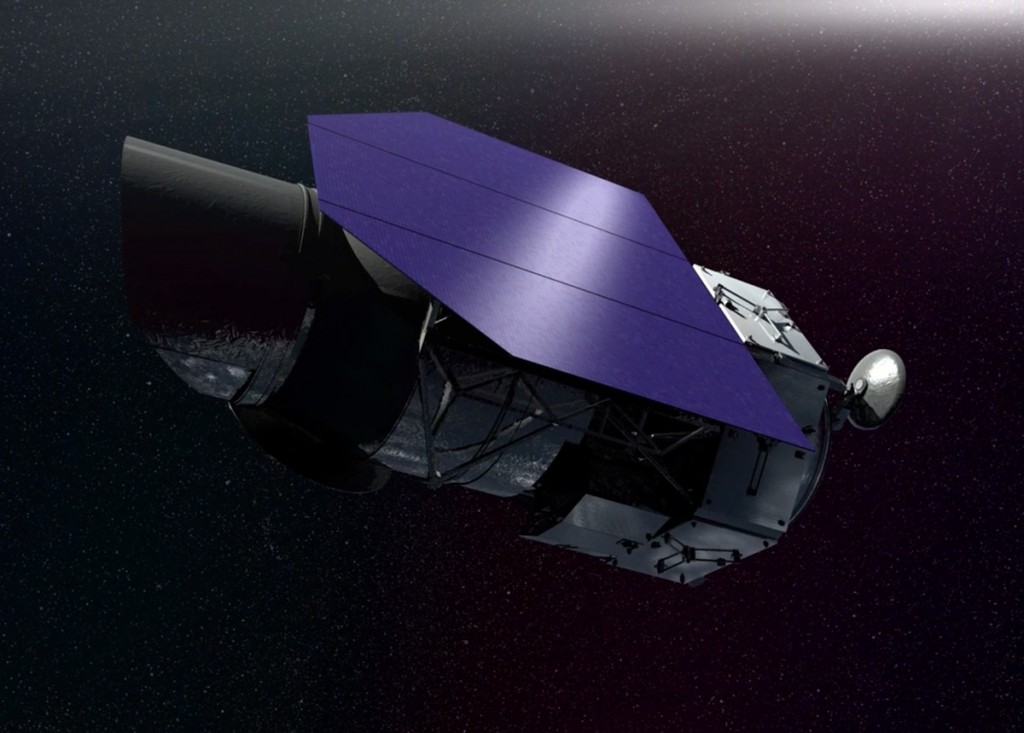
It would seem that the grounded FAST telescope is not the only one aspiring to places further away as NASA is building an improved Hubble telescope, featuring a field of view 100 times wider than before. The new telescope being built by the National Aeronautics and Space Administration has been dubbed the Wide-Field Infrared Survey Telescope (WFIRST) and is expected to be put to work in mid-2020s.

The space telescope is being built with the aspiration of searching for alien worlds beyond our solar system as well as a further study of dark energy and dark matter and their mysterious effects. The two objectives may seem wildly different from one another, but the former comes as a complement to already existent Kepler mission as well as the upcoming Transiting Exoplanet Survey Satellite project. The latter is simply a continuation of what scientists have been interested and baffled by for years.

Thanks to its construction, the WFIRST telescope will feature a new, wide-field survey tool that is accompanied by a coronagraph instrument that helps filter out effects such as glare from stars and reflected light. These usually make it hard for researchers to spot things such as dark matter and dark energy. But removing that factor also helps produce measurements of chemical composition of atmospheres of other worlds.

WFIRST will be able to measure with much better precision not only distances, but also tri-dimensional positions and shapes of distant galaxies, providing scientists with much better insight regarding the evolution and workings of the universe.

Once completed and sent out in outer space, the WFIRST telescope will take its position in the Earth-sun L2, a location that is considered a balance point situated at approximately 1 million miles from our planet, in a directly opposite orientation in relation to the sun.

The WFIRST telescope will be taking onto multiple quests of discovery, and thanks to the improved capabilities that it comes will, will certainly open up new paths of research for scientists, even in topics such as the growth of cosmic structures, cosmic expansion that is believed to happen with time, physics of atmospheres, and other top priority tagged issues of the astronomical community.

Image Source: 1

Filed Under: Tech & Science Tagged With: Dark energy study, Dark matter study, Hubble Telescope, New NASA Telescope

  • « Previous Page
  • 1
  • …
  • 40
  • 41
  • 42
  • 43
  • 44
  • …
  • 114
  • Next Page »

Subscribe to Blog via Email

Enter your email address to subscribe to this blog and receive notifications of new posts by email.

Join 11 other subscribers

Recent Articles

police handcuffs man

German Man Probed In Poisoning That Killed 21 Employees Since 2000

June 29, 2018 By Kenneth Scott Leave a Comment

Chicken wings bar

Intoxicated South Carolina Man Punches Waitress Who Refused to Serve Him Alcohol

June 29, 2018 By Karen Jackson Leave a Comment

gaming

New Zealand gamer Who Flew Halfway Across The World for Virginia Teen Gets Shots By Her Mother

June 28, 2018 By Cristopher Hall Leave a Comment

party

Former Virginia Tech Freshman Sentenced to 50 Years in Prison for Stabbing a Girl to Death

June 28, 2018 By Roxanne Briean Leave a Comment

bonfire

British Couple Sentenced to Life in Prison for Torturing and Murdering French Nanny

June 27, 2018 By Deborah Campbell Leave a Comment

pay phone

Texas Father of Girl Disappeared in the 80s Ignored by Authorities

June 26, 2018 By Cristopher Hall Leave a Comment

bottled water

San Francisco Woman Threatened to Call Police on Girl Who Sold Ice Water for Disneyland Trip

June 25, 2018 By Roxanne Briean Leave a Comment

Maplewood Park

Missouri Man Robbed by Date and Accomplice in Park

June 22, 2018 By Nancy Young Leave a Comment

coding

New York Man Sentenced in Cyberstalking Former Girlfriend, Mailing Drugs to Her Dorm

June 22, 2018 By Deborah Campbell Leave a Comment

headphones

Bose Poised to Launch Sleepbuds, In-Ear Headphones That Help You Sleep

June 21, 2018 By Nancy Young Leave a Comment

Police light

Intoxicated Female Driver in Custody for Pulling Arresting Officer by the Hair

June 21, 2018 By Kenneth Scott Leave a Comment

kitchen

Restaurant Manager Arrested and Charged in Shooting Death of Co-Worker over Negative Yelp Reviews

June 20, 2018 By Karen Jackson Leave a Comment

plastic container

Pennsylvania Couple Charged in Violent Death of Infant Discovered Buried in Cat Litter

June 19, 2018 By Cristopher Hall Leave a Comment

tailpipe

Minnesota Teen Gets Head Stuck In Oversized Tailpipe Winstock Music Festival

June 18, 2018 By Karen Jackson Leave a Comment

Pages

  • About Us
  • Contact us
  • Privacy Policy
  • Privacy Policy GDPR
  • Staff
  • Terms and Conditions

Recent Posts

  • German Man Probed In Poisoning That Killed 21 Employees Since 2000 June 29, 2018
  • Intoxicated South Carolina Man Punches Waitress Who Refused to Serve Him Alcohol June 29, 2018
  • New Zealand gamer Who Flew Halfway Across The World for Virginia Teen Gets Shots By Her Mother June 28, 2018
  • Former Virginia Tech Freshman Sentenced to 50 Years in Prison for Stabbing a Girl to Death June 28, 2018
  • British Couple Sentenced to Life in Prison for Torturing and Murdering French Nanny June 27, 2018
  • Texas Father of Girl Disappeared in the 80s Ignored by Authorities June 26, 2018
  • San Francisco Woman Threatened to Call Police on Girl Who Sold Ice Water for Disneyland Trip June 25, 2018

Categories

  • Business
  • Entertainment
  • Finance
  • Headlines
  • Health
  • Life
  • Nature
  • Science
  • Sports
  • Tech & Science
  • Travel
  • Uncategorized
  • United States
  • World

Copyright © 2026 ArgyllFreePress.com
About · Privacy Policy · Terms of Use · Contact