Argyll Free Press

Growing News Network

Wednesday, April 22, 2026
Log in
  • Business
  • Finance
  • Sports
  • Tech & Science
    • HP Envy 4500 Review
    • LG Optimus 170 Review
    • iPod Touch 6th Generation Review
    • HTC One M8 Accessories Set-up
    • Surrealist Games You Must Play
    • Hisense Sero 8 Review
    • Dell Latitude e7440 Review
    • HP Laserjet 1536dnf mfp Review
    • Garmin Fenix 2 Review
    • Skype Vs Viber
    • Best Video Conferencing Software
    • Sony mdr 1r Headphones Review
    • Canon Rebel t3i Review
    • Sennheiser Momentum 2-0 Review
  • Travel
  • Headlines
  • Health
  • United States

New Horizons Data Still Keeps Shedding Light on Pluto

February 26, 2016 By Nancy Young Leave a Comment

New Horizons Data Still Keeps Shedding Light on Pluto

Even if it has been more than half a year since the probe’s fly-by of Pluto, the New Horizons data still keeps shedding light on Pluto. Images of the planet and data reads have been incoming from the distant probe ever since it has gone out of hibernation and gone back in action. This data has gone through multiple testing phases and research with the scientists from NASA since; after that, the data has slowly been made available to the public in order to share with the rest of humanity just how far our species has gone.

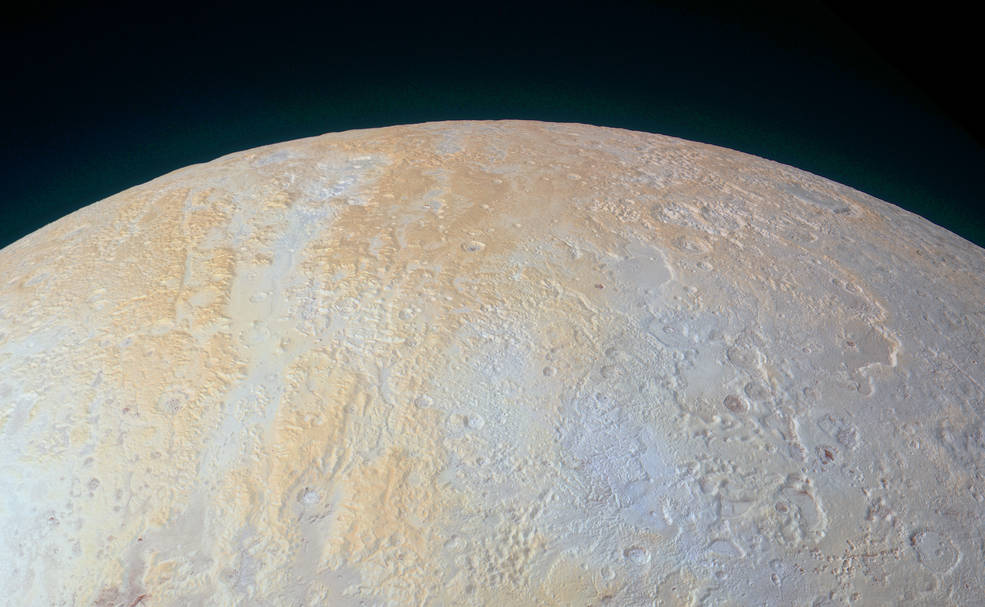
The most recent discovery that has been thrown our way by the NASA newsfeed is a beautiful picture of Pluto’s North Pole. The image was taken by New Horizons using the Ralph/Multispectral Visible Imaging Camera (MVIC), at an altitude of 21,100 miles from the surface of Pluto and about 45 minutes after the probe’s closest approach to the dwarf planet on July 14th 2015.

The image depicts heavily battered terrain and incredibly long canyons scarring the entirety of that area. The canyons run through Pluto’s Lowell Region – also known as the Percival Lowell area – some of them as wide as 45 miles across. A closer study made on the nature of the canyons that seem to run close to the north pole of the planet has revealed that the ravines walls appear to look old; at least older than other, sharper canyon regions that were found on the planet.

Scientists have theorized two possible reasons for that: one would be that the canyons in this region are made of weaker materials that degrade faster. The other explanation would suggest that Pluto had tectonic activity in the past. The deepest of canyons measure about 2.5 miles depth in this particular region. Researchers also theorized that their creation may very well have been a result of subsurface ice melting below the ground, eventually causing a cave-in.

Scientists have also made a point of observing the yellow terrains that are particularly visible closer to the North Pole than they are in the other regions of the planet. While it’s not with a hundred percent certainty, scientists suspect that the hue is a result of methane deposits that ended up being processed more by the solar radiation than bluer terrain in other zones on the planet.

Image Source: 1
Filed Under: Tech & Science Tagged With: new horizons, Pluto, Pluto North Pole, pluto surface

Fast Radio Burst Spotting Results in Success for the First Time

February 26, 2016 By Michael Turner Leave a Comment

Fast Radio Burst Spotting Results in Success for the First Time

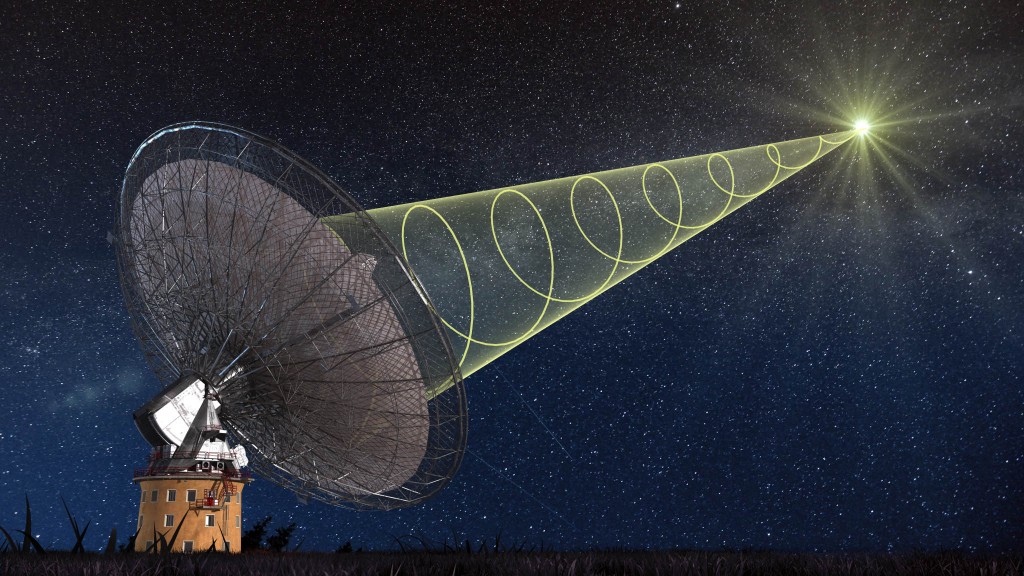
Recent news tell us that a fast radio burst spotting results in success for the first time. FRBs are extremely high-energy astrophysical phenomena that manifest through transient radio pulses that only last a few milliseconds. Because of that, they are usually extremely hard to find or detect. Records only show 17 occurrences ever being spotted until February 2016; most of them, however, were not detected at the time of occurrence. Usually, when one would be discovered, it would be a result of looking through months and even years of recorded data being reviewed by scientists.

A fast radio burst is a staggering event; despite their very short-lived duration, they are amazingly powerful. Scientists have estimated that a phenomenon as FRB can generate as much as energy as our Sun creates in roughly 10,000 years. Their origin is just as enigmatic, even though this could very well be an effect of how difficult catching and observing one in real time is.

So far researchers hadn’t been able to detect the nature of these events – what causes them, where they come from or how they manifest. Studying pieces of data that were out of date and without having access to the kind of information you needed in order to pinpoint the origin of a fast radio burst that had occurred months ago for example was like trying to find a needle in a haystack.

However, astronomers from the National Astronomical Observatory of Japan’s Subaru telescope and the ones from Commonwealth Scientific and Industrial Research Organisation (CSIRO) recently announced a breakthrough. For the first time, scientists were able to catch a fast radio burst taking place as it was taking place thanks to the preparation they had done in advance.

By setting up a system that gave the scientists an early warning whenever a signal was received, they would send out word to other observatories to zoom in to a particular spot on the sky where the FRB was detected. This system was probably inspired by NASA’s Swift space telescope that does the same, except with gamma ray bursts.

So thanks to this type of collaboration, scientists from different places on the planet were able to not only witness a fast radio burst happening, but also to pinpoint the mysterious location that it had originated from. The answer was that the FRB that had been spotted was coming from a galaxy 6 billion light years away. A galaxy that didn’t thrive in star formation, following studies showed, meaning that these phenomena could not be a result of that.

Image Source: 1

Filed Under: Tech & Science Tagged With: fast radio burst spottin g, fast radio bursts, FRB, nasa

256 GB Storage Options Are Incoming for Smartphones

February 26, 2016 By Kenneth Scott Leave a Comment

256 GB Storage Options Are Incoming for Smartphones

Not necessarily something that we didn’t see coming but now it’s very certain that 256 GB storage options are incoming for smartphones. The reason why 2016 should be the year when we start seeing 256 GB phones on stores’ shelves is because Samsung is the company that has begun mass producing 256 GB chips. Those are based on the Universal Flash Storage 2.0 standard (UFS).

This means more than just doubling the current maximum storage that you can find on phones (128 GB). The new chips that Samsung has developed are almost twice as fast as what the current technology can provide us, clocking at a speed of 850 MB per second. The writing speed may be lower than the reading speed – at 250 MB per second – but that is quite natural and still a huge amount of transfer power if you stop to think about it.

Simultaneously though, the new chips developed by Samsung advertise themselves to support up to 45,000 IOPS (40,000 IOPS on the writing aspect), once again doubling the value of their predecessors. IOPS – also known as Input/Output Operations Per Second value – is a method of measuring and benchmarking different types of storage. All these values manage to almost catch up with the speeds of a solid state drive for computers.

This is the second major hardware improvement that smartphones are promised to be getting soon this year, the first being the addition of the new Snapdragon 820 processor series. However, while the latter has already been announced as being part of some of the upcoming flagship smartphones coming out in the following months, the storage option is not yet part of the plan in any of the announced devices. But there’s nothing stopping Samsung from adding this storage option later on throughout the first half year of the Galaxy S7’s life.

That was the method they applied to the S6 after all. While it didn’t have the 128 GB version as a purchasable option on launch, it became one later on so there’s hardly anything stopping Samsung from doing that again.

This hardware addition compliments the other plans that Samsung seems to be cooking up. In another attempt to bring more capability to smartphones and phablets alike, Samsung announced back in September that it was also working on a new dynamic random access memory (DRAM) chip that could take the phone RAM value up to 6 GB of onboard memory. That number is hardly all there is to it, as the new DRAM memory is said to consume 20 percent less energy and be 30 percent faster at the same time.

Image Source: 1

Filed Under: Tech & Science Tagged With: 256 GB Storage Chips, samsung, Samsung Galaxy S7, Smartphone storage

The Internet of Things Is Expanding at a Steady Pace

February 26, 2016 By Karen Jackson Leave a Comment

The Internet of Things Is Expanding at a Steady Pace

There are plenty of studies and researches looking into IoT – which is believed to be the future that awaits us – and the Internet of Things is expanding at a steady pace, it would seem. As a matter of fact, simply watching the world change with every CES or other technological change in common items we use is the best idea you can use to be able to witness how things are changing.

The Internet of Things is occasionally referred to as being the next Industrial Revolution because as it develops in our society, it changes the way a huge amount of things work. And with these changes come new opportunities, of course. However, not every business out there is looking in this direction, and chances are that while it can still work to run a business that doesn’t implement IoT solutions for now, in a few years from now, things will be very different.

The Internet of Things: Examining how the IoT Will Affect the World is a study that had managed to make some estimates regarding how things will be in a few years from now. The study estimates that the IoT devices connected to the internet will triple by 2020, reaching a total number of 34 billion. Out of that number, only 10 billion will consist of traditional devices such as smartphones, tablets and so on.

Another point made by the study is the fact that governments will be the second-largest adopters of IoT solutions after businesses, with the consumer sector lagging behind the most. And that is the case even when we think about how in years from now on we will have heavily connected devices that allow us to control our surroundings and appliances from a single control hub. About how we will start requiring to do things in person a lot less than we do these days.

While studies estimate that the machine to machine and IoT ecosystem market will grow exponentially by 2020 (estimated somewhere at $250 billion), there currently is a noticeable trend in businesses. To be more specific, it would appear that at the current time, executives who are actively adopting it are very few in number. The study suggests that the reason behind it is a reluctance towards IoT security. In a world where everything is connected, breaching into one piece of the puzzle is rather easy.

Image Source: 1

Filed Under: Tech & Science Tagged With: Internet of Things, Internet of Things Solutions, Internet of Things Studies, IoT

The Implications of Facebook’s New Reactions

February 26, 2016 By Deborah Campbell Leave a Comment

The Implications of Facebook’s New Reactions

They have only been out for a couple of days at best and yet the implications of Facebook’s new Reactions system are already being thoroughly studied and discussed by both official staff as well as multiple blogs or individuals who feel like they have something to share. The Reaction system is something that downright threatens to change the very essence that has been captured and known as Facebook for the past several years.

But then again, everything must change at one point and Facebook made the step. According to the company, the current reaction system which sums up to Like, Love, Haha, Yay, Wow, Sad and Angry were the result of an entire year of research and development in order to come up with. And that is one year after the 2 years of testing the territory and thinking of methods to apply the intention.

And the team that worked on the project was comprised of more than just Facebook employees. An entire team coming from UC Berkeley’s Greater Good Science Center, led by Dacher Keltner – the founder, director and psychology professor – was on the job of developing the new Reaction system.

The series of conclusions that led to the creation of just the 6 new reactions that you can find on Facebook as of right now came from a selection of many more. And making the final selection of emotions that would be depicted in the reaction system took a lot longer to decide. Keltner mentioned in his research that he learned that scientists study more than 20 emotions present in human beings.

But Facebook had to find a series of reactions that would be recognizable to people all around the globe and not something limited to one particular space instead. From a selection of 50 emotions that were sent to the Facebook Reactions team by Pixar illustrator Matt Jones, the team had to choose just several that could best describe the selection of emotions that Facebook users would want to express without any further comment.

However, now that the Reactions system is complete and the issue of covering a wide enough selection of emotions that people may want to display to posts on Facebook, some individuals are not slow to express their concern over the effect of these additions. Multiple people are reporting the fact that the new system may overrun the classic version of actually typing out replies to people’s posts.

Even one of the people working on the team that developed the Reactions system expressed her concern that the new emojis may end up being misused and even abused in various circumstances. This is the internet after all.

How do you feel about the new Reactions system that Facebook has come up with?

Image Source: 1

Filed Under: Tech & Science Tagged With: Facebook, Facebook R&D, Facebook Reactions, Reactions development

Inbuilt Blurring Tool Is Now Available on YouTube

February 26, 2016 By Cristopher Hall Leave a Comment

Inbuilt Blurring Tool Is Now Available on YouTube

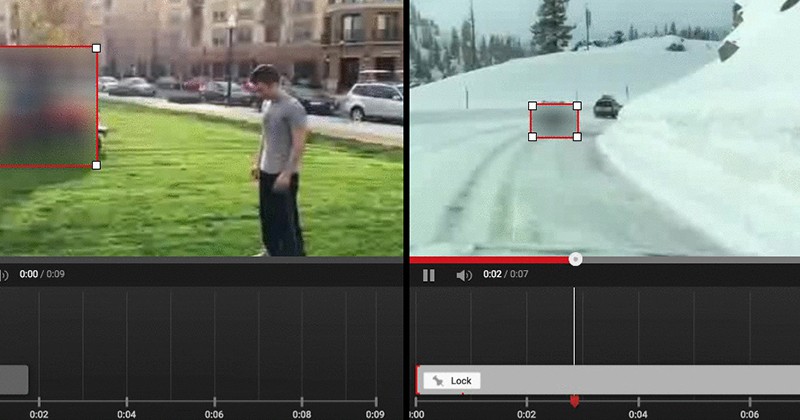
In order to help out video creators with post-production issues that may come up in the last second, an inbuilt blurring tool is now available on YouTube. Basically anything that you realize is not supposed to be in your video after you’ve completed recording and editing it, such as car plates, particular faces, objects, or ‘wardrobe malfunctions’ – as YouTube itself puts it – can be blurred out immediately. It’s a great alternative to having to reshoot scenes or dealing with the unfortunate event where someone decides they want to be taken out of a video just after you’re done with it.

The number of content creators on YouTube is constantly increasing, with more and more people deciding to undertake one or more types of video content to their channel. Whether it’s vlogs, social experiments, interviews or even the amateur-level variety, the blurring tool can give creators a last-minute fix to anything that may simply risk ruining your video.

And because you may not even be able to recapture the essence of the original video once again – which is usually the case with a lot of spontaneous shots – this new addition is small but amazingly useful.

A less advanced form of the blurring tool has been part of the offered tools by YouTube before, too. Starting with 2012, the platform offered creators a way to blur faces but they would be limited to that. Now, the tool is a lot more dynamic and easier to use. You can straight out just pause a video, use the box selection tool around the item you wish to blur and then let it run by itself. The drawn selection box will continue to follow the selected object as it detects it moving in the video.

While the proprietary motion tracking algorithms that YouTube has will continue blurring the object that you selected, you will have to manually select the duration that you wish to keep that object selected for. Similarly, you can ensure that the selected area is static and doesn’t follow a particular object. This can be done via the “Lock” option. Similarly, the option can be applied to more than just one object or face present in the video, meaning that you can have multiple blurs happening at the same time, whether the subjects are in motion or not.

This new tool allows creators to protect both their videos and the people featuring in them. It’s a very small yet tremendously useful tool as it can help with preventing claim trademark infringement as well as protecting identities and private data.

Image Source: 1

Filed Under: Tech & Science Tagged With: dynamic blurring tool, youtube, YouTube Blurring Tool, YouTube legal aid

Google Docs Just Got Ten Times Better

February 25, 2016 By Roxanne Briean Leave a Comment

Google Docs Just Got Ten Times Better

The less and less overlooked document editor, Google Docs, just got ten times better overnight, after Google decided to give it a twist. The twist in question is nothing else than allowing its users to type, edit and format documents – all via voice commands. So basically, anything that you previously thought you needed at least a keyboard for in terms of work may very well become a lot easier than ever believed to be before.

This is a move that completes the change that first came to Google Docs back in September 2015. At this point Google decided to add voice typing to their Google Docs service that would allow users to compose and edit documents a lot faster than before. However, this change felt somewhat incomplete as it would literally only allow you to dictate text and nothing more. Anything other, such as editing, formatting, copy pasting and so on would still require a keyboard and a mouse most of the time.

However, the new version of Google Docs is crazily useful for anyone who wishes to compose a document and have it all edited, formatted and ready to go without ever needing to touch a keyboard in order to achieve that.

The new update is pretty large in terms of capability. It can now follow a vast series of commands that the program itself is capable of. Things such as align center, go to end of line, select all, copy, paste, highlight, bold, insert table and everything else in between can be spoken instead of selected using a keyboard and/or mouse. Even more than that, saying ‘voice commands help’ while in Google Docs will make a window pop up, listing every single command that the program is capable of.

Even more than that, because the biggest problem with voice commands in other technology’s case is trying to make yourself understood by the device, people have expressed concern regarding its ability to not misunderstand what it’s being told. In response to that, Google mentioned that the voice typing feature also supports the newer English ‘dialects’, giving you a fair reading of what you’re saying without you having to struggle to sound differently than you normally do.

This new feature can be used by anyone right away, as long as you have either an internal microphone or a normal headset to help you out dictate text to your computer and you turn the feature on.

Image Source: 1

Filed Under: Tech & Science Tagged With: Google Docs, Google Docs Updates, Google Voice Control, Google Voice Formatting

Everybody Wants to Go to the Red Planet

February 25, 2016 By Roxanne Briean Leave a Comment

Everybody Wants to Go to the Red Planet

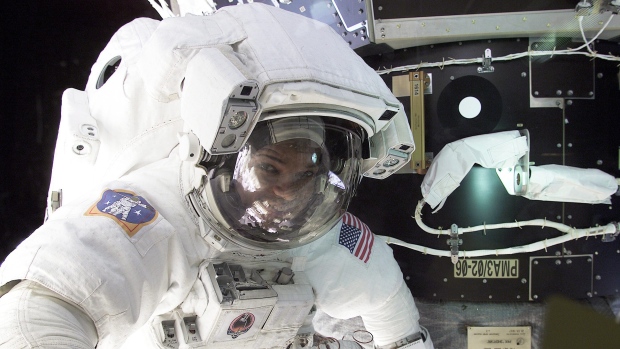
It would seem that everybody wants to go to the Red Planet under NASA’s fosterage. Or at least that’s what the number of applicants says, even if ‘everybody’ is an overstatement. Still, following NASA’s advert that it’s looking for its next class of astronauts that will most likely get to go to Mars in person over the next couple of decades, no less than 18,300 Americans have signed up to the program to become an astronaut.

The National Aeronautics and Space Administration opened the position just two months ago and an astounding number of people already submitted their resumes. While the enthusiasm for the mission is surely flattering for both NASA and humanity as a whole, the ‘new class of astronauts’ will only be able to be comprised of 12 people, which one could say is a little less than the number of applicants.

This huge amount of interest is relatively hard to explain, especially when one looks at the numbers and realizes this time around the number of applicants is three times larger than the number recorded for the hiring session that NASA held 4 years ago.

And yet, the prerequisites of being an astronaut are not to be taken lightly, and it’s still surprising that so many are qualified to put forward their resumes and recommendations in order to hope for a chance to be one of the very few who will embark on what is probably the most important mission of mankind up to this point in time.

The selection process will drag on for a shocking 18-month period and it’s far from your regular job interview kind of system. Testing, background checks, health verifications and even more than just that are some of the stages of the interview that applicants will be taken through in order to become one of the few.

The lucky ones who end up being selected will have a long trek of trials and tribulations ahead of them before they can even step foot into a space craft and leave for milestones as close to our planet as the International Space Station. The ones who make the cut will have to undergo 2 years of initial training that involves practicing on simulated spacecraft systems, spacewalking, learning how to speak Russian and many more.

A realistic trip will not happen until the early 2020s most likely, however. And before the Mars Mission will even have a chance to happen, there will be plenty of other manned missions planned for NASA astronauts, including ISS boarding, two commercial crew space crafts under U.S. companies brands as well as the Orion deep-space exploration vehicle.

Image Source: 1

Filed Under: Tech & Science Tagged With: ISS, Mars mission, nasa, NASA Astronauts, NASA hiring

Scott Kelly’s Year in Space Will Be Completed Soon

February 25, 2016 By Nancy Young Leave a Comment

Scott Kelly’s Year in Space Will Be Completed Soon

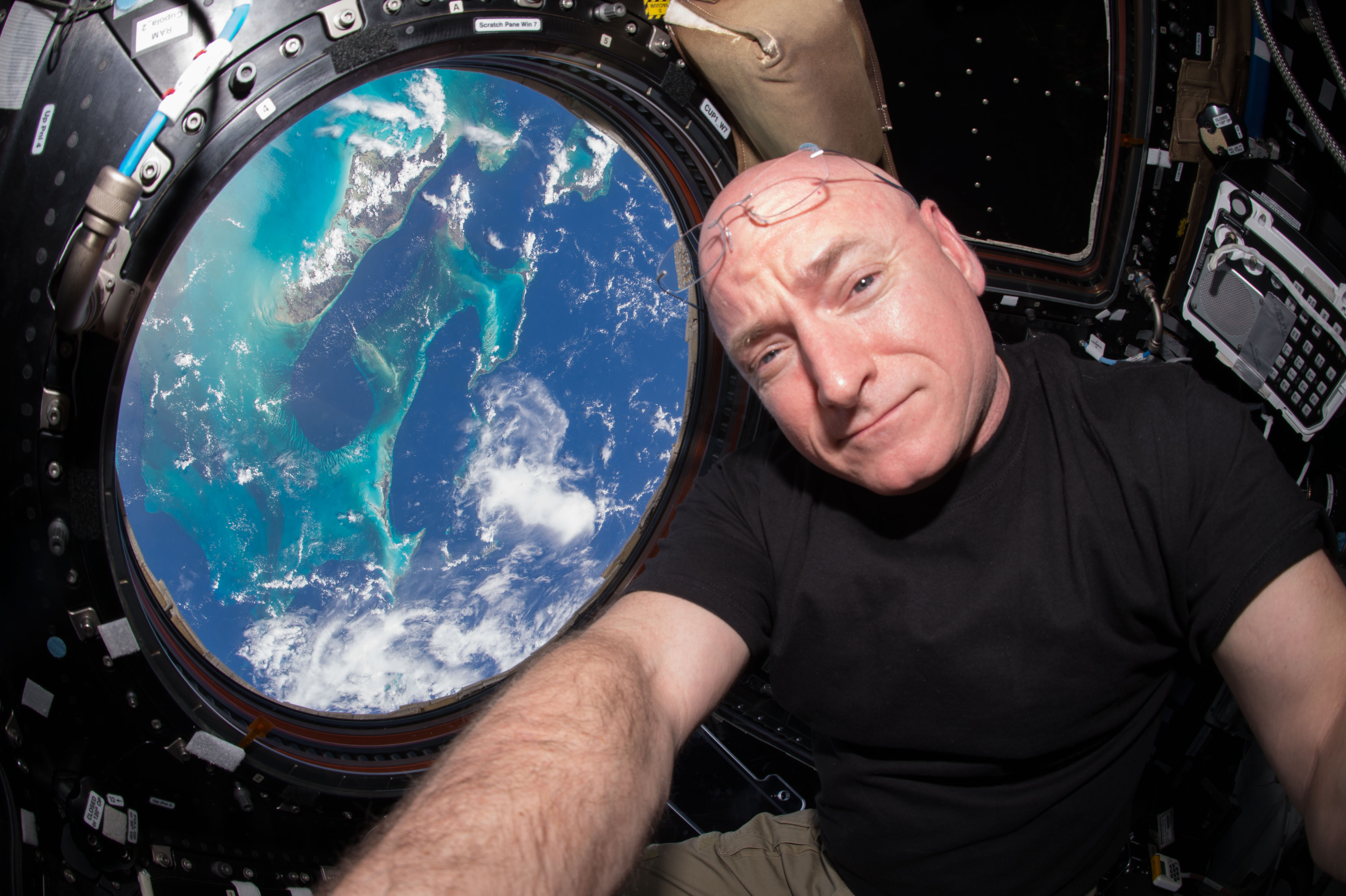
Scott Kelly’s Year in space will be completed soon, in just several days from now. March 1st 2016 marks the day when astronaut and engineer and retired U.S. Navy Captain Scott Kelly will return to the surface of the Earth, after having spent 340 days on the International Space Station in one go. While Scott Kelly is not the first or the only astronaut to spend such a long time in outer space, but currently holds the record for the most overall time spent – 520 days.

Scott Kelly made an impression on the hearts of many back on Earth, not to mention the fact that he is centric to an experiment that involves his identical twin brother, which hopes to determine the physical and psychological changes that astronauts undergo while in outer space.

To the fans and people back on Earth, he has been an inspiration to say the least and communicated more than anyone would have ever expected from him. By using various social media platforms such as Twitter or Tumblr, Scott Kelly kept in touch with the thousands of people following his year-long story spent on the International Space Station. Whether it was the breathtaking photos he would take of amazing looking sunrises as they are seen from space, the aurora borealis or the night-lit cities of our planet, Kelly continued to post at least a photo a day from the ISS, more than 200 miles above the planet’s surface.

On Tumblr, he took nearly an entire day to answer question coming from numerous people following him about what life in space is really like. Between joking about how he’ll be taller than his brother when he comes back and realizing how he has grown fond of the space station, a fact that makes him feel like he will miss the ISS, Scott Kelly says he will welcome the return to Earth.

His press atop the International Space Station has meant a lot more than it would seem, the experiment that him and his brother are part of only being one of many. All of the studies and experiments run on board of the ISS are preliminary steps that mankind needs to take in preparation of a manned expedition to Mars, the Red Planet. On top of studying how the human body fares when exposed to life in outer space for a prolonged amount of time, the astronauts on the ISS also studied methods of crop growing while in space, for example.

Image Source: 1

Filed Under: Tech & Science Tagged With: International Space Station, ISS, Scott Kelly, Year in space

How Nature Inspires Innovative Technology

February 25, 2016 By Michael Turner Leave a Comment

How Nature Inspires Innovative Technology

It seems there is no better muse for innovative tools than nature itself – and it’s almost hilarious just how nature inspires innovative technology in our days. There is a shocking amount of ingenuity scientists take from the way things work in the nature in order to bring some new contraption into the class of innovations – whether they manifest in terms of utility or leisure.

Just recently, some researchers were discussing what a ‘roach’ robot would be like if it was built in order to assist with natural disaster such as earthquakes or collapsed buildings. By studying the way roaches move and manage to squeeze through spaces much smaller than their normal size, a prototype was begun shortly after.

Now, another group of scientists is moving their gaze towards another aspect of nature that can help mankind with using air as a source of water. Their inspiration? It’s more than just one thing this time around: a darkling beetle, a species of carnivorous plant and even a cactus. However, the final result is far from looking like any of the above.

Instead, the end result is a material covered in microscopic bumps. But it’s an overstatement to say that it can just draw water out of thin air like that. Instead, these panels that were built by MIT graduate student Kyoo-Chul Park excel at drawing water out of foggy atmosphere. This is achieved thanks to the nature of the surfaces that are made to allow water to condense on them.

So in essence, a phenomenon scientists noticed in the beetles that live in southern Africa was how they managed to survive on less than a centimeter of rain in an entire year. The way the beetles do that is by harvesting fog that is incoming from the Atlantic Ocean by pointing their bodies upwards and letting them serve as a surface for water to condense on.

But that alone was not enough. Upon closer inspection they noticed that the bodies of the insects display a series of small bumps made from something that would attract water, while the spaces between them were water-repelling. Therefore, water would be collected onto the bumps, while the ‘valleys’ created by them would serve as channels that would help the water travel.

Using that concept, scientists were able to design a surface that would do the exact same thing and allow the same process to take place. By placing such panels in places where water supplies are scarce or the weather is hot enough to not allow clouds to coalesce and rain, this could prove as a solution.

Image Source: 1

Filed Under: Tech & Science Tagged With: condensation, desert beetle, water capture, water capture in desert

  • « Previous Page
  • 1
  • …
  • 38
  • 39
  • 40
  • 41
  • 42
  • …
  • 114
  • Next Page »

Subscribe to Blog via Email

Enter your email address to subscribe to this blog and receive notifications of new posts by email.

Join 11 other subscribers

Recent Articles

police handcuffs man

German Man Probed In Poisoning That Killed 21 Employees Since 2000

June 29, 2018 By Kenneth Scott Leave a Comment

Chicken wings bar

Intoxicated South Carolina Man Punches Waitress Who Refused to Serve Him Alcohol

June 29, 2018 By Karen Jackson Leave a Comment

gaming

New Zealand gamer Who Flew Halfway Across The World for Virginia Teen Gets Shots By Her Mother

June 28, 2018 By Cristopher Hall Leave a Comment

party

Former Virginia Tech Freshman Sentenced to 50 Years in Prison for Stabbing a Girl to Death

June 28, 2018 By Roxanne Briean Leave a Comment

bonfire

British Couple Sentenced to Life in Prison for Torturing and Murdering French Nanny

June 27, 2018 By Deborah Campbell Leave a Comment

pay phone

Texas Father of Girl Disappeared in the 80s Ignored by Authorities

June 26, 2018 By Cristopher Hall Leave a Comment

bottled water

San Francisco Woman Threatened to Call Police on Girl Who Sold Ice Water for Disneyland Trip

June 25, 2018 By Roxanne Briean Leave a Comment

Maplewood Park

Missouri Man Robbed by Date and Accomplice in Park

June 22, 2018 By Nancy Young Leave a Comment

coding

New York Man Sentenced in Cyberstalking Former Girlfriend, Mailing Drugs to Her Dorm

June 22, 2018 By Deborah Campbell Leave a Comment

headphones

Bose Poised to Launch Sleepbuds, In-Ear Headphones That Help You Sleep

June 21, 2018 By Nancy Young Leave a Comment

Police light

Intoxicated Female Driver in Custody for Pulling Arresting Officer by the Hair

June 21, 2018 By Kenneth Scott Leave a Comment

kitchen

Restaurant Manager Arrested and Charged in Shooting Death of Co-Worker over Negative Yelp Reviews

June 20, 2018 By Karen Jackson Leave a Comment

plastic container

Pennsylvania Couple Charged in Violent Death of Infant Discovered Buried in Cat Litter

June 19, 2018 By Cristopher Hall Leave a Comment

tailpipe

Minnesota Teen Gets Head Stuck In Oversized Tailpipe Winstock Music Festival

June 18, 2018 By Karen Jackson Leave a Comment

Pages

  • About Us
  • Contact us
  • Privacy Policy
  • Privacy Policy GDPR
  • Staff
  • Terms and Conditions

Recent Posts

  • German Man Probed In Poisoning That Killed 21 Employees Since 2000 June 29, 2018
  • Intoxicated South Carolina Man Punches Waitress Who Refused to Serve Him Alcohol June 29, 2018
  • New Zealand gamer Who Flew Halfway Across The World for Virginia Teen Gets Shots By Her Mother June 28, 2018
  • Former Virginia Tech Freshman Sentenced to 50 Years in Prison for Stabbing a Girl to Death June 28, 2018
  • British Couple Sentenced to Life in Prison for Torturing and Murdering French Nanny June 27, 2018
  • Texas Father of Girl Disappeared in the 80s Ignored by Authorities June 26, 2018
  • San Francisco Woman Threatened to Call Police on Girl Who Sold Ice Water for Disneyland Trip June 25, 2018

Categories

  • Business
  • Entertainment
  • Finance
  • Headlines
  • Health
  • Life
  • Nature
  • Science
  • Sports
  • Tech & Science
  • Travel
  • Uncategorized
  • United States
  • World

Copyright © 2026 ArgyllFreePress.com
About · Privacy Policy · Terms of Use · Contact