Argyll Free Press

Growing News Network

Tuesday, May 5, 2026
Log in
  • Business
  • Finance
  • Sports
  • Tech & Science
    • HP Envy 4500 Review
    • LG Optimus 170 Review
    • iPod Touch 6th Generation Review
    • HTC One M8 Accessories Set-up
    • Surrealist Games You Must Play
    • Hisense Sero 8 Review
    • Dell Latitude e7440 Review
    • HP Laserjet 1536dnf mfp Review
    • Garmin Fenix 2 Review
    • Skype Vs Viber
    • Best Video Conferencing Software
    • Sony mdr 1r Headphones Review
    • Canon Rebel t3i Review
    • Sennheiser Momentum 2-0 Review
  • Travel
  • Headlines
  • Health
  • United States

Everybody Wants to Go to the Red Planet

February 25, 2016 By Roxanne Briean Leave a Comment

Everybody Wants to Go to the Red Planet

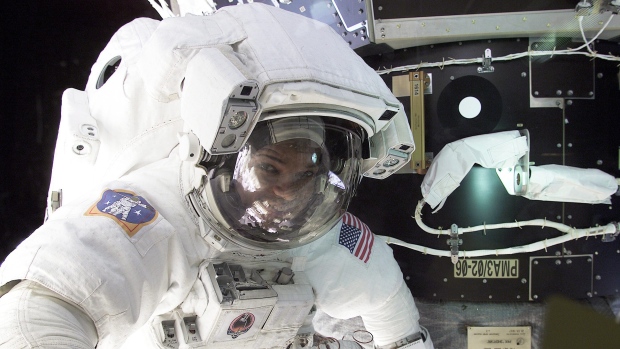
It would seem that everybody wants to go to the Red Planet under NASA’s fosterage. Or at least that’s what the number of applicants says, even if ‘everybody’ is an overstatement. Still, following NASA’s advert that it’s looking for its next class of astronauts that will most likely get to go to Mars in person over the next couple of decades, no less than 18,300 Americans have signed up to the program to become an astronaut.

The National Aeronautics and Space Administration opened the position just two months ago and an astounding number of people already submitted their resumes. While the enthusiasm for the mission is surely flattering for both NASA and humanity as a whole, the ‘new class of astronauts’ will only be able to be comprised of 12 people, which one could say is a little less than the number of applicants.

This huge amount of interest is relatively hard to explain, especially when one looks at the numbers and realizes this time around the number of applicants is three times larger than the number recorded for the hiring session that NASA held 4 years ago.

And yet, the prerequisites of being an astronaut are not to be taken lightly, and it’s still surprising that so many are qualified to put forward their resumes and recommendations in order to hope for a chance to be one of the very few who will embark on what is probably the most important mission of mankind up to this point in time.

The selection process will drag on for a shocking 18-month period and it’s far from your regular job interview kind of system. Testing, background checks, health verifications and even more than just that are some of the stages of the interview that applicants will be taken through in order to become one of the few.

The lucky ones who end up being selected will have a long trek of trials and tribulations ahead of them before they can even step foot into a space craft and leave for milestones as close to our planet as the International Space Station. The ones who make the cut will have to undergo 2 years of initial training that involves practicing on simulated spacecraft systems, spacewalking, learning how to speak Russian and many more.

A realistic trip will not happen until the early 2020s most likely, however. And before the Mars Mission will even have a chance to happen, there will be plenty of other manned missions planned for NASA astronauts, including ISS boarding, two commercial crew space crafts under U.S. companies brands as well as the Orion deep-space exploration vehicle.

Image Source: 1

Filed Under: Tech & Science Tagged With: ISS, Mars mission, nasa, NASA Astronauts, NASA hiring

HTC Teases the Public with the Power of 10

February 25, 2016 By Roxanne Briean Leave a Comment

The HTC One M10 is coming

Anyone who has subscribed to the newsletter of HTC has probably been a little surprised yesterday morning when their inbox was graced by a mysterious teaser sent by the Taiwanese manufacturer. And just few hours later, a short and ambiguous tweet featuring the same image and tagged as #Powerof10 became the pinned post of the official HTC Twitter account.

As you may have already figured out yourself, there’s only one thing that this can mean. The HTC One M10 is coming. And because the Mobile World Congress 2016 was not the event to showcase the upcoming flagship coming from HTC, the press event scheduled to take place on April 11th in London will most likely be the moment of unveiling in the true sense of the word.

It was a little surprising to see that HTC chose to only showcase the Desire series at MWC 2016. While all the other manufacturers were quick on their feet to present their latest endeavors such as the Samsung Galaxy S7 and LG G5, HTC bid its time to give us this snippet of what suggests to be a shadowed outline of the next HTC One smartphone.

While there’s no telling if any other details regarding the HTC One M10 will make their way out of confidential confines and to the public until the press event in April, there are various rumors suggesting the juicy details of the next flagship of the company. Those include a 12 MP Sony IMX377 camera, featuring 1.55um lens, phase detection auto focus and a laser autofocus, the Qualcomm Snapdragon 820 quad-core processor that was showcased at CES 2016, 4 GB of RAM and 64 or 128 GB inbuilt storage options. Not to mention that it will come with pre-loaded Android 6.0.1 Marhsmallow – or a later iteration if it, depending on what is the final release date that HTC decides on.

The HTC One M10 is believed to be the rumored project Perfume that piqued the interest of fans all over the world back when it was first leaked. And now that we have an apparently innocent teaser image to work with, there’s a little more we can deduce from what we’ve got so far.

The image behind what is most probably going to be the slogan of the HTC One M10 – #Powerof10 – appears to look a lot like the edge of a phone. If you look closely, you can almost tell it’s metallic in build and chamfered around the edges. If we’re to observe closely, the edges appear to be in relief and a lot sharper than we’ve seen on a huge number of phones so far.

Image Source: 1

Filed Under: Tech & Science Tagged With: HTC, HTC flagship, HTC One M10, HTC press event

LG Brings the Type of Robot We Will Have in Our Homes Soon

February 24, 2016 By Roxanne Briean Leave a Comment

LG Brings the Type of Robot We Will Have in Our Homes Soon

While Boston Dynamics is working on the type of robot that does an amazing job at either running as fast as a cheetah or carrying up to 400 lbs of weight while balancing on any type of terrain, LG has slightly different concerns when it comes to robotics.

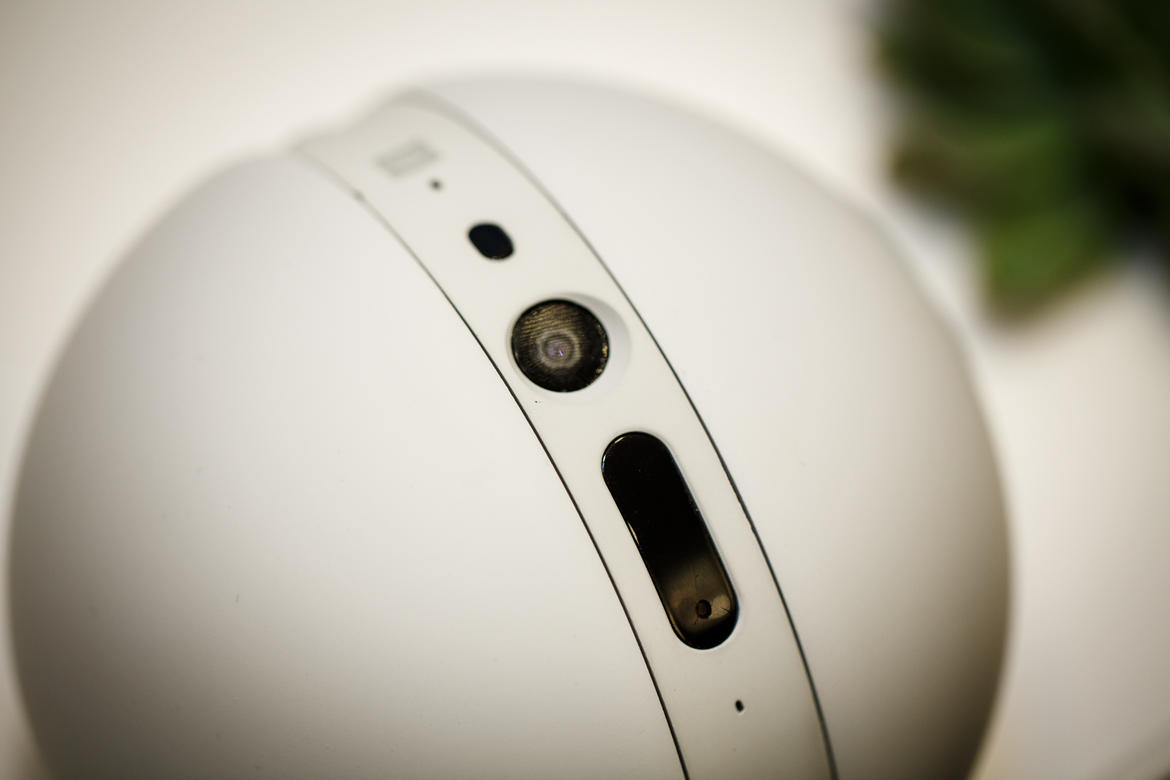
Surely, LG’s Rolling Robot is not as capable as the Atlas, for example, but has much more realistic utility in your lives or mine than the former. And while the LG Rolling Bot has a lot more simplistic and small build, it does an equally great job at maintaining its balance too.

The LG Rolling Bot is a contraption that you may have seen earlier this year at CES 2016 if you were there for the show. While it can be used for a number of things, one use that most people who have seen it and even the designers themselves seem to agree on is the fact that the LG Rolling Bot can be used as a remote camera and ‘entertainer’ for your cat.

When you first set your eyes on it, you may feel like there’s an uncanny resemblance between it and BB-9 from Star Wars: The Force Awakens. But frankly, the only similarity is the motion mechanism they employ to move around. Although the name suggests it, the Rolling Bot doesn’t exactly roll, but instead uses a set of two wheels underneath it to move around. Similarly, you’d expect a spherical thing like that would use its own shape to its locomotive advantage but really, the robot’s position and facing will remain the same nearly all the time.

So what is the LG Rolling Bot good for? It features an 8 MP camera that can steer and move up, down, left or right to up to 15 degrees, giving you a way to look around whenever you need to. Thanks to the camera and inbuilt remote controls that you’d be using off of your smartphone, you can use it to check things around your home even when you’re away. Not to mention that thanks to a couple of embedded infrared remote sensors will let you set them up in order to control various home appliances such as lights, television sets or air conditioners.

The reason they say you can use this as a cat cam is because you can easily use the LG Rolling Bot as a home monitoring tool and if not that, a method to keep your pets entertained. With the use of the inbuilt microphone and stereo, you can straight up make your cats feel less lonely when you’re not there to provide them with the affection they need in person.

Image Source: 1

Filed Under: Tech & Science Tagged With: BB-8 Like Robot, CES 2016, Home Monitoring Robots, LG Rolling Bot

IBM Is Planning to Develop a Real Life Sword Art Online Project

February 23, 2016 By Roxanne Briean Leave a Comment

IBM Is Planning to Develop a Real Life Sword Art Online Project

Thanks to its Watson Cognitive Computing tech and SoftLayer cloud computing technologies that the company has access to, IBM is planning to develop a real life Sword Art Online project. Minus the correlation between dying in the game and dying in real life. However, according to the company, they wish to create a world that hosts a role-playing game just like the one depicted in the very popular anime series.

Coming as a massively multiplayer online role-playing game taking place in a purely virtual reality environment, the game would not only appease the hunger of avid gamers and fans of the long awaited concept of virtual reality gaming, but it will also be the first of its kind.

One of the best parts of it all is that it seems to actually be a recreation of the VR game that was depicted in the anime series as the IBM dubbed its project ‘Sword Art Online: The Beginning’. There is extremely little there is known about the project at the current time with more announcements due to be made between March 18th and March 20th, when there will be a Tokyo-based event on the theme. So far, all we know is that starting that date the alpha testing of the game will begin with no less than 208 testers situated in Tokyo.

While the game will be made to run on both the Oculus Rift and HTC Vive, it will also involve the use of a 3D body scanner that will translate your real life looks into the game to create your very own avatar. Not to mention that we won’t be using controllers to maneuver our way through the game – according to reports. Instead, motion controls are how people will be controlling their virtual reality characters. Something similar to the NerveGear VR from the anime show is still going to take a while to become reality; years the very least.

Sword Art Online: The Beginning will surely be different from what we’ve seen in the Japanese animation, but also be shockingly different from any previous gaming experience. The anime’s creator – who seems to also be involved with the development of the real life SAO Sword Art Online VRMMO – has personally stated that The Beginning will be ‘completely foreign’ from any other video game experience.

There is undoubted concern regarding a real life application that pretty much holds you physically immobile from the waist down in a world that promises a dozen more times of immersion levels that the video games of our day currently do. However, only time will be able to show us just how much reason for concern there really is.

Image Source: 1

Filed Under: Tech & Science Tagged With: IBM, SAO VR Game, Sword Art Online, VRMMO

NASA Discusses Apollo 10 Mission Secrets

February 22, 2016 By Roxanne Briean Leave a Comment

NASA Discusses Apollo 10 Mission Secrets

Thanks to the latest episode of NASA’s Unexplained Files documentary, where NASA discusses Apollo 10 mission secrets, the public is once more shown the events that took place on the spacecraft decades ago. It is not the first time that we get to see with our own eyes the transcript of everything that happened in the several hours that the astronauts spent on the dark side of the Moon and outside radio range.

The transcript was originally declassified and made public back in 2008, and anyone can personally access and read it here. And one of the reasons anyone who has ever read it knows that there was more than just one peculiar phenomenon back on the deck of the spacecraft orbiting our moon. The most popular one, and the one showcased in the NASA documentary was the ‘space music’ incident.

While the crew of the Apollo 10 were practicing the separation and re-docking of the lunar module and the command module that later got used on the Apollo 11 Moon landing mission, the craft went outside of radio reach on the far side of the moon. And this is where it happened: all the crew seemed to hear and discuss a series of sounds, a series they described as weird music, or ‘outer spacey’ music.

All 3 astronauts present on the Apollo 10 seemed to attempt to remain focused on the task and would still mention the sounds every few minutes for the entire duration of the procedure. But it was certainly something that made them uneasy and baffled anyone who has ever heard them. The simple fact that this was something occurring while the crew of the Apollo 10 was outside of radio communication range only made the event even more frightening.

The documentary takes a closer look to the sounds in question and even gives the viewers a snippet of them as they remained on a recording since the lunar orbit mission. There are several scientist voices even discussing what could have caused them. While some people suggest the eerie sounds could have been the result of charged particles creating interference in the radio communications; others hurry to explain that could not have been the case as the Moon has no atmosphere or magnetic field – similar to Saturn that makes some sounds strangely familiar to what the astronauts heard on the far side of the moon.

The theme is thoroughly discussed in the latest episode of the NASA’s Unexplained Files documentary. It took nearly 40 years for the transcript to finally have its contents released and another 8 for that content to be discussed by NASA officials. You can catch the several minute footage of these events on the Science Channel.

Image Source: 1

Filed Under: Tech & Science Tagged With: Apollo 10, Apollo 10 transcript, Moon sounds, space sounds

Ordnance Survey Completed a Digital Map of Mars

February 17, 2016 By Roxanne Briean Leave a Comment

Ordnance Survey Completed a Digital Map of Mars

A first of its kind project of the ones involved, Ordnance Survey completed a digital map of Mars. Ordnance Survey is an organization actually in charge of mapping Britain’s ways that took the chance of doing something that had not been done before – at least not at this scale.

But the project was not without a grand purpose in mind: it was done for the scientist currently planning the landings of the ExoMars rover, planned for 2018 by the European Space Agency. While it is only the first of many, this mapping of the Red Planet will surely guide and assist the planned human navigation of the planet whenever that occurs, in the next few decades.

The map was rendered with the help of pictures taken by NASA along the last few years and made available to the public, but it is far from complete. While Mars is only about half of planet Earth in diameter, the map that was made by the Ordnance Survey only covers a surface roughly the size of the United States, which makes up about 7 percent of the total surface of planet Mars and translates into 3.7 million square miles.

The map, as it was rendered by the cartographers on the project, is highly detailed in geographic contours, displaying a very accurate representation of all the landmarks present on the surface of Mars. You can spot impact craters, landing sites and the different terrain characteristics that make up the surface of the red planet.

The cartographers that have been working on the map of Mars commented on what it was like to create the representation of a planet so different than our own. Chris Wesson discussed how even though the principles behind creating both are pretty much the same, the aesthetics and the process of it all are very different. It took a large amount of effort to map the US-sized representation of Mars’ surface as the terrain is particularly uneven and the cartographers needed multiple ‘shots’ of the same locations in order to reveal an accurate representation of Mars’ landscapes.

The map is hoped to be suitable enough in order to be used for the future Mars missions that space agencies hope to achieve by the year 2030, the next greatest step humans will take in our solar system.

Image Source: 1

Filed Under: Tech & Science Tagged With: Map of Mars, Mars, Ordnance Survey, The Red Planet

Sony Denies the PlayStation VR Release Rumor

February 17, 2016 By Roxanne Briean Leave a Comment

Sony Denies the PlayStation VR Release Rumor

There has been a number of fabrications travelling around the internet following statements that were rashly made and now, Sony denies the PlayStation VR release rumor. To be more exact, Gamestop CEO Paul Raines said yesterday that the PlayStation VR headset would not be made available for purchase until Q3 of 2016, during the fall.

This statement created a bit of an uproar with the public as the original Sony announcement regarding the VR headset was suggesting that the device was going to be released during Q2 of 2016 instead. If what Paul Raines said was true, it would suggest a hefty delay to the launch.

It has only been a day since this happened and Sony has already made an official statement to clarify – more or less – the situation. The company simply said that the Gamestop CEO was simply speculating, as they had not previously released any other details on the launch date for the PlayStation VR headset. This may seem informative at first but instead, if you come to think about it, it’s barely saying anything.

Firstly, we still don’t seem to be receiving much news on the topic; Sony has yet to provide us with an exact launch date and instead preferred to remain with its original, ambiguous announcement that stated Q2. Secondly, Sony didn’t purposefully denied the allegations of Paul Raines, saying that his statement was wrong, but instead just lightly suggested that it was a speculation made by the Gamestop CEO.

The speculation, instead, isn’t that farfetched if you come to think about it from a corporation perspective. It is well known that Sony has put a huge amount of effort and made huge investments into developing the PlayStation VR headset, along with employing the help of several first party studios in order to develop various games and apps for the headset. This was all made in hopes that the release would go as well as possible by offering the public as many things as possible with the launch.

The public should maintain a skeptical attitude towards the entire ordeal as it’s not impossible for Sony to slightly delay the release in order to ensure the best customer experience there can be. The company may be waiting for some real experience with public reaction to VR devices as recent events may give producing companies a rough start.

Just thinking about the Oculus Rift pricing issues, it’s not impossible for PlayStation VR to take a little more time before it hits the shelves in order to make the launch event optimal: for both the company and the public.

Image Source: 1

Filed Under: Tech & Science Tagged With: Oculus Rift, PlayStation VR, PlayStation VR Release Date, Virtual Reality Headsets

A New Type of 3D Printers Could Be the Future of Prosthetics

February 16, 2016 By Roxanne Briean Leave a Comment

A New Type of 3D Printers Could Be the Future of Prosthetics

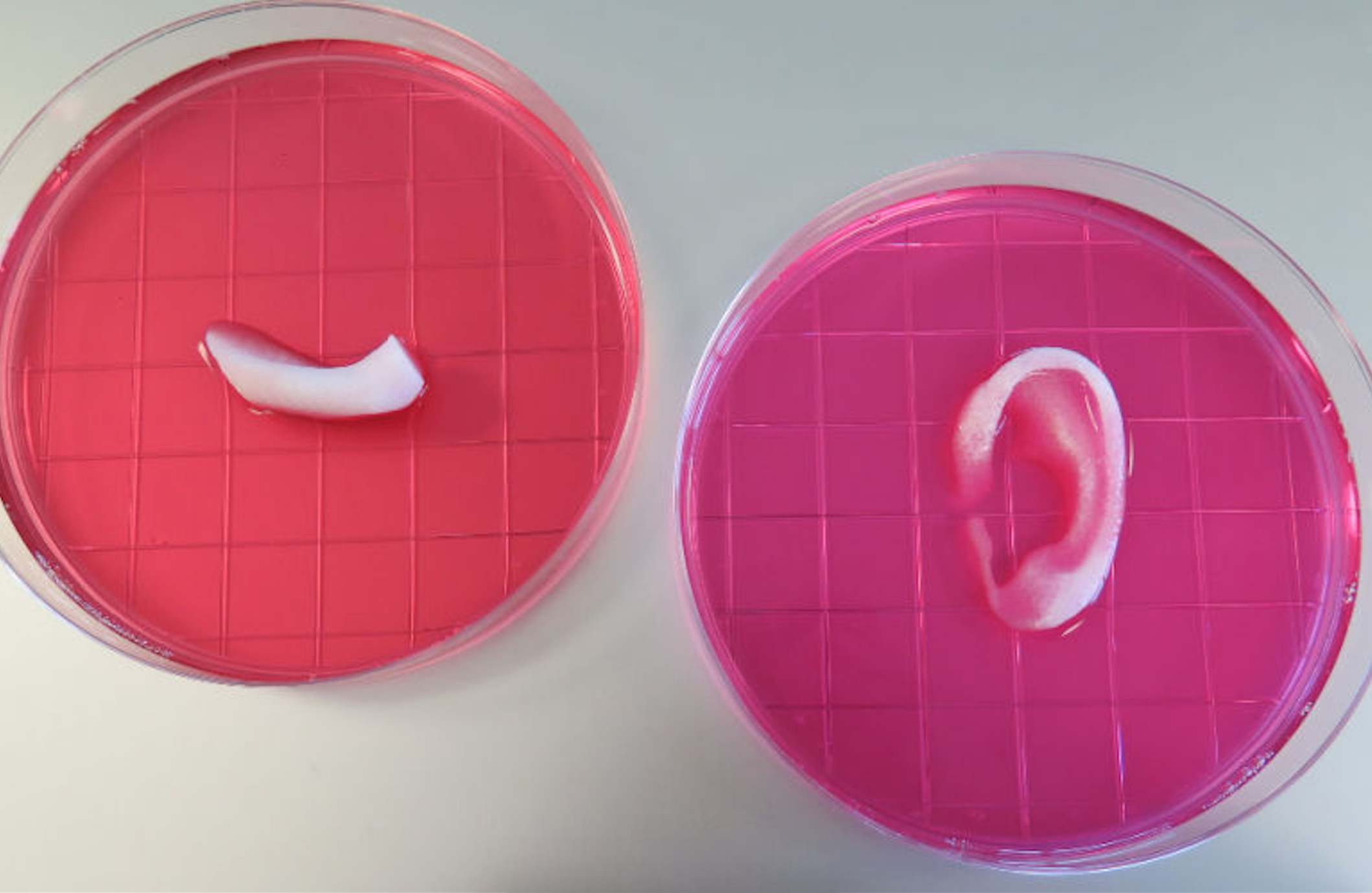
A team comprised of biomedical researchers at Wake Forest Institute for Regenerative Medicine gave news that a new type of 3D printers could be the future of prosthetics. And the reason they did that was because they just managed to successfully complete a device that took 10 years to develop; one that can print different types of tissue such as bone, cartilage and muscle.

This invention is capable of turning simple tissues into large and complex shapes such as human ears. But they are more than just simple prosthetics as they are, for the lack of a better word, alive. They consist of real, evolving and natural human cells that don’t act only as a filler. Initial experiments of printing things such as growing muscle or small bones, which later got implanted into animals showed that these 3D tissue prints actually survive and thrive in the host body.

While the study and development of the 3D printer used for these ‘prosthetics’ has been undergoing for years, the scientists working on it had two seemingly impossible to breach barriers. One was being able to print out bone or cartilage that wouldn’t fall apart; the other was building them in such a way that they would be accepted by a living organism, as well as function, adapt and evolve along with it.

Surprisingly though, they managed to achieve passing the second problem using a gel created from live human or animal cells as well as a biodegradable plastic called polycaprolactone. The latter is the material responsible for keeping the printed structure well bound together and sound while the growing cells start developing. With time, the plastic degrades away, leaving only alive cells – now stable and being able to remain in place by themselves – as the only material that the structure is made of.

This was the most important breakthrough of the entire development of the 3D tissue printer; by printing out the structures in an intermittent pattern, alternating the plastic gel with real tissue, the printed result can withstand the incipient phase of its life until cells begin developing and regenerating into the spaces that the degradable plastic leaves behind.

The first real experiment of a 3D printed prosthetic being implanted in a rat – in this particular case it was a strip of printed muscle – had amazing results. Not only that the muscle survived and developed into the rat’s body, but after initial lack of response to electric prodding, the muscle started to grow both blood vessels and nerves.

Future research will most likely lead to even more proficient 3D tissue printers that could aid human beings receive new body parts for implanting.

Image Source: 1

Filed Under: Health Tagged With: 3D Bioprinter, 3D Tissue Printer, Printed tissue, Wake Forest Institute for Regenerative Medicine

NASA Released a Year-Long Timelapse Video of the Sun

February 15, 2016 By Roxanne Briean Leave a Comment

NASA Released a Year-Long Timelapse Video of the Sun

NASA released a year-long timelapse video of the sun as it was captured by the Solar Dynamics Observatory from January 1st 2015 to January 28th 2016. This was done as a celebration of the satellite’s sixth year in space too. The mesmerizing video depicts the activity on the surface of the scorching star of our solar system as seen through SDO’s various light spectrums as it orbits around our planet.

The video was released in Ultra HD resolution and features rich and golden energy streaks and solar flares seeping out of the surface of the sun and the boiling temperature scorching the object that we cannot even look at in the sky, even if we are 149.6 million kilometers away from it. The colors that we see in the video are a result of looking at the sun in the high ultra-violet radiation range at 171 angstroms, something that cannot be seen with the human eye.

This has all been done as an attempt for scientists to study the sun’s magnetic field and attempt to understand all of the complicated movements that were spotted on the star’s surface. In order to make that possible, the Solar Dynamics Observatory captured a shot of the sun every 12 seconds for an entire year and through 10 different wavelengths.

A close inspection to the staggering images displayed in the video and there are multiple interesting facts that you may not have known before regarding the sun of our solar system. Clear depiction of things such as a sun filament can be spotted in the footage, showing just how the sun’s magnetic field is capable of holding up very large regions of very dense and cool gases.

All around the surface of the sun you can spot a huge amount of activity, manifesting as magnetic loops of different shapes and sizes. At times, these loops explode and erupt into giant coronal mass ejections that result in staggering amounts of magnetic energy being released into the solar system.

If the sun was a planet, a day would take nearly an Earth month, meaning that it takes roughly 25 days for a whole 360 degree rotation to complete. The flashes and jittery movements that can sometimes be spotted in the video are not artistic effects of the Solar Dynamics Observatory. When the sun disappears from view marks the moments when SDO’s vision is blocked by the movement of the Earth, eclipsing the entire star.

The image jumping occasionally is the SDO moving around and pointing in different directions in order to calibrate the sensors of the cameras that were used in the process.

Image Source: 1

Filed Under: Tech & Science Tagged With: footage of the sun, magnetic field of the sun, Solar Dynamics Observatory, time lapse video of the sun

NASA Envisions Futuristic Interplanetary Vacation Posters

February 14, 2016 By Roxanne Briean Leave a Comment

NASA Envisions Futuristic Interplanetary Vacation Posters

A fairly unexpected but duly appreciated jewel hit the official website news feed recently, showing us the way NASA envisions futuristic interplanetary vacation posters. At least for when that will be a thing of the day. Once again, this is the work of the Jet Propulsion Laboratory situated in Pasadena, California. The same group of people has been responsible for a huge amount of recent marketing and other means of delicately trying to grasp people’s attention towards the importance of space travel.

Only recently they released a video of a regular day at the Jet Propulsion Laboratory, including a tour of it. They also showed how future astronauts train and prepare for potential space missions. They seem to be on a spree, possibly part of NASA’s attempt to open the eyes of the public in the direction of space discovery.

It is known that NASA recently made a statement, saying that the funds necessary for both manned missions they want to undertake – another landing on the Moon as well as a trip to Mars – are incredibly high and unfortunately unrealistic to achieve. Because of that, the National Aeronautics and Space Administration will have to only settle for one or the other to be performed in the next 20 years. Considering one mission of this scale would cost roughly half a trillion dollars, NASA is turning to the public and also attempting to obtain financial help from federal funds.

The posters that made their way to the internet as part of the Visions of the Future series in an attempt to spark interest of the public towards the world that we would live in if space travelling and vacations would become a reality. The Jet Propulsion Laboratory visual strategist Dan Goods talked about the style that was chosen for the posters as being inspired from what science fiction artists and writers saw the future to be like in mid 20th century.

And as a matter of fact, most of them do look like excellent book cover ideas for Robert A. Heinlein book revisions. The 14 posters depict different destinations, and to each their very respective traits and most known features.

That way, you are invited to experience the charm of gravity assist on an aligned series of gas giants as Jupiter, Saturn, Uranus and Neptune, something that happens only every 175 years, invited to visit the already historic (by then) sites of Mars, the last celestial body to be known to have water on it – Ceres, the icy Europa or the colorful auroras of Jupiter. Otherworldly destinations make their appearance too, listing Kepler-15B, the planet that orbits around two suns, the ‘red Earth’ from another solar system or places such as the rogue planet PSO J318.5-22 – the one that doesn’t orbit a sun.

You can find all the posters available for download here.

Image Source: 1

Filed Under: Tech & Science Tagged With: nasa, National Aeronautics and Space Administration, Visions of the Future, Visions of the Future Posters

  • « Previous Page
  • 1
  • …
  • 26
  • 27
  • 28
  • 29
  • 30
  • …
  • 59
  • Next Page »

Subscribe to Blog via Email

Enter your email address to subscribe to this blog and receive notifications of new posts by email.

Join 11 other subscribers

Recent Articles

police handcuffs man

German Man Probed In Poisoning That Killed 21 Employees Since 2000

June 29, 2018 By Kenneth Scott Leave a Comment

Chicken wings bar

Intoxicated South Carolina Man Punches Waitress Who Refused to Serve Him Alcohol

June 29, 2018 By Karen Jackson Leave a Comment

gaming

New Zealand gamer Who Flew Halfway Across The World for Virginia Teen Gets Shots By Her Mother

June 28, 2018 By Cristopher Hall Leave a Comment

party

Former Virginia Tech Freshman Sentenced to 50 Years in Prison for Stabbing a Girl to Death

June 28, 2018 By Roxanne Briean Leave a Comment

bonfire

British Couple Sentenced to Life in Prison for Torturing and Murdering French Nanny

June 27, 2018 By Deborah Campbell Leave a Comment

pay phone

Texas Father of Girl Disappeared in the 80s Ignored by Authorities

June 26, 2018 By Cristopher Hall Leave a Comment

bottled water

San Francisco Woman Threatened to Call Police on Girl Who Sold Ice Water for Disneyland Trip

June 25, 2018 By Roxanne Briean Leave a Comment

Maplewood Park

Missouri Man Robbed by Date and Accomplice in Park

June 22, 2018 By Nancy Young Leave a Comment

coding

New York Man Sentenced in Cyberstalking Former Girlfriend, Mailing Drugs to Her Dorm

June 22, 2018 By Deborah Campbell Leave a Comment

headphones

Bose Poised to Launch Sleepbuds, In-Ear Headphones That Help You Sleep

June 21, 2018 By Nancy Young Leave a Comment

Police light

Intoxicated Female Driver in Custody for Pulling Arresting Officer by the Hair

June 21, 2018 By Kenneth Scott Leave a Comment

kitchen

Restaurant Manager Arrested and Charged in Shooting Death of Co-Worker over Negative Yelp Reviews

June 20, 2018 By Karen Jackson Leave a Comment

plastic container

Pennsylvania Couple Charged in Violent Death of Infant Discovered Buried in Cat Litter

June 19, 2018 By Cristopher Hall Leave a Comment

tailpipe

Minnesota Teen Gets Head Stuck In Oversized Tailpipe Winstock Music Festival

June 18, 2018 By Karen Jackson Leave a Comment

Pages

  • About Us
  • Contact us
  • Privacy Policy
  • Privacy Policy GDPR
  • Staff
  • Terms and Conditions

Recent Posts

  • German Man Probed In Poisoning That Killed 21 Employees Since 2000 June 29, 2018
  • Intoxicated South Carolina Man Punches Waitress Who Refused to Serve Him Alcohol June 29, 2018
  • New Zealand gamer Who Flew Halfway Across The World for Virginia Teen Gets Shots By Her Mother June 28, 2018
  • Former Virginia Tech Freshman Sentenced to 50 Years in Prison for Stabbing a Girl to Death June 28, 2018
  • British Couple Sentenced to Life in Prison for Torturing and Murdering French Nanny June 27, 2018
  • Texas Father of Girl Disappeared in the 80s Ignored by Authorities June 26, 2018
  • San Francisco Woman Threatened to Call Police on Girl Who Sold Ice Water for Disneyland Trip June 25, 2018

Categories

  • Business
  • Entertainment
  • Finance
  • Headlines
  • Health
  • Life
  • Nature
  • Science
  • Sports
  • Tech & Science
  • Travel
  • Uncategorized
  • United States
  • World

Copyright © 2026 ArgyllFreePress.com
About · Privacy Policy · Terms of Use · Contact