Argyll Free Press

Growing News Network

Wednesday, April 22, 2026
Log in
  • Business
  • Finance
  • Sports
  • Tech & Science
    • HP Envy 4500 Review
    • LG Optimus 170 Review
    • iPod Touch 6th Generation Review
    • HTC One M8 Accessories Set-up
    • Surrealist Games You Must Play
    • Hisense Sero 8 Review
    • Dell Latitude e7440 Review
    • HP Laserjet 1536dnf mfp Review
    • Garmin Fenix 2 Review
    • Skype Vs Viber
    • Best Video Conferencing Software
    • Sony mdr 1r Headphones Review
    • Canon Rebel t3i Review
    • Sennheiser Momentum 2-0 Review
  • Travel
  • Headlines
  • Health
  • United States

Preparing for the Upcoming Total Solar Eclipse

March 7, 2016 By Nancy Young Leave a Comment

total solar eclipse

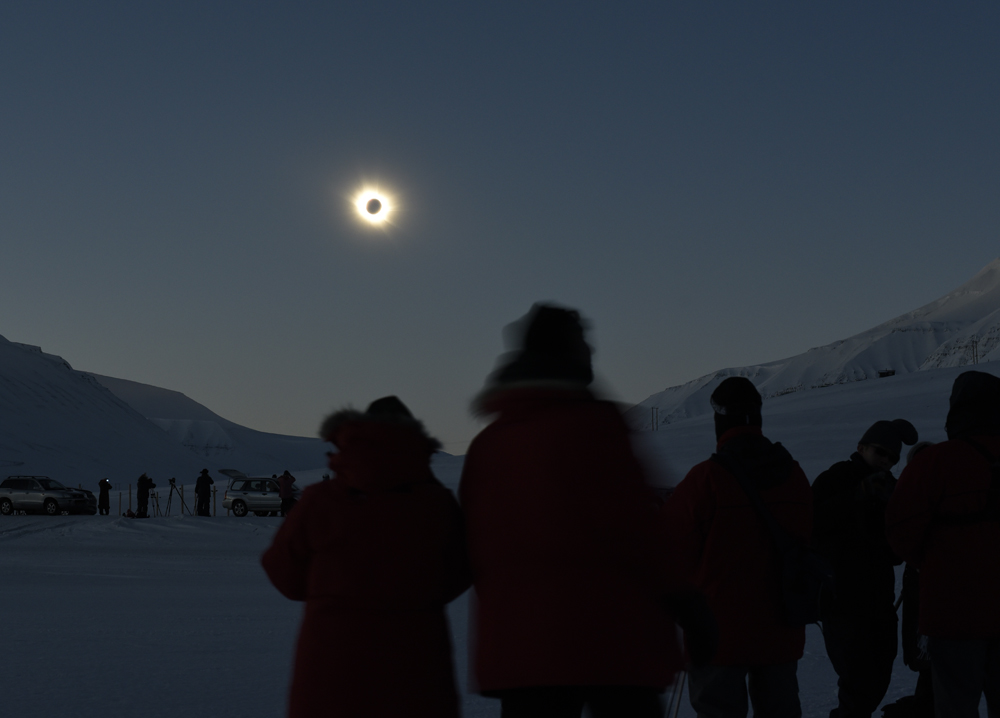
March 8th and 9th will mark very special days for anyone who likes to witness the rarer natural phenomena such as a total solar eclipse. Sadly, only skywatchers located in the Southeast Asia during those two days will be able to enjoy the entirety of it, while people situated in the Pacific islands will still be able to catch a partial eclipse.

And truth be told, that is a harshly limited amount of exposure. While this is not the kind of event that only takes place every hundred years or anything of the likes, it is still relatively rare. A total solar eclipse marks the moment when the moon passes between the Earth and the sun under a series of special requirements. Not only that the 3 need to be perfectly aligned, but the moon needs to be at a particular distance to the Earth in order to be able to cover up the entire sun on the skyline.

More precisely, this can only occur when the moon is at its perigee; also known as the moment when the Moon is at its closest point to our planet. This moment makes the moon appear larger in the night sky and also earns it the name of a supermoon.

Thus, once the alignment is complete, the moon will cast its more diffused penumbra and its concentrated umbra – the outer and inner shadow, respectively – mostly in the area of the Pacific Ocean.

The phenomenon will unfold in several locations on the surface of our planet, starting over Sumatra, Indonesia at 6 PM EST on Tuesday evening on the American time zone, then move over to Borneo, Sulawesi, continuing in a northeast manner across the Pacific Ocean and being barely noticeable close to the Hawaii before disappearing.

While the moon’s shadow will travel approximately 8,800 miles across the globe, its path (basically the diameter of the umbra) is merely 97 miles wide, restricting the zone where it will be visible to a very long and thin strip.

However, just because you’re not flying over the Pacific tomorrow doesn’t mean you can’t get to witness the total solar eclipse. With a little help from the Slooh robotic telescope will be capturing the event and streaming it to its service slooh.com here. You will be able to tune in at any time between March 8th 6 PM EST and 9 PM EST to watch it unfold.

Image Source: 1

Filed Under: Tech & Science Tagged With: skywatching, solar eclipse over the Pacific Ocean, total solar eclipse, total solar eclipse stream

How the Star Trek Series Is Slowly Becoming Our Reality

March 7, 2016 By Michael Turner Leave a Comment

our current reality is not that far off from the Star Trek universe

Anyone who has watched any of the good old series, be it Voyager or The Next Generation at two different moments in time will be able to tell you how our current reality is not that far off from the Star Trek universe anymore. Sure, we still can’t travel at the speed of light, never mind ten times faster than it. But so many physics concepts and contraptions that show up in the famous series are more or less part of our current reality.

Talking computers that can receive tasks via voice communication? Do Siri, Cortana and Google Now ring a bell? Those little PDAs they used to read reports are actually something we would call ‘primitive tablets’ of our days. Video and voice calling? Ha, way ahead of you. And those holodecks they have on the USS Enterprise may be a step up from our Microsoft HoloLens and the other VR or AR technologies coming out this year, but it’s still 2016. Star Trek only happens several hundred years in the fictional future, so we’re definitely ahead of track.

The latest news we got from German scientists from the University of Jena only confirm this even further. Their long-term efforts and research in the field of teleportation are starting to yield much more promising results that we could’ve hoped for so early.

Teleportation has been a terribly sought for concept for humanity, strongly apparent, especially during the 20th century. In spite of countless efforts and experiments, no physical object has yet to be teleported anywhere. But while the concept is still baffling scientists at work when it comes to full-fledged objects, it seems that its elusive nature has been decrypted when it comes to anything larger than the quantum scale.

For years, teleportation of data in the form of electrons and light particles has been a known concept that scientists tried to use as basis for further research. But that gave little to no insight regarding how teleportation could be made reality at larger scales, given the elementary particles’ very particular nature.

However, Alexander Szameit and his team recently managed to demonstrate how the concept of teleportation can and exists outside of the quantum realm. However, in order for us to be able to achieve the much sought-after teleportation, a special kind of laser beams should be used. These lasers would help link the information that you wish to transmit to a particular property of the light, resulting in instant transmission.

The only issue with this concept is that it still limits teleportation regarding spatial coordinates; the concept currently functions only on a local basis.

Image Source: 1

Filed Under: Tech & Science Tagged With: object teleportation, science fiction, star trek universe, teleportation

Universal Studios Opening Nintendo Land by Year 2020

March 7, 2016 By Kenneth Scott Leave a Comment

Nintendo Land theme park will have its gates opened by 2020

With a slight surprise at this not happening sooner, it’s finally official news that a Nintendo Land theme park will have its gates opened by 2020. The green light has been given to Universal Studio Japan to finally bring the iconic Mario and Luigi, Link and Zelda, Pikachu or any of the other hundreds of Pokemons to life in a heavily themed heaven of all things Nintendo.

This has all been revealed by a Japanese media report, who mentioned it was only a matter of time until Universal put the rights to some of Nintendo’s properties that they got to good use. Considering that excitement for the Harry Potter theme park that lies in the same complex where the Nintendo Land will be in 2020 will probably diminish by then, it is very likely that this will consist of a great source of income for the parties involved.

Not to mention that out of the aforementioned parties, Nintendo is probably the one who will earn the most out of the whole ordeal. Safe to say, the bill of building and opening the gates of this Nintendo Land falls on the back of Universal. And the bill is no less than 400 billion yen, which translates into roughly $352 million. This is a relief for the likes of Nintendo – which everyone knows is dealing with financial issues – and it was probably part of the plan when it ceased a part of its rights over the content to Universal.

The time of opening is set to be in 2020, the same year when Japan will be hosting the Olympics; by all means, a better time could not have been chosen as it will coincide with the moment when countless of tourists will be coming to Japan from all the corners of the world. This could help Universal earn a good starting revenue off of the new theme park and draw attention to it in what locals are concerned.

There has also been a leaked map of the upcoming Nintendo Land layout, but it doesn’t hold enough basis for us to honestly believe that’s how things will truly look like. However, if we’re to pay any heed to it and consider it’s accurate, the Nintendo Land will apparently be located right after the studio’s main gate. Even more so, the map shows one particular red highlighted area dubbed the ‘Mario Area’. Is it truly happening?

Image Source: 1

Filed Under: Tech & Science Tagged With: Nintendo, Nintendo Theme Park, Universal Studio, Universal Studio Japan

The Game That Completionist Gamers Will Grow Old Playing

March 4, 2016 By Deborah Campbell Leave a Comment

Video Game Dubbed No Man's Sky

An upcoming adventure survival video game dubbed No Man’s Sky is one of the most ambitious projects that gamers have ever had their eyes graced with. In essence, an indie game, No Man’s Sky is a production coming from Hello Games Studio, comprised of an incredibly tiny team of 15 people that have been working on it.

Take that fact into account first, and then consider the nature of this video game. No Man’s Sky is a game where players are free to explore an entire procedurally generated open universe that has been estimated to contain 18 quintillion planets, each with their own variety of species of plants, animals and geography. It may not be an impressively complex game regarding gameplay, but the mere idea that every single planet you visit may display a certain degree of diversity to the ones you have witnessed prior to that is mind-blowing.

In fact, come to think of it, there may be more diversity in planet nature in No Man’s Sky than in reality in our very own Milky Way.

In terms of gameplay, things are awfully complicated. You explore the universe using a starship. You walk on the surface of the planet in search for resources, gear, ways of funding your future missions and you may happen to come across a faction of aliens of some sort. You may be friendly with them, or you may not. If you seal an alliance with them, you may get extra benefits such as blueprints or new types of starships, while waging war on said factions will not come without repercussions.

So when are we to expect to feast on the beautiful and limitless world of No Man’s Sky? Starting 21st of June 2016, servers will be open for anyone who has purchased the game and wishes to enjoy the multiplayer aspect of it. But just like it would be in a real-life scenario where mankind has evolved enough so that everyone has their own little starship to travel around the universe as they please, chances are you won’t bump into other players very often, given the enormity of the world.

The game is scheduled to be released for PC and PlayStation 4 only so far. Preorders are already up on both Steam and PlayStation Store for those who wish to secure a copy beforehand. The final price tag that has been placed on the game is $59.99.

Image Source: 1

Filed Under: Tech & Science Tagged With: Hello Games Studio, Indie Game, Indie game releases 2016, No Man's Sky

The Morphing Electroluminescent Robots of the Future

March 4, 2016 By Karen Jackson Leave a Comment

electroluminescent skin

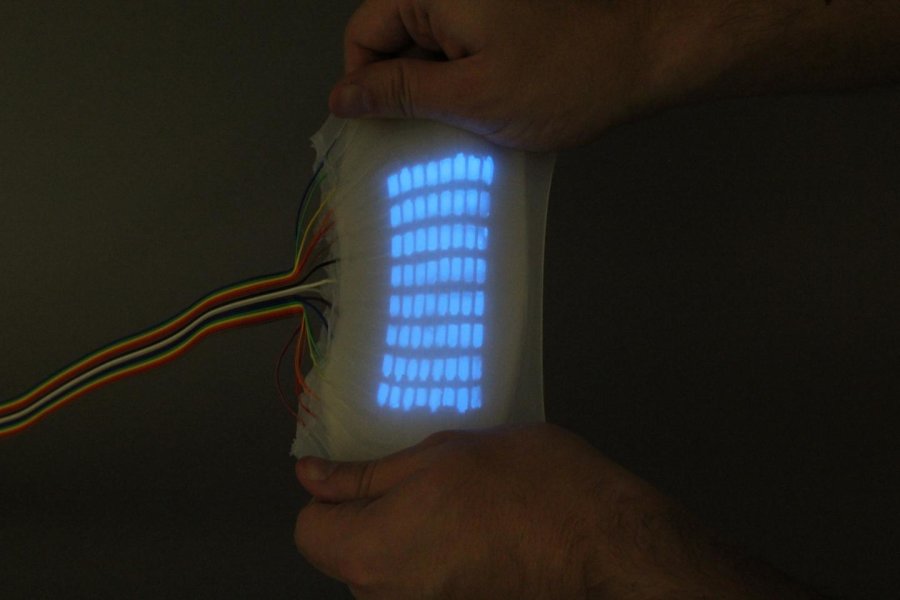
A very recent invention which can only be described as a type of electroluminescent skin could give a whole lot more versatility to our future robots. And this new technology that was developed by a team of graduate students from Cornell University – and led by assistant professor of mechanical and aerospace engineering Rob Shepherd – doesn’t even have to limit itself to robots.

This electroluminescent skin has the amazing ability to stretch up to more than six times its original size without losing any of its light-emitting properties. The previous prototype of this robotic skin, academically known as a hyper-elastic light-emitting capacitor (HLEC) could only endure half of what the current version can.

It is made of multiple payers of transparent hydrogel electrodes that cover an insulating elastomer sheet on both sides. The capacitors inside this material can continue to shine no matter the amount of pressure applied to it, the way it is stretched, rolled or deformed from its original shape and size. The original idea that inspired Robert Shepherd to start working on this material was studying the way octopuses behave in their natural habitat. They are capable of changing their color and their texture to match the surroundings they wish to blend in.

So the future utilities of such a material are very diverse and can go huge lengths. The first application that comes to mind is the use of this type of skin for our future robots of course. Because this kind of material can shape around any form and change its color, it could have a huge impact on our lives as robots slowly become part of it too. Scientists believe that a robot that can react to the mood of a room could play an imperative role in human-robot interactions.

Secondly, this type of technology could easily be used in smart devices such as smartphones. Imagine owning a phone the size of a Samsung Galaxy S6 that can stretch to the scale of a full-fledged tablet in a matter of seconds, without losing display quality of functionality.

Lastly, while not as thoroughly discussed, scientists have considered the possibility of using a material such as the electroluminescent skin for military purposes. The research that the Cornell University group underwent was funded by the Army and Air Force, so in reality, chances are very high that it will also end up being used as an advanced type of camouflage for missions.

Image Source: 1

Filed Under: Tech & Science Tagged With: Cornell University, electroluminescent skin, HLEC, hyper-elastic light-emitting capacitor

Scientists Peer into the Distant Past of the Universe

March 4, 2016 By Cristopher Hall Leave a Comment

galaxies that are more than 13 billion light years away

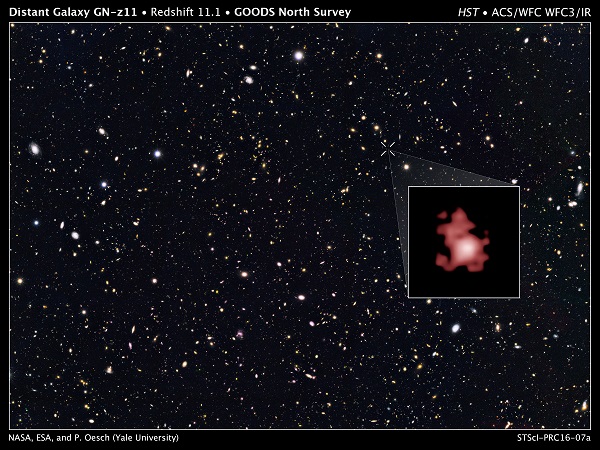
Mankind may continue to be grounded to planet Earth for decades, and stuck in this solar system for centuries, but that doesn’t stop scientists from looking at galaxies that are 13.4 billion light years away. This is officially the furthest mankind has seen up to this point, even if the galaxy that they found there shows up as nothing more than a red blotch on a screen.

The whole concept of looking at different galaxies is a little mind-bending to begin with. Whenever scientists peer through telescopes such as Hubble, that is capable of rendering images of extremely distant objects, they are not just looking incredibly far. They are also looking into the past. Every object that is visible through a telescope either produces or reflects light, making us capable of seeing it in the first place. For the light to be seen by human eyes, it has to travel for millions, even billions of years in order to reach the Earth.

That’s why the galaxy that astronomers have found on Thursday is a great reason for excitement. When the researchers realized that the light emitted by galaxy GN-Z11 had travelled for approximately 13.4 billion years to be able to be seen by us, they also had the epiphany that they were actually looking at a very distant age of the universe.

More specifically, they were looking at our universe as it was in its infancy. 400 million years old or 400 million years after the Big Bang to be exact. Or in other words, 3 percent of its current age.

So on the cosmic scale, practically newborn.

But the first question that arises in our heads, of course, is ‘how’ scientists managed to figure out just how far into the past they had peered? The answer lies in a very basic concept that astronomers have used to detect large space object movement such as stars and galaxies orbits for decades. It is called redshift and is regards the light that is emitted from said objects. When they move closer to the observation point, objects tend to glow blue; when they move away, objects tend to glow red.

Naturally, with the expansion of the universe, the GN-Z11 galaxy has a very distinctive red glow. And because it displays an extremely high rate of star formation, it is bright enough to spot; even from 13.4 billion years in the future. Scientists have detected that it grows nearly 20 times faster than our own Milky Way.

This galaxy sighting has resulted in a world record. Scientists believe that the oldest galaxies formed somewhere nearly 200 million years after the Big Bang. What is next? Will there be a day when we witness the very creation of our universe as we know it?

Image Source: 1

Filed Under: Tech & Science Tagged With: Big Bang, Furthest galaxies, Hubble Space Telescope, Observing space

Fifth Time May Be a Charm for Falcon 9

March 3, 2016 By Roxanne Briean Leave a Comment

SpaceX Manufactured Falcon 9

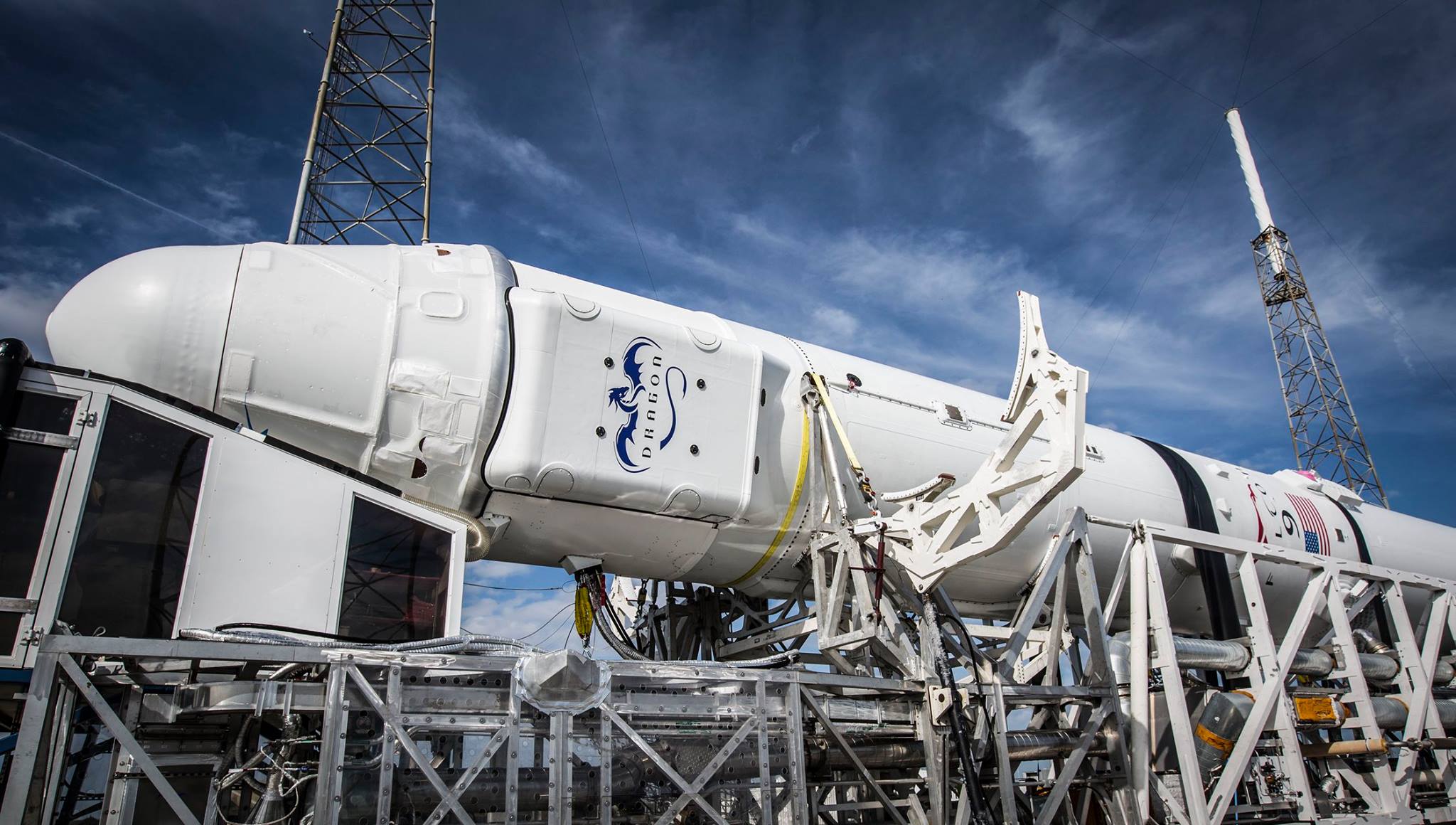
The SpaceX manufactured Falcon 9 has already had its launch delayed no less than four times, with the next attempt being scheduled to take place on March 4th, 2016. The mission that is supposed to carry out an SES-9 communications satellite up into outer space has not had the best run so far, with the launch continually being delayed due to both technical issues and unfavorable weather conditions.

This time around, the engineers and scientists in charge of the Falcon 9 launch believe that, given the already fixed technical issues, the rocket could finally be sent into outer space tomorrow. The last two attempts were postponed due to uncertainty and a lack of a good window to do it in. The launch had been possible on Tuesday in a window starting with 6:35 PM and ending with 8:05 PM but was unfortunately not gone through with due to physical and technical limitations. Prior to that, the Wednesday last week, fuel temperatures got into the way, and Friday was a no-go due to unfavorable winds.

The Falcon 9 rocket is a SpaceX construction, currently located at the Launch Complex 40 in Cape Canaveral and carries the SES-9 satellite, weighting 11,600 pounds. While the mission is not of a staggering magnitude, the launch seems to have been hindered by a multitude of factors and the scientists do not wish to risk failure.

The rocket will be sent out using cryogenic propellant, a type of fuel that does not leave room for anything but perfection in execution. Because of the need that the fuel is kept at a low temperature in order to maintain its density, it becomes vital for everything to be kept in check and under control to avoid irregularities and malfunction.

The SES-9 satellite is planned to operate in geostationary orbit around the Earth, positioning itself in the orbital slot at 108.2 degrees’ east longitude and will be able to provide communication services to the Asia-Pacific region. That sums up video, commercial, government, and mobile communication for about 20 different countries.

Many improvements have already been made to the rocket’s systems, according to all the data gathered from the previous attempts. As long as the wind conditions on Friday are favorable for a launch, March 4th may just be the day when it finally takes place.

Image Source: 1

Filed Under: Tech & Science Tagged With: Dead Space 2, Falcon 9, SES-9 Satellite, SpaceX

Cracking Paint Exemplifies Why Space Objects Have Different Sizes

March 3, 2016 By Nancy Young Leave a Comment

Space Objects Have Different Sizes

A Duke University theorist used a very simple and easy to understand example to explain why space objects have different sizes in our universe at least. It’s very well known to all of us that for example Jupiter is about 318 Earths in size while Mercury is about 0.05 Earths in mass. But while we take facts such as these for granted, if you stop to think about it, the difference in size when it comes to star or planet formation is slightly difficult to grasp.

The study that was eventually published in the Journal of Applied Physics on behalf of professor and mechanical engineer Adrian Bejan and R.W. Wagstaff explains why some objects slowly form into bigger shapes while others remain small scale planets. In order to make the explanation easy to grasp, he used a very earthly principle. The way wall paint has a tendency to crack after it has dried.

Apparently, the universe is prone to using the same principles as paint when it coalesces and forms objects. The most basic condition that the entire principle is based on is the need of matter to release tension that builds up inside of it because of the mere existence of the gravitational force, still elusive in nature to scientists.

The analogy that Bejan has made between the formation of planets and stars and cracking paint relies on a very similar kind of inward pull that space objects display. When pain dries, it starts shrinking and this creates a very large amount of tension over the entire surface. At a certain point, the tension is high enough to make the dried paint crack in order to relieve it. But this is not something that happens randomly, and instead, the release happens in the quickest way possible – according to physics principles.

Because of that principle, a certain hierarchy of zones where the paint is more prone to crack is formed – for example the zones that are at least slightly weaker in construction: either a portion where the layer is at least slightly thinner than the rest and so on.

Because the entire universe relies on this tension to be released, some bodies are prone to be subjected to the constructal law. This law states that any flowing system that is allowed to change freely over time will trend toward an easier flowing architecture. Following that type of thinking, in a universe where every single body was of the same size, the tension would have a hard time being relieved because of the very uniform gravitational pull that all of the physically identical bodies would exert.

Image Source: 1

Filed Under: Tech & Science Tagged With: constructal law, Duke University, space object size, space object size difference

New Steam Store Feature For Avid Bundle Fans

March 3, 2016 By Michael Turner Leave a Comment

Steam Store Feature

A new Steam Store feature gives you a price reduction of a game bundle if you already own other games from the series. Apparently, this comes as a sort of solution to the issue of Steam bundles you will often find during Steam sales. Say you already own the first two games of a series and you find the third one at a heavily discounted price with the only catch that it’s part of an ‘entire series’ bundle and you’d end up with duplicates of the previous titles.

That is great news for gamers awaiting the upcoming Steam sales and dire news for those who relied on and their friends getting duplicates and hoping they could squeeze off some free games from them.

This dynamic pricing mentality is a feature that makes a lot of sense for both the user and Valve. The former group will finally be able to not miss any more games simply because they find it redundant to pay $20 for a 4-game bundle when you already own 3 of them. The latter should find that they are able to increase sales that way as people feel less reluctant at purchasing bundles if they don’t have to deal with the idea of duplicates and wasted money.

The exact way this works is that if the Steam service detects that you own some of the titles in the Bundle you are viewing and considering buying, you will get a price reduction directly proportional to the titles you already own. That way, next sale you find should allow you to finish your series collection of whatever title you wish without having to spend extra resources.

Whether this means that during events such as Steam Summer Sale, we will be getting bundles and the individual games in it also at reduced price or not, is not yet known.

This piece of news itself has not yet been disclosed officially, at least not by Valve through a public announcement. However, various third party entities have retrieved official documentation from secure sources suggesting that this is a change planned by the company for the near future.

However, this change will only apply to games being purchased directly through Steam. Any kind of third party service that offers Steam keys for bundles and the like are not eligible for the feature. To list a few examples, G2A.com or HumbleBundle will not be made part of the upcoming change.

Image Source: 1

Filed Under: Tech & Science Tagged With: Bundle price reduction, Steam bundle, Steam games, Steam pricing

The Sound of Two Black Holes Merging

March 2, 2016 By Karen Jackson 1 Comment

Discovery of gravitational waves

The scientific discussion forums, publications and newsletters have been booming for two weeks regarding the discovery of gravitational waves. A discovery that was predicted by Albert Einstein nearly a hundred years ago but only experienced, found, tested and verified now. At least, that’s what most of us believe. Days prior to the announcement that gravitational waves had been discovered, scientists all over the world were murmuring hints at its validity.

Twitter and newsletters would occasionally be the host of a cryptic message or two regarding how there was something cooking in regards to gravitational waves. But the real event that triggered everything and set the research in motion had taken place months before, in two different corners of the United States, in the confines of the two Laser Interferometer Gravitational Wave Observatories – one in Hanford and the other in Livingston.

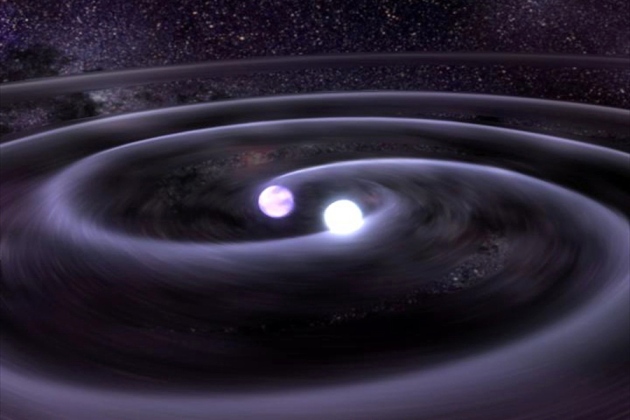
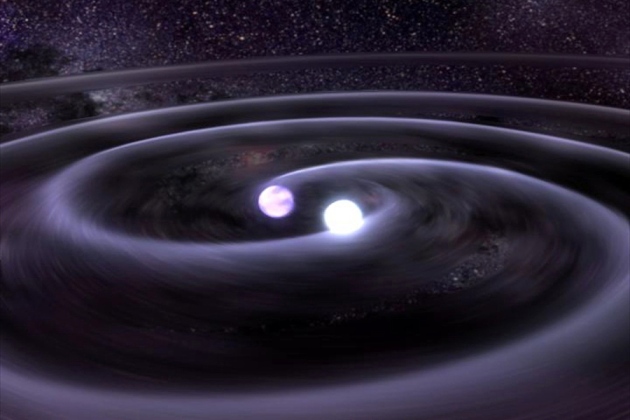
In the morning of September 14th, 2015, a ripple caused by two black holes colliding and travelling from incredibly far away passed through the Earth and recorded by LIGO Livingston, only to be caught on its radar by LIGO Hanford 7 milliseconds later. Though the ‘impact’ manifested itself through a barely noticeable ‘thump’ that stretched and lasted for a mere two milliseconds, it was there, visible on the radar. An easy to miss thing almost.

It took researchers months to be able to study the events that had occurred and be able to confirm with a hundred percent certainty that they were not mistaken in thinking that the signal that the LIGO had picked up was indeed a gravitational wave. And after long and strenuous studies, they were finally able to do so: not only that gravitational waves existed, but this was the direct proof that binary black hole systems exist and that they can, eventually, end up merging into one gigantic black hole, distorting the space-time around it for billions of light years.

It has been calculated that the wave that hit the Earth on the early morning of September 14th, 2015 had originated from a black hole merger nearly 1.3 billion years ago. So long ago, and yet the effect of the impact travelled so far – even if now only a small remainder of it remains.

The LIGO detectors had been built decades ago; a symbol of the arduous search that scientists had embarked on when they chose to chase the gravitational waves on the whims of another, brilliant scientist that lived a century ago. Only decades later, the LIGO project earned results. And now, with this new information on our hands, humanity can look at the universe differently, on the paved path that the gravitational wave discovery has emerged.

You can listen to the sound of two black holes merging 1.3 billion years ago here.

Image Source: 1

Filed Under: Tech & Science Tagged With: albert einstein, Gravitational Wave, gravitational wave discovery, LIGO

  • « Previous Page
  • 1
  • …
  • 36
  • 37
  • 38
  • 39
  • 40
  • …
  • 114
  • Next Page »

Subscribe to Blog via Email

Enter your email address to subscribe to this blog and receive notifications of new posts by email.

Join 11 other subscribers

Recent Articles

police handcuffs man

German Man Probed In Poisoning That Killed 21 Employees Since 2000

June 29, 2018 By Kenneth Scott Leave a Comment

Chicken wings bar

Intoxicated South Carolina Man Punches Waitress Who Refused to Serve Him Alcohol

June 29, 2018 By Karen Jackson Leave a Comment

gaming

New Zealand gamer Who Flew Halfway Across The World for Virginia Teen Gets Shots By Her Mother

June 28, 2018 By Cristopher Hall Leave a Comment

party

Former Virginia Tech Freshman Sentenced to 50 Years in Prison for Stabbing a Girl to Death

June 28, 2018 By Roxanne Briean Leave a Comment

bonfire

British Couple Sentenced to Life in Prison for Torturing and Murdering French Nanny

June 27, 2018 By Deborah Campbell Leave a Comment

pay phone

Texas Father of Girl Disappeared in the 80s Ignored by Authorities

June 26, 2018 By Cristopher Hall Leave a Comment

bottled water

San Francisco Woman Threatened to Call Police on Girl Who Sold Ice Water for Disneyland Trip

June 25, 2018 By Roxanne Briean Leave a Comment

Maplewood Park

Missouri Man Robbed by Date and Accomplice in Park

June 22, 2018 By Nancy Young Leave a Comment

coding

New York Man Sentenced in Cyberstalking Former Girlfriend, Mailing Drugs to Her Dorm

June 22, 2018 By Deborah Campbell Leave a Comment

headphones

Bose Poised to Launch Sleepbuds, In-Ear Headphones That Help You Sleep

June 21, 2018 By Nancy Young Leave a Comment

Police light

Intoxicated Female Driver in Custody for Pulling Arresting Officer by the Hair

June 21, 2018 By Kenneth Scott Leave a Comment

kitchen

Restaurant Manager Arrested and Charged in Shooting Death of Co-Worker over Negative Yelp Reviews

June 20, 2018 By Karen Jackson Leave a Comment

plastic container

Pennsylvania Couple Charged in Violent Death of Infant Discovered Buried in Cat Litter

June 19, 2018 By Cristopher Hall Leave a Comment

tailpipe

Minnesota Teen Gets Head Stuck In Oversized Tailpipe Winstock Music Festival

June 18, 2018 By Karen Jackson Leave a Comment

Pages

  • About Us
  • Contact us
  • Privacy Policy
  • Privacy Policy GDPR
  • Staff
  • Terms and Conditions

Recent Posts

  • German Man Probed In Poisoning That Killed 21 Employees Since 2000 June 29, 2018
  • Intoxicated South Carolina Man Punches Waitress Who Refused to Serve Him Alcohol June 29, 2018
  • New Zealand gamer Who Flew Halfway Across The World for Virginia Teen Gets Shots By Her Mother June 28, 2018
  • Former Virginia Tech Freshman Sentenced to 50 Years in Prison for Stabbing a Girl to Death June 28, 2018
  • British Couple Sentenced to Life in Prison for Torturing and Murdering French Nanny June 27, 2018
  • Texas Father of Girl Disappeared in the 80s Ignored by Authorities June 26, 2018
  • San Francisco Woman Threatened to Call Police on Girl Who Sold Ice Water for Disneyland Trip June 25, 2018

Categories

  • Business
  • Entertainment
  • Finance
  • Headlines
  • Health
  • Life
  • Nature
  • Science
  • Sports
  • Tech & Science
  • Travel
  • Uncategorized
  • United States
  • World

Copyright © 2026 ArgyllFreePress.com
About · Privacy Policy · Terms of Use · Contact