Argyll Free Press

Growing News Network

Thursday, April 23, 2026
Log in
  • Business
  • Finance
  • Sports
  • Tech & Science
    • HP Envy 4500 Review
    • LG Optimus 170 Review
    • iPod Touch 6th Generation Review
    • HTC One M8 Accessories Set-up
    • Surrealist Games You Must Play
    • Hisense Sero 8 Review
    • Dell Latitude e7440 Review
    • HP Laserjet 1536dnf mfp Review
    • Garmin Fenix 2 Review
    • Skype Vs Viber
    • Best Video Conferencing Software
    • Sony mdr 1r Headphones Review
    • Canon Rebel t3i Review
    • Sennheiser Momentum 2-0 Review
  • Travel
  • Headlines
  • Health
  • United States

Google Starts Guarding Users Against Deceptive Content

February 5, 2016 By Karen Jackson Leave a Comment

Google Starts Guarding Users Against Deceptive Content

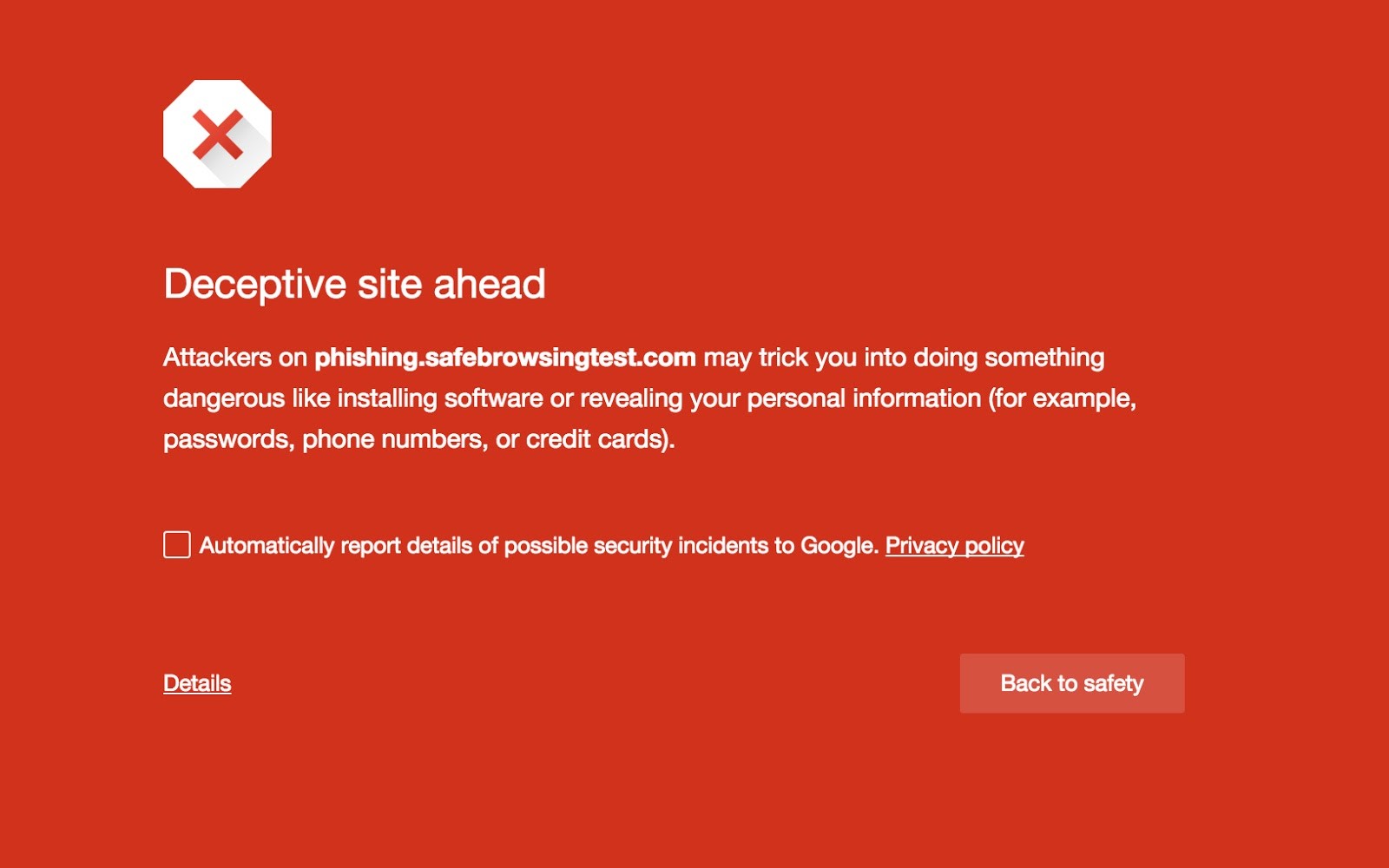
Chrome, one of the most popular Internet browsers tightens up its security even further as Google starts guarding users against deceptive content. The way it does that is in reference to the kind of ‘hidden’ links that anyone can – at one point – fall victim to.

For example, even if one is particularly careful about which parts of a website they click on and are careful enough to even look at the true URL that is displayed in the bottom left part of the browsers, it can still happen that sometimes, a seemingly innocent download button or link may actually turn out to be something different. Sometimes it’s ads, other times it can lead you to more worrying things such as malware or viruses.

Google announced that its browser, Chrome, will also start working in accordance with the social engineering policy that was announced in November by the company. According to it, the browser will analyze embedded content on a web page and try to determine whether it falls into the category of social engineering, whenever it attempts to act, look or feel like a trusted entity.

As a result, Chrome should prevent you for actually accessing any dangerous content by adding a gateway webpage before you actually reach the malicious website’s content. Similar to what antivirus programs have been doing for years, basically. The red gateway page will let you know that the content on the website you’re trying to access may be dangerous for you, give you details about it and prevent further action.

There is no mention of a ‘Proceed’ button yet, or whether the browser will or will not allow you to venture out on the targeted website. This is obviously a great addition to the browsing experience, but if you look at it both ways, it may have a problem here or there. Firstly, it’s certain that websites that always indulge in the irritating ‘advertising’ practices will end up getting flagged and the users kept safe from them. However, it is not unheard of for websites that do not truly have malicious content on them to also get flagged.

Without knowing what exactly triggers the new Chrome feature to prevent access to a website when it considers it ‘dangerous’, there is a chance that some smaller, innocent websites but with a poor design choice and desperate to pay for the bills via some questionable ads will also end up getting flagged and inaccessible.

Image Source: 1
Filed Under: Tech & Science Tagged With: chrome, chrome social engineering, Google, malicious websites

Amit Singhal Is Retiring but He Leaves an Empire Behind

February 4, 2016 By Deborah Campbell Leave a Comment

Amit Singhal Is Retiring but He Leaves an Empire Behind

Google Search Chief Amit Singhal is retiring but he leaves an empire behind, an empire that he helped Google build for the past 15 years. The Google search engine has become such a centric part of our lives that we wouldn’t even be able to consider what it would be like to not have access to it anymore. Google search is one of the largest methods the world wide web connects, unless you count the internet itself. Large enough to invent the entire ‘googling’ term altogether.

And at the head of it, for the past decade and a half has been a man that saw the transition from a telephone and television-driven world to one that is now mostly ruled by computers and the internet. Following in his steps and the next in line to take the reins is John Giannandrea, an iconic individual in Google’s artificial intelligence department. And most likely, the company could not have found a better fit as the new head of Google Search as the two are not that different.

Take the AI robots that Google (but not just Google) is building as your first example: what makes them intelligent is the fact that they learn. By employing complex deep neural networks, man-made hardware can actually end up mimicking the way the human brain works but at much higher speed and potential. They can learn from sounds, from images and from text at immense performances, usually helping them outperform their creators.

The recently build AlphaGo program that researchers from the Google AI Project Deep Mind situated in London has managed to defeat a professional Go! Human player in a full-sized game. That is one of the best examples in which the built product manages to exceed the builder.

Similarly to full-fledged AI, you get Google Search, a feature that relies on the same networks. The Google search engine has grown so much since its inception that these days it will very often surprise how well it can tell what you’re about to ask from it. That is also thanks to the expanded fields that it draws its information from. These days, Google has access to nearly every single thing you do while you’re on the internet – so it’ll know what you’re interested in and be even faster than before in giving you exactly what you’re looking for.

Image Source: 1

Filed Under: Tech & Science Tagged With: amit singhal, amit singhal retirement, google AI, google search engine

Scientists Are Reconsidering the Giant Impact Hypothesis

February 4, 2016 By Cristopher Hall Leave a Comment

Scientists Are Reconsidering the Giant Impact Hypothesis

Scientists are reconsidering the giant impact hypothesis that was universally agreed on in 2001 as the favored way in which our planet’s moon was formed. The original theory that suggested that a foreign planet with the body size of Mars known as Theia or Orpheus had collided into the side of planet Earth somewhere nearly 4.5 billion years ago. The debris and particles that were created as a result drifted under the Earth’s gravitational pull for a while until they coalesced into what we know as the Moon today.

While the thesis was supported by a great amount of evidence and scientists even managed to simulate what a collision such as that one would’ve looked like and how the moon was eventually formed, recent study suggests that while there’s very little doubt that an Orpheus once existed, the collision may not have happened the way it was imagined until now.

Scientists have been studying oxygen isotopes form the moon rocks taken by the rovers of the Apollo missions, with the basis that each planet has its personal oxygen signature, differentiated by various degrees from one another. According to that theory, if the Earth’s moon was indeed made up mostly of the remnants of Orpheus, then our natural satellite should have a different oxygen signature than our planet.

Turns out that the oxygen isotopes of both Earth and the Moon are near identical, which would instead suggest that the latter could rather be considered a piece of the Hadean-era Earth. That is why the new theory suggests that Orpheus didn’t just side-swipe the Earth, but instead had a head-on collision with the planet and got incorporated in it in the process.

If that is truly the case, then it would explain how both Earth and the Moon have the same oxygen signature. When Orpheus got swallowed into the Earth, particles and debris of both planets were spewed out of the host planet’s atmosphere which slowly coalesced, giving both bodies the same signature.

On top of that it is believed that Theia (Orpheus) was actually a growing planet at the time of impact, a theory that actually eases the belief that the two fused instead of side-swiping each other in order to create the moon.

Image Source: 1

Filed Under: Tech & Science Tagged With: earth and orpheus collision, forming of the moon, giant impact hypothesis, orpheus collision

Google May Expand the Family of Smart Home Appliances

February 4, 2016 By Roxanne Briean Leave a Comment

Google May Expand the Family of Smart Home Appliances

Smart phones, smart cars, smart homes, smart fridges, smart health instruments and now Google may expand the family of smart home appliances too. Nearly every single item you could think of is seeing some digital application of it as a viable thing to add in its construction to make it more useful than before. If you recall some of the craziest CES 2016 gadgets also mentioned a Bluetooth pregnancy test at one point.

Regardless, Google seems to be interested in more than just a few projects. With news of the tech giant being extremely active in more than just a few fields lately, it should not be found as a surprise when we notice that it’s now rumored to be planning to release a smart, Android-powered bathroom mirror. Even if the original device was created independently by a Google employee. It would appear that the individual in question had searched high and low whether anyone had ever attempted this before he started.

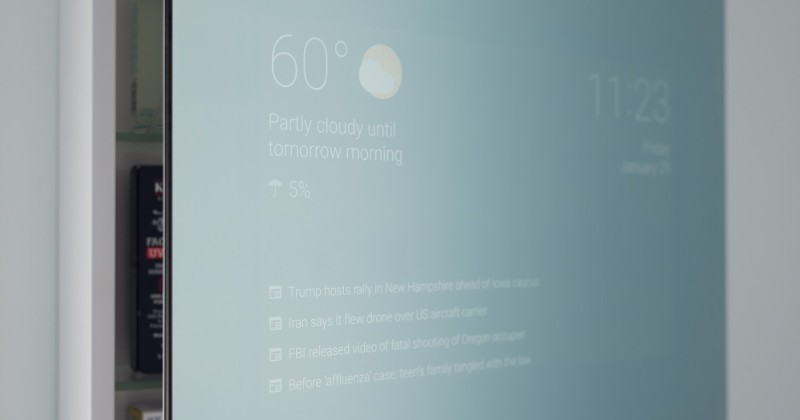
With nobody else to have thought of this before, Google engineer Max Braun built a smart replacement for his own bathroom mirror that is smart in the sense in which it has an inbuilt display. The mirror can thus display programmable notifications and information in different sides of it. That way the smart mirror does things such as display the date and time, the forecast for the day (or more or other days if that is your intent), recent news headlines. Who said you can’t brush your teeth and read the news at the same time?

The way Braun build this smart mirror was by employing a two-way mirror, a 15.6” display panel, a 40-ping LCD controller board as well as a push-to-activate momentary switch and terminals. When everything was said and done, Braun managed to single-handedly create a mirror that can be synced with a mobile device and push data and notifications in your bathroom too.

But this is only the beginning and just one man’s work. Braun said he intends to make it a lot more useful than its first prototype by adopting features that work with Google Now such as reminders, traffic updates and other. Braun has already tried running the smart mirror with devices such as Chromecast, Fire TV Stick and Nexus Player, thinking there may be some applicability there.

There’s no telling if Google itself will attempt to buy the concept from Braun, but chances are someone will. Not to mention the amount of headhunting the engineer will have to put up with in the near future.

Image Source: 1

Filed Under: Tech & Science Tagged With: Android-powered mirror, bluetooth mirror, smart home appliances, smart mirror

This Species of Deep Sea Worm Is an Early Life Form

February 4, 2016 By Michael Turner Leave a Comment

This Species of Deep Sea Worm Is an Early Life Form

Although the Xenoturbella has been found and known of since 1949, only the recent, closer studies on it decided that this species of deep sea worm is an early life form. And by early, scientists refer to what the very first non-microbial life form may have been like. By studying the species – which divides into 4 different categories – researches may be able to discover just how animals evolved over the length of time.

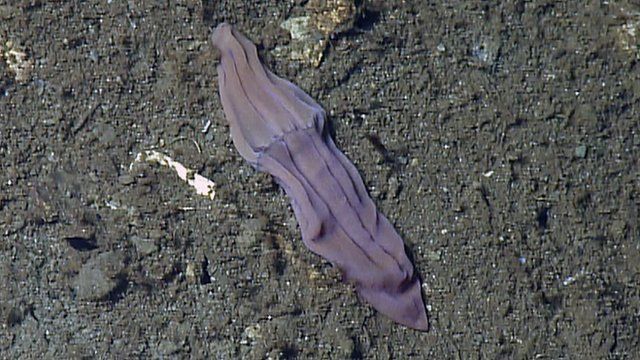
All four species of Xenoturbella had received a rather hilarious nickname from scientists – purple sock – because of the way it looks. With the shape of a crumpled, discarded purple sock, the Xenoturbella can be found on the very bottom of deep seas and oceans, near cold seeps, hydrothermal vents and some were found near a whale carcass.

A team from Scripps Institution of Oceanography, along with researchers from the Western Australian Museum and the Monterey Bay Aquarium Research Institute managed to collect numerous specimens of the flat-worm-like looking creature over 12 years. After close study in laboratories that focused on anatomy and the mitochondrial genomes, scientists decided that the main species splits into 4 different kinds of Xenoturbella: Xenoturbella Monstrosa, Xenoturbella Profunda, Xenoturbella Churro and Xenoturbella Hollandorum.

The study places the Xenoturbella and other worms known as acoelomorphs closest to all other bilaterally symmetrical animals. The species is believed to have evolved from more complex organisms and the very simple construction of them only suggests just how far back they go. The Xenoturbella doesn’t have any limbs, brain or eyes. The only distinguishable feature of the animal is a small gap that is used as a mouth. Regardless, everything that goes in goes back out through the same ‘mouth’.

At one point throughout history, the Xenoturbella was believed to be a mollusk. While most specimens do not exceed the diameter of a small coin, the largest one ever found was 20 centimeters long and belonged to the Xenoturbella Monstrosa family. The creature only seems to glide on the bottom of the ocean and uses some form of muscles to hold its position. When it contracts its muscles, it’ll look like what gave it its purple sock nickname.

One remaining mystery of the Xenoturbella is its usual diet; scientists have not been able to understand or find traces of what the species feeds on. The rovers sent to study and collect specimens of the Xenoturbella have never witnessed it eating and whenever researchers opened the worms up, their insides would be already empty. Considering the species does not have teeth or a sucking mechanism, it’s difficult to pinpoint what type of sustenance it relies on.

Image Source: 1

Filed Under: Tech & Science Tagged With: deep sea creatures, flatworms, xenoturbella, xenoturbella study

Samsung Giveth and Google Taketh Away Ad Blockers

February 4, 2016 By Kenneth Scott Leave a Comment

Samsung Giveth and Google Taketh Away Ad Blockers

Even if mere days ago, it looked like we could openly make use of at least one browser without a swarm of ads, it would appear that Samsung giveth and Google taketh away ad blockers. After even less than a week of Android users only having to compromise to use the Samsung Browser in order to get ad-free navigation, Google straight out removed the ad blockers that were supported by the browser just yesterday.

Apparently, the initiative that Samsung had – albeit well intentioned – goes right against Google Play policies by “interfering with other apps and services”. Thus Google removed the Adblock Fast from the store right away. The ad blocker in question had become one of the most popular hits over the weekend and it got removed after a 3-paragraph notice sent to the developers, stating that the app violated section 4.4 of the Developer Distribution Agreement.

Individuals who have been following the situation may find themselves a little appalled at the story as Adblock Fast uses Samsung’s code in its programming – the same coding that was approved by Samsung. And hilariously enough, Adblock Plus is a program that uses the exact same kind of code as Adblock Fast and yet, the former has not yet been called out and removed from Google Play.

Then again, Adblock Plus gave up the idea of creating an extension that would help remove ads from pages and instead creating an entire new ad-free browser. Maybe that’s why Adblock Plus managed to pass Google’s security gate and Adblock Fast didn’t. And the entire ordeal seems a little hilarious as Samsung had made a deal with Adblock Fast and Google budged in because it did not find the partnership as a good enough reason to allow third party apps running on phone manufacturers.

Now that Adblock Fast is gone from the Play Store, there’s not that huge amount of variety of adblockers you can still get yourself if you’re running an Android device. You can still find and use Crystal, the very popular iOS ad blocker. Your only other alternative would finally be Adblock Plus – the app that is bundled with the company’s own browser to begin with.

Recently, Google seems to have been tightening the reins in an attempt to throttle the decline of mobile web traffic. The reason behind the decline is individuals’ preference of apps over browsers; and said apps can rarely bake in the adds that would otherwise bring the company revenue – like it would on its classic search engine.

Image Source: 1

Filed Under: Tech & Science Tagged With: Ad Blocking, adblock fast, adblock plus, google play

Turing Phone Gives Up Android in Favor of Sailfish OS

February 3, 2016 By Karen Jackson Leave a Comment

Turing Phone Gives Up Android in Favor of Sailfish OS

The device that promises an unbreakable and unhackable build, the Turing Phone gives up Android in favor of Sailfish OS despite early announcements pertaining to the former. This may lead to a dwindle in numbers of interested customers considering the great amount of Android fans and the very low number of individuals who have even heard of Sailfish.

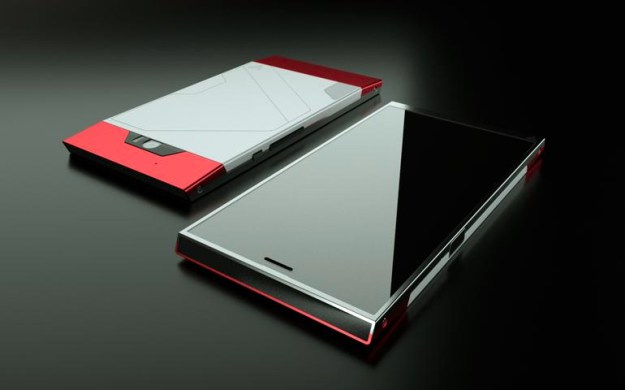
The Turing Phone is a device that was originally shown somewhere mid-2015 that features a 5.5 inch display and is completely made of liquidmorphium. Despite what the name of the alloy suggests, the material used is made to be even sturdier than steel and aluminum. Featuring an incredibly different design with sharp edges and cuts, it topped off the expectation list when it was also announced that it would come with the Android 5.1 Lollipop.

However, certain delays and issues have led the company to a delayed delivery date – originally set to December 2015, and now to the official announcement that on top of the new expected date of delivery being April 2016, users should not expect the Android operating system on it anymore.

The idea was scratched in favor of a more unusual OS that numerous people may have not even heard of before – Sailfish OS. Although not that popular, it features a great amount of quirky features and is certainly unique. The Sailfish OS is Linux based and created by a team of developers that used to be at the head of Nokia. You may have heard of this particular piece of software being used on the Jolla Tablet – a clever device that uses gesture and motion-based controls to do absolutely anything on it. Difficult to learn, but a lot of fun and fluidity once you get used to it.

But with the latest change, the Turing Phone may end up seeing a lot more trouble now that they opt for a less popular operating system. If before, it meant you were getting a strongly based and secure Android phone that at least Android fans could relate to, now you get an extremely secure phone with an OS that you may find difficult to use and extremely unfamiliar.

As an upside though, Turing Robotic Industries – the creative force behind the Turing Phone – claims that the phone will be able to run Android Apps on the Sailfish OS with no issues. But given the mere concepts that lie at the base of the operating system, the experience will probably differ by a large margin on the unbreakable phone.

Image Source: 1

Filed Under: Tech & Science Tagged With: turing phone, turing phone os, turing phone sailfish, turing robotics industries

Microsoft HoloLens Hopes to Revolutionize Watching NFL

February 3, 2016 By Cristopher Hall Leave a Comment

Microsoft HoloLens Hopes to Revolutionize Watching NFL

In its role as an NFL technology partner, Microsoft HoloLens hopes to revolutionize watching NFL games for the fans by employing augmented reality headsets. In theory, Microsoft hopes that the helmets would not only provide a personal view and projection of the game on various surfaces, but would also give the users complete control over what they watch, who they watch, or what kind of information regarding the game they can pull out.

This is not something that is planned only for the viewers, however, as coaches and even players could benefit from such a device. By seeing things the same way a fan would, teams could adjust and change the kind of game plan they are using, all thanks to a better overview of what is happening on the field.

A small attempt at integrating technology into the favorite sport of so many Americans has already been done through the Xbox One. Thanks to the sensors that are sewn into player jerseys that send RFID data directly into the app, which can then be used to create averages, records and numerous statistics regarding a particularly player’s performance, for example.

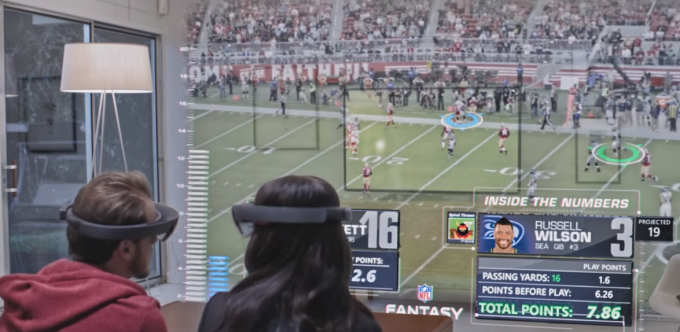
But the presentation video of how Microsoft actually sees the HoloLens playing a role in what NFL is concerned is actually a lot more impressive than anything tracking sensors could achieve by themselves. Starting with things such as a full-scale holographic player bursting out of your wall and immediately being surrounded by its personal statistics, hanging in midair and ending with downright watching the game on your coffee table, while also gaining full control of what and when you watch.

Manipulating the 3D video and the kind of information the HoloLens would display seems to be done through motion and gesture controls; at least that is what Microsoft hopes to be able to achieve. The information displayed about particular players, as shown in the video, could be split into two types, depending on who is using the AR application.

While fans could see just the player performance and full-scale holographic models of the players, coaches could gain insight on other details of the watched player, such as level of hydration, core body temperature or other types of information related to health factors of the player.

Image Source: 1

Filed Under: Tech & Science Tagged With: AR in sports, Augmented Reality, microsoft hololens, Microsoft HoloLens NFL

Uber Is Not Just Rebranding Its App Icon

February 3, 2016 By Roxanne Briean Leave a Comment

Uber Is Not Just Rebranding Its App Icon

If you happened to take out your app list on your phone recently, you may have noticed something that was a little off about one of your installed apps: it would appear that Uber is not just rebranding its app icon though, as the company seems to be looking to expand its services too.

With the change being a mere day old now, users and others seem to not have a very positive selection of feelings towards the change. Twitter has been booming with angry tweets saying that the change is not the greatest they had ever seen; however, that’s hardly a surprise when it comes to changes made by popular companies or services.

The app’s change log doesn’t say anything new; and on a closer inspection of the app itself after the update there’s hardly anything changed other than the icon and the splash screen that greets you when you turn it on. The former classic U-shaped logo is now a rather abstract form that the company explained in their presentation video.

Uber’s blog received a new entry yesterday, where the company’s CEO Travis Kalanick personally got involved in delivering the new changes to the public. And that is on top of personally getting involved in the entire revamp of the brand. According to his own post, the company feels that the new logo and icon define what the company does a lot better than before. After 4 years of developing as a brand, Kalanick says, they felt it was time to reflect the fact that Uber has matured as a company.

In Kalanick’s vision, Uber is more about connecting and “moving cities and their citizens”. Along with a new website layout, the new logo is gifted with a lot more color and personality than its predecessor. Apparently, the colors chosen for each major city or zone differs.

For example, Ireland’s green to burgundy selection of colors was inspired by lush fields and brick-build houses. Mexico’s bright greens, blues and magenta reminisces the colorful alleyways and streets. China mixes the foggy nature with the bright red traditional decorations. Uber said they are planning to have a theme for each and every city or country that it functions in – accounting for hundreds and hundreds of patterns and color palettes.

The new and rather ambiguous icon takes a step away from the classic look and attempting to open new pathways for the company. As they started as nothing more than a personal driver service, Uber now does a lot more than that – food or goods transport, with self-driving car service and “more” planned to come in the future.

Image Source: 1

Filed Under: Tech & Science Tagged With: uber, uber app, Uber changes, uber logo

NASA Releases Photos of Charon Taken by New Horizons

February 3, 2016 By Nancy Young Leave a Comment

NASA Releases Photos of Charon Taken by New Horizons

NASA releases photos of Charon taken by New Horizons space shuttle and they depict the very dark and yet very beautiful nature of Pluto’s largest moon. The images were captures on July 17th during the 3 day long flyby of the probe as it was moving past Pluto. A total of 16 one-second exposure photos were taken using the shuttle’s Long Range Reconnaissance Orbiter from a whopping distance of 1.9 million miles even though New Horizons came as close as 7,800 miles from the surface of Pluto.

The images captured depict the night side of Charon, only distinguishable as it’s dimly lit by the light reflected off of the surface of Pluto and yet still shows just how battered and scarred the surface of the moon is. Graced by cryogeysers and cryovolcanoes, Charon is the largest and probably harshest of Pluto’s total of 5 moons.

The pictures that were taken have actually witnessed the south pole of Charon. This zone entered polar night all the way back in 1989 and is expected to last until 2107, when sunlight will be shed again on that side of the moon. Charon’s harsh ‘winter’ conditions makes up for temperatures nearly as low as absolute zero – minus 459.67 degrees Fahrenheit, which is believed to be the point where atoms stop moving.

The images taken this way are extremely rare and valuable as the New Horizons probe continues its trek past the far edges of our solar system and hoping to do a flyby of a small object dubbed KBO 2014 MU69 which can be found nearly 1 billion miles beyond Pluto. This is nearly a quarter of the distance between Earth and Pluto. The shuttle is expected to fly past it by January 1st of 2019.

For many years, Pluto and its moons have remained covered in mystery until the probe that was launched in 2006 made the entire trek all the way to the far end of the solar system to reveal a huge amount of information about the dwarf planet’s surface and composition as well as its tiny moons. Charon has a diameter of around 753 miles, exceeding by far the size of all of the other four – Nix, Hydra, Kerberos and Styx. For example Hydra is 27 miles in its longest direction.

However, this may not be the last thing we see until the shuttle reaches its next destination as data is constantly being fed to the surface of the Earth by the probe, and images depicting the edge of the solar system will continue coming in until October this year.

Image Source: 1

Filed Under: Tech & Science Tagged With: charon, charon image, new horizons probe, pluto moons

  • « Previous Page
  • 1
  • …
  • 45
  • 46
  • 47
  • 48
  • 49
  • …
  • 114
  • Next Page »

Subscribe to Blog via Email

Enter your email address to subscribe to this blog and receive notifications of new posts by email.

Join 11 other subscribers

Recent Articles

police handcuffs man

German Man Probed In Poisoning That Killed 21 Employees Since 2000

June 29, 2018 By Kenneth Scott Leave a Comment

Chicken wings bar

Intoxicated South Carolina Man Punches Waitress Who Refused to Serve Him Alcohol

June 29, 2018 By Karen Jackson Leave a Comment

gaming

New Zealand gamer Who Flew Halfway Across The World for Virginia Teen Gets Shots By Her Mother

June 28, 2018 By Cristopher Hall Leave a Comment

party

Former Virginia Tech Freshman Sentenced to 50 Years in Prison for Stabbing a Girl to Death

June 28, 2018 By Roxanne Briean Leave a Comment

bonfire

British Couple Sentenced to Life in Prison for Torturing and Murdering French Nanny

June 27, 2018 By Deborah Campbell Leave a Comment

pay phone

Texas Father of Girl Disappeared in the 80s Ignored by Authorities

June 26, 2018 By Cristopher Hall Leave a Comment

bottled water

San Francisco Woman Threatened to Call Police on Girl Who Sold Ice Water for Disneyland Trip

June 25, 2018 By Roxanne Briean Leave a Comment

Maplewood Park

Missouri Man Robbed by Date and Accomplice in Park

June 22, 2018 By Nancy Young Leave a Comment

coding

New York Man Sentenced in Cyberstalking Former Girlfriend, Mailing Drugs to Her Dorm

June 22, 2018 By Deborah Campbell Leave a Comment

headphones

Bose Poised to Launch Sleepbuds, In-Ear Headphones That Help You Sleep

June 21, 2018 By Nancy Young Leave a Comment

Police light

Intoxicated Female Driver in Custody for Pulling Arresting Officer by the Hair

June 21, 2018 By Kenneth Scott Leave a Comment

kitchen

Restaurant Manager Arrested and Charged in Shooting Death of Co-Worker over Negative Yelp Reviews

June 20, 2018 By Karen Jackson Leave a Comment

plastic container

Pennsylvania Couple Charged in Violent Death of Infant Discovered Buried in Cat Litter

June 19, 2018 By Cristopher Hall Leave a Comment

tailpipe

Minnesota Teen Gets Head Stuck In Oversized Tailpipe Winstock Music Festival

June 18, 2018 By Karen Jackson Leave a Comment

Pages

  • About Us
  • Contact us
  • Privacy Policy
  • Privacy Policy GDPR
  • Staff
  • Terms and Conditions

Recent Posts

  • German Man Probed In Poisoning That Killed 21 Employees Since 2000 June 29, 2018
  • Intoxicated South Carolina Man Punches Waitress Who Refused to Serve Him Alcohol June 29, 2018
  • New Zealand gamer Who Flew Halfway Across The World for Virginia Teen Gets Shots By Her Mother June 28, 2018
  • Former Virginia Tech Freshman Sentenced to 50 Years in Prison for Stabbing a Girl to Death June 28, 2018
  • British Couple Sentenced to Life in Prison for Torturing and Murdering French Nanny June 27, 2018
  • Texas Father of Girl Disappeared in the 80s Ignored by Authorities June 26, 2018
  • San Francisco Woman Threatened to Call Police on Girl Who Sold Ice Water for Disneyland Trip June 25, 2018

Categories

  • Business
  • Entertainment
  • Finance
  • Headlines
  • Health
  • Life
  • Nature
  • Science
  • Sports
  • Tech & Science
  • Travel
  • Uncategorized
  • United States
  • World

Copyright © 2026 ArgyllFreePress.com
About · Privacy Policy · Terms of Use · Contact