Argyll Free Press

Growing News Network

Thursday, April 30, 2026
Log in
  • Business
  • Finance
  • Sports
  • Tech & Science
    • HP Envy 4500 Review
    • LG Optimus 170 Review
    • iPod Touch 6th Generation Review
    • HTC One M8 Accessories Set-up
    • Surrealist Games You Must Play
    • Hisense Sero 8 Review
    • Dell Latitude e7440 Review
    • HP Laserjet 1536dnf mfp Review
    • Garmin Fenix 2 Review
    • Skype Vs Viber
    • Best Video Conferencing Software
    • Sony mdr 1r Headphones Review
    • Canon Rebel t3i Review
    • Sennheiser Momentum 2-0 Review
  • Travel
  • Headlines
  • Health
  • United States

Rare Occultation Will See The Moon Block Out A Bright Star And Three Planets

September 18, 2017 By Michael Turner Leave a Comment

moon occultation in the night sky

A rare occultation event is taking place on September 18 as the Moon will obscure three planets and Regulus.

On September 18, sky gazers will be able to follow a rare event, a celestial occultation which will have the Moon blocking out three planets and also a bright star. Astronomers use the term “occultation” to describe the event of one celestial body blocking out another space body.

The Rare Lunar Occultation not to Repeat Until 2036

According to reports, lunar occultations are a rare phenomenon. The latest known such event, in which the Moon obscured three planets, took place back in 2008, almost a decade ago. However, the next such sighting is projected for more than a decade from now, namely, in 2036.

On September 18, the Moon will be obscuring from view, in this order, Venus, the bright star Regulus, Mars, and then Mercury. As the Earth’s natural satellite, the moon passes in front of other space objects on quite a regular basis. However, such a planetary alignment is a rare event.

The event was noted to have started at 1 a.m. UTC with Venus continued with Regulus at 5 a.m. UTC and Mars will follow at 8 p.m. UTC, and then Mercury at 11 p.m. UTC.

This event will be and is most visible to people living in Indonesia, Australia, and New Zealand. Sky gazers residing in North America can still follow the phenomenon, even if it will mostly be taking place during the daylight hours. Come evening, the rare occultation should be visible to any interested viewer that has access to a telescope.

These will simply have to follow the Moon and observe it as it moves across the sky. In its path, it will be obscuring Mars and Mercury. The three planets and star were aligned in a slightly askew diagonal.

Regulus, the star in question, is one of the 22 known “first magnitude stars”. They were named like this thanks to their property of being among the brightest stars in the night sky. The Moon can occult only four of these 22 space bodies. The three others,  besides Regulus, are Antares, Aldebaran, and Spica.

Image Source: Flickr
Filed Under: Nature

500 Million Years Old Fossils Reveal Important New Piece Of The Evolution Theory

September 12, 2017 By Karen Jackson Leave a Comment

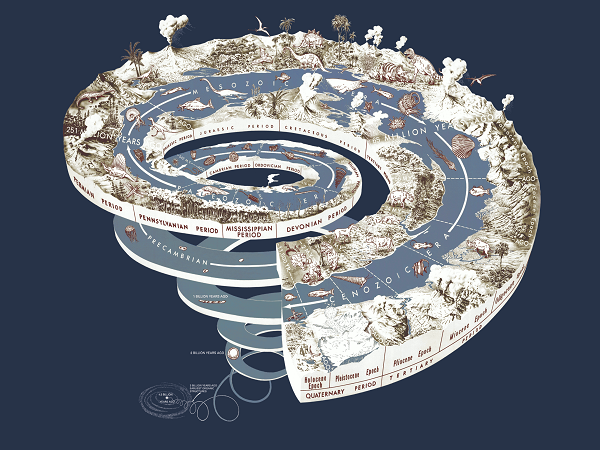
500 million years old fossils on a geological evolution scale

Scientists discovered over 500 million years old fossils which could change the ecological evolution scale.

A team of paleontologists discovered over 500 million years old fossils which revealed themselves to be the first creatures capable of moving around on their own. This makes them an important piece in the theory of the human and animal evolution timeline.

The 500 Million Years Old Fossils are the Remains of Almost Microscopic Creatures

The University of Manchester group of researchers behind the discovery revealed that they found these fossils in Brazil. Dating the fossilized remains showed them to go back to the period known as the Ediacaran-Cambrian transition. During this meeting point period, science considers that there was an ‘explosion’ of life on Earth as a great variety of creatures emerged at once.

The oldest examples of bilaterian animals also go back to this same transition point. Bilaterians are animals which have a body that can be divided into a top and a bottom. Also, in a left and a right side, a front and back one.

These recently discovered over 500 million years old fossils were noted to trace back to even earlier than any of the currently known bilaterians.

The creatures were discovered thanks to the burrowed traces they left in the rocks. According to reports, these were just ‘a fraction of an inch in diameter’ or somewhere between 0.002 and 0.0024 inches. Based on this, the university team determined that the creatures to leave these tracks “were similar in size to a human hair”.

They consider that these organisms left behind the burrows as they dug through the sediment layers. The creatures were likely comparable to the present-day roundworms, believes the team.

Such organisms would have propelled themselves through undulating locomotion or the wave-like movement of their body. This also places them in the complex animals class, as they were able to move themselves.

“Our new fossils show that complex animals with muscle control were around approximately 550 million years ago, and they may have been overlooked previously because they are so tiny,” states Luke Parry, the study lead author, part of the University of Bristol.

The team studied the fossils by creating a 3D model of the rocks containing them through X-ray images. This way, they were able to take a closer look at the creatures without damaging them.

Study findings are available in the journal Nature Ecology & Evolution.

Image Source: Wikimedia

Filed Under: Nature

The Aggressive Southern Pine Beetles May Soon Expand Their Territory

August 31, 2017 By Karen Jackson Leave a Comment

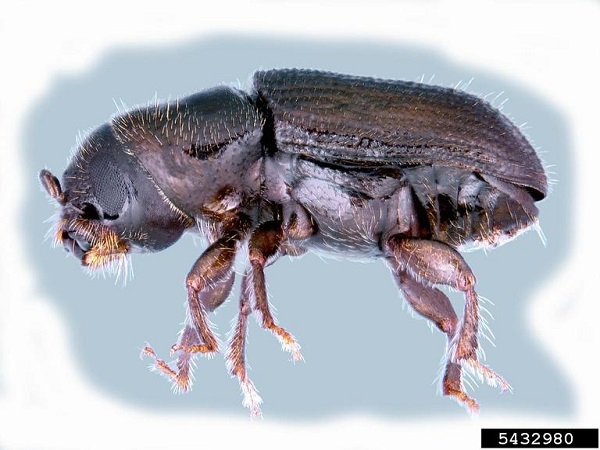
southern pine beetles illustration

Southern pine beetles may soon expand their territory because of the warmer weather.

According to a new study, the southern pine beetle, one of the most aggressive tree-killing insects in the world, may soon extend its territory because of the climate changes and their temperature increases.

Their range may earlier than expected come to include large portions of the northern United States as well as southern Canada, says the new study.

The Aggressive Southern Pine Beetles and Its Effects on Nature

This new study was led by Corey Lesk, a Columbia University graduate student of the Department of Earth and Environmental Sciences.

Southern pine beetles used to be live only in Central America and the southeastern United States. However, over the past few years, they were spotted in the Northeast and even in Long Island in New York and Connecticut.

This beetle’s range is limited by the weather, more precisely, the annual extreme temperature lows. The study team points out that now, these extreme lows are rising even faster than the average temperatures. If this trend continues, the beetle might have few to no problems in spreading and extending its territory.

Research also points to this possibly resulting in quite serious problems for the environment as it could affect a “vast ecosystem” and make it “vulnerable”.

“We could see loss of biodiversity and iconic regional forests. There would be damage to tourism and forestry industries in already struggling rural areas,” state the researchers.

Radley Horton, a study co-author and Columbia University Lamont-Doherty Earth Observatory researcher points out some of the consequences of the southern pine beetle on a forest.

According to him, infected trees could begin drying out, which would also increase their risks of more easily catching fire and burning. In turn, this would endanger all of their surrounding areas, be it ecosystem or even properties. Large forest fires would also release significant quantities of carbon into the atmosphere, increasing the greenhouse effect.

The study projects that, by 2020, if this trend continues, the southern pine beetles would have spread and established themselves along the Atlantic coast of the U.S. and up to Nova Scotia.

Imgae Source: Wikimedia

Filed Under: Nature

Some Fish Make Alcohol In Wait For Oxygen

August 16, 2017 By Nancy Young Leave a Comment

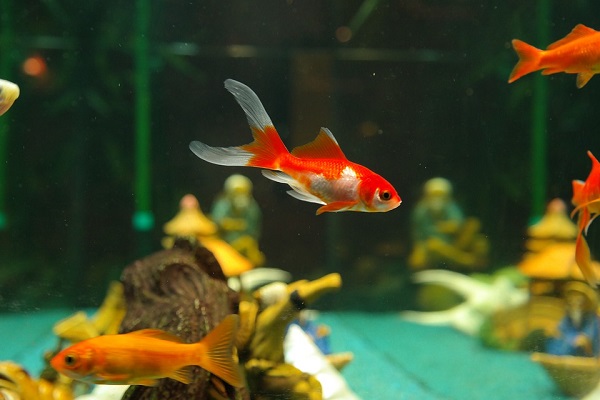
goldfish and some fish besides it in aquarium

Some fish, for example, the goldfish, can produce their own alcohol.

As you see a goldfish pond in the summer, your thoughts might turn to how those beautiful creatures survive in winter under a sheet of ice. Well, a group of scientists with the University of Liverpool in the United Kingdom believes that they have discovered what helps keep them and some of their relatives alive. It appears that some fish make alcohol while they are in wait for oxygen. Also, for a few them, that blood alcohol level can rise over the legal limit to drive in most countries.

Some Fish Include Goldfish and the Carp

When ice covers a pond or lake during winter, the oxygen levels can drop quickly depending on how much water volume there is. It also depends on how many creatures live within this body of water using up its oxygen reserve. This can spell death for some fish during an unusually long or harsh cold season.

The bodies of fish and most other animal species produce a substance called lactic acid whenever oxygen levels run low in the bloodstream. Lactic acid is toxic, and it is the same stuff that causes the muscles to feel sore after a hard workout.

Well, it seems that goldfish and their cousins in the carp family have developed a secondary system that kicks in inside their cells when their oxygen levels run low. This causes the cellular mitochondria to make alcohol out of the lactic acid in a process not that different from fermentation.

“The ethanol production allows the crucian carp to be the only fish species surviving and exploiting these harsh environments,” claimed Dr. Cathrine Fagernes, “thereby avoiding competition and escaping predation by other fish species with which they normally interact in better-oxygenated waters.”


Fagernes is the study author and also part of the University of Oslo, which also participated in the study. She then went to point out that this adaptation may be one of the reasons why the goldfish, the ‘carp’s cousin’, ‘is arguably one of the most resilient pets under human care.”

Study results and further details are available in the journal Scientific Reports. 

Image Source: Pixabay

Filed Under: Nature

A Massive Toothy Fish Chomped Its Food Just Like A Shark

August 7, 2017 By Karen Jackson Leave a Comment

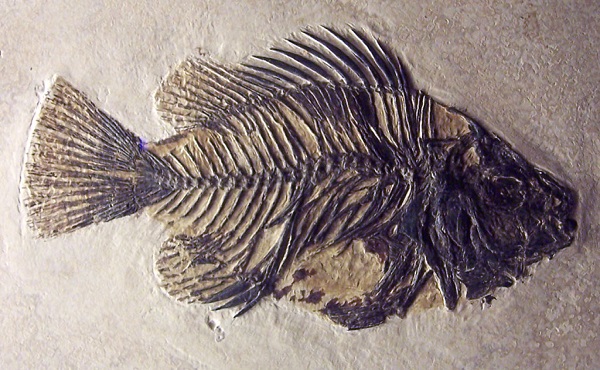
massive toothy fish fossil

The fossil of a massive toothy fish is offering a new look at marine predators and their evolution.

Scientists recently started analyzing the fossil of a previously unknown fish species, one whose specimens were massive toothy fish with eating habits and an appearance resembling modern-day sharks.

The fossil was detected in northeastern Nevada and is some 5.9 feet long. This bony fish had long jaws filled with sharp teeth. Its dentures suggest that the species could quite easily chomp down on its prey and then swallow it whole, just like sharks are known for doing.

Massive Toothy Fish Offers New Look at the Evolution of Predators

A team of Swiss and US researchers studied this strange fish fossil discovered in Elko County, Nevada. Belonging to a previously unknown species, this was then named the Birgeria americana. This fish is believed to have swum in the waters of the sea that once covered our modern-day Nevada and the surrounding states for about 1 million years following the mass extinction event from 252 million years ago.

“The surprising find from Elko County in northeastern Nevada is one of the most completely preserved vertebrate remains from this time period ever discovered in the United States,” states Carlo Romano of the University of Zurich, the lead author.

The discovered fossil is just 0.85 feet and is a partial skull fragment. This displays three parallel rows of teeth on the exterior and a smaller set on the interior. The outer teeth are up to 2 centimeters long.

According to the study team, this massive toothy fish probably hunted prey just like a shark. It possibly pursued its prey before chomping down on it and swallowing it whole.

The species is also believed to predate the famed Ichthyosaur by more than 30 million years. Discovering this fish fossil was deemed crucial by the researchers as it offers a new look at the evolution of large predators after the mass extinction event mentioned above.

A paper released in the Journal of Paleontology holds further details on the matter. For example, the study showed that a massive fish was capable of surviving in waters previously deemed to have been too warm for it.

The mass extinction event from 252 million years ago is estimated to have wiped out around 90 percent of all marine animals.

Image Source: Wikimedia

Filed Under: Nature

Exposure To Oil Is Damaging To Coral Reef Fish

July 18, 2017 By Kenneth Scott Leave a Comment

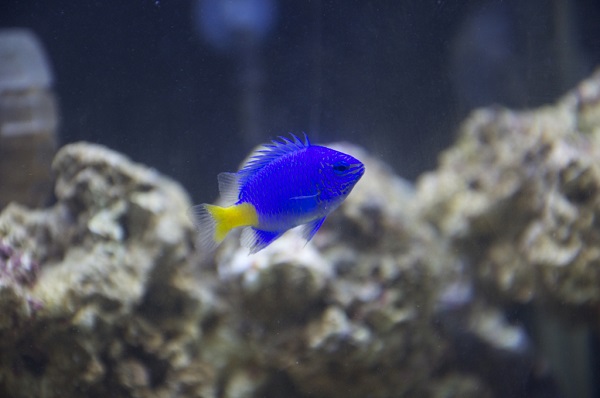
coral reef fish

Coral reef fish can have long term problems because of their early exposure to oil.

Coral reef fish have a hard time as they grow up because of their being exposed to oil in the early stages of their life, at least according to a new study. Even small amounts of this chemical substance in marine environments can lead to more problems than believed.

Research on the matter was conducted by US, Australian, and Norwegian scientists. They published their results in the journal Nature Ecology & Evolution. The paper also brings to attention the risks provoked by an increased industrial activity in regions such as the Great Barrier Reef.

Coral Reef Fish Impaired by Oil As They Look For Home

Study results are based on tests carried out in simulated marine environments which housed six reef fish species. These were all part of the Lethrinidae and Pomacentridae families. All of them can be found swimming in the Great Barrier Reef.

The team introduced minimal amounts of oil in their simulated environments, and then monitored the fish. According to a study co-author, Dr. Jodie Rummer from the James Cook University, the results were “quite alarming”.

The oil concentration in the simulated environments was reportedly the equivalent of ‘a few drops of oil’ in a swimming pool. Even so, they caused significant problems especially to the coral reef fish exposed to them in their early life stages.

These were noted to be worse at escaping from possible predators. Or at choosing a habitat for them to live in. The fish were also observed to be traveling in smaller groups and also towards more dangerous and open waters.

“In such early life stages, if these reef fishes are exposed to oil, they’re experiencing some really dangerous cognitive difficulties,” states Dr. Rummer.

As the coral reef fish seem unable to make proper decisions, this could also lead to “their ultimate demise” according to the study co-author. Oil could be affecting the fish’s neurotransmitters function in the brain.

The study specifically looked at emperor and damselfish that typically live in tropical coral reefs. These brightly colored fish play a significant role in the reef’s survival, as they help remove algae. They are also part of the local food chain as larger fish species prey on them.

Image Source: Flickr

Filed Under: Nature

Tardigrades Are Likely To Be Alive Even 5 Billion Years From Now

July 16, 2017 By Roxanne Briean Leave a Comment

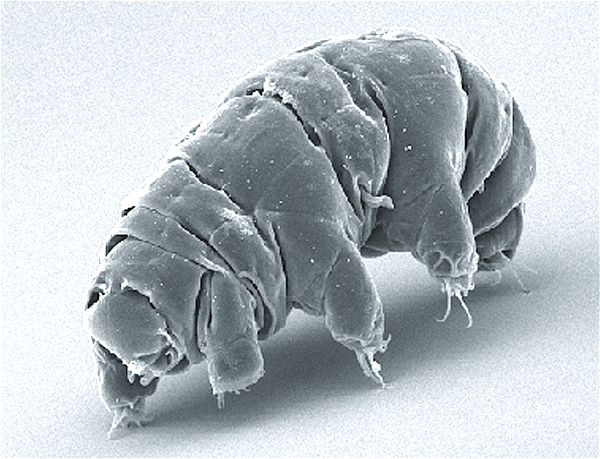
tardigrades

Tardigrades are seemingly likely to survive another five billion years from now on.

Scientists have known for some time that tardigrades, also known as water bears, are capable of surviving almost anything they can throw at it. Extended periods of dehydration, exposure to vacuum conditions, and even heavy doses of radiation would fail to kill these micro-animals.

Even though they are less than a millimeter long, they may well be some of the toughest creatures in existence. They have also been around for quite some time. Now, researchers predict that they could survive, as a species, for another 5 billion years.

Tardigrades are Quite Indestructible Creatures

A team looked into the issue as a way of examining how life might survive extinction level events and possibly transmit from planet to planet, even between stars. It also helps them predict life on other planets might exist long enough for us to find it. Of all the members of the animal kingdom, the tardigrade appears to be the most likely to survive a major destructive event. Only some microbes might have a greater chance to continue afterward.David Sloan, a physics researcher at Oxford University, stated that this new study considered “the hardiest species”, namely, the tardigrade. It did so as quite a number of previous studies focused on ‘doomsday’ scenarios.

These revolve around Earth and the astrophysical events, such as supernovae, which could wipe out humanity. However, few considered what species could still survive them.

Sloan, a co-author of the study, continued, relating his comments to other recent discoveries. “As we are now entering a stage of astronomy where we have seen exoplanets and are hoping to soon perform spectroscopy, looking for signatures of life, we should try to see just how fragile this hardiest life is.”
The main reason they put the 5 billion years time limit on the tardigrades’ existence is tied to the Sun. This is predicted to expand to such a size that Earth’s oceans would completely boil away. Still, humans will be gone long before that.
Study results are available in the journal Nature.  
Image Source: Wikimedia

Filed Under: Nature

  • « Previous Page
  • 1
  • 2

Subscribe to Blog via Email

Enter your email address to subscribe to this blog and receive notifications of new posts by email.

Join 11 other subscribers

Recent Articles

police handcuffs man

German Man Probed In Poisoning That Killed 21 Employees Since 2000

June 29, 2018 By Kenneth Scott Leave a Comment

Chicken wings bar

Intoxicated South Carolina Man Punches Waitress Who Refused to Serve Him Alcohol

June 29, 2018 By Karen Jackson Leave a Comment

gaming

New Zealand gamer Who Flew Halfway Across The World for Virginia Teen Gets Shots By Her Mother

June 28, 2018 By Cristopher Hall Leave a Comment

party

Former Virginia Tech Freshman Sentenced to 50 Years in Prison for Stabbing a Girl to Death

June 28, 2018 By Roxanne Briean Leave a Comment

bonfire

British Couple Sentenced to Life in Prison for Torturing and Murdering French Nanny

June 27, 2018 By Deborah Campbell Leave a Comment

pay phone

Texas Father of Girl Disappeared in the 80s Ignored by Authorities

June 26, 2018 By Cristopher Hall Leave a Comment

bottled water

San Francisco Woman Threatened to Call Police on Girl Who Sold Ice Water for Disneyland Trip

June 25, 2018 By Roxanne Briean Leave a Comment

Maplewood Park

Missouri Man Robbed by Date and Accomplice in Park

June 22, 2018 By Nancy Young Leave a Comment

coding

New York Man Sentenced in Cyberstalking Former Girlfriend, Mailing Drugs to Her Dorm

June 22, 2018 By Deborah Campbell Leave a Comment

headphones

Bose Poised to Launch Sleepbuds, In-Ear Headphones That Help You Sleep

June 21, 2018 By Nancy Young Leave a Comment

Police light

Intoxicated Female Driver in Custody for Pulling Arresting Officer by the Hair

June 21, 2018 By Kenneth Scott Leave a Comment

kitchen

Restaurant Manager Arrested and Charged in Shooting Death of Co-Worker over Negative Yelp Reviews

June 20, 2018 By Karen Jackson Leave a Comment

plastic container

Pennsylvania Couple Charged in Violent Death of Infant Discovered Buried in Cat Litter

June 19, 2018 By Cristopher Hall Leave a Comment

tailpipe

Minnesota Teen Gets Head Stuck In Oversized Tailpipe Winstock Music Festival

June 18, 2018 By Karen Jackson Leave a Comment

Pages

  • About Us
  • Contact us
  • Privacy Policy
  • Privacy Policy GDPR
  • Staff
  • Terms and Conditions

Recent Posts

  • German Man Probed In Poisoning That Killed 21 Employees Since 2000 June 29, 2018
  • Intoxicated South Carolina Man Punches Waitress Who Refused to Serve Him Alcohol June 29, 2018
  • New Zealand gamer Who Flew Halfway Across The World for Virginia Teen Gets Shots By Her Mother June 28, 2018
  • Former Virginia Tech Freshman Sentenced to 50 Years in Prison for Stabbing a Girl to Death June 28, 2018
  • British Couple Sentenced to Life in Prison for Torturing and Murdering French Nanny June 27, 2018
  • Texas Father of Girl Disappeared in the 80s Ignored by Authorities June 26, 2018
  • San Francisco Woman Threatened to Call Police on Girl Who Sold Ice Water for Disneyland Trip June 25, 2018

Categories

  • Business
  • Entertainment
  • Finance
  • Headlines
  • Health
  • Life
  • Nature
  • Science
  • Sports
  • Tech & Science
  • Travel
  • Uncategorized
  • United States
  • World

Copyright © 2026 ArgyllFreePress.com
About · Privacy Policy · Terms of Use · Contact