Argyll Free Press

Growing News Network

Monday, February 2, 2026
Log in
  • Business
  • Finance
  • Sports
  • Tech & Science
    • HP Envy 4500 Review
    • LG Optimus 170 Review
    • iPod Touch 6th Generation Review
    • HTC One M8 Accessories Set-up
    • Surrealist Games You Must Play
    • Hisense Sero 8 Review
    • Dell Latitude e7440 Review
    • HP Laserjet 1536dnf mfp Review
    • Garmin Fenix 2 Review
    • Skype Vs Viber
    • Best Video Conferencing Software
    • Sony mdr 1r Headphones Review
    • Canon Rebel t3i Review
    • Sennheiser Momentum 2-0 Review
  • Travel
  • Headlines
  • Health
  • United States

Less Sleep In Old Age Is An Evolutionary Survival Tool

July 14, 2017 By Cristopher Hall Leave a Comment

Man cannot fall sleep

Disrupted sleep patterns might be the relic of an evolutionary survival tool.

It’s common knowledge that as we get older we tend to sleep less or suffer from frequent sleep disruptions. However, researchers documenting the Hadza tribe in Northern Tanzania have come to the conclusion that restless sleep might be in fact an evolutionary survival tool. The survival mechanism evolved as the ancient hunter-gatherer tribes stood on guard against nocturnal threats.

Restless Sleep as Part of An Evolutionary Survival Tool

Researchers from the Duke University and the University of Nevada, USA teamed up with researchers from Tanzania to track the sleep patterns of the Hadza people. The Hadza are a modern-day tribe that lives in similar conditions to the ancient hunter-gatherers.

The researchers were able to gather data by strapping watches on their wrists that monitored their night-time movements. What they noticed is that there is a frequent change in the sleeping patterns between the old and the young so that at least one member of the tribe is awake. From the 20 days of study, the tribe was collectively asleep only for 18 minutes.

Researcher David Samson from the Duke University noticed that despite the restless sleep, the members felt no negative emotion about insomnia or other sleep problems that are frequent in Western societies. Moreover, Westerners get a more secure sleep than the tribe. The members sleep on the ground, next to a hearth or in huts made of branches. They have no controlled climate or synthetic lights.

Charlie Nunn, co-author, and professor of evolutionary anthropology at Duke stated:

If you’re in a lighter stage of sleep you’d be more attuned to any kind of threat in the environment.

Sleep flexibility has been observed in other animals such as birds and mice. However, it is for the first time that humans exhibited such behavior. As a result, the data makes the researchers suggest that perhaps restless sleep is an evolutionary survival tool that had helped our ancestors protect their tribes from any nocturnal threats.

Image source: DepositPhotos
Filed Under: Science

A One Trillion Tons Iceberg Broke From The Larsen C Ice Shelf

July 13, 2017 By Roxanne Briean Leave a Comment

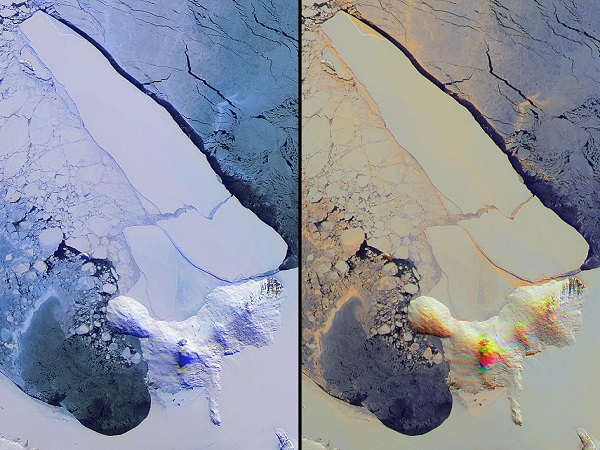
one million tons iceberg satellite view

A one trillion tons iceberg jut broke free of the Larsen C Ice Shelf in northwest Antarctica.

Scientists monitoring the Larsen C Ice Shelf announced early on Wednesday morning that a one trillion tons iceberg just broken free of the formation located in northwest Antarctica.

The team of researchers is part of Project MIDAS, a United Kingdom initiated research project. Scientists point out that such calving events are quite to be expected. Especially so considering the crack in Larsen C, which has been expanding faster than expected.

Calving is the term given to the process in which chunks of ice break off at the end or terminus of an ice shelf or glacier.

Breaking news! The iceberg has fully detached from Larsen C – more details to follow soon pic.twitter.com/pdSxDuAGjR

— Project MIDAS (@MIDASOnIce) July 12, 2017


One Trillion Tons Iceberg, the Third Biggest Calving Ever Recorded

According to initial estimates, the one trillion tons iceberg which recently broke off is one of the largest such structures ever recorded. It was estimated to be about the size of Delaware as it has an area of some 2,200 square miles. It also contains an ice volume about twice as big as the size of Lake Erie.

The Project MIDAS researchers revealed these details in a blog release posted on July 12. This also pointed out that the iceberg will most likely receive the “A68” designation. Its title will help officials in charge of tracking the movement of icebergs so that these can be avoided by ships.

Scientists also state that it is still hard to predict how the situation will unfold from now on. This is turn due to the iceberg’s large size. Scientists report that this may either remain in one piece or break apart into fragments. This latter also seems to be the most likely variant.

Breaking news on #LarsenC from @MIDASOnIce! Take a look yourself at the MODIS imagery at https://t.co/vMXIdzdfci pic.twitter.com/CmPkuxBpN6

— Stef Lhermitte (@StefLhermitte) July 12, 2017


The calving event in itself is believed to have taken place sometime in between Monday, July 10, and Wednesday, July 12.

Today’s MODIS vs. Monday’s Sentinel1 clearly shows the birth of the #LarsenC iceberg. @NASAEarth @ESA_EO @MIDASOnIce pic.twitter.com/XKZSvPlLDS

— Stef Lhermitte (@StefLhermitte) July 12, 2017


However, the researchers pointed out that “The calving of this iceberg leaves the Larsen C Ice Shelf reduced in area by more than 12 percent, and the landscape of the Antarctic Peninsula changed forever.”

If the one trillion tons iceberg does break apart, some parts of it may drift up north, into warmer parts. Some others may remain for decades in the same area where they are now.

Image Source: JPL/NASA

Filed Under: Science

Hubble Managed To Capture An Image Of The Hidden Galaxy

July 11, 2017 By Nancy Young Leave a Comment

hidden galaxy

Hubble managed to capture a much clearer image of IC 342 or the Hidden Galaxy.

The Hubble Space Telescope managed to snap a picture of a quite challenging cosmic target, namely the so-called Hidden Galaxy. Named IC 342, this bright galaxy is nonetheless hard to spot and capture in pictures, thus gaining its nickname mentioned above. IC 342 is situated relatively close to the Milky Way, at least in astronomical terms.

The Hidden Galaxy Offers a First Clearer Look

Because of the many obstacles in their way, astronomers have yet to determine the exact distance separating the two systems. This could be anything in between 7 million light years, to 11 million light years.

The Hidden Galaxy or Caldwell 5 is an intermediate spiral galaxy. It is positioned near the equator of the galactic disk of the Milky Way. This cosmic region is heavily populated by bright stars, dark dust, and cosmic gas. Also, these are not the only obstacle in viewing IC 342. The galaxy is also obscured by a significant amount of cosmic material in our solar system.

IC 342 appears to be one of the two brightest galaxies in the IC 342/Maffei Group galaxy groups of the Camelopardalis constellation. First discovered in 1985 by William Frederick Denning, it can be detected even with binoculars.

However, all the obstacles in its path make it hard to observe by either amateur or professional astronomers. Now, with some help from the Hubble Space Telescope, NASA and ESA managed to capture the clearest yet image of the Hidden Galaxy.

This reveals: “A beautiful mixture of hot, blue star-forming regions, redder, cooler regions of gas, and dark lanes of opaque dust can be seen, all swirling together around a bright core.”

These colors indicate, according to a NASA statement, that the galaxy is very active. The new image reportedly captured the “very central region” of IC 342.

Back in 2003, astronomers confirmed that the core of this galaxy is a very specific type of central region. Titled an HII nucleus, its very name underlines the presence of ionized hydrogen. This is likely a driving force behind the creation of so many hot new stars.

Image Source: Flickr

Filed Under: Science

Research Unearth New Remains Of Massive Jurassic-Era Crocodile Ancestor

July 5, 2017 By Kenneth Scott Leave a Comment

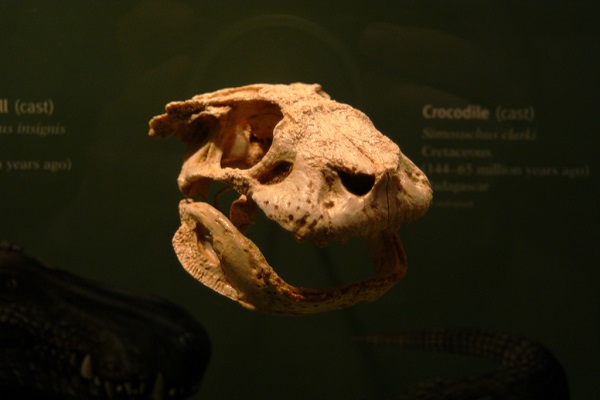
crocodile ancestor jaws

Research results concerning fossil remains of a crocodile ancestor called notosuchian were recently released.

Researchers discovered new fossil remains belonging to a massive crocodile ancestor that lived and was probably an apex predator during the Jurassic Period era. The animal could have weighed about a ton and been around seven meters long.

This Jurassic-Era ancestor is an elusive notosuchian part of the archosaurian, some of the most fearsome predators before the appearance of the T-rex. Only a few remains of the specimens of this species have been discovered.

Crocodile Ancestor, Apex Predator

This new fossil, a jaw part, was discovered in north-west Madagascar, near the village of Ambondromamy. A closer analysis of these remains helped paint a clearer picture of what this elusive animal must have looked like.

For example, it revealed that it had strong, very large and probably deadly teeth. Ones possibly measuring some 15 centimeters from root to tip. These might have also presented serrated edges on the inner side, ones perfect for tearing into prey and breaking tendons and bones.

The teeth were also particularly wide and also expanded at the root. Their shape, resembling halved bananas, are called “pachydont teeth”. This also resembles the broad T-rex teeth more than it does any other of its close relations.

Cristiano Dal Sasso, the study’s author, states that the creature was about the size of a big saltwater crocodile.

“”Based on the preserved skull bones, we infer a body shape similar to that of baurusuchids, and consequently an overall length of 7 metres – 1.6m wide at the hips – and a weight of 800-1,000 kilograms,” states the lead, Dal Sasso.

The newly discovered crocodile ancestor is called Razanandrongobe sakalavae or, for short, Razana. It is believed to be the ‘most ancient’ and also largest notosuchians. It is some 42 million years older than the next known oldest specimen.

Study results are available in the journal PeerJ.

Image Source: Flickr

Filed Under: Science

The Goebekli Tepe Site – Staggering Amounts of Skulls

June 30, 2017 By Cristopher Hall Leave a Comment

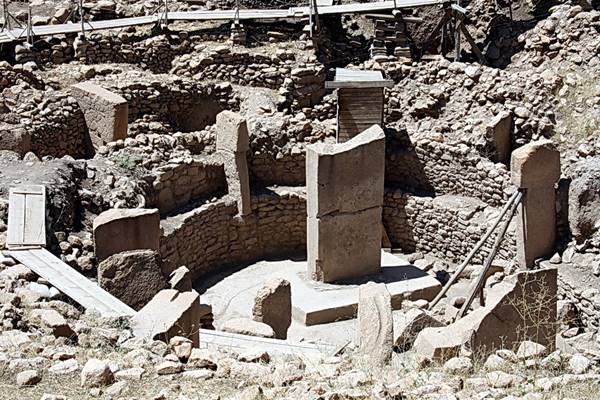
Goebekli Tepe site

Archaeologists have found a staggering amount of skulls at the Goebekli Tepe site, Turkey

At the Goebekli Tepe site, Turkey, archaeologists have found a staggering amount of human skulls which, they consider based on the factual evidence, were part of a skull cult.

The Goebekli Tepe Site – Staggering Amounts of Skulls

As archaeologists wrote in a paper based on the ongoing archeological research, most of the skulls were in fragments. This makes it difficult to elaborate about their provenience or any type of information. As of this date, there were 408 skull fragments uncovered at the Goebekli Tepe. However, according to data, only a small number of skulls were carved.

The carving of skulls is linked with one form of ancestral worshiping. Or only to wrap strings around them in order to hang the skulls near the temple found at the Goebekli Tepe site.

Lee Clare, one of the archeologists at the site and coauthor of the study published in Science Advances journal, said:

“In a skeleton, the lower jaw tends to fall off. The grooves would have supported a string that could have been wound around the skull and kept it from slipping off”.

Furthermore, symbols found at the site indicate towards the idea that the skulls found at the Goebekli Tepe site played an important role in rites taking place at the temple. This hypothesis leans on evidence found at the temple. A statue, called the Gift Bearer, shows an entity holding a human skull in his hand while a headless human is shown on one of the T-shaped pillars found at the site.

In their study, the authors wrote that out of 691 bone fragments found at the Goebekli Tepe site 408 appertain to skulls. This would indicate that the skulls were selected from the rest of the body.

The compound measures 22 acres of land. And although the archaeological digging has been ongoing for over two decades the archeologists managed to excavate a little under 10% of the total area. Further research will offer more information in the future, as digging at the Goebekli Tepe site continues.

Image Source: Flickr

Filed Under: Science

Scientists Crack the Macrauchenia Patachonica Case

June 27, 2017 By Roxanne Briean Leave a Comment

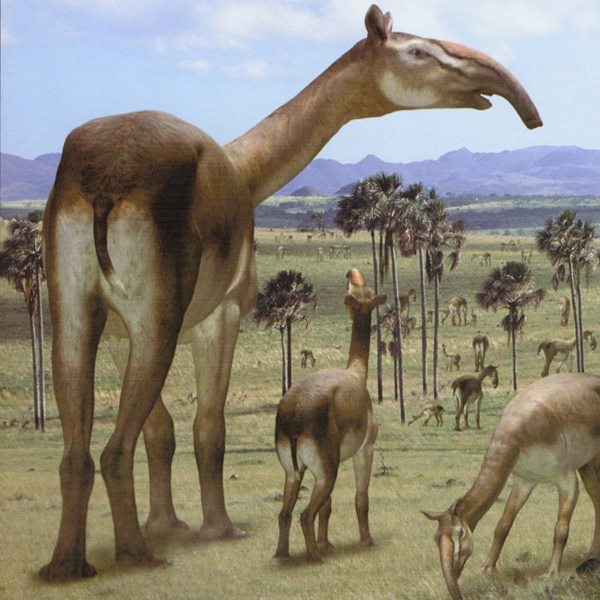
Macrauchenia patachonica

The Macrauchenia patachonica lived during the last ice age and was recently added to the tree of life

Charles Darwin stumbled upon one of, what he called, the strangest animals ever encountered. The Macrauchenia patachonica was an extinct animal, whose fossils Darwin had found but neither him nor his colleague, Richard Owen, a British paleontologist, could figure it out. But now scientists have cracked down the Macrauchenia patachonica.

Scientists Crack the Macrauchenia Patachonica Case

The last member of the species died approximately 12,000 years ago. The Macrauchenia lived during the last ice age. It looked like a bulky camel without a hump, having the neck of a llama and a short trunk as a nose.

Ross MacPhee, study coauthor and a curator at the American Museum of Natural History, said about the animal that

“It was a fairly bulky quadruped, probably not very fleet of foot”.

He said that the most remarkable aspect of the Macrauchenia patachonica was its nose. The researchers do not know whether it was an actual trunk, as in the case of an elephant-like nose, or if it was more of an appendage, like the proboscis of a tapir, he added. Especially since the opening was, per MacPhee’s account, right between the eyes, not above its mouth.

In a previous study, for example, researchers tried to place the Macrauchenia patachonica on the tree of life by using ancient collagen. This was two years ago. MacPhee and his colleague, Michi Hofreiter, have built on the 2015-study by extracting mitochondrial DNA from a fossil found in South America. In addition to this, however, the researchers also used a different, new approach in order to recover the genome of the Macrauchenia patachonica.

Because the tests and results confirmed their hypothesis and approach, they have since included it in the tree of life, being related to the hypo, horse, and elephant. Their work regarding the Macrauchenia patachonica gave them hope for further research regarding other extinct species of whose fossils are still uncovered, discovered, and analyzed.

Image Source: Walking With Wikia

Filed Under: Science

Ancient Cat DNA – New Discoveries

June 20, 2017 By Roxanne Briean Leave a Comment

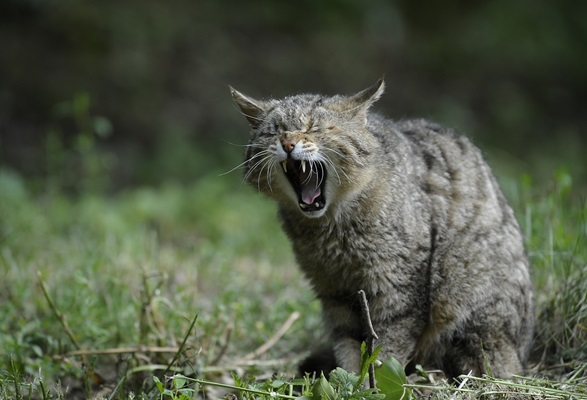
Ancient cat DNA

Mutations in the ancient cat DNA lead to the next evolutionary step which brought us the modern cat

Scientists have discovered a staggering new thing about cats: that the domestication of cats started roughly 10,000 years ago, during the dawn of the Agricultural Age. This discovery was made during an expedition and analysis of 209 Ancient cat DNA samples taken from cats found in Hierakonpolis, Egypt. The study reveals the ways in which the Ancient wild cats took to human bonding.

Ancient Cat DNA Reveals Cat-Human Bonding

Naturally, it would be impossible to do away with the fact that it is highly unlikely for Ancient cats to bond with humans. But this was done because the wildcats hunted rodents feasting on the grain harvested by Neolithic farmers. Seeing that it was beneficial for them to keep the cats around, the Agricultural sapiens sought to make sure that cats remained in place.

The discovery was done a couple of years ago during research expeditions of Eva-Maria Geigl and her colleagues. According to her findings, the moment has its origins in modern-day Turkey. But, regardless of this, the process was a lengthy one.

As far as the research goes, it was only from and during the Middle Ages that some cats (the Felis silvestris) developed fur with patch-like patterns. And the next evolutionary step took place during the 19th, when they were bred to have fancy coats.

“This suggests that for a very long time, cats have not been subject to strong selection through breeding and that the present-day breeds, in particular, the fancy breeds, are mostly a modern ‘invention’ from the 19th century.” (Eva-Maria Geigl)

The process of sharing of the Ancient cat DNA started once with the commencement of trading. The main roots were Anatolia (corresponding with modern-day Turkey) and Egypt, later spreading through the Mediterranean. And, thus, everywhere humans would go, cats would follow. This, later, corresponded with the fact that these wildcats interbred with already present native cats. Thus, leading to mutations of certain genes within the Ancient cat DNA.

This is yet to be later covered. But it has sparked a, otherwise, postponed research initiative into the origins of the second most beloved pet after dogs.

Image Source: Pixabay

Filed Under: Science

Jupiter Just Revealed The Presence Of Two Additional Moons

June 15, 2017 By Deborah Campbell Leave a Comment

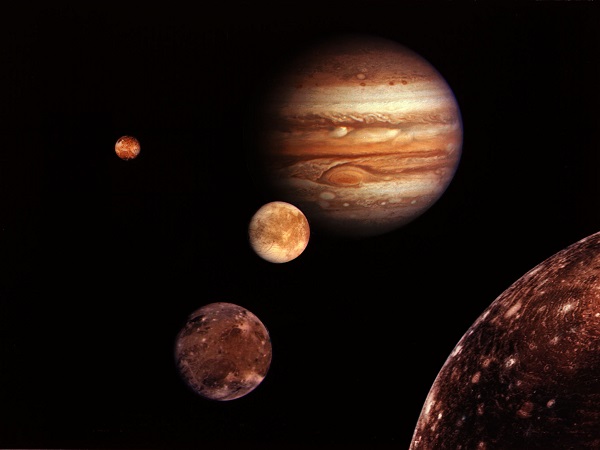
jupiter two additional moons

A team of astronomers recently announced their discovery of two additional moons orbiting Jupiter.

Scientists have been finding out and revealing quite a lot of news about Jupiter recently. Besides finding a way of confirming its being the oldest planet in our solar systems, a team of researchers spotted two additional moons in the gas giant’s planetary system.

Two Additional Moons Are Raising Jupiter’s Satellites Number

These two ‘new’ satellites were detected by Scott Sheppard from the Carnegie Institution for Science and his colleagues. They discovered S/2016 J 1 on March 8, 2016, and then S/2017 J 1 on March 26, 2017. Then, they presented them to the International Astronomical Union (IAU) and its Minor Planet Electronic Circulars. This announced their official status earlier this month, on June 2 and June 5 respectively.

“We were continuing our survey looking for very distant objects in the outer solar system, which includes looking for Planet X, and Jupiter just happened to be in the area we were looking in 2016 and 2017,” stated Sheppard.

After spotting them, the researchers decided to ‘take a detour’, and take a closer look at the moonlets.

Presently, scientists do not know very much about these additional two moons. Observations seem to indicate that both S/2016 J 1 and S/2017 J 1 are very small satellites. They also appear to be only around one or two kilometers across.

Observations of S/2016 J 1 indicate that this completes a full orbit around Jupiter in around 1.65 years. S/2017 J 1 is vehiculated to take some 2.01 years in doing the same. This moonlet is estimated to be, on average, some 23,500,000 kilometers away from Jupiter.

Although S/2016 J 1 was discovered one year earlier, its orbit presented many uncertainties. But observations with the Subaru reflector on Mauna Kea helped solved these questions later on.

There is little to no further information on Jupiter’s moons number 68 and 69. Further research might help bring more data on these latest detected natural satellites.
Image Source: Wikimedia

Filed Under: Science

Mars’s Life Supporting Window Was Longer Than Initially Estimated

June 4, 2017 By Nancy Young Leave a Comment

mars life supporting window

Mars’s life supporting window may have lasted longer than initially believed, according to a new study.

A new study offers evidence that Mars’s life supporting period may have been longer than initially believed, as it could have gone further back into the past. The researchers reached this conclusion after the Curiosity rover discovered “halos”.

Study results are available in the journal Geophysical Research Letters.

The Planet’s Groundwater lengthened Mars’s Life Supporting Window

The first evidence brought for Mars’s potential habitability came back in 2012. In August of that year, NASA’s Curiosity rover touched down inside the Gale Crater, a 96-miles wide structure. Observations of the area showed that it had once housed a potential lake-and-stream system sometime in its ancient years.

Now, the Gale Crater presented further evidence to sustain this theory and even lengthen Mars’s potential habitability period. Curiosity detected “halos” of silica-rich bedrock. These were noted to surround a series of structures situated near the crater’s floor.

These recent halos were established to be overlying ancient lake sediments. According to the mission team, they presented a high silica content. In turn, this seems to indicate that the halos detected in younger such rocks were very likely “remobilized” from older sedimentary rocks by “the water flowing through the fractures.”

“What this finding tells us is that, even when the lake eventually evaporated, substantial amounts of groundwater were present for much longer than we previously thought,” states Jens Frydenvang.

He is a scientist part of the Los Alamos National Laboratory in New Mexico and also of the University of Copenhagen. Frydenvang is the lead author of the new study as well. He continued by pointing out that the longer presence of groundwater basically extends Mars’s life supporting window.

Curiosity discovered these new silica halos as it was studying the lower north slope of Mount Slope. This is 3.4-miles high mountain situated in the center of the Gale Crater. The rover analyzed its new discovery with many instruments including its cameras, and an X-ray spectrometer. It also used its laser-firing Chemistry and Camera instrument.

Image Source: Pixabay

Filed Under: Science

Bleaching Seems To Have Affected The Great Barrier Reef Even Worse

June 2, 2017 By Nancy Young Leave a Comment

coral bleaching

Coral bleaching may have had an even worse than believed effect on the Great Barrier Reef.

For the past two years, coral reef bleaching has been affecting the Great Barrier Reef of Australia. As scientists have been trying to combat its effects, a new survey claims that the damage inflicted may be even worse than initially believed.

Coral Bleaching and its Worse Than Believed Effects

According to the National Ocean Service, bleaching occurs when the coral turns white due to stress caused by environmental conditions. The Great Barrier Reef is now experiencing its second consecutive year of such a phenomenon, caused by the warming waters.

Now, scientists are claiming that the affected areas are beyond repair. Biologist Terry Hughes, director of the Arc Center of Excellence for Coral Reef Studies at James Cook University in Queensland Australia, stated that over 55% of the coral reef was bleached in 2016.

He also said that, when combined with 2017, two-thirds of the Northern parts of the Great Barrier Reef have already been bleached. Other areas around the world are also suffering from bleaching but were not included in this percentage.

Terry Hughes argues that greenhouse gas emissions are to blame for the dying reefs. He also mentioned that the window to limiting greenhouse gas emissions is getting smaller. That if we want to act on it, now is the time to do so.

While reducing greenhouse emission levels may not restore the worse affected corals, it may potentially help save the remaining ones. Also, it could possibly contribute to the disappearance of the primary cause.

Presently, a biologist is cross breeding coral to try and make them withstand the warmer temperatures. This could help increase their adaptability. In turn, it may contribute to reducing mass bleaching levels, possibly even prevent them.

A study published last year in the journal Nature also analyzed the effects and various consequences of the first of the two consecutive periods of bleaching.

Image Source: Wikimedia

Filed Under: Science

  • « Previous Page
  • 1
  • …
  • 4
  • 5
  • 6
  • 7
  • 8
  • …
  • 15
  • Next Page »

Subscribe to Blog via Email

Enter your email address to subscribe to this blog and receive notifications of new posts by email.

Join 10 other subscribers

Recent Articles

police handcuffs man

German Man Probed In Poisoning That Killed 21 Employees Since 2000

June 29, 2018 By Kenneth Scott Leave a Comment

Chicken wings bar

Intoxicated South Carolina Man Punches Waitress Who Refused to Serve Him Alcohol

June 29, 2018 By Karen Jackson Leave a Comment

gaming

New Zealand gamer Who Flew Halfway Across The World for Virginia Teen Gets Shots By Her Mother

June 28, 2018 By Cristopher Hall Leave a Comment

party

Former Virginia Tech Freshman Sentenced to 50 Years in Prison for Stabbing a Girl to Death

June 28, 2018 By Roxanne Briean Leave a Comment

bonfire

British Couple Sentenced to Life in Prison for Torturing and Murdering French Nanny

June 27, 2018 By Deborah Campbell Leave a Comment

pay phone

Texas Father of Girl Disappeared in the 80s Ignored by Authorities

June 26, 2018 By Cristopher Hall Leave a Comment

bottled water

San Francisco Woman Threatened to Call Police on Girl Who Sold Ice Water for Disneyland Trip

June 25, 2018 By Roxanne Briean Leave a Comment

Maplewood Park

Missouri Man Robbed by Date and Accomplice in Park

June 22, 2018 By Nancy Young Leave a Comment

coding

New York Man Sentenced in Cyberstalking Former Girlfriend, Mailing Drugs to Her Dorm

June 22, 2018 By Deborah Campbell Leave a Comment

headphones

Bose Poised to Launch Sleepbuds, In-Ear Headphones That Help You Sleep

June 21, 2018 By Nancy Young Leave a Comment

Police light

Intoxicated Female Driver in Custody for Pulling Arresting Officer by the Hair

June 21, 2018 By Kenneth Scott Leave a Comment

kitchen

Restaurant Manager Arrested and Charged in Shooting Death of Co-Worker over Negative Yelp Reviews

June 20, 2018 By Karen Jackson Leave a Comment

plastic container

Pennsylvania Couple Charged in Violent Death of Infant Discovered Buried in Cat Litter

June 19, 2018 By Cristopher Hall Leave a Comment

tailpipe

Minnesota Teen Gets Head Stuck In Oversized Tailpipe Winstock Music Festival

June 18, 2018 By Karen Jackson Leave a Comment

Pages

  • About Us
  • Contact us
  • Privacy Policy
  • Privacy Policy GDPR
  • Staff
  • Terms and Conditions

Recent Posts

  • German Man Probed In Poisoning That Killed 21 Employees Since 2000 June 29, 2018
  • Intoxicated South Carolina Man Punches Waitress Who Refused to Serve Him Alcohol June 29, 2018
  • New Zealand gamer Who Flew Halfway Across The World for Virginia Teen Gets Shots By Her Mother June 28, 2018
  • Former Virginia Tech Freshman Sentenced to 50 Years in Prison for Stabbing a Girl to Death June 28, 2018
  • British Couple Sentenced to Life in Prison for Torturing and Murdering French Nanny June 27, 2018
  • Texas Father of Girl Disappeared in the 80s Ignored by Authorities June 26, 2018
  • San Francisco Woman Threatened to Call Police on Girl Who Sold Ice Water for Disneyland Trip June 25, 2018

Categories

  • Business
  • Entertainment
  • Finance
  • Headlines
  • Health
  • Life
  • Nature
  • Science
  • Sports
  • Tech & Science
  • Travel
  • Uncategorized
  • United States
  • World

Copyright © 2026 ArgyllFreePress.com
About · Privacy Policy · Terms of Use · Contact