Argyll Free Press

Growing News Network

Thursday, April 30, 2026
Log in
  • Business
  • Finance
  • Sports
  • Tech & Science
    • HP Envy 4500 Review
    • LG Optimus 170 Review
    • iPod Touch 6th Generation Review
    • HTC One M8 Accessories Set-up
    • Surrealist Games You Must Play
    • Hisense Sero 8 Review
    • Dell Latitude e7440 Review
    • HP Laserjet 1536dnf mfp Review
    • Garmin Fenix 2 Review
    • Skype Vs Viber
    • Best Video Conferencing Software
    • Sony mdr 1r Headphones Review
    • Canon Rebel t3i Review
    • Sennheiser Momentum 2-0 Review
  • Travel
  • Headlines
  • Health
  • United States

NASA Will Release A Big Announcement About Its Solar Probe Plus

May 31, 2017 By Deborah Campbell Leave a Comment

solar probe plus spacecraft

NASA will be making a ‘big announcement’ about its upcoming Solar Probe Plus mission targeting the sun.

Extending its eye of exploration inward, NASA is ready to make a big announcement on May 31 regarding its new mission to explore the sun. The recently designed Solar Probe Plus will be launched in the summer of 2018 to examine the heart of our solar system. It will come closer to the star than any spacecraft launched before, approaching to within four million miles. That is well inside Mercury’s orbital distance, and it will be a part of space never before explored by humanity.

The Solar Probe Plus, Closer To the Sun Than Ever Before

The corona of the sun is the last area of the solar system to which NASA has yet to send a targeted probe. Some scientists consider it more important than most, as the activity of solar storms has a direct impact on our own planet’s ecosystem, not to mention our technology.A massive solar flare could send an electromagnetic pulse toward Earth, capable of knocking out satellites and affecting weather patterns. Some estimate that the damage could reach $2 trillion. Also, power could be knocked out in some areas for nearly a year. This probe will be specifically looking at just those solar weather patterns, and many other things happening within the corona.

The new spacecraft itself will require some specialized engineering to complete its mission. It is destined for places with immense heat and radiation values. The temperature alone will be around 2,500 degrees Fahrenheit. Radiation in multiple bands will also be present, causing difficulties for sensors and transmitters alike.

The primary source of protection will be an 11.43 cm thick carbon-composite shield. NASA engineers believe this will be enough to protect the instruments but still allow them to transmit collected data back home.

This big announcement is probably just the beginning. The Solar Probe Plus is under construction now, with a launch window set for only 14 months away.
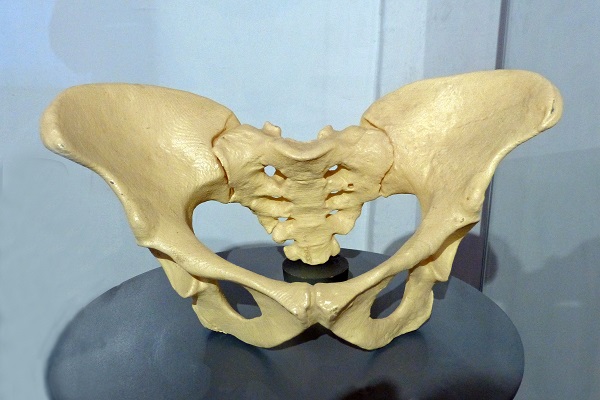

Image Source: Wikimedia

Filed Under: Science

Selam, A 3.3 Million Years Old Toddler, Brought New Data On The Spine

May 26, 2017 By Roxanne Briean Leave a Comment

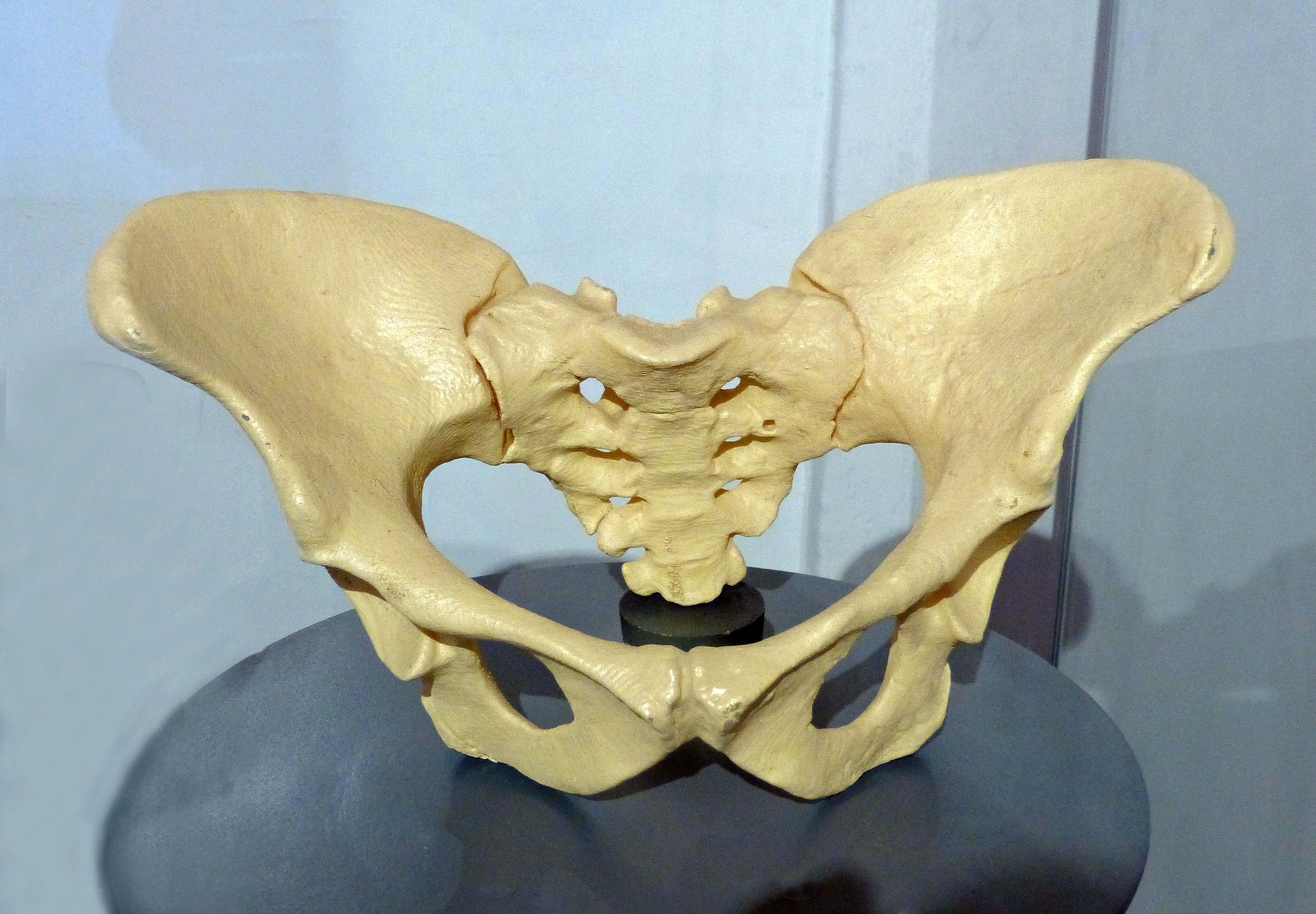
selam pelvis

Selam, the skeletal remains of a 3.3 million years old toddler, are bringing new data on the human spine.

The ancient skeleton of a 3.3 million years old baby, known as Selam, is bringing new evidence on the development of the human spine. This seems to indicate that humans were capable of walking around and running very much earlier than initially believed.

Selam is part of the Australopithecus afarensis, a species made famous thanks to “Lucy”. At the time, these were the earliest remains of a human ancestor. The skeleton of this baby was dated as being 3.3 million years old and was discovered in Dikika, Ethiopia.

Selam Comes With Unexpected Features

Selam presented quite an unexpected feature as its spine was noted to be very much similar to our own. This nearly complete skeleton displays 12 thoracic vertebrae and also has 12 pairs of ribs. It is one less than in most apps and comes sooner than expected.

This could make the Australopithecus afarensis a benchmark in the evolution process of ancient to modern human anatomy, according to the team.

“Selam has provided us the first glimpse into how our early ancestors’ spines were organized,” said Carol Ward. She is the study’s lead author and part of the University of Missouri School of Medicine.

Previous research also tried to determine the start of the transition point towards bipedalism. But evidence only showed this to have begun taking place some 60,000 years ago. Although Selam only reached around 2.5 years, the age of her remains, about 3.3 million years, is vital for this study.

The study team also underlined out the importance of the place on the spine where the thoracic vertebrae start transitioning to the lower back. In Selam’s case, this happens at the level of the 11th vertebra. This same location was noted in many of our ancestors, but not in modern humans. These have more vertebrae in their lower back.

Zeresenay Alemseged, who discovered Selam back in 2000, also pointed out its importance. He stated that this toddler skeleton represents one of the earliest evidence of the point and transition process of humans as they evolved to bipedalism.

Study results were released in the Proceedings of the National Academy of Sciences.

Image Source: Wikimedia

Filed Under: Science

One Of The Strangest Stars In The Galaxy Is Dimming Again

May 22, 2017 By Cristopher Hall Leave a Comment

strangest stars with light bursts

Because of its bizarre dimming, Tabby’s is seen as one of the strangest stars in the galaxy.

Astronomers have been very busy over the weekend after a team of specialists noted that one of the strangest stars in the galaxy is once again at work. Tabby’s star is the reason behind all this hassle as it is once again inexplicably and bizarrely dimming its light.

Tabby’s is officially known as KIC 8462858 but is also commonly called “Boyaijan’s star”. This cosmic body started raising questions as scientists noted its unusual pattern of inconsistent dimming and brightening. These have led to the emergence of many hypotheses. They range from comets, moons, to its being an alien megastructure.

Now, scientists are once again turning their attention to Tabby’s star following an urgent call. On May 19th, specialists asked as many people to turn their telescopes towards the sky in the hopes of gathering data on “Boyaijan’s star”.

One of the Strangest Stars is Dimming Once Again

The scientists to issue this call are hoping that thanks to the great number of telescopes trained towards the sky, they will manage to finally crack Tabby’s mystery.

“At about 4 a.m. this morning [May 19] I got a phone call … that Fairborn [Observatory] in Arizona had confirmed that the star was 3 percent dimmer than it normally is,” said Jason Wright.

He is an associate professor part of the Pennsylvania State University and manager of one of the studies on Tabby’s star. Wright took part in a live webcast on the matter.

He stated that this percentage confirms that the perceived dimming is not a statistical fluke. This also means that specialists have the chance to study the live dimming pattern of the star. Tabetha Boyajian, for whom the star is nicknamed, and her team, were the first to note these cycles back in September 2015.

Initially, scientists were expecting a regular series of brightening and dimming. This would be consistent with the star having a moon or being passed by a swarm of comets.

But Tabby’s changes are in line with neither. So scientists started taking greater attention to the cosmic body. Still, they were unable to predict the duration or appearance of the next dimming. So this latest pattern of dimming is a new chance at studying Boyajian’s.

It will offer scientists fresh new data on the matter, and more information than before. However, most point out that it will still take some time before an exact cause will be established.

Image Source: Wikimedia

Filed Under: Science

Opportunity, Mars’s Exploration Rover Just Reached Perseverance Valley

May 16, 2017 By Roxanne Briean Leave a Comment

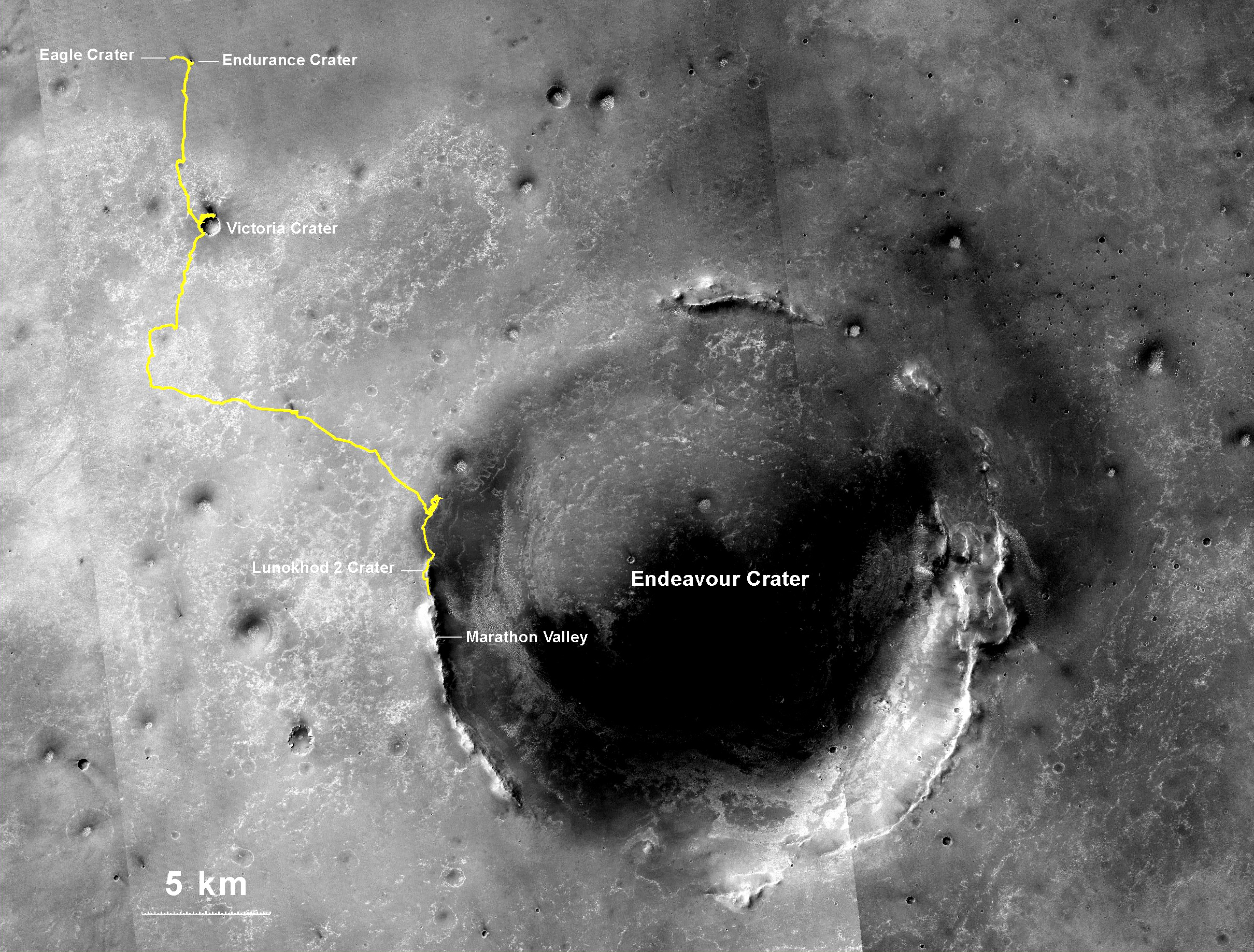
Perseverance Valley

NASA’s Opportunity just reached the main target of its current mission, the Perseverance Valley.

A NASA statement recently announced that the aerospace agency’s Mars Exploration Rover, the Opportunity, just reached the primary target of its current mission, the Perseverance Valley. The research team extended the rover’s current two-year mission so it could take a closer look at this interesting location.

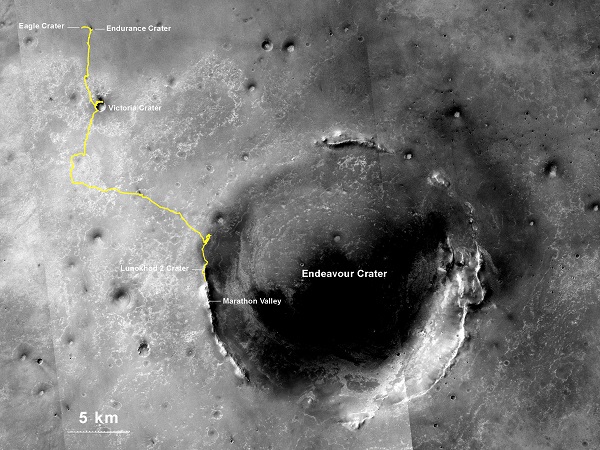
The “Perseverance Valley” is a fluid-carved valley which was incised on the inert slope at the rim of a vast crater on Mars. Opportunity started getting close to the area in early May and has since started beaming back data.

Next Target: The Perseverance Valley

Images taken by the rover’s camera offer a better look at the different areas of this valley. Previously, researchers had to work with images captured from orbit above Mars. Now, they can start turning to the high-resolution images taken by the Opportunity.

“The science team is really jazzed at starting to see this area up close and looking for clues to help distinguish among multiple hypothesis about how the valley formed,” stated Matt Golombek.

He is an Opportunity Project Scientist and part of the NASA Jet Propulsion Lab in Pasadena, California. Golombek points out that research has yet to determine how the Perseverance Valley came to exist.

This was carved into the rim of the Endeavour Crater, some billions of years ago, by a process still unidentified. Scientists put forth and are analyzing a number of possible factors. For example, water could have helped shaped this valley.

Or it could have been the result of a debris flow. As water lubricated a mix of boulders and mud, this may have helped form a path that later developed into a valley.

Perseverance Valley may have even appeared as the result of wind erosion, a much drier process than the other variants.

Now, Opportunity’s primary target for this mission is to try and determine which was the most likely cause. It will do so by gathering data from any of the remaining evidence. Scientists hope that this information will help them determine the most likely formation process.

Image Source: NASA

Filed Under: Science

Research Spots Rare Phenomenon In Antarctica, The Dragon Skin Ice

May 14, 2017 By Nancy Young Leave a Comment

dragon skin ice

Researchers recently spotted a rare and bizarre phenomenon in Antarctica known as the dragon skin ice.

An international team of researchers just revealed that they recently spotted a rare and odd phenomenon in Antarctica. Referred to as the “dragon skin ice”, this was last noted in the region back in 2007. The scientists that witnessed it are currently on their way to the Ross Sea. On their way there, they are also taking a closer look at sea ice of Antarctica.

Guy Williams is a researcher at the University of Tasmania’s Institute for Marine and Antarctic Studies. He is also part of the Ross Sea international expedition and the one to release the news about this strange phenomenon.

“Dragon-skin ice is very rare, bizarre evidence of a darker chaos in the cryospheric realm, not seen in Antarctica since 2007,” said Williams.

The Rare Dragon Skin Ice, An Explanation

Scaly sheets of ice characterize this rare phenomenon. These are similar to either dragon scales or the microscopic structures on a butterfly’s wing. Dragon skin ice is considered a rare sight. As it is, some point out that it might be a phenomenon characteristic of the Antarctica winter, which is still quite unexplored.

Dragon skin ice is said to be an effect of winds or waves on slushy ice. As either one of them hits the ice, it goes to sculpt into it into this unique fashion. Williams also noted that dragon skin ice might be a variation of the so-called “pancake ice”. This is the name given to sea ice that forms into small disks and then stacks upon one another.

The dragon skin was observed among Antarctica’s coastal polynyas. This is an area of open waters well known for its considerable production of ice which is driven forth and kept active by the force of katabatic winds.

The team of scientists is quite interested in these winds and area. They are studying the impact of the polynyas on both the local and global oceanography.

At the time of the dragon skin ice report, the international team of 27 researchers and its U.S. icebreaker, the Nathan B. Palmer, were stuck. They were stalled by the intense waves and winds in the area. As such, they were waiting for them to calm them to continue their study of the water beneath the ice shelf.

Image Source: Wikimedia

Filed Under: Science

Meet Zuul, The Ankylosaur With A Ghostbusters Inspired Name

May 13, 2017 By Kenneth Scott Leave a Comment

zuul ankylosaurus head

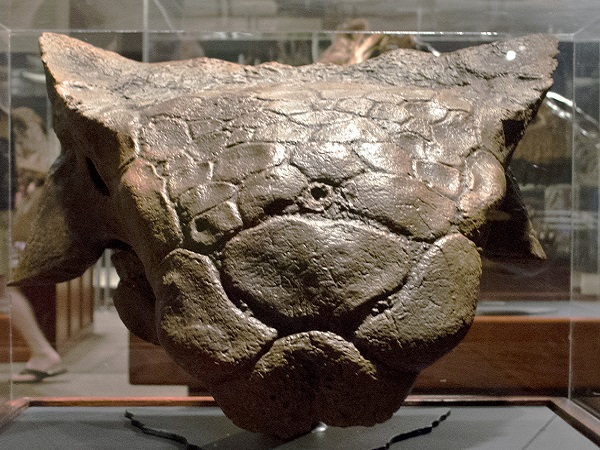
A team of scientists just named a newly discovered species of Ankylosaurus the Zuul crurivastator.

In a new publication in the Royal Society Open Science, researchers revealed their recent discovery of the Zuul crurivastator. The specimen, a new genus of the Ankylosaurus species, was discovered in the Judith River Formation of northern Montana.

As the team pointed out, this is the most intact ankylosaurus specimen found in North America to date. Bearing a Ghostbusters-inspired name, the newly discovered dinosaur bears a striking resemblance to the demonic demigod of the same name featured in the movie.

“Crurivastator” or the latter part of its name translates to “destroyer of shins”. Contradictory to its ominous title, this dinosaur was not a predatory animal. Instead, it appears to have been a peaceful vegetarian. One that reserved its clubbed tail only for predators.

The species most likely roamed North America, particularly the Judith River Formation area. It did so during the late Cretaceous period, about 75 million years ago.

Zuul Is Quite An Extraordinary Discovery

Typical finds from the Judith River Formation consists of teeth and bone fragments. The discovery of a partially mummified specimen with preserved soft tissue is considered exceptionally rare. Researchers also refer to this new specimen as ROM 75860 and regard it as one of the best finds from this region to date.

It could very well be the most complete ankylosaur skeleton found in North America, ever. With a complete skull, tail club, and viable soft tissue, it could prove to be of great help. Thanks to Zuul, scientists may better identify other ankylosaurines in future digs.

“ROM 75860 represents a new ankylosaurine genus and species, Z. crurivastator from the Judith River Formation.”

The completeness of the Zuul crurivastator makes it a pretty important as it could also help researchers better understand the evolution of the ankylosaur in the late Cretaceous period. It could also potentially indicate the richness in biodiversity of the Judith River Formation of northern Montana. In its turn, this may also place the region on the map for future potentially abundant finds.

Image Source: Wikimedia

Filed Under: Science

Leopard Sharks Are Washing Up Dead In San Francisco Bay

May 8, 2017 By Michael Turner Leave a Comment

leopard sharks

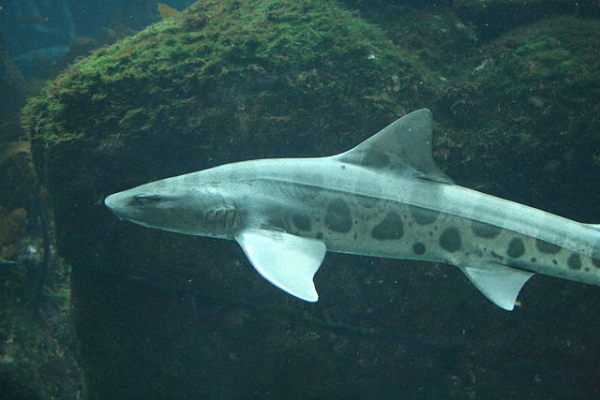
Environmentalists are alarmed about the large scale deaths of some hundreds of leopard sharks.

Environmentalists are alarmed about the large scale deaths of some hundreds of leopard sharks that have been washing up dead in San Francisco Bay area. This is the highest death roll for these sharks in the last six years. This event is concerning because of its large numbers which mark the biggest yet decline of the leopard shark population. And it started happening not even two months ago.

Leopard Sharks Most Likely Affected By Toxins

Specialists consider toxins as the biggest problem and the probable cause of this situation. Both mature adults and newborns sharks may be dying because of them. The Pelagic Shark Research Foundation stated that the sharks died after consuming food infected with chemical waste. Trash and debris piled up in the Bay Area from waterways and drains.

“This is an issue of San Francisco Bay sharks and associated wildlife being exposed to toxic watershed … due to Tide Gate entrapment and subsequent discharges into the San Francisco Bay,” mentioned the foundation.

This problem is getting serious considering the fact that hundreds of leopard sharks have already died. Unfortunately, this shows, once again, that human activity may endanger and even kill animals. Environmentalists mentioned that more and more sharks are probably going to die. This is their usual pupping season. Because of it, leopard shark specimens are gathering to breed and mate during spring and summer. On their way, they can pass through shallow waterways, which can harbor the toxins.

Rainy seasons can increase the level of toxins found in these waters. As these toxins are washed out from the ground into the bay, they eventually make their way into fish. As these can get eaten by the sharks, they too are affected and infected. Sharks, like any other animals species, are important for the food chain, and this high die-off could bring unexpected consequences.

Sharks aren’t the only victims as other marine animals have washed up dead in San Francisco Bay as well. These included some manta rays and halibuts. The dead marine animals washed up in the San Francisco Bay area despite the fact that its waters are clean. Specialists named human-made lagoons, sloughs, and the saltwater marshes as the most likely source of the infection.

Image Source: Wikimedia

Filed Under: Science

NASA Released A Video Of Cassini’s First Dive

May 6, 2017 By Michael Turner Leave a Comment

casini first dive saturn

NASA released a video of Cassini’s first dive in between Saturn and its rings.

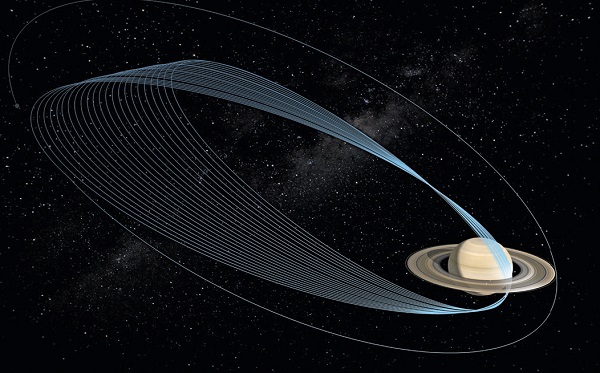
The National Aeronautics and Space Administration released a new video of Cassini. The spacecraft is on a mission called the “Grand Finale”. It will see the space probe take one final dive and crash into Saturn.

The hour long video of Cassini gives the audience a look at the probe’s point of view as it takes its first dive. This was number one out of 22 between the rings of Saturn and the planet itself. During this initial phase of what will be the swan song for the Cassini probe, it captured images of the polar vortex on the planet’s north side. It also recorded a jet stream with a hexagonal shape in the surrounding area.

Cassini’s First Dive of its Swan Song

After nearly 20 years of service, Cassini embarked on its one last adventure. The orbiter was launched in October 1997 with the lander named Huygens. The project marked the collaborative effort between NASA, the European Space Agency, and the Italian space agency.
Huygens separated from Cassini in December 2004 and headed for Titan, one of the moons of Saturn. This was the first landing of a man-made object in the outer reaches of the solar system. Cassini has continued to operate independently of Huygens for more than a decade.
Now that its fuel is running out, mission controllers have directed Cassini into the first dive of many that will eventually take the spacecraft directly into the atmosphere of Saturn. This is to avoid risking the biological contamination of a Saturnian moon that could occur if Cassini inadvertently landed on one of them. Both Titan and Enceladus may potentially be capable of supporting life forms of their own.Cassini will be periodically diving in the space between the atmosphere and rings of Saturn up until September. Then, it will take the final plunge that will send it hurtling into the planet’s atmosphere in one final blaze of glory.

Image Source: JPL/NASA

Filed Under: Science

NASA Just Found A Nearby Planetary System, All Thanks To SOFIA

May 5, 2017 By Roxanne Briean Leave a Comment

planetary system

SOFIA, one of NASA’s associates, helped find a nearby planetary system, very similar to ours.

A NASA-affiliated telescope project captured hyper-detailed images that reveal a nearby planetary system remarkably similar to our own, only much younger at only 500 million-years-old.

Parked 10.5 light years away, in the constellation Eridanus, is a star called Epsilon Eridani, eps Eri, for short. All signs point to it being a doppelgänger of the Sun, complete with a similar planetary scheme.

Epsilon Eridani: Our Planetary System, Only Younger?

So, why do scientists believe this nearby planetary system mirrors the Solar System? For starters, a “Sun” seemingly anchors both areas. Moreover, the cluster is home to a Jupiter-esque planet that orbits the same distance from eps Eri as Jupiter does from ou Sun.
It also features an asteroid belt, like Jupiter. Additionally, the Epsilon Eridani architecture includes a comet belt that appears to hold the same properties as the Kuiper Belt, which sits on the far side of Neptune.
SOFIA, which stands for Stratospheric Observatory For Infrared Astronomy, is a modern scientific marvel. It is a Boeing 747SP jetliner modified to accommodate a 2.5-meter telescope. This is specially developed to observe long infrared wavelengths.Previously, scientists relied on feedback from NASA’s Spitzer telescope that featured a 33.5-inch lens diameter. Thanks to it, they were able to cull significant data from Spitzer. Still, SOFIA’s large 100-inch lens allows researchers to observe details with greater precision.

Astronomers have been studying eps Eri since 2004. The last major news about the system came in 2009. This touched on dust and debris clusters that presumably formed in the wake of comet collisions and planet formation.

Researchers are confident that Epsilon Eridani will give insight into some of our still unanswered questions. For example, “How and when, exactly, do planets form?”. Or “In what order do planets take shape in a galactic system?”

Kate Su, whose research team is studying eps Eri at the University of Arizona, summed up the simple, yet fascinating, findings, opining the following.
“It really is impressive how esp Eri, a much younger version of our Solar System, is put together like ours.”
Image Source: Wikimedia

Filed Under: Science

A Pod Of Killer Whales Just Become Famous For Its Killing Spree

May 3, 2017 By Roxanne Briean Leave a Comment

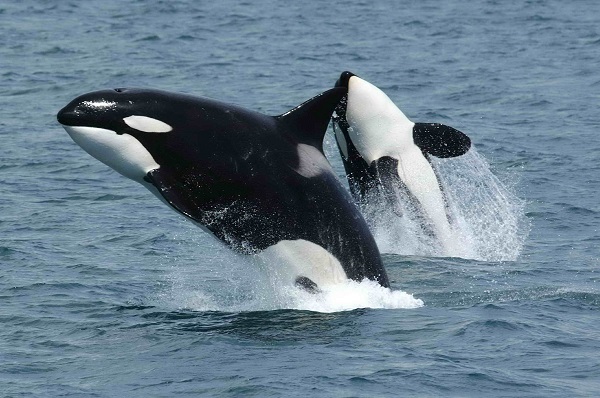
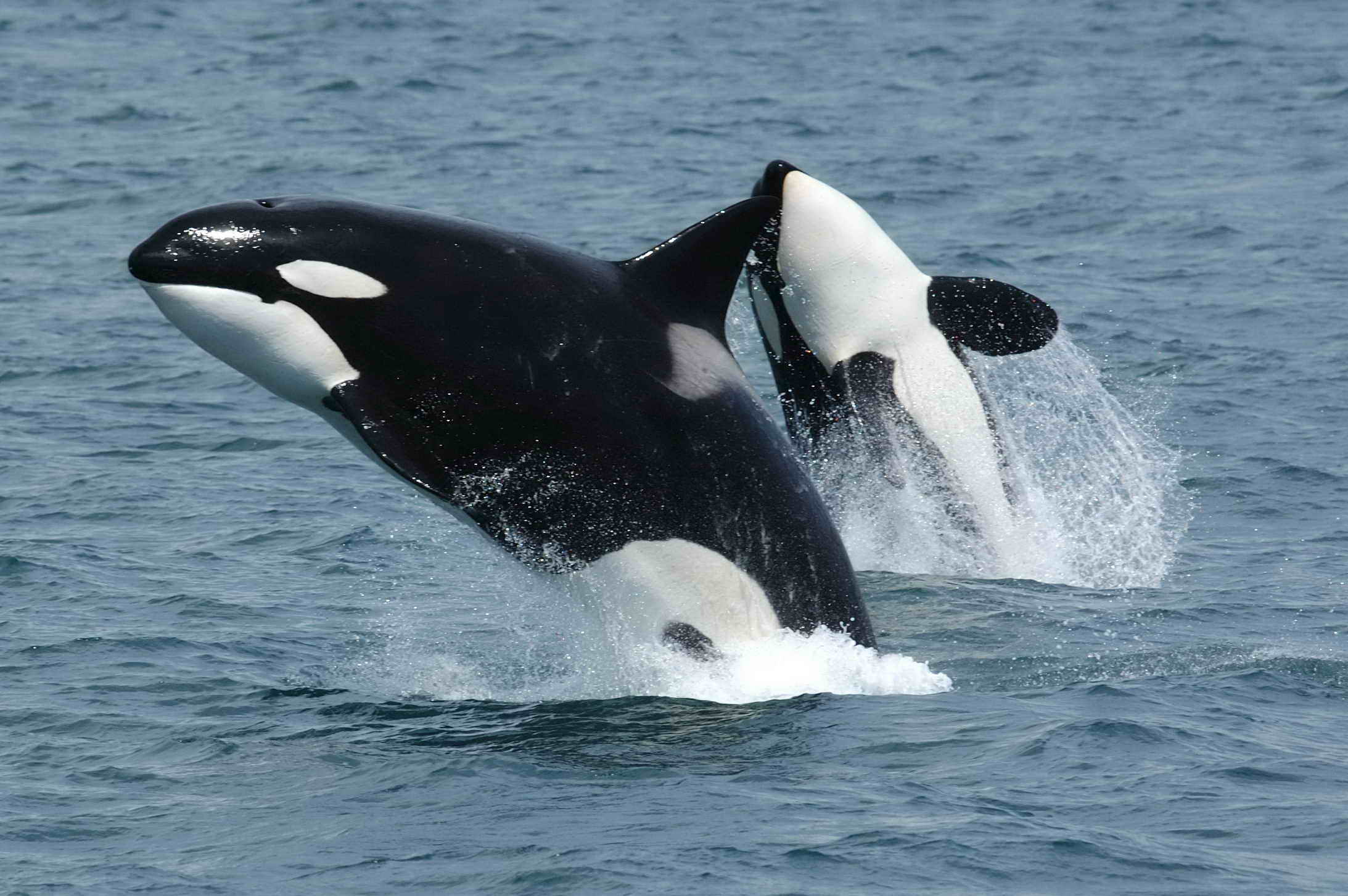
killer whales

A large pod of killer whales attacked a gray whale calf, launching a killing spree that’s been baffling scientists.

A large pack of orcas attacked a gray whale calf on April 20th, launching a killing spree that has baffled scientists. Since their first attempt, the group of killer whales killed at least five gray whale calves near Monterey Bay, California.

This Pod Of Killer Whales Already Made Over 5 Victims

Nancy Black, a marine biologist and co-owner of the Monterey Bay Whale Watch, calls the killing spree “unprecedented”. In an interview to the media, she says that she hasn’t seen anything like it in 30 years of experience. She also filmed a recent attack.

The killing is unusual, both in the size of the killer whale pod and in its efficiency. Ms. Black says that she witnessed the pack separate a gray whale calf from its mother in about 20 minutes. Such a feat would normally take hours. Although the first attack consisted of as many as 33 orcas, usually, such pods are made up of 5-10 killer whales.

Another surprising detail: pods of killer whales typically move in and out of the bay area. But in this case, they have held their position, presumably lying in wait for more gray whales and other prey.

Gray whales typically migrate 10,000-12,000 miles on a round trip, from lagoons in Mexico to their feeding grounds in the Arctic Seas. These attacks are preventing some from reaching their destination. However, one gray whale mother successfully defended her calf against the pod.

A reason for the attacks has yet to be established. Ms. Black theorizes that the orcas may be teaching their young to hunt since the youngest in the pod is not yet six months old. They could also be binge-feeding.

Whatever the reason, these killer whales likely won’t stop anytime soon. Since gray whales typically continue to migrate through May, they will have no shortage of prey.

Image Source: Wikimedia

Filed Under: Science

  • « Previous Page
  • 1
  • …
  • 5
  • 6
  • 7
  • 8
  • 9
  • …
  • 15
  • Next Page »

Subscribe to Blog via Email

Enter your email address to subscribe to this blog and receive notifications of new posts by email.

Join 11 other subscribers

Recent Articles

police handcuffs man

German Man Probed In Poisoning That Killed 21 Employees Since 2000

June 29, 2018 By Kenneth Scott Leave a Comment

Chicken wings bar

Intoxicated South Carolina Man Punches Waitress Who Refused to Serve Him Alcohol

June 29, 2018 By Karen Jackson Leave a Comment

gaming

New Zealand gamer Who Flew Halfway Across The World for Virginia Teen Gets Shots By Her Mother

June 28, 2018 By Cristopher Hall Leave a Comment

party

Former Virginia Tech Freshman Sentenced to 50 Years in Prison for Stabbing a Girl to Death

June 28, 2018 By Roxanne Briean Leave a Comment

bonfire

British Couple Sentenced to Life in Prison for Torturing and Murdering French Nanny

June 27, 2018 By Deborah Campbell Leave a Comment

pay phone

Texas Father of Girl Disappeared in the 80s Ignored by Authorities

June 26, 2018 By Cristopher Hall Leave a Comment

bottled water

San Francisco Woman Threatened to Call Police on Girl Who Sold Ice Water for Disneyland Trip

June 25, 2018 By Roxanne Briean Leave a Comment

Maplewood Park

Missouri Man Robbed by Date and Accomplice in Park

June 22, 2018 By Nancy Young Leave a Comment

coding

New York Man Sentenced in Cyberstalking Former Girlfriend, Mailing Drugs to Her Dorm

June 22, 2018 By Deborah Campbell Leave a Comment

headphones

Bose Poised to Launch Sleepbuds, In-Ear Headphones That Help You Sleep

June 21, 2018 By Nancy Young Leave a Comment

Police light

Intoxicated Female Driver in Custody for Pulling Arresting Officer by the Hair

June 21, 2018 By Kenneth Scott Leave a Comment

kitchen

Restaurant Manager Arrested and Charged in Shooting Death of Co-Worker over Negative Yelp Reviews

June 20, 2018 By Karen Jackson Leave a Comment

plastic container

Pennsylvania Couple Charged in Violent Death of Infant Discovered Buried in Cat Litter

June 19, 2018 By Cristopher Hall Leave a Comment

tailpipe

Minnesota Teen Gets Head Stuck In Oversized Tailpipe Winstock Music Festival

June 18, 2018 By Karen Jackson Leave a Comment

Pages

  • About Us
  • Contact us
  • Privacy Policy
  • Privacy Policy GDPR
  • Staff
  • Terms and Conditions

Recent Posts

  • German Man Probed In Poisoning That Killed 21 Employees Since 2000 June 29, 2018
  • Intoxicated South Carolina Man Punches Waitress Who Refused to Serve Him Alcohol June 29, 2018
  • New Zealand gamer Who Flew Halfway Across The World for Virginia Teen Gets Shots By Her Mother June 28, 2018
  • Former Virginia Tech Freshman Sentenced to 50 Years in Prison for Stabbing a Girl to Death June 28, 2018
  • British Couple Sentenced to Life in Prison for Torturing and Murdering French Nanny June 27, 2018
  • Texas Father of Girl Disappeared in the 80s Ignored by Authorities June 26, 2018
  • San Francisco Woman Threatened to Call Police on Girl Who Sold Ice Water for Disneyland Trip June 25, 2018

Categories

  • Business
  • Entertainment
  • Finance
  • Headlines
  • Health
  • Life
  • Nature
  • Science
  • Sports
  • Tech & Science
  • Travel
  • Uncategorized
  • United States
  • World

Copyright © 2026 ArgyllFreePress.com
About · Privacy Policy · Terms of Use · Contact