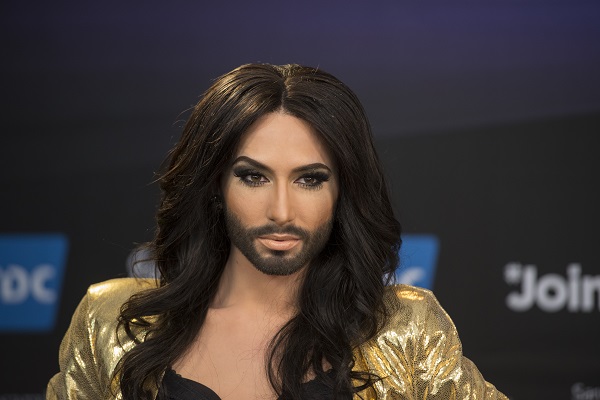
Conchita Wurst is one of the few well-seen celebrities with a transgender identity.
The World Health Organization has decided to remove transgender identity from the list of mental illnesses. This is the first time in many years that the official list is being updated.
The United Nations decided to revise the categorization of behavioral and mental disorders. The new and improved list will be released sometime in 2018.
The change comes in the nick of time as the Lance Psychiatry magazine just published a new article that brings compelling arguments on why transgender identity should not be classified as a mental illness.
Geoffrey Reed, the lead researcher in the case, stated that transgender identity was classified as a mental illness in order for doctors to be able to deny health care to transgender individuals.
“Stigma associated with both mental disorder and transgender identity has contributed to the precarious legal status, human rights violations, and barriers to appropriate care among transgender people,” the lead researcher declared.
Reed also stated that the proposal did not meet any opposition from the other members of the organization.
Reed and his team interviewed a sample of 250 transgender individuals with ages between 18 and 65. The researchers found that even though most participants experienced some level of distress during their lives, in the majority of cases the suffering was generated by violence and social rejection, not negative feelings or confusion.
The next step in the process is for other studies from different countries to confirm the thesis of Dr. Reed and his associates.
Unfortunately, even if the classification is changed, most negative opinions will linger, and the violent behavior towards transgender individuals will not change suddenly. However, researchers are hopeful that by removing transgender identity from the list of mental illness, stigmatization may be reduced in the long term.
Dr. Robles, the co-author of the paper, declared that among the participants, there was a surprisingly high number of individuals who received backlash from their own families.
The authors of the cited study were also aware of the limitations of their paper. The participation in the survey was volunteer-based, so there is a possibility that they interacted with only one kind of transgender individuals.
The scientists believe that the doubts can be removed if other scientists from around the world would conduct the same study, leading to a broader understanding of how transgender individuals see themselves.
Image source: Wikipedia