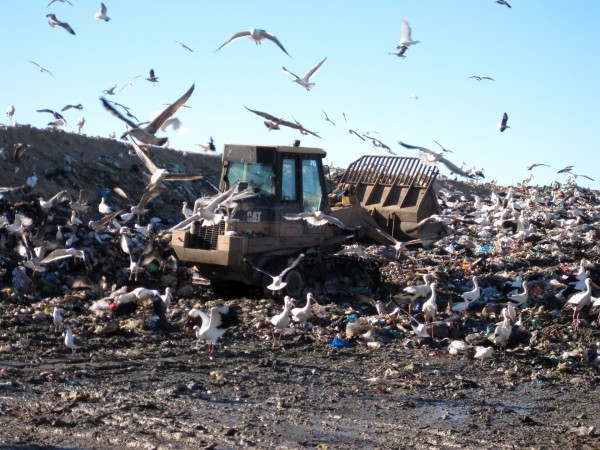
While we’re certain this is not an example of human kind’s tendency towards laziness and procrastination, it would appear that European storks are modifying their natural behavior. This modification involves something that comes as a result of human influence as well as the global environmental change. Instead of migrating south during the winter, these birds remain on European land – most specifically in the regions of Spain and Portugal – the entire year, where they have taken a liking to various types of junk food and other leftovers.
The particular storks that do display this type of behavior, however, are a new species that has suffered this change as a consequence of human actions. Researchers from the University of East Anglia have studied this species and announced their findings in a press release that was published two days ago, on Tuesday.
Their findings speak of this type of stork living near landfill sites, where junk food and remains of human meals are stocked up and provide a considerable amount of sustenance for the white storks. In essence, because they no longer need to migrate to warmer regions where they can find food during the winter season, this type of stork is now bound to the originating location.
As a result, the population of white storks in Portugal has gone up in numbers considerably in the past 20 years, nowadays accounting for 14,000 wintering birds. The reaction of scientists goes both ways, becoming of a mixture of enthusiasm at the prospect of studying the changes in migratory behavior and the concern expressed towards the fate of the white storks that have given up an incredibly old habit.
When the researchers studying these birds connected GPS tracking devices on the bodies of 48 different white storks, they learned more about their flight patterns, flight distances, their nesting areas, and their feeding areas. This confirmed that the white storks’ had taken a liking to landfills in the slightly warmer climate of Spain and Portugal, and as a result, would no longer feel compelled to travel all the way to African planes in order to be able to feed during the winter.
However, some concerns may arise regarding this change in behavior. Just recently, the European Union has decided that a number of these landfills will slowly be closed and replaced with facilities that keep food waste covered and away from outside access. Considering the storks in question are staying during the winter, it may cause a small decrease in the population until they regain their migration habits again.
Image Source: 1