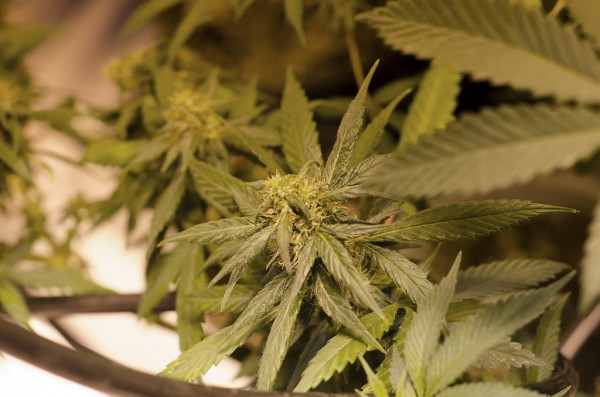
Scientists developed a 3D model of the brain’s marijuana receptor.
In an attempt to better comprehend how pot affects our body, a team of international researchers has created a 3D atomic-level image of the marijuana receptor in our brain. They also studied how weed’s active ingredient, tetrahydrocannabinol (THC)l is being activated in the brain.
When trying to understand how marijuana affects our bodies when consumed, researchers thought that creating a 3D model of the marijuana receptor would facilitate their work. However, the development process of the model presented several difficulties. Researchers struggled to create a crystal form of the marijuana receptor when it was bound to a stabilizing molecule which can block the functions of the receptor.
After some number of attempts, the scientists successfully recreated the crystal form of cannabinoid receptor 1 (CB1). After analyzing it, they observed that the complex structure of the receptor has an underlying complicated and expansive binding network consisting of many sub-pockets and channels which connect to the various parts of the receptor.
According to the study, CB1 is part of a large class of receptors known as G protein-coupled receptors (GPCR). They fulfill important roles in a high number of physiological functions. When certain external substances are bound to a GPCR, the G protein within the cell becomes active and creates a specialized cellular response. This reaction can be blocked using AM6538, the stabilizing molecule used on CB1. For this reason, scientists think that it can be a possible addiction treatment.
Researching the CB1 receptor might provide key insights on why certain THC molecules can cause complex and even adverse effects. The new 3D model of the marijuana receptor will help future research with the better understanding of the effects and drugs. It may even impact the creation of drugs from pain, obesity, inflammation, and more.
The study was led by several prominent researchers such as Zhi-Jie Liu, Laura Bohn, Raymond C. Stevens, and Alexandros Makryannis alongside other scientists. Their work was published in the journal Cell and attracted funding from several institutions like the GPCR Consortium, National Nature Science Foundation of China, the Shanghai Municipal Government, and more.
With marijuana gradually becoming a mainstream recreational drug, researchers, drug companies, and governments want to have a better understanding of how the drug affects people. For this reason, a high number of studies attempting to unravel its effects have been started.

Roxanne Briean
Latest posts by Roxanne Briean (see all)
- Former Virginia Tech Freshman Sentenced to 50 Years in Prison for Stabbing a Girl to Death - June 28, 2018
- San Francisco Woman Threatened to Call Police on Girl Who Sold Ice Water for Disneyland Trip - June 25, 2018
- Epping Woman Sentence to 20 Years of Prison for Mutilating Homeless Woman’s Children - June 12, 2018