The intriguing layers of the ant society have led to an intricate ‘political’ system, one that shows us that the longest war of the animal reign is ongoing for 100 million years. From this perspective, some insect species still manage to amaze scientists as they display a very detailed and well thought out layered society, similarly to the human kind.
While obviously not as evolved as mankind (yet, although some pieces of science fiction insist that meddling with the natural timeline will somehow lead to planet Earth being ruled by giant ants), they are also species that thrive upon well set rules and layers of society. And similarly to humans, they also ‘farm’ other creatures, fight over food and territory.
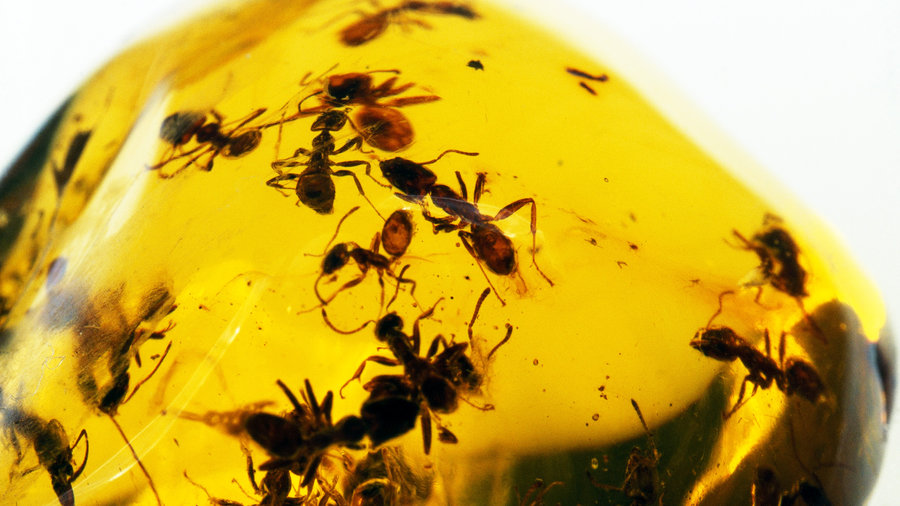
A recent discovery of several examples of different ants from the same colony preserved in 100 million year old amber found in Myanmar gives scientists even more insight into what the sociality level is in ants. And surprisingly, it hasn’t changed all that much since prehistoric times.
While ants are not the only species of animals that display eusociality – a term used for advanced sociality – they are the most common and well known example of it, along with honey bees and termites, while out of the vertebrates class only two species of African mole rats display the same interest in society layers.
The amber that originated in Myanmar captured two ants of different colonies mid-fight, as they were attempting to knock each other out. This is the proof that scientists needed to realize that this particular trait of ants has been ongoing for a much longer amount of time than previously thought.
Originally, it was believed that eusociality was between 17 to 20 million years old, but recent discovery moves this date back to the Cretaceous period – this was when dinosaurs were not yet extinct. Naturally, given the huge amount of time that it has been since, it is widely obvious that the Cretaceous ant was wildly different than the modern ant.
Researchers also found one of the largest soldier termites ever seen throughout the amber remnants in Myanmar – named the Gigantotermes Rex termite, it is nearly an inch long with a head that makes up nearly half of that length.
It too, was found immortalized in amber in the midst of combat with a different species of insect, only one more proof of the fact that this type of behavior existed and has survived this long throughout history.
Image Source: 1