While it’s a very long title to be presented by, the energy efficient biological super computer doesn’t even quite cut what it can really do or what it is truly capable of. The super computer in question was engineered at the McGill University by Senior computer scientists Dan Nicolau, together with his son, Dan Jr., after more than 10 years of efforts and hard work. At one point throughout their development, they were joined by an entire team of researchers from the United States, Germany, Norway, Sweden and Canada.
The concept that was used in its construction is something that has been studied for decades: by making use of a biochemical known as Adenosine triphosphate (ATP), internal energy can be transferred among cells. By applying the same concept in the case of a computer, it results in a machine that is capable of solving problems of high complexity with a lot less energy.
The way that is achieved? The earlier synthetic semiconducting circuitry that is usual to be used in supercomputers has been given up in favor of ATP-powered protein strings. They are not limited by the threat of overheating because it doesn’t rely on circuitry as we know it, and also manages to mix in a much lower energy consumption than regular type of construction. Add to that the fact that this super computer has the same size as a hardcover book and the invention becomes even more impressive.
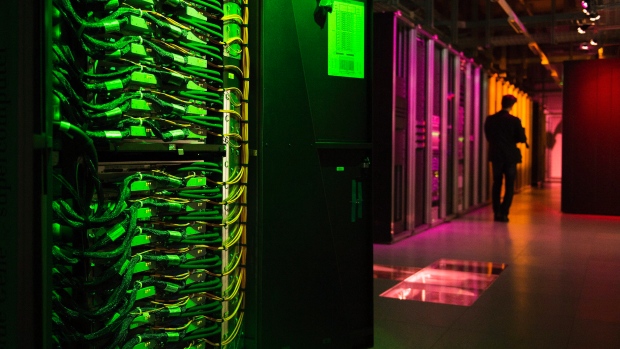
Supercomputers as they are known nowadays are gigantic constructions that take up entire rooms the size of basketball courts. They are limited in ability proportionately to their size, and they require amazing amounts of power to both keep going as well as cooling.
Alternatively, the biological computer would use up less than 1 percent of the power a current supercomputer does. Both Dan Nicolau and his son believe that their concept of a biological supercomputer could become reality and be put to practical use in nearly 10 years. The molecules that are needed to get such systems going are known to be cheap and the progress they have made so far with the concept promises applicability in a matter of years, even if at this point the idea has only been tested in terms of calculations work.
Image Source: 1

Michael Turner