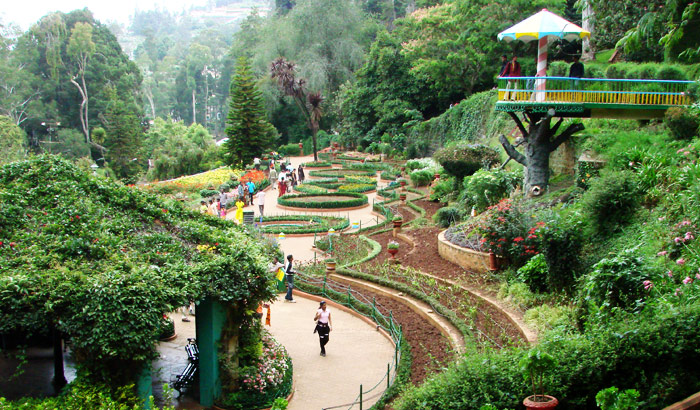
Botanical garden in Ooty, India
On Tuesday, Britain’s Royal Botanic Gardens published the first global report that warned the world about the precarious situation of the plant kingdom.
In the “State of the World’s Plants” report, botanists at the Kew Gardens in London hoped to draw attention to species that are often overlooked. The research center currently owns one of the world’s largest collections in its sprawling gardens and numerous greenhouses.
According to the Kathy Willis, the science director of Kew Gardens, this is the first report of this size that addresses the state of plants around the world.
More than just an 80-page report, the study has been linked to a website, so that their work can be expanded into a database of global reference. The botanists plan to update it annually and allow other researchers to compare their data on preserving the world’s plants.
One of the report’s authors, Steve Bachman, explained it was a huge undertaking which involved more than 80 scientists.
The study wanted to create a condensed collection of existing knowledge on the importance of plants, a readable version that can help spread the message to a wider audience. And the task was not easy.
Researchers have registered more than 391,000 species of vascular plants around the world; this group of plants conducts water and minerals. But that’s not all, because roughly 2,000 additional species are discovered annually, most of them in Brazil, Australia, and China.
According to Kew Gardens, some 17,810 plant species are useful for medical reasons, 5,538 can be eaten, and 3,649 are animal feed. This only adds more reason to why they should be better preserved.
However, raising awareness about the importance of plants is a bit more complicated than warning the world about the endangered Bengal tigers, African elephants, or even about how tropical rainforests suffer because of climate change.
One of the greatest risk factors and threats to the plant kingdom comes from farming, seconded by diseases, pesticides, and house buildings. Surprisingly, global warming plays only a marginal role at the moment.
According to previous studies, an estimated 10 percent of the world’s plant species are in danger of becoming extinct; others reported the alarming figure of 62 percent. Kew Gardens, however, roughly estimated that 21 percent of them are in need of better protection.
Image Source: Make My Trip

Michael Turner