Ocearch discovered a great white shark nursery in the North Atlantic
Ocearch, an ocean organization leading marine research, has made an unusual discovery right in the North Atlantic, near Montauk in Long Island: a white shark nursery. It could possibly be the birthing site of great white sharks.
Ocearch’s founding Chairman, Chris Fischer says that this was ‘the holy grail of the research,’ and probably the most important discovery they have ever performed in the ocean. Till date, Ocearch has conducted 26 campaigns, and all of them were directed at saving the ocean. The Wildlife Conservation Society and the Long Island Shark Collaborative were also present with Ocearch. Both of them intend to proceed with tracking the white sharks.
They are also getting blood samples and performing muscle biopsies.
The discovery isn’t just beneficial for the knowledge of the people, but it also gives Ocearch and other associations the possibility to defend the animals. Finding the nursery where they give birth and nourish their children in the North Atlantic gives the organization the chance to take care of the great white sharks which are already thought to be extinct.
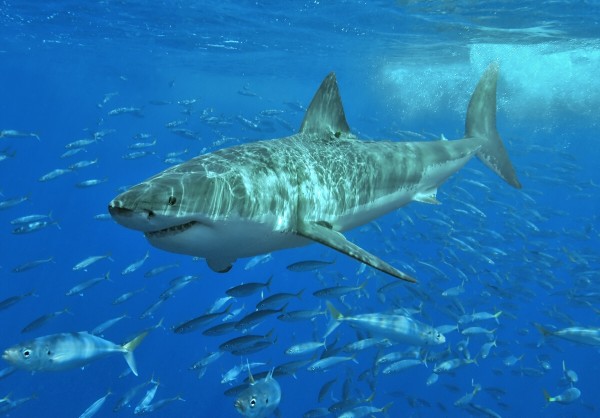
They great white shark also acknowledged as the great white is a species of large lamniform shark which can be observed in the coastal surface waters of all the major oceans. It is notable for its size, with mature female individuals growing up to 6.1 m in length and 1,950 kg.
Ocearch’s primary goal is to prevent the great white sharks from being captured. According to the International Union for the Conservation of Nature, these animals are especially helpless when giving birth to their youngs.
Fischer announced that they would try and determine if any of the sharks is the offspring of great whites that they have first confronted in Cape Cod.
Ocearch has been putting tags on great white sharks’ dorsal fins to follow them, and as soon as they surface, the satellite will get a ping. In August, the team marked Hampton and Montauk – a male and female shark approximately 42-50 pounds. By collecting tissue and blood samples, they were able to measure them and also identify their sex.
The first shark tagged in 2012 by Ocearch was named Mary Lee and has already covered over 34,000 miles since then.
Image source: Wikipedia

Michael Turner